Tag Archives: Dark Fantasy

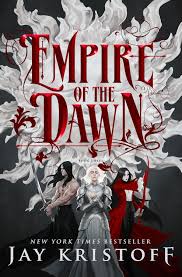
Review of Empire of the Dawn by Jay Kristoff

For me a five-star book is something that either I want to read again or something that is so profound it makes an immediate impact. There are lots of ways that books can be compelling: a unique idea, an interesting set of characters, a complex plot, an artistic use of the English language and more. Reading is also a subjective experience, so what appeals to me as a reader may be very different for you. I read a lot for both pleasure and work, but these short reviews are a way for me to show my appreciation for the work and the craft of the author of the reviewed work.

Jay Kristoff quickly became one of my favorite authors with both the Nevernight trilogy and this worthy conclusion to the Empire of the Vampire trilogy. This narrative journey through Empire of the Vampire, Empire of the Damned and now Empire of the Dawn has been phenomenal. Gabriel de Leon, the last Silversaint (vampire hunter), Celene Castia, Gabriel’s sister and the last Liathe, and Dior le Chance, the young woman who is believed to have the power to end the eternal darkness of their world form the central characters in this final volume. The story is dark, the narration of the conflict scenes so rich I could imagine them as a manga or anime (I think that is the only way you could faithfully replicate the speed and damage of these vampire vs Silversaint fights). The world cloaked in darkness, the place of religion and mysticism, the rich imagery in a perilous world, there is so much to love in this long but engaging story of a world where vampires are no longer consigned to the night and humanity hangs on the precipice. But beyond the incredible plot, worldbuilding, and hard driving action are the characters and their interactions with one another. There were so many times the dialogue between the characters echoed the pattern of conversations I had with people in the army, the way men rib each other to show they care, the language, and verbal duels that went along with the physical trials. There were countless times I would look up from the page and say, “Damn. Jay Kristoff can write.”

Each of the volumes of this trilogy were the best read of the year they were released and there is some regret in coming to the end of this massive journey. Jay Kristoff will not be for every reader: his language is the language of fighting men which includes frequent swearing (and he has some really interesting ways of utilizing the coarser parts of the English language) and there are several very spicy erotic scenes throughout the books. It is a dark world (literally and metaphorically) where no human character or animal character is safe. It is fantasy with horror and romantic elements set in a beautifully imagined (and illustrated if you buy a physical copy) world. It is a poignantly human story of characters who walk through the hell of war, betrayal, death, and times that seem hopeless. People will be divided on the ending of the book, but I thought it was masterful use of a plot device that breaks the fourth wall with a pair of narrators who have their own motivations for why they tell the story they are spinning. I did not want to put this almost eight-hundred-page book down, each time I picked it up it hooked me. I loved this dark gothic story of faith and fighting in a world struggling against four vampiric armies. The symbology and the myth, the conversations and the combat, the characters and the plot all come together to form the favorite trilogy I have ever read.
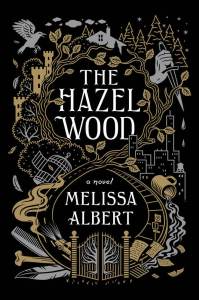
Review of The Hazel Wood by Melissa Albert

Melissa Albert, The Hazel Wood

For me a five-star book is something that either I want to read again or something that is so profound it makes an immediate impact. There are lots of ways that books can be compelling: a unique idea, an interesting set of characters, a complex plot, an artistic use of the English language and more. Reading is also a subjective experience, so what appeals to me as a reader may be very different for you. I read a lot for both pleasure and work, but these short reviews are a way for me to show my appreciation for the work and the craft of the author of the reviewed work.

Every reader has certain types of stories that they are drawn to and for me two of those genres are dark fairy tales and books that have another story underneath the story that helps to shape the world. The Hazel Wood is dark fairy tale that lives on the edge of our world that is defined by a set of stories published by the protagonist’s grandmother. This is the first book in a series of three books set in this world, one is the book of stories alluded to throughout the Hazel Wood while the second is a sequel that continues the story of Alice and Finch. This is my second reading of the series and yet it still retains its edge even though the journey was familiar. I appreciate this fantasy world which has teeth and claws and is as close to hell as heaven.

The story is more plot driven than character driven which would normally be less appealing for me, but in this story is about stories where the story spinner places an actual Story Spinner in the narrative and stories are characters it works. The dynamic of a broken family haunted by a story that has planted its roots in our world and follows the characters wanting to draw them back to the Hazel Wood, and eventually back to the Hinterlands. For Alice it is a journey into wonderland where she discovers the family she needed is the family she already had, not the mysterious grandmother who she could only read about until she arrives at her estate and discovers that some dreams are nightmares.

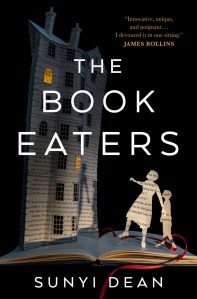
Review of Sunyi Dean The Book Eaters

Sunyi Dean. The Book Eaters

For me a five star book is something that either I want to read again or something that is so profound it makes an immediate impact. There are lots of ways that books can be compelling: a unique idea, an interesting set of characters, a complex plot, an artistic use of the English language and more. Reading is also a subjective experience, so what appeals to me as a reader may be very different for you. I read a lot for both pleasure and work but these short reviews are a way for me to show my appreciation for the work and the craft of the author of the reviewed work.

The Book Eaters is a work of dark fantasy set in contemporary England. The first time I saw the title and read the synopsis I was intrigued by the idea of a people who ate books instead of food and I was curious to see how this idea played out in the story. The story alternates between the present-day struggle of Devon and her son Cai and the traumatic story that places this mother and son on the run from the families of book eaters. Devon grows up in a world where she is isolated from the rest of the world by her family and grows up on fairy tales of princesses. These carefully curated stories are fed to her (literally since she is a book eater) and form her world and imagination, but she is also curious for the other stories that she is not supposed to read or eat. She begins to see signs that life is not the fairy tales she has been fed as a child, but as an adult she discovers that her role in the families is to be essentially breeding stock and she will be unable to raise the children she bears. Devon is permanently scared when the connection with her daughter is severed suddenly and she is sent to another marriage to bear her second child.

Devon’s second child, Cai, is a mind eater. Among the book eaters there are children born who consume human minds instead of paper and although there is a drug that allows them to consume books instead of minds they are always looked upon as a danger. Most of these children will become ‘dragons’ who are kept by the ‘knights’ in the story but as the time near for Cai to be taken by the knights and Devon to be removed from his life the family who produces the drug to treat the mind eaters disappears. In the present day the story follows Devon and Cai as they attempt to find the Ravenscar family who manufactures this drug which will allow five-year-old Cai to no longer eat human minds. In the meantime Devon must find a human for her son to feed on every two weeks as she attempts to avoid the families and the knights who want her and her son dead.

What makes The Book Eaters a compelling read is the realistic character development of both Devon and Cai who are looked upon as monsters but are bound together by the love of a mother and son. It is a book full of betrayals and broken people, of fairy tales that hide the darker side of reality, of the difficult choices love can cause us to make, and princesses who find a way to save themselves. The isolation of the families reminded me a little of the Ravenwood/Duchennes family in the Kami Garcia and Margaret Stohl series Beautiful Creatures although that is set in a Southern U.S. gothic world rather than an English one. A compelling plot which realistically develops a group of characters who are shaped by the curated narratives they have been fed and the trauma inflicted upon them as they attempt to survive in a world that views them as monsters.