Tag Archives: Book Review

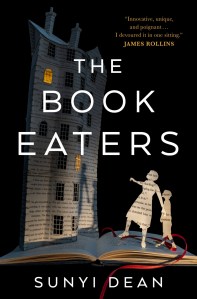
Review of Sunyi Dean The Book Eaters

Sunyi Dean. The Book Eaters
For me a five star book is something that either I want to read again or something that is so profound it makes an immediate impact. There are lots of ways that books can be compelling: a unique idea, an interesting set of characters, a complex plot, an artistic use of the English language and more. Reading is also a subjective experience, so what appeals to me as a reader may be very different for you. I read a lot for both pleasure and work but these short reviews are a way for me to show my appreciation for the work and the craft of the author of the reviewed work.

The Book Eaters is a work of dark fantasy set in contemporary England. The first time I saw the title and read the synopsis I was intrigued by the idea of a people who ate books instead of food and I was curious to see how this idea played out in the story. The story alternates between the present-day struggle of Devon and her son Cai and the traumatic story that places this mother and son on the run from the families of book eaters. Devon grows up in a world where she is isolated from the rest of the world by her family and grows up on fairy tales of princesses. These carefully curated stories are fed to her (literally since she is a book eater) and form her world and imagination, but she is also curious for the other stories that she is not supposed to read or eat. She begins to see signs that life is not the fairy tales she has been fed as a child, but as an adult she discovers that her role in the families is to be essentially breeding stock and she will be unable to raise the children she bears. Devon is permanently scared when the connection with her daughter is severed suddenly and she is sent to another marriage to bear her second child.

Devon’s second child, Cai, is a mind eater. Among the book eaters there are children born who consume human minds instead of paper and although there is a drug that allows them to consume books instead of minds they are always looked upon as a danger. Most of these children will become ‘dragons’ who are kept by the ‘knights’ in the story but as the time near for Cai to be taken by the knights and Devon to be removed from his life the family who produces the drug to treat the mind eaters disappears. In the present day the story follows Devon and Cai as they attempt to find the Ravenscar family who manufactures this drug which will allow five-year-old Cai to no longer eat human minds. In the meantime Devon must find a human for her son to feed on every two weeks as she attempts to avoid the families and the knights who want her and her son dead.

What makes The Book Eaters a compelling read is the realistic character development of both Devon and Cai who are looked upon as monsters but are bound together by the love of a mother and son. It is a book full of betrayals and broken people, of fairy tales that hide the darker side of reality, of the difficult choices love can cause us to make, and princesses who find a way to save themselves. The isolation of the families reminded me a little of the Ravenwood/Duchennes family in the Kami Garcia and Margaret Stohl series Beautiful Creatures although that is set in a Southern U.S. gothic world rather than an English one. A compelling plot which realistically develops a group of characters who are shaped by the curated narratives they have been fed and the trauma inflicted upon them as they attempt to survive in a world that views them as monsters.

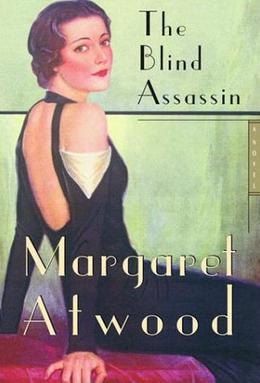
Review of the Blind Assassin by Margaret Atwood

Time Magazine Top 100 Novels
Book 14: The Blind Assassin by Margaret Atwood

This is a series of reflections reading through Time Magazine’s top 100 novels as selected by Lev Grossman and Richard Lacayo published since 1923 (when Time magazine was founded). For me this is an attempt to broaden my exposure to authors I may not encounter otherwise, especially as a person who was not a liberal arts major in college. Time’s list is alphabetical, so I decided to read through in a random order, and I plan to write a short reflection on each novel.

The Blind Assassin is a story within a story narrated in flashback by Iris Chase Griffen. Looking back as an old woman she remembers her time growing up with her sister Laura in household whose father shattered by World War I and the economic downturn of the 1930s and whose mother died while both girls were still young. Their father, Norval Chase, runs the Button Factory in the fictional town of Port Ticonderoga but struggles with alcoholism and depression and often isolates himself from the family to drink his pain away. Both girls were raised by Reenie, the family housekeeper, and while much of their childhood they live a relatively privileged life until the economic downturn and its impact on their father’s factory sets the conditions that cause her father to allow the wealthy Richard Griffen to propose to Iris at only eighteen to provide for his daughters. Iris’ marriage into the family of the politically ambitious Richard and his dominating sister Winifred leaves her feeling powerless, manipulated and controlled. Her husband’s version of love is abusive and Iris suspects he has several affairs during their marriage. Richard and Winifred also control the life of her sister Laura after the death of her father while Iris is on her honeymoon with Richard. The control of Laura’s life leads to her confinement in a mental health asylum and eventually her choice to commit suicide in a vehicular accident. Yet, Iris maintains her own secret life, an affair with Alex Thomas who tells her science fiction stories but who is also on the run for his activities with Communist groups in Canada in the 1930s. The story moves between the reflections and life of an old woman, remembrances of the affair and the narration of the story of the blind assassin, and a narration of the life of Iris to be handed on to her granddaughter who she is unable to see or visit due to the manipulation of the relationship between her daughter and her by Winifred.

The ending of this story is clever and the overall story is well written, but it takes a long time to develop. There is something in the voice of the old Iris which a bit haughty and detached in her view of the world around her and I had to work to get through the first two thirds of the book. Iris’ character is passive for much of the book and life happens to her, it is only in the end where we see the places where she has carved out a space to reclaim some control of her life. It is a book told from the perspective of regret: regret for her own feelings of powerlessness, regret for the damage she was unable to shield her sister, her daughter, or herself from. There is a realism in the lack of agency for a woman who is both the child of an alcoholic and who lives in a time where women had few options. I enjoyed the ending and that made the overall journey worth it. It is difficult to read the story of a woman who has no agency from the perspective of a man who is used to exercising agency and there were times I wanted to rage at the male characters in the story for the way they treated their daughter, their wife, or their lover. Yet, the views of the past are often as alien as the worlds that are described in the science fiction narrative of the blind assassin and the strange power of a book to place you in that alien place and allow you to rage at the situations of the characters in a book is part of the strange magic that authors yield in their words.