Tag Archives: Book Review

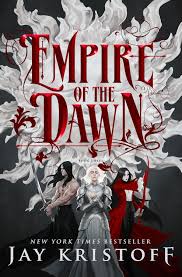
Review of Empire of the Dawn by Jay Kristoff

For me a five-star book is something that either I want to read again or something that is so profound it makes an immediate impact. There are lots of ways that books can be compelling: a unique idea, an interesting set of characters, a complex plot, an artistic use of the English language and more. Reading is also a subjective experience, so what appeals to me as a reader may be very different for you. I read a lot for both pleasure and work, but these short reviews are a way for me to show my appreciation for the work and the craft of the author of the reviewed work.

Jay Kristoff quickly became one of my favorite authors with both the Nevernight trilogy and this worthy conclusion to the Empire of the Vampire trilogy. This narrative journey through Empire of the Vampire, Empire of the Damned and now Empire of the Dawn has been phenomenal. Gabriel de Leon, the last Silversaint (vampire hunter), Celene Castia, Gabriel’s sister and the last Liathe, and Dior le Chance, the young woman who is believed to have the power to end the eternal darkness of their world form the central characters in this final volume. The story is dark, the narration of the conflict scenes so rich I could imagine them as a manga or anime (I think that is the only way you could faithfully replicate the speed and damage of these vampire vs Silversaint fights). The world cloaked in darkness, the place of religion and mysticism, the rich imagery in a perilous world, there is so much to love in this long but engaging story of a world where vampires are no longer consigned to the night and humanity hangs on the precipice. But beyond the incredible plot, worldbuilding, and hard driving action are the characters and their interactions with one another. There were so many times the dialogue between the characters echoed the pattern of conversations I had with people in the army, the way men rib each other to show they care, the language, and verbal duels that went along with the physical trials. There were countless times I would look up from the page and say, “Damn. Jay Kristoff can write.”

Each of the volumes of this trilogy were the best read of the year they were released and there is some regret in coming to the end of this massive journey. Jay Kristoff will not be for every reader: his language is the language of fighting men which includes frequent swearing (and he has some really interesting ways of utilizing the coarser parts of the English language) and there are several very spicy erotic scenes throughout the books. It is a dark world (literally and metaphorically) where no human character or animal character is safe. It is fantasy with horror and romantic elements set in a beautifully imagined (and illustrated if you buy a physical copy) world. It is a poignantly human story of characters who walk through the hell of war, betrayal, death, and times that seem hopeless. People will be divided on the ending of the book, but I thought it was masterful use of a plot device that breaks the fourth wall with a pair of narrators who have their own motivations for why they tell the story they are spinning. I did not want to put this almost eight-hundred-page book down, each time I picked it up it hooked me. I loved this dark gothic story of faith and fighting in a world struggling against four vampiric armies. The symbology and the myth, the conversations and the combat, the characters and the plot all come together to form the favorite trilogy I have ever read.

Review of the Girl in the Tower by Katherine Arden (2018)

Five Star Book Review

Katherine Arden, The Girl in the Tower

For me a five-star book is something that either I want to read again or something that is so profound it makes an immediate impact. There are lots of ways that books can be compelling: a unique idea, an interesting set of characters, a complex plot, an artistic use of the English language and more. Reading is also a subjective experience, so what appeals to me as a reader may be very different for you. I read a lot for both pleasure and work, but these short reviews are a way for me to show my appreciation for the work and the craft of the author of the reviewed work.

The Girl in the Tower is the middle book of the Winternight Trilogy, and it picks up in the aftermath of The Bear and the Nightingale. Vasya and her magnificent horse Solovey now set off to travel away from her home of Lesnaya Zemla where her father can no longer protect her from being viewed as a witch. She sets off on a journey as a traveler but quickly finds herself rescuing girls stolen by bandits and reunited with her brother Sasha who is a monk, a renowned warrior, and a trusted advisor of the crown prince of Moscow. She disguises herself as a boy and her brother, and later her sister Olya in Moscow, are caught up in this deception. From pursuing bandits raiding small villages in the woods to the world of court in Moscow and the appearance of the strange noble Kasyan this is a story with an even richer world than The Bear and the Nightingale. One of the things I appreciate about this story is that it is honest about the danger of Vasya as a woman attempting to navigate a different path where the only two options available for women are marriage and the convent.  

Katherine Arden does a remarkable job of portraying the world of this story. A time where Russia still owed allegiance to the Tatars but is beginning to yearn for independence, when the Russian Orthodox church reigns supreme in Moscow but the old practices and myths still have a hold in the rural areas. It is a winter story, but it is also a story of winter losing its hold to spring. For Vasya it is also a coming-of-age story and I appreciate the tension in the relationship between Vasya and the Winter King Morosko, but that there is an acknowledgement that this cannot be a simple love story. In the words of the characters:

                “Love?” he (Mososko) retorted. “How? I am a demon and a nightmare; I die every spring, and I will live forever.”

                She waited.

                “But yes,” he said wearily. “As I could, I loved you. Now will you go? Live.”

                “I, too,” she said. “In a childish way, as girls love heroes that come in the night, I loved you.” (336)

Even in a world that still has a little magic in it, maidens do not easily surrender their hearts to myths nor do inhuman ‘gods’ warm quickly to the maiden. Yet, Katherine Arden does a remarkable job of creating the tension which is formed by their bond. I really enjoy this mixture of fantasy with historical fiction and myths and folk stories of medieval Russia. I wrote in my review of The Bear and the Nightingale that the story felt like returning to a home I never knew, and the characters and environment made me feel at home with them once again in this second book of the Winternight trilogy. I look forward to returning to The Winter of the Witch later this year.  

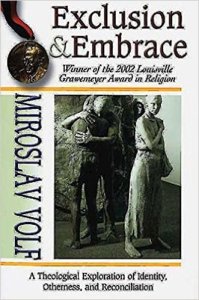
Review of Exclusion and Embrace: A Theological Exploration of Identity, Otherness, and Reconciliation by Miroslav Volf

Review of Exclusion and Embrace: A Theological Exploration of Identity, Otherness, and Reconciliation (1996) by Miroslav Volf.

This is the volume that introduced me to the work of Miroslav Volf and from the first page of the preface, where he lays out what is at stake in this theological exploration, through the final chapter on Violence and Peace it is a passionate and articulate formulation of a theology of the cross for our time. Volf is both honest about the challenges of reconciliation while holding before the reader the dream and hope of embrace as the end for which we are called to work. He powerfully weaves together theology, scripture, philosophy, and personal experience into a work that I have gone back to multiple times in my own ministry. Re-reading this work over twenty years after my initial reading Exclusion and Embrace is still a powerful work, but it also highlights my own evolution as a reader and scholar in the years between readings.

I first saw Exclusion and Embrace at the bookstore at Wartburg Seminary, and I felt drawn to it. I integrated it into an independent study attempting to flesh out Luther’s theology of the cross for our time in my senior year of seminary. At that point I was a young scholar reading everything I could get my hands on, and Volf’s work combined a deeply personal search for a Christian practice that was authentic with an academic rigor that was inspiring. This was the type of scholar I hoped to be. I was still attempting to integrate the diverse voices I had encountered in the previous two years of seminary into something that I could carry beyond the seminary walls. I was still wrestling with postmodernism as a way of thinking, knowing enough to be attracted and repelled by this alien way of encountering the world I was introduced to tangentially (although rarely under the name postmodernism) in academics. In Volf I found someone who was far more versed in authors like Nietzsche, Foucault, Deleuze, Said, and many other authors from a variety of perspectives who still took the scriptures, theology, and Christian practice seriously.

One of the major differences between my original and this reading is I have engaged enough with postmodern, feminist, and other voices to have developed my own perspective. I understand the influence of postmodern voices and perspectives, but in my own journey I have walked away from these perspectives because at their root I find them nihilistic. They serve as good critiques which fail to provide a viable alternative to the modernity they critique. Exclusion and Embrace is still an incredibly valuable work, but I found the central chapters speaking to dialogue partners who have little interest in a constructive dialogue with Christianity. I still believe the first two chapters and final chapter are incredibly important and make this a book that deserves wide reading. These are the places I have found myself referencing over the past twenty years and have caused me to read most of what Volf has written before and after Exclusion and Embrace.

One of the things I am most thankful for in Volf’s work is the way he bridges the divide between the academic world and the world which the academy often neglects. Like the three cities which form the concrete background of the reflection of the initial chapter (Los Angeles where Volf taught at the time, Berlin where he was giving the presentation that formed the chapter, and Sarajevo the war torn city from the land of Volf’s background as a Croatian) this is deals with the broken stories in need of forgiveness. Volf’s critique of the “pleasant captivities of the liberal mind” when he critiques the ‘God of perfect non-coercive love’ (Volf, 1996, p. 304) has stuck with me for the life of my ministry and resonates with my engagement with scriptures. This is a work that helped form my theology and gave me tools that would help me continue to grow as a pastor who engaged the scriptures and the questions of the surrounding world.     

Review of To the Lighthouse (1929) by Virginia Woolf

Time Magazine Top 100 Novels

Book 92: To the Lighthouse by Virginia Woolf (1929)

This is a series of reflections reading through Time Magazine’s top 100 novels as selected by Lev Grossman and Richard Lacayo published since 1923 (when Time magazine was founded). For me this is an attempt to broaden my exposure to authors I may not encounter otherwise, especially as a person who was not a liberal arts major in college. Time’s list is alphabetical, so I decided to read through in a random order, and I plan to write a short reflection on each novel.

To the Lighthouse is like a well painted still life, to utilize an image from the book. More accurately it is two moments in life, each carefully cataloged and described. Virginia Woolf has an artistic flair in her use of the English language as her palette to describe the Ramsay household and the extended number of close guests that occupy the action around the house. This is stream of consciousness writing informed by the sensibilities of a highly educated English family. There is a Freudian Oedipus Complex that emerges between father and son in the story, particularly visible in the second act, and there are times where the language and attitudes of the characters become pretentious to a point that it is distracting. It is a world where communication, especially between men and women, seems nearly impossible and much of the drama of the book is the characters waiting for someone of the opposite sex to intuit what the speaker in that moment of the book needs and relieve the anxiety of the moment.  To utilize another image from the book it looks at the image of a perfectly balanced tray of fruit whose appearance is ruined by someone taking one of the pieces away from the platter. The two visions in the story are separated by the death of several key characters during the ten years that separate the interactions. This dramatically change the balance for each character.

Every book is not for every reader, and when a story fails for me, I often wonder what it is that makes me not the best reader of the book, particularly a book other intelligent readers have enjoyed. I appreciate Virginia Woolf’s utilization of the English language and the flow of her words on the page. Stream of consciousness writing has always been a struggle for me. To utilize the image above of a well painted still life, I can admire the artistry the artist puts into the individual brushstrokes but I only want to look at it for so long. Reading is a subjective experience and both the subject matter and the lack of movement of any type of plot made this a less enjoyable read for me. There have been several novels on the Time Magazine Top 100 novels that are set within a highly educated or very well off-English household in the early 20th Century and this time-period seems a sterile environment for both relationships and life with so much effort being placed into maintaining appearances. I can appreciate the artistry of the book and why so many people consider it one of the great English language novels but maybe I am just not a patient enough reader for the stream of consciousness novels that were popular among the elite of the early 20th Century.

Review of Project Hail Mary by Andy Wier

Five Star Book Review: Project Hail Mary by Andy Wier

For me a five-star book is something that either I want to read again or something that is so profound it makes an immediate impact. There are lots of ways that books can be compelling: a unique idea, an interesting set of characters, a complex plot, an artistic use of the English language and more. Reading is also a subjective experience, so what appeals to me as a reader may be very different for you. I read a lot for both pleasure and work, but these short reviews are a way for me to show my appreciation for the work and the craft of the author of the reviewed work.

Project Hail Mary was a delightful journey with Dr. Ryland Grace on a last chance mission to save humanity from a failing sun caused by a previously unknown species. The story cleverly combines Dr. Grace’s experiences in the Tau Seti system as the sole survivor of the ship named Hail Mary and flashbacks to his role in the discovery of the problem, the conception of a solution and his surprising inclusion on the interstellar mission. This is a novel that is science fiction, heavy on science, but in a delightfully geeky way that allows a non-scientist to enjoy with the scientific main character. Both the portions that take place on earth as well as the portions that occur in space tell a very human story of fear, loneliness, the joy of discovery, and hope. Without providing spoilers, the book is full of unexpected discoveries and friendships, and Ryland Grace is a character who is easy to enjoy as you experience the discoveries, both scientific and personal, through his eyes.

Andy Wier does a great job of creating a book that is a joy to read. He strikes a great balance between science and storytelling. His curiosity expresses itself through his characters and he does a miraculous job of making the scientific experimentation that the story depends upon both accessible and interesting. I listened to the audio version of Project Hail Mary and there are some added benefits to this version of the book which I can’t adequately express without providing some spoilers. One of my sisters gave me this book as a gift after she had enjoyed it, and I thoroughly enjoyed it as well. Great characters caught in an epic journey who are unapologetic in their curiosity about their world. A very human story of space, discovery, curiosity, and hope.

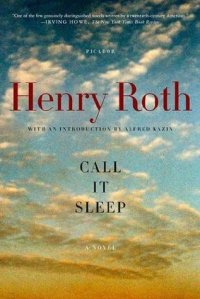
A Review of Call it Sleep by Henry Roth (1934)

Time Magazine Top 100 Novels

Book 18: Call it Sleep by Henry Roth

This is a series of reflections reading through Time Magazine’s top 100 novels as selected by Lev Grossman and Richard Lacayo published since 1923 (when Time magazine was founded). For me this is an attempt to broaden my exposure to authors I may not encounter otherwise, especially as a person who was not a liberal arts major in college. Time’s list is alphabetical, so I decided to read through in a random order, and I plan to write a short reflection on each novel.

Call it Sleep follows a young Jewish boy, David Schearl who immigrates to the United States with his mother Genya. Upon arriving he is introduced to his emotionally unstable and unloving father Albert Schearl. Young David struggles to engage with other children and adults and Henry Roth does a good job of writing a story from the perspective of an early elementary age boy. David is an innocent in a rough world, and he fears both the world outside and of his violent father. The place of an innocent in a fallen and rough world seems to animate the narration as David continually finds himself in situations he is unprepared for. From a neighbor girl who wants to play ‘bad’ to an older Gentile boy who takes advantage of David’s desire for attention to put himself in a position to take advantage of one of David’s cousins. Central to the story is a secret his mother tells her sister, which David overhears, about being in love with a Christian organ player to the disgrace of her family. The one place where David fits in is in chedar, a one room Hebrew school for young boys. David has a talent for Hebrew recitation and it also curious about the little bit of insight into God he receives from Reb Pankower, but this is also where David allows his interpretation of his mother’s secret to slip out to disastrous effects. When a rabbi who hears David’s confession brings it to his mother and father it creates an explosive crisis in the home.

Every book is not for every reader, and when a story fails for me, I often wonder what it is that makes me not the best reader of the book, particularly a book other intelligent readers have enjoyed. Part of my struggle was the language of dialogue between the young people in the narrative in broken English which made it more difficult to follow. The lines spoken in Yiddish are translated into easily read English, but Henry Roth attempts to copy the slang and accent of English spoken in the Jewish ghettos of the early 1900s. I can also appreciate Henry Roth’s ability to convey the mental state of a young boy, but young David is an unreliable interpreter of the world around him. I can understand why young David is fearful, and I appreciate the way his perspective sheds light on the immigrant experience, but it also made for a dull read. Call it Sleep was ultimately a book I could appreciate but not one I enjoyed.

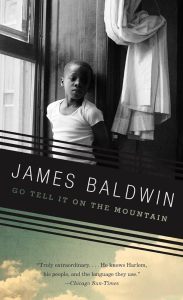
Review of Go Tell It On The Mountain by James Baldwin (1953)

Time Magazine Top 100 Novels

Book 35: Go Tell It On The Mountain by James Baldwin (1953)

This is a series of reflections reading through Time Magazine’s top 100 novels as selected by Lev Grossman and Richard Lacayo published since 1923 (when Time magazine was founded). For me this is an attempt to broaden my exposure to authors I may not encounter otherwise, especially as a person who was not a liberal arts major in college. Time’s list is alphabetical, so I decided to read through in a random order, and I plan to write a short reflection on each novel.

Go Tell It On The Mountain starts on the birthday of John Grimes who is the central character in this book of religion and hypocrisy, love desired and rarely returned, a family of secrets and hurt, and the first arousals of sexuality in a young man who realizes he is attracted to other men. Gabriel, his father but not his biological father, Elizabeth, John’s mother, and Florence, John’s aunt and Gabriel’s sister, all contribute to the tension in this household as well as the younger son Roy, biological son of Gabriel, and the unclaimed memory of Royal, an out of wedlock son of Gabriel who died before this moment in the story. The event of John’s birthday, which his mother belatedly remembers, is pushed into the background when his belligerent younger brother storms out of the house only to return wounded by a knife. Even though it is his birthday and he had taken his mother’s belated gift of a little money to the theater, his father lashes out at him, his mother, and his aunt in exasperation about Roy’s wild ways. John eventually escapes to the storefront church where his father is a deacon and the theme of sexuality emerges as he wrestles with Elisha, an older boy in the church, as they set up for evening services.

The remainder of the book occurs in flashbacks and visions during the evening church service where first his aunt Florence remembers her life and reluctantly surrenders to prayer. Then his father’s life is revealed in his wild teenage years, his marriage, his affair which produces Royal who he never claims and eventually dies a violent death, and his marriage to Elizabeth, John’s mother. Then Elizabeth has her own vision of her weak mother and the father who she loved. After her mother’s death who she was taken from by her father by her aunt because of the work her father does. She grows up in a loveless childhood but finds love in a young man named Richard. Before she can tell Richard about her pregnancy he commits suicide after a wrongful arrest by the police. Finally, is John’s dark night of the soul before his vision and acceptance of Christ.

The book does a good job of showing both the brokenness and the strength of faith. The Pentecostal tradition has a strong emphasis on holiness and yet the book is open about the hypocrisy and closely held secrets of the men who lead the church. It is a story of several intertwined people who never experienced the love they desired from the fathers, mothers, and siblings in their lives and who continue to hand on their broken lives to the next generation. The visions in part two do a good job of telling the backstory of the characters but even among the revelations of the visions the brokenness between the family members remains entrenched to the end. Even as there should be celebration over the salvation of John, his father Gabriel remains closed off from him. The shattered relationship between Gabriel and Florence over Gabriel’s wild past and his unforgiving nature is never resolved even though Florence feels she is near the end of her life, and she holds a letter with the secret of Gabriel’s out of wedlock child which she threatens to release to the congregation. Apparently, the story is semi-autobiographical, and I can appreciate the way the author works through his broken home and broken heart through the pages of the book.

Review of I, Claudius by Robert Graves

Time Magazine Top 100 Novels

Book 46: I, Claudius by Robert Graves

This is a series of reflections reading through Time Magazine’s top 100 novels as selected by Lev Grossman and Richard Lacayo published since 1923 (when Time magazine was founded). For me this is an attempt to broaden my exposure to authors I may not encounter otherwise, especially as a person who was not a liberal arts major in college. Time’s list is alphabetical, so I decided to read through in a random order, and I plan to write a short reflection on each novel.

I, Claudius is a fascinating first-person narration of the life of Tiberius Claudius Caesar Augustus Germanicus (or Claudius) who would become the fourth emperor of Rome. The novel takes the historical backdrop of Rome under emperors Augustus, Tiberius, and Caligula and portrays the world of the elites of the Roman empire. Claudius is often overlooked because of his lameness and his stuttering, but he learns to use his sharp mind as a historian. He is despised initially by Augustus and his wife Livia but late in his life Augustus realizes that his evaluation of Claudius has been mistaken. The novel portrays Claudius, presumably late in his reign as emperor, setting down an honest history of the Roman empire complete with assassinations, the debauchery of those in power, and the dangerous world that those in proximity to the Caesars must navigate.

As a person with some familiarity of the early Roman empire the book was a fascinating interweaving of fact and conjecture. Robert Graves gives a personality to these figures so often portrayed in statues and shows the humanity and sometimes the depravity of these men who will be viewed as deities throughout the empire. Livia occupies a major place in the narrative and is portrayed as a ruthless manipulator of Augustus and Tiberius. Yet, after her death it also becomes clear how she has kept the worst tendencies of Tiberius under control. Claudius is presented as a character who it is easy to empathize with, who endures the loss of his brothers, his first love, and is constantly at risk of being eliminated by Livia, Tiberius, and eventually Caligula. Yet, he survives all of them and to his dismay is eventually named the emperor of Rome.

This is a great example of early twentieth century historical fiction. Graves does a masterful job of inviting the reader into the time of Augustus, Tiberius, and Caligula without expecting the reader to be well versed in the history of the first century, but remains believable by a reader who is familiar with it. I look forward to reading more from Robert Graves and will probably read Claudius the God the sequel next.


Review of Sunyi Dean The Book Eaters

Sunyi Dean. The Book Eaters

For me a five star book is something that either I want to read again or something that is so profound it makes an immediate impact. There are lots of ways that books can be compelling: a unique idea, an interesting set of characters, a complex plot, an artistic use of the English language and more. Reading is also a subjective experience, so what appeals to me as a reader may be very different for you. I read a lot for both pleasure and work but these short reviews are a way for me to show my appreciation for the work and the craft of the author of the reviewed work.

The Book Eaters is a work of dark fantasy set in contemporary England. The first time I saw the title and read the synopsis I was intrigued by the idea of a people who ate books instead of food and I was curious to see how this idea played out in the story. The story alternates between the present-day struggle of Devon and her son Cai and the traumatic story that places this mother and son on the run from the families of book eaters. Devon grows up in a world where she is isolated from the rest of the world by her family and grows up on fairy tales of princesses. These carefully curated stories are fed to her (literally since she is a book eater) and form her world and imagination, but she is also curious for the other stories that she is not supposed to read or eat. She begins to see signs that life is not the fairy tales she has been fed as a child, but as an adult she discovers that her role in the families is to be essentially breeding stock and she will be unable to raise the children she bears. Devon is permanently scared when the connection with her daughter is severed suddenly and she is sent to another marriage to bear her second child.

Devon’s second child, Cai, is a mind eater. Among the book eaters there are children born who consume human minds instead of paper and although there is a drug that allows them to consume books instead of minds they are always looked upon as a danger. Most of these children will become ‘dragons’ who are kept by the ‘knights’ in the story but as the time near for Cai to be taken by the knights and Devon to be removed from his life the family who produces the drug to treat the mind eaters disappears. In the present day the story follows Devon and Cai as they attempt to find the Ravenscar family who manufactures this drug which will allow five-year-old Cai to no longer eat human minds. In the meantime Devon must find a human for her son to feed on every two weeks as she attempts to avoid the families and the knights who want her and her son dead.

What makes The Book Eaters a compelling read is the realistic character development of both Devon and Cai who are looked upon as monsters but are bound together by the love of a mother and son. It is a book full of betrayals and broken people, of fairy tales that hide the darker side of reality, of the difficult choices love can cause us to make, and princesses who find a way to save themselves. The isolation of the families reminded me a little of the Ravenwood/Duchennes family in the Kami Garcia and Margaret Stohl series Beautiful Creatures although that is set in a Southern U.S. gothic world rather than an English one. A compelling plot which realistically develops a group of characters who are shaped by the curated narratives they have been fed and the trauma inflicted upon them as they attempt to survive in a world that views them as monsters.

Review of the Blind Assassin by Margaret Atwood

Time Magazine Top 100 Novels
Book 14: The Blind Assassin by Margaret Atwood

This is a series of reflections reading through Time Magazine’s top 100 novels as selected by Lev Grossman and Richard Lacayo published since 1923 (when Time magazine was founded). For me this is an attempt to broaden my exposure to authors I may not encounter otherwise, especially as a person who was not a liberal arts major in college. Time’s list is alphabetical, so I decided to read through in a random order, and I plan to write a short reflection on each novel.

The Blind Assassin is a story within a story narrated in flashback by Iris Chase Griffen. Looking back as an old woman she remembers her time growing up with her sister Laura in household whose father shattered by World War I and the economic downturn of the 1930s and whose mother died while both girls were still young. Their father, Norval Chase, runs the Button Factory in the fictional town of Port Ticonderoga but struggles with alcoholism and depression and often isolates himself from the family to drink his pain away. Both girls were raised by Reenie, the family housekeeper, and while much of their childhood they live a relatively privileged life until the economic downturn and its impact on their father’s factory sets the conditions that cause her father to allow the wealthy Richard Griffen to propose to Iris at only eighteen to provide for his daughters. Iris’ marriage into the family of the politically ambitious Richard and his dominating sister Winifred leaves her feeling powerless, manipulated and controlled. Her husband’s version of love is abusive and Iris suspects he has several affairs during their marriage. Richard and Winifred also control the life of her sister Laura after the death of her father while Iris is on her honeymoon with Richard. The control of Laura’s life leads to her confinement in a mental health asylum and eventually her choice to commit suicide in a vehicular accident. Yet, Iris maintains her own secret life, an affair with Alex Thomas who tells her science fiction stories but who is also on the run for his activities with Communist groups in Canada in the 1930s. The story moves between the reflections and life of an old woman, remembrances of the affair and the narration of the story of the blind assassin, and a narration of the life of Iris to be handed on to her granddaughter who she is unable to see or visit due to the manipulation of the relationship between her daughter and her by Winifred.

The ending of this story is clever and the overall story is well written, but it takes a long time to develop. There is something in the voice of the old Iris which a bit haughty and detached in her view of the world around her and I had to work to get through the first two thirds of the book. Iris’ character is passive for much of the book and life happens to her, it is only in the end where we see the places where she has carved out a space to reclaim some control of her life. It is a book told from the perspective of regret: regret for her own feelings of powerlessness, regret for the damage she was unable to shield her sister, her daughter, or herself from. There is a realism in the lack of agency for a woman who is both the child of an alcoholic and who lives in a time where women had few options. I enjoyed the ending and that made the overall journey worth it. It is difficult to read the story of a woman who has no agency from the perspective of a man who is used to exercising agency and there were times I wanted to rage at the male characters in the story for the way they treated their daughter, their wife, or their lover. Yet, the views of the past are often as alien as the worlds that are described in the science fiction narrative of the blind assassin and the strange power of a book to place you in that alien place and allow you to rage at the situations of the characters in a book is part of the strange magic that authors yield in their words.