Tag Archives: Assyrian Empire

2 Kings 18 King Hezekiah and Sennacherib’s Threat to Jerusalem

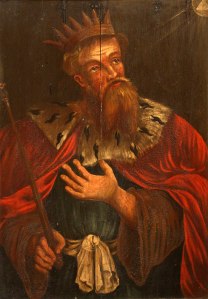
King Hezekiah on a 17th century painting by unknown artist in the choir of Sankta Maria kyrka in Åhus, Sweden.

2 Kings 18: 1-8

 1In the third year of King Hoshea son of Elah of Israel, Hezekiah son of King Ahaz of Judah began to reign. 2He was twenty-five years old when he began to reign; he reigned twenty-nine years in Jerusalem. His mother’s name was Abi daughter of Zechariah. 3He did what was right in the sight of the LORD, just as his ancestor David had done. 4He removed the high places, broke down the pillars, and cut down the sacred pole. He broke in pieces the bronze serpent that Moses had made, for until those days the people of Israel had made offerings to it; it was called Nehushtan. 5He relied on the LORD, the God of Israel, so that there was no one like him among all the kings of Judah after him or among those who were before him. 6For he held fast to the LORD; he did not depart from following him but kept the commandments that the LORD had commanded Moses. 7The LORD was with him; wherever he went, he prospered. He rebelled against the king of Assyria and would not serve him. 8He attacked the Philistines as far as Gaza and its territory, from watchtower to fortified city.

With the northern kingdom of Samaria (Israel) scattered by the Assyrians the remainder of the book of kings focuses on the kings in Jerusalem. Ultimately over the final eight chapters of 2 Kings it will focus on the two paradigmatically good kings, Hezekiah (chapters 18-20) and Josiah (chapters 22-23), in contrast to the kings ‘who do evil in the sight of the LORD. Hezekiah and Josiah are the only kings who are compared to their father David in faithfulness, and Hezekiah ‘held fast’ to the LORD in contrast to Solomon who in his later years ‘held fast’[1] to his foreign wives. (1 Kings 11:2) Hezekiah is viewed as a king who is faithful to God and whose faithfulness ensures that Jerusalem does not suffer the same fate as Samaria. 2 Chronicles 29-32 and Isaiah 36-39 also relate the events of Hezekiah’s reign in a very positive light.

The narrators of 2 Kings and 2 Chronicles view the faithfulness of Hezekiah in his consolidation of worship in the temple in Jerusalem and the elimination of the long-established high places and sacred poles. The high places have failed to be eliminated by previous kings and to the narrator of 2 Kings that has provided a qualification of the faithfulness of any previous king, but now Hezekiah is viewed as an example of the type of king that the LORD expects. Even Nehushtan[2], the bronze serpent on a pole mentioned in Numbers 21, is destroyed to prevent the misuse of this object from the time of Moses. The faithfulness of Hezekiah is also rewarded with success as he both rebels against Assyria and expands his territory into the land of the Philistines. We will explore the impact of this rebellion against Assyria at the end of chapter eighteen and through chapter nineteen, but this introduction to the reign of Hezekiah’s twenty-nine year reign ends on a high note.

2 Kings 18: 9-12

  9In the fourth year of King Hezekiah, which was the seventh year of King Hoshea son of Elah of Israel, King Shalmaneser of Assyria came up against Samaria, besieged it, 10and at the end of three years took it. In the sixth year of Hezekiah, which was the ninth year of King Hoshea of Israel, Samaria was taken. 11The king of Assyria carried the Israelites away to Assyria and settled them in Halah, on the Habor, the river of Gozan, and in the cities of the Medes, 12because they did not obey the voice of the LORD their God but transgressed his covenant—all that Moses the servant of the LORD had commanded; they neither listened nor obeyed.

This brief reminder of the Assyrian conquest of Samaria places the disaster of the northern kingdom in its place between the fourth and sixth year of Hezekiah. Most commentaries will note a struggle with the chronology here and in the following section since Samaria is destroyed in 722/721 BCE and in the following section Sennacherib (705-681 BCE) attacks in the fourteenth year of Hezekiah (believed to be 701 BCE). Ultimately this is a relatively minor instance of numbers not aligning and I do not want to detract from the basic contrast between the kings of the Israelites in the north who did not obey the voice of the LORD their God and Hezekiah who was faithful.

2 Kings 18:13-37

  13In the fourteenth year of King Hezekiah, King Sennacherib of Assyria came up against all the fortified cities of Judah and captured them. 14King Hezekiah of Judah sent to the king of Assyria at Lachish, saying, “I have done wrong; withdraw from me; whatever you impose on me I will bear.” The king of Assyria demanded of King Hezekiah of Judah three hundred talents of silver and thirty talents of gold. 15Hezekiah gave him all the silver that was found in the house of the Lord and in the treasuries of the king’s house. 16At that time Hezekiah stripped the gold from the doors of the temple of the Lord and from the doorposts that King Hezekiah of Judah had overlaid and gave it to the king of Assyria. 17The king of Assyria sent the Tartan, the Rabsaris, and the Rabshakeh with a great army from Lachish to King Hezekiah at Jerusalem. They went up and came to Jerusalem. When they arrived, they came and stood by the conduit of the upper pool, which is on the highway to the fuller’s field. 18When they called for the king, there came out to them Eliakim son of Hilkiah, who was in charge of the palace, and Shebnah the secretary, and Joah son of Asaph, the recorder.
  19
The Rabshakeh said to them, “Say to Hezekiah: Thus says the great king, the king of Assyria: On what do you base this reliance of yours? 20Do you think that mere words are strategy and power for war? On whom do you now rely, that you have rebelled against me? 21See, you are relying now on Egypt, that broken reed of a staff, which will pierce the hand of anyone who leans on it. Such is Pharaoh king of Egypt to all who rely on him. 22But if you say to me, ‘We rely on the Lord our God,’ is it not he whose high places and altars Hezekiah has removed, saying to Judah and to Jerusalem, ‘You shall worship before this altar in Jerusalem’? 23Come now, make a wager with my master the king of Assyria: I will give you two thousand horses, if you are able on your part to set riders on them. 24How then can you repulse a single captain among the least of my master’s servants when you rely on Egypt for chariots and for horsemen? 25Moreover, is it without the LORD that I have come up against this place to destroy it? The LORD said to me, ‘Go up against this land, and destroy it.’ ”
  26
Then Eliakim son of Hilkiah, Shebnah, and Joah said to the Rabshakeh, “Please speak to your servants in the Aramaic language, for we understand it; do not speak to us in the language of Judah within the hearing of the people who are on the wall.” 27But the Rabshakeh said to them, “Has my master sent me to speak these words to your master and to you and not to the people sitting on the wall, who are doomed with you to eat their own dung and to drink their own urine?”
  28
Then the Rabshakeh stood and called out in a loud voice in the language of Judah, “Hear the word of the great king, the king of Assyria: 29Thus says the king: Do not let Hezekiah deceive you, for he will not be able to deliver you out of my hand. 30Do not let Hezekiah make you rely on the LORD by saying, ‘The LORD will surely deliver us, and this city will not be given into the hand of the king of Assyria.’ 31Do not listen to Hezekiah, for thus says the king of Assyria: Make your peace with me and come out to me; then every one of you will eat from your own vine and your own fig tree and drink water from your own cistern, 32until I come and take you away to a land like your own land, a land of grain and wine, a land of bread and vineyards, a land of olive oil and honey, that you may live and not die. Do not listen to Hezekiah when he misleads you by saying, ‘The LORD will deliver us.’ 33Has any of the gods of the nations ever delivered its land out of the hand of the king of Assyria? 34Where are the gods of Hamath and Arpad? Where are the gods of Sepharvaim, Hena, and Ivvah? Have they delivered Samaria out of my hand? 35Who among all the gods of the countries have delivered their countries out of my hand, that the LORD should deliver Jerusalem out of my hand?”
  36
But the people were silent and answered him not a word, for the king’s command was, “Do not answer him.” 37Then Eliakim son of Hilkiah, who was in charge of the palace, and Shebna the secretary, and Joah son of Asaph, the recorder, came to Hezekiah with their clothes torn and told him the words of the Rabshakeh.

This critical moment in the story of Zion is related here and in Isaiah 36. For both 2 Kings and Isaiah the implication of this story is clear, that God protected the city. The faithfulness of the people under Hezekiah leads God to intervene on behalf of the city and the people and Jerusalem, unlike Samaria, will be spared. In a David and Goliath type of moment the small kingdom of Judah resists the seemingly irresistible empire of Assyria.

Alex Israel gives a good summary of the events preceding Assyria’s actions against King Hezekiah and Jerusalem:

The death of an emperor always presented an opportunity for revolt, but the circumstances of Sargon’s death, widely seen as a bad omen for Assyria, exacerbated the unrest. Rebellion broke out at both extremities of the sprawling empire. East of Assyria, in Babylonia, Merodach-baladan (known in Kings as Berodach-baladan) crowned himself as ruler. In the West, Judah allied itself with Philistia and Egypt in rejecting Assyrian power. Since Kings records that Berodach visited Hezekiah in Jerusalem (II Kings 20: 12-13), it is probable that the resistance efforts in the East and the West were coordinated. Israel 289

During the roughly two decades since the destruction of Samaria we know that Hezekiah has been active both in attempting to strengthen the defenses of Jerusalem and has ensured that the city has an adequate water supply by cutting tunnels to carry the waters of the Gihon spring to the Siloam Pool. (Cogan, 1988, p. 221) The Philistine cities Hezekiah attacked in verse eight may have been those loyal to Assyria to secure this Philistine-Egyptian-Judah alliance on the western side of Assyria. Yet, when Assyria under Sennacherib attempts to regain control of the portions of its empire in rebellion it overwhelms the fortified cities of Judah and stands at the gates of Jerusalem where this challenge is issued.

King Hezekiah does attempt to appease the Assyrian king by submitting to a tribute of three hundred talents of silver and thirty talents of gold[3] and Hezekiah empties the treasuries and strips the gold from the temple doorposts, yet the empire is not appeased and the troops of Assyria continue from the conquered city of Lachish to Jerusalem.

The Tartan, the Rabsaris, and the Rabshakeh are three officials of Sennacherib. Tartan is the viceroy who had the authority to act on behalf of Sennacherib, Rabsaris is literally the “chief eunuch”, and Rabshakeh is the “chief cupbearer.” Rabshakeh is the speaker for the emissaries of Sennacherib to the representatives of King Hezekiah, Eliakim the steward of the palace, Shebnah the secretary and Joah the recorder. Rabshakeh speaks both to these representatives but also to the population watching from the walls to weaken the resolve of the defenders and to have people defect from Hezekiah. At the heart of Rabshakeh’s challenge is on what the people and Hezekiah can trust.[4]

Rabshakeh indicates that Egypt is not trustworthy and that any trust placed in their action to deliver will only wound the one who hoped in this weak and unreliable ally. Then Rabshakeh indicates that the people should not trust in the LORD since, in Rabshakeh’s interpretation, the people have at Hezekiah’s insistence removed the very sites that honored the LORD. Then the Rab-shakeh indicates that the presence of the Assyrian army is because the LORD has sent it, an argument that is echoed in Isaiah 10: 5-11. Finally, the people should not trust in Hezekiah to deliver them or when Hezekiah says to ‘trust in the LORD.’ Despite the efforts of Hezekiah to fortify the city, the Rab-shakeh mocks his ineffectual army which could not field two thousand mounted men if Assyria provided the horses. Rabshakeh also states that the gods of the other nations have not prevented Assyria from conquering them, and even if the LORD had not sent Assyria the God of Israel is powerless to prevent the destruction that the army of Assyria portends.

This crisis for the narrator of 2 Kings and Isaiah is more than a military and humanitarian crisis, it is a crisis of trust. Is the God of Israel trustworthy and is Hezekiah, God’s faithful king, trustworthy or does might make right. Can the emissaries of Sennacherib mock God and Jerusalem with impunity or will God intervene on their behalf. The actions of King Hezekiah and the Prophet Isaiah in the following chapter will give a model of faithfulness for future generations and God’s response will prove God’s trustworthiness.


[1] In both cases the Hebrew word dabaq is used for these kings holding fast to either God or their foreign wives.

[2] Nehustan name suggests both the material nehoset, “bronze” and the image nahas, “serpent. (Cogan, 1988, p. 217)

[3] Assyrian records indicate eight hundred talents of silver and thirty talents of gold. (Cogan, 1988, p. 229)

[4] The Hebrew batahta (trust) and derivative forms which are translated security/reliance permeate Rab-shakeh’s speech.

2 Kings 17 The End of Samaria


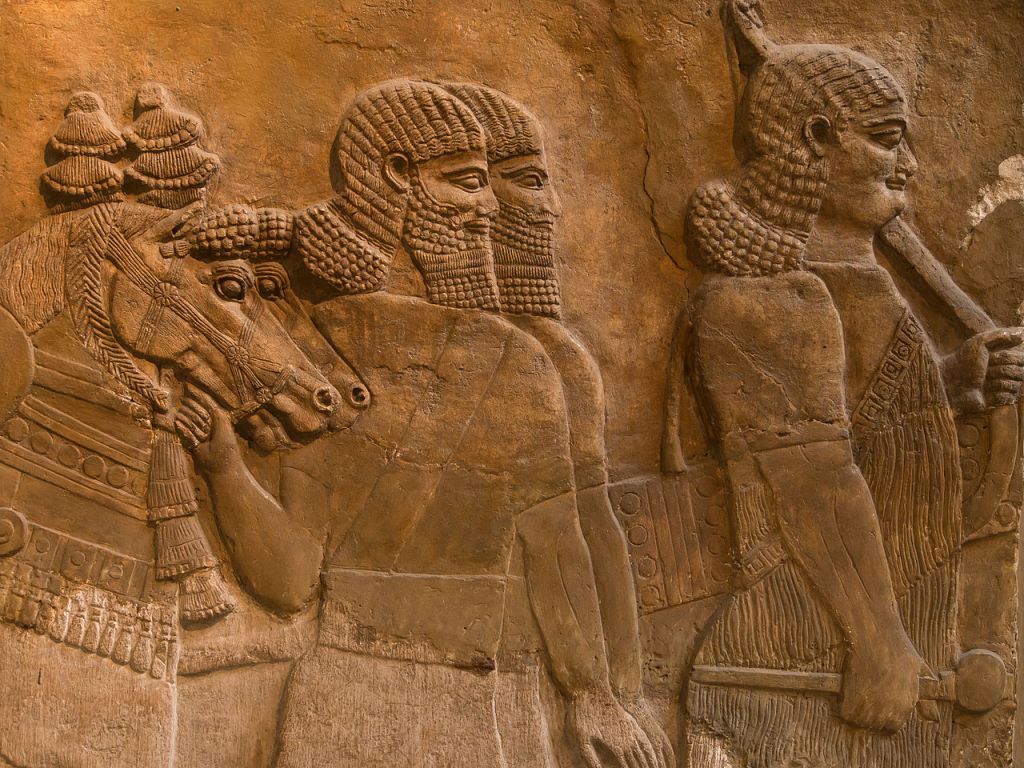
A neo-Assyrian relief of Assyrians in a procession, Photo by Denis Bourez in the Brittish Museum, London. Shared under CC 2.0 https://en.wikipedia.org/wiki/Assyria#/media/File:Denis_Bourez_-_British_Museum,_London_(8748213226).jpg

2 Kings 17: 1-6 King Hoshea the Last King in Samaria and the End of the Northern Kingdom of Israel

 1In the twelfth year of King Ahaz of Judah, Hoshea son of Elah began to reign in Samaria over Israel; he reigned nine years. 2He did what was evil in the sight of the LORD, yet not like the kings of Israel who were before him. 3King Shalmaneser of Assyria came up against him; Hoshea became his vassal and paid him tribute. 4But the king of Assyria found treachery in Hoshea, for he had sent messengers to King So of Egypt and offered no tribute to the king of Assyria, as he had done year by year; therefore the king of Assyria confined him and imprisoned him.

  5
Then the king of Assyria invaded all the land and came to Samaria; for three years he besieged it. 6In the ninth year of Hoshea the king of Assyria captured Samaria; he carried the Israelites away to Assyria. He placed them in Halah, on the Habor, the river of Gozan, and in the cities of the Medes.

The brief description of the reign of King Hoshea of Samaria, the capture of Samaria, and the scattering of the Northern Kingdom of Israel is accomplished in six terse verses. Yet, this major event will prompt a much longer reflection of the why the exile of Israel occurs and the resettlement of the land under the Assyrian king. The dissolution of the Kingdom of Samaria does not end the dream of a reunification of Judah and Israel among the prophetic imagination, but it does mark a significant shift in the narrative of 2 Kings. The bulk of 1 and 2 Kings to this point has focused on the events of the northern kingdom of Israel while it tracks the kings of Judah and the occasional event or interaction with the northern kingdom, but now after this chapter the entire focus of the narrator will orient on the remaining kingdom of Judah. The siege of Samaria, the capture of Israel and the dispersal of the population were traumatic for the people involved and the narrative of the book of Kings is designed to provide a theological rationale for this catastrophic event (and the eventual exile of Judah) among the people of the covenant.

King Hoshea comes to power around 732 BCE and roughly five years into his reign the powerful king Tiglath-pileser III dies and his son Shalmaneser V assumes control of the Assyrian empire. Shalmaneser V only reigns for five years, and it is possible that his replacement Sargon II is not his heir and that he meets a violent end. The transition to Shalmaneser V was likely viewed in the region as an opportunity for nations to extract themselves from Assyrian rule and King Hoshea’s withholding of tribute payments and appeals to King So of Egypt[1] are acts of rebellion that Shalmaneser V responds to violently by besieging Samaria and occupying the land. It is possible that Shalmaneser V dies during the three-year long siege and Sargon II completed it (Assyrian records seem to indicate this) but ultimately the result is the same. The destruction of Samaria, the exile of Israel and the resettlement of the land.

One would expect that the king of Samaria who reigns during the destruction of the nation would receive a harsh judgment, but instead he receives a more favorable judgment than any other northern king. His toned-down judgement is unique among the northern kings. Rabbinical commentators have often indicated that Hoshea paid off the tribute to Assyria by removing the golden statues in Bethel and Dan, and this was viewed favorably by the God of Israel and that Hoshea removed the barriers for people from Israel to worship in Jerusalem.[2] The narrator of the book of Kings also tends to view accommodation with the empire of the day as a sign of unfaithfulness so it the better, if not positive evaluation, may be in part due to the resistance of Hoshea to the king of Assyria.

In the aftermath of the fall of Samaria, 2 Kings describes the exile of the population to two places in modern day Iraq and one in modern day Iran. The Assyrians scattered captured populations to prevent a concentration in one area where they could rise against Assyria, but it also is likely that the entire population of northern Israel is not exiled. Some do apparently migrate to Judah and Alex Israel notes that archeology shows an increase in the population of Judah during this period. (Israel, 2019, p. 269) Other portions of the population likely remained in place and were mixed with the people that Assyrian resettled in the region. The northern tribes of Israel ceased to be a unified people, but that does not stop the prophets of Judah from imagining a future where Judah and Ephraim can be reunited as the people of God.[3]

2 Kings 17: 7-23 Theological Rationale for the Exile of Israel (Samaria)

  7This occurred because the people of Israel had sinned against the LORD their God, who had brought them up out of the land of Egypt from under the hand of Pharaoh king of Egypt. They had worshiped other gods 8and walked in the customs of the nations whom the LORD had driven out before the people of Israel and in the customs that the kings of Israel had introduced. 9The people of Israel did things that were not right against the LORD their God. They built for themselves high places at all their towns, from watchtower to fortified city; 10they set up for themselves pillars and sacred poles on every high hill and under every green tree; 11there they made offerings on all the high places, as the nations did whom the LORD had carried away before them. They did wicked things, provoking the LORD to anger; 12they served idols, of which the LORD had said to them, “You shall not do this.” 13Yet the LORD warned Israel and Judah by every prophet and every seer, saying, “Turn from your evil ways and keep my commandments and my statutes, in accordance with all the law that I commanded your ancestors and that I sent to you by my servants the prophets.” 14They would not listen but were stubborn, as their ancestors had been, who did not believe in the LORD their God. 15They despised his statutes and his covenant that he had made with their ancestors and the warnings that he had given them. They went after false idols and became false; they followed the nations that were around them, concerning whom the LORD had commanded them that they should not do as they did. 16They rejected all the commandments of the LORD their God and made for themselves cast images of two calves; they made a sacred pole, worshiped all the host of heaven, and served Baal. 17They made their sons and their daughters pass through fire, used divination and augury, and sold themselves to do evil in the sight of the LORD, provoking him to anger. 18Therefore the LORD was very angry with Israel and removed them out of his sight; none was left but the tribe of Judah alone.
  19
Judah also did not keep the commandments of the LORD their God but walked in the customs that Israel had introduced. 20The LORD rejected all the descendants of Israel; he punished them and gave them into the hand of plunderers, until he had banished them from his presence.
  21
When he had torn Israel from the house of David, they made Jeroboam son of Nebat king. Jeroboam drove Israel from following the LORD and made them commit great sin. 22The people of Israel continued in all the sins that Jeroboam committed; they did not depart from them 23until the LORD removed Israel out of his sight, as he had foretold through all his servants the prophets. So Israel was exiled from their own land to Assyria until this day.

The narrator of the book of Kings is both narrating the history of the kings of Israel and Judah (and by extension the people of both nations) but also looking back from two exilic events (the Assyrian exile of Israel and the Babylonian exile of Judah) and utilizing the historical narrative told through a theological lens to explain how the nation went from its highpoint as a unified kingdom under Solomon to Samaria’s scattering and Judah’s exile. At this first moment of crisis, the narrator steps back from the events to explain why this crisis occurred. The rise of Assyria may form the political background of the story, but through the lens of the narrator Assyria is merely a tool of the LORD because of the multiple sins of the people. The sins of the people of Israel, and Judah, are couched in the language of idolatry, a violation of the central commandment given to the Hebrew people whether in the Ten Commandments[4] or in the Shema[5]. As Choon-Leong Seow can state about this section of chapter seventeen:

The text is ultimately more than a justification of the doom that God brought upon a nation long ago. It is a homily to those of us for whom there is still an opportunity to do what is right. It is a homily about what happens when we violate the first commandment and betray God, from whom no secrets can be kept. (NIB III: 257)

The language of this section is the language of the covenant in Exodus, Leviticus, and Deuteronomy. The people worshipped other gods and adopted the practices of the nations that surrounded them. As people of the covenant, they were intended to be a treasured possession, a priestly nation, and a holy people,[6] but instead they have become indistinguishable from the people the LORD drove out before them in the book of Joshua. The language seems to be hyperbole with the statement of setting up high places in all their towns and sacred poles on every high hill and under every green tree, but the intent of this section is to convey the pervasiveness of the corruption of Israel and Judah. From the Golden Calf during the exodus,[7] to the sins of Jeroboam constructing the golden calves at Bethel and Dan [8], to the practices of Ahab opposed by Elijah, and finally to this moment of exile the people have continued to violate the commandments and statutes of the LORD their God.

The command not to worship other gods or to adopt the practices of the land is one of the most frequently repeated injunctions throughout the law. Deuteronomy 18: 9-11 is a representative example which our text echoes:

When you come into the land that the LORD your God is giving you, you must not learn to imitate the abhorrent practices of those nations. No one shall be found among you who makes a son or daughter pass through fire, or who practices divination, or is a soothsayer, or an augur, or a sorcerer, or one who casts spells, or who consults ghosts or spirits, or who seeks oracles from the dead.

The people of Israel and Judah have gone after the false practices of the nations and they have become false. They have worshipped idols who were false instead of worshipping the God who is unseen but real. The word translated false by the NRSVue is the Hebrew word hebel (or hevel) which is famously translated in Ecclesiastes as ‘vanity.’ Hebel is an evanescent word which means wind, vapor, smoke, or mist and is something transitory that cannot be grasped onto.[9] Walter Brueggemann picks up on this when he says of the people, “They worshipped “vapor” and they became vapor”” (Brueggemann, 2000, p. 480)

Even though the narrator of 1 and 2 Kings rarely notes the existence of the prophets who we have in the bible (after Elijah and Elisha), the last several chapters have been times when the biblical books of Amos, Hosea, Micah, and the first section of Isaiah address. There are prophets active in both Israel and Judah, in addition to the seers mentioned which also paint a troubled future with the LORD the God of Israel due to the disobedience of the people. This section which serves as both a summary of the history of disobedience and as a warning for Judah closes the narration of Israel but also points to the reality that this is an intentional action of the LORD the God of Israel. As Brueggemann helpfully summarizes:

The condemning action of Yahweh is summarized in a series of harsh verbs: reject, punish, gave into, banished, removed. The deportation is not an accident. It is not a matter of Assyrian policy. It is the sure and inevitable enactment of covenant curses that have been known from the outset of Sinai. (Brueggemann, 2000, p. 481)

The narrative of Israel has been viewed through the lens of the covenant and the cause of the exile of Israel is not Assyria, but God’s actions in response to their continual pattern of disregarding the covenant and adopting the worship and the practices of the nations of the region.

2 Kings 17: 24-41 The Ressettlement of Samaria by Assyria


  24
The king of Assyria brought people from Babylon, Cuthah, Avva, Hamath, and Sepharvaim and placed them in the cities of Samaria in place of the people of Israel; they took possession of Samaria and settled in its cities. 25When they first settled there, they did not worship the LORD; therefore the LORD sent lions among them that killed some of them. 26So the king of Assyria was told, “The nations that you have carried away and placed in the cities of Samaria do not know the law of the god of the land; therefore he has sent lions among them; they are killing them because they do not know the law of the god of the land.” 27Then the king of Assyria commanded, “Send there one of the priests whom you carried away from there; let him go and live there and teach them the law of the god of the land.” 28So one of the priests whom they had carried away from Samaria came and lived in Bethel; he taught them how they should worship the LORD.
  29
But every nation still made gods of its own and put them in the shrines of the high places that the people of Samaria had made, every nation in the cities in which they lived; 30the people of Babylon made Succoth-benoth, the people of Cuth made Nergal, the people of Hamath made Ashima; 31the Avvites made Nibhaz and Tartak; the Sepharvites burned their children in the fire to Adrammelech and Anammelech, the gods of Sepharvaim. 32They also worshiped the LORD and appointed from among themselves all sorts of people as priests of the high places, who sacrificed for them in the shrines of the high places. 33So they worshiped the LORD but also served their own gods, after the manner of the nations from among whom they had been carried away. 34To this day they continue to practice their former customs.
  They do not worship the LORD, and they do not follow the statutes or the ordinances or the law or the commandment that the LORD commanded the children of Jacob, whom he named Israel. 35
The LORD had made a covenant with them and commanded them, “You shall not worship other gods or bow yourselves to them or serve them or sacrifice to them, 36but you shall worship the LORD, who brought you out of the land of Egypt with great power and with an outstretched arm; you shall bow yourselves to him, and to him you shall sacrifice. 37The statutes and the ordinances and the law and the commandment that he wrote for you, you shall always be careful to observe. You shall not worship other gods; 38you shall not forget the covenant that I have made with you. You shall not worship other gods, 39but you shall worship the LORD your God; he will deliver you out of the hand of all your enemies.” 40They would not listen, however, but continued to practice their former custom.
  41
So these nations worshiped the LORD but also served their carved images; to this day their children and their children’s children continue to do as their ancestors did.

The Assyrians would resettle captured lands with displaced populations, here the text notes populations from Babylon, Cuthah, Avva, Hamath, and Sepharvaim (modern day Iraq and Syria). These resettled populations bring their native gods and practices and are tormented by lions in the land. Lions have previously been used by God to deal with prophets who disobeyed God’s instructions,[10] and now become a judgment of the God of the land on these new people who do not know the LORD. Leviticus notes wild animals as one of God’s methods of punishing the disobedience of the people of the land:

I will let loose wild animals against you, and they shall bereave you of your children and destroy your livestock; they shall make you few in number, and your roads shall be deserted. Leviticus 26:22

Mordechai Cogan and Hayim Tadmor note how lions as predators would become more dangerous in the aftermath of wars devastation and depopulation, (Cogan, 1988, p. 210) but for the narrator of 2 Kings this is a part of God’s causing some partial, if incomplete in the view of 2 King’s narrator, worship of the LORD. The king of Assyria dispatched a priest who formerly served at Bethel to teach the people the worship of the LORD, but in the narrators view what emerges is an amalgamation of practices from the worship of the resettled people and the worship of the LORD taught by one of the priests at one of the shrines where the improper worship of the LORD, in the view of the narrator, began. This section becomes an origin story for the Samaritans of later generations who will be viewed with suspicion by their neighbors in Judah.


[1] Historians are unsure which King of Egypt this name is intended to refer to.

[2] 2 Chronicles narrates King Hezekiah of Judah inviting Israel to participate in the Great Passover, and even though most of Israel scorns this invitation a few attend (2 Chronicles 30:11)

[3] For example, Isaiah 11:10-16, Jeremiah 31, and Ezekiel 37 all imagine a reconstituted Israel (comprised of both Judah and Ephraim) under a Davidic king.

[4] Exodus 20: 2-6; Deuteronomy 5: 6-10.

[5] Deuteronomy 6: 4-5.

[6] Exodus 19: 5-6.

[7] Exodus 32.

[8] 1 Kings 12: 25-33.

[9] See a fuller discussion of hebel in my discussion of Ecclesiastes 1.

[10] 1 Kings 13: 24-28; 20:36.

2 Kings 15 The Stability of Judah in Contrast to the Instability of Samaria

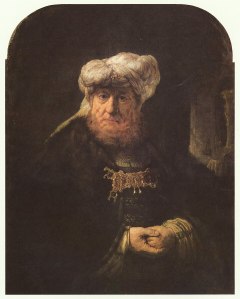
The King Uzziah Stricken with Leprosy, by Rembrandt, 1635.

2 Kings 15: 1-7 King Azariah (Uzziah) of Judah

 1In the twenty-seventh year of King Jeroboam of Israel, King Azariah son of Amaziah of Judah began to reign. 2He was sixteen years old when he began to reign, and he reigned fifty-two years in Jerusalem. His mother’s name was Jecoliah of Jerusalem. 3He did what was right in the sight of the Lord, just as his father Amaziah had done. 4Nevertheless, the high places were not taken away; the people still sacrificed and made offerings on the high places. 5The Lord struck the king so that he had a defiling skin disease to the day of his death and lived in a separate house. Jotham the king’s son was in charge of the palace, governing the people of the land. 6Now the rest of the acts of Azariah and all that he did, are they not written in the Book of the Annals of the Kings of Judah? 7Azariah slept with his ancestors; they buried him with his ancestors in the city of David; his son Jotham succeeded him.

King Azariah, also known as King Uzziah, has a long and successful reign over Judah. Uzziah and Azariah are used interchangeably in scriptures and even in this chapter and Uzziah was likely the name he assumed as king of Judah. His fifty-two-year reign begins in the middle of the forty-one year reign of Jeroboam II and both kings enjoy a period of military success and national resurgence. Azariah’s long and stable reign contrasts with his two predecessors (Joash and Amaziah) who saw the royal and temple treasuries diminished and in their political or military weakness were ultimately assassinated by those who served them. The stability during the time of Azariah in Judah also contrasts sharply with the instability in Samaria after the death of Jeroboam II.

Although 2 Kings does not spend a lot of time on the reign of Azariah/Uzziah his story is greatly expanded in 2 Chronicles 26. According to 2 Chronicles Azariah/Uzziah is a successful military leader who wins victories over Philistia, Ammon and extends Judah’s trade and military influence over the region. 2 Kings 14:22 gives a small window into the king’s success when it notes, “He rebuilt Elath and restored it to Judah after King Amaziah slept with his ancestors.” This small note indicates a large accomplishment only shared by Solomon, Jehoshaphat and Hezekiah. This gave Judah a port on the Mediterranean but also required them to control not only the port but the wilderness between. Alex Israel notes that he controls both major highways between Egypt and Mesopotamia, a lucrative trade route and source of income for the nation. (Israel, 2019, p. 227) 2 Chronicles also notes that King Uzziah strengthened the city walls of Jerusalem and increased the agricultural output of the land by his improvements and built up the army.

2 Kings’ brief account of this king who did what was right in the sight of the LORD ends with the jarring note that the LORD struck the king with ‘a defiling skin disease.’ This skin disease was traditionally rendered leprosy in most translations although we now believe that Hanson’s disease (which is what we call leprosy today) did not exist in the Middle East during this time. Yet, this affliction was normally associated with a judgment from God, and 2 Chronicles tells of the king entering the temple to offer incense, the job of the priests, and being struck with ‘leprosy’ as a punishment. Ultimately in 2 Chronicles the king is punished for overstepping his responsibility, attempting to fulfill both the kingly and the priestly role and ends his life separated from the palace and his responsibilities were assumed by his son Jotham until he died.

It is interesting that 2 Kings does not go into the success and fall of Azariah/Uzziah in the same manner as 2 Chronicles. Perhaps the narrator of 2 Kings doesn’t want to focus on the military success of Azariah in contrast to the lack of success by Joash and Amaziah who are both evaluated as kings who did what was right in the site of the LORD and at the same time does not want to focus on the act that leads to the king’s affliction. Despite the short narration of Azariah’s lengthy reign it is a consequential time as Judah remains stable as Northern Israel becomes chaotic and is one generation from collapse. This is also a time of prophetic voices and Isaiah (first Isaiah), Amos, Hosea, and Micah all give voice to this time in Israel and Judah.

2 Kings 15: 8-12 The Brief Reign of Zechariah King of Israel and the End of the Jehu Dynasty

  8 In the thirty-eighth year of King Azariah of Judah, Zechariah son of Jeroboam reigned over Israel in Samaria six months. 9 He did what was evil in the sight of the Lord, as his ancestors had done. He did not depart from the sins of Jeroboam son of Nebat that he caused Israel to sin. 10 Shallum son of Jabesh conspired against him and struck him down in Ibleam and killed him and reigned in place of him. 11 Now the rest of the deeds of Zechariah are written in the Book of the Annals of the Kings of Israel. 12 This was the promise of the Lord that he gave to Jehu, “Your sons shall sit on the throne of Israel to the fourth generation.” And so it happened.

The message of the LORD to Jehu after the destruction of the Omri dynasty indicated that his line would continue for four generations (2 Kings 10:30) and now after the death of Jeroboam II, the fourth generation, the Jehu dynasty collapses six months later. Jehu’s line ruled in Samaria for ninety-two years and it was enjoying a period of success under Jeroboam II, but the public murder of Zechariah ignites a power for struggle that will be violent and ultimately weaken Northern Israel as the Assyrian empire under Tiglath-Pileser III ascends. Zechariah is the first of a group of inconsequential kings in Samaria whose cumulative impact is very consequential in weakening Israel in a dangerous world.

2 Kings 15: 13-31 A Tumultuous Period in Israel

  13Shallum son of Jabesh began to reign in the thirty-ninth year of King Uzziah of Judah; he reigned one month in Samaria. 14Then Menahem son of Gadi came up from Tirzah and came to Samaria; he struck down Shallum son of Jabesh in Samaria and killed him; he reigned in place of him. 15Now the rest of the deeds of Shallum, including the conspiracy that he made, are written in the Book of the Annals of the Kings of Israel. 16At that time Menahem sacked Tiphsah, all who were in it and its territory from Tirzah on; because they did not open it to him, he sacked it. He ripped open all the pregnant women in it.

  17
In the thirty-ninth year of King Azariah of Judah, Menahem son of Gadi began to reign over Israel; he reigned ten years in Samaria. 18He did what was evil in the sight of the Lord; he did not depart all his days from any of the sins of Jeroboam son of Nebat that he caused Israel to sin. 19King Pul of Assyria came against the land; Menahem gave Pul a thousand talents of silver, so that he might help him confirm his hold on the royal power. 20Menahem exacted the silver from Israel, that is, from all the wealthy, fifty shekels of silver from each one, to give to the king of Assyria. So the king of Assyria turned back and did not stay there in the land. 21Now the rest of the deeds of Menahem and all that he did, are they not written in the Book of the Annals of the Kings of Israel? 22Menahem slept with his ancestors, and his son Pekahiah succeeded him.

  23
In the fiftieth year of King Azariah of Judah, Pekahiah son of Menahem began to reign over Israel in Samaria; he reigned two years. 24He did what was evil in the sight of the Lord; he did not turn away from the sins of Jeroboam son of Nebat that he caused Israel to sin. 25Pekah son of Remaliah, his captain, conspired against him with fifty of the Gileadites and attacked him in Samaria, in the citadel of the palace along with Argob and Arieh; he killed him and reigned in place of him. 26Now the rest of the deeds of Pekahiah and all that he did are written in the Book of the Annals of the Kings of Israel.

  27
In the fifty-second year of King Azariah of Judah, Pekah son of Remaliah began to reign over Israel in Samaria; he reigned twenty years. 28He did what was evil in the sight of the Lord; he did not depart from the sins of Jeroboam son of Nebat that he caused Israel to sin.
  29
In the days of King Pekah of Israel, King Tiglath-pileser of Assyria came and captured Ijon, Abel-beth-maacah, Janoah, Kedesh, Hazor, Gilead, and Galilee, all the land of Naphtali, and he carried the people captive to Assyria. 30Then Hoshea son of Elah made a conspiracy against Pekah son of Remaliah, attacked him, and killed him; he reigned in place of him, in the twentieth year of Jotham son of Uzziah. 31Now the rest of the acts of Pekah and all that he did are written in the Book of the Annals of the Kings of Israel.

Shallum son of Jabesh, Menahem son of Gadi, Pekahiah son of Menahem and Peka son of Remaliah all struggle for power during the stable reign of Azariah/Uzziah and (during Pekah’s reign in Samaria) the transition to Azariah’s son Jothan. Shallum reigns only for a month before he is overthrown by Menahem. Menahem assumes power in a violent manner and his description of sacking Tiphsah and tearing open the wombs of pregnant women describes him like the worst oppressors of Israel[1] and it is the violent ones who have ascended to power. Menahem may reign for ten years in Samaria but the large tribute payment[2] to Assyria under Tiglath-Pileser III[3] that he extracts from the gibbor hahayil (NRSVue ‘wealthy’)[4] likely means he is ruling with the political and even possibly military support of Assyria. When he dies his son is only to reign for two years. There are likely factions looking to align the nation with Assyria or Egypt as Hosea states:

Ephraim has become like a dove,
silly and without sense;
they call upon Egypt, they go to Assyria. (Hosea 7:11)

This is conjecture, but if Peka son of Remaliah ended the alliance with Assyria it would make sense of Tiglath-Pileser III seizing territory as well as dragging the captured people into exile. Records from Assyria indicate that there was a campaign against Israel in 733-732 BC and they took 13,520 people into exile. (Israel, 2019, p. 238) The Assyrian were known for taking exiles and displacing them to where they are totally dependent on Assyria and forced to blend into the larger Assyrian world. (Cogan, 1988, p. 177) The enemy has been within Samaria with this string of strongmen seizing power but now they face a much larger threat which is penetrating their borders and capturing the people and Israel appears powerless to resist.

2 Kings 15: 32-38 King Jothan of Judah


  32
In the second year of King Pekah son of Remaliah of Israel, King Jotham son of Uzziah of Judah began to reign. 33He was twenty-five years old when he began to reign, and he reigned sixteen years in Jerusalem. His mother’s name was Jerusha daughter of Zadok. 34He did what was right in the sight of the Lord, just as his father Uzziah had done. 35Nevertheless, the high places were not removed; the people still sacrificed and made offerings on the high places. He built the upper gate of the house of the Lord. 36Now the rest of the acts of Jotham and all that he did, are they not written in the Book of the Annals of the Kings of Judah? 37In those days the Lord began to send King Rezin of Aram and Pekah son of Remaliah against Judah. 38Jotham slept with his ancestors and was buried with his ancestors in the city of David, his ancestor; his son Ahaz succeeded him.

In contrast to the bloody and dangerous instability of Samaria, Judah continues to function under another king of the Davidic line who does what is right in the sight of the LORD. 2 Chronicles 27 indicates that Jothan continues to build up the walls and defenses of Judah, and the king is likely aware of the growing threat to the north in Assyria. Again, 2 Chronicles portrays Jothan as a militarily successful king and in 2 Kings we have indication of both Aram and Samaria/Northern Israel attacking Judah (possibly as agents of Assyria) yet we do not have any indication that Judah is losing territory. Resin and Pekah may be attempting to raid for resources in their own struggles against the rising might of Assyria, but for the moment the threat to stable Judah is significantly less than it appears to be for Northern Israel.


[1] See for example Elisha’s description of what Hazael will do in 2 Kings 8:12, the accusations against Edom in Amos 1:13, or the judgement oracle of Hosea 13:16.

[2] Roughly seventy five thousand pounds of silver.

[3] King Pul is a nickname in late sources for Tiglath-Pileser III, and the use of this title in 2 Kings indicated the familiarity of the narrator with this leader of Assyria. (Israel, 2019, p. 238)

[4] Gibbor hahayil is often rendered mighty ones and often this was assumed to have military connotations. This term is common in the book of Judges, but it also can refer to landowners like Boaz in the book of Ruth. Wealthy may be the proper translation, but with Menahem being a warrior leader, it may also indicate something like warlords who are maintaining power beneath him.

Introduction to 2 Kings

Cry Of Prophet Jeremiah on the Ruins of Jerusalem by Ilya Repin 1870

1&2 Kings together form a narrative that runs from the pinnacle of the nation of Israel under Solomon to its nadir at the beginning of the Babylonian exile. First and Second Kings were initially a common book, the book of Kings, which was later divided into two books in the biblical canon.[1] I worked through 1 Kings in 2022-2023, and now it is time to walk through the remainder of this story of the northern kingdom’s destruction by the Assyrian empire in 721 BCE and the Babylonian empire’s conquering of Judah in roughly 587 BCE. 1 Kings ends during of the ministry of Elijah and Elisha the prophets in northern Israel.

In the Jewish division of the Hebrew Scriptures the Deuteronomic History (Joshua, Judges, 1&2 Samuel, and 1&2 Kings) are all grouped with the prophets. They are history viewed through a theological lens and with the intention of looking backwards to understand the situation of the people in exile. There is a tradition of associating these books with Jeremiah, and they do share a common worldview. This association is heightened by the reality that 2 Kings and Jeremiah end with a narration that is almost identical.

2 Kings narrates the collapse of the land of Israel and the monarchy of both Israel (Samaria) and Judah. The kings throughout the book of Kings are evaluated by the theological perspective of Deuteronomy and with a few notable exceptions most of these kings can be summarized by the phrase, “He committed all the sins that his father did before him; his heart was not true to the LORD his God like the heart of his father David.” (1 Kings 15:3 referring to Abijam, son of Rehoboam, son of Solomon but similar language is used for all the ‘bad’ kings).

If you spend much time working in the Hebrew Scriptures/Old Testament, the impact of the Babylonian exile is unavoidable. It is a central defining crisis for the people of Judah. The books of Jeremiah, Lamentations, and Ezekiel are all centered around this time-period and 2 Kings’ historical narrative ends at the exile. 2 Kings has some stories that are utilized in the life of the church, but as a book the stories of 2 Kings are probably less familiar than the stories of 1 Kings. My journey through 1 Kings provided me a much fuller appreciation of this portion of the story of God’s people, and I look forward to discovering the conclusion of this portion of the story of Israel in a richer way.

Resources Used For This Journey

Brueggemann, Walter. 1 & 2 Kings. Macon, GA: Smith & Helwys Publishing Incorporated. 2000

Walter Brueggemann is one of the most prolific Christian writers on the Hebrew Scriptures and brings a wide breadth of knowledge on both the collection of scripture as whole. His writing is consistently readable and insightful and tends to explore challenging perspectives. The Smith & Helwys Bible Commentary series is a very attractive resource bringing together commentary and discussion with artwork, maps, and other visual resources. This resource is closer to the blogging format which I write in than many books. More of a thematic commentary which is useful for preaching and teaching. I also utilized this volume during my reflections on 1 Kings.

Cogan, Mordechai and Hayim Takmor, II Kings: A New Translation with Introduction and Commentary (The Anchor Bible). New York City: Doubleday & Company, Inc. 1988

The Anchor Bible, Now the Anchor Yale Bible, is a detailed textual commentary. I utilized Mordechai Cogan’s first volume in my work on 1 Kings. This is the longest and most detailed of the works I used for this journey through 2 Kings. This is a volume more directed to the specialist rather than the preacher or teacher and some knowledge of Hebrew is helpful in using this resource.

Israel, Alex. II Kings: In A Whirlwind. (Maggid Studies in the Tanakh). Jerusalem: Maggid Books, 2019.

I utilized Rabbi Alex Israel’s first volume in my reflections on 1 Kings. When looking at a Hebrew Scripture text I like to have a Jewish voice and the Maggid Studies are an approachable resource. Rabbi Israel’s skill as a teacher is on display in this volume as he writes an approachable text which brings 2 Kings into dialogue with the historical context and rabbinic interpretation. A clear and insightful perspective on the people and events of 2 Kings.

Seow, Choon-Leong. “The Books of 1 and 2 Kings.” In New Interpreter’s Bible III: 1-295.12 Vols. Nashville: Abingdon Press. 1999.

The NIB (New Interpreter’s Bible) is a solid resource as a resource for preaching and teaching that covers the entire bible and goes into some textual issues, but it primarily is focused on giving a fuller context to the story. Choon-Leon Seow’s contribution on the 1 and 2 Kings goes into a little more depth on translational issues than some other portions of this commentary set I’ve utilized, and this was a positive since it identified some interesting things to explore in the Hebrew text. This was another solid portion of the NIB and it is a resource worth having on the shelf for a pastor.


[1] The division initially occurred in the translation of the Hebrew Text into Greek (the Septuagint).

Ezekiel 31 Egypt as a Mighty Tree Cut Down

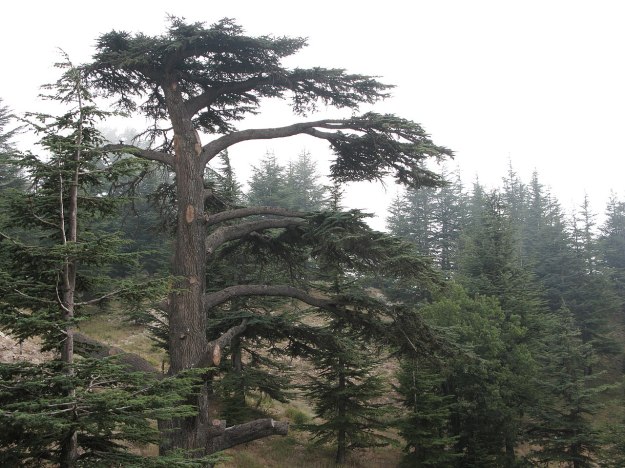
Cedar of Lebanon (Cedar of God), Lebanon By © Vyacheslav Argenberg / http://www.vascoplanet.com/, CC BY 4.0, https://commons.wikimedia.org/w/index.php?curid=92872076

Ezekiel 31

1In the eleventh year, in the third month, on the first day of the month, the word of the LORD came to me: 2Mortal, say to Pharaoh king of Egypt and to his hordes:
Whom are you like in your greatness?
3Consider Assyria, a cedar of Lebanon,
with fair branches and forest shade,
and of great height,
its top among the clouds.
4The waters nourished it,
the deep made it grow tall,
making its rivers flow
around the place it was planted,
sending forth its streams
to all the trees of the field.
5So it towered high
above all the trees of the field;
its boughs grew large
and its branches long,
from abundant water in its shoots.
6All the birds of the air
made their nests in its boughs;
under its branches all the animals of the field
gave birth to their young;
and in its shade
all great nations lived.
7It was beautiful in its greatness,
in the length of its branches;
for its roots went down
to abundant water.
8The cedars in the garden of God could not rival it,
nor the fir trees equal its boughs;
the plane trees were as nothing
compared with its branches;
no tree in the garden of God
was like it in beauty.
9I made it beautiful
with its mass of branches,
the envy of all the trees of Eden
that were in the garden of God.
10Therefore thus says the Lord GOD: Because it towered high and set its top among the clouds, and its heart was proud of its height, 11I gave it into the hand of the prince of the nations; he has dealt with it as its wickedness deserves. I have cast it out. 12Foreigners from the most terrible of the nations have cut it down and left it. On the mountains and in all the valleys its branches have fallen, and its boughs lie broken in all the watercourses of the land; and all the peoples of the earth went away from its shade and left it.
13On its fallen trunk settle
all the birds of the air,
and among its boughs lodge
all the wild animals.
14All this is in order that no trees by the waters may grow to lofty height or set their tops among the clouds, and that no trees that drink water may reach up to them in height.
For all of them are handed over to death,
to the world below;
along with all mortals,
with those who go down to the Pit.
15Thus says the Lord GOD: On the day it went down to Sheol I closed the deep over it and covered it; I restrained its rivers, and its mighty waters were checked. I clothed Lebanon in gloom for it, and all the trees of the field fainted because of it. 16I made the nations quake at the sound of its fall, when I cast it down to Sheol with those who go down to the Pit; and all the trees of Eden, the choice and best of Lebanon, all that were well watered, were consoled in the world below. 17They also went down to Sheol with it, to those killed by the sword, along with its allies, those who lived in its shade among the nations.
18Which among the trees of Eden was like you in glory and in greatness? Now you shall be brought down with the trees of Eden to the world below; you shall lie among the uncircumcised, with those who are killed by the sword. This is Pharaoh and all his horde, says the Lord GOD.

This fifth oracle against Egypt is like Ezekiel’s earlier oracle against the King of Tyre where the king is highlighted for their beauty and preeminent state among the garden of Eden.[1] Like that previous oracle the one who excels all others is brought low as they exceed their station as a creation of God. Although this oracle is directed against Pharoah and his hordes, it only mentions Pharoah or Egypt in the first and last verse, the rest of the oracle uses Assyria as an example for Egypt to heed. Assyria who was once the great empire in the north has collapsed and dragged all who allied themselves with her down to Sheol, and the same fate awaits proud Egypt in this oracle.

It is likely that Ezekiel is building upon Isaiah’s imagery in Isaiah 2:11-13 linking pride and great trees.

The haughty eyes of people shall be brought low, and the pride of everyone shall be humbled; and the LORD alone will be exalted in that day. For the LORD of hosts has a day against all that is proud and lofty, against all that is lifted up and high; against all the cedars of Lebanon, lofty and lifted up; and against all the oaks of Bashan;

Just as Daniel will probably utilize Ezekiel’s imagery in his own image in Daniel 4: 10-17 and Jesus alludes to this imagery in his parable of the mustard seed.[2] Yet, Ezekiel’s usage is the longest sustained use of this metaphor.

This oracle is dated almost two months after the previous one, June 21, 587 BCE. The city of Jerusalem is still besieged by Babylon, and it is possible that Babylon has already repulsed the Egyptian attempts to lift the siege. Egypt has been one of the significant powers in the ancient world throughout Israel’s history, and Egypt has continually exerted influence in the region around Israel. Now Egypt in this parable is told to look at a metaphor of Assyria. Assyrian was the great empire in the north prior to the emergence of the Babylonian empire. There are some translators who view Assyria’s presence here as a mistake, but thematically it makes sense to use a metaphor about Assyrian to demonstrate to Egypt that it too can fall from its great heights. Even though verses three through nine repeatedly refer to the beauty of this metaphorical tree and portray its majesty in an admirable light, like the earlier references to the King of Tyre, this is a case of prophetic satire. Although the kings of Assyria normally have the date palm as their image, the use of the cedar of Lebanon would be a well-known image of both size and strength, and a tree frequently used in royal and holy construction.

There are mythical elements in the background of this image, but they should not distract from the basic point that Pharoah and Egypt, according to the oracle, will share the same fate as Assyria. Although the waters nourished it and the deep made it grow tall, it will still fall when the prince of nations (King Nebuchadrezzar of Babylon) cuts it down. The waters and deep are the same Hebrew words used in Genesis 1:2 and this tree surpasses the trees of the garden of God (Eden) but ultimately, like the King of Tyre, its beauty, strength, and height cannot prevent its falling into the realm of the dead. The remnants of the tree fall on the mountains and valleys, just as the defeated ‘dragon’ in the next chapter will have its remains fall on the mountains, valleys, and waterways.[3] Now this great tree and all the lesser trees that inhabited the space under its branches find themselves in the Pit.

The very forces which once gave this great tree life now bury it in the depths. The rivers that flowed around it are now restrained and this once beautiful and living tree is now debris scattered upon the ground, or in other places brought down into the pit. The great tree and the empire it represents are now dead, and Egypt who is similarly a great tree is in danger from the same axe wielding prince of the nations. In the oracle Pharoah and all his armies cannot oppose God and God’s chosen instrument of vengeance King Nebuchadrezzar.

As mentioned before there are limited historical records from this period. We do know that Nebuchadrezzar does eventually turn his army to march on Egypt. Although the Babylonians have enjoyed multiple victories over Egypt, Egypt never becomes a part of the Babylonian empire. The great cedar tree which represents Egypt will stand at least for a time longer. Ezekiel interprets the actions of the king of Babylon and his forces as an extension of the will of the God of Israel. Even though Jerusalem is under siege, the LORD’s actions, in Ezekiel’s mind, are just. The LORD is not merely the God of Israel but is at work in the movement of empires to bring about the will of God.

[1] Ezekiel 28.

[2] Matthew 13: 31-32, Mark 4: 30-32, Luke 13: 18-19

[3] Ezekiel 32: 5-6.

Egypt’s Role in the Geopolitics of Israel/Judah During the Time of the Assyrian and Babylonian Empires

The Roman Kiosk of Trajan (left) on Agilkia island in the Nile River, near Aswān, Egypt

Egypt’s Role in the Geopolitics of Israel/Judah During the Time of the Assyrian and Babylonian Empires

Egypt’s connection with the story of Israel goes back to its beginning and is complex. At times the Egyptians have been allies and trading partners and at other times they are antagonists. Egypt was one of the first regional powers to emerge in history, and they would remain independent until they are brought under the Persian Empire in the sixth century BCE (roughly forty years after the siege of Jerusalem and the Babylonian exile). Egypt had been a military and economic power for thousands of years at the emergence of the Assyrian and later Babylonian powers to the north and had exercised both political and commercial influence over the region throughout this time.

One of the ways Egypt continued to exercise influence was by encouraging the rulers throughout the region to resist both Assyrian and Babylonian rule. Egypt was often sought for support or protection once these ruling powers were provoked, aid that sometimes materialized and often did not. For example, 2 Kings records Samaria (Northern Israel) attempting to resist Assyria in 724 BCE:

King Shalmaneser of Assyria came up against him; Hoshea (king of Samaria) became his vassal. But the king of Assyria found treachery in Hoshea; for he had sent messengers to King So of Egypt, and offered no tribute to the king of Assyria as he had done year by year; therefore the king of Assyria confined him and imprisoned him. Then the king of Assyria invaded all the land and come to Samaria; for three years he besieged it. In the ninth year of Hoshea the king of Assyria captured Samaria; he carried the Israelites away into Assyria. 2 Kings 17: 3-6a

Here Egypt is either unable or unwilling to march into Samaria to defend them from the Assyrians. This results in the collapse of Northern Israel (Samaria). Later Assyria would march against the Philistine city of Ekron who also appeals to Egypt for aid. In 701 BCE Egypt does march to the aid of Ekron but its forces are defeated and captured. (NIB VI: 1402) Assyria then turns towards Judah and when Rabshakeh, the commander of the Assyrian forces comes before the walls of Jerusalem he taunts the people:

The Rabshakeh said to them, “Say to Hezekiah. Thus says the great king, the king of Assyria: on what do you base this confidence of yours? Do you think that mere words are strategy and power for war? On whom do you rely, that you have rebelled against me? See, you are relying now on Egypt, that broken reed of a staff, which will pierce the hand of anyone who leans on it. Such is Pharoah king of Egypt to all who rely on him. 1 Kings 18:19-21, Isaiah 36:4-6

Rabshakeh’s siege does not capture Jerusalem when he abruptly turns away to another fight, biblical tradition indicates it is an internal conflict among Assyrian forces, and the threat is resolved.

Eventually Assyria and Egypt would change from opponents into allies at the emergence of the Babylonian empire. This becomes important for Judah’s history for several interconnected reasons. Judah under Josiah was undergoing a time of renewal according to the bible and there was even a hope for Judah to now once again rule over the lands of both Judah and what had formerly been Samaria. A part of this optimism was the alliance with Babylon. In 609 BCE when Pharoah Necho marches his army north to aid Assyria, King Josiah marches the army of Judah out to resist him. Judah’s army is conquered, King Josiah is killed, and Judah comes under Egyptian power with Pharoah Necho appointing Eliakim to rule in Jerusalem as a vassal. In 605 BCE Egyptian forces were defeated by Babylon at the Battle of Carchemish and pursued back to the Egyptian border. Even after Babylon asserted control over Judah and the surrounding region, Egypt continued to attempt to provoke Judah and other regional vassal states to resist Babylon.

When Babylon does react to Jerusalem withholding tribute by besieging the city, Egypt does march to their aid which causes Babylonian forces to briefly lift the siege of Jerusalem to deal with the Egyptian incursion. (Jeremiah 37:5-10) Yet the Egyptian forces quickly return to Egypt and Babylon resumes its siege. Egypt has once again proven to be an unreliable support for Jerusalem in its problems. This history of provocative behavior and unreliability likely informs Ezekiel’s words against Egypt.

The Place of Authority: A Brief History Part 3a: The Exile, the Crisis of Collapse

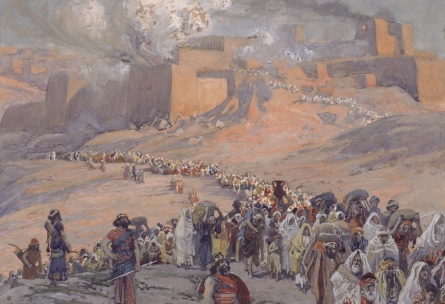
James Tissot, The Flight of the Prisoners

By the rivers of Babylon—there we sat down and there we wept when we remembered Zion. In the willows there we hung up our harps.For there our captors asked us for songs, and our tormentors asked for mirth, saying,

“Sing us one of the songs of Zion!”

How could we sing the Lord’s song in a foreign land? If I forget you, O Jerusalem, let my right hand wither! Let my tongue cling to the roof of my mouth, if I do not remember you,if I do not set Jerusalem above my highest joy. 

Remember, O Lord, against the Edomites the day of Jerusalem’s fall, how they said,

 “Tear it down! Tear it down! Down to its foundations!”

O daughter of Babylon, you devastator! Happy shall they be who pay you back what you have done to us! Happy shall they be who take your little ones and dash them against the rock!   Psalm 137 NRSV

In 721 BCE, after roughly 200 years of separation from the Southern Kingdom of Judah, the Northern Kingdom Israel falls to the Assyrian Empire (which has its origins in the Northwestern Part of modern day Iraq) and the Northern Kingdom is effectively absorbed into the Assyrian nation.  Somehow Judah holds on, even though it becomes completely surrounded by the Assyrian Empire.  Empires come and go, and power shifts to the Babylonian Empire (which has its origins in modern day Southern Iraq) without going into the bloody details: Jerusalem falls, the temple is destroyed, the Davidic monarchy effectively ends and the people of Judah are taken into exile or captivity in Babylon.  The loss of king and temple, as well as the land cause a crisis of authority which leads to one of the most constructive and important periods in Judaism.

The loss of home is catastrophic, it leads to a ton of questions about the future and there may not be any good answers at that point.  The closest cinematic example I could come up with was the loss of Anatevka in Fiddler on the Roof where families try to make the best of their coming exile, belittling what they are leaving behind-and yet families are broken apart, scattered across the world, many will never see each other again.

Something as catastrophic to not only the physical well-being but also to the communal consciousness can lead to several outcomes, many of which do emerge in this time. One response of the conquered is to assimilate with the conqueror, to align oneself with the victor, to adopt their values and practices and to set aside at least a portion of one’s previous identity to become a part of something different.  This is the perceived response of the Northern Kingdom by the Southern Kingdom-they stay on their land, intermarry with the Assyrians, and what emerges will be a hybrid people-no longer really Jewish, already separated from the Davidic monarchy and the temple hundreds of years before they become the other…the Samaritan (yes this is where those Samaritans that Jesus runs into in the New Testament come from).  But to be fair, a large number of the Judeans also assimilate into Babylon, only a small portion of the Judean people will return to their homeland at the end of the exile, most will remain dispersed throughout the nations.

In the lead up to the exile, the prophetic voice becomes very harsh in its critique of the monarchy, temple, the lack of economic justice within the nation, and the perceived idolatry of the shepherds of the nation.  This is the time where the first parts of Isaiah, much of Jeremiah and Ezekiel and many of the Minor Prophets become active in the memory of the people. The prophetic voice leads the way pointing to the ways in which kings and priests, throne and temple have not only failed as sources of authority but are at the very heart of the crisis viewed as a judgment from the LORD.  The prophets announce condemnation for the shepherds (the leaders, the authority in throne and temple) as one example among many:

The word of the Lord came to me: Mortal, prophesy against the shepherds of Israel: prophesy, and say to them—to the shepherds: Thus says the Lord God: Ah, you shepherds of Israel who have been feeding yourselves! Should not the shepherds feed the sheep? You eat the fat, you clothe yourselves with the wool, you slaughter the fatlings: but you do not feed the sheep. You have not strengthened the weak, you have not healed the sick, you have not brought back the strayed, you have not sought the lost, but with force and harshness you ruled them.  So they were scattered, because there was no shepherd: and scattered wandered over all the mountains and on every high hill; my sheep were scattered over the face of the earth, with no one to search or seek for them. Ezekiel 34.1-6 NRSV

 Instead of coming to believe that somehow their God is weaker than the gods of the Assyrians or the Babylonians, something amazing happens in the prophetic imagination (to use Walter Brueggemann’s keen words) and they begin to understand the transitions and the conflict around them as a part of God’s work—that behind Assyrian and Babylonian is the Lord of hosts (literally the Lord of armies-typically we think of this as heavenly armies, but I am beginning to think that in there is something more earthly to this term than often given credit). The coming destruction is a judgment particularly on the leaders, but also within all this death is the chance for something new: a fresh start, a redefinition, a chance to redefine and re-imagine what it means to be the chosen people.

The hand of the Lord came upon me, and he brought me out by the spirit of the Lord and set me down in the middle of the valley; it was full of bones.  He led me around them; there were very many lying in the valley, and they were very dry.  He said to me, “Mortal, can these bones live?” I answered, “O Lord God, you know.” Then he said to me, “Prophecy to these bones, and say to them: O dry bones, hear the word of the Lord. Thus says the Lord God to these bones: I will cause breath to enter you, and you shall live. I will lay sinews on you, and will cause flesh to come upon you, and cover you with skin, and put breath in you, and you shall live; and you shall know that I am the Lord. Ezekiel 37.1-6 NRSV

The prophetic voice will help the people re-imagine a new way forward, a way that is so critical to the way we understand things that we need to take some time with it.  Hope will not die, in fact it will be reborn in a new and powerful way and the people will understand themselves as a chosen people, but what that means takes a dramatic turn in the exile.  To that we shall turn next.

purple rose 01 by picsofflowers.blogspot.com