Category Archives: Book Reviews

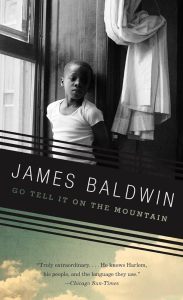
Review of Go Tell It On The Mountain by James Baldwin (1953)

Time Magazine Top 100 Novels

Book 35: Go Tell It On The Mountain by James Baldwin (1953)

This is a series of reflections reading through Time Magazine’s top 100 novels as selected by Lev Grossman and Richard Lacayo published since 1923 (when Time magazine was founded). For me this is an attempt to broaden my exposure to authors I may not encounter otherwise, especially as a person who was not a liberal arts major in college. Time’s list is alphabetical, so I decided to read through in a random order, and I plan to write a short reflection on each novel.

Go Tell It On The Mountain starts on the birthday of John Grimes who is the central character in this book of religion and hypocrisy, love desired and rarely returned, a family of secrets and hurt, and the first arousals of sexuality in a young man who realizes he is attracted to other men. Gabriel, his father but not his biological father, Elizabeth, John’s mother, and Florence, John’s aunt and Gabriel’s sister, all contribute to the tension in this household as well as the younger son Roy, biological son of Gabriel, and the unclaimed memory of Royal, an out of wedlock son of Gabriel who died before this moment in the story. The event of John’s birthday, which his mother belatedly remembers, is pushed into the background when his belligerent younger brother storms out of the house only to return wounded by a knife. Even though it is his birthday and he had taken his mother’s belated gift of a little money to the theater, his father lashes out at him, his mother, and his aunt in exasperation about Roy’s wild ways. John eventually escapes to the storefront church where his father is a deacon and the theme of sexuality emerges as he wrestles with Elisha, an older boy in the church, as they set up for evening services.

The remainder of the book occurs in flashbacks and visions during the evening church service where first his aunt Florence remembers her life and reluctantly surrenders to prayer. Then his father’s life is revealed in his wild teenage years, his marriage, his affair which produces Royal who he never claims and eventually dies a violent death, and his marriage to Elizabeth, John’s mother. Then Elizabeth has her own vision of her weak mother and the father who she loved. After her mother’s death who she was taken from by her father by her aunt because of the work her father does. She grows up in a loveless childhood but finds love in a young man named Richard. Before she can tell Richard about her pregnancy he commits suicide after a wrongful arrest by the police. Finally, is John’s dark night of the soul before his vision and acceptance of Christ.

The book does a good job of showing both the brokenness and the strength of faith. The Pentecostal tradition has a strong emphasis on holiness and yet the book is open about the hypocrisy and closely held secrets of the men who lead the church. It is a story of several intertwined people who never experienced the love they desired from the fathers, mothers, and siblings in their lives and who continue to hand on their broken lives to the next generation. The visions in part two do a good job of telling the backstory of the characters but even among the revelations of the visions the brokenness between the family members remains entrenched to the end. Even as there should be celebration over the salvation of John, his father Gabriel remains closed off from him. The shattered relationship between Gabriel and Florence over Gabriel’s wild past and his unforgiving nature is never resolved even though Florence feels she is near the end of her life, and she holds a letter with the secret of Gabriel’s out of wedlock child which she threatens to release to the congregation. Apparently, the story is semi-autobiographical, and I can appreciate the way the author works through his broken home and broken heart through the pages of the book.

Review of The Bear and the Nightingale by Katherine Arden

Five Star Book Review

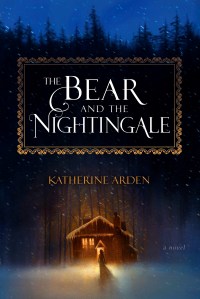
Katherine Arden, The Bear and the Nightingale

For me a five-star book is something that either I want to read again or something that is so profound it makes an immediate impact. There are lots of ways that books can be compelling: a unique idea, an interesting set of characters, a complex plot, an artistic use of the English language and more. Reading is also a subjective experience, so what appeals to me as a reader may be very different for you. I read a lot for both pleasure and work, but these short reviews are a way for me to show my appreciation for the work and the craft of the author of the reviewed work.

The Bear and the Nightingale feels like a story told around an oven in a home snowed in for the winter, a story of magical creatures and grown ups who cannot see the magic of the world any longer. Vasya, the main protagonist, is both mischievous and kind and has a strong enough will to resist the machinations of her stepmother and father. There are many of the classic elements you find in fairy tales, for example a wicked stepmother, but I enjoyed the interweaving of distinctive Russian elements to the story: from the Russian orthodox painting of an iconostasis by Father Kostantin to the domovoy, rusalka, leshy, and other elements of eastern European folk stories. Although Morozko and his brother Medved, who the conflict of the story rotates around, have the classic good verses evil polarity, Morozko is not simply good and Medved is more animalistic hunger than evil. It is a story of family, of faith both in the sense of religion and in the sense of magic, and for the main character it is the beginning of a coming-of-age story for a woman who will determine her own course in a world where women do not write their own stories.

I read the entire Winternight trilogy several years ago, and I was deeply impressed with Katherine Arden’s debut novels. Returning to this novel was like returning to a home I never knew. The characters are great, but I think it was the way she narrated the atmosphere of the story that invited me in to dwell in this magical world for a time. This is a work of historical fantasy, so the magical events are caught up in the history of the Russian people and I really appreciated the way she allowed me to live a snapshot of an imaginary life in a magic infused slice of this world defined by winter. I look forward to continuing through the remainder of this series with Vasya, Morozko, and the rest.

Review of the Sound and the Fury by William Faulkner (1929)

Time Magazine Top 100 Novels

Book 85: The Sound and the Fury by William Faulkner (1929)

This is a series of reflections reading through Time Magazine’s top 100 novels as selected by Lev Grossman and Richard Lacayo published since 1923 (when Time magazine was founded). For me this is an attempt to broaden my exposure to authors I may not encounter otherwise, especially as a person who was not a liberal arts major in college. Time’s list is alphabetical, so I decided to read through in a random order, and I plan to write a short reflection on each novel.

The Sound and the Fury is the second William Faulkner book I have read and reviewed, and it was even less enjoyable than A Light in August. Both books tell ugly stories using ugly language with occasional moments of poetic prose. I listened to an audiobook of this which was even more disturbing than reading this book full of unlikeable characters continually arguing with one another. Especially in the initial chapter when you are hearing through the ears of ‘Benjy’ and it switches back and forth from his memories as a young child to his confusion as a thirty-three-year-old man with childlike emotions, I found myself wondering what I was listening to. The novel is historically situated in a time where the views on race, sex, religion, and society are very different from our current era. In Faulkner’s other work I reviewed there were times I could fall into Faulkner’s poetic use of prose, but in the Sound and the Fury the only scene where the transcendent language overcame the harsh, ugly, argumentative language was in the final chapter during the Easter service. The story is tragic as the family at the heart of the story disintegrates in its dysfunction, but I had a difficult time having any empathy for any of the Compson family.

If William Faulkner’s intent in the Sound and the Fury was to induce disgust, then he was successful. The language of the American South from the 1910s and 1920s is jarring to an educated ear a century later and I often found this ugly language resonating in my head long after I removed my headphones. This book made me viscerally angry, and I was sorely tempted to not finish it. Perhaps it, like Flannery O’Connor’s work, presents an uncomfortable mirror to the world of my grandparents whose prejudices echo in both spoken and unspoken ways in our own but there was none of the artistry of Flannery O’Connor. I am glad that there are no other works by William Faulkner on this list, because I have no interest in reading anything by him in the future. I have never been as happy to reach the conclusion of a book.

Review of Lonesome Dove by Larry McMurtry

Five Star Book Review

Larry McMurtry. Lonesome Dove.

For me a five-star book is something that either I want to read again or something that is so profound it makes an immediate impact. There are lots of ways that books can be compelling: a unique idea, an interesting set of characters, a complex plot, an artistic use of the English language and more. Reading is also a subjective experience, so what appeals to me as a reader may be very different for you. I read a lot for both pleasure and work, but these short reviews are a way for me to show my appreciation for the work and the craft of the author of the reviewed work.

Lonesome Dove is an invitation back to a journey through a time when the American West in transition with a memorable cast of characters. Augustus “Gus” McCrae and Woodrow F. Call are two retired Texas Rangers living in Lonesome Dove on the Texas border with Mexico. One of their former rangers comes riding into town with a description of Montana, and that sets the journey in motion through the central United States driving a herd to establish the first ranch in Montana. Through the drive and the struggles they encounter, I grew to love this group of men. Larry McMurtry takes you back to a different time and makes you feel as if you are a part of the drive observing the conversations between Gus, Call, Deets, Newt, Jake and more. This is a long book, but I wasn’t ready for the journey to end either in Montana or when the book ends.

I’ve been doing a lot of reading on the American West from a historical perspective, and this journey put a narrative to the time after the Civil War and before the railroads crossed the nation. The drive north may be the unifying plotline, but the characters are what really make this a delightful journey. Gus is the philosopher and comedian who continually needs to talk, there is the driven but quiet Call, to the young Newt wondering about his place in the world and wondering who his father is. It is a story of tragedy and perseverance, of unrequited love and the search for meaning in a wild and dangerous land. I had seen the miniseries years ago, and although the actors do a great job in that series it is impossible even in a long series to capture the majesty of this journey on the written page.


Review of Death Comes for the Archbishop by Willa Cather

Time Magazine Top 100 Novels

Book 27: Death Comes for the Archbishop by Willa Cather (1927)

This is a series of reflections reading through Time Magazine’s top 100 novels as selected by Lev Grossman and Richard Lacayo published since 1923 (when Time magazine was founded). For me this is an attempt to broaden my exposure to authors I may not encounter otherwise, especially as a person who was not a liberal arts major in college. Time’s list is alphabetical, so I decided to read through in a random order, and I plan to write a short reflection on each novel.

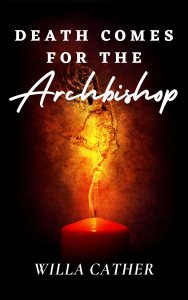
This was a well written and very enjoyable historical fiction book set in late 1800s New Mexico and Arizona. Bishop Jean Marie Latour travels with his friend and fellow priest Joseph Valliant from Ohio to assume responsibility for the parish of New Mexico now that New Mexico and Arizona have been incorporated into the United States. The author does a great job describing the environment that the two men inhabit, and I appreciate her sympathetic handling of both the two main characters, the Mexican and the Native People who inhabit this world. The story includes several historical characters including Kit Carson and Pope Gregory XVI and both the main characters and their parishioners are well developed and interesting. As a pastor I found the devotion of both Bishop Latour and Father Valliant to their flock inspiring.

The descriptions of the land are breathtaking, and Willa Cather obviously has a great deal of affection for both the land and the characters in the story. As a person who enjoys the history of the American West and is a religious leader this was a story that appealed to me strongly. I quickly found myself journeying with the characters through New Mexico, Mexico, Arizona, and eventually Colorado. It was a story of life, faith, and relationships. This was a beautifully written work of historical fiction portraying the faithful life of two religious leaders encountering faith in the people they are called to shepherd is the type of novel I hoped to discover in this reading list.

Review of The Hazel Wood by Melissa Albert

Melissa Albert, The Hazel Wood

For me a five-star book is something that either I want to read again or something that is so profound it makes an immediate impact. There are lots of ways that books can be compelling: a unique idea, an interesting set of characters, a complex plot, an artistic use of the English language and more. Reading is also a subjective experience, so what appeals to me as a reader may be very different for you. I read a lot for both pleasure and work, but these short reviews are a way for me to show my appreciation for the work and the craft of the author of the reviewed work.

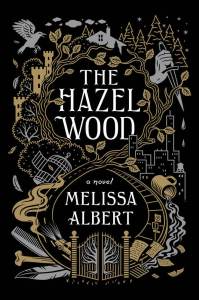
Every reader has certain types of stories that they are drawn to and for me two of those genres are dark fairy tales and books that have another story underneath the story that helps to shape the world. The Hazel Wood is dark fairy tale that lives on the edge of our world that is defined by a set of stories published by the protagonist’s grandmother. This is the first book in a series of three books set in this world, one is the book of stories alluded to throughout the Hazel Wood while the second is a sequel that continues the story of Alice and Finch. This is my second reading of the series and yet it still retains its edge even though the journey was familiar. I appreciate this fantasy world which has teeth and claws and is as close to hell as heaven.

The story is more plot driven than character driven which would normally be less appealing for me, but in this story is about stories where the story spinner places an actual Story Spinner in the narrative and stories are characters it works. The dynamic of a broken family haunted by a story that has planted its roots in our world and follows the characters wanting to draw them back to the Hazel Wood, and eventually back to the Hinterlands. For Alice it is a journey into wonderland where she discovers the family she needed is the family she already had, not the mysterious grandmother who she could only read about until she arrives at her estate and discovers that some dreams are nightmares.

Review of The Only Good Indians by Stephen Graham Jones

Five Star Book Review

Stephen Graham Jones, The Only Good Indians

For me a five-star book is something that either I want to read again or something that is so profound it makes an immediate impact. There are lots of ways that books can be compelling: a unique idea, an interesting set of characters, a complex plot, an artistic use of the English language and more. Reading is also a subjective experience, so what appeals to me as a reader may be very different for you. I read a lot for both pleasure and work but these short reviews are a way for me to show my appreciation for the work and the craft of the author of the reviewed work.

The Only Good Indians is a very interesting read. When you read something where the protagonists are from a different cultural world than the reader, a good author will make you feel the environment and worldview of the characters. The Only Good Indians is the story of four Blackfeet who while hunting elk on restricted land awaken a vengeful spirit determined to avenge the death of its herd. The story from the opening page grabs the reader with these four characters caught between the reservation and the world outside two characters attempt to leave the reservation for. It does a phenomenal job of putting you into experiences and minds of Ricky, Lewis, Cass and Gabe as well as the characters brought into their story. The Po’noka, the vengeful spirit, is an unrelenting monster with an animalistic desire to inflict pain and death on the ones who caused death to its herd a decade earlier. This is horror that transcends the normal tropes that the genre operates in.

Stephen Graham Jones uses the words of the story to manipulate the mood and feel of the story. Even when the characters act in self-destructive ways you understand and empathize with them. The reservation becomes its own character in the story, a home that seems impossible to leave behind. There is no escaping a past that still holds onto the present or the forces that seem to lead to the early death of too many Indian men. Yet, even as the novel confronts the dark forces that bind the four main protagonists it also has a hopeful note in another character that emerges from these broken men.

Review of the Moviegoer by Walker Percy

Time Magazine Top 100 Novels

Book 54: The Moviegoer by Walker Percy (1961)

This is a series of reflections reading through Time Magazine’s top 100 novels as selected by Lev Grossman and Richard Lacayo published since 1923 (when Time magazine was founded). For me this is an attempt to broaden my exposure to authors I may not encounter otherwise, especially as a person who was not a liberal arts major in college. Time’s list is alphabetical, so I decided to read through in a random order, and I plan to write a short reflection on each novel.

The Moviegoer is a book where the prose is lyrical set in the late 1950s New Orleans region. Binx Bolling (full name John Bickerson Bolling) is a stock trader who lives in a middle-class suburb called Gentilly, but who frequently goes into New Orleans to see his aunt (Emily Cutrer, who raised him) and his cousin Kate Cutrer. Binx is torn between his existential quest to avoid everydayness and his enjoyment of movies and the women he hires as his secretaries. He holds one moment ba

ck in the war after he had been shot as a moment when life had meaning but he also seems to revel in his own listless approach to life. His cousin Kate avoids committing herself to life as much as Binx and seems only held to life by the possibility of suicide. Between his aunt, who is the center of gravity in the family, Kate with her non-commitance to life, and Binx caught in his own unmoving existentialism the characters and the story conspire to remain stuck.

This was a book where I could see how the language could attract the attention of Lev Grossman and Richa

rd Lacayo, and perhaps the appeal of the existential crisis of people who in their own way rebelled against the conformity of the 1950s. As a reader I found the book incredibly frustrating. It was an example of spending pages describing something in a refined stream of consciousness which allowed the story and characters to remain stuck. I understand that Binx and the rest of the family are antiheroes in their own way, and I have also lived in Louisiana, although this is not unique to Louisiana or the south, and have met people who used similar tactics to remain stuck in their malaise. These experiences may have enhanced my frustration with the characters in the story. Others may love this short book, but it was not for me.

A Review of A Passage to India by E. M. Foster

Time Magazine Top 100 Novels

Book 70: A Passage to India by E. M. Foster (1924)

This is a series of reflections reading through Time Magazine’s top 100 novels as selected by Lev Grossman and Richard Lacayo published since 1923 (when Time magazine was founded). For me this is an attempt to broaden my exposure to authors I may not encounter otherwise, especially as a person who was not a liberal arts major in college. Time’s list is alphabetical, so I decided to read through in a random order, and I plan to write a short reflection on each novel.

A Passage to India is an uncomfortable read. It is a story set in India under British colonial rule and is a story of multiple cultures that do not communicate effectively with each other. There is the British citizens who view themselves as people bringing civilization to the people of India and view the Indian people as inferior and dangerous. Even among the Indians there are the divisions between Muslim and Hindu Indians. Two women come to India, Mrs. Moore and Mrs. Adela Quested, to visit Mrs. Moore’s son, Ronny who is the magistrate for the fictional city of Chandrapore. Both women hope to experience India while they are there, but the English citizens in India, especially the women, keep to the safety of their compounds. Mrs. Quested is also trying to decide if she will marry Ronny Moore, and initially she is inclined to break off the engagement, but in a stressful situation she agrees to marry Ronny. Later the two women go on an outing to the Marabar Hills with Doctor Aziz, a Muslim Indian doctor who attempts to meet the expectations of these English women. Yet, Adela Quested in a moment of being overwhelmed in the cave first, unknowingly, insults Doctor Aziz and then later accuses him of assaulting her.

The English, except for Cyril Fielding the headmaster of a small government run college for Indians, are convinced of Doctor Aziz’ guilt, and the Indians rally around the Doctor. Eventually in the trial Mrs. Quested withdraws her accusation and Doctor Aziz is freed, but animosity remains between all the characters until almost the end of the story. It is a story of miscommunication and varied expectations between cultures. English, Muslims, and Hindus in the story often have no interest in understanding one another.

I cannot say I enjoyed this book. I understand why it is an important book, especially when it was published in 1924. Even though E. M. Foster attempts to be sympathetic to the Indian characters in the story, there are times that I cringe at the way he portrays them. Part of this may be that I live in an area with a large Indian population and although their level of education and their exposure to western society is different that what colonial India would have experienced in the 1920s, there are times when the colonial attitudes the book is attempting to critique still come through.

Review of Rabbit, Run by John Updike

Time Magazine Top 100 Novels

Book 76: Rabbit, Run by John Updike (1960)

This is a series of reflections reading through Time Magazine’s top 100 novels as selected by Lev Grossman and Richard Lacayo published since 1923 (when Time magazine was founded). For me this is an attempt to broaden my exposure to authors I may not encounter otherwise, especially as a person who was not a liberal arts major in college. Time’s list is alphabetical, so I decided to read through in a random order, and I plan to write a short reflection on each novel.

Rabbit, Run is the story of Harry “Rabbit” Angstrom a former basketball star who now feels trapped in a meaningless job and an unsatisfying marriage. Coming home after a brief experience on the basketball court with some younger boys he looks at his life with his wife Janice as a trap and he initially makes a run in his car planning to leave for the south, but then returns to the area and seeks out his old basketball coach. His former coach lost his job in a scandal and soon connects “Rabbit” with Ruth Leonard who was a prostitute at the time. Harry moves in with Ruth for several months and starts a new job as a gardener which he enjoys. Harry has developed a relationship with the Episcopal priest in town who gave him the connection for the new job but is also attempting to reunite Harry with his wife. Harry leaves the now pregnant Ruth when he learns that his wife Janice is having their second child and attempts to restart his life with his wife and a job at his father-in-law’s auto dealership. Harry’s newfound devotion is short lived and his harsh words for his wife and departure cause her to return to drinking and leads to the accidental death of their newborn daughter by drowning. During the funeral “Rabbit” runs again attempting to find some feeling that he seems incapable of holding on to.

I understand that the book attempts to point to the emptiness of the middle-class life of the 1960s for husbands expected to be the provider for wife and children with little concern for their own happiness. Yet, Harry Angstrom was a vapid character for me. He seems completely unable to consider the consequences on anyone action and expects everyone to pick up the pieces as he walks away. Anytime things get difficult he runs and attempts to find someone new to take him in. Rather than the emptiness of the middle-class life of the 1960s I felt like John Updike left us with an empty man as his main character.

Every book is not for every reader, and when a story fails for me, I often wonder what it is that makes me not the best reader of the book, particularly a book other intelligent readers have enjoyed. For me the main character, Harry Angstrom, is an empty man-a person with very little dimension and depth who is driven by his instincts and who has no concern for the consequences of his actions on others. From the moment “Rabbit” runs and leaves his young son I lost my sympathy for him. I struggled to want to spend much time with any of the characters and the plot of a man who runs away rather than attempt to find a way through the struggles was also not appealing to me.  Others will enjoy John Updike’s writing or the way he pokes fun at religion, familial structure, and overall loss of meaning at the beginning of the 1960s. For me the primary emotion it evoked was disgust at the main character. That may be the intent as it looks at empty men like “Rabbit” but that makes for a difficult book to stomach.