Category Archives: Biblical Reflections

Deuteronomy 15: A Life of Covenant Generosity

Roman collared slaves-Marble relief from Smyrna (Izmir, Turkey), 200 CE

Roman collared slaves-Marble relief from Smyrna (Izmir, Turkey), 200 CE

Deuteronomy 15: 1-18 Forgiveness of Debts

1 Every seventh year you shall grant a remission of debts. 2 And this is the manner of the remission: every creditor shall remit the claim that is held against a neighbor, not exacting it of a neighbor who is a member of the community, because the LORD’s remission has been proclaimed. 3 Of a foreigner you may exact it, but you must remit your claim on whatever any member of your community owes you. 4 There will, however, be no one in need among you, because the LORD is sure to bless you in the land that the LORD your God is giving you as a possession to occupy, 5 if only you will obey the LORD your God by diligently observing this entire commandment that I command you today. 6 When the LORD your God has blessed you, as he promised you, you will lend to many nations, but you will not borrow; you will rule over many nations, but they will not rule over you.

 7 If there is among you anyone in need, a member of your community in any of your towns within the land that the LORD your God is giving you, do not be hard-hearted or tight-fisted toward your needy neighbor. 8 You should rather open your hand, willingly lending enough to meet the need, whatever it may be. 9 Be careful that you do not entertain a mean thought, thinking, “The seventh year, the year of remission, is near,” and therefore view your needy neighbor with hostility and give nothing; your neighbor might cry to the LORD against you, and you would incur guilt. 10 Give liberally and be ungrudging when you do so, for on this account the LORD your God will bless you in all your work and in all that you undertake. 11 Since there will never cease to be some in need on the earth, I therefore command you, “Open your hand to the poor and needy neighbor in your land.”

12 If a member of your community, whether a Hebrew man or a Hebrew woman, is sold to you and works for you six years, in the seventh year you shall set that person free. 13 And when you send a male slave out from you a free person, you shall not send him out empty-handed. 14 Provide liberally out of your flock, your threshing floor, and your wine press, thus giving to him some of the bounty with which the LORD your God has blessed you. 15 Remember that you were a slave in the land of Egypt, and the LORD your God redeemed you; for this reason I lay this command upon you today. 16 But if he says to you, “I will not go out from you,” because he loves you and your household, since he is well off with you, 17 then you shall take an awl and thrust it through his earlobe into the door, and he shall be your slave forever. You shall do the same with regard to your female slave.

                18 Do not consider it a hardship when you send them out from you free persons, because for six years they have given you services worth the wages of hired laborers; and the LORD your God will bless you in all that you do.


There is a narrative that is heard frequently in some political circles and among many conservative religious groups that reflects a privatized view of reality. The belief that an individual’s prosperity is possible without any obligation to the neighbor or the safety net for the vulnerable among us. Sometimes this privatized view of reality and faith is endorsed with the idea that, “there will never cease to be some in need on the earth,” (see verse 11) or Jesus’ saying in John’s gospel, “You always have the poor with you, but you do not always have me.” Pastors who preach with an emphasis on social justice issues, or who advocate for legal protections for vulnerable portions of the society are often accused of being too political. And perhaps this is on my mind after seeing several of my colleagues in Houston who were brokenhearted at the failure of the Houston Equal Rights Ordinance after actively working to assist with addressing some of the fear based misinformation that often was circulated by other Christian groups. Perhaps this particular ordinance may not align with what Deuteronomy 15 is talking about, but Deuteronomy’s call for a society that practices debt forgiveness is opposite of a community that can endorse a privatized view of economics or of a religion that is uninvolved in advocating on behalf of those who are economically and politically at risk.

The type of economic forgiveness that is outlined here in Deuteronomy challenges the privatized world of economic gain. The people are called to live a life that is generous towards their neighbors, lending to them and providing for them in the time of need but not allowing for people to become bondservants into perpetuity. The life of the community is not to be tied to the ability of the people to acquire more property and wealth at the neighbor’s expense or parsimoniously trying to address the need of the neighbor because a time of remission of debt is near. Their identity is tied to the story of the Exodus, they were once enslaved and were liberated by the LORD of Israel and now they are not to return to the economic system of Egypt that they were liberated from but rather are to liberate their fellow Hebrews every seventh year. Also they are not to send them out empty handed but rather to give them the resources they need to not immediately be returned into slavery.

The demands of Deuteronomy 15 were a challenge for the people of Israel to enact. The enticement of being able to secure one’s own wealth and future by increasing one’s holdings or having more slaves to bring in more agricultural produce in ancient times (or the ability to keep people perpetually indebted through high interest in many people’s lives today) are difficult issues to address. An example from the book of Jeremiah tells about the people of Judah releasing their slaves only to enslave them once again during the days leading up to the exile in Babylon (Jeremiah 34: 8-22). It is much easier to allow amnesia to set in and believe that “My power and the might of my own hand have gotten me this wealth.” (Deuteronomy 8:17). Yet for the people of Israel, and Christians who are also bearers of this story and message it is the LORD who provides. As the Lord’s Prayer can remind us we are to forgive our debtors as we want our debts to be forgiven.

What does this look like in a contemporary secular setting? This is a challenging question since the society that Deuteronomy envisions is not a secular society but a unified society where the people shared in a common covenantal identity. But perhaps in the secular and privatized society there is a great need for people of faith who take seriously the need to advocate for a just society. There will be disagreements about what this type of society might look like and there will be those who advocate for similar things for non-religious reasons. Yet, this vision that Deuteronomy shares (which may or may not have every been realized) is a vision that echoes throughout both the Old and New Testament and still continues to come back into public discourse today.  Yet even more than advocating for humane policies, which is important, perhaps we need to learn to be humane people. Rather than giving up because “there will never cease to be some in need on the earth,” as people of faith perhaps the first response is learning to “Open your hand to the poor and needy neighbor in your land.”


Deuteronomy 15: 19-23 Giving the Best To God

19 Every firstling male born of your herd and flock you shall consecrate to the LORD your God; you shall not do work with your firstling ox nor shear the firstling of your flock. 20 You shall eat it, you together with your household, in the presence of the LORD your God year by year at the place that the LORD will choose. 21 But if it has any defect– any serious defect, such as lameness or blindness– you shall not sacrifice it to the LORD your God; 22 within your towns you may eat it, the unclean and the clean alike, as you would a gazelle or deer. 23 Its blood, however, you must not eat; you shall pour it out on the ground like water.


Sometimes working in a church you get used to receiving castaways. A friend told a story how a woman drove up to church, dropped off a box and was irritated when they flagged the woman down to find out what was going on. The woman had dropped off a large box of water damaged books and very ratty toys figuring they could go in the church library or nursery. They were not good enough to be in her own home anymore but maybe they were good enough for the church. Yet, one of the reasons this discussion about sacrifices comes up multiple times throughout the book of Deuteronomy is to address various issues around the eating of these animals. While the animals are to be eaten together in community as a part of the festival, it is also not to be done with the ‘runt of the liter’ or the animal that is damaged in some way. The people were charged to bring their best to God and the community. Their actions in celebration and worship were to model their calling to love the Lord their God with all their heart, soul and might. (Deuteronomy 6:5)
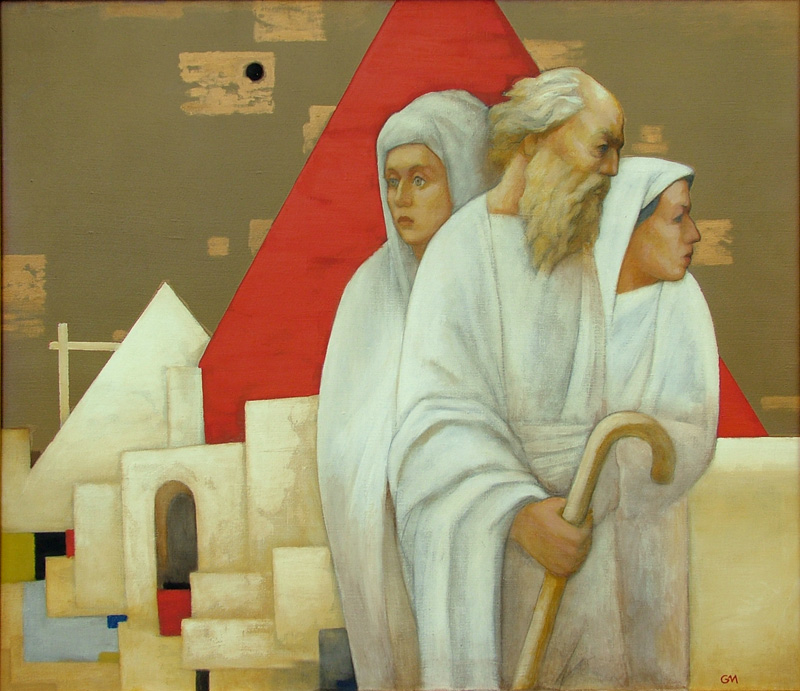
 

Deuteronomy 14: Boundary Markers and Celebrations

Grigory Mekheev, Exodus (2000) artist shared work under Creative Commons Attribution-Share Alike 3.0

Grigory Mekheev, Exodus (2000) artist shared work under Creative Commons Attribution-Share Alike 3.0

Deuteronomy 14

1 You are children of the LORD your God. You must not lacerate yourselves or shave your forelocks for the dead. 2 For you are a people holy to the LORD your God; it is you the LORD has chosen out of all the peoples on earth to be his people, his treasured possession.

 3 You shall not eat any abhorrent thing. 4 These are the animals you may eat: the ox, the sheep, the goat, 5 the deer, the gazelle, the roebuck, the wild goat, the ibex, the antelope, and the mountain-sheep. 6 Any animal that divides the hoof and has the hoof cleft in two, and chews the cud, among the animals, you may eat. 7 Yet of those that chew the cud or have the hoof cleft you shall not eat these: the camel, the hare, and the rock badger, because they chew the cud but do not divide the hoof; they are unclean for you. 8 And the pig, because it divides the hoof but does not chew the cud, is unclean for you. You shall not eat their meat, and you shall not touch their carcasses.

 9 Of all that live in water you may eat these: whatever has fins and scales you may eat. 10 And whatever does not have fins and scales you shall not eat; it is unclean for you.

11 You may eat any clean birds. 12 But these are the ones that you shall not eat: the eagle, the vulture, the osprey, 13 the buzzard, the kite, of any kind; 14 every raven of any kind; 15 the ostrich, the nighthawk, the sea gull, the hawk, of any kind; 16 the little owl and the great owl, the water hen 17 and the desert owl, the carrion vulture and the cormorant, 18 the stork, the heron, of any kind; the hoopoe and the bat. 19 And all winged insects are unclean for you; they shall not be eaten. 20 You may eat any clean winged creature.

21 You shall not eat anything that dies of itself; you may give it to aliens residing in your towns for them to eat, or you may sell it to a foreigner. For you are a people holy to the LORD your God.

 You shall not boil a kid in its mother’s milk.

                22 Set apart a tithe of all the yield of your seed that is brought in yearly from the field. 23 In the presence of the LORD your God, in the place that he will choose as a dwelling for his name, you shall eat the tithe of your grain, your wine, and your oil, as well as the firstlings of your herd and flock, so that you may learn to fear the LORD your God always. 24 But if, when the LORD your God has blessed you, the distance is so great that you are unable to transport it, because the place where the LORD your God will choose to set his name is too far away from you, 25 then you may turn it into money. With the money secure in hand, go to the place that the LORD your God will choose; 26 spend the money for whatever you wish– oxen, sheep, wine, strong drink, or whatever you desire. And you shall eat there in the presence of the LORD your God, you and your household rejoicing together. 27 As for the Levites resident in your towns, do not neglect them, because they have no allotment or inheritance with you.

 28 Every third year you shall bring out the full tithe of your produce for that year, and store it within your towns; 29 the Levites, because they have no allotment or inheritance with you, as well as the resident aliens, the orphans, and the widows in your towns, may come and eat their fill so that the LORD your God may bless you in all the work that you undertake.


If we look upon this chapters as merely a set of prohibitions of a couple practices and a lot of animals the people of Israel were not to eat we would miss the point. If we try to come up with rational explanations for why they shouldn’t eat certain things or imagine that the only reason these animals and practices are forbidden is because the Canaanites and other nations around them did it we would also miss the point. For the Israelites these are a part of bearing the identity of being a treasured possession or a people holy to God. As a people who bear the place where God’s name will dwell these practices also become a people whose identity is formed around certain practices that set them apart as holy. Part of being holy for Israel is living out of these practices for no other reason than they have been asked. As the Jewish writer Ruth Sohn can state:

According to Torah, God asks that we abstain from eating certain foods, not because they are unhealthy or intrinsically problematic, but simply as an expression or our devotion…These prohibitions are like the requests of a beloved; we may not understand them, but we are, in essence, asked to follow them purely as an expression of our love. (Thompson, 2014, p. 122f.)
The practices become boundary markers between the people of Israel who are called to be holy in a special way and who are to enjoy a special relationship with the LORD their God and the rest of the people. They are not called to impose these practices on others, in fact even within this section here we see ways in which these allowances can be used for mercy for the outsider, the provision that an animal that has died on its own may be used to feed the aliens residing in their town. It doesn’t mean that these are painless for the people who are living out of them. In a culture where meat was a luxury, as it is in most ancient agrarian communities, the prohibition of certain food sources that may have been readily available would have proved a constant temptation. Yet these eating practices proved to be one of the distinctive marks of Jewish identity for hundreds, even thousands of years. For example much later 2 Maccabees refers to the Jewish struggle against persecution under the Seleucid Empire in the reign of Antiochus IV with a specific reference to diet:

Eleazar, one of the scribes in high position, a man now advanced in age and of noble presence, was being forced to open his mouth to eat swine’s flesh. But he, welcoming death with honor rather than life with pollution, went up to the rack of his own accord, spitting out the flesh, as all ought to have the courage to refuse things that it is not right to taste, even for the natural love of life. (2 Maccabees 6: 18-20)

These practices of what to eat and what not to eat may seem strange to people who are not Jewish and have been a way in which others sought to get the Jewish people to relax their boundaries, yet for many Jewish people the food rules remain in practice in some form today.

The tithe, which is discussed in the final seven verses of the chapter is also a distinctive practice of the people but it is more about celebration than a burdensome requirement. The practice is in a sense a tax and a way to acknowledge the sovereignty of their God, yet God doesn’t need the grain and the wine and the animals. They are to bring them together and to enjoy together in God’s presence the produce of their flocks and fields. To take the ten percent of an accounting of the field and the firstlings of the flock are to be used to celebrate. Acknowledging the spread out nature of the community there is the provision to be able to convert the produce into money and then come and spend the money for whatever the family wants to use to celebrate. Meat in the ancient world would be eaten primarily at celebration times when a large group is gathered because there is no refrigeration to preserve the meat and so it would be an invitation for a large number of people to gather together around an ox that had been slaughtered. God allows for the people to purchase wine and strong drink as a part of the celebration as well. This is not a burdensome practice but rather a joyous one.

Within the celebration is also the provision for the needs of the unsupported ones of the community. The Levites who have been set aside for the operation of the tabernacle or temple need to be provided for so out of every third year’s tithe they are to be taken care of. Those who are the vulnerable of the community are also to be cared for out of this third year tithe: the resident alien, the orphan and the widow. They are to be the beneficiaries of this practice as well. As the claimed ones of God the people are to be the ones claiming responsibility of caring for those no one claims.

 Deuteronomy 13: The Challenge of Exclusivity

Willem de Poorter, 'De afgoderij van konig Solomo'-Solomon's decent into idolatry (between 1630 and 1648)

Willem de Poorter, ‘De afgoderij van konig Solomo’-Solomon’s decent into idolatry (between 1630 and 1648)

Deuteronomy 13

1 If prophets or those who divine by dreams appear among you and promise you omens or portents, 2 and the omens or the portents declared by them take place, and they say, “Let us follow other gods” (whom you have not known) “and let us serve them,” 3 you must not heed the words of those prophets or those who divine by dreams; for the LORD your God is testing you, to know whether you indeed love the LORD your God with all your heart and soul. 4 The LORD your God you shall follow, him alone you shall fear, his commandments you shall keep, his voice you shall obey, him you shall serve, and to him you shall hold fast. 5 But those prophets or those who divine by dreams shall be put to death for having spoken treason against the LORD your God– who brought you out of the land of Egypt and redeemed you from the house of slavery– to turn you from the way in which the LORD your God commanded you to walk. So you shall purge the evil from your midst.

 6 If anyone secretly entices you– even if it is your brother, your father’s son or your mother’s son, or your own son or daughter, or the wife you embrace, or your most intimate friend– saying, “Let us go worship other gods,” whom neither you nor your ancestors have known, 7 any of the gods of the peoples that are around you, whether near you or far away from you, from one end of the earth to the other, 8 you must not yield to or heed any such persons. Show them no pity or compassion and do not shield them. 9 But you shall surely kill them; your own hand shall be first against them to execute them, and afterwards the hand of all the people.10 Stone them to death for trying to turn you away from the LORD your God, who brought you out of the land of Egypt, out of the house of slavery.11 Then all Israel shall hear and be afraid, and never again do any such wickedness.

12 If you hear it said about one of the towns that the LORD your God is giving you to live in, 13 that scoundrels from among you have gone out and led the inhabitants of the town astray, saying, “Let us go and worship other gods,” whom you have not known, 14 then you shall inquire and make a thorough investigation. If the charge is established that such an abhorrent thing has been done among you, 15 you shall put the inhabitants of that town to the sword, utterly destroying it and everything in it– even putting its livestock to the sword.16 All of its spoil you shall gather into its public square; then burn the town and all its spoil with fire, as a whole burnt offering to the LORD your God. It shall remain a perpetual ruin, never to be rebuilt.17 Do not let anything devoted to destruction stick to your hand, so that the LORD may turn from his fierce anger and show you compassion, and in his compassion multiply you, as he swore to your ancestors, 18 if you obey the voice of the LORD your God by keeping all his commandments that I am commanding you today, doing what is right in the sight of the LORD your God.


As modern people the language of Deuteronomy, particularly the voices heard in sections like this can be difficult to hear. This does come from a different set of experiences and a very different time and culture and so I’m going to deal first with what it says and then reflect on how we might engage this within our own time, culture and struggles in a modern (or postmodern), secular and pluralistic world. If Deuteronomy reaches its final form in the aftermath of the Babylonian exile, which many scholars believe, as the people are wrestling for answers for how they retain their identity in a foreign land then Deuteronomy provides a voice arguing strongly against accommodation with the surrounding culture and provides a blame on the previous generations’ unfaithfulness to this as the reason for their current desolation. Deuteronomy is not the only voice in this conversation but among the scriptures that make up the Hebrew Bible they form one of the dominant voices.

We often think of decisions in terms of individual choices in a disenchanted world, but that was not the worldview of the people in the ancient world who received the book of Deuteronomy and who passed it on from generation to generation. This was a world in which belief was a communal activity which kept the demonic forces at bay, some of these forces like disease or famine would be looked upon today as a part of the measurable scientific worldview but in ancient times they were either ‘acts of God’ or acts of some other divine or demonic forces. If one person either turns away from or refuses to participate in the communal worship, beliefs and practices then it endangers everyone. As Charles Taylor says about the ancient worldview, “Villagers who hold out, or even denounce the common rites, put the efficacy of those rites in danger, and hence pose a danger to everyone.” (Taylor, 2007, p. 42) In more recent history this may be some of the paranoia behind witch hunts, or why the church as it entered into the crusades or the conquest of the new world often had a ‘convert/be baptized or die’ mentality. It may be alien to our time and as Walter Brueggemann states:

Church readers of this text might conclude that a large measure of accommodation is preferable to even a small amount of brutalizing vigilance. Deuteronomy of course is unpersuaded by such a judgment, unpersuaded but not self-critical about its own urgings. (Brueggemann, 2001, p. 156)

The text begins with prophets or dreamers who lead the people astray both by their words and by the actions that come to pass. No longer is merely the efficacy of a prophecy the measure of a prophet’s truthfulness but also now is introduced the reality that they must also remain faithful to the LORD. This leading astray is treason, and in a world where the religious and political authorities are merged as they are in Moses and the judges that will follow him, betrayal of God is also betrayal of the people. There is an interesting interpretation that the LORD is testing the faithfulness of the people through these false prophets, and throughout the telling of Israel’s story in Joshua, Judges, 1&2 Samuel and 1&2 Kings (commonly known as the Deuteronomic history because these books share a common perspective with Deuteronomy) there are numerous times where military leaders, religious leaders and kings will lead the people into the worship of other gods, which is the ultimate betrayal in Deuteronomy’s perspective. The penalty for this is harsh, it is death. That these decisions of loyalty for the people of Israel are matters of life and death for them as individuals and for them as a nation.

In the ancient world the closest bond is family, and so the second set of instruction in verses 6-11 involve a family member or a friend who tries to introduce unfaithful practices. The two examples that come to mind immediately is Solomon who begins to practice what his foreign wives practice and Ahab and Jezebel in their struggle with the prophet Elijah. Deuteronomy is unyielding even toward these closest of relationships and enhances the closeness by highlighting with terms like ‘the wife of your embrace’ or ‘your most intimate friend.’ In a culture where a husband may have many wives it is highlighted that even the favorite must be shown no accommodation, nor any child or intimate friend. In an uncompromising set of negative commands: do not yield, do not listen, do not pity, do not have compassion and do not shield; the family member is commanded to not only participate with the community in the execution of the offender but to throw the first stone. The peoples’ loyalty to the LORD is to be stronger than their loyalty to blood or companionship.

Finally the situation is discussed where a village or a community turns away from following the LORD to following other gods. The people who lead others astray and those led astray are together to bear the judgment of the broader community.  Yet, with a village or community there is to be a thorough investigation to discover the truth of the charges, but if true the entire village, all of its people, animals and wealth are to be destroyed. On the one hand this seems harsh, especially to the animals who had no choice in the matter but perhaps there is a gracious edge in this. If the spoils of the destruction of the village, both the animals and the wealth, are denied to the ones carrying out the destruction perhaps there is less incentive to make an accusation of unfaithfulness. Especially if they are also unable to rebuild the cities but are expected to leave them as a perpetual ruin. The reality is that if this sentence was ever carried out the city probably did not remain a perpetual ruin, and there are many stories in the book of Joshua and throughout the story of Israel where the people are to consign everything to destruction and hold back taking either the livestock and wealth or the women as a part of their conquest. This will be an ongoing struggle in the story of the people.

As modern people, who can look back upon the Salem witch trials, the Crusades and conquest of the new world, and countless other events where the practice of an exclusivist faith led to a betrayal of the practice of faith that would be consistent with many people’s reading of the person of Jesus, passages like this are difficult to read. We live in a world where faith is an individual decision and we can look upon people of different faiths or no faith and not see them as traitors or uneducated and so this exclusivist world of Deuteronomy seems alien to us, so how do we approach it in our time? Part of the answer for Christians I think does rely on the understanding that not all scripture holds equal weight. Different traditions approach this differently, but as a Lutheran Christian what lifts up Christ becomes central as a revelation of the character of God. For the Jewish people the first five books of the Bible may occupy a central place but for Christians there is the mutual flow of the New Testament interpreting the Hebrew Scriptures but the Hebrew Scriptures also helping us to understand the New Testament. That does not mean we can cast aside the parts or either set of books we disagree with, but it does give us a different set of tools to engage and wrestle with them. As Martin Luther could understand correctly that the first commandment does mean that “We are to fear, love and trust God above all things.” But we no longer live in a society where killing a person because they are of another faith is acceptable. We live in a much more secular world. Yet, I do think the wisdom that is present in texts like this is to highlight the seductiveness of alternate worldviews which encourage us to trust in other gods, which may not have a religious system associated with them in our time. We live in the constant struggle for where our trust and allegiance will lie and the temptation can come from others whose words seem to be trustworthy in other things, or a close friend or family member, or from the community around us. It is perhaps more challenging to live a faithful life in a secular world where the plethora or alternatives are paraded before us in diverse media and the ancient struggle of the people now becomes the internal struggle of the individual to live a faithful life. Yet, we need the communal aspect and I believe this is where the community of faith comes in to help and support us in our struggle to be faithful to the God who calls us.

Deuteronomy 12: Expounding on the Law

Grigory Mekheev, Exodus (2000) artist shared work under Creative Commons Attribution-Share Alike 3.0

Grigory Mekheev, Exodus (2000) artist shared work under Creative Commons Attribution-Share Alike 3.0

 Deuteronomy 12

1 These are the statutes and ordinances that you must diligently observe in the land that the LORD, the God of your ancestors, has given you to occupy all the days that you live on the earth.

                2 You must demolish completely all the places where the nations whom you are about to dispossess served their gods, on the mountain heights, on the hills, and under every leafy tree. 3 Break down their altars, smash their pillars, burn their sacred poles with fire, and hew down the idols of their gods, and thus blot out their name from their places. 4 You shall not worship the LORD your God in such ways. 5 But you shall seek the place that the LORD your God will choose out of all your tribes as his habitation to put his name there. You shall go there, 6 bringing there your burnt offerings and your sacrifices, your tithes and your donations, your votive gifts, your freewill offerings, and the firstlings of your herds and flocks. 7 And you shall eat there in the presence of the LORD your God, you and your households together, rejoicing in all the undertakings in which the LORD your God has blessed you.

                8 You shall not act as we are acting here today, all of us according to our own desires, 9 for you have not yet come into the rest and the possession that the LORD your God is giving you. 10 When you cross over the Jordan and live in the land that the LORD your God is allotting to you, and when he gives you rest from your enemies all around so that you live in safety, 11 then you shall bring everything that I command you to the place that the LORD your God will choose as a dwelling for his name: your burnt offerings and your sacrifices, your tithes and your donations, and all your choice votive gifts that you vow to the LORD. 12 And you shall rejoice before the LORD your God, you together with your sons and your daughters, your male and female slaves, and the Levites who reside in your towns (since they have no allotment or inheritance with you).

13 Take care that you do not offer your burnt offerings at any place you happen to see. 14 But only at the place that the LORD will choose in one of your tribes– there you shall offer your burnt offerings and there you shall do everything I command you.

15 Yet whenever you desire you may slaughter and eat meat within any of your towns, according to the blessing that the LORD your God has given you; the unclean and the clean may eat of it, as they would of gazelle or deer. 16 The blood, however, you must not eat; you shall pour it out on the ground like water. 17 Nor may you eat within your towns the tithe of your grain, your wine, and your oil, the firstlings of your herds and your flocks, any of your votive gifts that you vow, your freewill offerings, or your donations; 18 these you shall eat in the presence of the LORD your God at the place that the LORD your God will choose, you together with your son and your daughter, your male and female slaves, and the Levites resident in your towns, rejoicing in the presence of the LORD your God in all your undertakings. 19 Take care that you do not neglect the Levite as long as you live in your land.

                20 When the LORD your God enlarges your territory, as he has promised you, and you say, “I am going to eat some meat,” because you wish to eat meat, you may eat meat whenever you have the desire. 21 If the place where the LORD your God will choose to put his name is too far from you, and you slaughter as I have commanded you any of your herd or flock that the LORD has given you, then you may eat within your towns whenever you desire.     22 Indeed, just as gazelle or deer is eaten, so you may eat it; the unclean and the clean alike may eat it. 23 Only be sure that you do not eat the blood; for the blood is the life, and you shall not eat the life with the meat. 24 Do not eat it; you shall pour it out on the ground like water. 25 Do not eat it, so that all may go well with you and your children after you, because you do what is right in the sight of the LORD. 26 But the sacred donations that are due from you, and your votive gifts, you shall bring to the place that the LORD will choose. 27 You shall present your burnt offerings, both the meat and the blood, on the altar of the LORD your God; the blood of your other sacrifices shall be poured out beside the altar of the LORD your God, but the meat you may eat.

                28 Be careful to obey all these words that I command you today, so that it may go well with you and with your children after you forever, because you will be doing what is good and right in the sight of the LORD your God.

                29 When the LORD your God has cut off before you the nations whom you are about to enter to dispossess them, when you have dispossessed them and live in their land, 30 take care that you are not snared into imitating them, after they have been destroyed before you: do not inquire concerning their gods, saying, “How did these nations worship their gods? I also want to do the same.” 31 You must not do the same for the LORD your God, because every abhorrent thing that the LORD hates they have done for their gods. They would even burn their sons and their daughters in the fire to their gods. 32 You must diligently observe everything that I command you; do not add to it or take anything from it.


In the first eleven chapters of Deuteronomy we heard the story of the people of Israel re-narrated, the Ten Commandments re-stated and some of the central practices highlighted for the people to hear and know. Beginning in chapter twelve we begin to see these practices expanded upon and within these commandments the practices that form the people to live out of this command are expressed. The exposition of chapters 12-26 roughly follows the pattern of the Ten Commandments with twelve and thirteen referring back to having no other Gods. As the author of Deuteronomy reflects upon how the people of Israel will live out these commandments in the Promised Land they will impact the everyday life of the community. As Deanna Thompson can state, “These laws concern practical matters of worship, politics, economics, business and judicial practices, sexuality and marriage, family life and relationships.” (Thompson, 2014, p. 113)  The people of Israel were not attempting to create a community that happened to have a few religious practices but rather a community shaped by the covenant with their God and practices deriving from the Ten Commandments and the Shema where their lives are oriented around serving and loving their LORD. This is the beginning of a contextual theology where they try to understand how to form a people around these principles.

Part of covenant loyalty is celebration and feasting. It may seem strange to us that a chapter which is oriented on not worshipping other gods is so heavily concerned with eating together as a community but this is part of where identity is formed. The people are to come together for their offering and the offerings are not just burned up, they are eaten together with the priests and with others around the gathering place. Much like people gather together and tailgate before sporting events and they celebrate their common identity around a sports team, eating has always been a part of the celebrations around worship. One of the struggles of religious communities in a secular world has been the displacement of festival eating to other places, but it is not something that is gone from every religious tradition. My congregation is located next to a Hindu temple and they gather together to eat together frequently, especially on Saturdays. Orthodox Jews have a festival almost every month where they come together as community and part of that celebration is eating. Rather than allowing family and friendships to be the only places where people gather to eat if this is going to be a community that is able to love God and love their neighbor they need to come together to worship and eat together.

Priests for the Hebrew people also served a functional role as butchers in the land. Their job was not isolated from the dirty aspects of life, they may not have had farms and flocks to manage but they were woven into the agricultural system through their cultic role of preparing and offering the sacrifices of the flocks and fields. There will be stories of wandering Levites throughout the Hebrew Scriptures and while a part of their role was probably as story teller, the other part of their role is to make sure that the meat is properly prepared.

Deuteronomy also recognizes the struggle of distance in a larger community prior to the advent of motorized transportation. Most people probably did not make it in to the tabernacle or later temple for more than the occasional festival. People who lived in the rural areas certainly could not worship weekly at the tabernacle once the people were dispersed in the land. Distances made the journey impossible on foot very frequently while managing fields and flocks. So people are allowed to eat meat at times other than celebrations if it is available, and they are given only the restriction that they are not to eat the blood. These practices had less to do with health concerns and were about a recognition of their lives dependence upon the provision of the LORD. These actions have meaning assigned to them: “Only be sure that you do not eat the blood; for the blood is the life, and you shall not eat the life with the meat.” (Deuteronomy 12: 23) The blood is to be poured out before the LORD since the LORD is the source of life, but the people are not to consume the life since their life is derivative not of the animals that are killed but on the LORD their God.

The worship of the LORD is contrasted with the worship of other gods in relation to their practices as well. They are to come together, to offer their first fruits, their goodwill offerings and other offerings and to eat together and enjoy they bounty of the LORD in their land. The worship is primarily a gift to the gathered people and a celebration of their unity under the LORD. The worship of other gods may have been attractive in many aspects to the Hebrew people, but ultimately those practices are not to be followed. Especially the practice of child sacrifice is lifted up as something abhorrent to their LORD. In many cases the offering of a child was viewed as offering the very best to the deity which it was offered to, but the LORD is not a God who demands child sacrifices. Even the troubling story of Genesis 22 where the LORD commands Abraham to offer Isaac ends with the angel of the LORD providing the lamb instead of Isaac for the offering.

Often our identity is formed by the things we don’t do and the things we consciously do. As people of the LORD they do:

  • Gather together at a common place of worship and offer sacrifices
  • Gather together to eat and celebrate around this worship and sacrifice
  • Bring their donations to the LORD
  • Eat meat in their communities when they desire

But there are also things they do not do:

  • They do not allow other worship sites to remain in their land
  • They do not eat blood
  • They do not worship other deities
  • They do not sacrifice children.

Deuteronomy 11: Blessings and Curses

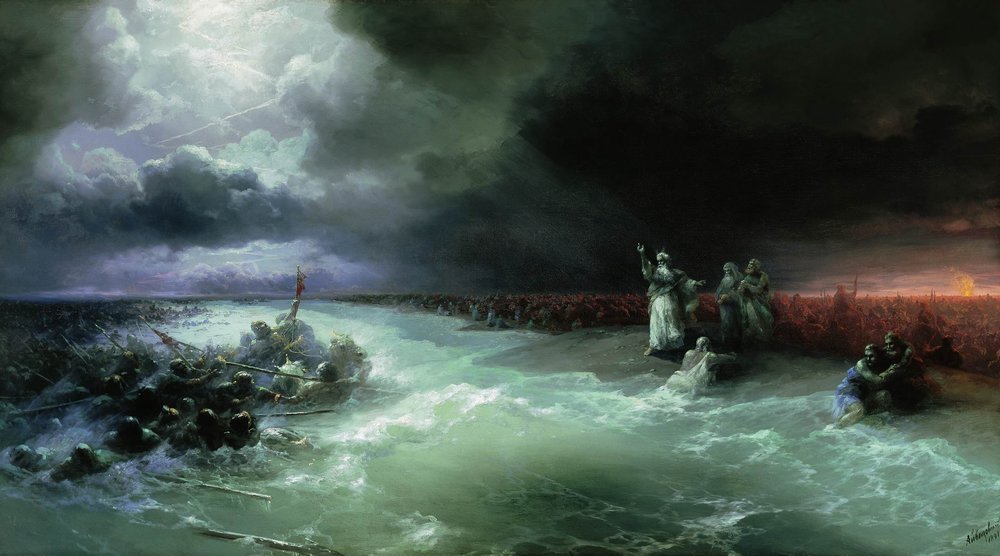
Ivan Aivazovsky, Passage of the Jews through the Red Sea (1891)

Ivan Aivazovsky, Passage of the Jews through the Red Sea (1891)

Deuteronomy 11

1 You shall love the LORD your God, therefore, and keep his charge, his decrees, his ordinances, and his commandments always. 2 Remember today that it was not your children (who have not known or seen the discipline of the LORD your God), but it is you who must acknowledge his greatness, his mighty hand and his outstretched arm, 3 his signs and his deeds that he did in Egypt to Pharaoh, the king of Egypt, and to all his land; 4 what he did to the Egyptian army, to their horses and chariots, how he made the water of the Red Sea flow over them as they pursued you, so that the LORD has destroyed them to this day; 5 what he did to you in the wilderness, until you came to this place; 6 and what he did to Dathan and Abiram, sons of Eliab son of Reuben, how in the midst of all Israel the earth opened its mouth and swallowed them up, along with their households, their tents, and every living being in their company; 7 for it is your own eyes that have seen every great deed that the LORD did.

8 Keep, then, this entire commandment that I am commanding you today, so that you may have strength to go in and occupy the land that you are crossing over to occupy, 9 and so that you may live long in the land that the LORD swore to your ancestors to give them and to their descendants, a land flowing with milk and honey. 10 For the land that you are about to enter to occupy is not like the land of Egypt, from which you have come, where you sow your seed and irrigate by foot like a vegetable garden. 11 But the land that you are crossing over to occupy is a land of hills and valleys, watered by rain from the sky, 12 a land that the LORD your God looks after. The eyes of the LORD your God are always on it, from the beginning of the year to the end of the year.

13 If you will only heed his every commandment that I am commanding you today– loving the LORD your God, and serving him with all your heart and with all your soul–14 then he will give the rain for your land in its season, the early rain and the later rain, and you will gather in your grain, your wine, and your oil; 15 and he will give grass in your fields for your livestock, and you will eat your fill. 16 Take care, or you will be seduced into turning away, serving other gods and worshiping them, 17 for then the anger of the LORD will be kindled against you and he will shut up the heavens, so that there will be no rain and the land will yield no fruit; then you will perish quickly off the good land that the LORD is giving you.

                18 You shall put these words of mine in your heart and soul, and you shall bind them as a sign on your hand, and fix them as an emblem on your forehead. 19 Teach them to your children, talking about them when you are at home and when you are away, when you lie down and when you rise. 20 Write them on the doorposts of your house and on your gates, 21 so that your days and the days of your children may be multiplied in the land that the LORD swore to your ancestors to give them, as long as the heavens are above the earth.

 22 If you will diligently observe this entire commandment that I am commanding you, loving the LORD your God, walking in all his ways, and holding fast to him, 23 then the LORD will drive out all these nations before you, and you will dispossess nations larger and mightier than yourselves. 24 Every place on which you set foot shall be yours; your territory shall extend from the wilderness to the Lebanon and from the River, the river Euphrates, to the Western Sea. 25 No one will be able to stand against you; the LORD your God will put the fear and dread of you on all the land on which you set foot, as he promised you.

                26 See, I am setting before you today a blessing and a curse: 27 the blessing, if you obey the commandments of the LORD your God that I am commanding you today; 28 and the curse, if you do not obey the commandments of the LORD your God, but turn from the way that I am commanding you today, to follow other gods that you have not known. 29 When the LORD your God has brought you into the land that you are entering to occupy, you shall set the blessing on Mount Gerizim and the curse on Mount Ebal. 30 As you know, they are beyond the Jordan, some distance to the west, in the land of the Canaanites who live in the Arabah, opposite Gilgal, beside the oak of Moreh.

                31 When you cross the Jordan to go in to occupy the land that the LORD your God is giving you, and when you occupy it and live in it, 32 you must diligently observe all the statutes and ordinances that I am setting before you today.

The author of the book of Deuteronomy approaches the same topics multiple times in similar ways over the first eleven chapters, and throughout the rest of the book. Because of this, on a topical level, there is not a lot of new material in this eleventh chapter, yet I also think it is important to consider the implied narrative that the book of Deuteronomy is set within. The book of Deuteronomy opens by telling us, “These are the words that Moses spoke to all Israel beyond the Jordan.” And the book portrays itself as primarily an oral speech rather than a written text. For most people in a literate or even post-literate context (post literate coming from the assumption that most people now receive information more through digital images rather than written text) our attention span for a spoken text is fairly short, but this is written for an aural culture (aural-information is received through hearing) where the majority of the hearers are not literate. Speech in an aural culture is repetitive so that is can be remembered and just as the words are connected to concrete actions to enhance remembrance (binding the words upon the forehead and on the hands, writing them on doorposts as a visual reminder of the spoken word) the repetition of certain critical words and phrases should continue to enhance the memory of the speech event. Music does this all the time by repeating a chorus or using certain patterns to fit words within. So while Deuteronomy may be an unwieldy written text as an aural presentation its continual re-narrating of the story, emphasis on the commandments, statutes and ordinances laid down for the people to live by serve to enhance its effectiveness.

Figurine of a Semitic Slave, Acient Egyptian figurine, Hecht Museum

Figurine of a Semitic Slave, Acient Egyptian figurine, Hecht Museum

There strong contrast set throughout Deuteronomy, and particularly here in chapter eleven between the people of Israel and the land they are to enter and their former masters and land in Egypt. Part of the story of their people is their being exploited as slave in the nation of Egypt. Egypt is the first major power and they are able to be a successful people because of the waters of the Nile. Yet to provide for food in this hot and arid land it required the irrigation of crops and this is a very labor intensive process. The Israelite people were probably a part of the slave labor force that used foot pumps to pull water out of the Nile to irrigate the fields of the Egyptians and to pull from a hot and unforgiving environment by the exertion of human will a harvest each year. Yet the system in Egypt was dependent upon slave labor and provided great agriculture riches for the owners and the elite on the backs of the enslavement of others. The Israelites are not to have this type of economic relationship where their culture is dependent upon the enslavement of other people. They are also entering a land of milk and honey, a land of abundance. The availability of water is not dependent upon the exertion of human labor but instead is dependent upon the God of Israel who provides the rains in their season and allows the waters of the heavens to provide for the crops of the Promised Land. In this land of abundance they are called to be attentive to the commands of their God, for the eyes of the LORD are always on the land but also always watching them as a people in their obedience.

The obedience to the commandments and to the words spoken here are a matter of blessing and curse for both the people and the land. They do not have a great river like the Nile that they can utilize to irrigate in the drought years, instead they are dependent upon their God granting them rain at the appropriate time. Obedience, as continues to be stressed over and over in Deuteronomy, means blessing for the people and their children and their children’s children. Disobedience means the loss of prosperity and ultimately the loss of the land. The book of Deuteronomy constructs a world of sharp alternatives in a tightly ordered universe. It is a matter of life or death importance that the people of Israel hear again their story, remember who they are and remember their LORD, and then live out of the commandments, statutes and ordinances of their God. They are to be a people who live in justice, not taking advantage of the exploitable to form a new class of slaves. They have this story and these words read to them again and again to reinforce the imperatives that Moses is putting before them in speech. It is speech that is reinforced by not only the emblem on their foreheads or sign on their hands but by the sight of Mount Gerizim and Mount Ebal where blessing and curse symbolically reside.

Deuteronomy 10- The Covenant Renewed

Patrice Leon, (940)

Patrice Leon, (940)

Deuteronomy 10: 1-5 – A Renewed Covenant

1 At that time the LORD said to me, “Carve out two tablets of stone like the former ones, and come up to me on the mountain, and make an ark of wood. 2 I will write on the tablets the words that were on the former tablets, which you smashed, and you shall put them in the ark.” 3 So I made an ark of acacia wood, cut two tablets of stone like the former ones, and went up the mountain with the two tablets in my hand. 4 Then he wrote on the tablets the same words as before, the ten commandments that the LORD had spoken to you on the mountain out of the fire on the day of the assembly; and the LORD gave them to me. 5 So I turned and came down from the mountain, and put the tablets in the ark that I had made; and there they are, as the LORD commanded me.


This retelling of the second giving of the ten commandments, combines portions of Exodus 34 and Exodus 37 putting the focus on Moses. Throughout Deuteronomy, Moses is the paradigm for what the people of Israel are to be. Moses again goes up Mount Sinai/ Horeb to be in the presence of God after the people have transgressed the covenant and the original tablets have been shattered by Moses in his frustration. The second giving of the Ten Commandments after the incident with the golden calf is an opportunity at a new beginning. God has moved past the previous transgressions and grants the people a new chance to live into their identity. In a key difference in tellings, now it is Moses who creates the original ark to house the Ten Commandments rather than Bezalel and Oholiab, but this is consistent with Deuteronomy’s focus on the character and person of Moses as the paradigmatic person who embodies what the Hebrew people are called to be. The place of the Ark of the Covenant in the story of the Jewish people comes not from its skillful work or the gold or the images of the cherubim but rather from its association with the story of Moses and its place as a holder of the words of God that Moses brings to the people.


Deuteronomy 10: 6-9 – Side Note on the Journey and Setting Aside the Levites


 6 (The Israelites journeyed from Beeroth-bene-jaakan to Moserah. There Aaron died, and there he was buried; his son Eleazar succeeded him as priest. 7 From there they journeyed to Gudgodah, and from Gudgodah to Jotbathah, a land with flowing streams. 8 At that time the LORD set apart the tribe of Levi to carry the ark of the covenant of the LORD, to stand before the LORD to minister to him, and to bless in his name, to this day. 9 Therefore Levi has no allotment or inheritance with his kindred; the LORD is his inheritance, as the LORD your God promised him.)


This is an interesting insertion into the story of the second time Moses is on the mountain with God, for it seems out of place. On the one hand the travel narrative jumps us well ahead in the story as told in Exodus and Numbers to the death of Aaron immediately prior to the second approach to the promised land and uses different names for the places in the movement, for example Moserah in Numbers is Mount Hor. Perhaps more importantly for the narrative is the removal of Aaron from the line of authority between Moses and the people. Moses becomes the link between the people and God as their leader and prophet and the Levites, and Aaron’s son Eleazar inherit the role of priests for the people. It sets the Levites up for their role once they enter the promised land but also explains their lack of an inherited land. The Levites going forward will be the ones to pass on the law that Moses receives in the narratives of Deuteronomy and Exodus, but their authority is as receivers of the law and their authority is derivative from the setting aside of God and dependent on the faithfulness of the other tribes in providing for them. The Levites become, in a sense, a permanent reminder of the people’s Exodus journey, becoming a representative people without a land dependent only upon the Lord as their inheritance.


Deuteronomy 10: 10-11- Back on the Mountain with God


            10 I stayed on the mountain forty days and forty nights, as I had done the first time. And once again the LORD listened to me. The LORD was unwilling to destroy you. 11 The LORD said to me, “Get up, go on your journey at the head of the people, that they may go in and occupy the land that I swore to their ancestors to give them.”

Continuing the theme from the beginning of this chapter we see a chance at a new beginning. The LORD’s anger has passed, the LORD’s promise of the land has not changed, the people’s disobedience has been consigned to the past with a new future opened up by forgiveness. Moses has intervened for the people and the LORD has listened but also the emphasis is on the LORD’s choce, “The LORD was unwilling to destroy you. Moses is reaffirmed as being the leader and is to go at the head of the people

Deuteronomy 10: 12-22 – The Choice of God

12 So now, O Israel, what does the LORD your God require of you? Only to fear the LORD your God, to walk in all his ways, to love him, to serve the LORD your God with all your heart and with all your soul, 13 and to keep the commandments of the LORD your God and his decrees that I am commanding you today, for your own well-being. 14 Although heaven and the heaven of heavens belong to the LORD your God, the earth with all that is in it, 15 yet the LORD set his heart in love on your ancestors alone and chose you, their descendants after them, out of all the peoples, as it is today. 16 Circumcise, then, the foreskin of your heart, and do not be stubborn any longer. 17 For the LORD your God is God of gods and Lord of lords, the great God, mighty and awesome, who is not partial and takes no bribe, 18 who executes justice for the orphan and the widow, and who loves the strangers, providing them food and clothing. 19 You shall also love the stranger, for you were strangers in the land of Egypt. 20 You shall fear the LORD your God; him alone you shall worship; to him you shall hold fast, and by his name you shall swear. 21 He is your praise; he is your God, who has done for you these great and awesome things that your own eyes have seen. 22 Your ancestors went down to Egypt seventy persons; and now the LORD your God has made you as numerous as the stars in heaven.


The people are in their position because of the choice of their God. Their response is one of obedience, respect, awe and love. They are called to commit themselves to God wholeheartedly. Working from the contrast between the smallness of the people and the vastness of God’s creation and domain they are reminded that God chose to love their ancestors and by extension them. As the previous chapters of Deuteronomy have made clear it is not their military might, their wealth, their self-righteousness or any other factor that have placed them into this covenantal relationship with their God. Rather, it is the divine choice to love this people. So the people are called to live out of this calling.

This God of Israel, the LORD, is also not primarily interested in the sacrifices or the wealth offered during the worship of God. God cannot be bribed by the produce of the land or the riches of the wealthiest kings. This is a God who may have dominion over the heavens and the heaven of heavens and the earth and all that is in it, but this is also a God who chooses to pay attention to the lost and the least of that same earth. The people are not to model themselves after an image of God who seeks the mighty and the powerful of the earth, but rather they are to model themselves on the imageless God who seeks out justice for the weakest of the community: the widow, the orphan and the stranger. The LORD who rescued them from their slavery expects them not to, in their entry into the land, to now become the oppressor and the slaveholder. As the LORD cared for them in their captivity and slavery in Egypt, the promise is that the LORD will also value the stranger, the captive, the slave and the weak in their midst.

Deuteronomy 9: The Promise of God and the Stubborn People


Deuteronomy 9: 1-5 The Promise of God


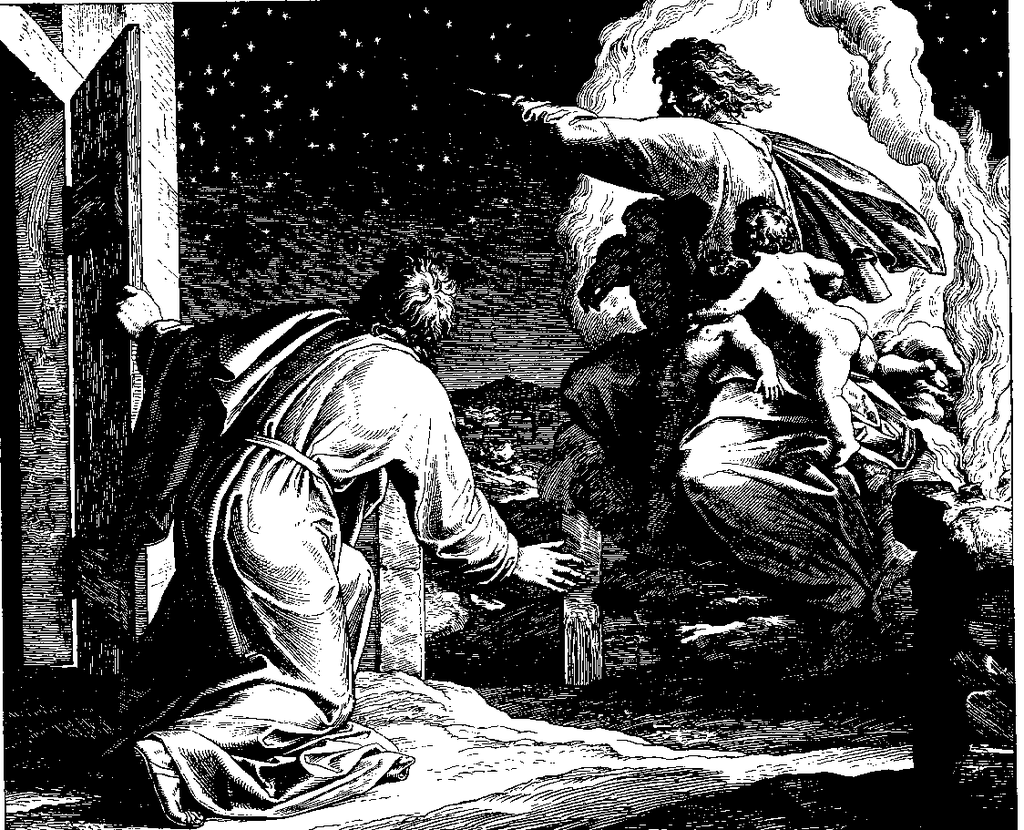
Julius Schnorr von Carolsfeld woodcut for "Die Bibel in Bildern" (1860) God telling Abraham to Count the Stars

Julius Schnorr von Carolsfeld woodcut for “Die Bibel in Bildern” (1860) God telling Abraham to Count the Stars

1 Hear, O Israel! You are about to cross the Jordan today, to go in and dispossess nations larger and mightier than you, great cities, fortified to the heavens, 2 a strong and tall people, the offspring of the Anakim, whom you know. You have heard it said of them, “Who can stand up to the Anakim?” 3 Know then today that the LORD your God is the one who crosses over before you as a devouring fire; he will defeat them and subdue them before you, so that you may dispossess and destroy them quickly, as the LORD has promised you.

4 When the LORD your God thrusts them out before you, do not say to yourself, “It is because of my righteousness that the LORD has brought me in to occupy this land”; it is rather because of the wickedness of these nations that the LORD is dispossessing them before you. 5 It is not because of your righteousness or the uprightness of your heart that you are going in to occupy their land; but because of the wickedness of these nations the LORD your God is dispossessing them before you, in order to fulfill the promise that the LORD made on oath to your ancestors, to Abraham, to Isaac, and to Jacob.


In the first three chapters of Deuteronomy, Moses takes the people through a retelling of their failure the first time they explored the Promised Land and then the conquering of King Sihon of Heshbon and King Og of Bashan there is a continual reference to a fear of the Anakim, a group of people larger and stronger than the Israelites. Already in the narrative of Deuteronomy we have seen how this narrative of fear kept the people out of the Promised Land a generation before and how the people have already begun to conquer nations more powerful than themselves with great cities. Moses continues, in the narrative, to prepare the people to continue without him. Moses wants the people to understand that it is not because of their might (Deuteronomy 7) that they are chosen by God, or by their prosperity (Deuteronomy 8) or by their own righteousness or piety (Deuteronomy 9) that God is acting on their behalf. As a people their future is dependent upon their God and the promises that this God has made.

In seeking to make sense of the world the Deuteronomist provides his reason for the LORD’s action against the nations that currently occupy the land the people of Israel are preparing to occupy. It is not the righteousness of the people of Israel but the unrighteousness, or wickedness, of the people of the land. Israel has not merited God’s favor, but the nations of the land have somehow merited the divine disfavor. Much as in Romans 11, the Apostle Paul can make an argument against arrogance by the new Gentile Christians not to boast about their being grafted onto the tree of God’s faithful people, here Moses tells the people not to become arrogant over their new position in the Promised Land for their position is contingent upon God’s faithfulness to God’s promise. Moses casts back to the promise made to Abraham, Isaac and Jacob that their descendants would become a great nation. In Genesis 15 the LORD promises Abram (later Abraham) that his descendants shall be as numerous as the stars of heaven and in Genesis 12 there is the promise of the land to Abram’s descendants.


Deuteronomy 9: 6-29 An Unrighteous and Stubborn People

Antonio Molinari, Adoration of the Golden Calf between 1700 and 1702

Antonio Molinari, Adoration of the Golden Calf between 1700 and 1702

6 Know, then, that the LORD your God is not giving you this good land to occupy because of your righteousness; for you are a stubborn people. 7 Remember and do not forget how you provoked the LORD your God to wrath in the wilderness; you have been rebellious against the LORD from the day you came out of the land of Egypt until you came to this place.

8 Even at Horeb you provoked the LORD to wrath, and the LORD was so angry with you that he was ready to destroy you. 9 When I went up the mountain to receive the stone tablets, the tablets of the covenant that the LORD made with you, I remained on the mountain forty days and forty nights; I neither ate bread nor drank water. 10 And the LORD gave me the two stone tablets written with the finger of God; on them were all the words that the LORD had spoken to you at the mountain out of the fire on the day of the assembly. 11 At the end of forty days and forty nights the LORD gave me the two stone tablets, the tablets of the covenant. 12 Then the LORD said to me, “Get up, go down quickly from here, for your people whom you have brought from Egypt have acted corruptly. They have been quick to turn from the way that I commanded them; they have cast an image for themselves.” 13 Furthermore the LORD said to me, “I have seen that this people is indeed a stubborn people. 14 Let me alone that I may destroy them and blot out their name from under heaven; and I will make of you a nation mightier and more numerous than they.”

15 So I turned and went down from the mountain, while the mountain was ablaze; the two tablets of the covenant were in my two hands. 16 Then I saw that you had indeed sinned against the LORD your God, by casting for yourselves an image of a calf; you had been quick to turn from the way that the LORD had commanded you. 17 So I took hold of the two tablets and flung them from my two hands, smashing them before your eyes. 18 Then I lay prostrate before the LORD as before, forty days and forty nights; I neither ate bread nor drank water, because of all the sin you had committed, provoking the LORD by doing what was evil in his sight. 19 For I was afraid that the anger that the LORD bore against you was so fierce that he would destroy you. But the LORD listened to me that time also. 20 The LORD was so angry with Aaron that he was ready to destroy him, but I interceded also on behalf of Aaron at that same time. 21 Then I took the sinful thing you had made, the calf, and burned it with fire and crushed it, grinding it thoroughly, until it was reduced to dust; and I threw the dust of it into the stream that runs down the mountain.

22 At Taberah also, and at Massah, and at Kibroth-hattaavah, you provoked the LORD to wrath. 23 And when the LORD sent you from Kadesh-barnea, saying, “Go up and occupy the land that I have given you,” you rebelled against the command of the LORD your God, neither trusting him nor obeying him. 24 You have been rebellious against the LORD as long as he has known you.

 25 Throughout the forty days and forty nights that I lay prostrate before the LORD when the LORD intended to destroy you, 26 I prayed to the LORD and said, “Lord GOD, do not destroy the people who are your very own possession, whom you redeemed in your greatness, whom you brought out of Egypt with a mighty hand. 27 Remember your servants, Abraham, Isaac, and Jacob; pay no attention to the stubbornness of this people, their wickedness and their sin, 28 otherwise the land from which you have brought us might say, ‘Because the LORD was not able to bring them into the land that he promised them, and because he hated them, he has brought them out to let them die in the wilderness.’ 29 For they are the people of your very own possession, whom you brought out by your great power and by your outstretched arm.”


In C.S. Lewis’ classic book the Lion, the Witch and the Wardrobe there is a scene where the children are discussing Aslan, who they have not met yet, with Mr. and Mrs. Beaver. With Aslan being a lion one of the children asks if he is safe, to which Mr. Beaver replies, “Safe?…Don’t you hear anything that Mrs. Beaver tells you? Who said anything about safe? ‘Course he isn’t safe. But he’s good.” In that story the lion Aslan can be fierce but also gentle but is not domesticated. The LORD that the people of Israel come to know in their story is good but certainly not safe. Their narrative reminds them that they continually tested God throughout their Exodus and there were several times where their very existence was at risk because they offended their LORD and Moses had to intervene on behalf of the people and their leaders. The people often sought in the past and will continue to seek in the future more domesticated gods that provide for them without expecting who they are to change as individuals and as people. These gods of the nations around them that are placated by various offerings and activities rather than the LORD who demands their obedience and is never safe.

The narrative of Deuteronomy reminds the people of the story of their ancestors and gives a time period to the time Moses is up on the Mountain of Sinai (Horeb) receiving the ten commandments, the regulations for the priests, the design for the tabernacle, and several other ordinances.  This part of the story where Moses receives all of these things is laid out in Exodus 20-31. This story in Deuteronomy is used to show the contrast between Moses’ faithfulness and the people’s unfaithfulness. While Moses spends the forty days on the mountain fasting and receiving the stone tablets from the LORD, the people at the base of Mount Sinai (Horeb) are violating the very heart of the commands Moses is receiving. For the LORD declares that they are not to cast images or to follow other Gods, and the LORD their God is indeed a jealous God. Wonders and signs may make the people trust in the moment but they rarely in the bible seem to create a lasting sense of trust, and so Moses takes them back to the story again so they can remember how time after time they put their own future in jeopardy in the past by trusting other gods and tries to encourage them not to repeat this practice in the future.

Moses in this story represents what Israel is to be. Moses stands between God and the people and intercedes for them, fasts for them, places his own safety at risk with this unsafe God and reminds God again of the promises God has made, of God’s reputation, and daringly calls upon God to be God.  Moses wrestles with God (which is where the name Israel comes from) on behalf of the people and on behalf of Aaron and on behalf of God as well. Moses and the people stand in sharp contrast, Moses is engaged with the one LORD while the people craft an image of gold. Moses does not eat or drink for forty days twice while the emphasis is on the people eating and drinking and reveling in Exodus 32. Moses emphasizes that both they and Aaron where close to being consumed by the LORD’s wrath before this wrath turned away. Moses also lifts up Taberah, Massah and Kibroth-hattaavah (Numbers 11: 1-3; Exodus 17: 1-7 and Numbers 11: 31-34) as well as Kadesh-barnea (which was already highlighted in Deuteronomy 1: 19-45) as additional times where the LORD’s anger was kindled and with each of these stories the people failed in their calling to trust and obey the LORD. Moses argues like a lawyer laying out the case before the people that they are far from righteous on their own, but rather they are the beneficiaries of the divine provision in spite of their and their ancestor’s stubbornness. Their reception of the land is a result of God’s promise rather than their own abilities or piety.

For the people of Israel the god of moralism is not to be their god. They are a covenant people claimed by the LORD, the God of Israel and to be a covenant people is to be set aside because of God’s calling. If the book of Deuteronomy is compiled in the Babylonian exile, as many scholars believe, and the people are reflecting upon how they, with the temple and a Davidic king and the land, now found themselves in exile. They are reexamine their own story critically, trying to discover where they failed in their calling as the people of the God of Israel. Perhaps in the tradition of Jeremiah they are looking toward the time when the LORD will make a new covenant with them and put the LORD’s law within them and they shall all know the LORD (see Jeremiah 31; 31-34). They are a people who are ultimately dependent on their God’s righteousness and to use Martin Luther’s famous language about this righteousness it is an ‘alien righteousness’ that is given to them but does not belong to them. They are a people constituted by God’s calling. Perhaps Moses, in Deuteronomy, like many of the great revival preachers of the 1800s is trying to call the people back to the LORD, appealing to the fear of what would happen if their covenant with the LORD is dissolved. But they stand at the edge of the Promised Land due to the favor of a good but unsafe and not domesticated God. The narrative of Deuteronomy takes the reader back to this point and leaves them in this place and begs them to live in a way that is faithful to the calling they have received and the learn to trust and obey their LORD because their lives do depend upon it.

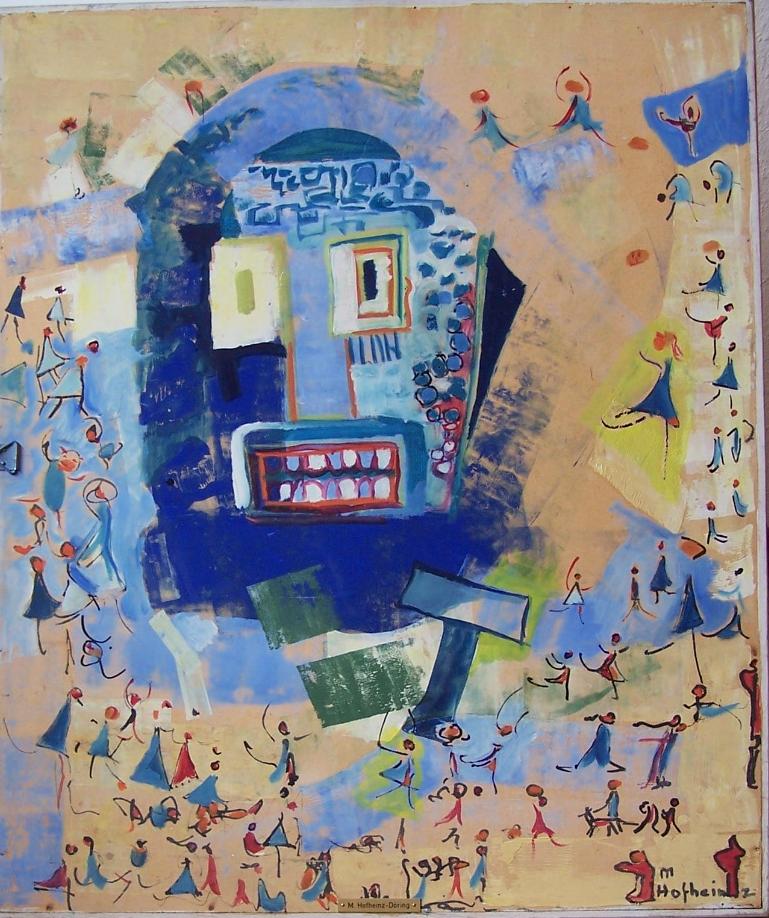
Margaret Hofheinz-Doring, Worship of the Golden Calf (1962)  shared under Creative Commons Attribution-Share Alike  3.0

Margaret Hofheinz-Doring, Worship of the Golden Calf (1962) shared under Creative Commons Attribution-Share Alike 3.0

Deuteronomy 8 The Dangers of Abundance

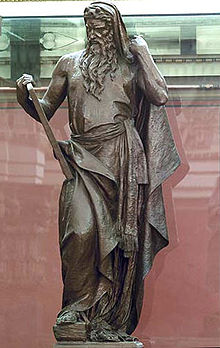
Statue of Moses at the Library of Congress, Washington D.C.

Statue of Moses at the Library of Congress, Washington D.C.

Deuteronomy 8: 1-10 The LORD’s Care in the Exodus

1 This entire commandment that I command you today you must diligently observe, so that you may live and increase, and go in and occupy the land that the LORD promised on oath to your ancestors. 2 Remember the long way that the LORD your God has led you these forty years in the wilderness, in order to humble you, testing you to know what was in your heart, whether or not you would keep his commandments. 3 He humbled you by letting you hunger, then by feeding you with manna, with which neither you nor your ancestors were acquainted, in order to make you understand that one does not live by bread alone, but by every word that comes from the mouth of the LORD. 4 The clothes on your back did not wear out and your feet did not swell these forty years. 5 Know then in your heart that as a parent disciplines a child so the LORD your God disciplines you. 6 Therefore keep the commandments of the LORD your God, by walking in his ways and by fearing him. 7 For the LORD your God is bringing you into a good land, a land with flowing streams, with springs and underground waters welling up in valleys and hills, 8 a land of wheat and barley, of vines and fig trees and pomegranates, a land of olive trees and honey, 9 a land where you may eat bread without scarcity, where you will lack nothing, a land whose stones are iron and from whose hills you may mine copper. 10 You shall eat your fill and bless the LORD your God for the good land that he has given you.


Deuteronomy 8 breaks into two sections, one looks back and one looks forward. Looking back to the journey of the people through the wilderness, a place without the resources for easy survival of a large people migrating from one land to another, they are reminded of the way the LORD provided in the midst of their scarcity. As Luther could say in his day:

God has given me and still preserves my body and soul: eyes, ears, and all limbs and senses; reason and all mental faculties. In addition, God daily and abundantly provides shoes and clothing, fields, livestock, and all property—along with all the necessities and nourishment for this body and life. (Luther, 1994, p. 25)

In the reflective mode of book of Deuteronomy Moses reminds the people how God provided food and water, made their clothes and shoes endure the forty years, kept their bodies from showing the strain of the difficult journey and in general preserved the people through their ordeal.

The time of the Exodus was also a time of testing and discipline for the people as they slowly began to be prepared to enter the Promised Land. This chapter uses parent-child language in verse 5 to talk about the way that the LORD has been teaching the people how to live as the covenant people of God and to prepare them to live in this bountiful land. In the parental role God has attempted to provide a healthy set of boundaries and provide a pattern for their relationship with one another. In a culture where identity was inherited, passed down from parent to child, they have been in the process of constructing a new set of identities. Once their identities were fixed as slaves in Egypt because they were Hebrew and not Egyptian, now their identity is that of children of God, freed from their captivity in Egypt. Their parent’s generation was a generation in transition, continually looking back to their previous identity and being called into a new one but now this generation has to construct a new identity. Their existence has been one of wandering and relying upon God for their daily bread. Their parents and grandparents were captives, now they are to be conquerors. Now that they have grown into their role as the people of God they are ready to inherit a land rich in agricultural produce, mineral wealth and flowing stream. They are now being addressed as the grown children who, like Adam in the book of Genesis, will be called to work and tend this garden for the LORD.  They too will be tempted in their abundance and will be enticed to construct new identities other than the one they are inheriting from their parental God.


Deuteronomy 8: 11-20 The Dangers of Complacency and Affluence

11 Take care that you do not forget the LORD your God, by failing to keep his commandments, his ordinances, and his statutes, which I am commanding you today. 12 When you have eaten your fill and have built fine houses and live in them, 13 and when your herds and flocks have multiplied, and your silver and gold is multiplied, and all that you have is multiplied, 14 then do not exalt yourself, forgetting the LORD your God, who brought you out of the land of Egypt, out of the house of slavery, 15 who led you through the great and terrible wilderness, an arid wasteland with poisonous snakes and scorpions. He made water flow for you from flint rock, 16 and fed you in the wilderness with manna that your ancestors did not know, to humble you and to test you, and in the end to do you good. 17 Do not say to yourself, “My power and the might of my own hand have gotten me this wealth.” 18 But remember the LORD your God, for it is he who gives you power to get wealth, so that he may confirm his covenant that he swore to your ancestors, as he is doing today. 19 If you do forget the LORD your God and follow other gods to serve and worship them, I solemnly warn you today that you shall surely perish. 20 Like the nations that the LORD is destroying before you, so shall you perish, because you would not obey the voice of the LORD your God.


Martin Luther could say of this passage, “(So) where abundance prevails, do not be puffed up or carelessly forget God. Whether everything is on hand or everything is lacking, cling to your God always with the same heart.” (Thompson, 2014, p. 92) And yet the fear portrayed, and realized through the later books of the Deuteronomic history, is that the people will not cling to their God with the same heart. When they are no longer dependent upon God for their daily bread in the same manner they will quickly begin to take their own security for granted. As David Martin, when talking about modern day Pentecostalism, can state, “Unsurprisingly, given so many of them are the ‘damned of the earth’, they respond to an Old Testament emphasis on good things God has in store for the righteous.” And the narratives of Deuteronomy portray a people who had been among the ‘damned of the earth’ and may well have been compiled to be told to a people feeling they are the ‘damned of the earth’ again as they sit in exile in Babylon. The people are needing to hear a promise of what God can do but also a cautionary tale of how when they have all that they need they run the risk of losing their identity. As immigrant cultures come to the United States the first generation typically comes with the values of the homeland and the language of the homeland, but subsequent generation become further and further removed from the language, culture and values of their ancestors homes, so too in a story of the Hebrew people they will begin, in a state of relative comfort, to adapt to the culture and the values that surround them. While the Ten Commandments may call them to care for their neighbor, and earlier in Deuteronomy is the call to care for the vulnerable among the community: the orphan, the alien, the widow, slaves, etc. Yet, the gods of materialism are seductive and call the individual to seek their own best interest, to follow the gods of their stomachs and desires, and to allow their living covenant with the God of Israel to become a set of religious practices separated from the rest of their lives. Deuteronomy continually reminds the people of their relationship to the LORD that their identity is found in the covenant they have with their God and that if they lose that identity their lives, property, and security are all at risk. That they too, even when abundance prevails, are to cling to their God with the same heart knowing that their daily bread still comes from the provision of the God of their ancestors.

Deuteronomy 7 A People Set Apart

Gustave Dore, The Midianites Are Routed (1866)

Gustave Dore, The Midianites Are Routed (1866)

Deuteronomy 7: 1-6: The Command to Destroy

When the LORD your God brings you into the land that you are about to enter and occupy, and he clears away many nations before you– the Hittites, the Girgashites, the Amorites, the Canaanites, the Perizzites, the Hivites, and the Jebusites, seven nations mightier and more numerous than you– 2 and when the LORD your God gives them over to you and you defeat them, then you must utterly destroy them. Make no covenant with them and show them no mercy. 3 Do not intermarry with them, giving your daughters to their sons or taking their daughters for your sons, 4 for that would turn away your children from following me, to serve other gods. Then the anger of the LORD would be kindled against you, and he would destroy you quickly. 5 But this is how you must deal with them: break down their altars, smash their pillars, hew down their sacred poles, and burn their idols with fire. 6 For you are a people holy to the LORD your God; the LORD your God has chosen you out of all the peoples on earth to be his people, his treasured possession.

In Neil Gaiman’s novel, American Gods, there is a scene where the main character, Shadow, enters an endless room of forgotten gods. This uncountable number of gods’ followers have vanished from the earth and they have vanished as well, passed away from the memory of time or history. The desire of this and other passages in Deuteronomy desire that the gods of these other nations would also be destroyed and wiped away from the memory of the peoples and the remembrances of time. This is a difficult passage for it calls for a divinely authorized extermination of other peoples and cultures. The word behind you must utterly destroy is the Hebrew word herem and sensitive interpreters should feel uncomfortable with this commands for the genocide of these other nations. It stands in contrast even within Deuteronomy for the mercy they are to show to the alien in their midst with the contrast that they are to show no mercy. This is a part of our scriptures and it, like many other passages, are something we should engage and wrestle with as we come to determine how we will use this and other passages in Deuteronomy and throughout the bible.

As a Lutheran pastor I try to follow a hermeneutic that is similar to Luther’s in what I do. Luther’s hermeneutic views the bible through the lens of Was Christum treibut (what pushes Christ) (Wengert, 2013, p. 5) and while I will use many lenses when trying to interpret scripture when it comes to authority, as a Christian and particularly as a Lutheran Christian, it is this coherence to the revelation of God in Jesus that forms the canon within the canon for my interpretation. So the command in Deuteronomy to utterly destroy cannot command a greater authority for me to ‘love my enemies and to pray for those who persecute me.’ (Matthew 5.43 paraphrased) Yet, too frequently Christians have been all too willing to enter into wars or campaigns to wipe out other religions, in particular our Jewish and Muslim brothers and sisters, as well as other groups of Christians.

Another point in this passage is it demonstrates two among the possible responses of a group of people encountering a religiously pluralistic world. One response it to eliminate that religious pluralism by force, to wipe out the other peoples and gods to provide a place where everybody can believe and practice in the same manner. This has been a response at innumerable places and times throughout history.  In our world it may be difficult for modern people to understand when we see the world very differently than those who viewed the outsider as a contamination of the purity of their worship and group and therefore a threat to their holiness. However, we still see religiously and secularly motivated attempts at genocide happen in our time as well. The second option is to pull away from the surrounding society, and that option is also demonstrated in this passage when they are commanded not to intermarry. This is still an option that many religious groups undertake in our society today. Yet for most people of faith destruction or isolation are not options in their pluralistic world and so they have to find a way to live distinctively in the midst of the surrounding culture.

Deuteronomy 7: 7-11: The Divine Choice

7 It was not because you were more numerous than any other people that the LORD set his heart on you and chose you– for you were the fewest of all peoples. 8 It was because the LORD loved you and kept the oath that he swore to your ancestors, that the LORD has brought you out with a mighty hand, and redeemed you from the house of slavery, from the hand of Pharaoh king of Egypt. 9 Know therefore that the LORD your God is God, the faithful God who maintains covenant loyalty with those who love him and keep his commandments, to a thousand generations, 10 and who repays in their own person those who reject him. He does not delay but repays in their own person those who reject him. 11 Therefore, observe diligently the commandment– the statutes, and the ordinances– that I am commanding you today.

The God of the Bible is an active, passionate, and uncontrollable God. In contrast to many modern conception of God where the divine is passive and uninvolved in the lives and concerns of the world, the biblical picture of God is of one who takes sides, chooses one people over another, involves Godself in the movement of empires and the lives of individual people. This God has chosen the people of Israel and they now live in the gift and challenge of that choice. God saw their oppression and their weakness and chose to act on their behalf and because of God’s hearing and acting they are now constituted as God’s people. This love of God is something that God refuses to give up on. For example the prophet Hosea can record:

How can I give you up, Ephraim? How can I hand you over, O Israel? How can I make you like Admah? How can I treat you like Zeboiim? My heart recoils within me; my compassion grows warm and tender. I will not execute my fierce anger; I will not again destroy Ephraim; for I am a God and no mortal, the Holy One in your midst, and I will not come in wrath. Hosea 11.8f.

Those who have read my work on Jeremiah know that I approach the book of Jeremiah from the perspective of a wounded God who is mourning the broken relationship between God and God’s people. Perhaps a disengaged god is easier to manage, or a god who dispassionately answers prayers but this is not the God of Israel, the LORD presented in the Hebrew Bible or the New Testament. This choice of God also involves commitment from Israel, to be chosen is to be held to a different standard, to be called to be a distinctive gift to the rest of the world. The people of Israel and the people of the Church will both fail in this calling, and yet the persistent calling of God remains.

Deuteronomy 7: 12-16: No Need for the Fertility Gods of the Surrounding Lands

                12 If you heed these ordinances, by diligently observing them, the LORD your God will maintain with you the covenant loyalty that he swore to your ancestors; 13 he will love you, bless you, and multiply you; he will bless the fruit of your womb and the fruit of your ground, your grain and your wine and your oil, the increase of your cattle and the issue of your flock, in the land that he swore to your ancestors to give you. 14 You shall be the most blessed of peoples, with neither sterility nor barrenness among you or your livestock. 15 The LORD will turn away from you every illness; all the dread diseases of Egypt that you experienced, he will not inflict on you, but he will lay them on all who hate you. 16 You shall devour all the peoples that the LORD your God is giving over to you, showing them no pity; you shall not serve their gods, for that would be a snare to you.

In the worldview of the Deuteronomist where obedience to the LORD of Israel and blessings are directly correlated there is no need for any other gods. The LORD is promising to provide for the people fertility in their homes, flocks and fields, freedom from illness and all the blessings they need to be an abundant people. This is an exclusive covenant that the people have been offered and the continual fear of the Deuteronomist is that the people will be led astray by the people of the land to follow these other gods. On the positive side this is concerned with passing on the faith and the story of the way their LORD has been active on their behalf from generation to generation. Yet in the midst of the continual return to this theme there seems to be an underlying fear of the loss of their children or their children’s children to these other seductive faiths.

The loss of the children to the faith is a fear that is present in most religious bodies, certainly in the United States with the changes in the broader culture there has been a lot of concern about the decline of Christianity in the United States. Recently the Pew Research Center released a study where the number of people who are unaffiliated is now larger than both Catholics and mainline Protestants and the number of unaffiliated is growing rapidly while all major groups of Christians show decline (report at: http://www.pewforum.org/2015/05/12/americas-changing-religious-landscape/). I know a lot of congregations are dealing with the anxiety that their children or their grandchildren are no longer active parts of their congregation or any congregation. Perhaps in our own time and situation of digital pluralism the biggest concern of the faithful is no longer other religions but rather other competing ideals. In a world of almost infinite options for how time can be utilized and the expectation that people of all ages will be involved in a wide array of activities from sports to work to politics to entertainment or shopping. Although the struggle of the people of Israel entering into the promised land and encountering other people with new sets of beliefs and practices was challenging and different than our time, there is always the allure of these alternative images which are seen in the street, schools and marketplace. In every generation the congregation of the faithful has to wrestle with how they will remain faithful in their time and pass on the faith to the next generation to enable them for their own journey in their own time.

Deuteronomy 7: 17-26: Do Not Fear and Do Not Covet

 17 If you say to yourself, “These nations are more numerous than I; how can I dispossess them?” 18 do not be afraid of them. Just remember what the LORD your God did to Pharaoh and to all Egypt, 19 the great trials that your eyes saw, the signs and wonders, the mighty hand and the outstretched arm by which the LORD your God brought you out. The LORD your God will do the same to all the peoples of whom you are afraid. 20 Moreover, the LORD your God will send the pestilence against them, until even the survivors and the fugitives are destroyed. 21 Have no dread of them, for the LORD your God, who is present with you, is a great and awesome God. 22 The LORD your God will clear away these nations before you little by little; you will not be able to make a quick end of them, otherwise the wild animals would become too numerous for you. 23 But the LORD your God will give them over to you, and throw them into great panic, until they are destroyed. 24 He will hand their kings over to you and you shall blot out their name from under heaven; no one will be able to stand against you, until you have destroyed them. 25 The images of their gods you shall burn with fire. Do not covet the silver or the gold that is on them and take it for yourself, because you could be ensnared by it; for it is abhorrent to the LORD your God. 26 Do not bring an abhorrent thing into your house, or you will be set apart for destruction like it. You must utterly detest and abhor it, for it is set apart for destruction.

As the narrative continues to prepare the people for their entry into the promised land and the beginning of the leadership of Joshua where the people will enter the promised land. These words above resonate with one of the recurring themes of Joshua that can be seen, among many other places in Joshua, in Joshua 1: 9

I hereby command you: Be strong and courageous; do not be frightened or dismayed, for the LORD God is with you wherever you go.

Through Moses the people are reminded of the way God has acted for them in the past: that they were a people who were rescued from the superpower of their day and who the LORD has sustained throughout their journey. If the LORD can handle Egypt, the LORD can handle these nations that are before them. They are not to fear these nations for they will be slowly driven out before the Israelites but they are also not to covet what they have. The lure of the silver and gold the nations have committed is to be dedicated to destruction. They are not to take an idol and value it for its components, instead they are to destroy it rather than risk the wrath of their LORD. They are not to try to secure their own wealth and prosperity in the land but rather their relationship is one where they are dependent on their LORD to provide their prosperity and blessing. They are to resist the materialistic urge to procure their own security through the captured wealth of these nations but rather they are to rely upon the abundance of the blessings the will receive in this land flowing with milk and honey from their LORD who brought them into the land.

Deuteronomy 6-The Center of the Faith

The Shema in Hebrew

The Shema in Hebrew

Deuteronomy 6: 1-8 the Shema

1 Now this is the commandment– the statutes and the ordinances– that the LORD your God charged me to teach you to observe in the land that you are about to cross into and occupy, 2 so that you and your children and your children’s children may fear the LORD your God all the days of your life, and keep all his decrees and his commandments that I am commanding you, so that your days may be long. 3 Hear therefore, O Israel, and observe them diligently, so that it may go well with you, and so that you may multiply greatly in a land flowing with milk and honey, as the LORD, the God of your ancestors, has promised you.

                        4 Hear, O Israel: The LORD is our God, the LORD alone. 5 You shall love the LORD your God with all your heart, and with all your soul, and with all your might. 6 Keep these words that I am commanding you today in your heart. 7 Recite them to your children and talk about them when you are at home and when you are away, when you lie down and when you rise. 8 Bind them as a sign on your hand, fix them as an emblem on your forehead, 9 and write them on the doorposts of your house and on your gates.

When Jesus was asked what the greatest commandment he, like most Jewish people of his day, quotes Deuteronomy 6: 4-5 and then he attached on Leviticus 19:18, “you shall love your neighbor as yourself”. This is the heartbeat of the Jewish, and later Christian, walk with the LORD. They are to be a people who have one LORD and only the LORD who is to be the center of their life and devotion.

Deuteronomy 6:4 is known as ‘the Shema’, which gets its name from the first word in Hebrew of the verse. Shema means to hear or listen and these are to be the first words on their lips as the rise and when they lie down, they are to be seen and heard in their coming and in their going. They are a people constituted by these words and they are not only to say them but to talk about them to their children and their children’s children. Parents become the primary vessels by which the heartbeat of their faith is passed down. They would even wear these words as a reminder of who they were and a public statement of their devotion to the world around them. These words are to be at the heart of their identity and their life. They are not just words to be said but rather to be lived and in continually hearing these words they are recalled to their own identity.

With both the Ten Commandments and ‘the Shema’ the hearing of these words is to all Israel and it is primarily the household that is responsible for passing on the faith. There will be a tension between the household and the priestly authority in times to come, within the story of Israel after the construction of the temple there will be increasing efforts to make the temple the focal point of religious authority, yet for the passing on of the faith much of that will happen in the homes. The church in America is rediscovering the reality that after a couple generations of placing the formation of faith primarily in the hands of the church that we have many who are not equipped to pass on their faith or to think about the ethical dilemmas they encounter on a day to day basis. Martin Luther understood this when he wrote the Small Catechism which equips parents to hand on the faith to their children almost 500 years ago, and perhaps the struggle is finding the balance. Families need the church or temple to call them back to their vocation of training themselves and their children but the church cannot be the only vessel of faith formation when the primary indicator of an adult’s remaining attached to their faith tradition are the conversations about their faith primarily from family members.

It is also helpful to remember that, even though compared to many modern countries, the nation of Israel is fairly tiny that most people would not be able to travel to the tabernacle or the temple for more than festival type occasions and that without having access to the written texts in the home (that we take for granted) they relied on the continual hearing of these words to form their identity. I think there is a lot to learn from this type of repetition, and for example most Christians can readily pull up certain pieces of scripture that have meaning to them, the Lord’s Prayer or the 23rd Psalm for example, and these become things that can be recalled even if a person is dealing with dementia. These words can begin to form the identity of the people for as long as they are practiced and lived, yet they could be forgotten in one generation and that will happen throughout the life of the people of Israel, just as Christians will at times forget their own identity when they forget their story.

Deuteronomy 6: 10- 25 the Danger of Amnesia

10 When the LORD your God has brought you into the land that he swore to your ancestors, to Abraham, to Isaac, and to Jacob, to give you– a land with fine, large cities that you did not build, 11 houses filled with all sorts of goods that you did not fill, hewn cisterns that you did not hew, vineyards and olive groves that you did not plant– and when you have eaten your fill, 12 take care that you do not forget the LORD, who brought you out of the land of Egypt, out of the house of slavery. 13 The LORD your God you shall fear; him you shall serve, and by his name alone you shall swear. 14 Do not follow other gods, any of the gods of the peoples who are all around you, 15 because the LORD your God, who is present with you, is a jealous God. The anger of the LORD your God would be kindled against you and he would destroy you from the face of the earth.

 16 Do not put the LORD your God to the test, as you tested him at Massah. 17 You must diligently keep the commandments of the LORD your God, and his decrees, and his statutes that he has commanded you. 18 Do what is right and good in the sight of the LORD, so that it may go well with you, and so that you may go in and occupy the good land that the LORD swore to your ancestors to give you, 19 thrusting out all your enemies from before you, as the LORD has promised.

20 When your children ask you in time to come, “What is the meaning of the decrees and the statutes and the ordinances that the LORD our God has commanded you?” 21 then you shall say to your children, “We were Pharaoh’s slaves in Egypt, but the LORD brought us out of Egypt with a mighty hand. 22 The LORD displayed before our eyes great and awesome signs and wonders against Egypt, against Pharaoh and all his household. 23 He brought us out from there in order to bring us in, to give us the land that he promised on oath to our ancestors. 24 Then the LORD commanded us to observe all these statutes, to fear the LORD our God, for our lasting good, so as to keep us alive, as is now the case. 25 If we diligently observe this entire commandment before the LORD our God, as he has commanded us, we will be in the right.”

 The Deuteronomist is of a mixed mind about the people encountering abundance, on the one hand the abundance they are to receive when they enter the Promised Land is a sign of God’s blessing yet there is also a significant risk that in their security they will forget the LORD. There will always be the temptations to follow other gods or to live in a way that is more concerned with the individuals’ prosperity than God’s covenant of justice. They are called to be different from the peoples around them, a witness to them, and a means of blessing for the other nations. Yet it is in that difference that the people will struggle, the gods and practices of the surrounding peoples will be more concrete, these gods have images and yet the LORD is always a mystery-never contained within these images, not willing to share the LORD’s people with these other images.

The gods of the surrounding nations may promise fertility or individual prosperity or a bountiful harvest, in short they promised things that were in the individual’s best interest. Martin Luther insightfully could say of sin that it is the ‘heart curved inward on itself’ and the commandments and the Shema and the unfolding of them to come are really looking towards the neighbor’s best interest. It is trying to construct a world where the community can live in justice and peace. It will always be a challenge to live into this vision when there are many competing voices encouraging the individuals and families to seek their own interest and yet it is a vision of shalom worth living into.

Even with the practices outlined around the Shema there is the continual danger of a slow slide into amnesia in the generations to come. They are a people whose story emerges out of the story of God taking them out of the land of Egypt and creating them as the LORD’s own people. For their life going forward their life will be defined both by this story and by the quality of their continued relationship with their LORD. Deuteronomy will emphasize over and over the need for continued vigilance in this relationship and the blessings that will come if they keep these commandments and the curse that comes with disobedience.