Category Archives: Biblical Reflections

Matthew 13: 1-23 Parable of the Sower

Red Clawson Wheat Seeds, image from https://greatlakesstapleseeds.com/products/red-clawson-wheat

Matthew 13: 1-23

Parallel: Mark 4: 1-20; Luke 8: 4-15

That same day Jesus went out of the house and sat beside the sea. 2 Such great crowds gathered around him that he got into a boat and sat there, while the whole crowd stood on the beach. 3 And he told them many things in parables, saying: “Listen! A sower went out to sow. 4 And as he sowed, some seeds fell on the path, and the birds came and ate them up. 5 Other seeds fell on rocky ground, where they did not have much soil, and they sprang up quickly, since they had no depth of soil. 6 But when the sun rose, they were scorched; and since they had no root, they withered away. 7 Other seeds fell among thorns, and the thorns grew up and choked them. 8 Other seeds fell on good soil and brought forth grain, some a hundredfold, some sixty, some thirty. 9 Let anyone with ears listen!”

10 Then the disciples came and asked him, “Why do you speak to them in parables?” 11 He answered, “To you it has been given to know the secrets of the kingdom of heaven, but to them it has not been given. 12 For to those who have, more will be given, and they will have an abundance; but from those who have nothing, even what they have will be taken away. 13 The reason I speak to them in parables is that ‘seeing they do not perceive, and hearing they do not listen, nor do they understand.’ 14 With them indeed is fulfilled the prophecy of Isaiah that says:

‘You will indeed listen, but never understand, and you will indeed look, but never perceive.15 For this people’s heart has grown dull, and their ears are hard of hearing, and they have shut their eyes; so that they might not look with their eyes, and listen with their ears, and understand with their heart and turn — and I would heal them.’

16 But blessed are your eyes, for they see, and your ears, for they hear. 17 Truly I tell you, many prophets and righteous people longed to see what you see, but did not see it, and to hear what you hear, but did not hear it.

18 “Hear then the parable of the sower. 19 When anyone hears the word of the kingdom and does not understand it, the evil one comes and snatches away what is sown in the heart; this is what was sown on the path. 20 As for what was sown on rocky ground, this is the one who hears the word and immediately receives it with joy; 21 yet such a person has no root, but endures only for a while, and when trouble or persecution arises on account of the word, that person immediately falls away. 22 As for what was sown among thorns, this is the one who hears the word, but the cares of the world and the lure of wealth choke the word, and it yields nothing. 23 But as for what was sown on good soil, this is the one who hears the word and understands it, who indeed bears fruit and yields, in one case a hundredfold, in another sixty, and in another thirty.”

In Matthew’s gospel we are almost at the midpoint of the gospel when we encounter this first block of parables. This is the third of the blocks of teaching in Matthew (previously we have encountered the Sermon on the Mount and the Mission Discourse) but now we encounter three groups of parables grouped together with explanations of why Jesus teaches the crowd in this manner and explanation to the group of disciples. This first parable and explanations is mainly shared between Mark, Matthew and Luke with Matthew adding the text alluded to in Mark.

Our word parable comes from the Greek prefix para (along-side, together with) combined with the verb balo (to cast, to throw) and in Greek they are stories that cast two things alongside one another metaphorically. They are related to a long practice within and outside the bible of mashal, short stories used in instruction and teaching. They are not necessarily allegories where individual items represent something else (although the parable of the sower and the parable of the weeds below are disclosed as allegories by the interpretation provided in the gospels). Most of the parables we encounter will stand on their own without interpretation often acting like metaphors placing two things alongside each other to either reveal (or perhaps conceal) something about what Jesus is saying.

Unlike the Sermon on the Mount or the Mission Discourse where the primary audience is the disciples, now the primary audience is the crowds which approach Jesus. The teaching takes place while the crowd stands on the shoreline in Matthew while Jesus, and presumably his disciples, sits on a boat. It is likely that Jesus, like most storytellers, probably used these stories on multiple occasions and that they were an important part of his method of addressing the crowds that sought him. As a reader of the parables we are invited into the role of the disciple who has been given to know the secrets (literally mysteries) of the kingdom of heaven rather than the crowds who stand on the shoreline and many of whom, in the words of this first parable, will not grow deep roots or will endure only while it does not provoke trouble or tribulation.

Vincent van Gogh, The Sower with a Setting Sun

In contrast to the other parables in this chapter the parable of the sower is not placed alongside the kingdom of heaven explicitly in its proclamation. The short story told to the crowd simply begins in the familiar picture of a person sowing seed in anticipation of an eventual harvest. Without jumping ahead to the explanations that the gospels provide let’s look at this short story on its own. Hand sowing is done for wheat, barley and other grains and would’ve reflected one of the primary means of farming in the Middle East. Many of the festivals of the Jewish people are oriented around the harvest times for these sown crops and they were essential for the diet of the people Jesus speaks to. Although modern farming attempts to remove some of the variables in the soil by introducing fertilizers, planting at a preset depth and field preparation, even modern farmers will see areas of a field underproduce while others produce abundantly. But the sower in this parable casts the seed upon the field and its surroundings indiscriminately and the seed falls both in areas expected to provide growth and those that would be typically avoided (hardened paths or areas of brambles and thorns). The reality of rocks and undesired plants growing in a field may have been unavoidable, and yet, the sowing in portions of the field that are not anticipated to be good earth is probably intended to be the portion of the parable which introduces the dissonance to normal, more careful practices of preserving one’s seed where harvest is most likely.

Following the parable are two sets of explanations to the disciples. The audience has changed and those who are in the presence of Jesus are the ‘little faith ones’ who continue to follow him through his work and proclamation. The disciples, even in Matthew which has a more positive evaluation of them than Mark’s gospel, hardly prove to be paragons of understanding and yet it fits within the paradoxical world that Jesus proclaims where the Father has, “hidden these things from the wise and revealed them to infants.” (Matthew 11: 25). These ‘little faith ones’ are given the mysteries of the kingdom of heaven. Matthew takes the allusion in Mark to Isaiah 6: 9-11 and makes it explicit. Isaiah 6: 9-11 is a part of the call of Isaiah which is less frequently heard where God says to Isaiah that paradoxically the lack of reception for Isaiah’s prophecy is a part of the divine plan. Here Isaiah and this first parable are brought together to speak to the reality of that God’s proclamation often falls upon dull hearts, closed ears and shut eyes. The call still goes for those who have ears to hear, eye to see and hearts to turn and yet even in the midst of places where the harvest is great, there will be surprising places where the word of the kingdom is not received, where faith is not found, or where the depth of understanding is shallow or where distractions or alternative values strangle the nascent faith.

The explanation of this parable as an allegory provides a key to understanding the parable. This may not be the only way that the parable was heard, but as readers we are invited to hear ourselves with the disciples as those who receive the mysteries of the kingdom of heaven. The seed becomes the word of the kingdom, the proclamation of Jesus or the proclamation done by his disciples, which goes out into the world. We have already seen times where Jesus’ message is received with hostility and resistance and this will continue to be a reality, including later in this chapter in Jesus’ hometown. For those who are charged with casting this word into a waiting world one of the gracious pieces of this parable is that reception is not their responsibility. They are not responsible for preparing the soil, they are merely sowers casting the seed into the receptive or unreceptive earth. Some of the proclamation may have no perceived effect and lay lifeless on the ground to be snatched away by the forces opposed to the kingdom, at other times there may be a joyous reception followed be dashed hopes as the shallowness of the faith is revealed as times become difficult, sometimes other persuasive alternatives will turn people away from the kingdom. I’ve always found the description of the thorny ground as ‘the cares of the world and the lure of wealth’ enlightening for I think many modern Christians who follow a prosperity understanding of the gospel would think that being wealthy and being engaged in the world are fertile soil rather than soil that grows strangling weeds. Nonetheless, there continues to be a harvest for the times the proclamation meets those receptive, who are people where the seed can germinate and bear fruit and continue to give life to the world around them. In our modern mechanical understandings of farming, which reflect our modern understandings of our world, the farmer would probably force the field to yield its harvest, but these artificial methods have their cost to the long-term health of the field. Perhaps we modern proclaimers have also tried to force a reception of the kingdom only to find it shallow, choked or non-existent. Perhaps, in this ancient wisdom there is a permission to a more cooperative approach where both the seed and soil must work together and the sower in not ultimately responsible for the harvest, for that lies in the hands of the Father. Like in the Mission Discourse the sower, when they find a field that is not receptive to the seed, is simply to shake off the dust and proceed on to another field where the seed may thrive.


Matthew 12: 46-50 Redefining Community

James Tissot, The Exhortation to the Apostles (between 1886 and 1894)

Matthew 12: 46-50

Parallel Mark 3: 31-35; Luke 8: 19-21

46 While he was still speaking to the crowds, his mother and his brothers were standing outside, wanting to speak to him.47 Someone told him, “Look, your mother and your brothers are standing outside, wanting to speak to you.” 48 But to the one who had told him this, Jesus replied, “Who is my mother, and who are my brothers?” 49 And pointing to his disciples, he said, “Here are my mother and my brothers! 50 For whoever does the will of my Father in heaven is my brother and sister and mother.”

Central to one’s understanding of identity throughout the ancient world was the family and not merely the nuclear family of father and mother, brothers and sisters. There is a reason that one of the ten commandments is dedicated to honoring the familial bonds and relationships and why Matthew spends seventeen verses at the beginning of the gospel narrating the genealogy of Jesus. Yet, within Judaism, there is always a higher calling to follow God than one’s family. This is particularly highlighted in the Abraham narrative which begins with Abram (later renamed Abraham) being separated from his family:

Now the LORD said to Abram, “Go from your country and your kindred and your father’s house to the land that I will show you. I will make of you a great nation, and I will bless you, and make your name great, so that you will be a blessing. Genesis 12: 1-2

Even the bond between father and the long-awaited son Isaac is to be secondary to Abraham’s commitment to the LORD his God.

He (God) said, “Take your son, your only son Isaac, whom you love, and go to the land of Moriah, and offer him there as a burnt offering on one of the mountains that I shall show you.” Genesis 22: 2

Throughout Matthew’s gospel we have seen Jesus insisting that following him is more central than one’s commitment to family. In fact the arrival of Jesus may bring conflict within those relationships: a disciple is to follow Jesus rather than burying his father (8: 18-22), family members may betray other family members over conflicting views of Jesus (10: 21-22) and the presence of Jesus will create strife within families but the followers of Jesus are to love Jesus more than familial relationships. (10: 35-37) The people hearing Matthew’s gospel may understand these broken familial relationships at a personal level, but here they also hear Jesus elevating them above the level of his own earthly family. If they have given up their family, the community of those gathered around Jesus has become their new brothers and sisters.

Others will attempt to define Jesus from his family relations:

“Is not this the carpenter’s son? Is not his mother called Mary? And are not his brothers James and Joseph and Simon and Judas? And are not all his sisters with us? Where then did this man get all this?” Matthew 13: 55-56

And while the community of family is important for Matthew it cannot be central, only Jesus can occupy that position. Jesus is not opposed to families, many of his miracles are requested by family members and one of his conflicts with the Pharisees and scribes will center around keeping the commandment to honor father and mother (Matthew 15: 1-20). Yet, Jesus also occupies a place that previously only the God of Israel could occupy. He is one who can ask those who follow him to be willing to leave family behind so that they can be blessing to the nations.  After the rich young man has gone away grieving his unwillingness to give up his possessions to follow Jesus, Peter asks: “Look, we have left everything and followed you. What then will we have?” and Jesus’ answer in addition to their positions judging Israel includes “And everyone who has left houses or brothers or sisters or father or mother or children or fields, for my name’s sake, will receive a hundred-fold, and will inherit eternal life” (19: 29)

Many Christians in Matthew’s time and beyond have experienced broken families and have needed the community of disciples to be mother and brothers and sisters. Here Jesus also embraces this community of disciples above those family relationships which cared for him. Jesus is creating a new family, a new Israel and like God’s call to Abram, there are times where Jesus’ call means leaving previously central relationships behind, but it also involves the formation of a new family network to support and care for one another.

Book of Ecclesiastes

Ecclesiastes is probably one of the latest books written in the Hebrew Bible, or the Old Testament as many Christians known the first portion of their scriptures, and was also one of the books that many ancient and modern people have wondered how it fits in the Bible. These reflections from 2016 walk through this short book of wisdom in both Jewish adn Christian scriptures. Ecclesiastes wanders boldly into the absurdity and senselessness of the world of the Teacher, Qohelet (the word that is translated the Teacher or in other translations the preacher and how I will refer to the author throughout these reflections). It is not only in our time where disillusionment can creep in and mocks any sentimental religiosity or easy answers. Perhaps the entirety of this short work is vanity, perhaps it is wisdom or foolishness, for many it will be unsatisfying and for others it will be a voice singing in the choir of those willing to peer honestly into the unresolved questions of a world that often seems devoid of any cosmic wisdom or justice. Below are links to my reflections on the twelve chapters of Ecclesiastes.

Ecclesiastes 1: Chasing After the Wind
Ecclesiastes 2: The Quest for Meaning
Ecclesiastes 3: Approaching Time Wisely
Ecclesiastes 4: The Things that Steal our Peace
Ecclesiastes 5: the Gift of Mortality Before God and in the World
Ecclesiastes 6: The Illusiveness of Joy
Ecclesiastes 7: The Lonely Path of the Seeker
Ecclesiastes 8: Wisdom in an Uncertain World
Ecclesiastes 9: Staring into the Abyss and Finding Peace
Ecclesiastes 10: Wisdom, Life and the King
Ecclesiastes 11: Proverbs for Life in an Uncertain World
Ecclesiastes 12: The End of Wisdom


The Book of Esther

This is a compilation of my work on the book of Esther, the second book of scripture I worked through in 2013. It represents an early stage in my finding my voice in this medium but it is relatively easy book of scripture to approach and is well loved in both Jewish and Christian traditions.

Let the Party Begin: Esther 1: 1-12
If You Make A Decision While Drunk, Make Sure You Have Good Advisers: Esther 1: 13-21
Reality TV in the Ancient World: Esther 2: 1-11
Long Live the Queen: Esther 2: 12-18
Rumors of Assassination: Esther 2: 19-23
From Insult to Genocide: Esther 3: 1-6
Rolling the Dice: Esther 3: 7-11
Bureaucracy and Collusion: Esther 3: 12-15
Waiting on the World to Change: Esther 4: 1-8
The Weight of the World on Her Shoulders: Esther 4: 9-17
A Game of Thrones: Esther 5: 1-8
Of Gallows and Egos: Esther 5: 9-14
The World is About to Turn: Esther 6: 1-14
Endgame: Esther 7: 1-6
Mechanisms of Execution: Esther 7: 7-10
Dueling Edicts: Esther 8: 1-8
Bureaucracy in Action: Esther 8: 9-14
Mordecai’s Rise: Esther 8: 15-17
Horror or Celebration in Susa: Esther 9: 1-9
The Horror Concludes: Esther 9: 11-19
The Practice Forms the Faith: Esther 9: 20-32
The Final Chapter: Esther 10: 1-3

A Young Girl in an Unfair World: A Sermon on Esther
Esther’s Crown: A Poem

Matthew 12: 22-45 The Spirit of God in an Age of Unclean Spirits

Jonah By Unknown – Metropolitan Museum of Art, online collection: entry 453683, Public Domain, https://commons.wikimedia.org/w/index.php?curid=32908844

Matthew 12: 22-45

Parallel Mark 3: 22-35, 8: 11-12; Luke 11: 14-15, 17-23, 12: 10, 6: 43-45, 11: 16, 29-32, 24-26

22 Then they brought to him a demoniac who was blind and mute; and he cured him, so that the one who had been mute could speak and see. 23 All the crowds were amazed and said, “Can this be the Son of David?” 24 But when the Pharisees heard it, they said, “It is only by Beelzebul, the ruler of the demons, that this fellow casts out the demons.” 25 He knew what they were thinking and said to them, “Every kingdom divided against itself is laid waste, and no city or house divided against itself will stand. 26 If Satan casts out Satan, he is divided against himself; how then will his kingdom stand? 27 If I cast out demons by Beelzebul, by whom do your own exorcists cast them out? Therefore they will be your judges. 28 But if it is by the Spirit of God that I cast out demons, then the kingdom of God has come to you. 29 Or how can one enter a strong man’s house and plunder his property, without first tying up the strong man? Then indeed the house can be plundered. 30 Whoever is not with me is against me, and whoever does not gather with me scatters. 31 Therefore I tell you, people will be forgiven for every sin and blasphemy, but blasphemy against the Spirit will not be forgiven. 32 Whoever speaks a word against the Son of Man will be forgiven, but whoever speaks against the Holy Spirit will not be forgiven, either in this age or in the age to come.

33 “Either make the tree good, and its fruit good; or make the tree bad, and its fruit bad; for the tree is known by its fruit. 34 You brood of vipers! How can you speak good things, when you are evil? For out of the abundance of the heart the mouth speaks. 35 The good person brings good things out of a good treasure, and the evil person brings evil things out of an evil treasure. 36 I tell you, on the day of judgment you will have to give an account for every careless word you utter; 37 for by your words you will be justified, and by your words you will be condemned.”

38 Then some of the scribes and Pharisees said to him, “Teacher, we wish to see a sign from you.” 39 But he answered them, “An evil and adulterous generation asks for a sign, but no sign will be given to it except the sign of the prophet Jonah. 40 For just as Jonah was three days and three nights in the belly of the sea monster, so for three days and three nights the Son of Man will be in the heart of the earth. 41 The people of Nineveh will rise up at the judgment with this generation and condemn it, because they repented at the proclamation of Jonah, and see, something greater than Jonah is here! 42 The queen of the South will rise up at the judgment with this generation and condemn it, because she came from the ends of the earth to listen to the wisdom of Solomon, and see, something greater than Solomon is here!

43 “When the unclean spirit has gone out of a person, it wanders through waterless regions looking for a resting place, but it finds none. 44 Then it says, ‘I will return to my house from which I came.’ When it comes, it finds it empty, swept, and put in order. 45 Then it goes and brings along seven other spirits more evil than itself, and they enter and live there; and the last state of that person is worse than the first. So will it be also with this evil generation.”

This is a long section to address in one section, but the interconnectedness of the narrative and pronouncements are tightly intertwined to prepare us to again understand the authority of the one whose teaching Matthew wants us to hear. This conflict which initiates around the presence of unclean spirits in this generation not only invites us to consider the spirit that Jesus is working through but also how the followers of the Pharisees have been unable to deal with the deeper spiritual problem of an ‘evil generation.’ There is no place of neutrality in this conflict between the present evil age and the approaching kingdom of heaven, and to misunderstand the signs of the kingdom of heaven’s advent is where blasphemy lies. John the Baptist, Jonah, Nineveh, the queen of the South and even the followers of the Pharisees are called as witnesses to the nature of the one who stands in their presence announcing the binding of the strong man in his house.

The healing which begins this section once again sets the stage for another conflict over authority between Jesus and a group of Pharisees. Their accusation of Jesus casting out demons by the authority of Beelzebul, ruler of demons, echoes Jesus’ warning to his disciples in Matthew 10: 25 that “if they call the master of the house Beelzebul, how much more will they align those of his household.” Within the crowd they wonder if Jesus might be the ‘Son of David,’ the hoped for royal figure to reignite the hope of the Davidic line. Jesus’ demonstrated ability to bring healing to those afflicted by the evil spirits of this age places him as one with power to bring about changes for those in this generation. The Pharisees response to Jesus’ power is to link it with the power that is enslaving those of this generation, Jesus is in league with the demons themselves, it is all some sort of demonic trick to lead the chosen people astray. Jesus is accused of being a sorcerer or magician who by alliance with unholy powers is threatening the unity of the holy people.

Jesus’ answer to these Pharisees argues that their accusation is absurd and again invites them to see that instead of being aligned with the evil spirits his work is evidence of the Holy Spirit. If there is infighting in the demonic kingdom of Satan or Beelzebul then they are weakened by that infighting and the forces oppressing this evil generation can be easily swept away, but all evidence instead says that they are firmly entrenched against God’s kingdom. In a statement that can be read a couple ways Jesus tosses the question back to the Pharisees, “If I cast out by Beelzebul, by whom do your followers (literally the sons of you (implied Pharisees) cast them out?” Perhaps there are other exorcists of the Pharisees who have been able to bring relief to some of the people, and people would look to those with religious authority to deal with all manners of affliction, but I think it is more likely that this points to the ineffectiveness of the Pharisees followers in addressing the manifestations of the demonic in their midst. Jesus may, instead of pointing to the existence of successful Pharisaic exorcists, be pointing to their impotence in the midst of the forces they face and how their attempts to create an ordered world have only made a more attractive homes for the demonic forces to end their sojourn and to make their home. Jesus has demonstrated that he has the power to heal and to liberate those enslaved by the forces at work in this generation and now is the time to plunder the house of the strong man.

The lack of success of the Pharisees against the forces of this time testifies against them while it points to the Spirit of God at work in Jesus’ ministry as the Son of Man. There is space for misunderstanding who the Son of Man is and how exactly Jesus and the Lord the God of Israel are connected, but to judge the work of casting out demons, healing the blind and lame, of setting the captives free as the work of demonic spirits rather than the divine Spirit is to misunderstand the kingdom of God completely. Just as these Pharisees consider Jesus’ ministry a danger to the unity of the people, Jesus views their resistance to the kingdom of God as that which scatters the lost sheep of Israel. To remain committed to the way things are is to be remain aligned against the kingdom of God. Jesus’ harsh words about ‘this evil generation’ are intended to bring about repentance so that even these Pharisees and scribes might turn towards God’s approaching kingdom.

The conflict also points, again, to another side of the identity of Jesus. Jesus in addition to the titles Son of David and Son of Man we now have a stronger linkage with the Spirit of God being active in Jesus and as a demonstration of the kingdom of God’s presence. Somehow in the presence of Jesus the Spirit of God is active and the kingdom of God is present as demonstrated by the actions of healing and exorcism. Yet, many of these Pharisees will remain unable to discern in Jesus the presence of God’s kingdom or the activity of the Spirit of God. In the spirit of the quotation from Isaiah 42 in the previous section, the Gentiles will be the ones who will see and judge the faithfulness of this generation. Like the Canaanite woman in Matthew 15: 21-28 who will show great faith in Jesus while these Pharisees show no faith even though the works in their presence should have demonstrated which Spirit Jesus was acting in and the power of the kingdom of God.

Jesus then follows this response with words that echo John the Baptist’s earlier condemnation of the Pharisees and Sadducees who came to see him at the Jordan in Matthew 3: 7-10. Both John and Jesus have called the people to repentance and both have been resisted by both religious and political leaders. I do think one key to understanding the accusation of these Pharisees as a ‘brood of vipers’ and ‘bad trees that bear bad fruit’ is their alignment with the forces at work in this time. They are unable to speak good and do good because they are too deeply rooted in the soil of the way things are. They are too heavily invested in protecting their power in the current order to embrace the approach of the new power of the kingdom of God. Instead of recognizing and out of the storehouse of the good bringing forth additional good words and fruit in the presence of Jesus they have only their own storehouses of scarcity to bring forth the words they speak and the lack of action against the demonic forces at work in their world. Yet, there is a time where their words and actions will be judged as either righteous or in need of judgment.

Jesus wants not only some legalistic moral perfection, but instead the law is interpreted in light of a merciful righteousness. One’s speech and actions flow out of one’s heart and the wise community of disciples has sunk their roots deep into the practices of mercy to yield this desired fruit. Throughout Matthew’s gospel there will be the imperative to act towards those who are poor in spirit, mourning, meek and hungering and thirsting for righteousness as well as those who are oppressed by those spirits which are aligned against the kingdom of God. Some of those aligned against God’s kingdom may act piously but not righteously. The Pharisees are accused of “tying up heavy burdens, hard to bear, and laying them on others.” (Matthew 23: 4) while Jesus invites others to take his yoke which is “easy, and my burden is light.” (Matthew 11: 30). Jesus continues to act to lift the burdens of the oppressed of this time, while the Pharisees are accused of only making their burdens heavier.

Ironically, after the healing, Jesus is asked for a sign. Jesus responds with the ‘sign of Jonah’ where he will lie in the earth for three days, like Jonah lied in sea creature for three days while God waited for his repentance. One the one hand, the story of Jonah is the classic story of the outsiders (Gentiles) understanding and repenting while the insider (Jonah) remains unrepentant unable to embrace the mercy and forgiveness of God. On the other hand, the story of Jonah is a story of divine patience where God refuses to give up on God’s recalcitrant and unforgiving servant. One greater than the prophet Jonah who could made the people of Nineveh is here, so perhaps there is still an opportunity for the recalcitrant people of the lost people of Israel and even for these Pharisees. Perhaps they too can be transplanted into good soil and the brood of vipers can become those whose merciful storehouses can be opened those in the community around them who need their fruits of mercy.

Just as Nineveh who repented at the proclamation of Jonah will judge this generation so too will the queen of South, or queen of Sheba, who came seeking the wisdom of Solomon in 1 Kings 10 judge those unable to perceive the wisdom of God.  The introduction of the queen of Sheba probably raised eyebrows. One reason is highlighted by Anna Case-Winters, “It is somewhat surprising in the patriarchal culture to present a woman as judging in the divine court, and a foreign woman at that.” (Case-Winters, 2015, p. 171)  Yet, Matthew highlighted foreign women who in the genealogy who made a place for themselves in the story of God and also shortly we will see a foreign woman demonstrate great faith unlike those here. Like the Ninevites who understood the opportunity of repentance in the proclamation of Jonah, or the queen of Sheba who recognized wisdom in Solomon these women will stand in contrast to these Pharisees and scribes who fail to recognize Jesus’ proclamation, power or wisdom.

The neat orderly world of the Pharisees where there are people who are beyond the reach of mercy and the violent peace of Rome is accommodated makes for a place where the demonic can play. The spirits, even if they are cast out find their previous hosts even more welcoming in the light of these practices. Ultimately the practices of the Pharisees have proved unable to prevent the pillaging of the people of God prior to the approach of one greater than Jonah, Solomon, or David who acts with the power of the Spirit of God. Continuing the practices that have allowed the current order, which is opposed to the kingdom of God, to flourish will not bring about the repentance of this generation or the exile of the demonic forces which oppress it. Only one who can bind the strongman, who can overpower the well-entrenched devilish forces at work in the world, can bring salvation to the lost sheep of Israel and hope to the Gentiles. We are invited to ponder the identity of the one who works with the authority of the Holy Spirit and who embodies the kingdom of God, but more than merely pondering the identity we are called to recognize the power that is at work in the actions of the Son of Man and to respond with repentance while sinking one’s roots deep into his merciful practices of righteousness.

Matthew 12: 15-21 Embodying Israel for the Sake of the Nations

Isaiah From the Knesset Menorah Jerusalem

Matthew 12: 15-21

Parallel Mark 3: 7-12; Luke 6: 17-19

15 When Jesus became aware of this, he departed. Many crowds followed him, and he cured all of them, 16 and he ordered them not to make him known. 17 This was to fulfill what had been spoken through the prophet Isaiah:

18 “Here is my servant, whom I have chosen, my beloved, with whom my soul is well pleased. I will put my Spirit upon him, and he will proclaim justice to the Gentiles. 19 He will not wrangle or cry aloud, nor will anyone hear his voice in the streets. 20 He will not break a bruised reed or quench a smoldering wick until he brings justice to victory. 21 And in his name the Gentiles will hope.”

Jesus is rejected by one portion of Israel and embraced by another. While the group of Pharisees we encountered at the beginning of this chapter are seeking to destroy him, the crowds follow him. Matthew responds to this complicated reception by the lost sheep of Israel by reference to Isaiah 42, one of the ‘servant songs’ of Isaiah as a key to understanding the mixed reception by his own people. The New Testament spends a lot of time dwelling on the rejection by many in Judea and Galilee while the nations seem to embody faith in surprising ways. Jesus, and those around him, continue to take on the vocation of Israel to be a light to the nations.

Isaiah 42: 1-4, which is quoted by Matthew, is one of the servant songs in Isaiah[1]. These ‘songs’ are named because they all refer to a ‘servant’ of the LORD who is tasked with proclaiming the LORD’s judgment and justice not only to Israel but to the nations. Many Christians have heard within the language of the servant songs a foreshadowing of the ministry of Jesus and while particularly in the songs classically called servant songs by Christians are used by the writers of the New Testament to describe the ministry of Christ we often miss what the majority of the references to the servant of the LORD in this section of Isaiah are: references to Israel. When you look at Isaiah 41-53 most references to the servant are explicitly to Israel:

But you, Israel, my servant, Jacob, whom I have chosen, the offspring of Abraham, my friend. (41: 8)

But now hear, O Jacob, my servant, Israel whom I have chosen! (44:1)

For the sake of my servant Jacob, and Israel my chosen, I call you by your name, I surname you though you do not know me.  (45:4)

Go out from Babylon, flee from Chaldea, declare this with a shout of joy, proclaim it, say, “The LORD has redeemed his servant Jacob!” (48: 20)

Some of the references, like 42: 1-4, 49: 1-6 and 52: 13 – 53: 12 may refer to the prophet or another individual figure, but they also reference one whose work is the work of Israel. I would argue that with the adoption of the language of the ‘servant’ who is proclaiming justice to the Gentiles that Jesus and how he is healing them Is embodying the vocation of Israel as the light to the nations.

The quotation of Isaiah 42 also takes us back to the baptism of Jesus in Matthew 3: 17 where the voice from heaven declares these words “This is my Son, the beloved, with whom I am well pleased.” The textual linkage while not exact is closer than most English translations indicate. The word translated ‘servant’ here is again child in Greek (in the Hebrew for Isaiah 42: 1 it is servant/slave but in both Matthew and the Greek Septuagint the word is child[2]).  Again Jesus’ identity is joined to the identity of Israel and his work of healing while charging the crowds not to reveal him is interpreted in light of the servant of the LORD who proclaims hope and justice to the nations.

Throughout Matthew’s gospel we have seen that the hope Jesus embodies is not limited to the people of Israel and that the representatives of the nations will often demonstrate a faith not seen in Israel. This trajectory will climax at the end of the gospel where the disciples are commissioned to make disciples of all nations (same word translated nations is Gentiles here). In the pluriform manner of attempting to capture through titles, scripture and narrative we have Jesus embodying the vocation of Israel for the sake of the nations as another facet of understanding the identity and importance of Jesus.

If Jesus and his followers take on the identity and vocation of Israel throughout the gospel, then what happens to Israel? This is a question that Matthew does allude to towards the end of the gospel in a surprising way (in a way often misunderstood by Christian interpreters). Without dwelling at length here about the overall perspective of this reading of Matthew, I can say that the embodiment of Israel’s vocation by Jesus, the events at the last supper and crucifixion, and the commission of his disciples to the nations do not represent a rejection of Israel for Matthew. Matthew who has spent more time than any other gospel writer attempting to understand Jesus’ ministry in light of the law and prophets would not easily abandon God’s chosen people. Matthew’s gospel doesn’t spend the time in reflection of Paul in Romans 9-11, but I do think there are some parallel thoughts when Paul reflects:

So I ask, have they (Israel) stumbled so as to fall? By no means! But through their stumbling salvation has come to the Gentiles, so as to make Israel jealous. Now if their stumbling means riches for the world, and if their defeat means riches for the Gentiles, how much more will their full inclusion mean! Romans 11: 11-12

If in the embodiment of Israel’s vocation by Jesus will bring the Gentiles hope and justice then we can also trust that God will not forget Israel, God’s servant the beloved or Jacob the chosen, the offspring of Abraham the friend of God.

[1] The classical list of the ‘Servant Songs of Isaiah’ includes four poems from Isaiah: 42: 1-4; 46: 1-6; 50: 4-7; 52: 13-53:12 and sometimes 61: 1-3 which are classically used by Christians as references to Christ. I would argue that looking at the language of Isaiah 41-53 that, for reasons that will become clear above, that the servant songs actually include most of the poetry of these twelve chapters in Isaiah.

[2] The Greek pais typical meaning is child, it can mean servant in terms of subordinate but when possible I’ve gone with the most direct translation of terms.

Matthew 12: 1-14 One Greater than David, Temple or Sabbath

Close up view of Wheat, shared by user Bluemoose on Wiki Commons under Creative Commons 2.0

Matthew 12: 1-14

Parallel Mark 2: 23-3: 6; Luke 6: 1-11

1 At that time Jesus went through the grainfields on the sabbath; his disciples were hungry, and they began to pluck heads of grain and to eat. 2 When the Pharisees saw it, they said to him, “Look, your disciples are doing what is not lawful to do on the sabbath.” 3 He said to them, “Have you not read what David did when he and his companions were hungry? 4 He entered the house of God and ate the bread of the Presence, which it was not lawful for him or his companions to eat, but only for the priests. 5 Or have you not read in the law that on the sabbath the priests in the temple break the sabbath and yet are guiltless? 6 I tell you, something greater than the temple is here. 7 But if you had known what this means, ‘I desire mercy and not sacrifice,’ you would not have condemned the guiltless. 8 For the Son of Man is lord of the sabbath.”

9 He left that place and entered their synagogue; 10 a man was there with a withered hand, and they asked him, “Is it lawful to cure on the sabbath?” so that they might accuse him. 11 He said to them, “Suppose one of you has only one sheep and it falls into a pit on the sabbath; will you not lay hold of it and lift it out? 12 How much more valuable is a human being than a sheep! So it is lawful to do good on the sabbath.” 13 Then he said to the man, “Stretch out your hand.” He stretched it out, and it was restored, as sound as the other. 14 But the Pharisees went out and conspired against him, how to destroy him.

These stories of conflict between Jesus and the Pharisees that make up most of chapter twelve of Matthew point to two intertwining questions of the identity and authority of Jesus and what the nature of righteousness in this kingdom Jesus proclaims will look like. Matthew has used titles, quotations and allusions to scripture, narrative and now comparison to highlight aspects of the identity of Jesus and no single title or idea seems to completely capture the identity of Jesus in his gospel. A large part of the conflict between Jesus and the Pharisees we meet in the gospel center around how his identity and interpretation of the practice of the law come into conflict with their own practices and their restriction of certain authority to the God of Israel. Jesus’ actions to this group of Pharisees represent a violation of their understanding of their covenant with the God of Israel and jeopardize, in their view, their vocation to be a priestly people.

Before we examine the identity that Matthew’s gospel wants to highlight for Jesus and understand why he would argue for ‘mercy and not sacrifice’ it is important to understand the worldview of the Pharisees as they are presented here. Many scholars would argue that the picture of the Pharisees in the gospels is a polemic characterization, which is true, and the views expressed by the Pharisees as represented in the gospels probably may not accurately depict the understanding of that entire group. Yet, I do think that within these conflict stories we do see two distinct understandings of righteousness and the covenant expectations of the people emerging which I think highlight why the tension between Jesus and the religious leaders in Galilee and Judah emerged.  Unfortunately, the way of thinking which most people in the West for the last several centuries have been trained in obscures the important communal portion of identity which is central to understanding why these controversies exist.

Most modern people think of decisions of faith as an individual decision made by a rational (or sometimes irrational) person in a world where spirituality is a part of our private life. This is not the world of the gospels for either Jesus or his opponents. The nations of Israel considered itself set apart to be ‘a priestly kingdom and a holy nation.’ (Exodus 19: 6) Its identity depended upon its maintaining the laws, practices, commandments and statutes of their God. Its history of prosperity and famine, independence, exile and renewal is tied to a theological reading of history which is dependent on the covenant faithfulness of their kings and by extension the people. Their protection from the forces at work in the world: the demonic forces of oppression, the uncontrollable (but divine or demonically impacted) forces of nature like storms and earthquakes and the rise and fall of empires (and the destruction of war, the gift of peace or the occupation of a foreign invader) all depend upon God’s favor. In a worldview where the community’s collective practice of being a priestly nation and a holy people are the only way of accessing the security their God promised to provide, the type of changes to practice that Jesus was doing are not minor unless he has the authority to speak on behalf of the God of Israel. Charles Taylor’s description of a ‘heretic’ in pre-Reformation Europe is far closer to the experience of people in Jesus’ time than our own modern understanding:

Villagers who hold out, or even denounce the common rites, put the efficacy of these rites in danger, and hence pose a menace to everyone. (Taylor, 2007, p. 42)

If you want to understand why Jesus’ actions of allowing his disciples to eat on the Sabbath or healing on the Sabbath would provoke, to a modern mind, the disproportionate response of conspiring how to destroy Jesus you need to examine the threat he posed, in the eyes of this group of Pharisees, to the identity of the people of the villages he passed through as a holy people and a priestly nation. These practices, which may seem rigid and legalistic to us, provided for these Pharisees an important part of their connection to their God.

One of the dangers that people of faith face is placing their trust in the wrong things, constructing their identity around practices which lose their connection to the broader understanding of why those practices exist. The Hebrew prophets had often called the people of Israel back to a focus on the God of Israel and the justice that was the intention of the law with its commandments, practices and statutes. Jesus in Matthew’s gospel, like the Hebrew prophets, shows little interest in a piety that is disconnected from a merciful interpretation of righteousness. For Matthew, not only have the Pharisees that Jesus encounters lost the connection between their practices and righteousness (understood through the lens of mercy) but they also fail to perceive that Jesus has the authority to declare what the proper practice of sabbath looks like.

In the first controversy occurs as Jesus and his disciples go out into the waiting harvest and are ironically passing through a wheat field at harvest time. The disciples of Jesus pick grain to eat from a field which they are passing through causing the controversy. At stake is an understanding of the commandment on sabbath:

Observe the sabbath day and keep it holy, as the LORD your God commanded you. Six days shall you labor and do all your work. But the seventh day is a sabbath to the LORD your God; you shall not do any work—you, or your son or your daughter, or your male or female slave; or your ox or your donkey, or any of your livestock. (Deuteronomy 5: 12-14)

Within this understanding of sabbath going out to harvest your field on the sabbath would of course be forbidden because it would involve work. We might quickly think that the little bit of labor the disciples do to address their hunger a small thing but for these Pharisees it is not, for them the sanctity of sabbath is at risk. Jesus’ response takes us back to three pieces of scripture, the first is from 1 Samuel 21:

David came to Nob to the priest Ahimelech. Ahimelech came trembling to meet David, and said to him, “Why are you alone, and no one with you?” David said to the priest Ahimelech, “The king has charged me with a matter, and said to me, ‘No one must know anything of the matter about which I send you, and with which I have charged you.’ I have made an appointment with the young men for such and such a place.  Now then, what have you at hand? Give me five loaves of bread, or whatever is here.”  The priest answered David, “I have no ordinary bread at hand, only holy bread — provided that the young men have kept themselves from women.”  David answered the priest, “Indeed women have been kept from us as always when I go on an expedition; the vessels of the young men are holy even when it is a common journey; how much more today will their vessels be holy?” So the priest gave him the holy bread; for there was no bread there except the bread of the Presence, which is removed from before the LORD, to be replaced by hot bread on the day it is taken away. 1 Samuel 21: 1-6

David is fleeing King Saul, who intends to kill him, and in departing is allowed by the priest to eat the bread of the presence set out each day for the LORD which only the priests were supposed to eat. There is a narrative precedence in the person of David for violating holiness so that he may do what is necessary in his predicament. The second piece of scripture references the practices of the priest in setting out the bread (that David and his companions ate) as well as incense on sabbath:

Every sabbath day Aaron shall set them in order before the LORD regularly as a commitment of the people of Israel, as a covenant forever. They (the bread) shall be for Aaron and his descendants, who shall eat them in a holy place, for they are most holy portions for him from the offerings by fire to the LORD, a perpetual due. Leviticus 24: 8-9

The final piece of scripture is the second time Matthew has quoted Hosea 6:6 (previously quoted in Matthew 9: 13 in the context of eating with sinners and tax collectors after the call of Matthew) which points to the central idea of mercy in Jesus’ conception of righteousness. Jesus in his dialogue with these Pharisees uses scripture to highlight a different understanding of righteous practice but he also in two stunning statements points to his own authority to make these declarations. By implication of the David story he is greater than David, but then he says plainly he is greater than the temple and lord of the sabbath. His identity as the Son of Man gives him precedence over the sabbath, just as David’s flight allowed him and his companions to eat the bread of the presence, but one greater than the temple is standing before these Pharisees who probably believe that two of their central pillars of religious identity are being violated. If Jesus is not lord of the sabbath and greater than the temple then he is a danger to the people who needs to be eliminated, but those hearing this narrative are invited to ponder the identity of one who is master of sabbath and greater than the temple.

Christ Heals the Man with Paralyzed Hand, Byzantine Mosaic in the Cathedral of Monreale

The second controversy involves healing on the sabbath and whether that involves work. The question of whether it is permitted to heal on sabbath is asked to categorize Jesus’ actions as no longer remaining within the bounds of righteousness as they practice it. Jesus replies with a situation which implies an understanding of scripture where competing practices are to be answered in an interpretation shaped by practices of mercy. The command of scripture is now placed next to the command on acting on behalf of the neighbor’s fallen animal:

You shall not see your neighbor’s donkey or ox fallen on the road and ignore it; you shall lift it up and help it. (Deuteronomy 22: 4)

Simply because the animal is now the individuals who sees it does not indicate that the seeing one is required to let the animal suffer because it is sabbath and it is their animal rather than their neighbor’s. Jesus’ answer implies that the hearer will know that the proper response is to act on behalf of the animal and by moving from an animal of lesser importance to a human being of greater importance that one is expected to help on the sabbath when one sees another suffering. In Jesus’ merciful understanding of righteousness, it is not only permitted to do good to one in need of healing on the sabbath it is expected. Jesus claims the authority to properly interpret what sabbath is about, but we have already heard him claim to be lord of the sabbath and greater than the temple. His work of mercy is what the God of Israel desires instead of sacrifice and his ability to relieve the suffering of this man on the sabbath is another sign of the kingdom of heaven’s approach in his ministry. These claims appear blasphemous to the Pharisees he is in conflict with and they feel he is a danger to the people’s relationship with their God and so they conspire to destroy him. In Jesus’ view they have aligned themselves against the approach of the kingdom of heaven, in their view he is a menace to everyone.

Wisdom, Logos, and a Cosmic Christology

Stained Glass at Faith Lutheran Church, Little Rock, Arkansas


One of the challenges that people of faith face when attempting to talk about their experience of the divine is how to articulate their experience of God when the experience transcends traditional language for talking about God. This is the challenge that the early followers of Jesus faced as they attempted to use scripture to describe the experience of Jesus and his identity in relation to the God of Israel. One of the ways of talking about the identity of Jesus that would emerge as one of the important pieces of the early church’s discussion of what we call Christology (literally words about Christ but attempting to discuss the identity of Christ) was the idea of Christ being the wisdom of God.

The Wisdom of God in the Scriptures

In the Hebrew Scriptures and Apocrypha

Wisdom in the Hebrew Scriptures is personified in Proverbs 8-9 and is placed alongside the LORD the God of Israel in the act of creation:

The LORD created me at the beginning of his work, the first of his acts of long ago. Ages ago I was set up, at the first, before the beginning of the earth. When there were no depths I was brought forth, when there were no springs abounding in water. Before the mountain had been shaped, before the hills, I was brought forth—when he had not yet made earth and fields, or the world’s first bits of soil. When he established the heavens, I was there, when he drew a circle on the face of the deep, when he made firm the skies above, when he established the fountains of the deep, when he assigned to the sea its limit, so that the waters might not transgress his command, when he marked out the foundations of the earth, then I was beside him like a master worker; and I was daily his delight, rejoicing before him always, rejoicing in his inhabited world and delighting in the human race. Proverbs 8: 22-31

In Proverbs, the character of wisdom is a woman (and both the Hebrew Chokmah and the Greek Sophia which we translate as wisdom are grammatically feminine). Wisdom is portrayed as a ‘first creation’ of God and while a valued partner to God this personification of wisdom is not considered an equal to the creator, but rather a treasured servant who delights in the word of the LORD in creating the heavens and the earth. This woman Wisdom is prevalent in the book of Proverbs and then also appears in the Apocryphal Wisdom of Solomon and Sirach:

She reaches mightily from one end of the earth to the other, and she orders all things well. I loved her and sought her from my youth; I desired to take her for my bride, and became enamored of her beauty. She glorifies her noble birth by living with God, and the Lord of all loves her. For she is an initiate in the knowledge of God, and an associate in his works. Wisdom 8: 1-4

Wisdom was created before all other things, and prudent understanding from eternity. The root of wisdom — to whom has it been revealed? Her subtleties — who knows them? 8 There is but one who is wise, greatly to be feared, seated upon his throne — the Lord. 9 It is he who created her; he saw her and took her measure; he poured her out upon all his works, Sirach 8: 4-9

The Wisdom of God in the New Testament

As the early followers of Jesus began to attempt to describe the identity of Jesus, they used the character of divine wisdom who was present in creation as a way of attempting to discuss the cosmic character of who Jesus was. The best know example is Colossians 1: 15-20

He is the image of the invisible God, the firstborn of all creation; for in him all things in heaven and on earth were created, things visible and invisible, whether thrones or dominions or rulers or powers — all things have been created through him and for him. He himself is before all things, and in him all things hold together. He is the head of the body, the church; he is the beginning, the firstborn from the dead, so that he might come to have first place in everything. For in him all the fullness of God was pleased to dwell, and through him God was pleased to reconcile to himself all things, whether on earth or in heaven, by making peace through the blood of his cross.

The linking of Jesus and Wisdom is also behind much of Paul’s language in 1 Corinthians 1-2 and Matthew 11: 17 and its parallel in Luke 7: 35.

Wisdom and Logos

Philo of Alexandria, 20 BCE- 50 CE, a Jewish writer and thinker is credited with translating the Hebrew concept of divine Wisdom into the masculine idea of Logos (Word), a popular idea in Greek philosophy of the time. Logos and its linkage to the divine Wisdom’s part in creation stands behind the language of John 1:

In the beginning was the Word, and the Word was with God, and the Word was God. He was in the beginning with God. All things came into being through him, and without him not one thing came into being. What has come into being 4 in him was life, and the life was the light of all people. John 1: 1-4

Wisdom/Logos Divine Christology and the Early Church’s Struggle Over Christ’s Identity

As the early church encountered a philosophical culture of the Hellenistic (Greek speaking) world there was a desire to continue to refine how Jesus and the God of Israel (and eventually the Spirit of God) were related. As Christology was refined at the early church councils like Nicaea (CE 325) (where much of the Nicene creed is formulated particularly the language around Jesus the Son, final form is reached at the council of Constantinople in CE 381) and Chalcedon (CE 451) which demarcated the orthodox views of the early church that Christ was (in contrast to the followers of Arian) fully divine and not a ‘creature’ of God the Father and that Christ has a fully human and fully divine nature (in contrast to the ‘monophysites’ in 451) emerge out of this Greek philosophical world where the early church leaders worked. While these positions are using the best wisdom and language of the church in the fourth and fifth century and pull on the language of the scriptures it is also important not to impose on the writers of the New Testament these more philosophical views. The New Testament was written to answer the question of Christ’s identity to a predominantly Hebrew way of thinking which is more comfortable with linking Christ with the God of Israel without precisely determining the nature of that relationship.

Matthew 11: 16-30 The Wisdom of Christ in a Foolish Generation

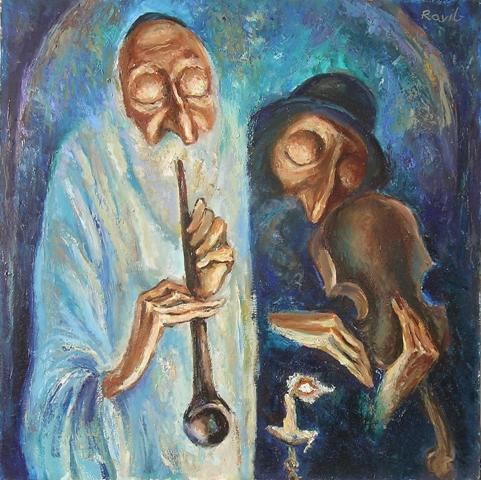
Farewell Melody by Ravil Akmaev Shared under the Creative Commons 3.0

Matthew 11: 16-30

Parallel Luke 7: 31-35; 10: 12-15, 21-22

Highlighted words will have comments on translation

16 “But to what will I compare this generation? It is like children sitting in the marketplaces and calling to one another,

17 ‘We played the flute for you, and you did not dance; we wailed, and you did not mourn.’

18 For John came neither eating nor drinking, and they say, ‘He has a demon’; 19 the Son of Man came eating and drinking, and they say, ‘Look, a glutton and a drunkard, a friend of tax collectors and sinners!’ Yet wisdom is vindicated by her deeds.”

20 Then he began to reproach the cities in which most of his deeds of power had been done, because they did not repent. 21 “Woe to you, Chorazin! Woe to you, Bethsaida! For if the deeds of power done in you had been done in Tyre and Sidon, they would have repented long ago in sackcloth and ashes. 22 But I tell you, on the day of judgment it will be more tolerable for Tyre and Sidon than for you. 23 And you, Capernaum, will you be exalted to heaven? No, you will be brought down to Hades. For if the deeds of power done in you had been done in Sodom, it would have remained until this day. 24 But I tell you that on the day of judgment it will be more tolerable for the land of Sodom than for you.”

25 At that time Jesus said, “I thank you, Father, Lord of heaven and earth, because you have hidden these things from the wise and the intelligent and have revealed them to infants; 26 yes, Father, for such was your gracious will. 27 All things have been handed over to me by my Father; and no one knows the Son except the Father, and no one knows the Father except the Son and anyone to whom the Son chooses to reveal him.

28 “Come to me, all you that are weary and are carrying heavy burdens, and I will give you rest. 29 Take my yoke upon you, and learn from me; for I am gentle and humble in heart, and you will find rest for your souls. 30 For my yoke is easy, and my burden is light.”

Throughout this reading of Matthew’s gospel, I’ve pointed to the similarity in the simple wise/foolish dichotomy of wisdom literature in many of the teachings of Jesus. The prophets also use this type of language to demonstrate the wise path of following God’s call to repent and the consequences of remaining among the foolish. As Jesus addresses the lack of repentance among those who have heard the proclamation of the kingdom of heaven, those who have not heard the wisdom the God has offered them. He points both the judgment for those who have chosen the foolish road and promise for those who have wisely taken his yoke upon them instead of remaining in servitude to other masters. The way Jesus responds to the unwillingness of many who would consider themselves wise and intelligent again helps us consider the identity of the one who speaks to this generation who seems not to have ears to hear.

We transition quickly from the identification of John the Baptist with Elijah and Jesus’ link by allusion with the LORD to the generation that accepts neither John the Baptist nor Jesus. Those who consider themselves wise now act like children who don’t want to dance when the song is played or beat their breast when it is time to mourn. Those who think they are wise are out of step with the times, like a child who throws a tantrum in the middle of someone else’s party. John the Baptist is too cold, Jesus is to hot and they are looking for someone who is just the right temperature for their group. John drinks to little, Jesus drinks to much and with the wrong people. John (and Jesus) will be accused of having or being in alliance with demons. Jesus doesn’t demonstrate a piety that would please some others judging from what constitutes a wise path from their perspective. But the works of Christ should, in Jesus’ view, point the wise towards a realization of who this proclaimer of the kingdom of heaven is and what righteousness rather than piety looks like.

Jesus’ words of woe towards the cities of Chorazin, Bethsaida and even the place that starts as his home in Capernaum are meant to bring about repentance but may also express frustration to the resistance Jesus experiences among the people in those places. These may be places where disciples or Jesus had to shake the dust of their sandals and move on to the following town. They are places that without repentance will be like the traditionally wicked cities of Sodom, Tyre and Sidon who come under God’s judgment. The response to the message that Jesus carries matters because to fail to acknowledge Jesus is to fail to acknowledge the one who sent him and to remain aligned against the approach of the kingdom of heaven.

For Matthew’s gospel there is a time of judgment, and the presence of John and Jesus indicate that the time is at hand. The coming of the kingdom of heaven is good news for those who wisely receive it, but it is condemnation for those who oppose it. I know that some of my own discomfort with Jesus’ condemnation of the towns of Chorazin, Bethsaida and Capernaum reflect my location within an American version of Christianity which in H. Richard Niebuhr’s famous words involves, “A God without wrath brought men without sin into a kingdom without judgment through the ministrations of Christ without a cross.” The reality that the God portrayed in the bible judges is necessary in a world where men and women do sin and treat their neighbor in unrighteous ways and empires and kings abuse those without power.

One of the reasons many may have rejected to take the offer of Jesus’ yoke may be the ways they have already accommodated the yoke of Rome and those who ruled on her behalf. People must understand what time the stand in to inform the choices they make and to most rational people of Jesus’ time this was the time of the empire of Rome rather than the kingdom of heaven. As Warren Carter can point out, more than half of the times the work yoke (Greek zugos) is used in the Septuagint (the Greek translation of the Hebrew Scriptures and Apocrypha) it refers to “political control, particularly the imposition of harsh imperial power.” (Carter, 2001, p. 122) I do think it is important to acknowledge that Jesus in his proclamation of the kingdom of heaven is proposing an alternative to the way things are conducted under the reign of Rome. Like the prophets who made audacious claims about God’s actions in the presence of attractive alternative ways of viewing the world, those who hear the words of Jesus should wonder what authority he possesses to make such broad claims.

Paradoxically, much like in Paul’s letter to the Corinthians, the wise of this world have rejected the wisdom of God and those who are not wise in the world’s eyes can see God’s wisdom. As we’ve seen in Matthew, it is often those who have no reason to demonstrate faith who demonstrate great faith in Jesus’ authority while those who have the witness of the scriptures remain deaf to the message and identity of Jesus. In the words of John’s gospel:

He was in the world, and the world came into being through him; yet the world did not know him. He came to what was his own, and his own people did not accept him. John 1: 10-11

My use of John and allusion to Paul here are intentional because the language in this section resembles the language that in different ways Paul and John use to refer to Jesus. Verse 27 where Jesus talking about all authority being handed to him by the Father and no one knows the Father except the Son, and no one knows the Son except the Father would feel at home in the gospel of John. It bears the same type of pattern as John 14

Jesus said to him, “I am the way and the truth and the life. No one comes to the Father except through me. If you know me you will know my Father also. From now on you him and have seen him. John 14: 6-7

Both John and Paul identity Jesus with being the ‘wisdom of God’ (John uses the masculine word (Greek logos) instead of the feminine wisdom (Greek Sophia)). We’ve had wisdom themes throughout the gospel but here Jesus in an offhand way alludes to the character of wisdom by stating, “wisdom is vindicated (literally justified or made righteous) by her deeds. Is Matthew pointing towards a wisdom Christology where Christ is identified with the Divine Wisdom?

The discussion is made richer by hearing two other ancient sources. Richard B. Hays and others have pointed to the similarity with the end of the Apocryphal book the Wisdom of Sirach (also called Sirach or Ecclesiasticus)

23 Draw near to me, you who are uneducated, and lodge in the house of instruction. 24 Why do you say you are lacking in these things, and why do you endure such great thirst? 25 I opened my mouth and said, Acquire wisdom for yourselves without money. 26 Put your neck under her yoke, and let your souls receive instruction; it is to be found close by. 27 See with your own eyes that I have labored but little and found for myself much serenity. 28 Hear but a little of my instruction, and through me you will acquire silver and gold. 29 May your soul rejoice in God’s mercy, and may you never be ashamed to praise him. 30 Do your work in good time, and in his own time God will give you your reward. Sirach 51: 23-30

While the prayer that ends the book of Sirach is not attributed to the divine wisdom of God, it does appeal to the hearer to place oneself under her yoke. Here Jesus now takes upon the characteristic of wisdom offering her yoke to those who need rest for their souls. By choosing the wise path, the path of Christ one will find rest for one’s souls. A second text possibly alluded to here is Jeremiah 6. Again, Jeremiah is appealing to the people of Judah to turn from their foolish ways to embrace the good ways of God.  

16 Thus says the LORD: Stand at the crossroads, and look, and ask for the ancient paths, where the good way lies; and walk in it, and find rest for your souls. But they said, “We will not walk in it.” 17 Also I raised up sentinels for you: “Give heed to the sound of the trumpet!” But they said, “We will not give heed.” 18 Therefore hear, O nations, and know, O congregation, what will happen to them. 19 Hear, O earth; I am going to bring disaster on this people, the fruit of their schemes, because they have not given heed to my words; and as for my teaching, they have rejected it. 20 Of what use to me is frankincense that comes from Sheba, or sweet cane from a distant land? Your burnt offerings are not acceptable, nor are your sacrifices pleasing to me. 21 Therefore thus says the LORD: See, I am laying before this people stumbling blocks against which they shall stumble; parents and children together, neighbor and friend shall perish. Jeremiah 6: 16-21

While the tone of Jeremiah 6 has similarities to the judgment on the cities of Chorazin, Bethsaida and Capernaum it also begs the people to turn and find rest for their souls. It also resonates with the earlier statement about not taking offense (Greek skandalizo which the verbal form of the word translated stumbling block in Paul’s letters) when God has placed a stumbling block before the people. People become unable to receive God’s path. While Jeremiah doesn’t point to the character of divine Wisdom, he does point to the LORD the God of Israel being the speaker.

It is easy to want to assign to the gospel a fully developed understanding of all the ways that the later church and even other books in the New Testament will talk about Jesus, but even though they share common language, they also speak from different perspectives and answer different questions about Jesus’ identity. Yet, the language here points to something that Matthew wants to communicate about the identity of Jesus. Richard B. Hays is worth quoting at length here:

To paraphrase the point in characteristically Matthean fashion, something greater than Wisdom is here. Jesus who is “gentle and lowly in heart,” transforms and redefines what is meant by “wisdom” by virtue of the specifically narrated character of his teachings, his life, and his death and resurrection.

At the same time, however the metaphorical linkage with Sirach 51 does suggest a cosmic, divine aspect to Jesus’ teaching. He is more than a sage, more than a prophet: he can speak authoritatively of “my yoke” as none of Israel’s sages could ever do. He does not merely point the way to wisdom as a source of rest; rather, he is the one who can promise actually to give rest to all who come to him. (Hays, 2016, p. 158)

There is something more than just a sage here, some greater understanding of what the Son of Man or Messiah mean. There is some cosmic aspect that the words of Jesus’ point to here where only the Son knows the Father and wisdom is justified by her works. Jesus will embody what the gentleness (Greek praus, translated meek in Matthew 5:5) and humility (Greek tapeinos, literally lowly or subservient) would be part of the merciful righteousness that Jesus demonstrated and proclaimed. Jesus’ merciful righteousness will stand in contrast to the pietas (or piety) practiced by Caesar.

On the other hand, there is something compelling about the wise/foolish nature of wisdom literature being spoken from one who is linked to wisdom and the way the wise of the world reject the wisdom of God. As Hays can say again, referencing Jeremiah:

Many of Jesus’ hearers, especially the wise and the learned, say in effect, “We will not walk in it.” Therefore, the promise of “rest for your souls” remains open to those who hear and obey Jesus, but those who refuse the summons come under dire judgment. (Ibid, p. 159)

Perhaps the commonality of those who were called as emissaries of the gospel of Jesus being rejected would inform much of the language of the New Testament that would become the later wisdom/Logos/cosmic Christology of many early church theologians. Jesus is greater than the wisdom of Solomon or the proclamation of Jonah (Matthew 12: 41-42) and Matthew and others continue to deploy a wide range of titles, scripture quotations and allusions, as well as hearing about the acts of power that should have caused Chorazin, Bethsaida and Capernaum to turn towards the one who knows the Father and reveals him. Many will reject the message of Jesus as foolishness, but in the words of Paul:

but to those who are the called, both Jews and Greeks, Christ the power of God and the wisdom of God. 1 Corinthians 1: 24

Matthew 11: 1-15 Jesus and John the Baptist: Identity, Time and Authority

Saint John the Baptist in Prison Visited by Salome, Guercino (1591-1666)

Matthew 11: 1-15

Parallel Luke 7: 18-28

1 Now when Jesus had finished instructing his twelve disciples, he went on from there to teach and proclaim his message in their cities.

2 When John heard in prison what the Messiah was doing, he sent word by his disciples 3 and said to him, “Are you the one who is to come, or are we to wait for another?” 4 Jesus answered them, “Go and tell John what you hear and see: 5 the blind receive their sight, the lame walk, the lepers are cleansed, the deaf hear, the dead are raised, and the poor have good news brought to them. 6 And blessed is anyone who takes no offense at me.”

7 As they went away, Jesus began to speak to the crowds about John: “What did you go out into the wilderness to look at? A reed shaken by the wind? 8 What then did you go out to see? Someone dressed in soft robes? Look, those who wear soft robes are in royal palaces. 9 What then did you go out to see? A prophet? Yes, I tell you, and more than a prophet. 10 This is the one about whom it is written,

‘See, I am sending my messenger ahead of you, who will prepare your way before you.’

11 Truly I tell you, among those born of women no one has arisen greater than John the Baptist; yet the least in the kingdom of heaven is greater than he. 12 From the days of John the Baptist until now the kingdom of heaven has suffered violence, and the violent take it by force. 13 For all the prophets and the law prophesied until John came; 14 and if you are willing to accept it, he is Elijah who is to come. 15 Let anyone with ears listen!

Jesus concludes the instructions for his disciples, and we return to narrative where we are again confronted with the question of Jesus’ identity and authority. In chapters eight and nine we were drawn in a rhythm of stories of acts of power which disclosed Jesus’ identity and authority combined with stories interjected which point to the character of discipleship under Jesus. After Jesus completes his instructions for his disciples his encounter with a group of John’s disciples returns us to the reflections upon Jesus’ identity in chapter eleven which will use language strikingly similar to some other New Testament authors and link into themes in Paul (in this section), John (in the next section) and again Paul (in the final section). While Matthew may not develop these themes in the same what that Paul or John will it does at least allude to some common language and understandings about Jesus’ identity already being present in the time of the compilation of Matthew’s gospel and continues to point to Jesus’ identity being greater than even a title like Messiah (or Christ) can encompass.

The opening verse of chapter eleven transitions us from the instruction to narrative in a pattern commonly used in Matthew’s gospel (see also 7:27; 13:53; 19:1 and 26:1). The language of this transition is also similar to the language that Deuteronomy narrates Moses using at the end of each of his teaching of the twelve tribes of Israel (Deuteronomy 31:1, 31:24 and 32:45) and further heightens the connection between the twelve tribes of Israel and the twelve disciples.  The translation of the Greek teleo here as ‘finished’ is appropriate and contrasts to the normal translation of the same term in Matthew 5:48 as ‘perfect’ which I address at length in that section. The word translated ‘instruction’ (Greek diatasso) has a firmer sense of commanding, ordering or directing and it reinforces the position of Jesus as one to give orders and to send out these followers into the prepared fields for harvest. Jesus may have completed giving instructions to his disciples, but he now moves towards the continued proclamation of the kingdom of heaven and teaching about how to live as a community under that kingdom to the cities on his journey.

Jesus has sent forth his disciples but in the presence of the crowds he receives the disciples of John who come to him and question his identity. John has heard in prison of what Jesus is doing, and the words behind the ‘what the Messiah is doing’ is literally the work of Christ (Greek erga tou Christou). Christ and Messiah are the same word (Messiah is the transliterated Hebrew and Christ is the transliterated Greek) and it refers to one who is anointed to rule. While Christ or Messiah or the Latin Rex all refer to kingship and John the Baptist’s reference to the work of the Christ probably indicates an understand Jesus in terms of the awaited king to reestablish the Davidic line and bring about the renewal of Israel. Yet, the works that Jesus is doing is not the work of a warrior king, like David, (at least not against the armies of Rome) but rather there is a different quality to the work of Jesus. John’s query through his disciples asking, “are you the one?” provides another query into the identity of Jesus and its meaning.

Jesus’ answer refers to the works narrated in chapters eight and nine, but their form also points back to language of Isaiah, particularly 35: 5-6:

Then the eyes of the blind shall be opened, and the ears of the deaf unstopped; then the lame shall leap like a deer, and the tongues of the speechless sing for joy.  Isaiah 35: 5-6a

Being the Messiah or the Son of David is redefined in terms of healing rather than military conflict. In fact, the opposition to the kingdom of heaven’s approach will be by those who use violence to bring about peace. The kingdom of heaven is not the violently maintained Pax Romana which is enforced (often brutally) by the legions of the empire or the kings and rulers of the various provinces of the empire. The Christ as embodied by Jesus embodies both the characteristics of a prophet like Elijah or Elisha (who would heal and even raise the dead), a Moses who can give instructions to the nation of Israel but also a king with authority.

Jesus’ answer to John’s disciples ends in another beatitude, like the beginning of the Sermon on the Mount, where “blessed (happy) is anyone who takes no offense at me.” As I mentioned when discussing the beatitudes in Matthew 5, this takes us into the rhythm of wisdom literature where one is ‘blessed’ to be like the saying illustrates. Wisdom is going to be introduced in our next section, but here we are also by the Greek skandalizo which is the verbal form of skandalon used by Paul, for example in 1 Corinthians 1: 23:

but we proclaim Christ crucified, a stumbling block (skandalon-scandal) to the Jews and foolishness to the Greeks.

Paul will in 1 Corinthians allude to the wisdom of God, which is Christ crucified, and as we will see as the conversation continues between Jesus and the crowd we will also be brought into an identification with Jesus and the character of wisdom. Here it is worth having one’s ear open to the identity being alluded to as Jesus redefines the expectations of Messiah initially in terms of healing and then highlighting the ‘offense’ that will cause many to choose the path of foolishness rather than wisdom.

As John’s disciples depart Jesus returns to the crowd to talk about the identity of John by extension his own identity. Jesus rhetorically negative responses about what the people went into the wilderness to encounter John the Baptist is a pretty direct jab at Herod Antipas. A reed shaken by the wind probably alludes to the coinage Herod Antipas issued which uses reeds on them. Reeds are common in Israel and while they are blown about by the wind because they are unreliable for strength. Jesus may be referring to the way Herod Antipas was ‘battered’ by John’s prophetic condemnation of his relationship with Herodias. This is sharpened by the ‘soft robes’ description. The word ‘soft’ can also be translated ‘effeminate’ which would be a strong criticism indeed in the ancient world. Herod is subtly accused of being weak, unreliable and non-masculine. John the Baptist is the contrast to Herod Antipas (even though he is imprisoned by him) and his role is that of a prophet and specifically the prophet sent to prepare the way.

Matthew uses scripture to point us to the identity of Jesus in surprising ways. Here he uses the same passage Mark quotes in relation to John the Baptist (see Mark 1:2 where Mark misquotes this as Isaiah). The reference is to Malachi 3: 1:

See I am sending my messenger to prepare the way before me, and the Lord whom you seek will suddenly come to his temple.

The use of Malachi is important because it is the end of Malachi where the hope for a return of Elijah comes:

Lo, I will send you the prophet Elijah before the great and terrible day of the LORD comes. He will turn the hearts of parents to their children and the hearts of children to their parents, so that I will not come and strike the land with a curse. Malachi 4: 5-6

John the Baptist’s identity is linked to Elijah who prepares the way for the coming of the LORD, the God of Israel, and by at least allusion Jesus is linked to the LORD. Messiah as a title is insufficient for who Jesus is in Matthew’s gospel. It, like the Son of David, Son of God, and Son of Man it points to a portion of Jesus’ identity but ultimately needs to be redefined in the terms of the ‘works of the Messiah.’ John the Baptist may be greater than any who came before him, but in the dawning kingdom of heaven even the least of its citizens are now greater than John for they are a part of a new thing. The crowd hearing the proclamation of Jesus stand at a critical time for they are seeing what the prophets and the law and John the Baptist all prepared the way for. What they are seeing and hearing is the fulfillment of the prophetic and covenantal hope of Israel.

Verse twelve and thirteen can be read multiple ways. The NRSV renders ‘the kingdom of heaven has suffered violence, and the violent take it by force. For all the prophets and the law prophesied until John came.’ In translating this there are two significant issues: first in the kingdom of heaven’s ‘suffering violence and being taken by force’ and secondly in the sense the prophets and the law ‘prophesied until John came.’ The first passage the Greek biazetai kai biastai arpazoousin auten is behind this phrase. Biazetai and biastai are a related verb and noun. While the NRSV’s translation of third person singular passive biazaetai as ‘has suffered violence’ is the traditional rendering of a verb that indicates entering by force it can also mean that the kingdom of heaven has entered forcefully or entered in power and in resistance to that power violent men have tried to force their way into the kingdom. The kingdom of heaven does come in power as illustrated by the healings and Jesus’ authority of sin, the demonic, creation and even death demonstrated in the previous chapters, but it will not be established by violence. There are conflicting visions between those who are looking to Jesus in terms of a traditional king or emperor whose peace is maintained by military force. Jesus himself will be seized by violent men and they will attempt to maintain their power through their violence. There is a conflict between the kingdom of heaven and those violent men who maintain the kingdoms of the earth, and the kingdom of heaven is not powerless, but it will not respond like a king or emperor. The second translational issue is whether the law and prophets have ceased their function after John came and that prophesy is at an end. I would keep the Greek word order and render the phrase ‘the law and the prophets up to John prophesied.’ There is a temporal aspect to this Greek phrase but the way the English rearranges the words in the NRSV can be read as John the Baptist bringing an end to prophecy where the Greek simply states that those who came before John and including John prophesied.

Moving back out of the translational reeds we do have in this exchange between the disciples of John, the crowds and Jesus a continued reflection on who John the Baptist is and by extension who Jesus is. John the Baptist, for those willing to hear is Elijah, and Jesus is the one for whom Elijah is preparing the way. Messiah or Christ as it is applied to Jesus needs to be understood in relations to the ‘works of the Messiah’ demonstrated by Jesus. The kingdom that Jesus proclaims and reigns over is not a kingdom created by violent men like the conquests by David or Caesar, but it is not without power. Its power may seem like foolishness to the Greeks and a stumbling block to the Jews in Paul’s language. Continuing in Paul’s language in 1 Corinthians and preparing us for the next section this ‘Christ Jesus, who became for us the wisdom of God’ is the Jesus who will be the one crucified by violent men is also the one in whom this paradoxical power of the kingdom of heaven resides. This power that allows, “the blind receive their sight, the lame walk, the lepers are cleansed, the deaf hear, the dead are raised, and the poor have good news brought to them.