Category Archives: Judges

Judges 14 Samson and the Marriage at Timnah

Samson Slaying the Lion (1628) by Peter Paul Rubens

Judges 14

Once Samson went down to Timnah, and at Timnah he saw a Philistine woman. 2 Then he came up, and told his father and mother, “I saw a Philistine woman at Timnah; now get her for me as my wife.” 3 But his father and mother said to him, “Is there not a woman among your kin, or among all our people, that you must go to take a wife from the uncircumcised Philistines?” But Samson said to his father, “Get her for me, because she pleases me.” 4 His father and mother did not know that this was from the LORD; for he was seeking a pretext to act against the Philistines. At that time the Philistines had dominion over Israel.

5 Then Samson went down with his father and mother to Timnah. When he came to the vineyards of Timnah, suddenly a young lion roared at him. 6 The spirit of the LORD rushed on him, and he tore the lion apart barehanded as one might tear apart a kid. But he did not tell his father or his mother what he had done. 7 Then he went down and talked with the woman, and she pleased Samson. 8 After a while he returned to marry her, and he turned aside to see the carcass of the lion, and there was a swarm of bees in the body of the lion, and honey. 9 He scraped it out into his hands, and went on, eating as he went. When he came to his father and mother, he gave some to them, and they ate it. But he did not tell them that he had taken the honey from the carcass of the lion.

10 His father went down to the woman, and Samson made a feast there as the young men were accustomed to do. 11 When the people saw him, they brought thirty companions to be with him.12 Samson said to them, “Let me now put a riddle to you. If you can explain it to me within the seven days of the feast, and find it out, then I will give you thirty linen garments and thirty festal garments. 13 But if you cannot explain it to me, then you shall give me thirty linen garments and thirty festal garments.” So they said to him, “Ask your riddle; let us hear it.” 14 He said to them,

“Out of the eater came something to eat. Out of the strong came something sweet.”

But for three days they could not explain the riddle.15 On the fourth day they said to Samson’s wife, “Coax your husband to explain the riddle to us, or we will burn you and your father’s house with fire. Have you invited us here to impoverish us?” 16 So Samson’s wife wept before him, saying, “You hate me; you do not really love me. You have asked a riddle of my people, but you have not explained it to me.” He said to her, “Look, I have not told my father or my mother. Why should I tell you?” 17 She wept before him the seven days that their feast lasted; and because she nagged him, on the seventh day he told her. Then she explained the riddle to her people. 18 The men of the town said to him on the seventh day before the sun went down,

“What is sweeter than honey? What is stronger than a lion?”

And he said to them,

“If you had not plowed with my heifer, you would not have found out my riddle.”

19 Then the spirit of the LORD rushed on him, and he went down to Ashkelon. He killed thirty men of the town, took their spoil, and gave the festal garments to those who had explained the riddle. In hot anger he went back to his father’s house. 20 And Samson’s wife was given to his companion, who had been his best man.

The tragedy of the story of Samson in several ways parallels the larger tragedy of Israel as portrayed in the book of Judges. Both Samson and Israel have God call them in dramatic ways and both are given specific practices which are to set them apart from the surrounding people. Just as Samson seems unable to resist his attraction to Philistine women, the people of Israel have often not only intermarried with the Canaanites and the other nations but have also adopted the worship of their gods and their practices and life have become indistinguishable from their neighbors. Underneath the tragedy of Samson’s story is the wonder at what this promised child could have been if he had used his prodigious strength to carry the hopes of the people instead of acting like a petulant child who flaunts the boundaries and expectations that have been placed upon him.

Samson’s narrative follows a pattern where he becomes involved with a woman who betrays him (his Philistine ‘bride’ and a prostitute in Gaza) he is bound and handed over to the Philistines (by Judah in the next chapter and by Delilah in chapter sixteen) and he is then empowered by the LORD to kill his captors by brute force and violence. Samson as he is portrayed in the narrative is driven by his hunger and passion and quickly casts aside the expectations of a Nazirite or his obligations to his family’s wishes when it pleases him. Samson will do what it right in his own eyes, just as Israel will later be accused of doing as it quickly moves towards an internal conflict which poses a far greater threat than the Philistines. Samson’s individualistic hunger driven life which has no place to regard the covenant God has placed on him, the desires of his parents, and his calling within the community reflect the degradation of the covenant identity of Israel’s tribes as the devolve into warring factions.

The narrative of Samson we have in Judges has probably been condensed to be told efficiently but there are several minor gaps in the story which I’ll highlight as we journey through. Samson goes down to Timnah[1] and sees a Philistine woman and desires her. Throughout Judges intermarriage has been an issue with the Canaanites. It is likely that there had been intermarriage with the Philistines prior to Samson, but this is the first recorded instance in Judges and there seems to be an additional concern about the Philistines not practicing circumcision. The Philistines had come to the region of Canaan later, and it is known that Israel was not the only community that practiced circumcision. Yet, this difference in practices is a boundary that causes additional concerns for Manoah.[2] This also overturns the normal order of a family relationship since a father would normally decide who his sons (or daughters) would marry. The promised child who was to begin to deliver Israel from the Philistines begins by breaking the religious and cultural boundaries of Israel and turning the family order on its head. All because the woman is ‘right in his eyes.’[3]

The perspective on God in this story is peculiar. God’s perspective as told in the story accepts the personality of Samson because God intends to use Samson’s bad behavior to incite conflict between him and the Philistines. Yet, if the Philistines were the oppressors they are portrayed as there should be multiple opportunities for an individual to rise up against that oppression. Perhaps it is that Israel has simply accommodated to the life under Philistine rule and that even Samson with his prodigious strength see no alternative or any injustice that needs to be opposed. Nevertheless, there is a tension in the narrative when the action of God steers Samson to violate the prohibitions against intermarriage God gave in the covenant to the people. While I don’t doubt that God can work through a chaotic and troublesome individual like Samson the suspicious part of me, especially when combined with Samson’s violation of the Nazirite vows below, wonders if this is an attribution of God’s approval on Samson’s action in order to bring him closer to the image of a paragon of faithfulness.

The famous story of Samson and the lion is critical to the narrative but like the riddle it inspires it is full of strange and unexpected things. Samson is walking with his parents but when he arrives at the vineyard of Timnah his parents are gone. This is likely a place where the story is condensed in telling and it is important to the later narrative that his parents are not there. The presence of Samson in a vineyard is troubling since as a Nazirite he is not to eat anything from the vine, but the unexpected presence of a lion in the vineyard is also troubling. Lions live in wilderness areas not in cultivated vineyards, and yet here in this vineyard a Nazirite meets a lion and kills it violently with his bare hands. The carcass of the lion remains undisturbed in the vineyard and perhaps it is too early for workers to be tending the vineyard but it is seasonally warm enough for bees to make a hive in the midst of the carcass. The Nazirite Samson again enters the vineyard and sticks his hands into the carcass harvesting honey and breaking the Nazirite vow not to touch a corpse. Like Adam and Eve, he has eaten something he is forbidden to eat and he shares it with his parents without letting them know the source, perhaps indicating he knows they would not approve.

The Philistine woman of Timnah is essentially passive in this story. She never is given a name or a choice, she is simply the object of Samson’s passion. She pleases Samson, she is right in his eyes, therefore his father is to arrange the wedding. The seven-day feast could be an Israelite observance since many Israelite festivals are seven days, but it is likely that the companions at the feast are Philistines and the celebration banquet is a normal practice among the Philistines. The word for ‘feast’ (misteh) suggests a drinking feast (NIB II: 850) and the presence of Samson in the vineyard and now his presence at the feast likely means that Samson has now violated two of the three primary provisions for a Nazirite.  The presence of riddles at a feast would be common but Samson’s riddle is almost unsolvable without knowing about the story of the lion in the vineyard. It is possible that someone could stumble upon this corpse infested with bees, but it is telling that prior to this no one had been in the vineyard and disposed of the rotting carcass. The wager is a costly one in the ancient world, thirty garments is too large a price for these ‘companions’ to willingly pay. The timeline of the feast is confused. For the first three days the companions are unable to explain the riddle, the Greek Septuagint (which the NRSV follows) has the companions come to his wife on the fourth day, while the Hebrew text states they come to her on the seventh day. Yet, Samson’s wife weeps before him the seven days of the feast and whether she is threatened on day four or day seven the narrative indicates that her weeping over a period of time causes Samson distress. Samson’s actions have placed her and her family under threat of these young men, but it is also possible that this woman who Samson decided would be his wife is not joyous about the match after seeing her husbands conduct at the festival.

The tears of Samson’s wife finally convince him to release the answer to the riddle and she passes it on to the men who give the answer at the conclusion of the seven days. Samson departs in a petulant rage towards Ashkelon, twenty-five miles away in the heart of the Philistine confederation of five cities, and his rage turns murderous. Thirty men of Ashkelon lose their lives to provide the garments he now owes the men of Timnah and once Samson pays this debts he abandons his wife and returns to his father’s home. The woman who was right in his eyes is no longer right in his ears after seven days of weeping. The woman is given a new husband, one of the companions from the feast as Samson lives with his hot anger in his parent’s household.

This initial story of Samson desiring a Philistine bride and the trouble that ensues due to his actions sets the stage for a growing conflict between Samson and the Philistines. Samson’s actions are already in sharp contrast to the hope of the previous chapter. Yet, in many ways the Samson mirrors the degradation of the life in Israel. Just as the people have intermarried with their neighbors and have turned aside from their way of life, Samson has chosen a Philistine bride and abandoned many of the Nazirite practices. Samson’s choices have left him fuming with anger in his father’s home and with the blood of a lion and thirty men already on his strong hands.

[1] Timnah is in the Valley of Sorek. The Danites at the beginning of Judges were confined to the hills in their territory (1:34). (Webb, 2012, p. 364) It is likely that under the Philistine domination of the area that the remaining Canaanites, Philistines, and Israelites all lived in close proximity.

[2] In the Hebrew the words of his father and mother are spoken as singular (my people-‘ammi) and I take this to be Manoah speaking for both himself and Samson’s mother. This is one place where the text may be condensed.

[3] Hayyasar beenayo this is the same term used in Judges 17:6 and 21: 25 of Israel.

Judges 13 The Birth and Calling of Samson

The Sacrifice of Manoah (1640–50) by Eustache Le Sueur

Judges 13

The Israelites again did what was evil in the sight of the LORD, and the LORD gave them into the hand of the Philistines forty years.

2 There was a certain man of Zorah, of the tribe of the Danites, whose name was Manoah. His wife was barren, having borne no children. 3 And the angel of the LORD appeared to the woman and said to her, “Although you are barren, having borne no children, you shall conceive and bear a son. 4 Now be careful not to drink wine or strong drink, or to eat anything unclean, 5 for you shall conceive and bear a son. No razor is to come on his head, for the boy shall be a nazirite to God from birth. It is he who shall begin to deliver Israel from the hand of the Philistines.” 6 Then the woman came and told her husband, “A man of God came to me, and his appearance was like that of an angel of God, most awe-inspiring; I did not ask him where he came from, and he did not tell me his name; 7 but he said to me, ‘You shall conceive and bear a son. So then drink no wine or strong drink, and eat nothing unclean, for the boy shall be a nazirite to God from birth to the day of his death.'”

8 Then Manoah entreated the LORD, and said, “O, LORD, I pray, let the man of God whom you sent come to us again and teach us what we are to do concerning the boy who will be born.” 9 God listened to Manoah, and the angel of God came again to the woman as she sat in the field; but her husband Manoah was not with her. 10 So the woman ran quickly and told her husband, “The man who came to me the other day has appeared to me.” 11 Manoah got up and followed his wife, and came to the man and said to him, “Are you the man who spoke to this woman?” And he said, “I am.” 12 Then Manoah said, “Now when your words come true, what is to be the boy’s rule of life; what is he to do?” 13 The angel of the LORD said to Manoah, “Let the woman give heed to all that I said to her. 14 She may not eat of anything that comes from the vine. She is not to drink wine or strong drink, or eat any unclean thing. She is to observe everything that I commanded her.”

15 Manoah said to the angel of the LORD, “Allow us to detain you, and prepare a kid for you.” 16 The angel of the LORD said to Manoah, “If you detain me, I will not eat your food; but if you want to prepare a burnt offering, then offer it to the LORD.” (For Manoah did not know that he was the angel of the LORD.) 17 Then Manoah said to the angel of the LORD, “What is your name, so that we may honor you when your words come true?” 18 But the angel of the LORD said to him, “Why do you ask my name? It is too wonderful.”

19 So Manoah took the kid with the grain offering, and offered it on the rock to the LORD, to him who work wonders. 20 When the flame went up toward heaven from the altar, the angel of the LORD ascended in the flame of the altar while Manoah and his wife looked on; and they fell on their faces to the ground. 21 The angel of the LORD did not appear again to Manoah and his wife. Then Manoah realized that it was the angel of the LORD. 22 And Manoah said to his wife, “We shall surely die, for we have seen God.” 23 But his wife said to him, “If the LORD had meant to kill us, he would not have accepted a burnt offering and a grain offering at our hands, or shown us all these things, or now announced to us such things as these.”

24 The woman bore a son, and named him Samson. The boy grew, and the LORD blessed him. 25 The spirit of the LORD began to stir him in Mahaneh-dan, between Zorah and Eshtaol.

At this point in the book of Judges the situation for Israel is perilous. The pernicious cycle of disobedience has continued and escalated, the quality of the judges has declined, and intertribal conflict has already proved to be as dangerous as the surrounding nations. Yet, the LORD continues to provide a way for the people to be delivered from their oppression. This unusual announcement of Samson’s birth and calling provides an opportunity for hope in the midst of the despair but in the midst of an ascendent Philistine threat and a disunified and disobedient Israel there is also significant cause for concern.

The Philistines were first mentioned in Judges 3:31 when the minor judge Shamgar kills six hundred Philistines with an oxgoad, and we see evidence of their presence being a threat to Israel in Judges 10:7. Now the Philistines are the primary military threat the Israelites face and they will continue to be a military threat until King David vanquishes them one hundred and fifty years later. The Philistines were a sea faring people that likely originated in the Greek islands and came to Canaan. They had settled in the coastal plain with a confederation of five cities (Gaza, Ashdod, Ashkelon, Ekron, and Gath) and were a militaristic people who had the ability extract iron from its ore for use in weaponry. Their seafaring culture also made them heavily engaged in trading from Anatolia (modern day Turkey) to Egypt. This militaristic people with advanced metallurgical knowledge and extensive trade and mercantile connections formed a sharp contrast with these divided tribes of “agrarian homesteaders with inferior bronze implements and no martial tradition of which to speak.” (Hattin, 2020, p. 145)

The forty years which the Israelites suffer under the hand of the Philistines is twice as long as any previous time period which an enemy had oppressed the people.[1] As Barry Webb can state,

By the time Samson is born the Philistine dominance over Israel is so complete, and the morale of Israel so low, that even the hope that Yahweh might save them has been extinguished.” (Webb, 2012, p. 350)

It is possible that the idolatry of the people has become so pervasive that there is not even the cultural memory of calling upon the LORD remains because they have forgotten their God. The plight of this exhausted people is dire as they exist oppressed by the Philistines and alienated from the LORD their God.

It is into this dire situation that the angel of God approaches this unnamed wife on Manoah with an incredible calling and commission for her future son. Manoah’s wife stands in a tradition of barren women who receive a message from God about her future child/children[2] and with this announcement we are encouraged to wonder about this child to be born. The Danites were one of the weakest tribes and were unable to claim their portion of Canaan at the beginning of Judges (1: 34-35) and it is telling that the Hebrew uses the word for family or clan (mishpahat) instead of the usual word for tribe (sebet).  This messenger from God has appeared in two previous places in the narrative of Judges: at Bochim to rebuke the people (2:1) and at the commissioning of Gideon (6: 11-12).

The setting aside of an individual as a nazirite is described in Number 6: 1-21 and is usually for a designated period, but Samson is designated before his birth to take on this identity for his life. Samson’s life as a nazirite is divinely ordained rather than chosen by himself, and in some respects this reflects the language of the call of Jeremiah (Jeremiah 1: 5). Yet this calling also requires the mother to observe the characteristics of a nazirite while she is pregnant with Samson. Even in the womb Samson is to live under the rules that make him set aside as special and holy.

Another reason for hope in this passage is that the angel of the LORD approaches the wife of Manoah. I have mentioned throughout these reflections that the role and safety of women in the book of Judges is a measure of the security and faithfulness of the people. Even though the woman is not named she has an important role in enabling the future judge to live faithfully into his calling. She may not have as much authority as Achsah or Deborah or end the oppression of a foreign king like Jael, but her role has more hope than Jephthah’s unnamed daughter. Manoah’s role in the story can be read as faithful or as trying to reassert power within the relationship. Manoah, unlike the rest of Israel at this point, does ask the LORD for guidance and this may be an attempt at faithfulness to ensure that the wife and child are brought up the way the LORD desires. Yet, it may also be an attempt to have the emissary of the LORD deal with him and to assert his power in the household. Ultimately both may together form Manoah’s motivation since most ancient families assumed a patriarchal authority in determining how both the spouse and children would live. Yet, the angel of the LORD again approaches the wife of Manoah and she summons her husband to meet this messenger.

When asked by Manoah if this is the same messenger who previously spoke to his wife, his simple response of “I am”[3] and then reiterates the instruction he previously gave to Manoah’s wife. Manoah receives no additional instruction how to guide the boy’s life and it remains the mother and not the father who remains in the foreground of this initial stage of the narrative. As Barry Webb can state “The implication seems to be that Manoah will never “own” the boy as a normal father might; he will be a Nazirite of God (v.7), and it is God, not Manoah, who will shape his life.” (Webb, 2012, p. 355)

Manoah belatedly remembers to offer hospitality to this strange messenger who has come to his wife. His wife has previously had some insight into the character of the messenger when she describes him, ‘like and angel of God, most awe-inspiring’ but Manoah seems oblivious. He is convinced that the child will be born but he treats this messenger like a prophet instead of an angel. Yet, Manoah obediently prepares the offering and then asks for the name of the messenger. The angel of the LORD stating his name is ‘too wonderful’ and the offering to the God who “works wonders[4] do draw a closer connection between the messenger and God. When the angelic messenger ascends in the flames Manoah finally ascertains a portion of the truth yet his wife continues to remain one step ahead of him realizing that the visit of the angel of the LORD is not going to cause their death since their offering was accepted and their death would make the announced birth impossible.

Yet, in the midst of all the hope engendered by the announcement of the future child set apart from birth there is an ominous word. In verse five the angel announces that, “he will begin to save Israel from the hands of the Philistines.” Unlike the Moabites, the Ammonites and the other threats in the book of Judges the Philistines are different and it will be a longer struggle to be free of this opponent. Samson can only begin what will be a long struggle between Israel and the Philistines. As mentioned above it will be one hundred fifty years when the Israelites are united under King David when the Philistines are no longer a feared oppressor. Yet, this provision by God to a people who no longer ask for God’s assistance gives some hope in the midst of the oppression by this external opponent. It remains to be seen if this hoped for child can turn Israel from its practice of ‘doing evil in the sight of the LORD.’

[1] Eight years under Kushan-rishathaim (3:8), eighteen years under Moab (3: 14), twenty years under King Jabin of Canaan (4:3), seven years under Midian (6: 1), and eighteen years under the Ammonites (10: 8)

[2] Sarah (Genesis 21: 1-3), Rebecca (Genesis 25: 19-21),  Rachel (Genesis 29:31, 30: 22), Hannah (1 Samuel 1:2), and the Shunamite woman (2 Kings 4: 8-17)

[3] The Hebrew ‘ani does not have any formal correspondence to the name of God ‘YHWH’ from Exodus 3:14 and so it is unlikely this is an allusion to the identity of the angel of the LORD and the LORD the God of Israel being the same. (Webb, 2012, p. 354) Yet, see below on the use of ‘wonder’ and ‘wonderful’.

[4] Wonderful pieli’y and wonder pele’ are the adjective and noun form of the same word and pele’ in its thirteen uses in the scriptures is always used for God. (Webb, 2012, p. 356)

Judges 12 Jephthah’s Ignoble End and Three Minor Judges

The Return of Jephtha, by Giovanni Antonio Pellegrini

Judges 12: 1-7 Intertribal Conflict Under Jephthah

1 The men of Ephraim were called to arms, and they crossed to Zaphon and said to Jephthah, “Why did you cross over to fight against the Ammonites, and did not call us to go with you? We will burn your house down over you!” 2 Jephthah said to them, “My people and I were engaged in conflict with the Ammonites who oppressed us severely. But when I called you, you did not deliver me from their hand. 3 When I saw that you would not deliver me, I took my life in my hand, and crossed over against the Ammonites, and the LORD gave them into my hand. Why then have you come up to me this day, to fight against me?” 4 Then Jephthah gathered all the men of Gilead and fought with Ephraim; and the men of Gilead defeated Ephraim, because they said, “You are fugitives from Ephraim, you Gileadites — in the heart of Ephraim and Manasseh.”1 5 Then the Gileadites took the fords of the Jordan against the Ephraimites. Whenever one of the fugitives of Ephraim said, “Let me go over,” the men of Gilead would say to him, “Are you an Ephraimite?” When he said, “No,” 6 they said to him, “Then say Shibboleth,” and he said, “Sibboleth,” for he could not pronounce it right. Then they seized him and killed him at the fords of the Jordan. Forty-two thousand of the Ephraimites fell at that time.

7 Jephthah judged Israel six years. Then Jephthah the Gileadite died, and was buried in his town in Gilead.

The group of tribes and clans collectively known as Israel is unravelling. The tribe of Ephraim occupied the central hill country of northern Israel and by location and population they were one of the more powerful tribes. It is telling that northern Israel will often be referred to as Ephraim in later writings just as southern Israel is associated with Judah. Throughout the book of Judges, the role of Ephraim has been another barometer of the health of the confederation of tribes: initially under Ehud and Barak[1] Ephraim willingly goes forth to fight alongside other tribes, under Gideon they complain that they are not summoned until after the Midianites are scattered and fleeing yet Gideon is able to appease them, here they come with an armed force to confront Jephthah. The LORD may have delivered the Ammonites into Jephthah’s hands but here the God of Israel remains silent in this internal conflict.

We have seen conflict erupt inside Israel under Gideon and Abimelech, and now it expands dramatically in this conflict between the people of Gilead and the people of Ephraim. The Ephraimites leaders and their armed followers who boast that the people of Gilead are ‘fugitives’ or ‘renegades’ of Manasseh and Ephraim quickly find the tables turned as they are cut-off from their homes when Jephthah’s followers capture the fords of the Jordan River and strand the Ephraimite combatants on the eastern side. The difference in regional dialects becomes a tool of terror as Ephraimites attempting to flee home are captured and butchered at the river crossings. The loss of forty-two thousand Ephraimites at the hands of fellow Israelites is a slaughter of heartbreaking proportions. The tribes of Israel prove that the greatest threat to their continued existence is internal, and that the tribes are dangerously close to entering into a civil war where the tribes threaten the continued existence of one another.

Jephthah as a judge does not compare favorably when placed next to the preceding judges. His time judging Israel is shorter than anyone except Abimelech. He was an unexpected judge because of his heritage as a child of a prostitute which was forced to flee his homeland and his previous life as a bandit and raider. He is successful in leading the people of Gilead to victory over the Ammonites, but he is unable to manage conflicts between tribes and is responsible for the death of forty-two thousand Israelites of his neighboring tribe. One curious final note is that he is buried literally ‘in the towns of Gilead.”[2] There is a rabbinic tradition that Jephthah died of a debilitating illness that caused his limbs to drop off and be buried in different cities of the territory of Gilead (Hattin, 2020, p. 139)and perhaps they perceived a sort of poetic justice for one whose twisted act of devotion caused the dismemberment of his own family and division among the tribes of Israel. Regardless of how Jephthah dies and is buried, his short divisive reign as a judge of Israel demonstrates how perilous the future is for the tribes of Israel.

Judges 12: 8-15 The Final Three Minor Judges

8 After him Ibzan of Bethlehem judged Israel. 9 He had thirty sons. He gave his thirty daughters in marriage outside his clan and brought in thirty young women from outside for his sons. He judged Israel seven years. 10 Then Ibzan died, and was buried at Bethlehem.

11 After him Elon the Zebulunite judged Israel; and he judged Israel ten years. 12 Then Elon the Zebulunite died, and was buried at Aijalon in the land of Zebulun.

13 After him Abdon son of Hillel the Pirathonite judged Israel. 14 He had forty sons and thirty grandsons, who rode on seventy donkeys; he judged Israel eight years. 15 Then Abdon son of Hillel the Pirathonite died, and was buried at Pirathon in the land of Ephraim, in the hill country of the Amalekites.

The final set of minor judges provide a transition between the story of Jephthah and the story of Samson. In contrast to Shamgar and Tola they do not deliver Israel from any threat (internal or external). Ibzan, Elon, and Abdon judge for much shorter durations as well, time periods similar to Jephthah’s. Ibzan is noted for his large extended family which he arranges marriages for beyond his clan (presumably for economic prosperity and power). The final three judges come from different regions in Israel and may have had overlapping times where they exercised power- Bethlehem is in the south near Jerusalem, Zebulun is in the north of Israel, while Ephraim is in the middle. Elon who judges the longest has no mention of family, only that he judged ten years and was buried in Aijalon. Abdon is again highlighted for the size of his family and like Jair the Gileadite his sons and grandsons ride donkeys. The acquisition of large families with wealth and power may serve as effective leaders in times of relative peace, but like the sons of Jair they will prove ineffective when the next military threat arises because of the inability of the people to live faithfully to their covenant with the LORD the God of Israel.[3]

[1] Although not mentioned in the narrative of Judges 4, Ephraim has an active role according to the song of Deborah and Barak in Judges 5:14.

[2] The noun for towns is plural in Hebrew.

[3] The theological perspective of the book of Judges is that Israel’s oppression by external enemies is directly correlated to their pernicious propensity to adopt the practices of the surrounding peoples and to worship their gods.

Judges 11 Jepthah and a Corrupted View of God

The Return of Jephtha, by Giovanni Antonio Pellegrini

Judges 11:1-11 A Strange Choice to Lead the People

1 Now Jephthah the Gileadite, the son of a prostitute, was a mighty warrior. Gilead was the father of Jephthah. 2 Gilead’s wife also bore him sons; and when his wife’s sons grew up, they drove Jephthah away, saying to him, “You shall not inherit anything in our father’s house; for you are the son of another woman.” 3 Then Jephthah fled from his brothers and lived in the land of Tob. Outlaws collected around Jephthah and went raiding with him.

4 After a time the Ammonites made war against Israel. 5 And when the Ammonites made war against Israel, the elders of Gilead went to bring Jephthah from the land of Tob. 6 They said to Jephthah, “Come and be our commander, so that we may fight with the Ammonites.” 7 But Jephthah said to the elders of Gilead, “Are you not the very ones who rejected me and drove me out of my father’s house? So why do you come to me now when you are in trouble?” 8 The elders of Gilead said to Jephthah, “Nevertheless, we have now turned back to you, so that you may go with us and fight with the Ammonites, and become head over us, over all the inhabitants of Gilead.” 9 Jephthah said to the elders of Gilead, “If you bring me home again to fight with the Ammonites, and the LORD gives them over to me, I will be your head.” 10 And the elders of Gilead said to Jephthah, “The LORD will be witness between us; we will surely do as you say.” 11 So Jephthah went with the elders of Gilead, and the people made him head and commander over them; and Jephthah spoke all his words before the LORD at Mizpah.

The story of Jephthah the Gileadite illustrates how corrupted Israel’s life and faith has become. Jephthah is one step further removed from his father’s line than Abimelech: while Abimelech was the son of a concubine we are immediately told that Jephthah is the son of a prostitute. He is a child of the region. When the narrative names his father as Gilead it is possible that it is a later descendant of Gilead son of Machir that the region is named for, but it is also possible that Gilead replaces the name of his father because it is unknown or to protect his name. Jephthah starts life as a disinherited bastard forced out by his half-brothers and forced to flee his homeland. Jephthah new life begins in the land of Tob (good) but his life is that of a bandit and raider who leads other outlaws and outcasts. He who fled for fear of his half-brothers has emerged as a force to fear and a ‘mighty warrior.’[1]

At the end of the previous chapter the leaders of Gilead have declared that whoever leads them against the Ammonite threat will be their head. The thirty sons of Jair the Gileadite have not risen to the challenge, nor has any of the other leaders. The lack of a compelling leader who can oppose the Ammonite threat causes the elders to seek out a bandit and strongman who they had previously expelled. Jephthah and his social misfits[2] are now brought to Gilead to be the answer to the Ammonite threat. Jephthah refuses to accept anything less that being head over the people of Gilead if he is to rescue those who previously rejected him. This elevation of a strongman who was the son of a prostitute does emphasize the deterioration of the quality of people available to rescue Israel, a quality which is reflective of the alienation from the LORD the God of Israel. Yet it also follows a common theme in the bible of God’s salvation coming from unexpected places. (Hattin 2020, 110-111)

It is worth noting that although Jephthah invokes the name of the LORD to witness the agreement between Jephthah and the leaders of Gilead and, presumably in some type of ceremony, speaks his words before the LORD as he assumes his position, there is no calling of Jephthah by the LORD.  Jephthah is the leader the elders of Gilead have chosen. Like Abimelech, it is the leaders of the area who select a strongman with a checkered past. The story of Jephthah is one of triumph and tragedy. Gilead will be the strongman that the crisis with the Ammonites demands but the story we have of his life also demonstrates that central parts of the relationship between the LORD and the people have been compromised and that the continued life of the tribes of Israel is in a tenuous state.

Judges 11: 12-28 Dueling Histories

12 Then Jephthah sent messengers to the king of the Ammonites and said, “What is there between you and me, that you have come to me to fight against my land?” 13 The king of the Ammonites answered the messengers of Jephthah, “Because Israel, on coming from Egypt, took away my land from the Arnon to the Jabbok and to the Jordan; now therefore restore it peaceably.” 14 Once again Jephthah sent messengers to the king of the Ammonites 15 and said to him: “Thus says Jephthah: Israel did not take away the land of Moab or the land of the Ammonites, 16 but when they came up from Egypt, Israel went through the wilderness to the Red Sea and came to Kadesh. 17 Israel then sent messengers to the king of Edom, saying, ‘Let us pass through your land’; but the king of Edom would not listen. They also sent to the king of Moab, but he would not consent. So Israel remained at Kadesh. 18 Then they journeyed through the wilderness, went around the land of Edom and the land of Moab, arrived on the east side of the land of Moab, and camped on the other side of the Arnon. They did not enter the territory of Moab, for the Arnon was the boundary of Moab. 19 Israel then sent messengers to King Sihon of the Amorites, king of Heshbon; and Israel said to him, ‘Let us pass through your land to our country.’ 20 But Sihon did not trust Israel to pass through his territory; so Sihon gathered all his people together, and encamped at Jahaz, and fought with Israel. 21 Then the LORD, the God of Israel, gave Sihon and all his people into the hand of Israel, and they defeated them; so Israel occupied all the land of the Amorites, who inhabited that country. 22 They occupied all the territory of the Amorites from the Arnon to the Jabbok and from the wilderness to the Jordan. 23 So now the LORD, the God of Israel, has conquered the Amorites for the benefit of his people Israel. Do you intend to take their place? 24 Should you not possess what your god Chemosh gives you to possess? And should we not be the ones to possess everything that the LORD our God has conquered for our benefit? 25 Now are you any better than King Balak son of Zippor of Moab? Did he ever enter into conflict with Israel, or did he ever go to war with them? 26 While Israel lived in Heshbon and its villages, and in Aroer and its villages, and in all the towns that are along the Arnon, three hundred years, why did you not recover them within that time? 27 It is not I who have sinned against you, but you are the one who does me wrong by making war on me. Let the LORD, who is judge, decide today for the Israelites or for the Ammonites.” 28 But the king of the Ammonites did not heed the message that Jephthah sent him.

The correspondence between Jephthah and the king of the Ammonites is illustrative of the deep-seated disagreements that people may have over history. The king of the Ammonite’s justification for invasion is a three-hundred-year-old battle when Israel took possession of this land on the eastern side of the Jordan. The Ammonites likely do not expect Jephthah to yield the territory of Gilead to them, but when asked for a reason for their invasion they make their claim. In modern times Russia can claim a history for why they should invade Ukraine, and Israel and Palestine have competing claims on a common land, but in both ancient and modern conflicts the reason for claiming a land often rests upon the ability to enforce one’s claims militarily. Jephthah’s response demonstrates that some of Israel’s history has been retained as he is able to summarize Numbers 20-21 and Deuteronomy 2, but it is also intriguing that Jephthah refers to the god of the Ammonites as Chemosh. Chemosh is in every other biblical and archeological texts the god of Moab while Molech is the god of the Ammonites. I have my suspicions why the name of the god is mistaken or changed which I will address in the following section, but it is strange to have such a significant mistake, if it was historical, be carried forward in the scriptural remembrance of it.

Ultimately the dueling histories in Jephthah’s mind are to be resolved by dueling deities. The conflict between the armies of Gilead and the Ammonites is a contest between their gods. If the God of Israel can be a mighty warrior who defeats the god of the Ammonites it will be demonstrated on the battlefield and justify whichever party prevails in their occupation of the land of Gilead. Jephthah commits the question to the LORD’s judgment and prepares to meet the Ammonites in battle.

Judges 11:29-40 A Corrupted View of God

29 Then the spirit of the LORD came upon Jephthah, and he passed through Gilead and Manasseh. He passed on to Mizpah of Gilead, and from Mizpah of Gilead he passed on to the Ammonites. 30 And Jephthah made a vow to the LORD, and said, “If you will give the Ammonites into my hand, 31 then whoever comes out of the doors of my house to meet me, when I return victorious from the Ammonites, shall be the LORD’s, to be offered up by me as a burnt offering.” 32 So Jephthah crossed over to the Ammonites to fight against them; and the LORD gave them into his hand. 33 He inflicted a massive defeat on them from Aroer to the neighborhood of Minnith, twenty towns, and as far as Abel-keramim. So the Ammonites were subdued before the people of Israel.

34 Then Jephthah came to his home at Mizpah; and there was his daughter coming out to meet him with timbrels and with dancing. She was his only child; he had no son or daughter except her. 35 When he saw her, he tore his clothes, and said, “Alas, my daughter! You have brought me very low; you have become the cause of great trouble to me. For I have opened my mouth to the LORD, and I cannot take back my vow.” 36 She said to him, “My father, if you have opened your mouth to the LORD, do to me according to what has gone out of your mouth, now that the LORD has given you vengeance against your enemies, the Ammonites.” 37 And she said to her father, “Let this thing be done for me: Grant me two months, so that I may go and wander on the mountains, and bewail my virginity, my companions and I.” 38 “Go,” he said and sent her away for two months. So she departed, she and her companions, and bewailed her virginity on the mountains. 39 At the end of two months, she returned to her father, who did with her according to the vow he had made. She had never slept with a man. So there arose an Israelite custom that 40 for four days every year the daughters of Israel would go out to lament the daughter of Jephthah the Gileadite.

The Daughter of Jephthah, by Alexandre Cabanel (1879).

On the surface this story is an uncomfortable story of a rash vow that costs a daughter her life. Leaning into the story it is an even more ominous look into a corrupted view of the LORD the God of Israel with an intentional human sacrifice as the promised reward for a military triumph. As we saw with Gideon, the spirit of the LORD descending upon an individual does not seem to change the character of the individual. In Gideon’s case it allows him to rally the people, but it does not quell his doubts and fears. With Jephthah it does not cause him to make this declaration to the LORD.

Jephthah until this point has sounded like he is a worshipper of the LORD who is demonstrating faithful adherence to the God of Israel in contrast to the portrayal of the people of Israel. Yet, there is no indication that God has previously selected Jephthah as a judge for the people, it is the leaders of Gilead who come seeking a strongman to lead them in the midst of their crisis. Yet the vow that Jephthah takes should catch our attention, especially in the context of the conflict with the Ammonites. The Hebrew idiom used in the vow (latzet likrat) is used everywhere else in the scriptures for the meeting of two or more people and the term likrat by itself is used over a hundred times and only means an animal once. (Hattin 2020, 125) Jephthah likely intends for the burnt sacrifice to be a human sacrifice. This points to either Jephthah participating in the worship of gods like Molech or blending these practices into the worship of the God of Israel.

The other narrative where the possibility of human sacrifice occurs in Genesis 22. This text, often called the Akedah, is where God asks Abraham to take his son Isaac and offer him as a sacrifice, but Abraham’s God stops this action and provides a ram instead. The practice of offering children as a burnt offering is one of the practices of the people that the God of Israel indicates is abhorrent and the Israelites are not to copy (Deuteronomy 12: 31). As mentioned above it is Molech who is attested in scripture and in other sources as the god of the Ammonites, and the practices that is singled out among Molech worshippers in the bible is the sacrifice of children (Leviticus 18:21, 20: 2-5, 2 Kings 23: 10, Jeremiah 32:35). Perhaps the substitution of Chemosh for Molech calls attention away from the practice of child sacrifice and attempts to make Jephthah’s vow more palatable as an action of faith towards the God of Israel. Yet, something has corrupted the practice and faith of Jephthah and others throughout Israel where the practice of worship the God of Israel is indistinguishable from the practices of the worship of the god of the Ammonites.

The victory is noted very briefly: the LORD gives the Ammonites into Jephthah’s hand, and the Ammonites suffer a massive defeat. The divine contest between the god of the Ammonites and the God of Israel is reflected in the military victory of Jephthah’s forces. The emphasis in the story is on the vow and its tragic fulfillment. Jephthah likely intended a human sacrifice but did not intend for the sacrifice to be his only child. Even the unnamed daughter doesn’t question the propriety of the vow or the need to fulfill it. The impact of this story becomes transformed into practice in the region as young women go out for four days to lament this daughter lost to a father’s foolish and faithless promise, but it also cements this story as a part of the legacy of the people of Israel.

Some later Jewish and Christian interpreters of this story will attempt to change the narrative where this daughter is dedicated to God to live in chastity and service. Yet, the text indicates that Jephthah completed the vow of offering the first person as a burnt sacrifice. One of the indicators of the community’s religious health and faithfulness in Judges is the treatment of women and children (NIB II: 835). Initially women have status and names, but as the book of Judges progresses the status of women and children becomes increasingly perilous. The willingness to causally sacrifice the life of a human being is indicative of the gods which one worships. I write this reflection in the immediate aftermath of shootings in Buffalo and Uvalde, and it makes me question if it was only the ancient Israelites who had a problem with blending the worship of their God with the practices of other gods. One of the benefits of an account like Judges is that it can cause us to ask uncomfortable questions about the society that our God intends for us and our faithfulness to that vision.


[1] Hebrew ‘gibbor hayil’, this is the same title that the messenger of God gives to Gideon

[2] Hebrew ‘nasim reqim’ literally empty men (Webb 2012, 310)

Judges 10 A Brief Respite and the Pernicious Cycle

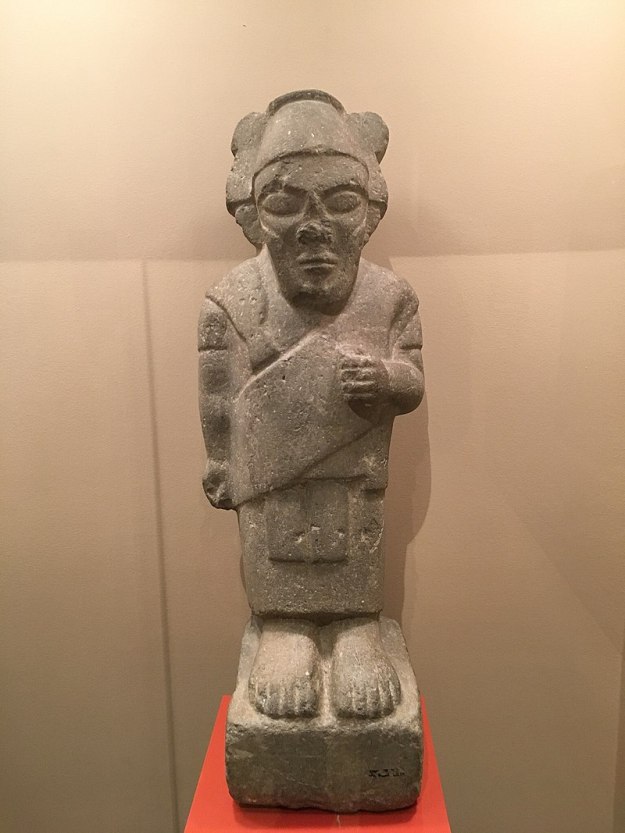
Statue of an Ammonite King on display at the Jordan Museum, estimated 8th Century BCE, Photo by Makeandtoss,,CC0, https://commons.wikimedia.org/w/index.php?curid=86369152

Judges 10:1-5 Tola and Jair in the Aftermath of Abimelech

1 After Abimelech, Tola son of Puah son of Dodo, a man of Issachar, who lived at Shamir in the hill country of Ephraim, rose to deliver Israel. 2 He judged Israel twenty-three years. Then he died, and was buried at Shamir.

3 After him came Jair the Gileadite, who judged Israel twenty-two years. 4 He had thirty sons who rode on thirty donkeys; and they had thirty towns, which are in the land of Gilead, and are called Havvoth-jair to this day. 5 Jair died, and was buried in Kamon.

In the aftermath of Abimelech’s bloody reign, we have the introduction of two minor judges. In contrast to the first minor judge, Shamgar, neither Tola nor Jair are depicted as warriors. They may preside over a relatively peaceful and prosperous time for the Israelite tribes. The information that the text provides about Tola is related to his family, tribe, and place of residence in addition to the time of his judging provides ‘deliverance for Israel. His time as a judge never indicates what he delivers Israel from. It may be from the disarray in the aftermath of the fall of Abimelech. Perhaps he provides a time of calm administration and judgment in the aftermath of Abimelech’s fiery and brief reign. Jair probably comes from the portion of the tribe of Manasseh that remained on the eastern side of the Jordan river. Jair shares a name with a warrior leader who conquered this region during the time of Moses (Numbers 32: 41-42, Deuteronomy 3:14). But once again we have no indication that this later Jair or his sons are warrior leaders, instead he seems to be the head of a wealthy family that controls a large region. I appreciate the Jewish Publication Society’s attempt to capture the play on words between donkeys and town in the Hebrew here when it renders this passage, “He had thirty sons who rode on thirty burrows and owned thirty boroughs in the region of Gilead.”[1] Jair’s time as judge may have been a time of acquiring wealth and property for his family, but it may also point to the vulnerability of Israel to future invasion. In contrast to the warrior namesake, these sons of Jair who preside over cities and ride on donkeys are unprepared when faced with the Ammonites invade their region.

Judges 10: 6-18 The Unfaithful People and the Exasperated God

6 The Israelites again did what was evil in the sight of the LORD, worshiping the Baals and the Astartes, the gods of Aram, the gods of Sidon, the gods of Moab, the gods of the Ammonites, and the gods of the Philistines. Thus they abandoned the LORD, and did not worship him. 7 So the anger of the LORD was kindled against Israel, and he sold them into the hand of the Philistines and into the hand of the Ammonites, 8 and they crushed and oppressed the Israelites that year. For eighteen years they oppressed all the Israelites that were beyond the Jordan in the land of the Amorites, which is in Gilead. 9 The Ammonites also crossed the Jordan to fight against Judah and against Benjamin and against the house of Ephraim; so that Israel was greatly distressed.

10 So the Israelites cried to the LORD, saying, “We have sinned against you, because we have abandoned our God and have worshiped the Baals.” 11 And the LORD said to the Israelites, “Did I not deliver you  from the Egyptians and from the Amorites, from the Ammonites and from the Philistines? 12 The Sidonians also, and the Amalekites, and the Maonites, oppressed you; and you cried to me, and I delivered you out of their hand. 13 Yet you have abandoned me and worshiped other gods; therefore I will deliver you no more. 14 Go and cry to the gods whom you have chosen; let them deliver you in the time of your distress.” 15 And the Israelites said to the LORD, “We have sinned; do to us whatever seems good to you; but deliver us this day!” 16 So they put away the foreign gods from among them and worshiped the LORD; and he could no longer bear to see Israel suffer.

17 Then the Ammonites were called to arms, and they encamped in Gilead; and the Israelites came together, and they encamped at Mizpah. 18 The commanders of the people of Gilead said to one another, “Who will begin the fight against the Ammonites? He shall be head over all the inhabitants of Gilead.”

The pernicious pattern returns when, “the Israelites again did what was evil in the sight of the LORD.” The tribes continue to adopt the worship and the practices of the people who they share their land or borders with. Now they are surrendered to a double threat, the Philistine who come from the west and the Ammonites who come from the east. The Ammonites probably first encountered the people who had been led by Jair, while the Philistines emerge from the southern region near Judah. The Israelites in their ununified state are overwhelmed by both attackers and suffer eighteen years. The Philistine threat drops from the narrative and the primary concern seems to be the advance of the Ammonite threat which now threatens not only Gilead in the east but also the tribes on the western side of the Jordan.

The cry to the LORD is met initially with rejection. The people have called on God in the past and then quickly returned to the practice of worshipping other gods once the crisis is over. Now the LORD tells the people that after delivering them from seven different opponents (from the Egyptians to the Maonites (presumably the Midianites and people of the east driven away in the time of Gideon) that the people can go and appeal for help to the gods they seem continually drawn to. Words will not be enough this time for Israel to gain the LORD’s assistance. Even once the people remove the foreign gods from among them the text indicates that the LORD may still view their repentance as suspect, but one of the characteristics of the LORD is that the LORD responds to the suffering of the people of Israel. The verb which is translated ‘to bear’ (quasar) often indicates impatience, anger, or exasperation and it is likely that even in the midst of the LORD exasperation with Israel it is the suffering that causes the LORD to act. The crisis of an imminent conflict at Gilead sets the stage for the elevation of the next judge of Israel who will deliver the people from their plight.


[1] The Hebrew uses the same word for towns and donkeys (ayarim) (Hattin 2020, 102)

Judges 9 The Brief Bloody Reign of Abimelech

The Death of Abimelech By Gustave Doré – Public Domain, https://commons.wikimedia.org/w/index.php?curid=5305603

Judges 9: 1-6 Abimelech’s Violent Rise to Power

Now Abimelech son of Jerubbaal went to Shechem to his mother’s kinsfolk and said to them and to the whole clan of his mother’s family, 2 “Say in the hearing of all the lords of Shechem, ‘Which is better for you, that all seventy of the sons of Jerubbaal rule over you, or that one rule over you?’ Remember also that I am your bone and your flesh.” 3 So his mother’s kinsfolk spoke all these words on his behalf in the hearing of all the lords of Shechem; and their hearts inclined to follow Abimelech, for they said, “He is our brother.” 4 They gave him seventy pieces of silver out of the temple of Baal-berith with which Abimelech hired worthless and reckless fellows, who followed him. 5 He went to his father’s house at Ophrah, and killed his brothers the sons of Jerubbaal, seventy men, on one stone; but Jotham, the youngest son of Jerubbaal, survived, for he hid himself. 6 Then all the lords of Shechem and all Beth-millo came together, and they went and made Abimelech king, by the oak of the pillar at Shechem.

It is important when we come to these ancient stories of the tribes that will become Israel to remember that we are entering a violent world of strongmen who rule by might. Jerubbaal (or Gideon) is given a prominent position due to his military prowess and his ability to ward off threats both external and internal to Israel, including in his conflicts within Israel in Shechem and Penuel. It is likely that the son of a concubine that is acquired in Shechem did not receive much attention or support from his father. Family dynamics in the ancient world were different, especially in polygamous relationships like we see in the case of Jerubbaal but a modern frame that may be helpful is to think about families where there are children from multiple marriages and the children of a previous marriage are neglected to give attention to the children of the latest marriage. Abimelech likely grew up distant from his father, envious of his half brothers and desiring affirmation as the son of a concubine.

Abimelech’s narrative begins with his gathering his mother’s kin to lobby the lords of Shechem (literally ba’als of Shechem but it clearly refers to those who have authority and influence) to place Abimelech in power. These lords may view Abimelech as pliable, it may be the closer kinship bonds, or they may desire revenge against the family of Jerubbaal who previously humiliated the leaders of the community. They pull seventy pieces of silver from the temple of Baal-berith[1] which allow Abimelech to attract a group of ruffians to follow him. Then the violence of this chapter begins when he proceeds from Shechem (in Ephraim) to Ophrah (in Manasseh) and kills seventy children of his father on a stone like a sacrifice, and in the aftermath of the bloody parricide emerges as the anointed king of Shechem and Beth-millo. The oak of the pillar at Shechem is likely a worship site for Canaanite deities (NIB II:816) and is one more indication of the embrace of idolatry and the turn away from who these Israelites were set aside to be. They have chosen a murderer who leads a violent gang to lead the people in this dark period of Israel’s story. His father took revenge on Israelite communities that had refused him hostility, now his son who emerges from one of these communities eliminates his brothers as potential competition in his quest for power. Abimelech is a regional leader who likely was viewed as a raider beyond the region in Ephraim he controlled, but his brief time with the title of king is bathed in blood.


Judges 9: 7-21 The Parable of the Trees and Jotham’s Curse

7 When it was told to Jotham, he went and stood on the top of Mount Gerizim, and cried aloud and said to them, “Listen to me, you lords of Shechem, so that God may listen to you.

8 The trees once went out to anoint a king over themselves. So they said to the olive tree, ‘Reign over us.’ 9 The olive tree answered them, ‘Shall I stop producing my rich oil by which gods and mortals are honored, and go to sway over the trees?’ 10 Then the trees said to the fig tree, ‘You come and reign over us.’ 11 But the fig tree answered them, ‘Shall I stop producing my sweetness and my delicious fruit, and go to sway over the trees?’ 12 Then the trees said to the vine, ‘You come and reign over us.’ 13 But the vine said to them, ‘Shall I stop producing my wine that cheers gods and mortals, and go to sway over the trees?’ 14 So all the trees said to the bramble, ‘You come and reign over us.’ 15 And the bramble said to the trees, ‘If in good faith you are anointing me king over you, then come and take refuge in my shade; but if not, let fire come out of the bramble and devour the cedars of Lebanon.’

16 “Now therefore, if you acted in good faith and honor when you made Abimelech king, and if you have dealt well with Jerubbaal and his house, and have done to him as his actions deserved — 17 for my father fought for you, and risked his life, and rescued you from the hand of Midian; 18 but you have risen up against my father’s house this day, and have killed his sons, seventy men on one stone, and have made Abimelech, the son of his slave woman, king over the lords of Shechem, because he is your kinsman — 19 if, I say, you have acted in good faith and honor with Jerubbaal and with his house this day, then rejoice in Abimelech, and let him also rejoice in you; 20 but if not, let fire come out from Abimelech, and devour the lords of Shechem, and Beth-millo; and let fire come out from the lords of Shechem, and from Beth-millo, and devour Abimelech.” 21 Then Jotham ran away and fled, going to Beer, where he remained for fear of his brother Abimelech.

In the book of Joshua, the people are gathered in the valley between Mount Ebal and Mount Gerazim and this becomes a site where the people of Israel are blessed, the book of the law is read before the people and they are recommitted to their identity as the people of God. [2] Now Mount Gerazim becomes, ironically, the mountain where the people of Shechem (which lies between the two mountains) is cursed for their actions against the sons of Jerubbaal (Gideon). Curses in the ancient world are considered powerful and this parable and accompanying curse foreshadow the destruction in Shechem and the fall of Abimelech. The generic use of god (Elohim) by Jotham may indicate that Jotham is also cursing not in the name of the God of Israel, but he may have also adopted the practices of the Canaanite gods which his father initially opposed.

The parable of the trees involves three well known tree species and one which is a challenge to identify. The olive tree, the fig tree, and the grape vine are all critical parts of the agricultural produce of ancient Israel. The olive tree being the first tree which the parable points to for kingship makes sense due to the association of olive oil with the act of anointing a king. (1 Samuel 16: 1, 13) The fig tree is often associated with Israel in both the prophets and the gospels. (Jeremiah 24, Matthew 21:18-22 and parallels) The grapevine also has a long association with Israel. (Isaiah 5: 1-7, Matthew 21: 33-46 and parallels) Yet the form of the parable also indicates a polytheistic slant where both the oil of the olive and the wine of the grape is used for ‘gods and mortals.’ The monotheistic worship of the God of Israel seems to be alien to the world of the parable and the reality of this portion of Israel in this troubled time. The identity of the ‘bramble’ is harder to determine. It may be a buckthorn which is a wild plant that would produce little shade and (importantly to the parable) would be vulnerable to wildfires. Yet, the point of the parable is to label Abimelech as a worthless and unreliable sort who is a danger to those who he reigns over.

Even though the follow up to the parable is framed as conditional blessing or curse, it is quickly clear from the conditions that this is a curse upon both Abimelech and the people of Shechem. Although Jotham neglects his father’s previous revenge upon the leaders of Shechem. He views his father’s actions towards Shechem and Ephraim in a positive light: he liberated them from their oppression under the Midianites. In Jotham’s view their support of Abimelech and his ruffians which enabled the killing of his siblings is not justifiable and the blood rests on their heads. His curse that Shechem and Abimelech both go down in the flames of their internal conflict will play out during Abimelech’s brief reign as a tyrant and strong man in northern Israel as Jotham hides out in Beer (a place David will later seek refuge in from King Saul).[3]

Judges 9: 22-33 The Unrest at Shechem

22 Abimelech ruled over Israel three years. 23 But God sent an evil spirit between Abimelech and the lords of Shechem; and the lords of Shechem dealt treacherously with Abimelech. 24 This happened so that the violence done to the seventy sons of Jerubbaal might be avenged and their blood be laid on their brother Abimelech, who killed them, and on the lords of Shechem, who strengthened his hands to kill his brothers. 25 So, out of hostility to him, the lords of Shechem set ambushes on the mountain tops. They robbed all who passed by them along that way; and it was reported to Abimelech.

26 When Gaal son of Ebed moved into Shechem with his kinsfolk, the lords of Shechem put confidence in him. 27 They went out into the field and gathered the grapes from their vineyards, trod them, and celebrated. Then they went into the temple of their god, ate and drank, and ridiculed Abimelech. 28 Gaal son of Ebed said, “Who is Abimelech, and who are we of Shechem, that we should serve him? Did not the son of Jerubbaal and Zebul his officer serve the men of Hamor father of Shechem? Why then should we serve him? 29 If only this people were under my command! Then I would remove Abimelech; I would say to him, ‘Increase your army, and come out.'”

30 When Zebul the ruler of the city heard the words of Gaal son of Ebed, his anger was kindled. 31 He sent messengers to Abimelech at Arumah, saying, “Look, Gaal son of Ebed and his kinsfolk have come to Shechem, and they are stirring up the city against you. 32 Now therefore, go by night, you and the troops that are with you, and lie in wait in the fields. 33 Then early in the morning, as soon as the sun rises, get up and rush on the city; and when he and the troops that are with him come out against you, you may deal with them as best you can.”

Abimelech’s rule is probably one of continual conflict and raiding and although they may be a time free of external threats they are not peaceful. Even the lords of Shechem who enabled his bloody rise to power are now in conflict with him. It is possible that the lords of Shechem set the ambushes on the mountains surrounding Shechem on behalf of Abimelech (furthering his policies of raiding) or they did it to attempt to remove him, but regardless the result is a condition where trade in Shechem is difficult and this likely contributed to the destabilization of Abimelech’s power in the region.

The emergence of a competitor for power with the arrival of Gaal son of Ebed is ominous for the continued reign of Abimelech. Even though his name is unimpressive in Hebrew (vomit son of a slave) (Hattin 2020, 99) Gaal’s ability to claim lineage back to the founder of Shechem undercuts Abimelech’s previous claim as a brother to the Shechemites. Gaal’s appeal to the lords of Shechem does attract the attention of Zebul who is ruling the city for Abimelech. The drunken words spoken in a temple to a god other than the LORD are reported to Zebul and forwarded on to Abimelech along with advice on how to regain control of Shechem.

Abimelech’s father, Jerubbaal, was the first judge to punish other Israelites. In Abimelech we see the beginning of open conflict within Israel. The greatest threat to Israel’s ultimate survival will be internal rather than external in the book of Judges. Here the heat of the curse spoken by Jotham is beginning to catch in the undergrowth and will soon threaten life in the valley of Shechem. Abimelech’s short reign over Shechem and the surrounding region is about to catch fire.

Judges 9: 34-49 The Fire Consumes Shechem

34 So Abimelech and all the troops with him got up by night and lay in wait against Shechem in four companies. 35 When Gaal son of Ebed went out and stood in the entrance of the gate of the city, Abimelech and the troops with him rose from the ambush. 36 And when Gaal saw them, he said to Zebul, “Look, people are coming down from the mountain tops!” And Zebul said to him, “The shadows on the mountains look like people to you.” 37 Gaal spoke again and said, “Look, people are coming down from Tabbur-erez, and one company is coming from the direction of Elon-meonenim.” 38 Then Zebul said to him, “Where is your boast now, you who said, ‘Who is Abimelech, that we should serve him?’ Are not these the troops you made light of? Go out now and fight with them.” 39 So Gaal went out at the head of the lords of Shechem, and fought with Abimelech. 40 Abimelech chased him, and he fled before him. Many fell wounded, up to the entrance of the gate. 41 So Abimelech resided at Arumah; and Zebul drove out Gaal and his kinsfolk, so that they could not live on at Shechem.

42 On the following day the people went out into the fields. When Abimelech was told, 43 he took his troops and divided them into three companies and lay in wait in the fields. When he looked and saw the people coming out of the city, he rose against them and killed them. 44 Abimelech and the company that was with him rushed forward and stood at the entrance of the gate of the city, while the two companies rushed on all who were in the fields and killed them. 45 Abimelech fought against the city all that day; he took the city and killed the people that were in it; and he razed the city and sowed it with salt.

46 When all the lords of the Tower of Shechem heard of it, they entered the stronghold of the temple of El-berith. 47 Abimelech was told that all the lords of the Tower of Shechem were gathered together. 48 So Abimelech went up to Mount Zalmon, he and all the troops that were with him. Abimelech took an ax in his hand, cut down a bundle of brushwood, and took it up and laid it on his shoulder. Then he said to the troops with him, “What you have seen me do, do quickly, as I have done.” 49 So every one of the troops cut down a bundle and following Abimelech put it against the stronghold, and they set the stronghold on fire over them, so that all the people of the Tower of Shechem also died, about a thousand men and women.

Abimelech’s violent response to the threat posed by Gaal son of Ebed begins exactly as Zebul advises. Abimelech moves his ‘troops’[4] into position around the city overnight. When Gaal and Zebul stand before the entrance to the city in the morning the movement of troops is underway. Zebul reveals his knowledge of Gaal’s rash boast and indicates that these are the soldiers he bragged he could overcome. Gaal rallies the lords of Shechem and goes out to fight only to flee in disgrace and is expelled from the city by Zebul along with his kin. Two interesting textual notes: there is no indication of casualties in this brief narrative, only many wounded and this may indicate that the forces Gaal is able to command rapidly surrender but it is also intriguing that Abimelech does not enter the city and retake control and instead retires to Arumah. Perhaps the presence of Zebul and forces loyal to Abimelech make his occupation of the city unnecessary or perhaps the closing of the gates made a quick occupation more challenging but the violence against Shechem will shortly move from the fields into the city.

The following day when people go out into the fields the violence resumes. The timing indicated by the harvest of grapes indicates that the people would likely be beginning to harvest the produce of the fig and olive trees (along with other fruits) in another parallel with the parable of the trees. This time Abimelech’s strategy isolates these people outside the city and slaughters them. Abimelech’s forces fight against the city and consigns the area to desolation. The action of sowing a city with salt in the Hebrew Scriptures indicates perpetual ruin.[5] It also continues a theme that begins with Adam of the consequences of rebellion upon the soil making it unable to be fruitful. Abimelech’s revenge is not only intended to cause the blood to flow upon the earth but also to deny the city a future after Abimelech’s revenge is completed.

The lords of Shechem have avoided the slaughter initially and are gathered in the temple of El-berith.[6] The Mount Zalmon (mount of darkness) that Abimelech ascends is likely either Mount Gerazim (the mountain where the curse was uttered) or Mount Ebal which are the two mountains around Shechem. The action of Abimelech and his forces cutting down branches and bundling them against the temple stronghold where the remaining leaders of Shechem are gathered enacts the fiery condemnation of curse of Jotham as all those who enabled the reign of this violent son of Jerubbaal are now consumed by his fiery nature.

Judges 9: 50-57 Abimelech’s Fire is Extinguished

50 Then Abimelech went to Thebez, and encamped against Thebez, and took it. 51 But there was a strong tower within the city, and all the men and women and all the lords of the city fled to it and shut themselves in; and they went to the roof of the tower. 52 Abimelech came to the tower, and fought against it, and came near to the entrance of the tower to burn it with fire. 53 But a certain woman threw an upper millstone on Abimelech’s head, and crushed his skull. 54 Immediately he called to the young man who carried his armor and said to him, “Draw your sword and kill me, so people will not say about me, ‘A woman killed him.'” So the young man thrust him through, and he died. 55 When the Israelites saw that Abimelech was dead, they all went home. 56 Thus God repaid Abimelech for the crime he committed against his father in killing his seventy brothers; 57 and God also made all the wickedness of the people of Shechem fall back on their heads, and on them came the curse of Jotham son of Jerubbaal.

The destruction of Shechem also denies Abimelech a place where his power can be enacted. The exact location of Thebez is uncertain but most suspect it is one of the surrounding communities and may have been connected to Shechem for its livelihood. Abimelech quickly captures the city, but the people flee to a stronghold (tower) inside the city. Instead of only the lords of Shechem remaining in the stronghold at the temple of El-berith, now men and women and leaders are all gathered together in this fortified structure. Abimelech has grown bold in his previous successes at conquering the city of Shechem and the stronghold of El-berith, but now his approach to the door of the stronghold results in his ignominious death when a ‘certain woman’ drops an upper millstone on him. The upper millstone is the smaller millstone, but it still may have taken multiple people to ‘throw,’ yet the casting of this stone by a single woman fits the narrative well and the strongman is humiliated by an unnamed woman. In warrior cultures it is only honorable to die at the hands of a formidable opponent, but now Abimelech’s death is tied to an anonymous woman. In an attempt to regain his honor, he asks for his armor-bearer to end his life, but the narrative continues to mock the end of Abimelech’s brief violent reign. The ‘one man’ who put himself forward by killing his seventy brothers on ‘one stone’ now is killed by ‘one woman’ with ‘one stone.’ (Webb 2012, 293)

Israel has continued to lose its identity as the covenant people of the LORD the God of Israel. In the absence of a judge who can deliver the people and lead them in a faithful direction the people turn to a strongman who embodies the opposite of what a judge should be. In times of uncertainty people are often drawn to the strong and violent ones who seem to offer protection, but that protection often comes at a steep price. The book of Judges would indicate that no judge is better than a strongman like Abimelech. This dark time of internal conflict among the cities and groups in Israel is a prelude to open conflict as the people continue to fall further away from their identity.

[1] As mentioned previously Baal-berith or El-berith means Lord (baal) or god (el) of the covenant. This is likely a synchronistic attempt to blend elements of Canaanite Baal worship with elements of Israelite worship of the LORD the God of Israel.

[2] Joshua 8:30-35

[3] 1 Samuel 22:2-4

[4] The people who Abimelech commands are experienced fighters and raiders but troops in modern contexts assumes uniformed and trained soldiers. These are ruffians loyal to their strongman leader.

[5] Although it would be logistically impractical to sew fields with enough salt to remain infertile there is a strong association with salt and judgment. Salted lands indicate a wasteland (Deuteronomy 29: 23, Job 39:6, Jeremiah 17:6, Zephaniah 2:9)

[6] El-berith and Baal-berith are almost certainly the same, El is the general title for a god and Baal is the general title for ‘lord’ associated with the Canaanite gods. See previous notes on Baal-berith.

Judges 8 The Conclusion of the Gideon Narrative

Picture of a Shofar made from the horn of a Greater Kudu By Olve Utne. This file is licensed under the Creative Commons Attribution-Share Alike 2.5 Generic license.CC BY-SA 2.5, https://commons.wikimedia.org/w/index.php?curid=208940

Judges 8: 1-3 Avoiding Intertribal Conflict

Then the Ephraimites said to him, “What have you done to us, not to call us when you went to fight against the Midianites?” And they upbraided him violently. 2 So he said to them, “What have I done now in comparison with you? Is not the gleaning of the grapes of Ephraim better than the vintage of Abiezer? 3 God has given into your hands the captains of Midian, Oreb and Zeeb; what have I been able to do in comparison with you?” When he said this, their anger against him subsided.

This brief conflict with the representatives of the Ephraimites shows the lack of unity among the tribes of Israel and the potential for conflicts that could lead to a war among the tribes. Gideon has come from Manasseh and in rallying the people to deal with the Midianite threat the Ephraimites were not included in the tribes called. This may have been an oversight, a deliberate snub, or a strategic decision by Gideon, but the Ephraimites interpretation of this lack of inclusion is both an insult and a decision which could result in their endangerment by fleeing Midianites which they were belatedly asked to contain or reprisals in the failure of Gideon’s attack. Their verbally violent upbraiding of Gideon may also reveal ongoing tensions between these two tribes which trace their lineage back to Joseph.[1] Gideon is able to avoid the conflict escalating by responding to the harsh words of Ephraim with self-deprecation of his accomplishments and his clan. Using a harvest metaphor of the gleanings (those left on the vine after harvest for the poor) and the harvested grapes themselves he indicates the leftovers of Ephraim are better than the completion of Manasseh reflected in their capture of the war leaders Oreb and Zeeb. Gideon is able to appease the anger of Ephraim and to continue his pursuit of the Midian remnant without having to fight with his fellow Israelites in Ephraim.

Judges 8: 4-21 The Conflict With Midian and Within Israel

4 Then Gideon came to the Jordan and crossed over, he and the three hundred who were with him, exhausted and famished. 5 So he said to the people of Succoth, “Please give some loaves of bread to my followers, for they are exhausted, and I am pursuing Zebah and Zalmunna, the kings of Midian.” 6 But the officials of Succoth said, “Do you already have in your possession the hands of Zebah and Zalmunna, that we should give bread to your army?” 7 Gideon replied, “Well then, when the LORD has given Zebah and Zalmunna into my hand, I will trample your flesh on the thorns of the wilderness and on briers.” 8 From there he went up to Penuel, and made the same request of them; and the people of Penuel answered him as the people of Succoth had answered. 9 So he said to the people of Penuel, “When I come back victorious, I will break down this tower.”

10 Now Zebah and Zalmunna were in Karkor with their army, about fifteen thousand men, all who were left of all the army of the people of the east; for one hundred twenty thousand men bearing arms had fallen.11 So Gideon went up by the caravan route east of Nobah and Jogbehah, and attacked the army; for the army was off its guard. 12 Zebah and Zalmunna fled; and he pursued them and took the two kings of Midian, Zebah and Zalmunna, and threw all the army into a panic.

13 When Gideon son of Joash returned from the battle by the ascent of Heres, 14 he caught a young man, one of the people of Succoth, and questioned him; and he listed for him the officials and elders of Succoth, seventy-seven people. 15 Then he came to the people of Succoth, and said, “Here are Zebah and Zalmunna, about whom you taunted me, saying, ‘Do you already have in your possession the hands of Zebah and Zalmunna, that we should give bread to your troops who are exhausted?'” 16 So he took the elders of the city and he took thorns of the wilderness and briers and with them he trampled[2] the people of Succoth. 17 He also broke down the tower of Penuel, and killed the men of the city.

18 Then he said to Zebah and Zalmunna, “What about the men whom you killed at Tabor?” They answered, “As you are, so were they, every one of them; they resembled the sons of a king.” 19 And he replied, “They were my brothers, the sons of my mother; as the LORD lives, if you had saved them alive, I would not kill you.” 20 So he said to Jether his firstborn, “Go kill them!” But the boy did not draw his sword, for he was afraid, because he was still a boy. 21 Then Zebah and Zalmunna said, “You come and kill us; for as the man is, so is his strength.” So Gideon proceeded to kill Zebah and Zalmunna; and he took the crescents that were on the necks of their camels.

Gideon has moved beyond the Jordan river into the territory of Gad in his pursuit of the remnant of the Midianites and Amalekites, but even though he still in land occupied by Israel he is not met with hospitality. Succoth is roughly four and a half miles east of the Jordan River and Penuel is an additional five and a half mile on their journey. The rejection of both towns of Gideon’s request likely had to do with a fear of reprisals from the Midianites if Gideon’s small force is unable to capture the leaders of the Midianite and Amalekite forces if they returned to the region. This refusal of hospitality and provisions demonstrates the lack of unity among the tribes and families and the draw of self-interest in a situation without any external security provided by the nation. Yet, Gideon declares the intention of revenge upon these two towns which have failed to assist him in completing his mission against the Midianite threat. Missed in the English translations of his threat to the people of Penuel is the irony that, “when I return in Shalom (peace-translated victory by NRSV) I will tear down this tower.” Gideon’s shalom will not be peaceful for Penuel or Succoth.

The identification of Karkor, where the remnant of the Midianite force assembled, is uncertain but one common identification is Wadi Sirhan, which would have forced Gideon to travel approximately eight two miles along the caravan routes. (Webb 2012, 255) This would also put the Midianites back into their territory and may indicate why they were not in a defensive posture, but rather left their encampment unguarded. They likely viewed pursuit by a previously unorganized and poorly equipped force over so large a distance impossible. Yet, Gideon proves to be a dogged pursuer and his bold action once again throws the remnant of the army into panic and allows him to capture the kings of the Midianites, Zebah and Zalmunna. Even with the previous reduction of the Midianite ‘army’ from one hundred thirty-five thousand to fifteen thousand, the capture of the kings and scattering of the army by a force of three hundred is an impressive feat. Yet, there is no indication in the text that God is active in Gideon’s guidance, pursuit, or victory.

In this brief time we have seen a transformation occur within Gideon from a reluctant judge who needed reassurance to an aggressive and even ruthless leader who views himself as the ‘mighty warrior’ that the angel of the Lord originally named him. (Judges 6: 12) Even the captured kings, Zebah and Zalmunna, remark that Gideon looks like a ‘son of a king’ but as a reader of this narrative we may wonder if these transformation in Gideon are a positive development. Gideon once threshed wheat, but now he threshes the leaders of Succoth with the thorns of the wilderness and briars. He once tore down the altar to Baal, but now he tears down the tower of Penuel and kills the men of the city. (Mobley 2005, 144)

The final scene may give us a motive for Gideon’s dogged pursuit since Gideon holds these two Midianite leaders responsible for the death of his brothers. If his brothers had been left alive these two kings may have been spared, but Gideon views their lives as payment for the loss of his family members. He gives his firstborn the honor[3] of executing these two kings. Jether proves unable to accept this honor since he is still young but he also acts as a reminder of who Gideon was: Gideon was once afraid and viewed himself as too young but no longer. The delegation of this task to the boy may also have been intended to humiliate these two kings, but when the task falls back to Gideon he ends the lives of these two kings and takes for his war trophies the crescents from the necks of the kings camels.

Judges 8: 22-35 The Golden Ephod and Backsliding into Idolatry

22 Then the Israelites said to Gideon, “Rule over us, you and your son and your grandson also; for you have delivered us out of the hand of Midian.” 23 Gideon said to them, “I will not rule over you, and my son will not rule over you; the LORD will rule over you.” 24 Then Gideon said to them, “Let me make a request of you; each of you give me an earring he has taken as booty.” (For the enemy had golden earrings, because they were Ishmaelites.) 25 “We will willingly give them,” they answered. So they spread a garment, and each threw into it an earring he had taken as booty. 26 The weight of the golden earrings that he requested was one thousand seven hundred shekels of gold (apart from the crescents and the pendants and the purple garments worn by the kings of Midian, and the collars that were on the necks of their camels). 27 Gideon made an ephod of it and put it in his town, in Ophrah; and all Israel prostituted themselves to it there, and it became a snare to Gideon and to his family. 28 So Midian was subdued before the Israelites, and they lifted up their heads no more. So the land had rest forty years in the days of Gideon.

29 Jerubbaal son of Joash went to live in his own house. 30 Now Gideon had seventy sons, his own offspring, for he had many wives. 31 His concubine who was in Shechem also bore him a son, and he named him Abimelech. 32 Then Gideon son of Joash died at a good old age, and was buried in the tomb of his father Joash at Ophrah of the Abiezrites.

33 As soon as Gideon died, the Israelites relapsed and prostituted themselves with the Baals, making Baal-berith their god. 34 The Israelites did not remember the LORD their God, who had rescued them from the hand of all their enemies on every side; 35 and they did not exhibit loyalty to the house of Jerubbaal (that is, Gideon) in return for all the good that he had done to Israel.

The people of this portion of Israel express a desire for someone to rule over them and the beginning of a dynasty. Gideon refuses this position and theologically provides the right answer by stating that, “the LORD will rule over you.”  Yet, the final actions of Gideon provide several questions for the attentive reader. Gideon’s father constructed an altar to Baal and an Asherah pole and presumably acted as a cultic leader of this worship of the Canaanite gods, and now his son constructs an ephod, an item associated with the priestly garments of the High Priest, which would allow him to divine the will of the God of Israel. There is no separation between political and religious leaders in the ancient world and Gideon’s household at Ophrah now becomes a place where the people will now prostitute[4] themselves to this golden ephod. There are strong echoes of the narrative of the Golden Calf (Exodus 32) in this scene where Aaron asks the people to bring him the golden earring and casts the image of a calf which the people bow down to. This will also be reflected in the crafting of an idolatrous ephod by Micah in Judges 17: 4-5) It is conceivable that the ephod provides a manner for Gideon to maintain control under the guise of religious trappings and act like a king without the title of a king, but paradoxically Jerubbaal (the one who contends with Baal) becomes the one who begins Israel’s backsliding back into idolatry and with his death the people again turn to Baal-berith.(Interestingly Baal-berith means lord of the covenant so this may an attempt to bring the characteristics of worship of Baal and the LORD together)

Deuteronomy when it speaks of the desired king (Deuteronomy 17: 14-20) indicates that the king is not to accumulate large amounts of gold or many wives, and although Gideon never takes the title of king he does both. The birth of seventy sons would be looked upon as a sign of great prosperity but it also points to a world where women are viewed as a commodity to be obtained and hoarded. In addition we learn, in a revelation important for the coming narrative, that Gideon has a son through a concubine in Shechem named Abimelech. Shechem is the location of Gideon’s judgment on the leaders who denied his forces bread and it is likely that this concubine was considered a spoil of war. (Deuteronomy 21:10-14) The name Abimelech means ‘my father is king’ and this may also indicate that Gideon’s declaration that he will not rule may not be completely accurate. The ambivalent ending of the chronicle of Gideon sets the stage for a dark chapter in Israel’s story and an early cautionary tale about the potential pitfalls of a dynastic reign.

[1] The narration of Israel (Jacob’s) blessing of his grandsons (by Joseph) and laying his right hand on the younger son (Ephraim) and the left on the older son (Manasseh) in Genesis 48:10-14 may reflect some of the resentment the tribe of Manasseh felt at the tribe of Ephraim’s larger and more influential role among the northern tribes. Ephraim becomes a shorthand for these northern tribes in later writings.

[2] Literally he taught (Hebrew yd’)

[3] In ancient warrior cultures the killing of a powerful foe was viewed as an occasion for honor rather than an unwelcome task.

[4] James Webb’s translation of Israel’s prostitution to the Ephod as “playing the harlot” does a striking job of capturing the language of Isaiah and other prophets about the people’s lack of religious fidelity to the LORD. (Webb 2012, 262)

Judges 7 The Collapse of the Midianite Threat

Picture of a Shofar made from the horn of a Greater Kudu By Olve Utne. This file is licensed under the Creative Commons Attribution-Share Alike 2.5 Generic license.CC BY-SA 2.5, https://commons.wikimedia.org/w/index.php?curid=208940

Judges 7

Then Jerubbaal (that is, Gideon) and all the troops that were with him rose early and encamped beside the spring of Harod; and the camp of Midian was north of them, below the hill of Moreh, in the valley.

2 The LORD said to Gideon, “The troops with you are too many for me to give the Midianites into their hand. Israel would only take the credit away from me, saying, ‘My own hand has delivered me.’ 3 Now therefore proclaim this in the hearing of the troops, ‘Whoever is fearful and trembling, let him return home.'” Thus Gideon sifted them out; twenty-two thousand returned, and ten thousand remained.

4 Then the LORD said to Gideon, “The troops are still too many; take them down to the water and I will sift them out for you there. When I say, ‘This one shall go with you,’ he shall go with you; and when I say, ‘This one shall not go with you,’ he shall not go.” 5 So he brought the troops down to the water; and the LORD said to Gideon, “All those who lap the water with their tongues, as a dog laps, you shall put to one side; all those who kneel down to drink, putting their hands to their mouths, you shall put to the other side.” 6 The number of those that lapped was three hundred; but all the rest of the troops knelt down to drink water. 7 Then the LORD said to Gideon, “With the three hundred that lapped I will deliver you, and give the Midianites into your hand. Let all the others go to their homes.” 8 So he took the jars of the troops from their hands, and their trumpets; and he sent all the rest of Israel back to their own tents, but retained the three hundred. The camp of Midian was below him in the valley.

9 That same night the LORD said to him, “Get up, attack the camp; for I have given it into your hand. 10 But if you fear to attack, go down to the camp with your servant Purah; 11 and you shall hear what they say, and afterward your hands shall be strengthened to attack the camp.” Then he went down with his servant Purah to the outposts of the armed men that were in the camp. 12 The Midianites and the Amalekites and all the people of the east lay along the valley as thick as locusts; and their camels were without number, countless as the sand on the seashore. 13 When Gideon arrived, there was a man telling a dream to his comrade; and he said, “I had a dream, and in it a cake of barley bread tumbled into the camp of Midian, and came to the tent, and struck it so that it fell; it turned upside down, and the tent collapsed.” 14 And his comrade answered, “This is no other than the sword of Gideon son of Joash, a man of Israel; into his hand God has given Midian and all the army.”

15 When Gideon heard the telling of the dream and its interpretation, he worshiped; and he returned to the camp of Israel, and said, “Get up; for the LORD has given the army of Midian into your hand.” 16 After he divided the three hundred men into three companies, and put trumpets into the hands of all of them, and empty jars, with torches inside the jars, 17 he said to them, “Look at me, and do the same; when I come to the outskirts of the camp, do as I do. 18 When I blow the trumpet, I and all who are with me, then you also blow the trumpets around the whole camp, and shout, ‘For the LORD and for Gideon!'”

19 So Gideon and the hundred who were with him came to the outskirts of the camp at the beginning of the middle watch, when they had just set the watch; and they blew the trumpets and smashed the jars that were in their hands. 20 So the three companies blew the trumpets and broke the jars, holding in their left hands the torches, and in their right hands the trumpets to blow; and they cried, “A sword for the LORD and for Gideon!” 21 Every man stood in his place all around the camp, and all the men in camp ran; they cried out and fled. 22 When they blew the three hundred trumpets, the LORD set every man’s sword against his fellow and against all the army; and the army fled as far as Beth-shittah toward Zererah, as far as the border of Abel-meholah, by Tabbath. 23 And the men of Israel were called out from Naphtali and from Asher and from all Manasseh, and they pursued after the Midianites.

24 Then Gideon sent messengers throughout all the hill country of Ephraim, saying, “Come down against the Midianites and seize the waters against them, as far as Beth-barah, and also the Jordan.” So all the men of Ephraim were called out, and they seized the waters as far as Beth-barah, and also the Jordan. 25 They captured the two captains of Midian, Oreb and Zeeb; they killed Oreb at the rock of Oreb, and Zeeb they killed at the wine press of Zeeb, as they pursued the Midianites. They brought the heads of Oreb and Zeeb to Gideon beyond the Jordan.

After a delay of two days while Gideon seeks signs to confirm God’s action on their behalf the portion of Israel that has assembled against the Midianite threat is ready for action. Yet, the primary goal of the LORD is not the removal of the Midianite threat but to retrain the Israelites to trust in the God of Israel rather than Baal, Asherah, or their own strength. This may be one of the reasons for the double naming of Gideon as Jerubbaal, to indicate that this is a struggle against Baal and the other gods. The assembled force of thirty-two thousand[1]men is an incredibly large force in the ancient world, even though those assembled are probably poorly equipped and untrained. The size of communities in the ancient world is much smaller and even though the Midianites are metaphorically as thick as locusts and their camels are without number a large, gathered force would be viewed as an impressive threat. The LORD’s concern that the assembled Israel would be tempted to view the victory as their own rather than an act of God leads to God commanding Gideon to refine[2] the force to a smaller group.

The first troops sent back are those fearful of the upcoming battle. There is a play on words in Hebrew between the name of the spring (Harod) and the trembling (hared in Hebrew) and the reality that two thirds of the assembled force leaves when given the opportunity reflects a gathered force of farmers rather than trained soldiers. As we will see later in the story the confusion of battle can lead to self-inflicted casualties by an undisciplined force, but the loss of twenty-two thousand men would probably have been disheartening to Gideon and the assembled forces. Yet, the refinement is not completed. There have been multiple suggestions why the ‘lappers’ were chosen instead of the ‘kneelers’ but the reality is that we are unable to determine why the ‘lappers’ were chosen to remain, and it may simply be a way to get down to the much smaller number of three hundred. Gideon is left with one percent of his original force which has taken supplies from the departing forces. If the victory is to come with only three hundred fighters against an overwhelming group of marauders the God of Israel must fight on their side.

One of the themes throughout the Gideon narrative is the way God deals with Gideon’s reluctance. Now the LORD proactively provides a sign for Gideon and Purah, his young man, in hearing the interpretation of a dream which indicates the fear that has come upon the Midianites. Like the ‘great fear’ that comes upon the city of Jericho in Joshua 2, now Gideon understands this overheard interpretation of the tent of Midian collapsing when a cake of barley bread tumbles into it as God’s indication of the handing over of the Midianites to his severely reduced force. The Midianites were likely aware of the massing of a large number of Israelites in proximity to the valley where they camped but were probably unaware of the majority of this large force departing.

Gideon’s strategy uses the element of surprise to make it appear that a much larger force has arrived at the camp of the Midianites in force. The movement of the three companies of a hundred into position around midnight and the sudden noise from the shofars (trumpets) and light from the torches throws the camp into confusion. Most of the casualties among the Midianites were self-inflicted in the panic. The Israelites cry out, ‘a sword for the LORD and for Gideon!” but it is the LORD who among the Midianites, “sets every man’s sword against his fellow and against all the army;” Yet, it is telling that the credit is given to both the LORD and to Gideon, and this foreshadows a future where the household of Gideon become the focus of devotion rather than God.

Now that the Midianite encampment is scattered the call is sent out first to the originally gathered forces and then to the Ephraimites to complete the removal of the Midianite threat. The two Midianite war leaders Oreb (Raven) and Zeeb (Wolf) are captured and killed. Yet, we will see in the next chapter that Israel is not unified and the threat on internal conflict still looms. Gideon is not done with the fight against Midian or within Israel, yet the decisive action of God has scattered the Midianite threat and made them a force that this portion of Israel can handle.


[1] As mentioned at the beginning of these reflections the translation of large numbers represented by the Hebrew ‘elep which is often translated thousands but can also mean unit. Barry G. Webb has a full discussion of this in his commentary (Webb 2012, 71-74)

[2]sarap which is translated ‘sift’ by most English translations is a metallurgical term that normally refers to the refining of ore (Webb 2012, 240)

Judges 6: The Calling of Gideon

Gideon’s Call, 1860 woodcut by Julius Schnorr von Karolsfeld

Judges 6: 1-10

The Israelites did what was evil in the sight of the LORD, and the LORD gave them into the hand of Midian seven years. 2 The hand of Midian prevailed over Israel; and because of Midian the Israelites provided for themselves hiding places in the mountains, caves and strongholds. 3 For whenever the Israelites put in seed, the Midianites and the Amalekites and the people of the east would come up against them. 4 They would encamp against them and destroy the produce of the land, as far as the neighborhood of Gaza, and leave no sustenance in Israel, and no sheep or ox or donkey. 5 For they and their livestock would come up, and they would even bring their tents, as thick as locusts; neither they nor their camels could be counted; so they wasted the land as they came in. 6 Thus Israel was greatly impoverished because of Midian; and the Israelites cried out to the LORD for help.

7 When the Israelites cried to the LORD on account of the Midianites, 8 the LORD sent a prophet to the Israelites; and he said to them, “Thus says the LORD, the God of Israel: I led you up from Egypt, and brought you out of the house of slavery; 9 and I delivered you from the hand of the Egyptians, and from the hand of all who oppressed you, and drove them out before you, and gave you their land; 10 and I said to you, ‘I am the LORD your God; you shall not pay reverence to the gods of the Amorites, in whose land you live.’ But you have not given heed to my voice.”

Once again the faithfulness of Israel is short lived in the absence of a leader to help them remain obedient to their covenant with the God of Israel. The pernicious cycle of disobedience continues with the return of the refrain, “The Israelites did what was evil in the sight of the LORD,” and once again another group oppresses the people. The Midianites and the Amalekites and the people of the east are a group of raiders that are coming out of the desert and making normal life impossible for the Israelites of this northern region. These groups are not interested in occupying or farming the land, they come and take the produce of the land and prevent the people from being able to reap the benefits of their agricultural work. These Midianites and Amalekites carry off the harvest, destroy the crops in the field and carry off the livestock of the people making normal life impossible. They are (poetically) as numerous and as destructive as a locust swarm to the farming life of the people and the only way the people can survive is by hiding their produce and even themselves in mountains, caves, and strongholds. After seven years the people finally call out to the LORD for assistance.

The Israelites have no unified military force to resist these marauding invaders whose camels and tents plant themselves in the middle of their livelihood. The stories captured in Judges are stories of individual tribes and families who are rescued by God’s intervention through a judge, but the narrative reinforces both Israel’s unfaithfulness and their defenselessness outside of the intervention by their God (or when their God delivers them into another group’s power). The prophet sent to the Israelites once again reminds them of their disobedience and gives no indication that the LORD will intervene on their behalf. The God of Israel is certainly capable of dealing with the Midianite threat: he brought them out of slavery in Egypt, the superpower of that time. Yet, the people have continued to adopt the worship of the gods of the people of Canaan in lieu of (or in addition to) the God of Israel who brought them from Egypt to this land. This scene is similar to the messenger from God/angel of God from Gilead’s declaration to the Israelites at Bochim (Judges 2: 1-5). The prophet’s presences sets the stage for God’s action through Gideon, but it also prepares us for the reality we will encounter in the town of Ophrah where Baal worship has displaced the worship of the LORD the God of Israel.

Judges 6: 11-24

11 Now the angel of the LORD came and sat under the oak at Ophrah, which belonged to Joash the Abiezrite, as his son Gideon was beating out wheat in the wine press, to hide it from the Midianites. 12 The angel of the LORD appeared to him and said to him, “The LORD is with you, you mighty warrior.” 13 Gideon answered him, “But sir, if the LORD is with us, why then has all this happened to us? And where are all his wonderful deeds that our ancestors recounted to us, saying, ‘Did not the LORD bring us up from Egypt?’ But now the LORD has cast us off, and given us into the hand of Midian.” 14 Then the LORD turned to him and said, “Go in this might of yours and deliver Israel from the hand of Midian; I hereby commission you.” 15 He responded, “But sir, how can I deliver Israel? My clan is the weakest in Manasseh, and I am the least in my family.” 16 The LORD said to him, “But I will be with you, and you shall strike down the Midianites, every one of them.” 17 Then he said to him, “If now I have found favor with you, then show me a sign that it is you who speak with me. 18 Do not depart from here until I come to you, and bring out my present, and set it before you.” And he said, “I will stay until you return.”

19 So Gideon went into his house and prepared a kid, and unleavened cakes from an ephah of flour; the meat he put in a basket, and the broth he put in a pot, and brought them to him under the oak and presented them. 20 The angel of God said to him, “Take the meat and the unleavened cakes, and put them on this rock, and pour out the broth.” And he did so. 21 Then the angel of the LORD reached out the tip of the staff that was in his hand, and touched the meat and the unleavened cakes; and fire sprang up from the rock and consumed the meat and the unleavened cakes; and the angel of the LORD vanished from his sight. 22 Then Gideon perceived that it was the angel of the LORD; and Gideon said, “Help me, Lord GOD! For I have seen the angel of the LORD face to face.” 23 But the LORD said to him, “Peace be to you; do not fear, you shall not die.” 24 Then Gideon built an altar there to the LORD, and called it, The LORD is peace. To this day it still stands at Ophrah, which belongs to the Abiezrites.

Within the context of the disobedience of Israel and the oppression of the Midianites we now enter the specific experience of Gideon in the town of Ophrah. The angel of the LORD is now sent to Gideon the son of Joash the Abiezrite. Gideon is beating out wheat in the wine press to hide the harvest from the threat of the Midianites. Threshing is a task normally done outdoors where the stalks are spread on flat, open ground and an ox or other animal would drag a large sledge with sharp stones on the bottom to detach the ears from the stalk and break open the kernels. (Hattin 2020, 69) After crushing the grain would be separated by throwing it into the sky and allowing the wind to blow away the lighter stalks while the grain returned to the earth. A winepress was typically built in a depression in a sheltered area which provided greater cover, but also prevented the wind from being used in the normal threshing process. The Midianite raiders have disrupted life in Israel so that normal tasks required to sustain life have been interrupted.

This is the first time that the angel of the LORD speaks to one who is to be a judge, previously the angel/messenger spoke to all of Israel and stated they would no longer go out to fight for Israel. Now it is Gideon, the youngest son of Joash who is chosen to be the mighty warrior.[1] Gideon’s protest that ‘the LORD has cast us off’ speaks to the experience of God failing to protect them from the Midianites, but it also neglects the reality that his father has an altar to Baal and an Asherah pole that the surrounding community uses. Even if there is a memory of the name of the LORD and some of the actions attributed to this God there seems to be a cultural amnesia about the LORD’s requirement of not being one among the many gods that the people worship. Yet, the LORD is unwilling to remain unresponsive when the people of Israel cry out in their oppression and so the LORD provides a way through this youngest child of a family in the weakest clan of Manasseh.

Gideon, like the Israelites, perceive their weakness on their own. They are not well armed or trained to fend off these raiders that come from the desert and steal their harvest, destroy their crops, and rustle their livestock. The people of Israel on their own are not great fighters and are unable to see how they can resist their oppressors. They remain dependent on the LORD to be the mighty warrior who goes out to fight alongside them. Gideon needs a sign, some sort of indication that the calling he is receiving is true. This scene bears several similarities to the meeting between Abraham and the three divine messengers by the oaks of Mamre, and in both scenes the offer of hospitality is the invitation to be present for an extended period while a large amount of flour is turned into cakes and an animal is slaughtered, dressed, and cooked for consumption. An ephah of flour is almost six gallons of flour (roughly a bushel) and in a world before refrigeration the preparation of an animal was done in proximity to the animal’s consumption.

In addition to the echoes of Abraham’s story there are also similarities in the stories of Moses, Elijah, and Jacob. Like Moses, Gideon questions his selection as one through whom God will work and needs a sign to demonstrate this calling. The concerns about seeing God face to face also are resonant of the God’s passage before Moses in Exodus 33: 12-22 where God states that, “no one shall see me and live.” The close association between the LORD and the angel of the LORD is highlighted here when Gideon fears for his life after being in the presence of the angel of the LORD. The pouring of the broth over the rock with the cakes and meat is similar to Elijah’s actions when he confronts the prophets of Baal on Mt. Carmel. (1 Kings 18: 20-40) This similarity is heightened in the next section when Gideon ‘contends against Baal.’ Finally, like Jacob when he encounters God in a dream at Bethel, he sets up an altar at the spot of the epiphany. God encounters Gideon in ways that would be familiar to those who know the story and even though Elijah’s narrative comes later in the story of Israel they both contend against the continued threat of Baal worship.

Judges 6: 25-32

25 That night the LORD said to him, “Take your father’s bull, the second bull seven years old, and pull down the altar of Baal that belongs to your father, and cut down the sacred pole that is beside it; 26 and build an altar to the LORD your God on the top of the stronghold here, in proper order; then take the second bull, and offer it as a burnt offering with the wood of the sacred pole that you shall cut down.” 27 So Gideon took ten of his servants, and did as the LORD had told him; but because he was too afraid of his family and the townspeople to do it by day, he did it by night.

28 When the townspeople rose early in the morning, the altar of Baal was broken down, and the sacred pole beside it was cut down, and the second bull was offered on the altar that had been built. 29 So they said to one another, “Who has done this?” After searching and inquiring, they were told, “Gideon son of Joash did it.” 30 Then the townspeople said to Joash, “Bring out your son, so that he may die, for he has pulled down the altar of Baal and cut down the sacred pole beside it.” 31 But Joash said to all who were arrayed against him, “Will you contend for Baal? Or will you defend his cause? Whoever contends for him shall be put to death by morning. If he is a god, let him contend for himself, because his altar has been pulled down.” 32 Therefore on that day Gideon was called Jerubbaal, that is to say, “Let Baal contend against him,” because he pulled down his altar.

The reorientation of the people of Israel begins with Gideon’s own family and his hometown of Ophrah. Gideon is to take two bulls and tear down the altar to Baal and the Asherah pole that belong to his father, and Gideon fear the reaction of both his family and the people of the town. For his family it is not only the loss of the bull which Gideon sacrifices but also priestly function that his father presumably holds based on the altar being associated with him. Gideon’s assertation earlier that of his own lack of strength is contrasted to his father’s position of being the owner of the altar of Baal and the Asherah pole as well as Gideon’s ability to have ten servants work with him. Even with the ten servants he conducts the altar demolition and the sacrifice of the bull at night.

Gideon’s fears are well founded and as Michael Hattin can highlight,

The showdown at Ofra (Ophrah) is the first time in the Hebrew Bible that people of Israel pronounce their willingness to kill opponents of idolatry and the new development does not bode well. (Hattin 2020, 75)

The biblical mandate that idolaters are to be put to death (Deuteronomy 17: 2-7) is now reversed. The situation in this portion of Israel has degraded to the point where the people of Ophrah become champions of Baal and the LORD the God of Israel is either forgotten or included alongside Baal and Asherah. Joash chooses his son over Baal and Asherah and threatens violence against any who take the defense of Baal and Asherah into their own hands. Joash apparently is in a powerful enough position for his threat of violence to be taken seriously by the crowd and he frames the conflict as between Baal and Gideon.

The action of Gideon, on behalf of the LORD of Israel, begins the process of turning the people away from idolatry. Gideon becomes ‘one who contends with Baal’ and his new title reflects this. Ironically Gideon will later create an ephod which Israel will later bow down to, but for now he has begun the journey of returning the people to the LORD the God of Israel. Now that the altar of Baal has been removed now the focus can turn to the Midianite and Amalekite raiders which have interrupted the normal actions of life in Israel.

Judges 6: 33-40

33 Then all the Midianites and the Amalekites and the people of the east came together, and crossing the Jordan they encamped in the Valley of Jezreel. 34 But the spirit of the LORD took possession[2] of Gideon; and he sounded the trumpet, and the Abiezrites were called out to follow him. 35 He sent messengers throughout all Manasseh, and they too were called out to follow him. He also sent messengers to Asher, Zebulun, and Naphtali, and they went up to meet them.

36 Then Gideon said to God, “In order to see whether you will deliver Israel by my hand, as you have said, 37 I am going to lay a fleece of wool on the threshing floor; if there is dew on the fleece alone, and it is dry on all the ground, then I shall know that you will deliver Israel by my hand, as you have said.” 38 And it was so. When he rose early next morning and squeezed the fleece, he wrung enough dew from the fleece to fill a bowl with water. 39 Then Gideon said to God, “Do not let your anger burn against me, let me speak one more time; let me, please, make trial with the fleece just once more; let it be dry only on the fleece, and on all the ground let there be dew.” 40 And God did so that night. It was dry on the fleece only, and on all the ground there was dew.

Now that the conflict between God’s chosen warrior and Baal’s defenders has been resolved the threat of the Midianites and the Amalekites can be addressed. These raiders come from the east and settle in the Jezreel valley to continue their plundering of the clans and tribes of Israel, but now a chosen warrior has been called by the God of Israel. Gideon is clothed with the spirit of the LORD and rallies this own clan as well as sending messengers to the rest of his tribes and the other northern tribes nearest that valley. Yet, being clothed with the Spirit of the LORD does not change Gideon’s cautious personality he demonstrated earlier in the narrative.

Gideon seeks reassurance again before he engages the foreign invaders. Initially he asks for God to allow a piece of fleece to be wet while the ground is dry at the site of his first encounter with the angel of the LORD. Laying out fleece exposed overnight to gather water is practiced in dry areas as a way of obtaining the water necessary to live while the surrounding dew evaporated more quickly. This first request is for a lesser sign, but then in language similar to Abraham (Genesis 18:30) Gideon appeals to God for a second more difficult sign. Yet the LORD grants the delay of two days to provide these two signs to convince Gideon that God is with the people.

[1] Hebrew gibbor hehayil which can refer to physical strength or the economic strength to equip oneself and a group for combat. Ruth 4:11 uses this term for economic ability in reference to Boaz.

[2] Literally the Spirit clothed (labesa) Gideon

Judges 5 The Song of Deborah and Barak

Luca Giordano, The Defeat of Sisera (1692)

Judges 5

1 Then Deborah and Barak son of Abinoam sang on that day, saying:
2 “When locks are long in Israel, when the people offer themselves willingly — bless  the LORD!
3 “Hear, O kings; give ear, O princes; to the LORD I will sing, I will make melody to the LORD, the God of Israel.
4 “LORD, when you went out from Seir, when you marched from the region of Edom, the earth trembled, and the heavens poured, the clouds indeed poured water.
5 The mountains quaked before the LORD, the One of Sinai, before the LORD, the God of Israel.
6 “In the days of Shamgar son of Anath, in the days of Jael, caravans ceased and travelers kept to the byways.
7 The peasantry prospered in Israel, they grew fat on plunder, because you arose, Deborah, arose as a mother in Israel.
8 When new gods were chosen, then war was in the gates. Was shield or spear to be seen among forty thousand in Israel?
9 My heart goes out to the commanders of Israel who offered themselves willingly among the people. Bless the LORD.
10 “Tell of it, you who ride on white donkeys, you who sit on rich carpets  and you who walk by the way.
11 To the sound of musicians at the watering places, there they repeat the triumphs of the LORD, the triumphs of his peasantry in Israel. “Then down to the gates marched the people of the LORD.
12 “Awake, awake, Deborah! Awake, awake, utter a song! Arise, Barak, lead away your captives, O son of Abinoam.
13 Then down marched the remnant of the noble; the people of the LORD marched down for him against the mighty.
14 From Ephraim they set out into the valley, following you, Benjamin, with your kin; from Machir marched down the commanders, and from Zebulun those who bear the marshal’s staff;
15 the chiefs of Issachar came with Deborah, and Issachar faithful to Barak; into the valley they rushed out at his heels. Among the clans of Reuben there were great searchings of heart.
16 Why did you tarry among the sheepfolds, to hear the piping for the flocks? Among the clans of Reuben there were great searchings of heart.
17 Gilead stayed beyond the Jordan; and Dan, why did he abide with the ships? Asher sat still at the coast of the sea, settling down by his landings.
18 Zebulun is a people that scorned death; Naphtali too, on the heights of the field.
19 “The kings came, they fought; then fought the kings of Canaan, at Taanach, by the waters of Megiddo; they got no spoils of silver.
20 The stars fought from heaven, from their courses they fought against Sisera.
21 The torrent Kishon swept them away, the onrushing torrent, the torrent Kishon. March on, my soul, with might!
22 “Then loud beat the horses’ hoofs with the galloping, galloping of his steeds.
23 “Curse Meroz, says the angel of the LORD, curse bitterly its inhabitants, because they did not come to the help of the LORD, to the help of the LORD against the mighty.
24 “Most blessed of women be Jael, the wife of Heber the Kenite, of tent-dwelling women most blessed.
25 He asked water and she gave him milk, she brought him curds in a lordly bowl.
26 She put her hand to the tent peg and her right hand to the workmen’s mallet; she struck Sisera a blow, she crushed his head, she shattered and pierced his temple.
27 He sank, he fell, he lay still at her feet; at her feet he sank, he fell; where he sank, there he fell dead.
28 “Out of the window she peered, the mother of Sisera gazed  through the lattice: ‘Why is his chariot so long in coming? Why tarry the hoofbeats of his chariots?’
29 Her wisest ladies make answer, indeed, she answers the question herself:
30 ‘Are they not finding and dividing the spoil? — A girl or two for every man; spoil of dyed stuffs for Sisera, spoil of dyed stuffs embroidered, two pieces of dyed work embroidered for my neck as spoil?’
31 “So perish all your enemies, O LORD! But may your friends be like the sun as it rises in its might.” And the land had rest forty years.

The song of Deborah and Barak is generally considered one of the oldest pieces of the Hebrew Scriptures, along with the song of Moses, due to its archaic Hebrew vocabulary and syntax, and like the song of Moses in Deuteronomy 32 it shares a distinctive form in the way the Hebrew text is presented. The song is assumed to be older than the narrative version of the story which formed the preceding chapter, and it gives several unique insights into the narrative. Yet, the song assumes a knowledge of the background narrative that it refers to and it was probably a way in which the narrative of Deborah, Barak, and Jael was not forgotten in the passage of time. It also highlights the contrast between the weakness of Israel and the powerful nature of the God of Israel.

The opening line, “When locks were long in Israel” is obscure and difficult to translate with any confidence, but the overall direction of the verse is clear referring to a time when the people were willing to offer themselves to the guidance of the God of Israel. The ‘locks being long’ may refer to a time when holy warriors, like the Nazirites (Numbers 6, Judges 13), didn’t cut their hair and dedicated themselves to God’s service. The NIV renders this this text as ‘when the princes of Israel take the lead’ but most other translations go in the same direction as the NRSV and this seems to be the most likely approach even if its full meaning has been lost to us now. Yet, the primary focus is not the people of Israel, it is the God of Israel whose power thy sing about. It is striking that the initial imagery of the God of Israel is very similar to the imagery that the Canaanites used for their deities, but most people in the ancient world would have assumed that their gods worked through signs like earthquakes and storms. Yet, the initial appearance of the God of Israel being seen in the earth quaking, the storm dumping water, and the mountains quaking prepare us for the action of the LORD in verses 20-21.

Beginning in verse six we have a poetic illustration of the plight of Israel before the coming of Deborah and Barak to rally them and call them back to following the LORD. The mention of Shamgar (Judges 3:31) and Jael (4:17-22) points back to a time when the people of Israel are powerless in the face of a resurgent Canaanite threat. Shamgar may have been able to drive off a Philistine force, but the overall condition was desperate. Normal life was no longer possible. A leaderless Israel could not trade and travel could not be done safely on the main roads. The people of Israel are unable to defend themselves and even once Deborah arrives to be a ‘mother of Israel’ there are no weapons among the people: no spear or shield to defend themselves with. The poem attributes this lack of strength to the Israelites adopting new gods to worship, and probably the practice of adopting the practices and ways of the people already in the land. Before Deborah, Israel has forgotten who it is and how to protect themselves in a dangerous world where their oppressors have an organized and well-equipped fighting force.

Deborah the ‘mother of Israel’ probably begins the process of helping the tribes in her region begin to reclaim their identity and distinctive way of life. As mentioned in the previous chapter, as a woman she may have had more freedom to act without the Canaanites viewing her as a threat. Whatever shape her work among Israel took, her presence sets the foundation for the rallying of the tribes that do participate in the battle of Wadi Kishon under Barak. Yet, the poem also gives us an indication that Israeli is not unified: Reuben, Dan, Asher, and the half tribe of Manasseh and Gad (designated by the region they live in, Gilead) all fail to answer the rallying cry of Deborah and Barak even though they seem to be aware of it. Ephraim, Benjamin, Issachar, Zebulun, and Naphtali all in the poem offer forces. The narrative in chapter four indicates Zebulun and Naphtali being the primary contributors which is interesting if Deborah is from Issachar. The only forces that Deborah and Barak are able to rally consists of rag tag, poorly equipped force from roughly half of the summoned tribes. Israel on its own is poorly equipped to deal with the Canaanite forces that have made trade and normal life an impossibility for the previous eighteen years.

The weakness of the Israelites in the face of the kings of Canaan has been poetically illustrated. The title ‘kings of the Canaanites’ may harken back to the time of Joshua since the narrative version only points to King Jabin, but in contrast to an ununified Israel a consolidated Canaanite force approaches this rag tag resistance with the expectation of the annihilation and plundering of their enemy. Instead the LORD deploys the stars against Canaan. In the ancient world the stars were often viewed as deities or forces that controlled the weather and the unfolding of event, but now they are a part of the heavenly army of the LORD the God of Israel who are deployed against the chariots of Canaan bringing a torrential downpour which transforms the iron chariots from an insurmountable advantage into a liability for the Canaanites. The retreat of the horses of the Canaanites is captured by the Hebrew for ‘galloping, galloping’ daharot, daharot. Yet, instead of continuing the narration of the surprising scattering of the Canaanites the poem shifts to a curse of Meroz, presumably an Israelite clan or village that did not help pursue and cut off the Canaanite retreat and may have even aided the scattered forces.

Yet in contrast to the cursing of Meroz is the blessing of Jael. Where a group of Israelites failed to provide support, a non-Israelite woman brings down the commander of the Canaanites. The poem may give us a possible hint to Jael’s actions against Sisera when it refers to him ‘laying dead at her feet.’ The Hebrew here, ben rahleyha, also means ‘between her legs’ and is used elsewhere with sexual overtones (ex. Ezekiel 16:25) (NIB II:788) and it is possible that after offering shelter Sisera she is raped by the general and responds by killing him in his sleep. This is conjecture based on the slightest of hints in the poem and is not something that can be stated with any certainty, but it would give a motive for Jael to break the expectations of hospitality and the peace her husband Hobab had established with the Canaanites.

The final stanza of the poem imagines the mother of Sisera waiting for the return of her son. In imagining the cause of his delay this woman imagines that her son is delayed by his actions against other women. The Hebrew here is more explicit than the English translations, women are reduced to wombs so instead of a woman or two for each man it is merely women as sexual objects. That this justification is placed in the mouth of a woman indicates a culture that sees the objectification of women as sexual objects to be conquered by men as normal. This is not the world the Israelites were supposed to embody but it may have been the violent world they often inhabited. The ancient world was not a safe place for women, but here in this poem we have the strong contrast between the unnamed mother of the Canaanite general and Deborah the mother of Israel who calls the people to a different identity and Jael, the wife of Hobab the Kenite, who brings an end to the violent Sisera in her tent.

The poem ends by declaring “So perish all your enemies, O LORD! But may your friends be like the sun as it rises in might.” The poem is clear that the reason for the victory that Israel achieves through Deborah, Barak, and Jael in the righteous power of the LORD the God of Israel. The Canaanites with their chariots have become enemies of their God through their oppression and for the moment these Israelites rallied around Deborah and Barak are friends of God rising in might. Yet, Israel too can find itself as an enemy of God when it forgets God’s ways and adopts the ways of the violent and oppressive ways of the Canaanites. The judges that come after Deborah and Barak will be less successful in bringing the people back to following the God of Israel and the people will continue to reflect the practices of the nations which they were supposed to displace instead of the covenant vision that God handed on to Moses and Joshua. Israel instead of rising in might stands in danger of being eclipsed by its own unfaithfulness