Category Archives: Jeremiah

Jeremiah 12: The Disillusioned Prophet and the God who Listens

Jeremiah’s Petition

Job by Leon Bonnat (1880)

Job by Leon Bonnat (1880)

  Jeremiah 12

 You will be in the right, O LORD,when I lay charges against you;
 but let me put my case to you. Why does the way of the guilty prosper?
Why do all who are treacherous thrive?
 2 You plant them, and they take root; they grow and bring forth fruit;
 you are near in their mouths yet far from their hearts.
 3 But you, O LORD, know me; You see me and test me– my heart is with you.
Pull them out like sheep for the slaughter, and set them apart for the day of slaughter.
 4 How long will the land mourn, and the grass of every field wither?
For the wickedness of those who live in it the animals and the birds are swept away,
and because people said, “He is blind to our ways.”
 
The question of theodicy, how can the wicked prosper while the righteous suffer is one that the bible wrestle with again and again, and here Jeremiah lays it before God. Jeremiah lays out the difference between himself as the righteous one and the ‘wicked ones’ who believe that God is blind to their ways and Jeremiah is ready for God to judge. Jeremiah is worn out, tired and brokenhearted and is ready to be done with it, ready for God to judge his opponents not knowing how long of a journey he still has before him. While most commentators see God’s response as harsh, that has as much to do with the tone they hear it in as the words themselves (that and they way they divide the text which I will address below). I hear it somewhat differently

Stallions charging

God’s response

 5 If you have raced with foot-runners and they have wearied you, how will you compete with horses?
 And if in a safe land you fall down, how will you fare in the thickets of the Jordan?
 6 For even your kinsfolk and your own family, even they have dealt treacherously with you;
 they are in full cry after you; do not believe them, though they speak friendly words to you.

God’s response to Jeremiah is one of warning of what is still to come. Jeremiah’s journey is not going to be an easy one going forward with betrayal coming even from his own household. Jeremiah this is probably one of those points where Jeremiah needs to be heard and hear that God is still active.  In Jeremiah it is often difficult to know where God is speaking and where Jeremiah is speaking. Two of the scholars I respect greatly see God speaking from verse 5 through the end of the chapter, (Brueggemann 1998, 102-123) (Elizabeth Acthemeier, et.al 1999, VI:679f.) but I am going to propose a different reading with Jeremiah picking up at verse 7
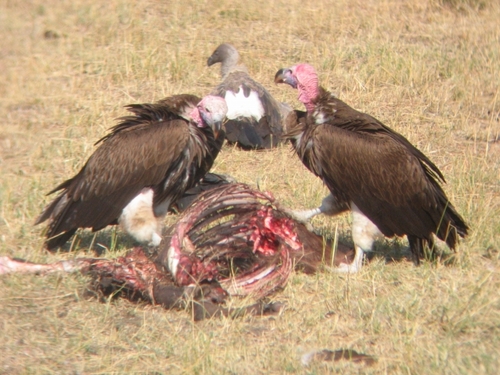
 masai-mara-national-park-scavengers--large-msg-115779180761

Jeremiah’s reponse

 7 I have forsaken my house, I have abandoned my heritage;
 I have given the beloved of my heart into the hands of her enemies.
 8 My heritage has become to me like a lion in the forest;
 she has lifted up her voice against me– therefore I hate her.
 9 Is the hyena greedy for my heritage at my command?
Are the birds of prey all around her?
Go, assemble all the wild animals;
bring them to devour her.
 10 Many shepherds have destroyed my vineyard,
 they have trampled down my portion,
 they have made my pleasant portion a desolate wilderness.
 11 They have made it a desolation; desolate, it mourns to me.
The whole land is made desolate, but no one lays it to heart.
 12 Upon all the bare heights in the desert spoilers have come;
for the sword of the LORD devours from one end of the land to the other;
 no one shall be safe.
 13 They have sown wheat and have reaped thorns,
 they have tired themselves out but profit nothing.
They shall be ashamed of their harvests because of the fierce anger of the LORD.

Jeremiah no longer is concerned for his relations, his family, his heritage. He feels betrayed and so he is ready to surrender them to the consequences of their actions. He is ready for the birds of the air and the beasts of the field to pick over the bones of his homeland, his own village and his family. Jeremiah at this point sees no hope, all he can see is the betrayal and devastation that is coming. The prophet’s broken heart has left him in a state of absolute depression where there is no longer any profit, any joy.

scarsofheart

God’s response

 14 Thus says the LORD concerning all my evil neighbors who touch the heritage that I have given my people Israel to inherit: I am about to pluck them up from their land, and I will pluck up the house of Judah from among them. 15 And after I have plucked them up, I will again have compassion on them, and I will bring them again to their heritage and to their land, everyone of them. 16 And then, if they will diligently learn the ways of my people, to swear by my name, “As the LORD lives,” as they taught my people to swear by Baal, then they shall be built up in the midst of my people. 17 But if any nation will not listen, then I will completely uproot it and destroy it, says the LORD.

God desires God’s people back. There is no easy way around what is coming, even in the reforms of Josiah at the time Jeremiah begins his time as a prophet only brought about superficial changes and God desires something much deeper. The only way a new relationship can begin is for the old one to die so a new one can take it’s place. The Babylonian exile, while an event of horror in the memory of the Jewish people was also a time where they went through a process that they re-identified who they were in their relationship with the Lord. The Lord is unwilling to sit by and not be active, the Lord can no longer abide the way things are where the treacherous thrive and the guilty prosper, yet God still loves the people and desires to have compassion on them and wants them to live out of their identity.

purple rose 01 by picsofflowers.blogspot.com

Jeremiah 11: From Blessing to Curse

Shemah inscription on the Knesset Menorah, Jerusalem

Shemah inscription on the Knesset Menorah, Jerusalem

Jeremiah 11: 1-8: Recalling the People’s Vocation
The word that came to Jeremiah from the LORD: 2 Hear the words of this covenant, and speak to the people of Judah and the inhabitants of Jerusalem. 3 You shall say to them, Thus says the LORD, the God of Israel: Cursed be anyone who does not heed the words of this covenant, 4 which I commanded your ancestors when I brought them out of the land of Egypt, from the iron-smelter, saying, Listen to my voice, and do all that I command you. So shall you be my people, and I will be your God, 5 that I may perform the oath that I swore to your ancestors, to give them a land flowing with milk and honey, as at this day. Then I answered, “So be it, LORD.”
6 And the LORD said to me: Proclaim all these words in the cities of Judah, and in the streets of Jerusalem: Hear the words of this covenant and do them. 7 For I solemnly warned your ancestors when I brought them up out of the land of Egypt, warning them persistently, even to this day, saying, Obey my voice. 8 Yet they did not obey or incline their ear, but everyone walked in the stubbornness of an evil will. So I brought upon them all the words of this covenant, which I commanded them to do, but they did not.

Jeremiah attempts to call the people back to their vocation as the people of God. The language recalls the formative story of the Hebrew people, the story of the Exodus and calls them back to the covenant that God made with the people when they were brought out of Egypt. The people are called once again to hear the words of the covenant, obey the Lord’s voice in a powerful echo of Deuteronomy where the central command is to ‘hear’ or ‘give heed.’ For Jeremiah this sense of a calling the people are to live into as the people of God is their reason for existing. Yet, Jeremiah is also aware of the story of his people and the way they didn’t listen and heed. Jeremiah is working out of a Deuteronomic theology (do these things and you will be blessed, fail to do these things and you will be cursed) and from that perspective he will judge the way God is working in the life of the people. Jeremiah will find this perspective challenged as he continues his ministry, but the basic understanding of why the people find themselves under God’s judgment remains a powerful thought throughout Jeremiah. It is the way Jeremiah makes senses of the senseless desolation he will encounter later in his life with the desolation of his people and their forced exile.

436px-DeadTree

Jeremiah 11: 9-17: The Good Tree Gone Bad
9 And the LORD said to me: Conspiracy exists among the people of Judah and the inhabitants of Jerusalem.10 They have turned back to the iniquities of their ancestors of old, who refused to heed my words; they have gone after other gods to serve them; the house of Israel and the house of Judah have broken the covenant that I made with their ancestors. 11 Therefore, thus says the LORD, assuredly I am going to bring disaster upon them that they cannot escape; though they cry out to me, I will not listen to them. 12 Then the cities of Judah and the inhabitants of Jerusalem will go and cry out to the gods to whom they make offerings, but they will never save them in the time of their trouble. 13 For your gods have become as many as your towns, O Judah; and as many as the streets of Jerusalem are the altars you have set up to shame, altars to make offerings to Baal.
14 As for you, do not pray for this people, or lift up a cry or prayer on their behalf, for I will not listen when they call to me in the time of their trouble. 15 What right has my beloved in my house, when she has done vile deeds? Can vows and sacrificial flesh avert your doom? Can you then exult? 16 The LORD once called you, “A green olive tree, fair with goodly fruit”; but with the roar of a great tempest he will set fire to it, and its branches will be consumed. 17 The LORD of hosts, who planted you, has pronounced evil against you, because of the evil that the house of Israel and the house of Judah have done, provoking me to anger by making offerings to Baal.

This is the language of the betrayed. The Lord speaks out of the Lord’s deep wounds and the grief of the brokenness of the relationship. The people have lost their position, their betrayal has cut so deep that their appeals no longer have any value. They are reaping the harvest of their past deed, and the blanket term that covers their betrayal is idolatry. Their identity has changed from being the fruitful olive tree to becoming the blackened and dead tree after the fire consumes it. God no longer wants to hear from the people, nor the intercession of even his prophet on their behalf. God is done listening, God has turned God’s back, like a parent who disowns his or her children or a spouse who divorces their partner, God no longer is willing to continue with the relationship because of the continued betrayal of the people.

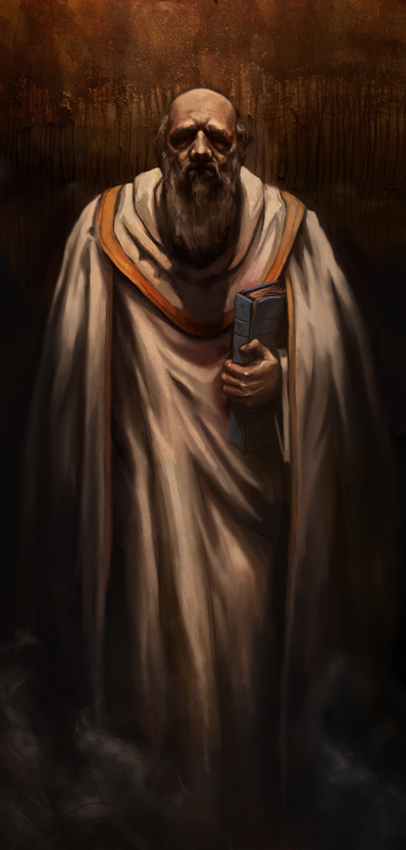
The Prophet (nogard86 at deviantart.com)

The Prophet (nogard86 at deviantart.com)

Jeremiah 11: 18-23: The Cost of Being a Prophet
18 It was the LORD who made it known to me, and I knew;
then you showed me their evil deeds.
19 But I was like a gentle lamb led to the slaughter.
And I did not know it was against me that they devised schemes, saying,
“Let us destroy the tree with its fruit,
let us cut him off from the land of the living,
so that his name will no longer be remembered!”
20 But you, O LORD of hosts, who judge righteously,
who try the heart and the mind,
let me see your retribution upon them,
for to you I have committed my cause.
21 Therefore thus says the LORD concerning the people of Anathoth, who seek your life, and say, “You shall not prophesy in the name of the LORD, or you will die by our hand”– 22 therefore thus says the LORD of hosts: I am going to punish them; the young men shall die by the sword; their sons and their daughters shall die by famine; 23 and not even a remnant shall be left of them. For I will bring disaster upon the people of Anathoth, the year of their punishment.

The consequences for the prophet are steep, and just as the Lord experiences betrayal so now the prophet also experiences a deep betrayal. The prophet has loved his people, indeed that is one of the requirements of being a prophet, and yet now the Lord reveals the plot against the prophet himself. The prophet is horrified and also lapses into the language of betrayal-calling for retribution on his betrayers. In the Lord’s verdict (21-23) we also learn that this betrayal, from the people of Anathoth, are from Jeremiah’s own kin, his own hometown. The people of Anathoth are going to bear an even greater punishment than the people in general, for the Lord says there will not be a remnant from them, unlike the rest of the people.

purple rose 01 by picsofflowers.blogspot.com

The Things That Deceive: Jeremiah 10

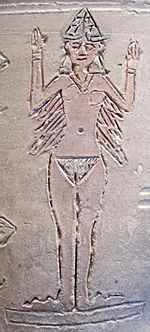
Ishtar Vase from between 1999 and 1500 BCE

Ishtar Vase from between 1999 and 1500 BCE

Mocking the Idols: Jeremiah 10: 1-16

 Hear the word that the LORD speaks to you, O house of Israel.
 2 Thus says the LORD:
 Do not learn the way of the nations,
or be dismayed at the signs of the heavens;
 for the nations are dismayed at them.
 3 For the customs of the peoples are false:
 a tree from the forest is cut down,
 and worked with an ax by the hands of an artisan;
 4 people deck it with silver and gold;
they fasten it with hammer and nails so that it cannot move.
 5 Their idols are like scarecrows in a cucumber field, and they cannot speak;
 they have to be carried, for they cannot walk.
 Do not be afraid of them, for they cannot do evil, nor is it in them to do good.
 6 There is none like you, O LORD; you are great, and your name is great in might.
 7 Who would not fear you, O King of the nations? For that is your due;
 among all the wise ones of the nations and in all their kingdoms there is no one like you.
 8 They are both stupid and foolish; the instruction given by idols is no better than wood!
 9 Beaten silver is brought from Tarshish, and gold from Uphaz.
They are the work of the artisan and of the hands of the goldsmith;
their clothing is blue and purple; they are all the product of skilled workers.
 10 But the LORD is the true God; he is the living God and the everlasting King.
 At his wrath the earth quakes, and the nations cannot endure his indignation.
 11 Thus shall you say to them: The gods who did not make the heavens and the earth shall perish from the earth and from under the heavens.
 12 It is he who made the earth by his power,
who established the world by his wisdom,
and by his understanding stretched out the heavens.
 13 When he utters his voice, there is a tumult of waters in the heavens,
 and he makes the mist rise from the ends of the earth.
He makes lightnings for the rain, and he brings out the wind from his storehouses.
 14 Everyone is stupid and without knowledge;
 goldsmiths are all put to shame by their idols;
 for their images are false, and there is no breath in them.
 15 They are worthless, a work of delusion;
at the time of their punishment they shall perish.
 16 Not like these is the LORD, the portion of Jacob,
for he is the one who formed all things,
and Israel is the tribe of his inheritance; the LORD of hosts is his name.

The people of Jeremiah’s time, like people in our own time, live in a world of multiple allegiances and gods and one of the central commandment of the Jewish people was not to create an image for their God. There is always the temptation to attempt to place our hopes in the things that we create, and so Jeremiah like Isaiah (see for example Isaiah 44: 9-20) has a section of mocking the idols as powerless. Yet these idols are things that are consuming the most precious resources: gold, silver, the finest clothing, the best wood, caring sculpted by an artisan and yet they are nothing. The Hebrew word hevel comes up three times in this section talking about the idols, this is a word which goes back to the name Abel (from the Cain and Abel story) which is most famously picked up in Ecclesiastes:

Vanity of Vanities,says the teacher
Vanity of Vanities! All is vanity. Ecclesiastes 1:2

The word translated vanities (hevel) is literally mist, smoke, vapor-it is something that when grasped onto vanishes within one’s grasp. Those who are trusting in these things they created are finding the objects of their trust are no more reliable than the evanescent vapor of a morning fog.

In our own time we have our own idols as well, they may not be stone, wood or metal statues but they may be individuals (athletes, politicians, actors, musicians); military might or power, security, wealth, fame, position or status or any number of other things. They may be external things we give our allegiance to or they may be things we create (or at least believe we create) with our own hands. Often they are tied up with our wealth and where our wealth is directed. And just like the people of Jeremiah’s time who invested their wealth into the creation of images of gods, we too invest our wealth where our gods are. As Walter Brueggemann can point out false economics and false religion are tied together (Brueggemann 1998, 103) or as Jesus says in the Sermon on the Mount:

For where your treasure is, there your heart will be also Matthew 6: 21.

shepherd-sheep

The Leaders who Lead Astray Jeremiah 10: 17-25

17 Gather up your bundle from the ground, O you who live under siege!
 18 For thus says the LORD:
I am going to sling out the inhabitants of the land at this time,
 and I will bring distress on them, so that they shall feel it.
 19 Woe is me because of my hurt! My wound is severe.
But I said, “Truly this is my punishment, and I must bear it.”
 20 My tent is destroyed, and all my cords are broken;
 my children have gone from me, and they are no more;
there is no one to spread my tent again, and to set up my curtains.
 21 For the shepherds are stupid, and do not inquire of the LORD;
 therefore they have not prospered, and all their flock is scattered.
 22 Hear, a noise! Listen, it is coming—
 a great commotion from the land of the north
 to make the cities of Judah a desolation, a lair of jackals.
 23 I know, O LORD, that the way of human beings is not in their control,
that mortals as they walk cannot direct their steps.
 24 Correct me, O LORD, but in just measure;
not in your anger, or you will bring me to nothing.
 25 Pour out your wrath on the nations that do not know you,
and on the peoples that do not call on your name;
for they have devoured Jacob;
they have devoured him and consumed him,
and have laid waste his habitation.

Who is the mourner, is it the prophet, is it Zion personified, or is it God? Any of the three, and perhaps all of the three are mourning together. The reality is that for those who are willing to listen, which seems to be few if any, they are to flee like the people of Israel fleeing at the beginning of their exodus in the wilderness. In the midst of the wounded God, wounded prophet and a wounded people we see at the center of things are the leaders who have led the flock astray. This is not the world where everyone makes their own decision on things, in fact the Davidic and priestly leadership would claim divine authorization, and yet they had not inquired of God. Rather they had probably looked out for their own interests, ensuring their own comfort, and operating much as any other nation’s leaders operated. If the leaders don’t live out the vision of God’s peace what hope do the people have.

At verse 23 we have a shift and the prophet is talking back to God, pleading both for God’s mercy and justice at the same time. Much as Psalm 6 begins with an appeal for God to act justly but not in anger:

O Lord, do not rebuke me in your anger,
Or discipline me in your wrath. Psalm 6:1

The plea is for God to calm down, to make decisions after God’s anger has dissipated which places the prophet in a precarious place (which any person who has told a person who is raging to calm down knows) and then also calls on God to pour out God’s wrath on the nations around Jerusalem. To hold them to the same standard that Jerusalem is being held to.

Being the set aside people of God is a dangerous position, God has high hopes for them. The calling is a gift and a challenge at the same time. The people have failed in their vocation and are now enduring the wrath and the grief of God. Wrath is an uncomfortable term and I probably need to spend some time talking about it, but ultimately God is not passive-God does take sides and one of the hopes that Christians have is that God will not allow injustice to continue indefinitely. Unfortunately, many times this image of God’s wrath has been used as an object of fear to prop up the unquestioned authority of the church or particular leaders, and this would not be that different from Jeremiah’s day with the temple and king.

purple rose 01 by picsofflowers.blogspot.com

Review of Jeremiah: The Fate of A Prophet by Binyamin Lau

Jeremiah the Fate fo a Prophet

JEREMIAH: THE FATE OF A PROPHET, by Binyamin Lau. Translated by Sara Daniel. Jerusalem: Maggid Books, 2013. Pp.230.  $24.95 (hardcover)

The book of Jeremiah is one of the most challenging to approach in all of scriptures due to its enigmatic arrangement, wide historical context and challenging material. Rabbi Dr. Binyamin Lau does an incredible service in taking the book of Jeremiah and rearranging the chapters into sections that parallel the prophet’s life and placing the prophet’s words in the surrounding historical context. Set within this broader context we see the struggle of the prophet as he moves from soaring hope for the reunification of Israel and Judah through the disillusionment with the nationalistic struggles of Judah and eventually into the despair of the Babylonian exile. Rather than producing a commentary which deals with each chapter of Jeremiah, Rabbi Lau produces a narrative using: the text of Jeremiah, the recorded memory of the events in 2 Kings and 2 Chronicles in conversation with other historical sources and other prophets active at various points in Jeremiahs long career as well as the Rabbinic tradition of interpretation. The end result is a coherent and tragic narrative of a disparaged and disgraced prophet who tried desperately to eliminate the social injustices and corruption of his people and to save the Temple from its impending doom.

The introduction of the work argues that the modern context the prophet might be understood as the public intellectual who must summon all of their intellectual powers and persuasive skills to convince their audience of the truth of their words. Lau argues that prophecy does not depend upon being accepted and among the prophets only Jonah was able to fulfill his mission by convincing the people of Nineveh to see the error of their ways (xiv-xv). Yet the prophet must love the people enough to pay the personal price for their visions, and even be willing to be declared an enemy of the people. Jeremiah’s prophetic ministry, as the narrative will tell, will come at a high personal cost.

The book is divided between the three primary kings that Jeremiah’s prophetic ministry took place under: Josiah, Jehoiakim, Zedekiah. Part I begins by setting the stage with the story leading up to the time of Josiah by dealing with his predecessors. Briefly touching on the conflict between Samaria and Judah, in the context of the Assyrian domination of the Trans-Euphrates region, we see a picture of a divided people where savage wars between the nations of Judah and Israel overshadow the blood ties that once united them. (3) During the miraculous salvation of Jerusalem, in the time of Isaiah the prophet and the reign of King Hezekiah, we see the entry of Babylonia into the Judean world with Merodoch-Baladan’s delegation to Hezekiah. When Hezekiah’s son, Manasseh, ascended to the throne in 697 BCE he attempted to put the nation of Judah back on its feet but could not resist the lure of Assyrian culture and began to forfeit the cultural and religious heritage of Judah. It is within this context, after a brief reign by Amon, that Josiah becomes king in 640 BCE and the story of Jeremiah’s prophetic career begins.

Jeremiah’s prophetic calling occurs in the thirteenth year of Josiah’s reign, or 626 BCE, which is a time of great change in the region. This is the time when King Josiah has begun to cleanse and purify Jerusalem from Assyrian culture and worship. The young king is also sending envoys to Samaria to attempt to reunite the kingdoms of Judah and Israel. This grand dream of King Josiah to bring the people of Judah and Israel back to being one kingdom and worshipping the Lord only can be understood within the horizon of the crumbling of the Assyrian empire which is waging a war of attrition on its northern border. (10) Jeremiah’s ministry begins prophesying the unification of Israel and Judah, appealing to their shared ancestor Jacob. Jeremiah is captured by this vision and is convinced that God’s promise to rebuild after the destruction will soon be realized. Yet, as Jeremiah begins to yearn for this change he recognizes a discrepancy between the king’s attempted reforms and the other local leadership who still continue to represent the sinful generation of Manessah, yet Jeremiah believes that God is about to get rid of these shepherds and gather the scattered flock from Samaria. Jeremiah’s most optimistic words go out to the cities of Samaria, but in Judah and particularly in his own homeland of Benjamin Jeremiah witnesses a people “engrossed in their own land and wealth, wrapped up in everyday life, and awash in paganism.” (33) Throughout the remainder of the reign of Josiah and his attempts to reform Judah, Jeremiah will become increasingly distraught over the superficiality of these reforms among the leaders, priests and the people. “Jeremiah sees behind this façade and recognizes the falsity and the hypocrisy, the thin veneer of piety serving as a fig leaf for corruption and warped social values.”(49) When King Josiah dies in 609 BCE, while going out to confront Pharaoh Necho, Jeremiah’s observation of the shallowness of the reforms of Josiah bear their unfortunate fruit as the new king sets the nation on a very different course.

Part II deals with the reign of Johoiakim (609-598 BCE) and his pro-Egyptian regime. This is a time where Egypt experiences a renewal of power and influence. Egypt lays a heavy tariff on Judah, which Johoiakim passes onto the people of the land. “Jehoiakim strikes a winning combination: economic reliance on Egypt, spiritual and national reliance on the Temple, and a general atmosphere of compliance with the leader. What can go wrong?”(78) Jeremiah’s prophecy rails against all three of these items stating that reliance on Egypt will lead the king and his followers to their demise, that the temple is like the tabernacle at Shiloh that was destroyed by God after it was corrupted by the high priest’s sons, and the king and his loyalists will fall into the hands of Babylonia. Jeremiah finds himself struggling against the leaders of his nation, the priests and other prophets and is viewed as a traitor to the very people he is attempting to save from their coming doom. Jeremiah finds himself caught between the message of impending doom he feels compelled to pronounce and the persecution this pronouncement brings. The nation’s ability to rely on Egypt falters in 605 when Nebuchadnezzar begins his conquest, and Judah becomes subservient for three years, but in 601 when Egypt enjoys a brief resurgence Judah again sides with Egypt and rebels against Babylon. Jeremiah is able to see Babylon as the instrument of the Lord’s judgment and yet he still holds a single thread of hope that the people will repent and the terrible coming destruction of the Babylonians will be averted. Yet, in 597 Nebuchadnezzar in a brief campaign recaptures the rebellious cities of Judah the reign of Jehoiakim and the three month reign of his successor Jeconiah come to an end and the time between the two exiles begins under the Zedekiah, who was Josiah’s youngest son, after he swore loyalty to Babylon.

Binyamin Lau continues to masterfully tell the story of Jeremiah and the people of Judah in the time leading up to the destruction of Jerusalem and the final deportation of the Judean people as a punishment for breaching of their treaty with Babylon. King Zedekiah finds himself surrounded by those who have seized power in the leadership vacuum left by the Babylonians taking most of the previous leaders into exile in 597 BCE. When Babylon returns to the north in 594, Judah finds itself with the other nations in the area becoming a part of an Egypt led alliance. To the consternation of many of the leaders in the land as well as many other prophets, in particular Hananiah, Jeremiah continues to proclaim that the nation is to serve the King of Babylon and live and he passionately pleads for the city to turn from its course and avoid the destruction that is coming. Yet again the prophet’s words will fall on deaf ears. Even though King Zedekiah has some sympathy for Jeremiah and his prophesy the king finds himself powerless in the face of those who are leading the nation on a path of confrontation once again with Babylon. Even after Jeremiah’s words come true with the destruction of Jerusalem and the temple in 586 BCE, the people still refuse to pay attention to the prophet who for decades has tried to save the city and temple from this fate.

Jeremiah’s story is one of bitter disappointment. Throughout the story and prophecy of Jeremiah, Rabbi Lau is able to illuminate parallels in modern day Jerusalem. “The streets of Jerusalem still throng with false prophets who earnestly claim, ‘the tradition of our forefathers is in our hands; the Third Temple shall not be destroyed!’ Once again they seek to lull us into a sense of false security, to make us forget the grave responsibility we shoulder: to be worthy of this national home, the Jewish state.”(225) It is also very easy to make connections between the political and religious movements in modern day Israel and similar political and religious rhetoric in the United States. This is an insightful journey into the world of the prophet and illuminating in approaching not only Jeremiah but the world of the Hebrew Scriptures.

purple rose 01 by picsofflowers.blogspot.com

Jeremiah 9: 2-26: Death in and of the Land

lorax

Speaking for the Earth

Jeremiah 9: 2-16

2 O that I had in the desert a traveler’s lodging place,
that I might leave my people and go away from them!
 For they are all adulterers, a band of traitors.
 3 They bend their tongues like bows;
 they have grown strong in the land for falsehood, and not for truth;
 for they proceed from evil to evil, and they do not know me, says the LORD.
 4 Beware of your neighbors, and put no trust in any of your kin;
 for all your kin are supplanters, and every neighbor goes around like a slanderer.
 5 They all deceive their neighbors, and no one speaks the truth;
they have taught their tongues to speak lies;
 they commit iniquity and are too weary to repent.
 6 Oppression upon oppression, deceit upon deceit!
 They refuse to know me, says the LORD.
 7 Therefore thus says the LORD of hosts:
 I will now refine and test them, for what else can I do with my sinful people?
 8 Their tongue is a deadly arrow; it speaks deceit through the mouth.
They all speak friendly words to their neighbors,
but inwardly are planning to lay an ambush.
 9 Shall I not punish them for these things? says the LORD;
and shall I not bring retribution on a nation such as this?
 10 Take up weeping and wailing for the mountains,
 and a lamentation for the pastures of the wilderness,
 because they are laid waste so that no one passes through,
 and the lowing of cattle is not heard;
 both the birds of the air and the animals have fled and are gone.
 11 I will make Jerusalem a heap of ruins, a lair of jackals;
 and I will make the towns of Judah a desolation, without inhabitant.

 12 Who is wise enough to understand this? To whom has the mouth of the LORD spoken, so that they may declare it? Why is the land ruined and laid waste like a wilderness, so that no one passes through? 13 And the LORD says: Because they have forsaken my law that I set before them, and have not obeyed my voice, or walked in accordance with it, 14 but have stubbornly followed their own hearts and have gone after the Baals, as their ancestors taught them. 15 Therefore thus says the LORD of hosts, the God of Israel: I am feeding this people with wormwood, and giving them poisonous water to drink. 16 I will scatter them among nations that neither they nor their ancestors have known; and I will send the sword after them, until I have consumed them.

In Dr. Seuss’ The Lorax the words of the Lorax are ignored by the Onceler and the effects of the Onceler’s actions are felt by the birds of the air and the animals of the field. Human action becomes tied to the well being of the earth and animals-and this is a very biblical thought. Within Jeremiah it is not only the people of Israel who will suffer for their inability to live in harmony with vision of shalom, it is the mountain and the wilderness and the pastures that are also laid waste (which the pastures and fields would be devastated by an invasion and forests become converted to siege engines), cattle and birds become the food for the invading army as well as the people fleeing the fight and the only animals that remain are the scavengers. Although this is a very dark view of the coming days for Jeremiah’s people it also reflects both the reality of warfare of that time and this connection between the faithfulness of God’s people and the well being of the earth.

It is also interesting that the primary thing lifted up as the cause at this point is falsehood, deception and lies. Either God or the prophet (or both) wish there is someplace else they could go away from this people because trust has been broken and now nothing that is said is able to be trusted.  Lies, in the prophets words, have become a game where people intentionally lie to one another and yet in a world of speaking points and zingers I sometimes wonder what happened to truthful speech. In a world  where fear often makes truthful speech difficult (particularly around any controversial issue) Oftentimes the lies that cover up an action cause as much or more damage to trust as the action itself and they poison the waters of a relationship.  Between God and God’s people the waters of the relationship have been poisoned and it is reaching for a painful (for both parties) ending.

Ringed Round By Death

Mourning

Jeremiah 9: 17-26

17 Thus says the LORD of hosts: Consider,
and call for the mourning women to come;
 send for the skilled women to come;
 18 let them quickly raise a dirge over us,
so that our eyes may run down with tears,
and our eyelids flow with water.
 19 For a sound of wailing is heard from Zion:
“How we are ruined! We are utterly shamed,
because we have left the land,
because they have cast down our dwellings.”
 20 Hear, O women, the word of the LORD,
 and let your ears receive the word of his mouth;
teach to your daughters a dirge, and each to her neighbor a lament.
 21 “Death has come up into our windows,
it has entered our palaces, to cut off the children from the streets
 and the young men from the squares.”
 22 Speak! Thus says the LORD:
 “Human corpses shall fall like dung upon the open field,
 like sheaves behind the reaper, and no one shall gather them.”

 23 Thus says the LORD: Do not let the wise boast in their wisdom, do not let the mighty boast in their might, do not let the wealthy boast in their wealth; 24 but let those who boast boast in this, that they understand and know me, that I am the LORD; I act with steadfast love, justice, and righteousness in the earth, for in these things I delight, says the LORD. 25 The days are surely coming, says the LORD, when I will attend to all those who are circumcised only in the foreskin: 26 Egypt, Judah, Edom, the Ammonites, Moab, and all those with shaven temples who live in the desert. For all these nations are uncircumcised, and all the house of Israel is uncircumcised in heart.


An invocation of the rituals of death is what is called for in the disaster to come, but there aren’t enough people to cover the process of mourning. In our own situation it would be likened to a situation where there are not enough funeral directors, counselors, pastors and others to lead the funerals and so others are having to learn how to lead the mourning. In the ancient world, mourning was women’s work and the public display of grief was a way in which the dead were honored (which for most of us is a foreign concept-many of the Lutheran funerals I preside over the family members ‘bravely hold back tears’).  But here we have a situation so dire that there are not enough mourners to go around and so the daughters of the survivors are all taught their identity as wailing women, and mourners, as those who give voice to the pain of death. They are entering a time where bodies once honored cover the ground like the sheaves of wheat after a harvest or like the excrement in a cattle pen.  Death enters from every direction and is all around, coming into the home, the public spaces and it doesn’t discriminate between children, the young adults or the elderly. Life may continue but it is ringed round by death.

Wisdom and wealth have failed as a source of life. In wisdom literature, particularly in the book of Ecclesiastes, the wise person realizes that these can not be a source of ultimate meaning or joy. Ecclesiastes in many cases understands what Existential philosophy would discover two millennia later that:

16 I said to myself, “I have acquired great wisdom, surpassing all who were over Jerusalem before me; and my mind has had great experience of wisdom and knowledge.” 17 And I applied my mind to know wisdom and to know madness and folly. I perceived that this also is but a chasing after wind.

 18 For in much wisdom is much vexation, and those who increase knowledge increase sorrow. I said to myself,

“Come now, I will make a test of pleasure; enjoy yourself.” But again, this also was vanity. 2 I said of laughter, “It is mad,” and of pleasure, “What use is it?” 3 I searched with my mind how to cheer my body with wine– my mind still guiding me with wisdom– and how to lay hold on folly, until I might see what was good for mortals to do under heaven during the few days of their life. 4 I made great works; I built houses and planted vineyards for myself; 5 I made myself gardens and parks, and planted in them all kinds of fruit trees. 6 I made myself pools from which to water the forest of growing trees. 7 I bought male and female slaves, and had slaves who were born in my house; I also had great possessions of herds and flocks, more than any who had been before me in Jerusalem. 8 I also gathered for myself silver and gold and the treasure of kings and of the provinces; I got singers, both men and women, and delights of the flesh, and many concubines.

 9 So I became great and surpassed all who were before me in Jerusalem; also my wisdom remained with me. 10 Whatever my eyes desired I did not keep from them; I kept my heart from no pleasure, for my heart found pleasure in all my toil, and this was my reward for all my toil. 11 Then I considered all that my hands had done and the toil I had spent in doing it, and again, all was vanity and a chasing after wind, and there was nothing to be gained under the sun. Ecclesiastes 1:16-2:11

Wisdom or wealth are not enough, they are ultimately ‘hevel’ (the Hebrew word translated as ‘vanity’- it is literally smoke, mist or vapor) they are worthless. Nor is ethnic identity or religious practice enough for none of these can bring one into the vision that God had for God’s people.  Jeremiah’s argument here foreshadows what Paul will say to his communities in the New Testament:

For in Christ Jesus neither circumcision nor uncircumcision counts for anything; the only thing that counts is faith working through love. Galatians 5:6

Surface rituals are not leading the people to a practice of steadfast love, justice and righteousness, instead they have substituted what Brueggemann refers to as ‘surface rituals’ (Brueggemann 1998, 101)and what God is seeking is not a mark on the flesh but a transformation of the heart, which God will promise later in the book of Jeremiah.

Jeremiah 8:4- 9:1: The Headstrong People and the Heartsick Prophet and God

Stallions charging

I am trying something a little different as I start again with Jeremiah: rather than breaking each section into several posts throughout the week I am going to try to do one larger post for those who enjoy this type of Biblical reflection but to where those who don’t read this part of the blog don’t have multiple posts weekly on Jeremiah. I have also been given the honor of reviewing Binyamin Lau’s Jeremiah: The Fate of the Prophet and that should be coming in the next couple weeks as well as integrating some of his insights into my journey through Jeremiah.

Jeremiah 8:4-17
4 You shall say to them, Thus says the LORD:
When people fall, do they not get up again?
If they go astray, do they not turn back?
5 Why then has this people turned away in perpetual backsliding?
They have held fast to deceit, they have refused to return.
6 I have given heed and listened, but they do not speak honestly;
no one repents of wickedness, saying, “What have I done!”
All of them turn to their own course, like a horse plunging headlong into battle.
7 Even the stork in the heavens knows its times;
and the turtledove, swallow, and crane observe the time of their coming;
but my people do not know the ordinance of the LORD.
8 How can you say, “We are wise, and the law of the LORD is with us,”
when, in fact, the false pen of the scribes has made it into a lie?
9 The wise shall be put to shame, they shall be dismayed and taken;
since they have rejected the word of the LORD, what wisdom is in them?
10 Therefore I will give their wives to others and their fields to conquerors,
because from the least to the greatest everyone is greedy for unjust gain;
from prophet to priest everyone deals falsely.
11 They have treated the wound of my people carelessly,
 saying, “Peace, peace,” when there is no peace.
12 They acted shamefully, they committed abomination;
yet they were not at all ashamed, they did not know how to blush.
Therefore they shall fall among those who fall; at the time when I punish them,
they shall be overthrown, says the LORD.
13 When I wanted to gather them, says the LORD,
there are no grapes on the vine, nor figs on the fig tree;
even the leaves are withered, and what I gave them has passed away from them.
14 Why do we sit still? Gather together, let us go into the fortified cities and perish there;
for the LORD our God has doomed us to perish, and has given us poisoned water to drink,
because we have sinned against the LORD.
15 We look for peace, but find no good,
for a time of healing, but there is terror instead.
16 The snorting of their horses is heard from Dan;
at the sound of the neighing of their stallions the whole land quakes.
They come and devour the land and all that fills it, the city and those who live in it.
17 See, I am letting snakes loose among you,
adders that cannot be charmed, and they shall bite you, says the LORD.

If you have been following through Jeremiah to this point you could be forgiven for thinking you have read much of this before. Much as people agonizing over the brokenness of a relationship or the ending of a marriage often revisit the same material again and again trying to make sense of the reality of the changes they are dealing with, we see God continuing to struggle through God’s own disillusionment and emotions. As I’ve mentioned before the God portrayed in Jeremiah struggles with very human emotions and struggles against the coming disaster, desiring any evidence of a return to the way things could have been. Yet the falsehood of the people, which begins at the top with the prophets and the priests, has set them on a course that is moving away from God. Over and over we hear God saying, turn, return, repent but the people are charging towards their own destiny as a horse charging in battle. Even the law has been corrupted by the scribes, whether it is by their interpretation of it or their actual recording of it we do not know, but this is a world where only a select few were literate and they were the interpreters of God’s will to the people.

Two things that caught my attention reading through this, one is the reference to the fig tree, in verse 13, that neither puts our figs and even its leaves are withered. I am becoming more and more convinced of the influence of Jeremiah’s imagery on the New Testament, and in Mark 11(as well as Matthew) we encounter Jesus encountering a fig tree with no fruit, cursing it and it withers-which is a direct allusion to the temple. In earlier posts I have also talked about the vine/vineyard imagery. Both figs and grapes are common parts of the agricultural life of the people in Judah. The other image is the transition to snakes in verse 17, which may also point back to Numbers 21 where the Lord sent snakes among the people in their journey in the wilderness and Moses eventually was commanded to make a bronze serpent that the people could look upon and live.

God continues to agonize over the judgment that is coming upon God’s chosen people. If there was some way to restore the relationship without the removing of God’s protection and the harsh reality of the coming Babylonian invasion God seems open to it, but the direction of the people has moved away from God’s pursuit, and soon God’s people will also join in the grieving.

scarsofheart

Jeremiah 8: 18-9:1
18 My joy is gone, grief is upon me, my heart is sick.
19 Hark, the cry of my poor people from far and wide in the land:
“Is the LORD not in Zion? Is her King not in her?”
(“Why have they provoked me to anger with their images, with their foreign idols?”)
20 “The harvest is past, the summer is ended, and we are not saved.”
21 For the hurt of my poor people I am hurt,
I mourn, and dismay has taken hold of me.
22 Is there no balm in Gilead? Is there no physician there?
Why then has the health of my poor people not been restored?
9:1 O that my head were a spring of water, and my eyes a fountain of tears,
so that I might weep day and night for the slain of my poor people!
Who is doing the weeping here, is it the prophet or is it God, or perhaps it is both. The prophet is so closely tied into God’s emotions and yet these are his people too. There is a heartsick God and a heartsick prophet who are mourning for the people whose path is taking them to a place where they will experience hurt and destruction. It is like the parent watching a child go down a path that they know will cause them pain but no words they say will turn them away, or it is like the person who loves the addict but has to allow them to follow the path they are on until they are ready to receive treatment not as a punishment but as a new opportunity. The old African American spiritual points to the reality of a the region of Gilead, East of the Jordan, being famous for a balm, an aromatic resin famous for its properties of easing pain and covering the smell of a festering wound:

There is a balm in Gilead to make the wounded whole
There is a balm in Gilead to heal the sin sick soul. (Evangelical Lutheran Worship 2006)

But in contrast to not only the words in the song and the hopeful nature, Jeremiah and God see no healing, even in Gilead. There is no prescription medication or course of treatment that will ease the pain of what is to come.

purple rose 01 by picsofflowers.blogspot.com

The City Becomes a Desolation: Jeremiah 7:27-8:3


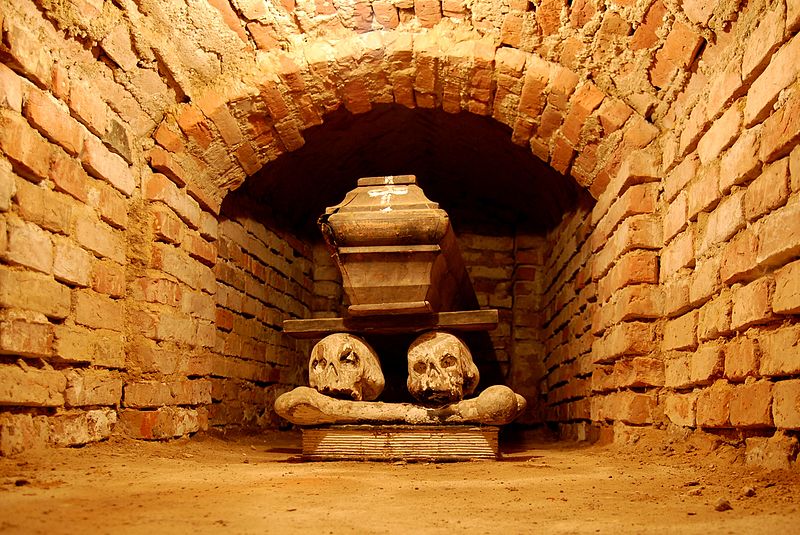
crypt

Jeremiah 7: 27-8:3

 27 So you shall speak all these words to them, but they will not listen to you. You shall call to them, but they will not answer you. 28 You shall say to them: This is the nation that did not obey the voice of the LORD their God, and did not accept discipline; truth has perished; it is cut off from their lips.

 29 Cut off your hair and throw it away; raise a lamentation on the bare heights,
for the LORD has rejected and forsaken the generation that provoked his wrath.

                30 For the people of Judah have done evil in my sight, says the LORD; they have set their abominations in the house that is called by my name, defiling it. 31 And they go on building the high place of Topheth, which is in the valley of the son of Hinnom, to burn their sons and their daughters in the fire– which I did not command, nor did it come into my mind. 32 Therefore, the days are surely coming, says the LORD, when it will no more be called Topheth, or the valley of the son of Hinnom, but the valley of Slaughter: for they will bury in Topheth until there is no more room.33 The corpses of this people will be food for the birds of the air, and for the animals of the earth; and no one will frighten them away. 34 And I will bring to an end the sound of mirth and gladness, the voice of the bride and bridegroom in the cities of Judah and in the streets of Jerusalem; for the land shall become a waste.

 8:1 At that time, says the LORD, the bones of the kings of Judah, the bones of its officials, the bones of the priests, the bones of the prophets, and the bones of the inhabitants of Jerusalem shall be brought out of their tombs; 2 and they shall be spread before the sun and the moon and all the host of heaven, which they have loved and served, which they have followed, and which they have inquired of and worshiped; and they shall not be gathered or buried; they shall be like dung on the surface of the ground. 3 Death shall be preferred to life by all the remnant that remains of this evil family in all the places where I have driven them, says the LORD of hosts.

It has been a little while since I’ve posted anything on Jeremiah. This has been sitting as a draft for a couple months and it was going to be posted the day the tornadoes went through Moore, Shawnee and Newcastle Oklahoma and I didn’t want any association with the title and what happened there. (Also as an excuse my son who had some of my resources on my e-reader with him while he was in Oklahoma for the first part of the summer) but recently I’ve had a couple events that have encouraged me to get back to Jeremiah, so here you go.

We return to the language of horror and disgust precisely to attempt to get past the walls of resistance that the people have put up around them. Are the people practicing child sacrifice, we will never know, but to the Jewish mind this is the most revolting of the practices of the world around them. A time when death is so prevalent that there is no longer the ability to separate the dead from the living because there are no places left to bury the dead. Death is so prevalent that it invades into the everyday experience of the people and they cannot help but be defiled by the presence of death in their midst. The dead are left in the open for the crows and wild animals to consume, and the wild animals have the run of the land—no one is there to stop them. This is the image of a slaughter. There is no more joy, no more happiness, no more celebration, it is the ending of the world as they know it.

Even kings and priests and officials are not exempt from the sacrilege. Their honored bones are laid upon the ground, prophets have no honor, and they are valued as crap. What remains is the image of the boneyard of Ezekiel 37 where no life seems possible. The world where death and defilement has been kept at bay is suddenly turned upside down and death is everywhere around.

purple rose 01 by picsofflowers.blogspot.com

The Prophet Who Hears and The People Who Don’t: Jeremiah 7: 16-26

Martin_Luther_King_Jr_NYWTS

Jeremiah 7: 16-26

16 As for you, do not pray for this people, do not raise a cry or prayer on their behalf, and do not intercede with me, for I will not hear you. 17 Do you not see what they are doing in the towns of Judah and in the streets of Jerusalem? 18 The children gather wood, the fathers kindle fire, and the women knead dough, to make cakes for the queen of heaven; and they pour out drink offerings to other gods, to provoke me to anger. 19 Is it I whom they provoke? says the LORD. Is it not themselves, to their own hurt? 20 Therefore thus says the Lord GOD: My anger and my wrath shall be poured out on this place, on human beings and animals, on the trees of the field and the fruit of the ground; it will burn and not be quenched.

 21 Thus says the LORD of hosts, the God of Israel: Add your burnt offerings to your sacrifices, and eat the flesh. 22 For in the day that I brought your ancestors out of the land of Egypt, I did not speak to them or command them concerning burnt offerings and sacrifices. 23 But this command I gave them, “Obey my voice, and I will be your God, and you shall be my people; and walk only in the way that I command you, so that it may be well with you.” 24 Yet they did not obey or incline their ear, but, in the stubbornness of their evil will, they walked in their own counsels, and looked backward rather than forward. 25 From the day that your ancestors came out of the land of Egypt until this day, I have persistently sent all my servants the prophets to them, day after day; 26 yet they did not listen to me, or pay attention, but they stiffened their necks. They did worse than their ancestors did.


Now the audience shifts from Jeremiah speaking to those who listen at the temple gate to God speaking to Jeremiah. Jeremiah seems to have become the one who God can speak to when everyone else has stopped listening and now God tells Jeremiah not to intercede for the people anymore. God is tired of listening, God is at the point of giving up. God is tired of being patient, of waiting for the people to return. On the one hand we see a religious practice within the families that are putting a lot of effort into worshiping other gods as a household, on the other hand the cultic practice of the temple is lifted up as something that replaced obedience. Sacrifices and religious practice have replaced the central command to hear and listen.

The prophetic and the priestly voice are in direct contest to determine who will speak for God. Often this is the case, the priestly voice is the voice of the settled people where the prophetic is calling people back to obedience. The priestly voice is focused on maintaining an institution, while the prophetic is concerned with faithfulness to their calling. There is always the temptation within a priestly role to tell people what they want to hear, while prophets tend to say the things nobody wants to hear. Ideally an individual would be able to fulfill both callings, but the reality is that both find themselves in tension with one another.

Prophets are rarely appreciated in their own time and in their own lifetime, and sometimes even when they are recognized they are also de-fanged. For example, with Martin Luther King, Jr. we have all become familiar with his ‘I have a dream speech’ but much of his criticism of the war in Vietnam or economic injustices have been muted under the remembrance of him purely as a person who advocated for greater inclusivity of people of all races. I think something similar has happened with Jeremiah, select portions of Jeremiah have made it into the various lectionary systems and Jeremiah doesn’t have the memorable stories of Daniel or Jonah and so his protest is included, he is honored and his protest is forgotten.

purple rose 01 by picsofflowers.blogspot.com

Railing Against the Temple: Jeremiah 7:1-15

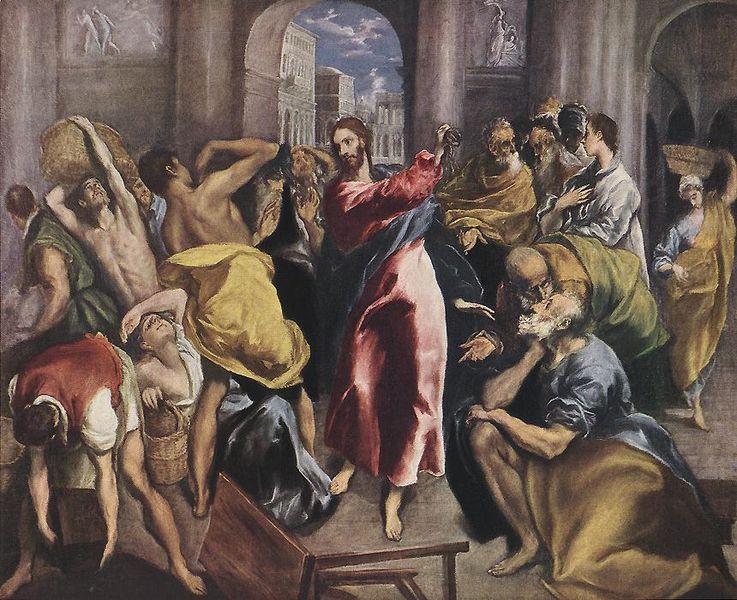
Christ Driving the Traders from the Temple by El Greco (1600)

Christ Driving the Traders from the Temple by El Greco (1600)

Jeremiah 7:1-15

The word that came to Jeremiah from the LORD: 2 Stand in the gate of the LORD’s house, and proclaim there this word, and say, Hear the word of the LORD, all you people of Judah, you that enter these gates to worship the LORD. 3 Thus says the LORD of hosts, the God of Israel: Amend your ways and your doings, and let me dwell with you in this place. 4 Do not trust in these deceptive words: “This is the temple of the LORD, the temple of the LORD, the temple of the LORD.”

                5 For if you truly amend your ways and your doings, if you truly act justly one with another, 6 if you do not oppress the alien, the orphan, and the widow, or shed innocent blood in this place, and if you do not go after other gods to your own hurt, 7 then I will dwell with you in this place, in the land that I gave of old to your ancestors forever and ever.

                8 Here you are, trusting in deceptive words to no avail. 9 Will you steal, murder, commit adultery, swear falsely, make offerings to Baal, and go after other gods that you have not known,

 10 and then come and stand before me in this house, which is called by my name, and say, “We are safe!”– only to go on doing all these abominations? 11 Has this house, which is called by my name, become a den of robbers in your sight? You know, I too am watching, says the LORD. 12 Go now to my place that was in Shiloh, where I made my name dwell at first, and see what I did to it for the wickedness of my people Israel. 13 And now, because you have done all these things, says the LORD, and when I spoke to you persistently, you did not listen, and when I called you, you did not answer, 14 therefore I will do to the house that is called by my name, in which you trust, and to the place that I gave to you and to your ancestors, just what I did to Shiloh. 15 And I will cast you out of my sight, just as I cast out all your kinsfolk, all the offspring of Ephraim.

Jeremiah 7:1-8:3 is generally thought of by scholars as Jeremiah’s temple sermon, it breaks from the form of poetry in 4-6 and places Jeremiah at the gate of the temple proclaiming against the temple authority. Long before Karl Marx and other modern philosophers talked about religion serving to legitimate the dominant class the prophets railed against the priestly and monarchical authorities propping up their own positions with claims of divine right. To use the language of Liberation theologians God is exercising a preferential option for the poor and oppressed (if you do not oppress the alien, the orphan and the widow-these are those without a method of support in the society) and God is not willing to be in competition with other gods-idolatry and injustice are the two rallying cries of the prophet. Specifically appealing to the ten commandments as a central part of the covenant that the people are to live out of and contrasting that to the appearance of trusting in the temple and land rather than the Lord.

Jesus also had significant issues with the temple establishment in his own day, and it is not by chance that Jesus quotes Jeremiah 7:11 when he comes into the temple and throws out the moneychangers. Often there is a focus on the moneychangers, but if you read the context of this within Matthew, Mark and to a lesser extent Luke you can see that the issue is with the temple establishment in general. There is always the danger of any religion becoming a way of authorizing the status quo and it is the prophets who come and upset and challenge this. God has strong words for the temple authority in Jeremiah’s and Jesus’ time and in both cases that temple would be in ruins in the generation that followed.

The position taken by Jeremiah would be viewed as treason by the state, it would be challenging the ideological underpinnings of the religious and the monarchical authorities, it calls people not to trust in the temple.  It attempts to show the people that the temple and the sacrifices they offer cannot cover up a destructive way of life that is out of alignment with God’s covenant with them.  In the gate of the temple Jeremiah is called to challenge the foundations of the way of life of the people and God once again cries out for the people to return to the covenant so once again God may dwell in their midst.

purple rose 01 by picsofflowers.blogspot.com

Not Precious Metal, Fools Gold: Jeremiah 6: 22-30

Jeremiah Lamenting the Destruction of Jerusalem by Rembrandt van Rijn 1630

Jeremiah Lamenting the Destruction of Jerusalem by Rembrandt van Rijn 1630

22 Thus says the LORD: See, a people is coming from the land of the north,
a great nation is stirring from the farthest parts of the earth.
23 They grasp the bow and the javelin, they are cruel and have no mercy,
their sound is like the roaring sea; they ride on horses,
equipped like a warrior for battle, against you, O daughter Zion!
24 “We have heard news of them, our hands fall helpless;
anguish has taken hold of us, pain as of a woman in labor.
25 Do not go out into the field, or walk on the road;
for the enemy has a sword, terror is on every side.”
26 O my poor people, put on sackcloth, and roll in ashes;
make mourning as for an only child, most bitter lamentation:
for suddenly the destroyer will come upon us.
27 I have made you a tester and a refiner among my people
so that you may know and test their ways.
28 They are all stubbornly rebellious, going about with slanders;
they are bronze and iron, all of them act corruptly.
29 The bellows blow fiercely, the lead is consumed by the fire;
in vain the refining goes on, for the wicked are not removed.
30 They are called “rejected silver,” for the LORD has rejected them.
We finally come to the end of a long poem that has run from chapter 4-6, and it is the language of pain, or worlds ending, of rejection and yet throughout all of it is the desire for things to be different. Imagine if you would a scenario where a couple has been married for several years, and one spouse has not only been having an affair but has decided that they no longer wants to be married, yet they want to remain in the house. How would the partner react? The partner may want to keep the marriage intact, but would probably not be willing to keep things the way they are, to have invested so much in a relationship and to desire it’s reconciliation only to see their efforts flaunted and then to live with a constant reminder of the brokenness under their roof. Even the most gracious person is going to seek a necessary change to the way things are. Throughout this poem God has desired the people to turn, to change, and yet they do not hear (and perhaps cannot hear). There are too many people proclaiming peace in a time when war is at the gates, prosperity in a time of famine is on the doorstep. The enemy is near, and here at the end of the poem the rumor of their approach has set the people into panic and God or the prophet still desires for them to repent, to put on sackcloth, to roll in ashes, to mourn as for the loss of an only child, yet we hear only the silence about any repentance. They are so corrupted that even switching to the image of metal working, they are all dross and no longer have precious metal left. They are rejected silver or something more familiar to many of us iron pyrite, fool’s gold. The people may look great, but when you find out what they really are the appearance betrays their real nature, and so they are unable to be refined and in the language of the poem they are rejected.
This may be the end of the poem, but this is not the end of the story. There is a long way to go as we walk through the desolation, and I know at times this is a difficult journey for me, but I know that in the distance hope is on the horizon. I cannot imagine remaining in the desolation without the knowledge of the hope that will come.

purple rose 01 by picsofflowers.blogspot.com