Author Archives: Neil

Introducing Shimar the Pirate Dog

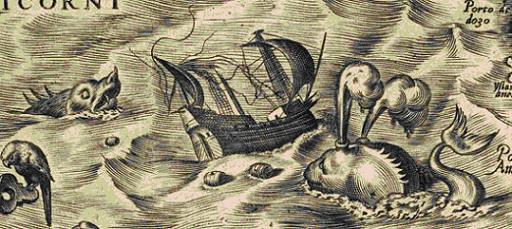
The Real Life Shimar in the inspiration for his ship’s name, the Dirty Drawers

For the last couple years I have been trying to imagine what is going on in my dog Shimar’s mind. I have a number of stories I have been developing and sharing with kids, co-workers, and others and I realized that these stories were beginning to create their own little world in my imagination. So one of my goals over this week while I took some time away was to put some of these short stories on paper and see where it went. They are more children’s stories than anything else. They are not strictly historical, although they do pull on some historical places and times (even though a good historian will see all the places where I combine different times and places-for example the lead up to the Battle for Havanna with the pirate use of the Island of Tortuga (which declined almost one hundred years earlier). But it is a story of cats, dogs, and ferrets who command ships so don’t expect strict the story to be bound by strict historical accuracy. In a time where there are a lot of serious things to talk about sometimes it is important to take a little time to tell children’s stories, to indulge in foolishness and to imagine what is going on in the mind of a one eyed dog with a lot of personality.

Welcome to the world of Shimar the Pirate Dog, Reggie the Terrible who will eventually become his first mate and their ship the Dirty Drawers that I hope to have episodes coming out over the next couple days. They are long reads for a blog but for fiction each chapter is fairly short, each of the first two chapters is about five pages, single spaced. I will include this page as a holder for the table of contents.

Shimar and Reggie are real dogs and their personality is the inspiration for the two main characters. The ferrets, Nick and Leah are also real but most of the other characters were made up to fill in the story. In casting the sailors and people Spanish and Portugal as cats while the English and many of the pirates are dogs is simply intended to play on the long running trope of the battle between cats and dogs and placing it in a historical battle. Portugal made a nice play on words for Purrtugal, and since the history of the Caribbean is a history of struggle between the English and Spanish empires around the time of pirates.

Chapter 1- Shimar the Pirate Dog
Chapter 2- Reggie the Terrible
Chapter 3- T-Rex Island

Chapter 1- Shimar the Pirate Dog

Shimar on one of his favorite spots

“Listen up you young pups, now I know when you look at me you see a dog of small stature with only one eye, bare skin where once there was a long coat of crème and white fur and a limp in my back leg but don’t’ forget that you look upon the legendary Shimar the Pirate Dog.”

“Shimar the Pirate Dog?” puzzled the puppies as they looked upon the small dog perched upon a pillow that rested upon the arm of a sofa. “You, but you aren’t much bigger than we are! And we are nowhere near the ocean. How can a little dog like you have been a pirate on the high seas?”

“Well pipe down and I will spin you a tale, a tale of me, the Pirate captain Shimar, of my first mate Reggie the Terrible, and our ship the Dirty Drawers.” Said the old dog.

“So why is your ship called the Dirty Drawers?” Said one pup

“And why is your first mate called the Terrible?” spoke up another.

“And how did you lose your eye and your fur?” ventured a third.

“Quiet, quiet,” cautioned Shimar, “all in good time, they are all a part of the story that I am about to tell. It all begins many years ago, a little while before Reggie enters the story or before any other parts of the adventure when I was a prisoner, serving a life sentence in that worst of all prisons, the pound.”

“No, not the pound, not that horrible place!” Shrieked one of the youngest pups.

“Yes, the pound, locked away with all the dogs and cats and other critters. Confined to a small cage, far from the oceans swell and the sea breeze. I thought my days were done. As a young pup, I had escaped any fence that someone tried to enclose me in and I loved to run free and wild, like our ancestors the might wolves, but one day they managed to snag me, they put me into a cage and oh the sad songs I heard in the jailhouse. The wails of caged dogs protesting their innocence, the evil cry of cats vowing vengeance upon their captors. Yet, while I could tell you all kinds of jailhouse tails but you don’t want to hear about that place with its hardships, what you want to hear about it my life as Shimar the pirate dog, am I right?”

“Yeah!” cried the pups.

“So, prison life was hard. There was the confinement, there were the guards and worst of all were the cats. Many of the cats in prison were hardened catnip addicts who would take on a Rottweiler if they thought they could get catnip for it. I had attempted to escape several times. I had tried looking cute, at that point I still had a soft, bushy coat of crème and white fur and even though I only had one eye I was still a pretty attractive pup.”

“But you only had one eye, how’d that happen?”

“Oh, well I got into a fight with a prison gang called the Fierce Feral Felines who were running a catnip smuggling operation in the pound. That my young friends is a tale for another time, but if I stop to tell every tale you’ll never get to hear about my adventures as a pirate. So where was I, ah yes, I was being rescued and it was an epic jail break. The alarms were blaring, the dogs were howling in rhythm with the alarms, the light went out, and they broke me out of my cage, and ran with me out of the pound with a hoard of dogcatchers shouting and trying to stop them as this group of dogs came in, opening all the dog cages and it was epic. Our rescuers barked at us to head outside and there waiting on a horse drawn carriage was an old solid white bulldog directing the smaller dogs to get up on the wagon and the larger dogs to run alongside. Some of his pack were holding the dog catchers at bay while we loaded up and then with a loud, commanding bark the horses began to move and the remaining dogs fell back as we fled into the setting sun. The dog catchers furiously shouted and yelled and some even for a little while ran after us. We rode and we rode, and I would be happy to never ride on a horse drawn carriage as long as I live. The road was rough and we were thrown all about the carriage as the bigger dogs ran alongside howling and barking and jumping as the night began to set in. We journeyed across open country for what seemed an eternity stopping only to let the horses and the bigger dogs rest. It was an awesome sight, some sixty dogs of various sizes and ages moving across the countryside. Once we were far enough away all but the oldest were commanded to run and stay together with the pack. It was hot and my little legs were tired and there was never enough food but I was a free dog and I ran and yipped and barked with my companions. Eventually several days later, though it seemed like weeks upon weeks we reached the ocean.

Never before had I seen the ocean or smelled the salty air. I ran in the hot sand yipping and rolling like a young pup, although I had already spent my youth behind bars. I was free, it was a freedom I had never known before. No fences to keep me in, no leashes or chains constraining where I could run, just the sand and the sea. I chased after seagulls, I ran through the waves, I dug tunnels in the sand, I got pinched on the nose by a crab- I don’t recommend that, smarted for days afterwards, and my liberators laughed and laughed and laughed at my foolishness as well as the foolishness of the other dogs on the beach. I was free at last and I didn’t care how foolish my antics might look to anyone else. I was covered in sand and seaweed and salt when I saw the ship for the first time.

The captain, the white bulldog who oversaw our rescue who I now knew was called Ghost, told us he expected some of us to join his crew of the pirate ship Vice Grip, named after his jaws once he held onto something. It would be hard and dangerous work, the pay was poor, the living conditions small but you it would be a pirate’s life where you could take what you wanted and perhaps one day one of us might command our own ship.

The first time the captain looked upon me he snorted, “You’re no sea dog, you are a land lover who should stay on the shore.” But I was determined to prove him wrong. I would stand on the prow of the ship as the waves broke on her hull. I would swab the decks until you could eat off of them, although admittedly for dogs that didn’t have to be that clean, I would chase every rat that stowed away on board trying to eat our kibble that we took with us, and I would become a fierce and fearless pirate. I already had only one eye, so all I needed was an eye patch to fit the part. I would be a sea wolf, a terror of the seas, I would set sail on the Vice Grip and prove myself to the captain and his fearsome crew.

The Vice Grip was a sleek and powerful brig with 20 guns and a crew of around 150 pirates who were fiercely loyal to the Ghost as we referred reverently to our captain. We set off on what was my initial voyage into the dangerous Caribbean Waters setting off for the pirate port of Tortuga where we were to rendezvous with a couple other ships to prowl the waters searching for fame, fortune, and most importantly for me at that point adventure. That initial voyage was difficult, I was continually sea sick and I often had to ‘feed the fishes’ if you know what I mean. It took me a little while to get my sea legs under me and much of life upon the open ocean is repetitive and boring, especially as a newbie sailor. There are long patches where you see nothing but the blue of the seemingly endless ocean stretching to meet the endless blue of the sky, you are a small wooden ark in the vastness of the abyss. Occasionally we’d see creatures leap out of the ocean, and sea gulls would pursue us and call out continually for food. But aside from aching bones from hours of hard work and an uneasy stomach that initial voyage upon the waters of the Caribbean was uneventful until we pulled into Tortuga.:

“But I thought you were a pirate captain, sir?” interrupted one of the pups.

“Patience my young friends, you don’t become a pirate captain overnight, you have to start at the bottom and I had already moved from being a prisoner to being a pirate on what I thought was one of the greatest pirate crews of the age. The Ghost had demonstrated his courage to me when he orchestrated our jailbreak and his crew seemed to hold him in an awe approaching worship at times. I only saw someone challenge him once, and that was in Tortuga when we were taking on supplies and a Mastiff barked that he couldn’t believe that such a ship could be commanded by someone so small. The Ghost quickly turned towards this massive dog and moved towards him slowly, bulldogs don’t move anywhere too quickly, and growled in his deep, gravelly voice, “Is that a challenge you filthy cur dog?” When the mastiff growled bag, Ghost, quicker than I thought possible lunged and grabbed onto his rear leg with his strong massive jaws. Oh, how that mastiff cried and howled and begged to be set free and Ghost held on until he decided it was time to let the challenger limp away with tail dragging between his legs.

Later that day he came up to me and said, “Never let anyone challenge you or intimidate you just because you are small in stature. Being a small in stature simply means that you must be big in attitude and that for your bark to be respected your bite has to be worse.” I was surrounded by several dogs bigger than me: Pit bulls, Dobermans, and German Shepherds but we had our share of Terriers, Dachshunds, and even one Chihuahua who was meaner and tougher than any of them. We loaded the ship with kibble, gunpowder, and rolled the cannon balls and stowed them on the gun decks. While in port I was assigned to a 12-pound cannon crews, one of our smaller guns and I stored the munitions that were for the two 12 pounders. While we were in port the leader of our gun crew showed me what my responsibility was as we practiced cleaning, loading and positioning for fire our gun. We worked and drilled until I could do my job in my sleep, and I think I did at times as I laid there in my hammock. Our cannon was nicknamed tiny terror, since the Chihuahua I mentioned above commanded it. The Chihuahua’s name was Juan but we all called him Snarl since his lip seemed to be locked in an eternal snarl. He drove us mercilessly but we were his crew and he made sure that nobody else messed with his crew. Being one of the smaller guns we were a small group of dogs of smaller breeds: there was Rusty, a good-natured mutt, and Gunter the Dachshund in addition to me who were responsible for keeping the tiny terror ready to bite at a moment’s notice.

And I learned to take care of myself, pirates are a rough group. Once while we were on Tortuga a group of pirates from another crew threatened us tiny terrors one night as we were eating and drinking and when Snarl said attack and launched himself from the table onto the back of the Rottweiler who was barking threats at us. I found myself matched up against a boxer and my speed came in handy as I darted around nipping at his back legs and every time he reached for me all he could ever get was a mouthful of fur. Before long the Rottweiler was pleading from mercy from Snarl and we tiny terrors proved equal to our name. From that night on we didn’t have any trouble in port.

After a couple days of refitting, rest and planning we joined up with the crew of the Specter led by Captain Silver, a greyhound whose daring raids were spoken of across the island and the Hyena a massive older ship, not as fast as the Vice Grip of the Specter but more heavily armed and able to carry a larger crew and a more cargo. The three ships were going to sail in the direction of Havana in search of ships carrying treasure from the new world back across the ocean. Finding ships once they entered the Atlantic would be near impossible but within the Caribbean there was a greater opportunity to find ships and to capture their cargo. So, we set off and I was in high spirits for I was finally earning a place among the pirates and I would have a part, even if it was a small part in the prize that was to come.

We departed on a rainy morning in March, and the rain was colder than I thought possible for that part of the world, and it wasn’t long before all of our coats were drenched with rain, but Ghost’s commands were heard above the wind and the rain as we moved away from Tortuga into the deep waters. The days were filled with drilling on cannon drills, cleaning the deck, and in joyous expectation of our first contact with a treasure ship. We sailed at a modest pace, to allow the Hyena to run with the faster Vice Grip and Specter. Apart from the rains the initial day the winds were favorable and the weather good and on the evening of our third day of patrols the Specter signaled that she had spotted our prey approaching. We moved to begin the long task of intercepting the ships, initially approaching at a pace where the Hyena wouldn’t be left too far behind but as we saw the ship growing closer the Vice Grip and Specter set their sales for speed and began to outdistance the Hyena, but this was all a part of the plan agreed upon by the captains. The ship we were approaching also didn’t change course which was a bit unsettling, either their captain was a fool or there was some danger we were not yet aware of, but as we scanned the horizon we didn’t see any evidence of danger.

We quickly approached, and the captain ordered us to fly our colors and the black flag with a bulldog head biting through a bone flew from our mast while captain Silver’s slender skull with crosses sabers on a black background flew from his ship. The announcement that we were pirates had its desired effect, the captain of the merchant ship struck his sails, allowing us to move alongside and board it without contest. Its crew cowered as we came alongside and began to board. Quickly chests and food were carried back across from their ship to ours. We searched their ship from top to bottom for anything that was worth taking back to our ships to split with our comrades on the Specter and Hyena. We made quick work of it, but even though we worked quickly before we were finished we heard our captain order us back to the ship. We grabbed one last crate and returned to our home on the Vice Grip to learn that the Hyena had spotted a frigate approaching. Even with three ships we would be hard pressed to take on a frigate unless we were able to coordinate all three ships. Captain Silver signaled all three ships to separate and meet back in Tortuga in two weeks. Our two faster ships would attempt to lead the frigate away from the Hyena. It would be a challenging ordeal because even though a frigate was larger than either the Vice Grip or Specter it was just as fast on the open seas. We would pass closest to the path of the frigate to attempt to get it to change its course away from the Hyena. We were ordered to load the cannons and our crew got the tiny terror ready for action.

As we approached the frigate I got to experience the tiny terror’s bark. We were ordered to put a shell in the direction of the frigate, even though we were still out of range and so under Snarl’s orders we fired the canon and it was louder than anything I had ever heard. A spray of water erupted from where the 12-pound shell landed and the frigate answered with one of her own cannons which landed close enough to our ship that I got a face full of salty water. We passed close enough that their captain changed course to pursue us, but we were already making our fastest pace as we moved toward the Bahamas where we hoped to lose our pursuers. The next two days were tense as the frigate continued to pursue us, but the winds were good and we continued to stay ahead of them until we were able to hide in the midst of the islands.

As we returned to Tortuga to reunite with the crews of the Specter and Hyena we began to examine the loot we pulled from the hull of the merchant ship. In many respects, it was not an exceptional cargo, pine and oak pulled from the forests of the Americas, sugar, molasses and spice which we could get a decent price for, but there was also one crate that the crew had seemed especially reluctant to part with. One of the German Shepherds cracked open the crate and gave it a sniff, wrinkled its eyebrows and said, “What is this?”

But I knew, and it made sense now why the frigate pursued us as long as they did. “That’s catnip!” I exclaimed, “no wonder the cats on the merchant ship looked so defeated as we took it away. We could get a good price for that on the black market. One sniff of that and cats will be rolling around on the deck powerless before you! They will do anything, anything for that.”

“But Mr. Shimar, how did you know it was catnip?” Said one of the listening pups.

Well, remember I said I had lost my eye to the Fierce Feral Felines in prison, they were running a catnip smuggling ring. I had seen what it did to other cats and how they used it. I also knew that this was high quality catnip, not some rejects from the edges of a field. There was a note inside that this was a special reserve harvest sent as a gift to Purrincess Maria, the daughter of the feline king of Purrtugal.

Prophesy to the Wind

The Knesset Memorial, Jerusalem (Detail) Ezekiel in the Valley of Dry Bones

O mortal can these bones live? This people who continues to dwell in the valley of death
This people who refuses to learn from the past, these ears that did not hear
These hands which did not help and the eyes that remain obstructed so that they do not see
The cataracts of hatred and privilege that blind them to the neighbor they sacrificed
The ears made deaf by the cacophony of shouting voices that no longer hear the victims cry
And yet the Lord says to prophesy to the bones and once again they will rise up again
Bone will join to bone, sinew to sinew, flesh and tendons and heart and muscle will grow anew
 
So dry bones hear the words the prophet proclaims, from one who stands in the valley of death
Daring to enter into that place where dreams have died and history is forgotten
Walking to the remains of a people whose heart and soul shriveled and died as they forgot love
These shambling remains of the people of a dream and a hope, to a nation which lost its way
Stand upon the graves of the present and shout at the top of your lungs about resurrection
Not to some distant heaven but a new creation where eyes and ears and hearts are opened
The death of the moment is not the end of the story for the prophet tells of new beginnings
 
The prophet whose voice strained as he tried to change their direction of yesterday’s winds
Now prophesies again to the four winds that blow upon the earth as they return the breath of God
Which enters into the nostrils and fills the lungs with the air of the new creation which doesn’t die
For the voices of hatred and death, of separation and war, the raised voices of angry men fall silent
As the still, soft, silent creative words are finally heard after the fire, thunder, winds and quakes
And with tears in his eyes the prophet sees the dry bones live, the blind eyes see and the deaf ears hear
As the new hearts learn how to love rather than hate and arms are raised to embrace rather than strike
 
Perhaps the prophet is a madman listening to the voices in his head and prophesying to the wind
To continue to cry out for the possibility of something new as demons dance in the graveyard
To believe that the dry bones might someday choose something other than the death they know
Or perhaps the stubborn prophet is the only sane one, the voice of life in the midst of devastation
The dreamer who refuses to give up in the midst of the nightmare and believes the darkness will end
Perhaps like Isaiah and Jeremiah and Ezekiel the prophet will become a beacon of hope in the night
O mortal can these bones live? Can this people be renewed? O Sovereign Lord, you know
 
Until that day the prophet’s voice goes out to the dry bones and prophesies into the wind.


Exodus 25: Holy Things for Holy Space

Exodus 25: 1-9 A Voluntary Offering for the Tabernacle

The LORD said to Moses: 2 Tell the Israelites to take for me an offering; from all whose hearts prompt them to give you shall receive the offering for me. 3 This is the offering that you shall receive from them: gold, silver, and bronze, 4 blue, purple, and crimson yarns and fine linen, goats’ hair, 5 tanned rams’ skins, fine leather,1 acacia wood, 6 oil for the lamps, spices for the anointing oil and for the fragrant incense, 7 onyx stones and gems to be set in the ephod and for the breastpiece. 8 And have them make me a sanctuary, so that I may dwell among them. 9 In accordance with all that I show you concerning the pattern of the tabernacle and of all its furniture, so you shall make it.

For many Christians Exodus 25-31 and 35-40 are portions of scripture they either pass over or perhaps read without much reflection. Yet, particularly in ancient literature where the documents must be hand copied by a scribe, the dedication to such a significant amount of space, ink and time to the preservation of this vision of the tabernacle should make us slow down and take notice. In contrast, the construction of the temple in 1 Kings occupies only two chapters.

Perhaps because I have spent a lot of time over the past two years planning and working with an architectural firm on an expansion for my congregation I have a greater appreciation for the level of detail that goes in taking a vision and attempting to communicate it in text to the people who will construct the expansion. The term tabernacle comes from the Hebrew word which means to dwell and the project they will be constructing will be a place the LORD can dwell with the people. In one sense, it is attempting to create a bit of heaven on earth: the use of the finest resources and specific patterns to emulate in some small way the visions of the throne room of God that Moses and others will see. In another sense, it is a modeling of what creation was supposed to be. There is a creation narrative pattern where the order is brought together and God comes to dwell with humanity in a recreated garden space. Probably both heaven and earth become models for this dwelling place and the greatest resources of the earth are used for this act of creation of a sacred space.

The offering for the space is voluntary not compulsory. Unlike the temple, where Solomon’s building activity places a heavy burden on the people including compulsory labor, the tabernacle will utilize the gifts people freely bring and the divinely gifted artisans that God provides. Unlike the golden calf of Exodus 32 which is hastily molded and cast and whose worship quickly devolves into reveling and disorder, this will be a space where the orderly worship parallels the orderly vision of creation in Genesis.

As we move through the individual components set aside for the tabernacle and the construction of those elements I do believe the construction of this holy space is an act of devotion and worship. There have been times within Christianity where the focus has been upon the building and the collection for those building would also put a high toll on the faithful. My tradition, the Lutheran Church, emerges out of a conflict over the raising of funds through indulgences which would ultimately go to build St. Peter’s Basilica in Rome. But as people of faith we do need sacred spaces, places where God promises to dwell among us. It is faithful for people to give of their own wealth and resources and talents to build these places that are a little taste of heaven here on earth.

James Tissot, Moses and Joshua in the Tabernacle (1896-1902)

Exodus 25: 10-22 The Ark of the Covenant

10 They shall make an ark of acacia wood; it shall be two and a half cubits long, a cubit and a half wide, and a cubit and a half high. 11 You shall overlay it with pure gold, inside and outside you shall overlay it, and you shall make a molding of gold upon it all around. 12 You shall cast four rings of gold for it and put them on its four feet, two rings on the one side of it, and two rings on the other side. 13 You shall make poles of acacia wood, and overlay them with gold. 14 And you shall put the poles into the rings on the sides of the ark, by which to carry the ark. 15 The poles shall remain in the rings of the ark; they shall not be taken from it. 16 You shall put into the ark the covenant1 that I shall give you.

17 Then you shall make a mercy seat of pure gold; two cubits and a half shall be its length, and a cubit and a half its width. 18 You shall make two cherubim of gold; you shall make them of hammered work, at the two ends of the mercy seat. 19 Make one cherub at the one end, and one cherub at the other; of one piece with the mercy seat you shall make the cherubim at its two ends. 20 The cherubim shall spread out their wings above, overshadowing the mercy seat with their wings. They shall face one to another; the faces of the cherubim shall be turned toward the mercy seat. 21 You shall put the mercy seat on the top of the ark; and in the ark you shall put the covenant that I shall give you. 22 There I will meet with you, and from above the mercy seat, from between the two cherubim that are on the ark of the covenant, I will deliver to you all my commands for the Israelites.

Rather than an image of the LORD the people of Israel have a chair or footstool marking where God’s presence will meet them in this holy space. The ark also serves the additional purpose of being a storage space, like a chest, for the covenant or the law. The very best materials are used in this item that will occupy the central and holiest place within the tabernacle. Acacia wood and pure gold form the box and the elaborate lid for the ark of the covenant.

The ark will become a central representation of God’s presence among the Israelites in the time of Joshua, the Judges, King Saul and King David. It is brought out into the battlefield with the armies of Israel. At times when it is captured it bring calamity to the nations who are not the LORD’s priestly kingdom and who place the ark within the pantheon of gods that they worship. It is a place where God’s holiness is reflected to the people and some manner of God’s presence dwells. The ark, which is roughly forty-five inches long and twenty-seven inches wide and deep, (Myers, 2005, p. 227) becomes a mobile seat of God’s presence. Interestingly the mentions of the ark of the covenant disappear during the time a permanent temple is built and it is not mentioned from Solomon’s reign onward. The lost ‘ark of the covenant’ has occupied the imagination of writers of fiction along with items like the holy grail or Noah’s ark as a powerful relic of ancient times.

It is also notable that while the mentions of the ark of the covenant disappear in the time of the monarchy so do the references among the kings to the covenant itself. It is only when the high priest Hilkiah rediscovers the book of the law in the temple that the covenant is for a moment renewed prior to the Babylonian exile. During the exile as the people no longer have the physical structures of the temple to be a place where they can be brought close to God’s presence the written copies of the Torah and other writings become the center of life for the Jewish people. It is during this time without a tabernacle or temple, ark of the covenant or any of the other items used in the worship of God that the Jewish and later Christian followers of God would become people of the written word.

Exodus 25: 23-40 The Table and Lampstand

23 You shall make a table of acacia wood, two cubits long, one cubit wide, and a cubit and a half high. 24 You shall overlay it with pure gold, and make a molding of gold around it. 25 You shall make around it a rim a handbreadth wide, and a molding of gold around the rim. 26 You shall make for it four rings of gold, and fasten the rings to the four corners at its four legs. 27 The rings that hold the poles used for carrying the table shall be close to the rim. 28 You shall make the poles of acacia wood, and overlay them with gold, and the table shall be carried with these. 29 You shall make its plates and dishes for incense, and its flagons and bowls with which to pour drink offerings; you shall make them of pure gold. 30 And you shall set the bread of the Presence on the table before me always.

31 You shall make a lampstand of pure gold. The base and the shaft of the lampstand shall be made of hammered work; its cups, its calyxes, and its petals shall be of one piece with it; 32 and there shall be six branches going out of its sides, three branches of the lampstand out of one side of it and three branches of the lampstand out of the other side of it; 33 three cups shaped like almond blossoms, each with calyx and petals, on one branch, and three cups shaped like almond blossoms, each with calyx and petals, on the other branch — so for the six branches going out of the lampstand. 34 On the lampstand itself there shall be four cups shaped like almond blossoms, each with its calyxes and petals. 35 There shall be a calyx of one piece with it under the first pair of branches, a calyx of one piece with it under the next pair of branches, and a calyx of one piece with it under the last pair of branches — so for the six branches that go out of the lampstand. 36 Their calyxes and their branches shall be of one piece with it, the whole of it one hammered piece of pure gold. 37 You shall make the seven lamps for it; and the lamps shall be set up so as to give light on the space in front of it. 38 Its snuffers and trays shall be of pure gold. 39 It, and all these utensils, shall be made from a talent of pure gold. 40 And see that you make them according to the pattern for them, which is being shown you on the mountain.

Before we have the design of the building we have the details of some of the central items that will occupy the space that will be designed around it. The ark, the table and the lampstand have symbolic and functional purposes. The table is also to be used for holy things and so it is made from acacia wood and pure gold. It may not occupy the same type of visual imagery within the people of Israel’s imagination as the ark of the covenant will, but it does hold a very practical purpose of being a place where the twelve loaves of the bread of the Presence are placed as offering. Bread was the basic element of food for the Jewish people and the twelve loaves probably symbolized the produce of the twelve tribes before God visually. It is these loaves that David is given to eat since there is no other bread in the temple when he is fleeing from King Saul in 1 Samuel 21, which apparently were normally eaten by the priests who worked in the tabernacle.

The lampstand with six branches, three on each side with lamps on each branch and in the center, artistically crafted from gold to look like almond blossoms while serving a practical function of providing light in a time before electricity would also come to serve a symbolic function. Even though the ark disappears from imagery and writing once the temple is built the lampstand would remain and become a central image of Judaism to the present day. For example, when the temple is destroyed in 70 C.E. and items from the temple are brought in procession in Rome one of the easily recognizable images is the lampstand and it becomes reproduced on the arch of Titus in Rome (see below). The Menorah, as this type of lampstand will later be known, is still the Emblem of the State of Israel.

Roman triumphal procession with spoils from the Temple, depicted on the inside wall of the Arch of Titus in Rome

Exodus 24: Sealing the Covenant and Approaching God at Sinai

David Roberts, Mount Sinai (1839)

Exodus 24: 1-8 Sealing the Covenant

Then he said to Moses, “Come up to the LORD, you and Aaron, Nadab, and Abihu, and seventy of the elders of Israel, and worship at a distance. 2 Moses alone shall come near the LORD; but the others shall not come near, and the people shall not come up with him.”

 3 Moses came and told the people all the words of the LORD and all the ordinances; and all the people answered with one voice, and said, “All the words that the LORD has spoken we will do.” 4 And Moses wrote down all the words of the LORD. He rose early in the morning, and built an altar at the foot of the mountain, and set up twelve pillars, corresponding to the twelve tribes of Israel. 5 He sent young men of the people of Israel, who offered burnt offerings and sacrificed oxen as offerings of well-being to the LORD. 6 Moses took half of the blood and put it in basins, and half of the blood he dashed against the altar. 7 Then he took the book of the covenant, and read it in the hearing of the people; and they said, “All that the LORD has spoken we will do, and we will be obedient.” 8 Moses took the blood and dashed it on the people, and said, “See the blood of the covenant that the LORD has made with you in accordance with all these words.”

Moses has taken the words of the LORD and the ordinances, presumably the content of the previous four chapters, and returned to the people to communicate and teach them these commandments and laws. The people again answer that “All the words the LORD has spoken we will do.” But now there is a liturgical sealing of the acceptance of the words of God. The covenant is cut, to use the Hebrew phrasing, and these pacts or covenants were often sealed by sacrifice or blood of some type. Genesis 15 is an example of this type of ceremony where God makes a covenant with Abraham and both pass through the pieces of the sacrificed animals, passing through the blood and in effect saying that faithfulness to the covenant is a deadly serious business. Here the blood of the oxen is sprinkled on the people and dashed against the altar binding both parties.

The place of sacrifice is very simple with an altar and twelve pillars. The pillars here correspond to the people rather than some representation of God, the prohibition against forming images of God holds here, although in later times these places with pillars will come to represent the idolatry of the people. Here an altar or earth or uncut stones (see Exodus 20: 22-26) along with the pillars at the base of the Mount Sinai becomes the only things necessary on this holy place. The mountain itself is a holy space, a place where God has come down to dwell among the people. Much of the rest of the book of Exodus will be concerned with the construction of a mobile place that God can come down to dwell with the people, but here, like when God speaks to Moses in chapter three, the people are on holy ground.

The blood of the covenant seals the relationship between the people and their God. They have now received some initial guidance from God on the type of community they are to construct and how they are to live into their identity as a ‘treasured possession, a priestly kingdom and a holy nation.’ (see Exodus 19: 5-6) They are now marked and set aside for their calling. Within Christianity this type of liturgical language of covenant sealing gets echoes both in relation to baptism and in communion. The wine in communion is the ‘blood of the new covenant’ and baptism is a point where the individual is ‘baptized into the death of Christ’ so that they might be dead to sin and alive to Christ.

Jean-Leon Gerome, Moses on Mount Sinai (1895-1900)

Exodus 24: 9-18 Meeting with the LORD on the Mountain

 9 Then Moses and Aaron, Nadab, and Abihu, and seventy of the elders of Israel went up, 10 and they saw the God of Israel. Under his feet there was something like a pavement of sapphire stone, like the very heaven for clearness. 11 God1 did not lay his hand on the chief men of the people of Israel; also they beheld God, and they ate and drank.

 12 The LORD said to Moses, “Come up to me on the mountain, and wait there; and I will give you the tablets of stone, with the law and the commandment, which I have written for their instruction.” 13 So Moses set out with his assistant Joshua, and Moses went up into the mountain of God. 14 To the elders he had said, “Wait here for us, until we come to you again; for Aaron and Hur are with you; whoever has a dispute may go to them.”

 15 Then Moses went up on the mountain, and the cloud covered the mountain. 16 The glory of the LORD settled on Mount Sinai, and the cloud covered it for six days; on the seventh day he called to Moses out of the cloud. 17 Now the appearance of the glory of the LORD was like a devouring fire on the top of the mountain in the sight of the people of Israel. 18 Moses entered the cloud, and went up on the mountain. Moses was on the mountain for forty days and forty nights.

We are given multiple views of the theophany on Mount Sinai. There is the perspective of the majority of the people at the base of the mountain which is described in a way that the closest analogy would be a volcano. To the people on the ground the approach of God is terrifying and dangerous, a devouring fire on the top of the mountain. For the seventy elders and the three priests there is the appearance of a dwelling place of God, beautiful in its description and an appearance of God that is only modestly described. There is a physical manifestation of the LORD, whose feet rest upon a pavement of sapphire stones of great clarity and the LORD is described anthropomorphically (using human features even when done metaphorically like when it states God did not lay his hands on the chief men). Yet, unlike in Isaiah 6 or Ezekiel 1 (and even these theophanies are very reticent to discuss the actual appearance of the LORD) there is no description of the LORD. Unlike other religions where there are vivid representations of the gods and goddesses, Judaism’s aniconic relationship with their God also extends to descriptions of God’s appearance with words. Yet, within the book of Exodus, there are multiple times where there is a tangible presence of God, even if it is not something to be described or even fully seen (as in Exodus 33). Finally, there is the experience of Moses who will spend extended periods of time in God’s presence.

The scene also sets the stage for the drama that will come in Exodus 32. Moses departs up the mountain for forty days and forty nights in the cloud with the LORD. The people remain at the base of the mountain waiting on Moses and Aaron and Hur are left to hear the disputes of the people. The next several chapters will have God describe to Moses the vision for the tabernacle where God can come down to dwell with the people. Yet, during this absence the people will come to Aaron and move away from God’s command not to create an image of God by creating the golden calf which they will worship. Yet, for a time we get to ascend with Moses into the cloud and see the vision of the tabernacle and enter into this time away from the people and with God.

Exodus 23: Justice, Celebration and Presence

Torah inside of the former Glockengasse Synagogue in Cologne. Photo shared under Creative Commons Attribution- Share Alike 4.0, source Zeughaus

Exodus 23:1-9 And Justice for All

 You shall not spread a false report. You shall not join hands with the wicked to act as a malicious witness. 2 You shall not follow a majority in wrongdoing; when you bear witness in a lawsuit, you shall not side with the majority so as to pervert justice; 3 nor shall you be partial to the poor in a lawsuit.

 4 When you come upon your enemy’s ox or donkey going astray, you shall bring it back.

 5 When you see the donkey of one who hates you lying under its burden and you would hold back from setting it free, you must help to set it free.1

 6 You shall not pervert the justice due to your poor in their lawsuits. 7 Keep far from a false charge, and do not kill the innocent and those in the right, for I will not acquit the guilty. 8 You shall take no bribe, for a bribe blinds the officials, and subverts the cause of those who are in the right.

 9 You shall not oppress a resident alien; you know the heart of an alien, for you were aliens in the land of Egypt.

The end of the Pledge of Allegiance for the United States ends with the phrase, “with liberty and justice for all.” Yet, liberty and justice for all people has been a challenging part of the United States’ story as it attempts to live into these words. Who does the ‘all’ encompass? In the United States that definition was initially white landholding males. The Civil War and the long struggle for Civil Rights attempted to expand the all to include people of color. Women’s movements have attempted to increase the equity in the world and the workplace for women. Probably the place where this generates the largest amount of friction in our current civil discourse relates to men and women who are LGBTQ in their identity. Without justice, the alternative society the people of Israel were tasked to create would devolve into a mirror of the Egyptian society they left.

Initially the ‘all’ in Exodus 23 extends to all citizens, both the rich and the poor. Truthful speech on behalf of the neighbor was essential. Not only does the command to not bear false witness get included in Exodus 20:16 but here it is amplified. They are to be people of truthful speech on behalf of their neighbor, they are not to be deceitful for their own gain of to remain in good standing with the majority. They are to be willing to speak inconvenient truths rather than to pervert justice. The prophets will be examples of those who are charged to speak in ways that rely upon God’s witness and the truth to both leaders and people who may not want to hear. Judgment is not to favor the rich and the powerful but it is also not to be swayed by a bias towards the poor (or against the rich).

Secondly the ‘all’ extends to the enemy and their property, particularly here the animals. Exodus is realistic enough to understand that all relationships within a society will not be friendly. Yet, my enemy’s animal being loose or overburdened becomes my responsibility. Even though the loss of an animal would hurt the one who hates me, for both my enemy and the animal I bear responsibility to set it free from its burden or to bring it back to my enemy.  Ultimately my enemy is my neighbor and the law protects my enemy and their property.

The ‘all’ includes my neighbor, rich or poor, and neither are to be denied justice. Justice requires the people in authority not to take bribes, for people not to bring false charges to steal a neighbor’s property, life or reputation, or any other practice that subverts justice. Finally, the ‘all’ extends to the stranger, or the resident alien as the NRSV translates it. As in the previous chapter, these strangers who are not a part of the people of Israel are not to be oppressed. The experience of the people of Israel being oppressed as ‘strangers’ or ‘resident aliens’ in Egypt is to form a contrast to the society they are to create. Within the immigration debate in the United States is another realm where our nation struggles with the ‘all’ of the pledge. Within the Torah the inclusion of the ‘resident alien’ into the ‘all’ is stated frequently as a reminder to the people of Israel, and those who would claim their scriptures as a part of their own scriptures, that they are to be a people where the ‘all’ is very expansive.

Exodus 23: 10-13 Creation’s Sabbath Rest

 10 For six years you shall sow your land and gather in its yield; 11 but the seventh year you shall let it rest and lie fallow, so that the poor of your people may eat; and what they leave the wild animals may eat. You shall do the same with your vineyard, and with your olive orchard.

 12 Six days you shall do your work, but on the seventh day you shall rest, so that your ox and your donkey may have relief, and your homeborn slave and the resident alien may be refreshed. 13 Be attentive to all that I have said to you. Do not invoke the names of other gods; do not let them be heard on your lips.

The practice of a fallow year for the fields may have had a positive impact on the fertility of the ground but here the justification goes back to the care of the neighbor. The year where the field lies fallow and vineyards and olive orchards grow without the tending allow for the poor and the wild animals to benefit. Much as the gleaning provisions in Leviticus 19: 9-10, 23:22 and Deuteronomy 24: 21 provide a way for the vulnerable of the land to be cared for, here this seventh-year practice is another way in which the community is to provide an opportunity for survival of the at-risk neighbor.

The Sabbath commandment is re-visited here as well along with the reminder that the Sabbath is rest not only for the people of Israel but for all in their borders to rest. Animals, slaves and resident aliens are beneficiaries along with the people of Israel in this commandment to rest. Here in Exodus there is a creation pattern which the Sabbath is modeled after: In six days the earth was created (according to Genesis 1) and on the seventh day the LORD rested. Now this seventh day which the LORD hallowed becomes the model for the seventh year where the fields lie fallow and the seventh day where people and animals of creation rest.

Painted Sukkah with a view of Jerusalem, Late 19th Century, Austria or South Germany

Exodus 23: 14-19 Festival and Sacrifice

 14 Three times in the year you shall hold a festival for me. 15 You shall observe the festival of unleavened bread; as I commanded you, you shall eat unleavened bread for seven days at the appointed time in the month of Abib, for in it you came out of Egypt.

No one shall appear before me empty-handed.

 16 You shall observe the festival of harvest, of the first fruits of your labor, of what you sow in the field. You shall observe the festival of ingathering at the end of the year, when you gather in from the field the fruit of your labor. 17 Three times in the year all your males shall appear before the Lord GOD.

 18 You shall not offer the blood of my sacrifice with anything leavened, or let the fat of my festival remain until the morning.

 19 The choicest of the first fruits of your ground you shall bring into the house of the LORD your God. You shall not boil a kid in its mother’s milk.

The calendar of festivals for the people of Israel is centered around the Exodus narrative and the yearly cycle of harvest. Exodus 12 and 13 narrate the celebration of Passover as a part of the narrative of the people leaving Egypt. This was to be the defining narrative of the people and the community in their gathering, sacrifice and ritualized eating would tell again the narrative of what made this celebration unique and how these actions defined their life as the people of God.

Deuteronomy 16 also narrates the festivals of first fruits and the festival at the end of the harvest. These were to be the times when the males of Israel would appear before the LORD. In a time where people would have to travel to the place where the LORD placed his name (either the tabernacle, shrines or later the temple) there was not the ability for most people to worship weekly like many people are familiar with. These festivals became communal gathering times and times of celebration for the harvest that was a part of the year.

The people were to bring their best to the LORD at these celebrations and times of sacrifice. There were practices they were not to do: like boiling a kid in its mother’s milk or offering anything leavened with the blood of the sacrifice, but most of these offerings were used as a part of the community’s celebration. They were times of feasting and celebration, storytelling and gathering.

Exodus 23: 20-33 Promised Presence in Future Conflicts

 20 I am going to send an angel in front of you, to guard you on the way and to bring you to the place that I have prepared. 21 Be attentive to him and listen to his voice; do not rebel against him, for he will not pardon your transgression; for my name is in him.

 22 But if you listen attentively to his voice and do all that I say, then I will be an enemy to your enemies and a foe to your foes.

 23 When my angel goes in front of you, and brings you to the Amorites, the Hittites, the Perizzites, the Canaanites, the Hivites, and the Jebusites, and I blot them out, 24 you shall not bow down to their gods, or worship them, or follow their practices, but you shall utterly demolish them and break their pillars in pieces. 25 You shall worship the LORD your God, and I1 will bless your bread and your water; and I will take sickness away from among you. 26 No one shall miscarry or be barren in your land; I will fulfill the number of your days. 27 I will send my terror in front of you, and will throw into confusion all the people against whom you shall come, and I will make all your enemies turn their backs to you. 28 And I will send the pestilence1 in front of you, which shall drive out the Hivites, the Canaanites, and the Hittites from before you. 29 I will not drive them out from before you in one year, or the land would become desolate and the wild animals would multiply against you. 30 Little by little I will drive them out from before you, until you have increased and possess the land. 31 I will set your borders from the Red Sea1 to the sea of the Philistines, and from the wilderness to the Euphrates; for I will hand over to you the inhabitants of the land, and you shall drive them out before you. 32 You shall make no covenant with them and their gods. 33 They shall not live in your land, or they will make you sin against me; for if you worship their gods, it will surely be a snare to you.

The God of the Exodus has brought the people out of the land of Egypt and is bringing them on a journey to a new, promised land. The angel of the LORD who goes with the people becomes an intermediary of God’s promised presence and a guarantee of the LORD’s provision of security. There is both promise and threat here, much as Deuteronomy’s blessings and curses in Deuteronomy 28 and 29. If the people will listen to the voice of God, mediated through the angel (in addition to Moses) then God will be with them. However, if they do not there are consequences-this representative of God is not a forgiving presence. As people who have grown up with different sensibilities than the ancient Hebrew people there may be a tension between this demanding voice of God and many passages where God is portrayed as more gracious. Yet, obedience is one of the covenant expectations for the people.

The promise of God’s presence in the conquest of the promised land as it occurs in Deuteronomy 2, 3 and the book of Joshua presents many ethical challenges which I have addressed other places (see additionally Exodus 15, Deuteronomy 20, Psalm 18 and Violence and the Bible). There is an unavoidable tension between the concern for the resident alien and the command to utterly demolish the people of the land. Especially in the United States where there is a ‘new Exodus’ narrative (the United States becoming for many early Americans a new promised land and what that meant for the native Americans who were driven from their homes). There are no easy answers, every people has times where religion has been used to justify acts of violence. Every nation has parts of their history that have been glossed over. One of the struggles and gifts of going back to parts of the Bible that are rarely used is the opportunity to wrestle with the uncomfortable parts of the tradition and see what parts of the narrative we can lift up and what parts we need to acknowledge and ask forgiveness for.

Without dwelling on this in the same way I have in the other places listed above, the positive force in this is the command to trust in the promised presence of God in the people’s future conflicts. Ultimately, this formerly enslaved people have been promised God’s intervention as they make their way beyond the wilderness into their promised land. For the people, the promise of God’s presence makes the difference between their weakness on their own and their ability to conquer their foes through God’s strength.

Exodus 22: Boundaries, Trust and Reconciliation

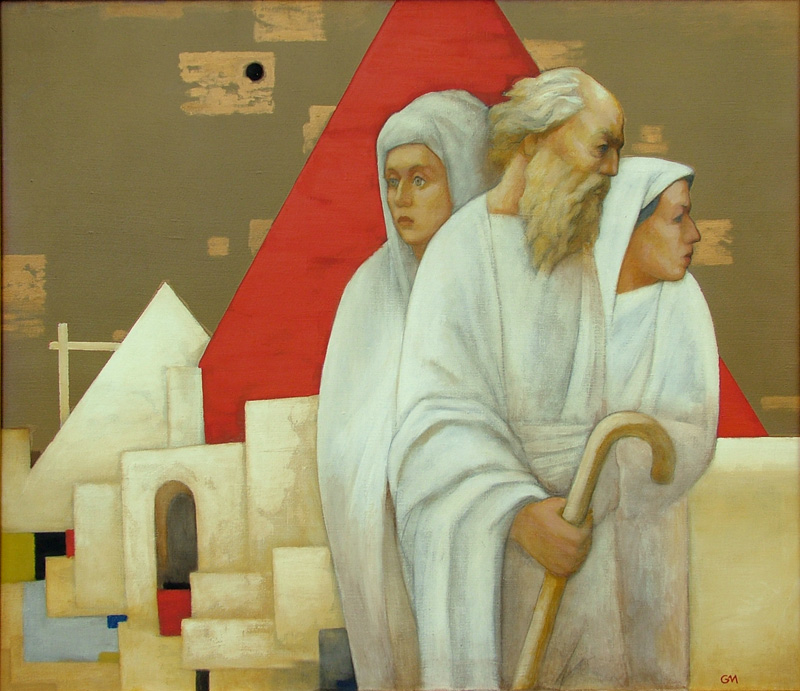
Grigory Mekheev, Exodus (2000) artist shared work under Creative Commons Attribution-Share Alike 3.0

Exodus 22:1-15 Expanding the Commandment on Stealing

 When someone steals an ox or a sheep, and slaughters it or sells it, the thief shall pay five oxen for an ox, and four sheep for a sheep.1 The thief shall make restitution, but if unable to do so, shall be sold for the theft. 4 When the animal, whether ox or donkey or sheep, is found alive in the thief’s possession, the thief shall pay double.

 2 If a thief is found breaking in, and is beaten to death, no bloodguilt is incurred; 3 but if it happens after sunrise, bloodguilt is incurred.

5 When someone causes a field or vineyard to be grazed over, or lets livestock loose to graze in someone else’s field, restitution shall be made from the best in the owner’s field or vineyard.

 6 When fire breaks out and catches in thorns so that the stacked grain or the standing grain or the field is consumed, the one who started the fire shall make full restitution.

 7 When someone delivers to a neighbor money or goods for safekeeping, and they are stolen from the neighbor’s house, then the thief, if caught, shall pay double. 8 If the thief is not caught, the owner of the house shall be brought before God,1 to determine whether or not the owner had laid hands on the neighbor’s goods.

 9 In any case of disputed ownership involving ox, donkey, sheep, clothing, or any other loss, of which one party says, “This is mine,” the case of both parties shall come before God;1 the one whom God condemns2 shall pay double to the other.

 10 When someone delivers to another a donkey, ox, sheep, or any other animal for safekeeping, and it dies or is injured or is carried off, without anyone seeing it, 11 an oath before the LORD shall decide between the two of them that the one has not laid hands on the property of the other; the owner shall accept the oath, and no restitution shall be made. 12 But if it was stolen, restitution shall be made to its owner. 13 If it was mangled by beasts, let it be brought as evidence; restitution shall not be made for the mangled remains.

 14 When someone borrows an animal from another and it is injured or dies, the owner not being present, full restitution shall be made. 15 If the owner was present, there shall be no restitution; if it was hired, only the hiring fee is due.

We no longer live in a time where cattle rustlers and sheep stealers are our greatest concern, but concerns for the integrity of one’s property and household continue to actively consume our daily life. We live in an age where we attempt to insure our property and livelihood is protected by paying an agency for insurance but in the ancient world the community and family was the insurance that the individual and family invested in. Theft, irresponsibility, and inter-family strife threaten the bonds that hold the community together. As we look at the way the book of Exodus attempts to structure the communal life of the people of Israel I will also attempt to bring in some parallel concerns for our own age.

I have followed the NRSV in rearranging the Hebrew verses in verses 1-4 in a way that keeps the themes of restitution for a lost animal together. The way it is arranged above (vs. 1, 3b, 4, 2, 3a.) unites the themes about if the animal is lost with if the animal is found alive in the thief’s possession. The penalty for a slaughtered or sold or otherwise unreturnable animal is four or five-fold, while a returnable animal is two-fold. Note that the justice is restorative-intended to restore the property and repair the relationship between the thief and the person whose property is stolen.  Contrast this with our system where a person who has stolen something is incarcerated by the state without restitution being made to the individual whose property has been lost. The system in Exodus is dedicated to restoring relationships between individuals in community. In our system, the loss may be borne by insurance agencies (if a person can afford appropriate insurance) and the state pays the price of holding a person. In ancient Israel, a person unable to pay their debt to their neighbor could, as outlined in the previous chapter, sell themselves to be a slave of the offended party and their debt to their neighbor was worked off in their service. In an age where our rate of spending on prisons is outstripping many other important functions that the state oversees. At least in the state of Texas, it costs more per day to have a person in prison than to educate a student. If for only economic reasons, it would be worth looking at ways in which at least some crimes could be settled in a way that kept a person out of prison and as an active part of the community and society. If you look at restorative justice systems they are focused on attempting to have the offender make restitution for the crimes they have committed and have a path for returning the trust to the community.

In the United States, several states have passed Stand Your Ground laws which give an individual permission to defend themselves with force, even lethal force, when they feel threatened. The Castle Doctrine, which allowed this type of self and property defense within the home was extended by the Stand Your Ground Laws to anyplace a person has a legal right to be. The Castle Doctrine does parallel, at least partially, the provisions for a thief breaking in. Here it is assumed that thievery will happen at night and that in the confusion of night a person could be beaten to death but in the daylight the ability to identify someone clearly and how they were endangering life and property could be more easily discerned. Legislating these things takes wisdom, something that is sadly lacking in our time. In our society, we have inverted the concerns of the people of Israel. For us the debates center around personal security while in Israel they were about community relations. Note that the limits are placed on the bloodguilt that the family of the invader could claim. The ability to claim that one’s neighbor was threatening as a justification for killing would not have been acceptable for Ancient Israel.

The model of restitution continues throughout the passage as it addresses property damage by irresponsibility, disputed property, safekeeping of money or goods, safekeeping of livestock and loss while borrowing of livestock. If one causes a field or vineyard to burn (the future prosperity of the individual) one is responsible for restoring that loss. Although things are more complex in our world it does make me wonder if there is some wisdom in looking at how restitution could be made when the actions of a person ‘playing with fire’ endangers the future income of another. Throughout my lifetime I have heard countless stories of people’s retirement income being bet on risky investments by an investor and lost. While it is challenging to imagine how the debt could be repaid in these situations it is an interesting situation to ponder. In cases where property ownership is disputed we often see the courts involved, and I’m not advocating a return to religious courts that deal with this litigation-but the system in ancient Israel was about restoring relationships and taking the issue before God perhaps provided a less costly and less antagonistic process for restoring those relationships. The issues related to safekeeping goods, money or livestock there is a quick examination to see whether the person safeguarding is at fault: if an animal is attacked by a wild beast or a thief carries off the money or goods and is caught the person safeguarding is not at fault. In other cases, the fault may be more difficult to discern and this involves wisdom and therefore the parties are brought before God. Similarly, when an animal is borrowed while the owner is present and dies the borrower is not responsible, but if the owner is not present there is restitution made.

These commands are not as developed as a modern legal system but they do begin to unpack the commandment on stealing and illustrate how they are to build a community that live out this vision of justice and community. Without justice, the community quickly breaks down. Yet, justice needs a human face. There are times where a unique situation must be considered and therefore these cases are to be brought before the LORD. The wisdom of the system in Exodus is in how it attempts to reconcile the parties and to rebuild community. Just as in their time, we too need wisdom as we attempt to construct a society that is just and where neighbors can live in harmony.

Exodus 22: 16-31 Community Prohibitions and Safeguards

 16 When a man seduces a virgin who is not engaged to be married, and lies with her, he shall give the bride-price for her and make her his wife. 17 But if her father refuses to give her to him, he shall pay an amount equal to the bride-price for virgins.

 18 You shall not permit a female sorcerer to live.

 19 Whoever lies with an animal shall be put to death.

 20 Whoever sacrifices to any god, other than the LORD alone, shall be devoted to destruction.

 21 You shall not wrong or oppress a resident alien, for you were aliens in the land of Egypt. 22 You shall not abuse any widow or orphan. 23 If you do abuse them, when they cry out to me, I will surely heed their cry; 24 my wrath will burn, and I will kill you with the sword, and your wives shall become widows and your children orphans.

 25 If you lend money to my people, to the poor among you, you shall not deal with them as a creditor; you shall not exact interest from them. 26 If you take your neighbor’s cloak in pawn, you shall restore it before the sun goes down; 27 for it may be your neighbor’s only clothing to use as cover; in what else shall that person sleep? And if your neighbor cries out to me, I will listen, for I am compassionate.

 28 You shall not revile God, or curse a leader of your people.

 29 You shall not delay to make offerings from the fullness of your harvest and from the outflow of your presses.1

The firstborn of your sons you shall give to me. 30 You shall do the same with your oxen and with your sheep: seven days it shall remain with its mother; on the eighth day you shall give it to me.

 31 You shall be people consecrated to me; therefore you shall not eat any meat that is mangled by beasts in the field; you shall throw it to the dogs.

When you attempt to construct a society, there are things that you allow and encourage and there are limits that must be set. The vulnerable within the society must be protected, certain individuals who are deemed a danger to the community are eliminated or excluded and certain behaviors are expected. Some of these come from a worldview that is very different from our own but they still are worth wrestling with, even if we would disagree with them, because they place values on certain types of security and relationships.

I wrestled with placing verses 16-17 in this discussion: whether to include them in the previous section, cover them independently or to link them with this later section of prohibitions and a good argument could be made for any of these options. A man who has sex with a virgin who is not engaged could be viewed as a person who has threatened the property of the household of the father and therefore restitution is to be made to the father and security provided for the woman. This could also be viewed as an unfolding of the sixth commandment on adultery and therefore separate from the discussion of theft and individual property and this could be one illustration of how to deal with individuals who transgress this boundary. Finally, non-betrothed women could be looked upon as one of the vulnerable in society along with the resident alien, widows and orphans who require legislation to protect them from becoming victims to a man’s irresponsible actions.

Wrestling with these verses in a very different context where issues like consent would be central it is difficult to imagine a world where a woman’s consent is not an issue of consideration. As discussed in Deuteronomy 21, 22 and 24, talking about captive women, women of Israel and divorce respectively, the perspectives of the writers understood women, their role in society and their rights much differently than we do today. Here, if a man sleeps with an unspoken for woman he can buy her as his wife regardless of her desires as long as her father permits it. As I mentioned, this probably ensures some security for the woman but it is at least uncomfortable if not distasteful to modern hearers. But in a time where men and women marry later and consensual sex before marriage is accepted by much of the society we still need to question what is the responsibility of the man and the woman as well as the families for people who engage sexually outside the security of marriage. When these unions result in pregnancy, what obligation does the man to the future mother and to the child? How are women protected and provided for in these relationships?

Female sorcerers are singled out here for death. As in Deuteronomy 18: 9-14 where a whole list of different predictors of the futures or practitioners of magic are outlawed there is a concern that these other options would lead people away from trusting in the LORD their God. This along with the reiterated prohibition about sacrificing to other gods is to remind the people that they are to be a people centered on the LORD their God and only the LORD their God. In a society where these other gods or practitioners of magic were attractive alternatives they are strictly forbidden.

Bestiality is also highlighted as one of those things that merit a death sentence in Exodus. This is a boundary violation, crossing the boundaries of species and what is permitted for the people of Israel. These boundaries, as I discuss in Deuteronomy 14 with relation to what food is not eaten, become marks of who is a part of the community. To be a part of the people of Israel means to do certain things, like celebrating the Passover and removing the leaven from their houses for that time, and not doing certain things, like lying with an animal or eating certain animals. Transgressions of those boundaries are viewed as direct threats to the holiness of the community.

The vulnerable of the community must be protected for a just society. Here the resident alien, the widow, the orphan and the poor become the examples of the vulnerable. Narrative reminds the people that they are to deal with the resident alien in justice since they themselves were resident aliens in Egypt. They are to be a society that models a different way of treating the vulnerable in society than they experienced in their slavery. They are to care for the vulnerable and God chooses to stand on the side of the vulnerable. If the resident alien, the orphan or the widow cry out to God, God promises to hear and act as a judge on their behalf. The threat to those who are comfortable is that if they become a society that does not care for the vulnerable then God will ensure they become a society of vulnerable people again: aliens in a foreign land, widows and orphans without men for security, and poor with no one to care for them. They are not to utilize the poor to increase their wealth: they are their neighbors to be cared for rather than exploited. Ultimately one’s view of society’s good is supposed to override one’s drive for personal profit.

Not reviling God of leaders among the people are linked together. Leaders in Israel are the one’s anointed by God. This is not a democratic society where the people choose their leaders. Ultimately there was a trust that there was some divine hand in the structure of society. In our time, we struggle with this type of hierarchical worldview. For us the pendulum has swung the other direction where faith in the pillars of society (political, social or religious) is at an all-time low and the individual is the primary basis for judging right from wrong. Yet, there does need to be people who fulfill leadership roles in society and while the Hebrew Scriptures will be critical of leaders, priests and kings they also did not want an anarchical society without structure.

Setting aside firstborns echoes Exodus 13: 11-16. This small reminder echoes the larger context of the final plague in Egypt and the consecration of the first born for the LORD. Just as the first born are set aside as the LORD’s portion, so they among the nations are to be the LORD’s portion-a holy nation as stated in Exodus 19: 6. Being holy, or consecrated, they are to refrain from unclean things and here that list expands to included meat from an animal that is killed by a beast. As a boundary marker, this is a practice that the people of Israel do not do.

Who Cares if One More Light Goes Out? I Do

Who cares if one more light goes out
In a sky of a million stars
It flickers, flickers
Who cares when someone’s time runs out
If a moment is all we are
Or quicker, quicker
Who cares if one more light goes out
Well I do
 
From Linkin Park’s song one more light

I was a late comer to the Linkin Park phenomenon. I didn’t find their music until 2010 and the album A Thousand Suns. I have needed different types of music at different times in my life and music has always been one of those ways I could connect with what I was feeling on the inside. In 2010, after having seeing a dream fail to materialize, suffering from anxiety and depression after living in a stressful work and home environment for several years, seeing a marriage that I thought would last forever fall apart and finding myself raising my son on my own and my daughter living in another state I needed a different kind of music. I gravitated back to rock and metal after a decade or more of listening to primarily country because I needed something that resonated with the pain, the anger, the frustration and the fear inside. In 2010 the rapid fire rapping of Mike Shinoda and the at times hauntingly beautiful and at other time primal dissonant scream of Chester Bennington paired in a way that touched the emotions I felt at the time. I quickly went back and purchased Hybrid Theory, Meteora, Minutes to Midnight and Road to Revolution and they were played over and over. I wrote down the lyrics and they wrote themselves on my mind as I screamed out some of my own sense of powerlessness. Slowly my life came back together but my love for the band’s music remained. I loved that each album was different and how they continually experimented with new sounds and yet there was still something unique to the music they made. In 2015 I had the opportunity to see them in Dallas. They were one of the groups I had wanted to see and the opportunity came and I am glad I took it. It was September in Dallas and the night was hot and sticky but Thirty Seconds to Mars and then Linkin Park both came. Linkin Park’s set was intense as they moved from hit to hit and I left wishing they could have played a few more. I had tickets to see them again this August with the One More Light tour, a tour that was cancelled after Chester Bennington’s suicide at 41.

Music and musicians touch us. I had friends who were devastated by the loss of Michael Jackson, Prince, or Chris Cornell. I think all of them were great musicians but their music never was the music I sang over and over again. I never met Chester, but I grieve for the loss of him. I’ve walked with family members after a suicide and I can only imagine what his family and his bandmates are feeling. Even though I know a little of his story, I consider myself very fortunate that even at my darkest moments thoughts of suicide were fleeting and quickly pushed aside. I am thankful for the emotion he put into his work, his band’s music, his performance and all of these helped me express what I felt at a time where I needed it. Paper Ships is my own small tribute to a person we lost too soon. Thankfully I can carry hours of his music on my phone and play it and it still resonates. If One More Light is the last light we hear from Linkin Park I am thankful for the music they have produced over the past seventeen years. #RIPCHESTER and may those left behind eventually find the peace in this life that you never did.

Paper Ships

Another paper ship sinks amid depression’s black sea
Too fragile to withstand the storms it encountered
Absorbing the waters it intended to sail upon
Drinking in the inky waters of the abyss
 
Leviathan lurks below the water’s edge
And the Kraken picks off its prey from the deep
Even the bravest and best captains are lost at sea
In the uncharted lands where the dragons hunt
 
Many brave ships pass through these waters
They let down their nets hoping to bring up a catch
Or they cross through these waters looking for new lands
And some are desperately trying to find the way back home
 
These icy waters can freeze the soul and stop the heart
Storm can be violent and the doldrums deadly
Sometimes the sea demands its sacrifice
And another paper ship feeds the sea’s unending hunger

Exodus 21: Slavery, Capital Crimes and Responsibility for Property

Figurine of a Semitic Slave, Acient Egyptian figurine, Hecht Museum

Exodus 21: 1-11 On Slavery

 These are the ordinances that you shall set before them:

 2 When you buy a male Hebrew slave, he shall serve six years, but in the seventh he shall go out a free person, without debt. 3 If he comes in single, he shall go out single; if he comes in married, then his wife shall go out with him. 4 If his master gives him a wife and she bears him sons or daughters, the wife and her children shall be her master’s and he shall go out alone. 5 But if the slave declares, “I love my master, my wife, and my children; I will not go out a free person,” 6 then his master shall bring him before God.1 He shall be brought to the door or the doorpost; and his master shall pierce his ear with an awl; and he shall serve him for life.

 7 When a man sells his daughter as a slave, she shall not go out as the male slaves do. 8 If she does not please her master, who designated her for himself, then he shall let her be redeemed; he shall have no right to sell her to a foreign people, since he has dealt unfairly with her. 9 If he designates her for his son, he shall deal with her as with a daughter. 10 If he takes another wife to himself, he shall not diminish the food, clothing, or marital rights of the first wife. 11 And if he does not do these three things for her, she shall go out without debt, without payment of money.

For many people, once they have reached the Ten Commandments, they stop reading Exodus. Some may return for the story of the Golden Calf, but most people skip or skim over these passages which expand on the type of society the people were to construct. Yet, I think that, like the similar passages in the book of Deuteronomy, these ordinances provide an interesting opportunity to think ethically about the type of society they were attempting to create and the society we as people of faith advocate for. There is a slightly different take on the issue of slavery in Deuteronomy 15: 12-18.

When we talk about slavery in modern times it is easy to assume that ancient people should have naturally chosen a democratically structured society which outlawed slavery, but trying to impose our values on another time only insures that we will either not understand or not value the society they were trying to create. In the ancient world slavery was assumed. It was a way in which a person could pay back their debt. It is also tempting to frame slavery in the manner it occurred in the United States in the time prior to the Civil War and this can be deceiving. On the one hand, slaves had less value than a free person and you will see this in some of the coming punishments. On the other hand, at least for the Hebrew people the slave was both property and person and there were limits placed on that servitude.

The people have been brought out of the house of slavery and, in many ways, they were to be an alternate society to their experience in Egypt. For men, and the Bible is written from a predominantly androcentric point of view, this servitude is limited to six years. Typically, it is younger, unmarried members of a family that would assume debt servitude on behalf of the family and so a time of service of six years still allowed for the family to be debt free and the individual to have time to begin their own family. There were apparently times where slaves married into a family or married another slave in a household and while the male slave would be able to go free, the female and children could not. There are several situations where a person could choose to remain a slave to maintain family unity or because their life in the household of their master was better than the house they had to return to. Yet, at least in the law, the man has an ability to choose to remain a slave and must state this before the LORD and then receive a pierced ear as a sign of his lifelong servitude.

Women in the ancient world do not have the same set of protections, but even for women there are some protections. The woman may not be sold into slavery to a foreign people if she does not please her master and her life is bound to the new family. She may serve as a spouse for the master or one of his descendants and they cannot take away her rights to food, clothing and marital rights. Assuming a family’s debts appears to be one of the methods for acquiring a young woman as a bride. In Deuteronomy 21: 10-14, similar protections are afforded to captured women which are brought into the household.

I would hope that even the most ardent biblical literalist would not advocate for the reestablishment of slavery. But I do think this presents some interesting points to consider for our own society. Both young men and women enter into slavery for economic reasons and for a period, or in the case of young women for their life, they are no longer their own person. Yet, there are many people today who find themselves staggered under a debt that they cannot pay. Sometimes these debts may be a result of poor choices but other times they may result from an unforeseen disaster or medical bill. Perhaps one of the places for reflection would be should there be a limit to the time one must work to pay back a debt. Is there a place where a person in effect becomes a bond slave or indentured servant with little free will of their own?

Perhaps another place for reflection is with the image of the woman who is sold into servitude so that she becomes the spouse of the man who assumed the debt for her family. Marriage is an economic transaction. I know this is an unpopular statement when people believe they are marrying for love, but anyone who has gone through a divorce will realize there is truth in the statement. I wouldn’t want to go back to a culture of arranged marriages where man and woman may have little say in who they will marry, yet I do think it is important to realize that there is an economic and a relational stake in every marriage. This is one of the few places where divorce is alluded to in the Hebrew Bible but there is an understanding that the woman in a relationship is entitled to both her physical needs but also that there are marital rights that she too has a claim to. Dealing with indebtedness or marriage are difficult ethical issues, but they are issues that arise frequently in life and often in interconnected ways.

Peter Paul Rubens, Cain Slaying Abel, (1608-1809)

Exodus 21: 12-27 Unfolding the Commandment on Murder

 12 Whoever strikes a person mortally shall be put to death. 13 If it was not premeditated, but came about by an act of God, then I will appoint for you a place to which the killer may flee. 14 But if someone willfully attacks and kills another by treachery, you shall take the killer from my altar for execution.

 15 Whoever strikes father or mother shall be put to death.

 16 Whoever kidnaps a person, whether that person has been sold or is still held in possession, shall be put to death.

 17 Whoever curses father or mother shall be put to death.

 18 When individuals quarrel and one strikes the other with a stone or fist so that the injured party, though not dead, is confined to bed, 19 but recovers and walks around outside with the help of a staff, then the assailant shall be free of liability, except to pay for the loss of time, and to arrange for full recovery.

 20 When a slaveowner strikes a male or female slave with a rod and the slave dies immediately, the owner shall be punished. 21 But if the slave survives a day or two, there is no punishment; for the slave is the owner’s property.

 22 When people who are fighting injure a pregnant woman so that there is a miscarriage, and yet no further harm follows, the one responsible shall be fined what the woman’s husband demands, paying as much as the judges determine. 23 If any harm follows, then you shall give life for life, 24 eye for eye, tooth for tooth, hand for hand, foot for foot, 25 burn for burn, wound for wound, stripe for stripe.

 26 When a slaveowner strikes the eye of a male or female slave, destroying it, the owner shall let the slave go, a free person, to compensate for the eye. 27 If the owner knocks out a tooth of a male or female slave, the slave shall be let go, a free person, to compensate for the tooth.

From one controversial topic to another, this time the death penalty. In the United States, the use of the death penalty is still debated, yet in the ancient world capital punishment is assumed as an appropriate punishment for certain crimes. Lex talionis (an eye for an eye, a tooth for a tooth) it the underlying principle of justice for these crimes. The retaliation against a person is to be equal to the crime- what is sought is justice and not revenge. This may seem a harsh justice but I think it is important to wrestle with how they thought of these various offenses (even if we disagree with their evaluation of the appropriate sentence).

Underlying these ordinances is the desire to construct a society where the neighbor is protected. The person who commits murder in Israel was to be put to death. It is a life for a life when the murder is premeditated. However, there is an understanding that not every death is premeditated and sometimes a death may be an accident. Here, and more fully in Deuteronomy 19: 1-13, there are to be set aside cities of refuge where a person may flee to so that the judgment may be fair.

Striking or cursing mother or father also are offenses that in Exodus merit death. In Deuteronomy 21: 18-21 there is further discussion of the community’s role in carrying out this sentence. These are probably referring to adult children who strike their elderly parents who are not able to defend themselves. I think this does provide an interesting opportunity to consider the issue of elder abuse and how society protects its vulnerable members. In an ancient society where children would provide for their aging parents in their old age to curse or abuse one’s elder parents could put their lives at risk.

Kidnapping, presumably with the intent to sell a person into slavery, is also a capital offense. The people were not to be a society that was based upon slavery and exploitation and apparently kidnapping was viewed as stealing someone’s life.

Justice can be retributive but at its best it is directed towards restoration. Here when a person is injured and does not die the assailant is to pay for the lost time and to pay for the recovery.

Again, the issue of slavery enters the conversation with the slave who is beaten. The slave is somehow not completely a person. When a slave is beaten to death the owner is to be punished but some level of beating is assumed and if the slave recovers the owner is faultless. Yet, there are some limits-loss of eye or tooth is paid back with freedom but the eye for an eye, tooth for a tooth justice do not apply here.

Neither is an unborn child here regarded as a citizen. Causing a woman to miscarry results in a fine but placing this type of incident next to the eye for an eye, tooth for a tooth explanation of lex talionis means, in the words of Rabbi Jonathon Sacks.

One thing, however, is clear on this interpretation. Causing a woman to miscarry—being responsible for the death of a foetus—is not a capital offense. Until birth, the foetus does not have the legal status of a person. Such was the view of the sages in the land of Israel. (Sacks, 2010, p. 169)

Early Christians, pulling from the Greek translation of this passage which translates the word for ‘further harm’ as ‘form’ made distinctions, based on the passage, on whether the fetus was formed or not, but the Hebrew makes no such distinctions. Ultimately on controversial topics, like abortion, people will have strong opinions. The distinction here in the Hebrew Scriptures is that it is not considered at the same level as murder.

Exodus 21: 28-36 Responsibility for the Actions of One’s Animals

28 When an ox gores a man or a woman to death, the ox shall be stoned, and its flesh shall not be eaten; but the owner of the ox shall not be liable. 29 If the ox has been accustomed to gore in the past, and its owner has been warned but has not restrained it, and it kills a man or a woman, the ox shall be stoned, and its owner also shall be put to death. 30 If a ransom is imposed on the owner, then the owner shall pay whatever is imposed for the redemption of the victim’s life. 31 If it gores a boy or a girl, the owner shall be dealt with according to this same rule. 32 If the ox gores a male or female slave, the owner shall pay to the slaveowner thirty shekels of silver, and the ox shall be stoned.

 33 If someone leaves a pit open, or digs a pit and does not cover it, and an ox or a donkey falls into it, 34 the owner of the pit shall make restitution, giving money to its owner, but keeping the dead animal.

 35 If someone’s ox hurts the ox of another, so that it dies, then they shall sell the live ox and divide the price of it; and the dead animal they shall also divide. 36 But if it was known that the ox was accustomed to gore in the past, and its owner has not restrained it, the owner shall restore ox for ox, but keep the dead animal.

Unless one lives in a rural setting one is not likely to be gored by a bull, but underlying these sets of commandments is defining the responsibility that the owner of an animal has for the actions of an animal. Perhaps closer to our time would be issues around a pet dog who attacks a child, an adult or another pet. In Israel, an animal who attacks lethally was to be put to death and the benefit of the animal (its use as food) was lost. Animals that attack once do not reflect on the owner’s lack of responsibility, but animals with a history of attacking that are not restrained do bring strong penalties (here a death penalty) for the owner. If an animal is attacked there is to be restitution for the lost animal and if the irresponsibility of another person causes an animals death there is to be restitution made.