Author Archives: Neil

Matthew 5: 21-32 Law and Relationships in the Kingdom

James Tissot, Sermon on the Beatitudes (1886-96)

Matthew 5: 21-32

Parallel Mark 9: 43-48; 10: 11-12; Luke 12: 57-59; 16:18

Highlighted words will have comment on translation below

21 “You have heard that it was said to those of ancient times, ‘You shall not murder’; and ‘whoever murders shall be liable to judgment.’ 22 But I say to you that if you are angry with a brother or sister, you will be liable to judgment; and if you insult a brother or sister, you will be liable to the council; and if you say, ‘You fool,’ you will be liable to the hell of fire. 23 So when you are offering your gift at the altar, if you remember that your brother or sister has something against you, 24 leave your gift there before the altar and go; first be reconciled to your brother or sister, and then come and offer your gift. 25 Come to terms quickly with your accuser while you are on the way to court with him, or your accuser may hand you over to the judge, and the judge to the guard, and you will be thrown into prison. 26 Truly I tell you, you will never get out until you have paid the last penny.

27 “You have heard that it was said, ‘You shall not commit adultery.’ 28 But I say to you that everyone who looks at a woman with lust has already committed adultery with her in his heart. 29 If your right eye causes you to sin, tear it out and throw it away; it is better for you to lose one of your members than for your whole body to be thrown into hell. 30 And if your right hand causes you to sin, cut it off and throw it away; it is better for you to lose one of your members than for your whole body to go into hell.

31 “It was also said, ‘Whoever divorces his wife, let him give her a certificate of divorce.’ 32 But I say to you that anyone who divorces his wife, except on the ground of unchastity, causes her to commit adultery; and whoever marries a divorced woman commits adultery.

This is the first half on six examples that Jesus provides his new followers of how to interpret scripture, live according to a law that has been fulfilled and points to the type of community the kingdom of heaven embodies. Often these are heard as moralistic, as Jesus intensifying the commandment to the point where no mere mortal could keep it and as an unattainable goal that we are expected to reach to appease God. I do believe there is much to be gained in wrestling honestly with these words and trying to discern how they may indeed be a gift to the community of disciples and how they may point to a life that is worth striving for. These commandments and their interpretation are a gift that point to a type of society embodied in the kingdom of heaven. As mentioned before, I do believe that Jesus is operating out of a hermeneutic of mercy and I do believe that, especially as these words go against the ways often practiced in society and church, that they do point towards a type of community that would be visible in the midst of the world around them because of their actions toward others in the community, those outside the community and even those who would label the members of this community as enemies. It is a community in which anger is overcome, lust does not dominate our relations with one another, language is simple and truthful, retaliation is renounced and even enemies are met with love rather than hatred. (Hays, 1996, p. 321)

Jesus takes up the mantle of Moses both from his position on the mountain and the articulation of the commandments, but he also boldly goes beyond the commandments of Moses by following each commandment with, “But I say to you.” The first command that receives interpretation is the commandment related to murder or killing (Exodus 20: 13, Deuteronomy 5:17) and the additional line about whoever murders shall be liable to judgment probably refers to the expansion on the commandment on murder in Exodus 21: 12-27 and in Exodus and Deuteronomy the commands related to murder are to create a society where my neighbor’s life is more important than any grievance I may have with my neighbor. I don’t think any rational person wants a society where the killing of one’s neighbor is permitted but Jesus points towards a society where not only my neighbor’s life but my neighbor’s reputation and my relationship with my neighbor are to be protected. I was brought up with the proverb that, ‘sticks and stones may break my bones but words will never hurt me,’ and those who have been in any community I’ve served have heard my reshaping of this proverb to, ‘sticks and stones may break my bones but words will send me to therapy.’ Words can indeed wound and can not only damage my neighbor’s standing in the community but also my neighbor’s relationship to me. Matthew wants us to understand the importance of reconciliation in the community and he will also have us hear Jesus teaching on this in Matthew 18.

I have struggled with several of the passages in the Sermon on the Mount because I heard them as articulating a type of moralistic perfection which I have never been able to practice. While I can agree with Proverbs that, “Whoever is slow to anger has great understanding, but one who has a hasty temper exalts folly.” (Proverbs 14: 29) I’ve come to accept that anger is a necessary and sometimes helpful emotion when it helps us realize when something is unjust or when it helps to signal something that is unhealthy for us. Hearing this interpretation of the commandment through the lens of moralistic perfection my practice was to suppress anger but that is also an extremely unhealthy practice which has consequences for relationships and for physical health. It is possible that Jesus is articulating a commandment which forbids some of our most basic and primal emotions, many have interpreted Jesus this way, but I do think the direction of this command is towards the life of the community.

If I allow myself to remain in a place of anger towards my brother or sister without working toward reconciliation, then I do place myself in a position of being liable to judgment. If my words spoken in anger or judgment towards my neighbor cause loss of status in the society or create emotional wounds that they have to bear I am responsible for attempting to reconcile their position in the society and to attempt to heal the wounds I have caused. With the prophets and the psalms, we hear in Jesus that our life in the world is our preparation to be in place to offer sacrifice. As is Psalm 24,

Who shall ascend the hill of the LORD? And who shall stand in his holy place? Those who have clean hands and pure hearts, who do not lift up their souls to what is false, and do not swear deceitfully.” (Psalm 24: 3-4)

For Jesus reconciliation with my neighbor whom I have offended or wounded is more important than any act of sacrifice or worship. Relationships are at the center of this kingdom of heaven which has come near in Jesus. This way of life also extends beyond the boundaries of the community toward those who do not practice it. Those who would bring me to court over my actions are practicing the litigious practices of the world in which the disciples will find themselves in, but the disciples are instructed to work towards reconciliation even with those who view litigation as the default method of handling differences.

The commandment on adultery is also expanded in a similar manner to now include looking at a woman with lust in one’s eyes. It is possible that Jesus is declaring that men are not to desire women sexually and there are those who interpreted this commandment in terms of an interim ethic of physical and spiritual celibacy but again this would articulate a type of moralistic perfection that I have never been able to practice. I do believe that we were created for connection and that our sexuality is a part of the gift that God has granted us and yet it is a gift that has an impact on the way we interact in community. Sexuality is a highly charged topic of discussion both within religious communities and throughout society and for many what happens in the bedroom should stay in the bedroom but as uncomfortable as these discussions may be they are necessary to our life of faith.

As a starting point for this discussion of Jesus’ interpretation of the commandment on adultery let’s begin with the dehumanizing experience of sexual harassment. As I mentioned above in the discussion on the commandment to murder, one doesn’t need to physically wound someone to either emotionally wound a person or damage their place within the community. Women (and men although less frequently) may be viewed as sexual objects rather than people worthy of respect and dignity. In the kingdom of heaven men and women are viewed instead as people set apart as treasured possessions, a nation of priests and chosen people. The relationships between women and men are to be different than those embodied in the community around them where women, in particular, may be not be valued as full citizens of the kingdom.

The Sermon on the Mount is about creating a community that embodies the kingdom of heaven, and relationships within that community are essential. Sexuality is a powerful part of the relationship we share with others in the community. While the commandment on adultery is primarily viewed in the Hebrew Scriptures as protecting the male in the relationship, polygamy was practiced and if a woman was not married or promised then there were provisions to bring her into the relationship with the person who had intimate relations with her (desired or undesired, see for example Deuteronomy 22: 15-30) but now the command places the responsibility upon the male not to objectify the woman as an object of desire.

We live in a world where women do have rights and protections that did not exist in the time of Jesus, however wrestling with how we as a community embody this commandment are as important today as they have been at any point in our history. The ‘me too’ movement and the exposure of a number of prominent men (and a few women) who have used their power and authority to sexually harass, abuse and assault employees, co-workers and relations should be a clarion call for we as a community of Christ to talk about what healthy sexuality looks like. In addition, we live in a time where sexuality has become highly commercialized and readily available. One of the risks to relationships in our digital age is the easy availability of sexually explicit imagery on the internet. If men and women are being conditioned to look at other bodies as sexual objects rather than a gift for relationship then we have moved far away from the vision of Jesus in the Sermon on the Mount. There are powerful forces behind the way sexuality is used and misused in our society. As Stephanie Coontz could state prior to the internet:

 “the consumerist values that had already made sex a marketable commodity” were increasingly applied to female and gay sexuality as well as to traditional gender roles and marriage, for purposes dictated by the multi-billion-dollar sex industry, not for the aims of personal liberation or social transformation. (Coontz, 1992, p. 265)

The kingdom of heaven is about communal liberation and social transformation and it is not for commercial gain. It is about relational reconciliation rather than sexuality exploitation. It is about a community that embodies a different way of modeling the relationships between men and women. Yet, I think it is important to remember that this is about something different than moralistic perfection, in our individualistic world we many ask, “What should I do?” but the kingdom of heaven is about a community where we can ask, “What should we do?” What kind of community could we imagine where we can talk to young men and women, and adults as well, about how we relate to one another sexually while valuing one another’s place within the community. Perhaps the easier road is the one of celibacy which Jesus discusses in Matthew 19: 10-12 but not everyone, myself included, could accept this teaching.

Matthew places between the commandment on adultery and the discussion on divorce the harsh words about removing eyes or hands to demonstrate the serious nature of relationships in the kingdom of heaven. On one hand it is important to state that this is probably not intended to be taken literally in an individualistic manner, but as a community it is important to live in a way that embodies the kingdom of heaven and there may be times where a member of the community is cut off or cast out (see Matthew 18, although the hope is also for reconciliation with the community). This is also the first time in the gospel of Matthew we encounter the concept of Gehenna, translated hell. For most Christians the term hell carries a lot of baggage and there has been a long tradition of imagining hell as a place of torture. Most of the Hebrew Scriptures do not have an equivalent concept of Gehenna or hell, Sheol is a place of the dead but not a place of condemnation. Jesus, especially in Matthew and the synoptic tradition, does include punishment for those who choose the path of the wicked. The gospels use the term Gehenna a term that originates with the valley of Hinnom, which was considered a cursed place and a place where trash from Jerusalem was burned but it also is used as the opposite of the kingdom of heaven. Choose the kingdom of heaven or choose Gehenna, it is a choice between wisdom and foolishness. I think it is difficult to argue that Jesus does not have some conception of a judgment that goes beyond this life that parallels the resurrection that also transcends this life. Yet, this choice, like the choice between wisdom and foolishness, is so that people may choose the way of this visible community that is embodying the way of life articulated in the sermon.

Finally comes the first discussion of divorce in Matthew, also addressed in Matthew 19: 3-12, which indicates this may have been an issue that Matthew’s community needed to hear addressed multiple times. Before I begin this discussion, we all are shaped by our own stories and mine includes divorce and remarriage and I have had to wrestle with this text and others in the New Testament as I attempted to walk through these as faithfully as possible. I’ve shared more on my experience of divorce here. I also serve a community where many in the community have divorce as a part of their story. I once believed that there was always something someone could do to prevent a divorce, but ultimately a modern relationship relies upon both parties investing in the relationship. Jesus lived in a time where marriage was understood differently, marriages for most of history were primarily an economic relationship arranged between families to attempt to ensure a good match for the child and the family’s economic future. Within this economic arrangement a divorce placed the woman in a tenuous situation because she was no longer a favorable match for a second partner and may not be welcomed back into their father’s home. In a world of limited economic opportunities, a woman may be reduced to begging or prostitution.

This passage refers to Deuteronomy 24: 1-4 is the only place in the law where divorce is discussed for the general population of Israel (there are provisions in Leviticus for priests). Now Jesus links this provision with the commandment on adultery. The Greek term porneia which is translated unchastity by the NRSV is open to debate about its exact meaning: illicit sexual relations with a person other than the spouse, premarital unchastity or even (in relation to Leviticus 18) being married too closely in family relations (an incestuous marriage in the eyes of the law). In Greek this term is a general term relating to sexual-misconduct but it is a different term than moicheoo which is translated adultery in this passage. Yet, when compared to its Markan parallel we see that this exception is added in Matthew’s version. As Richard B. Hays can state:

No matter what interpretation is put upon the clause, it is undeniable that we see here a process of adaptation, in which Jesus’ unconditional prohibition of divorce is applied and qualified in the interest of predicatability. Here, as elsewhere, to work out a balance between rigor and mercy, between the demands of discipleship and the realities of the community’s situation. (Hays, 1996, p. 355)

Within the New Testament divorce is addressed in Matthew, Mark, Luke and 1 Corinthians and even within the formation of the New Testament we see the community trying to find the balance between rigor and mercy, between discipleship and the reality of their community situation. Paul, for example, in 1 Corinthians has to deal with the issue of believers who are married to non-believers and whose non-believing spouses may want to terminate the relationship.

The discussions related to divorce in churches, along with other issues of sexuality, can be difficult because the issues impact people at their deepest and most intimate levels of desire for connection. In a time where marriages are based on love and emotion, I do think it is important to acknowledge the danger of this dependence on the immediacy of feeling to maintain a lifetime relationship. As Stephanie Coontz can articulate:

Our dependence on love leads us to demand the constant renewal of romance, gift exchange, and self-revelation. But as soon as we can take someone’s gifts for granted, or their novelty wears off, the love is at risk. Boredom, argues sociologist Richard Sennett, is the logical consequence of relationships constructed according to the cult of private intimacy; infidelity and planned obsolescence are consumer society’s answer to boredom: “When two people are out of revelations…all too often the relationship comes to an end.” (Coontz, 1992)

Jesus’ vision of relationships is very different that the vison of relationships articulated in our individualistic and consumeristic society. I do think Stanley Haerwas’ framing of the question differently is a helpful starting point:

In similar fashion the question is not whether a divorced woman should be allowed to marry, but what kind of community must a church be that does not make it a matter of necessity for such a woman to remarry. If Christians do not have to marry, if women who have been abandoned do not have to remarry, then such a church must be a community of friendship that is an alternative to the loneliness of the world. (Hauerwas, 2006, p. 70)

Jesus is articulating a way of being that embodies the kingdom of heaven, where relationships are central, where reconciliation is important and where men and women can dwell together in safety and love. The community of faith has rarely, if ever, fully embodied this vision and we deal with broken relationships, abused trust and hurtful words and actions. Yet, even though the accusation could be justly made that this type of vision is utopian in outlook we are talking about articulating the kingdom of heaven. Israel and now this community of disciples is intended to be an alternative community to the world around it. They are intended to be salt to preserve and light to illuminate and a city on the hill which the nations can stream to. It is a goal towards which the community of the faithful can strive towards but there also needs to be done within a way of reading that is merciful and allows a space for forgiveness.

Gehenna, Tartaros, Sheol, Hades and Hell

Mauricio Garcia Vega “Visita al infierno’ shared by artist under Creative Commons 3.0


For many Christians the concept of hell has a lot of baggage associated with it. In the New Testament Gehenna, Sheol, or Tartaros which are translated Hades (Sheol) or Hell (Gehenna or Tartaros) did not carry the same level of imagined meaning to its hearers. The New Testament is not primarily concerned with heaven and hell as locations for the afterlife reward and punishment, which is how most people hear these terms today.

The Afterlife in the Hebrew Scriptures

For most of ancient Judaism heaven was the place that God reigned from, but it was not a place where humans (except for a select few like Elijah and Enoch) were brought to be with God. The Hebrew Scriptures are primarily concerned with the relationship between God and the people of God in this life. The blessings of covenant faithfulness were to be experienced in the provision of God for the people and the curse of covenant unfaithfulness was experienced in the struggle and strife that occurred through invasion, famine and illness. There is a long history of lament when the blessings of covenant faithfulness seem to be denied by God unfairly, but this faithful protest to God still expected God’s action within the lifetime of the prophet or poet calling for God’s action. There is a concept of Sheol, a place where the dead rest, but it is not a place of punishment or reward but simply a place where the dead are. Two quick examples of the concept of Sheol in the Hebrew Scriptures: it occurs frequently in Psalms and Proverbs as a place where the dead go and where the faithful one will end up if God does not intervene. In Psalm 6:5 the author attempts to bargain with God to deliver them because, “For in death there is no remembrance of you; in Sheol who can give you praise?” Additionally, there was an understanding that, even though it was prohibited magic for the Jewish people, a medium was summoning the shade of a dead one from somewhere which we see in the story of Saul consulting the medium at Endor. (1 Samuel 28)

Belief about death would evolve near the end of the time where the Hebrew Scriptures were written because the experience of the people appeared to be in tension with the promise of covenant faithfulness. As Samuel Ballentine, quoting Peter Berger, can state:

“All socially constructed worlds are inherently precarious,” P. Berger observes. They are precarious because the socially managed consensus concerning right and wrong, good and evil, actions and abilities that are acceptable and those that exceed tolerable limits, is constantly threatened by chaos. (Ballentine, 1993, p. 139)

At the end of Isaiah, we see the first idea of an everlasting punishment for those who have rebelled against God. This is set within the larger context of an ingathering of the nations where all flesh worships before God but there is articulated a judgment for those who rebel against God that goes beyond this life:

And they shall go out and look at the dead bodies of the people who have rebelled against me; for their worm shall not die, their fire shall not be quenched, and they shall be an abhorrence to all flesh. (Isaiah 66:24)

In the Jewish writings like 2 Maccabees, Enoch and 2 Esdras, which are written between the time of the Hebrew Scriptures and the New Testament, we see the evolution of the resurrection of the dead but at the time of Jesus this is not a universal belief (the Pharisees and Jesus accept it but the Sadducees do not.)

In the New Testament

Tartaros occurs only in 2 Peter 2:4 and refers to a place where the rebellious angels are sent. This is combined in later theology to make hell the domain of the devil and the fallen angels, but this evolution has not occurred at the time when the New Testament is written. Satan has fallen from heaven, but his place seems to be on the earth at the time of the gospels. There is the concept of the Abyss in Revelation as well as angels and demonic forces which are unleashed from the sea and the earth as well as punishment in the lake of fire in Revelation 20: 11-15 where the devil and those who align themselves with him end up.

Sheol in the New Testament is translated Hades and is often in parallel with death. It seems to serve a similar function to the use of Sheol in the Hebrew Scriptures as a place where people are brought down to at death, but it also becomes personified as an entity (along with death) that is resisting God’s reign. In Matthew it is used twice, once in reference to Capernaum which has had ample opportunities to hear Jesus’ message and repent but since there has not been repentance will be brought down to Hades (Matthew 11:23) and most famously after the declaration of Peter:

And I tell you, you are Peter, and on this rock I will build my church and the gates of Hades will not prevail against it. (Matthew 16: 18)

Gehenna is used more in Matthew than in any other book of the New Testament (Matthew 5:22, 29, 30 [parallel Mark 9:43, 45,47] 10:28 [Parallel Luke 12: 5]; 18:9; 23: 15 and 33). The only uses outside of Matthew and Mark and Luke is James 3:6 (speaking about the tongues ability to set on fire being itself set on fire by Gehenna). To further explore Matthew’s concept, I’ve listed each place Matthew uses the idea of Gehenna.

22 But I say to you that if you are angry with a brother or sister, you will be liable to judgment; and if you insult a brother or sister, you will be liable to the council; and if you say, ‘You fool,’ you will be liable to the hell of fire… 29 If your right eye causes you to sin, tear it out and throw it away; it is better for you to lose one of your members than for your whole body to be thrown into hell. 30 And if your right hand causes you to sin, cut it off and throw it away; it is better for you to lose one of your members than for your whole body to go into hell. Matthew 5: 22, 29, 30 [parallel Mark 9:43, 45,47]

28 Do not fear those who kill the body but cannot kill the soul; rather fear him who can destroy both soul and body in hell. Matthew 10:28 [Parallel Luke 12: 5]

8If your hand or your foot causes you to stumble, cut it off and throw it away; it is better for you to enter life maimed or lame than to have two hands and two feet and to be thrown into the eternal fire. 9 And if your eye causes you to stumble, tear it out and throw it away; it is better for you to enter life with one eye than to have two eyes and to be thrown into the hell of fire (Matthew 18: 8-9)

15 Woe to you, scribes and Pharisees, hypocrites! For you cross sea and land to make a single convert, and you make the new convert twice as much a child of hell as yourselves. Matthew 23: 15

33 You snakes, you brood of vipers! How can you escape being sentenced to hell? Matthew 23: 33

Additionally Matthew does have a concept of the age of punishment in contrast to the age of life in Matthew 18:8, 19: 16, 29 and 25: 41 and 46. (I am intentionally not using the NRSV and most modern translations’ usage of eternal punishment and eternal life because these also have a lot of baggage in the Christian tradition).

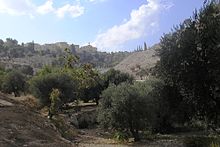
Deror Avi, Picture of the Valley of Hinnom (2007) Shared by photographer under GNU Free Documentation License 1.2

Jesus, especially in Matthew and the synoptic tradition, does include punishment for those who choose the path of the wicked. The gospels use the term Gehenna a term that originates withthe valley of Hinnom, which was considered a cursed place and a place where trash from Jerusalem was burned but it also is used as the opposite of the kingdom of heaven. Choose the kingdom of heaven or choose Gehenna, it is a choice between wisdom and foolishness. I think it is difficult to argue that Jesus does not have some conception of a judgment that goes beyond this life that parallels the resurrection that also transcends this life. Yet, rather than giving us terrifying descriptions to fuel the imaginations, Jesus uses the term in a way that the people of his time would understand and that we can only approach through the accumulated tradition and imagination of the church and artists. Jesus doesn’t focus on Gehenna or heaven as a destination, instead he is focused on the kingdom of heaven’s approach to earth. Gehenna is the place that those who oppose the kingdom of heaven find themselves.

How do we as Christians almost two thousand years after Jesus death and resurrection approach this concept of judgement and hell? Here is some wisdom I can share that I’ve learned from other wise thinkers on our tradition. The first comes from Miroslav Volf in his work Exclusion and Embrace where in the final chapter he makes the point:

Most people who insist on God’s “nonviolence” cannot resist using violence themselves (or tacitly sanctioning its use by others). They deem the talk of God’s judgment irreverent, but think nothing of entrusting judgment into human hands, persuaded presumably that this is less dangerous and more humane than to believe in a God who judges! That we should bring “down the powerful from their thrones” (Luke 1: 51-52) seems responsible; the God should do the same, as the song of that revolutionary Virgin explicitly states, seems crude. And so violence thrives, secretly nourished by belief in a God who refuses to wield the sword.

My thesis that the practice of nonviolence requires a belief in divine vengeance will be unpopular with many Christians, especially theologians in the West. To the person who is inclined to dismiss it, I suggest imagining that you are delivering a lecture in a war zone (which is where a paper that underlies this chapter was originally delivered). Among your listeners are people whose cities and villages have been first plundered, then burned and leveled to the ground, whose daughters and sisters have been raped, whose fathers and brothers have had their throats slit. The topic of the lecture: a Christian attitude toward violence. The thesis: we should not retaliate since God is perfect noncoercive love. Soon you would discover it takes the quiet suburban home for the birth of the thesis that human nonviolence corresponds to God’s refusal to judge. In a scorched land, soaked in the blood of the innocent, it will invariably die. And as one watches it die, one will do well to reflect about many other pleasant captivities of the liberal mind. (Volf, 1996, pp. 303-304)

Additionally, I would add the way we often use the concept of eternal damnation and salvation incorrectly, something I learned from Lesslie Newbingin:

In the debate about Christianity and the world’s religions it is fair to say that there has been an almost unquestioned assumption that the only question is, “What happens to the non-Christian after death?” I want to affirm that this is the wrong question and that as long as it remains the central question we shall never come to the truth. And this for three reasons:

    1. First, and simply, it is the wrong question because it is a question to which God alone has the right to give the answer….
    2. The second reason for rejecting this way of putting the question is that it is based on an abstraction. By concentrating on the fate of the individual soul after death, it abstracts the soul from the full reality of the human person as an actor and sufferer in the ongoing history of the world…
    3. The third reason for rejecting this way of putting the question is the most fundamental: it is that the question starts with the individual and his or her need to be assured of ultimate happiness, and not with God and his glory.(Newbingin, 1989, pp. 177-179)

Ultimately questions of heaven and hell, salvation and damnation are not in my control, and that is something I am thankful for. I do trust that God is wiser than I am in judgment and that ultimately the injustice in this world will not outlast God’s justice. The world’s violence will not ultimately thwart God’s kingdom of peace. Beyond this I can accept that there is an opposite to the kingdom of heaven that Jesus announces to those who hear him, but instead of focusing on Gehenna and the path of foolishness I attempt to follow the path of the kingdom and share it with those who have ears to hear. Beyond this part which I can live and proclaim I leave the rest in God’s capable hands.

Matthew 5: 13-20 A Visible Vocation Connected to Scripture

Sermon on the Mount by Carl Bloch (1877)

Matthew 5: 13-20

Parallel Mark 9:49-50 and 4:21, Luke 14: 35-35, 8: 16, 11:33 and 16: 16-17

Highlighted words will have comment on translation below

 13 “You are the salt of the earth; but if salt has lost its taste, how can its saltiness be restored? It is no longer good for anything, but is thrown out and trampled under foot.

14 “You are the light of the world. A city built on a hill cannot be hid. 15 No one after lighting a lamp puts it under the bushel basket, but on the lampstand, and it gives light to all in the house. 16 In the same way, let your light shine before others, so that they may see your good works and give glory to your Father in heaven.

17 “Do not think that I have come to abolish the law or the prophets; I have come not to abolish but to fulfill. 18 For truly I tell you, until heaven and earth pass away, not one letter, not one stroke of a letter, will pass from the law until all is accomplished. 19 Therefore, whoever breaks one of the least of these commandments, and teaches others to do the same, will be called least in the kingdom of heaven; but whoever does them and teaches them will be called great in the kingdom of heaven. 20 For I tell you, unless your righteousness exceeds that of the scribes and Pharisees, you will never enter the kingdom of heaven.

Both Mark and Luke have individual sayings from this portion of the Sermon on the Mount scattered throughout their gospels, but Matthew places them in a crucial place immediately after the opening of the Sermon to help frame the identity the community is to adopt and to connect it with the scripture. As mentioned earlier, Jesus probably used these sayings multiple times, but Matthew has given us a tightly woven net composed of these saying to capture men and women who are being called into the community of disciples. They have been called to choose the wisdom of the Sermon, to embrace the blessedness or happiness of the kingdom of heaven and now they are called to their vocation and connected with the gift and vocation of Israel.

Salt in the modern world is a seasoning, salt in the ancient world was a preservative and that is a critical distinction. Salt is not what keeps the world tasting better, followers of Christ were not called to be the spice of life for the world. Instead salt in a world before refrigeration was that which preserves the earth. They are not called to become salt, they already are. The throughout this section is plural so ‘all of you’ are the salt of the earth and the light to the world. Even though salt is primarily for preservation it does have a distinctive taste, it does make itself tasted with the rest of the meal that is to be consumed. The disciples and hearers are not given a choice of whether they will accept the vocation of being salt, but they can choose the foolish path of not living as salt. The word translated ‘lost its taste’ is the Greek world moraino which literally means to become foolish. This is the verbal form of the word we get the English moron from. As I mentioned in the previous discussion of the Beatitudes an underappreciated linkage of the Sermon on the Mount is to wisdom literature with its choices between the wise and foolish, righteous or wicked and here salt of the earth and foolish salt. There is a vocation in the kingdom of heaven for the sake of the world for the hearers of Jesus’ words who live according to them, but for those who take the path of becoming foolish there is no longer a use for them, they are not called to be salt for their own sake but for the sake of the earth. They, like Israel before them, were given their vocation to be a blessing to all the nations of the earth and if they choose to live in a way that is not distinctive from the earth that they serve then they are no longer good for anything.

Light is another frequent image in scripture for the vocation of the people of God. For example:

I am the LORD, I have called you in righteousness, I have taken you by the hand and kept you; I have given you as a covenant to the people, a light to the nations, to open the eyes of the blind, to bring out from the prison those who sit in darkness. (Isaiah 42: 6-7 emphasis mine)

he says, “It is too light a thing that you should be my servant to raise up the tribes of Jacob and to restore the survivors of Israel; I will give you as a light to the nations, that my salvation may reach to the ends of the earth. (Isaiah 49:6, emphasis mine)

We have already had Jesus identified as a great light (Matthew 4: 16 quoting Isaiah 9:2) and here the vocation of light is granted to those gathered around Jesus and hearing these words. In combination with the image of light is the image of the city on a hill which is meant to be visible. This also taps into Isaiah’s imagery of Jerusalem being a place where the nations are drawn to:

In the days to come the mountain of the LORD’s house shall be established as the highest of the mountains, and shall be raised above the hills; all the nations shall stream to it. May people will come and say, “Come, let us go to the mountain of the LORD, to the house of the God of Jacob; that he may teach us his ways and that we may walk in his paths.” For out of Zion shall go forth instruction, and the word of the LORD from Jerusalem. (Isaiah 2:2-3)

But now the mountain is not the temple mount in Jerusalem but the mountain of the Sermon on the Mount near Capernaum. The transition back to the choice of wisdom literature between wise and foolish is presented. The people do not have the choice to be light, but one can make the foolish choice to put a light under a bushel basket instead of on a light stand. As Dietrich Bonhoeffer would remind his students, “The followers are the visible community of faith: their discipleship is a visible act which separates them from the world—or it is not discipleship.” (DBWE 4:113) The community of disciples is to be light in the midst of the darkness, they are the light of the world and the city on the hill, they are visible to the world around them and their good works give glory to the God they serve.

One of the struggles that many Christians, myself included, wrestle with is the visible nature of their faith in a secular world. For people in the United States, faith has mainly been consigned to the private or spiritual realm, but it was never intended to be so. I know this is one of the things I struggle with as a private person and even as a pastor. As a pastor people do tend to watch my actions and words much closer than the average person of faith and I’m OK with that, but a salty, city on the hill, light of the world faith is much more visible than what I or my congregation often live. That type of faith will meet resistance and even persecution, and I’ve met that type of resistance in congregations I’ve served and from those in the community who disagreed with the hermeneutic of mercy that shapes my understanding of how we are to live our calling. I do struggle with the vanilla nature of the church as it actually exists, and while I’m not willing to embrace the model of some churches which pull away from society it is a challenge to continue to be salt and light in the midst of the world without being shuttered or made foolish. The Sermon on the Mount does not grant us a complete ethical system which can help us answer every question but it does, like all good wisdom literature and attempts to interpret scripture, point us toward the path of wisdom and help us begin to imagine what a life informed by the kingdom of heaven might look like.

The vocation of the hearers of the Sermon on the Mount relates to the vocation of the people of Israel. In being connected with the vocation of Israel the hearers are also connected with the scriptures of Israel. For Matthew it is critical for the reader to see the connection between Jesus and the scriptures, that is one of the reasons he continually alludes and quotes the scriptures to help us understand who Jesus is and what the vocation he calls us into looks like in the world. As we prepare to hear Jesus show us how to hear the scripture, we are not called to forget what came before but instead to hear and learn from it, to preserve and honor it, and to live lives that show forth a righteousness that is different from the scribes and Pharisees. Again we are framed with the question of wisdom literature in terms of the ones who breaks the commandments and teaches others (by words or actions) to do the same is the least while the one who keeps the commandments and teaches other to keep them is the greatest in the kingdom of heaven. This keeping of scripture will be a visible witness which brings glory to God but may also bring persecution to the one living this public faith.

Before we move into hearing Jesus interpreting scripture a brief pause to frame the way Jesus will read scripture. This is often heard as legalistic or pointing towards a type of moralistic perfection and the interpretation below will run counter to this path. A helpful question when approaching either the law in the Hebrew Scriptures or Jesus’ interpretation of it in the Sermon on the Mount is: What type of community/society are they trying to create/imagine? That doesn’t mean that what lies ahead is easy to live into, I struggle with it, but it does give us a different horizon to hear the law within. The law is about a society where my neighbor’s best life is possible. One of the key differences between the scribes and the Pharisees as they are represented in Matthew’s gospel and Jesus is mercy being a central part to understanding what righteousness is about. As we now enter Jesus’ interpretation of the law and prophets which are connected to our vocation may we apply that merciful and, dare I say, gracious hermeneutic to our neighbors and to ourselves.

Matthew 5: 1-12 The Wisdom of the Sermon on the Mount

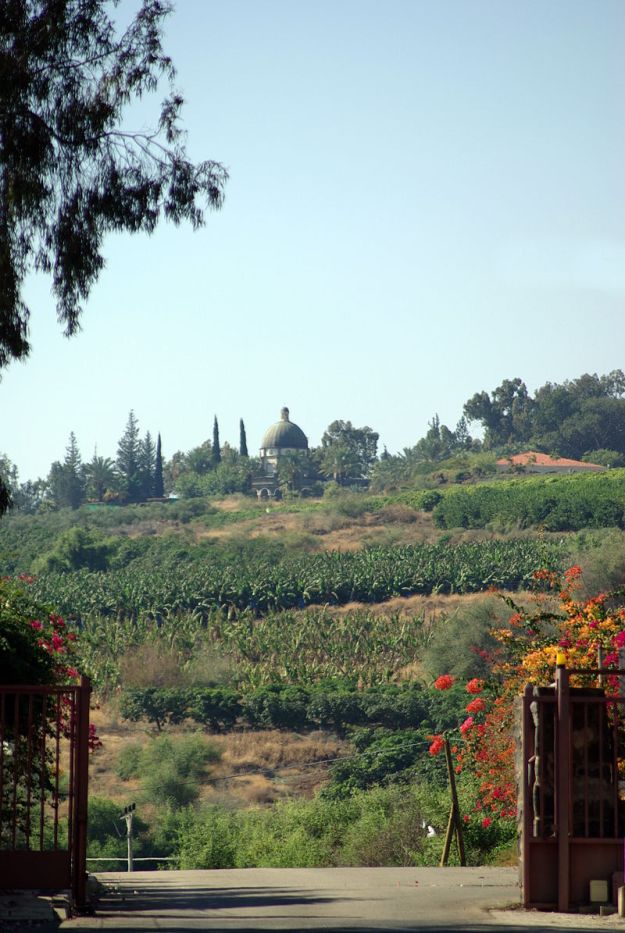
Mount of Beatitudes, seen from Capernaum. Photo by Berthold Werner, public domain

Matthew 5: 1-12

Parallel Luke 6: 20-26

Highlighted words will have comment on translation below

1 When Jesus saw the crowds, he went up the mountain; and after he sat down, his disciples came to him. 2 Then he began to speak, and taught them, saying:

3Blessed are the poor in spirit, for theirs is the kingdom of heaven.
4Blessed are those who mourn, for they will be comforted.
5Blessed are the meek, for they will inherit the earth.
6Blessed are those who hunger and thirst for righteousness, for they will be filled.
7Blessed are the merciful, for they will receive mercy.
8Blessed are the pure in heart, for they will see God.
9Blessed are the peacemakers, for they will be called children of God.
10Blessed are those who are persecuted for righteousness’ sake, for theirs is the kingdom of heaven.
11Blessed are you when people revile you and persecute you and utter all kinds of evil against you falsely on my account. 12 Rejoice and be glad, for your reward is great in heaven, for in the same way they persecuted the prophets who were before you.

The Sermon on the Mount is designed to be heard as one unit, even though we often break it up into individual readings and for the sake of space I will be dealing with smaller sections (even as I try to address it as an intentionally assembled and compact unit of teaching). Matthew constructs the Sermon on the Mount and places it early in the gospel to help the hearers in his time and later times understand what life in the community of disciples can be like, to open their ears, eyes, hearts, minds and imaginations to the kingdom of heaven. We probably do not have a transcript of Jesus’ teaching on at one specific time and place, but I do assume that the teachings collected in the sermon were among the memorable things that Jesus said and were probably used in multiple teaching opportunities. Several similar teachings are placed in different locations in Luke’s gospel, but the gospel writers were concerned with constructing their gospels to highlight what they felt was critical for their churches to understand about Jesus and the kingdom of heaven.

Location matters in the gospels, and Jesus going up the mountain is not only an action that allows him to be seen and heard by the crowds but it also (especially considering the content of the sermon) links him symbolically with Moses. Moses would go up the mountain to receive the law from God, now Jesus goes up the mountain to fulfill the law and the prophets. Jesus here and at the mountain of transfiguration will be linked to Moses (and Elijah and the rest of the prophets) and will also surpass them. But location helps to emphasize that Jesus is one speaking with the authority to declare the things he states. This will be especially important later in the chapter as he expands on the law.

The Beatitudes, the common name for Matthew 5: 3-12, get their name from the word in Latin that we translate as ‘blessed.’ This is another place where translation can obscure a linkage that may have been obvious to the initial hearers of the message. The Greek makarios is often used to translate the Hebrew asre which is often used in wisdom literature. I do think that we are invited into the framework of wisdom literature with its choice between the way of the wise and the foolish, those who follow the law and those who do not and this linkage is heightened in Luke’s similar blessings and woes in Luke 6: 20-26.  Asre is normally translated happy in the NRSV, for example:

Happy are those who do not follow the advice of the wicked, or take the path that the sinners tread, or sit in the seat of scoffers. (Psalm 1:1)

Happy are those to whom the LORD imputes no iniquity, and in whose spirit there is no deceit. (Psalm 32:2)

Happy are those who live in your house, ever singing your praise. Selah

Happy are those whose strength is in you, in whose heart are the highways to Zion. (Psalm 84: 4-5)

Happy are those whose way is blameless, who walk in the way of the LORD. Happy are those who keep his decrees, who seek him with their whole heart, (Psalm 119: 1-2)

Happy are those who find wisdom, and those who get understanding, (Proverbs 3: 13)

Happy is the one who listens to me, watching daily at my gates, waiting beside my doors. (Proverbs 8: 34)

Several other sayings in both Psalms, Proverbs, the prophets and the law take this form encouraging the people to choose the way that is being stated. Although the translation of makarios into blessed brings its own set of meaning to the passage I am going to begin to highlight terms that I would retranslate to bring in a different shade of meaning. For most people ‘blessed’ may have the sense of happiness with it but when they read religious language they simply take it as declarative language where God declares something ‘blessed’ and it is made holy but it doesn’t necessarily change anything for the ‘blessed one.’ While I agree with those who would highlight the aspect of inclusion for those excluded here in this passage (poor in spirit, mourners, meek, and those hungering and thirsting for righteousness) I also think it is important that we hear, in terms of wisdom literature and the language of the beatitudes, that in this kingdom of heaven those who have been unhappy, oppressed and excluded are invited to a community where they will be happy and the things they need to be happy will be given to them.

The gospel writers were each clever in the way they construct their gospels to link critical stories together and Matthew links this initial teaching section with his final section of teaching in Matthew 25, as Richard B. Hays can highlight:

Matthew creates an inclusio with the Beatitudes of Matthew 5: 3-12 by narrating an unsettling last judgment scene in which Jesus/Emmanuel turns out to have been present among us in the hungry and thirsty and naked and sick and imprisoned of this world. (Matt 25: 31-46). This, too, is an integral part of what “God with us” means in Matthew, as exemplified in the story of Jesus’ own suffering, culminating in the cross. To recognize God’s presence truly, then, Matthew’s readers must serve the needs of the poor, for “just as you did it to one of the least of these brothers, you did it to me:” (25:40) (Hays, 2016, p. 170)

Unlike Luke where the blessings and woes are placed next to one another, in Matthew the inclusion allows us to see the invitation at the beginning of Jesus’ teaching and the consequence for not following this wisdom at the end.

Moving into the Beatitudes themselves I will divide them into two sets of four and then a final saying set off by a change in reference (from blessed are the ones/those to blessed are you). The first set of four are those who God is depicted in scripture frequently being their advocate against those in power. The second set addresses those who are attempting to live in the way that they are called to live, and the final phrase addresses those who are persecuted specifically for living on account of Jesus for their rejection among the unwise will mean reward in the kingdom of heaven.

The ideas that will be articulated in the Beatitudes and the rest of the Sermon on the Mount are grounded in the vision of what Israel was to be for the sake of the world. Israel was always intended to be an alternative vision of society to the model used by Egypt, Assyria, Babylon, Greece, Rome or any other empire or nation ancient or modern. It was to be a society where they loved and feared the LORD their God and they loved and protected their neighbor. Much of the law is imagining a society where not only are the landholding members of the people of Israel protected but also the alien, the poor, the widow and the orphan. Israel often failed to embody this type of society, often emulating the practices of the larger nations around them with the powerful enlarging their own property, power, wealth and households by exploiting or failing to protect their vulnerable neighbors. The society gathered around Jesus are invited again into a kingdom where the poor in spirit, the mourning, the meek and those hungering and thirsting for righteousness are protected both by the community and by God.

The poor in spirit, in contrast to the poor in Luke 6:20, has caused a lot of debate about what Matthew means. My reading of this passage is the ‘poor in spirit’ and the ‘poor’ are referring to the same group, it is not a spiritualization of poverty but instead refers to those who have been oppressed and are holding on to their last thread of hope, against all evidence to the contrary, that God will deliver them. The longstanding wisdom of the Hebrew scriptures is that God is the one who will side with the poor against their oppressors and in the words of Proverbs, “Those who oppress the poor insult their Maker, but those who are kind to the needy honor him.” (Proverbs 14:31) The kingdom of the world may have no place for the poor, but the kingdom of heaven will belong to them. They can be happy because in the society that Jesus is presenting to the disciples and hearers they are included, valued and protected. They can be blessed because they have what they need to have the life God desires for them, and, as we will learn in Matthew 25, Jesus will be found among them.

The mourners are those who weep at the state of the world. The mourning may be personal, due to the loss of a loved one, or it may be social due to the loss of property, occupation, meaning or place in society. In contrast to the Greco-Roman worldview which disapproved of mourning (Carter, 2005, p. 132) and the stoic worldview many in the United States inherited, there was an expectation of mourning and a rich tradition of lament included in the Hebrew Scriptures, especially in the Psalms. Yet, there is also a confident hope in a God who could and would reverse the situations in the world that caused the faithful to mourn and lament. Isaiah 25:7-8 is one of the articulations of hope in a God who can destroy every enemy that haunts them and then comfort them in what should be familiar language for most Christians

And he will destroy on this mountain the shroud that is cast over all peoples, the sheet that is spread over all nations; he will swallow up death forever. Then the LORD God will wipe away the tears from all faces, and the disgrace of his people he will take away from all the earth, the LORD has spoken. (emphasis mine)

 Meekness in English means quiet, gentle, submissive or easily imposed upon which is similar in meaning to praus the Greek word behind it, but this word in Biblical usage is not so simple to translate. This word refers to Jesus twice in Matthew:

Take my yoke upon you, and learn from me; for I am gentle and humble in heart, and you will find rest for your souls. (Matthew 11: 29)

Tell the daughter of Zion, Look, your king is coming to you, humble and mounted on a donkey, and on a colt, the foal of a donkey. (Matthew 21:5)

The highlighted terms are both the Greek praus translated as gentle or humble. I think meek captures a shade of what Jesus is alluding to here, for they are those who rather than rising up in violent reaction to the oppression they may encounter are those who wait for God to deal with the wicked. As Psalm 37 can state:

Yet a little while, and the wicked will be no more; though you look diligently for their place, they will not be there. But the meek shall inherit the land, and delight themselves in abundant property. (Psalm 37: 10-11)

The final Beatitude of the first section is those who hunger and thirst for righteousness who will be filled. As with the previous three I read this as those who have suffered under the oppression of the current state of society and need God’s liberation, they are those who seek righteousness in society and before God but are hungry and thirsty in the midst of their attempt to live a righteous rather than a wicked life. When they strive first the kingdom of heaven, they are promised that all the things they need for food, clothing and life will be granted to them as well (Matthew 6: 25-34).

With the second set of Beatitudes are exhortations which point to the way of life that will be further described in the Sermon on the Mount and throughout Jesus’ life and ministry. Throughout Matthew’s gospel the understanding of what righteousness looks like is always read through the lens of mercy. From Joseph being a righteous man and deciding to act with mercy towards Mary (Matthew 1:19), to Jesus frequent transgressions of a literal reading of the law to act in mercy we are shown a hermeneutic[1] of mercy throughout this gospel. The merciful will receive mercy, and this is a way of reading the law that will contrast with the readings of the Pharisees and Sadducees Jesus encounters in Matthew. For example, in Matthew 9: 9-13, Jesus will tell the Pharisees criticizing his practice of eating with sinners and tax collectors, “Those who are well have no need of a physician, but those who are sick. Go and learn what this means, ’I desire mercy, not sacrifice.’ For I have come to call not the righteous but sinners.” (Matthew 9:11) Jesus’ words and actions will embody this hermeneutic of mercy and Hosea 6:6 (quoted in Matthew 9:11) seems to be a key text that Jesus and his followers are to use to unlock what scripture is to mean for their lives. As Richard B. Hays can state,

Clearly, for Matthew, mercy is a central theme. The important thing to recognize, in all these passages, is that the quality of mercy is not set in opposition to the Torah; rather, Matthew’s Jesus discerns within Scripture itself the hermeneutical principle—expressed epigrammatically in Hosea 6:6—that all the commandments are to be interpreted in such a way as to engender and promote the practice of mercy among God’s people. (Hays, 2016, p. 127)

The pure in heart are those who live in faithfulness to the vision of the kingdom of heaven articulated here and throughout Jesus’ ministry. As Psalm 24 can remind us:

Who shall ascend the hill of the LORD? And who shall stand in his holy place? Those who have clean hands and pure hearts, who do not lift up their souls to what is false, and do not swear deceitfully. (Psalm 24: 3-4)

Those of pure hearts and clean hands may approach the place of God in the psalm, and here the pure in heart are prepared to see God. The preparation for God’s approach is not ritual action or sacrifice but a life properly lived. The heart in Hebrew thought is not the instrument of emotion (that would be the gut) but rather the instrument of will and decision. Those who are pure in their will and decision, who live according to the way of righteousness rather than foolishness will see God. Seeing God may be impossible for mortals in several places in the scriptures, but one of the themes of Matthew’s gospel is that in Jesus we encounter ‘God with us.’ Yet, as discussed above this is also the “God with us” who is found with the hungry, thirsty, naked and poor. Those who are not pure in heart may be those who missed the appearance of God because they did not choose a way of righteousness and mercy which sees the need of the community around them, but in the kingdom of heaven the poor in spirit, mourning, meek and the ones hungering and thirsting for righteousness have already been granted a place with God.

Peacemaking in the kingdom of heaven is meant to be understood in contrast to the image of peace practiced by Rome which was peace through conquest and military might. When I served in Nebraska, near the former headquarters for Strategic Air Command, I would sometimes see stickers on vehicles with a B-52 Stratocaster bomber replacing the arms of a peace sign with a caption, “Peace the old-fashioned way.” This would fit with the Roman understanding of the Pax Romana which, in the language of the ancient historian Tacitus, “pacem sine dubio…verum cruentam. Peace there was, without question, but a bloody one” (Zanker, 1988, p. 187) The peace of the kingdom of heaven will only be a bloody one because the one who embraces it may be crucified by the emissaries of the kingdoms of the world, not because they respond in violence. The kingdom of heaven will be a place where reconciliation is more important than sacrifice, where enemies are loved, and where cheeks are turned in response to being struck. Those who practice this type of community will be welcomed into a familial relationship with the daughters and sons of God.

Those who are persecuted for righteousness sake as those who are persecuted for living a life that is shaped by this merciful, pure in heart and peaceful version of righteousness that Jesus will articulate. Structurally we are also linked back to the first Beatitude since both the poor in spirit and those persecuted for righteousness are inheritors of the kingdom of heaven. Ultimately this righteousness that one will be persecuted for involves standing with the poor in spirit, the mourning ones, the meek and the ones hungering and thirsting for righteousness. Disciples will be continually called to take up their cross. It will be a struggle for the kingdom of heaven to enter this world. Rather than responding to violence with violence they will respond with endurance instead.

The final Beatitude switches suddenly to a second person plural (all of you) where those who are gathered around Jesus now are addressed as ones who may be happy in the midst of being persecuted verbally or physically since it bears witness to their faithfulness to this kingdom. Their reward is great in this community because they are like one of the prophets who remained faithful to God in the midst of a faithless time. They are a part of a community, like the prophets, who believed that in a time of injustice the God’s justice would triumph, in a world of bloody peace believed that God’s true peace would come, who believe in mercy more than sacrifice and in a God who stand with the poor in spirit, the mourning ones, the meek and the one hungering and thirsting for a righteousness they’ve yet to see. Yet, they can be happy or blessed because the kingdom of heaven is being embodied in their hearing.          

[1] A hermeneutic is a way of interpretation, a word that is frequent in the world of scholarship but rarely heard outside the worlds of philosophy, scriptural interpretation and theology but I include it because it is a useful word in framing how to read a text.

Introduction to the Sermon on the Mount

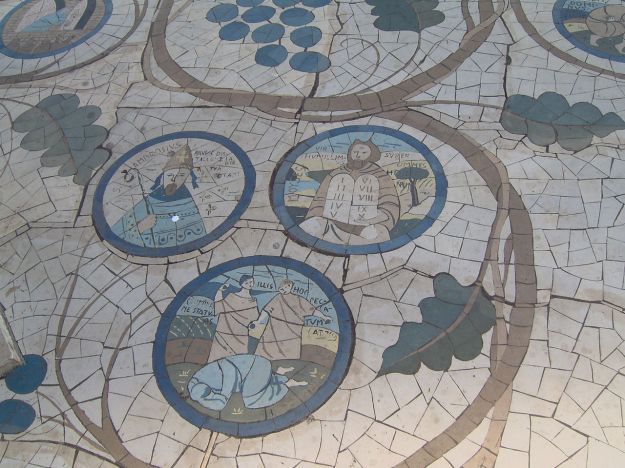
Mosaic on the Mount of Beatitudes in Israel (Images are St. Ambrose,, Moses and the Stoning of Stephen) Shared under Creative Commons 2.5

The Sermon on the Mount (Matthew 5-7) is probably the best know piece that is unique to Matthew’s gospel (as it is assembled, although much of the material in the Sermon is found throughout Luke’s gospel) and there are scholars who have spent their entire careers focused on this small section of Matthew’s gospel. You don’t have to be a scholar to read the Sermon on the Mount and see that it calls the hearer to a different set of values than one will see practiced in the world around them. As a hearer you have the choice of how to respond to this expansion on the law given to Moses, the practices of prayer, fasting, how one values one’s treasurers and what one does with them, judging and more in this initial teaching section of Matthew’s gospel. Matthew constructed the gospel to quickly bring us to this first block of teaching and instruction and Matthew spends a lot of space in the gospel listening to the teaching of Jesus and letting it shape the community that hears it.

The words of the Sermon on the Mount have often been viewed as: an unattainable ethic which serves only to drive us to the grace of Christ, an interim ethic to bring about a radical reorientation in the context of Jesus’ presence and the quickly approaching judgment (which didn’t occur as expected in most reconstructions following this view) or a perfectionist ethic that Christ does expect Christians to follow. Each of these approaches in their own way minimize the imperative to attempt to live into the vision the sermon presents.  Prior to Luther the way of life embodied in the Sermon on the Mount was mainly limited to those who had separated themselves in monastic communities but one of the impacts of the Reformation was the ideal of bringing the reading, interpretation and the living of scripture as actions of the entire church was the perceived impossibility of all the baptized keeping this ethic. The solution for Luther, as one example, was perfect doctrine rather than perfect practice:

We cannot be or become perfect in the sense that we do not have any sin, the way they dream about perfection. Here and everywhere in Scripture “to be perfect,” means in the first place, that doctrine be completely correct and perfect, and then, that life move and be regulated according to it. (LW 21:129)

In fairness to Martin Luther, he did believe that correct doctrine would lead to a reformed way of living, that faith would lead a Christian to be a perfectly dutiful servant of all. Yet the perfectionistic way in which we frame the Sermon on the Mount I believe prevents us from honestly wrestling with the way of life that Matthew is presenting to those who would be disciples of Jesus.

Although I will deal with the translation of Matthew 5:48 when I reach that section, I do believe it is important enough to deal with up front because it is a crucial verse. The NRSV translates this final verse of the fifth chapter, “Be perfect, therefore, as your heavenly Father is perfect.” Many scholars follow the translation in a manner like O. Wesley Allen,

Likewise, there are idealistic expectations in the discourse that seem beyond the reach of any normal, finite, sinful human being or human community summed up in the expression, “Be perfect, therefore, as you heavenly Father is perfect. (Allen, 2013, p. 53)

The word translated as perfect is telios which is a word with the connotation of completeness, or reaching an end/goal, of being mature or grown up. As a person who grew up in the individualistic ethos that is instilled in people who grow up in the United States, perfection is a term which depends upon individual rigor in attending to the letter of the law but one of the things I’ve discovered in my time studying the Hebrew Scriptures is that the law is always directed towards the community. An individual may act righteously or wickedly, they may be innocent or blameless but the law itself is always directed towards the life of the community. When I studied Deuteronomy, for example, I framed my examination of the law in terms of the type of society they were attempting to create. If the Sermon on the Mount is about the type of community that the kingdom of heaven embodies, as I will argue, then perhaps it is a primer in how to live together as the people of God rather than a model for individual perfection.

Jesus doesn’t seem to focus his ministry on attaining moralistic perfection, but instead the kingdom of heaven seems to be much more related toward surprising compassion towards the people Jesus encounters. As E. P. Sanders can state:

Secondly, the overall tenor of Jesus’ teaching is compassion toward human frailty. He seems not to have gone around condemning people for their minor lapses. He worked not among the powerful, but among the lowly, and he did not want to be a stern taskmaster or a censorious judge, who would only add to their burdens…

Thirdly, Jesus did not live a stern and strict life. For most of us the word ‘perfectionism’ calls up images of severe Puritanism: lots of rules, plenty of punishment for error and not much room for fun. This sort of Puritanism, according to Jesus, was all right; an austere life had been fine for John the Baptist, but it was not his own style. (Sanders, 1993, pp. 202-203)

Finally, the way perfection is modeled in the United States does pull on our history of severe Puritanism, even as it has transformed in our secular society under the guise of a non-religious perfectionism.  So for the moment let us set aside our ideas of being perfect or achieving perfection in an individualistic sense and let us enter this world that Jesus is articulating for us in the Sermon on the Mount. Matthew has brought us quickly to the mountain to hear these words from Jesus, so may we have ears to hear, eyes to see, minds whose imagination can dream this dream of the kingdom of heaven, and hearts to courageously strive together for this community of disciples.


Perfection and Blamelessness in the Bible

In looking at how to approach the Sermon on the Mount, I’ve wrestled with how to translate the word translated perfect in Matthew 5:48 and while my suspicion is that perfect is not a good translation for the Greek work telos, I wanted to look more broadly at how the scriptures dealt with the idea of being perfect, perfection or blameless.

Perfect, Perfection and Blamelessness in the Hebrew Scriptures

There are two primary words in Hebrew that end up translated perfect, perfection and blameless and they are related two each other. Hebrew words begin as a verbal form and so the verb root is :תָּם
(Tam) which in its Qal form means to complete, finish, fulfill, to be finished, come to an end and in its Hitp’ael form means finish, complete, perfect, cease doing a thing, complete or shut up.[1]This verb also has a noun form (Tim) and the more common for our current examination adjectival form Tamim. There are a few other Hebrew terms which get translated perfect or blameless (for example Daniel 6:22 translates a term that normally is translated purity (zaku) for blameless and Lamentations and Ezekiel use the word kelil for a poetic reflection of perfection in terms of beauty).

In the Hebrew Scriptures these translations rarely talk about moralistic perfection which is often implied to an English reader of the words perfect, perfection, and blameless and below I am listing my categories of what these translations are referring to:

Innocence/Righteousness

Righteousness/Justice is an important concept in Hebrew thought, but I think it is easy for us to assign a modern interpretation on Justice or the Law which doesn’t coincide with a Hebrew way of understanding the gift implied in these terms. Often when Tam or Tamim is translated blameless it is referring to the concept of a person being innocent or righteous. In both Hebrew and Greek justice and righteousness are rooted in the same term (tszadik in Hebrew, dikaisoune in Greek) and while there is a sense where righteousness is linked to keeping the commands and ordinances of the law, it more broadly encompasses living in a right relationship with God and one’s neighbors. Tamim or Tam can be translated in parallel with righteousness, for example in Genesis 6:9 Tamim is translated blameless in parallel with righteousness and refers to Noah being innocent unlike his generation: “Noah was a righteous man, blameless in his generation” (see also Genesis 17:1 in relation to God calling Abram to be innocent (blameless)). This is also the primary way the book of Job uses the Tam and Tamim family of words, for example: There is no one like him, a blameless and upright man (Job 2:3, see also Job 1:1, 8; 8:20; 9:20, 21,22; 12:4; 22:4). Being blameless is parallel to being upright or righteous but it is not used in the sense of legalistically keeping every possible interpretation of the law, instead it is often used more generally to speak of a person’s character being in accordance with God’s intent for life in the community of faith.

Sacrificial Acceptability or Completion in Dedication to God

Another usage of Tamim or Tam when translated perfect is related to a cultic usage where a sacrifice or item is acceptable for use in sacrifice or the worship of God. Leviticus 22:21 is an example of this usage for a sacrifice, “When anyone offers a sacrifice of well-being to the LORD, in fulfillment of a vow or as a freewill offering, from the herd or from the flock, to be acceptable it must be perfect; there shall be no blemish in it.” This also is used when the temple is dedicated in 1 Kings to talk about the completion of the space in preparation for worship, “Next he overlaid the whole house with gold, in order that the whole house might be perfect; even the whole altar that belonged to the inner sanctuary he overlaid with gold”(1 Kings 6:22). Tamim and Tamm are used to reflect completeness or wholeness, which is the sense of perfect reflected by the translation. A sacrifice must be without injury, illness or blemish or the sanctuary was completely overlaid with gold without missing any area.

Completeness/Righteousness in relation to God

This use of Tamim (always the adjective in this usage) occurs in songs and poetry when talking about God as being complete or whole in relation to God being upright. Deuteronomy 32:4 is the first usage of this type in the song of Moses, “This God—his way is perfect; the promise of the LORD proves true; he is a shield for all who take refuge in him” (also used in this manner in David’s song of Thanksgiving in 2 Samuel 22: 31 and in Psalm 18:30)

Completeness in relation to knowledge or content

In the book of Job, the final human voice to speak prior to God’s answer is Elihu who attempts, like the other friends of Job, to convince Job that he must be unrighteous to merit the suffering he is undergoing. In his boasts he claims to have perfect knowledge (or to be in the presence of God who has perfect knowledge) in the sense of knowing everything correctly or completely. (Job 36:4, 37:16)  Psalm 19:7 can also refer to the law as being complete in a similar (but non-ironic) manner, “The law of the LORD is perfect, reviving the soul; the decrees of the LORD are sure, making wise the simple

Poetic Use in Relation to Beauty or Splendor

Perfect or perfection is often used in compliments to poetically state that a person, city or event was attractive, beautiful or wonderful. This is one of the most common usages of Tamim and Tam in Psalms, Song of Solomon, Lamentations, and Ezekiel (which also uses the Hebrew word kelil) and can be used for a woman, a king, the law or even a city like Jerusalem or Tyre. For example, Song of Solomon can refer to a woman, “Open to me, my sister, my love, my dove, my perfect one; for my head is wet with dew, my locks with the drops of night” (Song of Solomon 5:2, see also 6:9). The king of Tyre is described as a signet of perfection and perfect in beauty (Ezekiel 28:12), the law is perfect in terms of admiration(Psalm 119:96) as are Jerusalem (Psalm 50:2, Lamentations 2:15, Ezekiel 16:14) and Tyre (Ezekiel 27: 3-4, 11).

Translated Perfect or Blameless in the New Testament (other than Telos/Teleo)

There are a couple words that get translated perfect or blameless in the New Testament: amemptos is commonly used in Pauline literature and is translated blameless and echoes the sense of innocence/righteousness discussed above for Tam and Tamim in Hebrew.[2] Other terms that get translated as either perfect or blameless (other than telios which will be the focus of the next section) include: amomos (unblemished in terms of sacrifice, blameless in moral terms, Revelation 14: 5), anegkletos (blameless, irreproachable, 1 Timothy 3:10, Titus 1: 6, 7) akakos (innocent, guileless, Hebrews 7:26) holoklepia (wholeness, completeness, soundness-wholeness of health, Acts 3: 16); kataptisis (being made complete, complete, 2 Corinthians 13:9); pas (all, full, great) and plerow (make full, fill, fulfill, bring to completion, Revelation 3:2). Each of these translations capture one of the senses listed for tam and tamim above but since the focus of this is on the translation of the term telos in Matthew’s gospel, we will now turn our attention to this word.

Translating Telos/Teleo in Matthew and the New Testament.

Teleo (verb) and telos (noun) and their derivatives, especially the adjectival form, in Greek are the most common terms translated perfect by the NRSV. The book of Hebrews frequently uses this term in the sense of completeness or sacrificial acceptability. James and 1 John use the term in the sense of highest in terms of comparison (perfect love, perfect law, perfect gift, etc.).[3]Paul uses telos and teleo derivatives three times to indicate completeness which get translated perfect in the NRSV (Romans 12: 2; 2 Corinthians 7:1; 12:9)[4]

Teleios, the adjectival derivative of telos, occurs three times in the gospels, all in the Gospel of Matthew: Matthew 5:48 (twice) and Matthew 19:21 and the NRSV translates each time as perfect:

Matthew 5: 48 Be perfect, therefore, as your heavenly Father is perfect

Matthew 19: 21 Jesus said to him, “If you wish to be perfect, go, sell your possessions, and give the money to the poor, and you will have treasure in heaven; then come, follow me.

The telos family of words are words of ending, completion and reaching a goal, they don’t carry the connotation of moralistic perfection that placing the word perfect in English does. Apparently, this translation goes back to the Latin Vulgate which translates teleios with the latin perfecti and perfectus and translations tend to value consistency with previous translations when possible. However, the lingering impact of perfect on the history of translation of this passage has caused people to hear the Sermon on the Mount as an unattainable pillar of perfection that is unable for human beings to attain. I would argue for a more literal translation in both Matthew 5:48 and 19:21 of complete instead of perfect for reasons I will argue in the introduction to the Sermon on the Mount and in the comments on Matthew 5: 48.


[1] Hebrew verbs have various forms (Qal, Nif’al, Pi’el, Pu’al, Hitpa’el, Hif’il and Hof’al) the Qal is the simple active form where the Hitpa’el is the reflexive form. The form of the verb can significantly change a meaning, but in the case of Tam they are very similar with minor shades of difference.

[2] Philippians 1:10; 2: 15; 3:6; Colossians 1: 22; 1 Thessalonians 2: 10; 3: 13; 5: 23

[3] Hebrews 2:10; 5:9; 7:19; 9:9, 11; 10:1; 11:40; 12:23; James 1:17, 25; 3:2; 1 John 4:8

[4] I 1 Corinthians 1:8 the NRSV translates telos in its normal meaning as end

Matthew 4: 18-25 Snagging the Fishers for Humanity and Spreading the Kingdom

Calling of the Apostles Peter and Andrew by Duccio di Buoninsegna (1308-1311)

Matthew 4: 18-25

Parallel Mark 1: 16-20, Luke 5: 1-11; John 1: 35-51

18 As he walked by the Sea of Galilee, he saw two brothers, Simon, who is called Peter, and Andrew his brother, casting a net into the sea — for they were fishermen. 19 And he said to them, “Follow me, and I will make you fish for people.” 20 Immediately they left their nets and followed him. 21 As he went from there, he saw two other brothers, James son of Zebedee and his brother John, in the boat with their father Zebedee, mending their nets, and he called them. 22 Immediately they left the boat and their father, and followed him.

23 Jesus went throughout Galilee, teaching in their synagogues and proclaiming the good news of the kingdom and curing every disease and every sickness among the people. 24 So his fame spread throughout all Syria, and they brought to him all the sick, those who were afflicted with various diseases and pains, demoniacs, epileptics, and paralytics, and he cured them. 25 And great crowds followed him from Galilee, the Decapolis, Jerusalem, Judea, and from beyond the Jordan.

The kingdom of heaven may have established a foothold in Capernaum, but now that kingdom and its representative will begin its infiltration of the surrounding region of Galilee. Jesus will go out and actively begin selecting those who will participate in fishing for people and begin to drive out the forces of sickness and demonic possession that have kept the people in the darkness. Matthew condenses the call of his first disciples and the initial acts of healing and casting out of demons into a short space to bring us to Jesus’ teaching on the mountain but this scene is necessary to set the scene for this extended teaching and the crowds that are coming to hear him.

Capernaum is on the north bank of the Sea of Galilee, so Jesus would not have to move far to find fishermen along the bank of the sea. Even though Jesus may not need to move far in seeking these first followers the action of a teacher going and seeking students is unusual in a culture where a Rabbi would set up a school and disciples would seek out the teacher. Yet, the initiative will rest with Jesus in the call, and when others seek Jesus out as potential disciples (Matthew 8: 19-22) they will learn this is a difficult, if not impossible task. We do not know how long Jesus has been in Capernaum proclaiming the kingdom of heaven or if the four fishermen knew him prior to being called but these fishermen will serve as a model of responding faithfully to Jesus’ call. There is resonance with the call that Jesus extends to the disciples and the call of Abram in Genesis 12 where God calls Abram to leave their kindred, their fathers house and go to a land that God will show them. Yet, initially, the disciples will not leave their country, but they will leave behind their vocations and family.

The fishermen are often portrayed as ‘poor fishermen’ but there is no indication that they were poor or that what they were leaving behind was not a stable and sustainable existence. Probably the closest analogy to our time would be small business owners who have enough invested in their business to have a boat and nets, food to eat and homes to live in, money to pay the taxes on the fish they catch and the ability to transport (and process) caught fish for sale. This was a family enterprise that relied upon family members upholding their part of the work of fishing, mending nets, maintaining boats, and selling their catch and the removal of sons from their positions in the family business would have presented a challenge for the remaining family members. Yet, Peter and Andrew and James and John all go when called, leaving their families, their business and their way of life behind. The boats may still be there, and they may still at times fish, but their primary fishing will be kingdom related rather than profit related.

Against the background of the use of fishing metaphors in the scriptures we see the imagery of fishing being used for the regathering of Israel.

Therefore, the days are surely coming, says the LORD, when it shall no longer be said, “As the LORD lives who brought the people of Israel up out of the land of Egypt,” but “As the LORD lives who brought the people of Israel up out of the land of the north and out of all the lands where he had driven them.” For I will bring them back to their own land that I gave to their ancestors.
I am now sending for many fishermen, says the LORD, and they shall catch them; and afterward I will send for many hunters, and they shall hunt them from every mountain and every hill, and out of the clefts of the rocks. Jeremiah 16: 14-16 

How one reads this portion of Jeremiah can be tricky. It can be read, as Richard B. Hays reads it by pulling on the verses that immediately follow what I have quoted above, “the “fishermen” whom God is summoning are agents of judgment, hauling people in so that God can “repay their iniquity and their sin.”” (Hays, 2016, p. 24). Jeremiah 16 is about a new beginning, but only after judgment and exile. I read this portion of Jeremiah 16 as an ingathering of the people after the prophesied judgment. Fishing imagery can be used in terms of judgment (see for example Amos 4: 1-2) but I do believe the theme of gathering in the dispersed people is behind the scriptural resonance here.

The disciples leave their boat and follow, they respond faithfully and these ‘little faith ones’ will become models of what being a disciple of Jesus is for future generations of followers. Jesus has shown the initiative, issued the call and these four men have responded. As Dietrich Bonhoeffer would say in Discipleship, “Discipleship is not a human offer. The call alone justifies it.” (DBWE 4: 63) Jesus, for Matthew and the disciple, is no ordinary rabbi or teacher. Although these four disciples probably do not recognize the significance of the one calling them, Matthew has been trying to get us to hear through his various uses of scriptural quotation and resonance the that Jesus is more than just a herald of the kingdom of heaven. The disciples in Jesus’ time and of all times will have to puzzle about the identity and significance of Jesus during their following but like the ‘little faith ones’ called from their fishing boats we are also called to look for the inbreaking signs of the kingdom of heaven as we travel through the world.

Jesus moves, teaches and acts as Matthew prepares us for the first concentrated block of Jesus’ teaching in the Sermon on the Mount. Mark’s gospel will focus on what Jesus does, but Matthew wants those who are disciples to gather with the crowd to hear Jesus teach. Yet, Jesus and the kingdom of heaven are also known by what Jesus does. His fame spreads by his teaching and his healing and exorcisms. The inbreaking kingdom of heaven casts out sickness, disease, pain, the demon possessed, and those broken in mind or body. Jesus’ power overcomes all these barriers to the people realizing the wholeness and healing of the kingdom of heaven. His fame is said to spread throughout Syria, one of the reasons some interpreters believe Matthew’s gospel was written in Syria, but it may also be the shining of the light in Galilee to the nations, the Gentiles. It may also be a part of the theme of the ingathering of Israel which is already occurring from Galilee, the Decapolis, Jerusalem, Judea and beyond the Jordan and this may be the early catch of God’s fishermen beginning to gather the dispersed people out of the land of the north.

Authority and power rest with Jesus: authority to heal and make whole and the authority to teach in the synagogues and soon on the mountain. The crowds are beginning to gather, the initial fishers of humanity have been called and the kingdom of heaven has been announced and embodied. Matthew has set the groundwork for us to hear the Sermon on the Mount, for Jesus to teach us what being it will mean to be a covenant to the people and a light to the nations. Perhaps we, like the fishermen have been snared. Perhaps we, like the sick, diseased, broken or possessed have been healed and seen the kingdom of heaven’s work in our lives. We are now prepared to go up with the disciples to listen as Jesus talks both to us and the rest of the crowd.

Matthew 4: 12-17 The Kingdom’s Foothold

Capernaum as see from lake Tiberius photo by Tango7174 November 13, 2012 shared under Creative Commons 4.0

Matthew 4: 12-17

Parallel Mark 1: 14-15, Luke 4: 14-15

12 Now when Jesus heard that John had been arrested, he withdrew to Galilee. 13 He left Nazareth and made his home in Capernaum by the sea, in the territory of Zebulun and Naphtali, 14 so that what had been spoken through the prophet Isaiah might be fulfilled:

15 “Land of Zebulun, land of Naphtali, on the road by the sea, across the Jordan, Galilee of the Gentiles —16 the people who sat in darkness have seen a great light, and for those who sat in the region and shadow of death light has dawned.”

 17 From that time Jesus began to proclaim, “Repent, for the kingdom of heaven has come near.

When John is arrested Matthew narrates that Jesus withdrew or departed (Greek anechoreo) to Galilee, a place where Jesus’ father Joseph brought the child and his mother for safety earlier. Matthew uses this word for withdrawing or departing much more than the other gospels (Mark and Luke use is twice, Matthew uses it ten times)[1] and it is the same word that describes Joseph’s action to remove Jesus and Mary to Egypt to escape the threat of Herod and Archelaus Matthew 2. The kingdom of heaven may be drawing near but it is not meeting the political threats of Herod or Rome on their own terms, Jesus will not reign in a manner consistent with the peace through military power practiced by Rome and its client states. Even though Jesus withdraws to Galilee from the wilderness of the Jordan he withdraws into the territory of Herod Antipas, who arrested John, and makes his base of operations precisely in this territory. Unlike an earlier time where Joseph’s departure with Jesus and Mary moves away from the threat of Herod, here Jesus withdrawing ironically brings him closer to the immediate threat.

Matthew quickly moves us away from Nazareth, where Jesus lived after returning from Egypt and where his family home may have remained and makes his home in Capernaum. Unlike Mark, where Jesus comes to Capernaum but never settles or has a home (Jesus being continually on the way is a Markan theme) Matthew makes Capernaum the home base for the mission of Jesus. Matthew does not portray Jesus as a homeless wanderer but instead puts him in a social class like the fishermen and tradespeople he would interact with. On the one hand this movement to Capernaum separates his home from the home of Mary and Joseph and sets him off on his own. On the other hand, the location is significant to Matthew as well and the next quotation of scripture highlights this importance.

The quotation is from Isaiah 9: 1-2, which is below in its larger context in Isaiah 9, this may be very familiar to Christians who are used to hearing this reading on Christmas Eve.

But there will be no gloom for those who were in anguish. In the former time he brought into contempt the land of Zebulun and the land of Naphtali, but in the latter time he will make glorious the way of the sea, the land beyond the Jordan, Galilee of the nations. The people who walked in darkness have seen a great light; those who lived in a land of deep darkness — on them light has shined. You have multiplied the nation, you have increased its joy; they rejoice before you as with joy at the harvest, as people exult when dividing plunder. For the yoke of their burden, and the bar across their shoulders, the rod of their oppressor, you have broken as on the day of Midian. For all the boots of the tramping warriors and all the garments rolled in blood shall be burned as fuel for the fire. For a child has been born for us, a son given to us; authority rests upon his shoulders; and he is named Wonderful Counselor, Mighty God, Everlasting Father, Prince of Peace. His authority shall grow continually, and there shall be endless peace for the throne of David and his kingdom. He will establish and uphold it with justice and with righteousness from this time onward and forevermore. The zeal of the LORD of hosts will do this. Isaiah 9: 1-7 (Highlighted portion quoted in Matthew)

Isaiah 9 originally comes from a time where the Assyrian empire is expanding and Northern Israel will be conquered and absorbed by this empire, while Judah retains some measure of independence. Galilee and Samaria were associated with Israel (the tribes other than Judah and Benjamin) which no longer retain their distinctive identity after the Assyrian conquest in 721 BCE. Yet, this passage in Isaiah points to a hope for not only Judah (or Judea) but for all of Israel, even the Israel that has been lost and scattered among the nations. The great light emerges in the place where there had been darkness, where Samaria and Galilee had been isolated from the remnant of Judah. For Matthew, Jesus’ act of establishing his base of operations in Capernaum has a broader theological significance of being the long hoped for member of the Davidic line who can bring about the reconstitution of all of Israel.

The title Galilee of the gentiles (or nations-the Greek term ethnos means both, and Gentiles in general are the non-Jewish people) also points to the inclusive nature of the hope of both Isaiah and Matthew. Throughout Matthew’s gospel we will see Gentiles play significant roles as illustrating what faith looks like. Two figures (the Canaanite woman and the Centurion) will show a faith that is not seen in Israel or in the disciples. From the genealogy and the magi, we have already seen the way non-Jewish people were joined to the story of Jesus and how they often embodied a righteousness that was greater than their Jewish counterparts in the story. The choice of location not only points to the reconstitution of Israel but also to the nations also being the recipients of this light which comes in the darkness.

Ruins of 4th Century synagogue, Photo by David Shankbone shared under Creative Commons 4.0

Ruins of Housing during Roman times in Capernaum, Photo by David Shankbone shared under Creative Commons 4.0

Established with a base of operations in Capernaum, Jesus begins the proclamation of the kingdom of heaven. As mentioned in the discussion of Matthew 3: 2, Jesus’ proclamation is explicitly linked to the proclamation of John the Baptist. Both are calling for repentance and announcing the nearness of the kingdom of heaven. John and Jesus share a common message but a different relationship or role within that message. John may be the herald that announces the kingdom of heaven’s approach and be the Elijah preparing the way, but Jesus will be the long-awaited Wonderful Counselor, Mighty God, Everlasting Father, Prince of Peace. To use the rhythm of John’s gospel, John the Baptist’s authority and role have now decreased, but Jesus’ authority shall grow continually. Jesus not only announces the advent of the kingdom of heaven but will embody the kingdom of heaven’s encroachment on the kingdom of the world and the conquest over the one who claims dominion over these kingdoms.

While Jesus will later send his followers, “to the lost sheep of the house of Israel” (Matthew 10: 6) and not to the Gentiles, their testimony will be a testimony to governors and kings and the Gentiles (Matthew 10:18). Within the vocational understanding of Israel, they were to be a treasured possession of God, a kingdom of priests and a holy nation (Exodus 19: 5-6) and they were called to be a light to the nations for the sake of the Lord. What happens in Galilee or Samaria or Judea is not intended to remain there but to be in the words of the servant song in Isaiah 42:

I am the LORD, I have called you in righteousness, I have taken you by the hand and kept you; I have given you as a covenant to the people, a light to the nations, to open the eyes that are blind, to bring out the prisoners from the dungeon, from the prison those who sit in darkness. Isaiah 42: 6-7

Matthew want to quickly bring us to the point where Jesus is teaching his disciples and forming them into a group that can be a covenant to the people, a light to the nations. Jesus in his actions is not merely about the reconstitution of Israel, but something larger is occurring that will affect the nations as well. The advent of the kingdom of heaven will not merely bring about a return to the nostalgic idea of a united Israel under a Davidic king but will instead impact the kingdoms of the world. The people who once lived in lands of deep darkness—on them light has shined. Or to use the poetic language of John’s prologue:

The light shines in the darkness, and the darkness did not overcome it. John 1: 5

This light will soon instruct his followers on what it means to be ‘the light of the world’ and how they are to “let their light shine before others, so that they may see your good works and give glory to your Father in heaven.” (Matthew 5: 14-15) But for now the light for Israel and the nations has begun to emanate from Capernaum and the kingdom of heaven has established its foothold in the land of the lost tribes of Israel.

[1] Matthew 2: 14, 19-22; 4:12; 10:23; 12: 14-21; 14:13; 15:21; it is also used for the magi withdrawing in 2: 12-13. M. Eugene Boring highlights this in (NIB 8:167)

Matthew 4: 1-11 The Temptation in the Wilderness

Ivan Kramskoy, Christ in the Desert (1872)

Matthew 4: 1-11

Parallel Mark 1: 12-13, Luke 4: 1-13

1 Then Jesus was led up by the Spirit into the wilderness to be tempted by the devil. 2 He fasted forty days and forty nights, and afterwards he was famished. 3 The tempter came and said to him, “If you are the Son of God, command these stones to become loaves of bread.” 4 But he answered,

“It is written, ‘One does not live by bread alone, but by every word that comes from the mouth of God.'”

5 Then the devil took him to the holy city and placed him on the pinnacle of the temple, 6 saying to him, “If you are the Son of God, throw yourself down; for it is written,

‘He will command his angels concerning you,’ and

‘On their hands they will bear you up, so that you will not dash your foot against a stone.'”

7 Jesus said to him, “Again it is written, ‘Do not put the Lord your God to the test.'”

8 Again, the devil took him to a very high mountain and showed him all the kingdoms of the world and their splendor; 9 and he said to him, “All these I will give you, if you will fall down and worship me.” 10 Jesus said to him, “Away with you, Satan! for it is written,

‘Worship the Lord your God, and serve only him.'”

11 Then the devil left him, and suddenly angels came and waited on him.

Even though a chapter division is introduced between the baptism scene at the end of chapter three and the temptation at the beginning of chapter four these scenes are connected. Within liturgical churches the perceived separation between these scenes is heightened by the traditional reading of the baptism scene after the end of the Christmas season and the temptation scene several weeks later during the first Sunday in Lent. Matthew and Luke share a common telling of this scene (although Luke modifies the order we find in Matthew probably due to Luke’s focus on the temple as being central to the narration of Jesus’ story) both keeping the placement in the narrative with Mark but adding the content of the temptation Jesus undergoes.

Jesus is led by the Spirit into the wilderness, a softening of the language we find in Mark where Jesus is literally ‘thrown’ into the wilderness (using the same term that Mark uses for casting out of demons). Throughout this temptation we are linked to the baptism by the location, the wilderness, the action of the Spirit of God and the continuity of the title used throughout the two scenes, Son of God. Previously the wilderness provided a place of revelation where the Spirit of God and the voice from heaven pronounce Jesus’ identity now it provides a place where Jesus’ identity is challenged. The wilderness will be a place of divine guidance, care and revelation but it is also a place of deprivation, isolation and challenge. Yet, this temptation seems to be if not divinely orchestrated at least an intentionality of movement by the Spirit of God and Jesus. It is a place where danger and revelation will hold hands, to use O. Wesley Allen’s phrase. (Allen, 2013, p. 39) Yet, there is also an element of, for a time, being isolated by God and entering into the suffering of that isolation as the wilderness of temptation becomes a place where the kingdom of heaven’s advent is both prepared for and resisted.

The forty days and forty nights in the wilderness that Jesus fasts prior to the temptation is frequently noted in paralleling the forty years that the people of Israel spend in the wilderness, a time where the people transition from being the slaves of Egypt to the people of the LORD the God of Israel. While the sojourn of the people of Israel is a time of divine guidance, care (providing food and water throughout their journey) and revelation (both the giving of the law and the creation of the tabernacle) and Jesus being identified with Israel is one of the accents within the identity that Jesus will bear there is also a close tying to the story of Moses in this scene. While Moses is not tested by the devil in the manner, we hear in Jesus story he has two forty-day periods on Mount Sinai where he receives the law (see Exodus 24: 18) and intercedes for the people after the incident of the Golden Calf. The intercession for the people after the Golden Calf is like the language of this scene:

He was there with the LORD forty days and forty nights; he neither ate bread nor drank water. And he wrote on the tablets the words of the covenant, the ten commandments. (Exodus 34:28)

Not only is he receiving the law to bring to the people, a parallel we will soon see in the sermon on the mount, but it is also during this forty days on Mount Sinai where Moses goes to make atonement for the people. Jesus, we learned in Matthew 1: 21 is one who will save the people from their sins. I believe this scene want us to hear an echo of Moses going up Mount Sinai to intercede for the people, Moses will say,

“Alas, the people has sinned a great sin; they have made for themselves gods of gold. But now only forgive their sin—but if not, blot me out of the book that you have written.”  Exodus 32: 31-32)

This scene in Exodus (Exodus 32-34) is a scene where God reveals God’s glory to Moses, where the covenant between God and Israel is renewed and God chooses to dwell among the people again. One of the links we may be encouraged to see here is a time where Jesus also initiates a time of fasting to restore the relationship between God and the people of God.

With all these connections and links to various images from the scriptures it can become a little overwhelming as we wonder: Who is Jesus? Is he God with us? David? Moses? Israel? Son of God? The Son of Man? The Christ? And ultimately Matthew feels we need all these titles and linkages to attempt to convey the fullness of who Jesus is and what his story means for those who hear it. Matthew is willing to use the rich language of the scriptures he inherits to attempt to paint his portrait of Jesus for the church to learn from and to follow. In the previous chapter I mentioned two great scriptural rivers that flow into the deep sea that is Matthews gospel (Isaiah specifically and the prophets in general along with the Psalms specifically and wisdom literature in general) but now I want to highlight a third river that flows through the landscape, one that has provided nourishment and hope and now as it reaches its goal in the gospel will be also be a part of the advent of the kingdom of heaven, the law (or Torah). As mentioned above, Jesus is one who becomes linked with Moses and the law in the Sermon on the Mount, but it is also worth noting here because the three quotations that Jesus makes during the temptation all come from the law, specifically the book of Deuteronomy.

Perhaps before we can begin the actual scene of temptation, we need to discuss the antagonist in the scene who is called tempter, devil and Satan. We view the world differently than our ancestors in the time of Matthew and we often don’t see our world as inhabited by devils and demons the way we find in the gospels. Philosopher Charles Taylor uses the language of the porous self in the earlier enchanted world to talk about this reality, where the porous self is vulnerable to spirits, demons and cosmic forces and these forces (both good and evil) actively inhabit the world and possess people within it. With evil forces active in the enchanted world affiliation with a power that could triumph over these forces was an important part of life, and for those within the sphere of Christianity and Judaism that force was God. In Taylor’s language:

Perhaps the clearest sign of the transformation in our world is that today many people look back to the world of the porous self with nostalgia. As though the creation of a thick emotional boundary between us and the cosmos were now lived as a loss. The aim is to try to recover some measure of this lost feeling. So people go to the movies about the uncanny in order to experience a frisson[1]. Our peasant ancestors would have thought us insane. You can’t get a frisson from what is really in fact terrifying you. (Taylor, 2007, p. 38)

That people believed in evil forces being personified in the devil and demons during the time of Matthew is not controversial, the controversy is how we as ones living in the disenchanted world we have inherited from modernity can talk about the devil and the demonic. One approach is taken creatively by C.S. Lewis in The Screwtape Letters where he ascribes the disenchanted world to the action of the devilish forces themselves. As the fictional devil Screwtape writes to a devil who is still learning how to manipulate humans:

Our policy, for the moment, is to conceal ourselves. Of course this has not always been so. We are really faced with a cruel dilemma. When the humans disbelieve our existence we lose all the pleasing results of direct terrorism and we make no magicians. On the other hand, when they believe is us, we cannot make them materialists and sceptics. (Lewis, 2017, p. 203)

Others may attribute social, psychological, or cultural reasons to explain the belief of the devilish and demonic forces in the gospel. The rational bias of the enlightenment encourages us to live within a world separated from the spiritual world or devils and angels, but I refuse to excise from the gospels the critical forces on opposing sides of the kingdom of heaven. Personally, I am all to aware of the persistence of evil in the world in ways that go beyond rational explanations of systemic evil or other modern explanations. Even though I may have never encountered evil personified in either the devil or a demon I am inclined to walk between the two options that C.S. Lewis states at the beginning of the Screwtape Letters: I neither disbelieve their existence nor do I exercise an unhealthy interest in them. (Lewis, 2017, p. 183)

The Spirit has led Jesus to a place where he is to be tempted, and there is an intentionality to this scene as the kingdom of heaven is brought into conflict with one who claims to be able to give all the kingdoms of the world. This conflict sets the stage for everything afterwards, this is the moment when we realize that the tempter is unable to tempt the one who has come to confront him and that the devil is powerless in the presence of the Son of God. The devil’s power here may appear incredible, but ultimately it derives its strength from those he is able to tempt into allegiance to him. Jesus shows us how to read scripture in a way that resists temptation and delivers us from the evil one, Jesus perhaps is led into temptation to show us how the law (Torah) helps us resist the promises of the devil. Yet, perhaps this scene also binds the strongman (see Matthew 12: 29) for immediately after this scene Jesus will announce the kingdom of heaven is at hand, demons will recognize him for who he is (Matthew 8: 28-31) and the forces that have bound people whether demonic or illness will be overcome.

The first temptation, turning stones to bread, begins with the situation of the forty days of fasting and the hunger that Jesus experiences. Jesus’ answer pulls on Deuteronomy 8: 2-3:

Remember the long way that the LORD your God has led you these forty years in the wilderness, in order to humble you, testing you to know what was in your heart, whether or not you would keep his commandments. He humbled you by letting you hunger, then by feeding you with manna, which neither you nor your ancestors were acquainted, in order to make you understand that one does not live by bread alone, but by every word that comes from the mouth of the LORD.

The fundamental issues throughout the temptation: Who is the God who Jesus will serve? Who provides what is needed? And what will Jesus’ title Son of God mean for the way he conducts himself? Jesus again takes on the role of Israel being tested not only by the devil but also demonstrating his obedience to God, being humble and keeping the commandments. The harkening back to this scene in Deuteronomy reminds the hearer with scripture tuned ears that God is the one able to provide bread in the wilderness, and while Jesus will later multiply loaves and fishes, ultimately God is the one who provides what is needed. Jesus enters this space of divine silence and devilish temptation awaiting the word that comes from the mouth of the LORD, and perhaps, to use imagery from the gospel of John, he is that word spoken to the devilish temptation.

Consistent throughout all the temptation is also the challenge of the way Jesus inhabits the title Son of God. Like the serpent in the garden of Eden he attempts to lure the one into believing that God would not deny that which is desirable to one who could be like God. Yet, unlike Eve and Adam, Jesus is not swayed by these words and will not be the Son of God by anyone else’s terms.  Much like the mocking tone of “You are the Christ” sung by King Herod in Jesus Christ Superstar there is a mocking of the way Jesus chooses to embody being the Son of God in Satan’s challenge.

The second temptation introduces a movement away from the wilderness to Jerusalem at the pinnacle of the temple. The proximity to holy space or the ability to quote scripture does not guarantee that one will read scripture correctly, as later conflicts within the temple will demonstrate. Here even the devil in this space uses scripture but uses it incorrectly. The quoted verses are from Psalm 91: 11-12, and as we heard previously the Psalms is one of the major texts that Matthew will use to talk about who Jesus is, but here even the devil can use the Psalms to talk about who he believes Jesus should be. The implied challenge for Jesus is to demonstrate his trust in God and demonstrate that trust through expecting God to rescue Jesus amid trouble. The angels will wait on Jesus after the temptation, but here they are absent, here in this place of temptation (even though they are at the pinnacle of the temple) the divine voice is silenced by the tempter’s words and even scripture is used as the devil’s tool. Yet, Jesus continues to demonstrate a way of reading scripture that models for Israel and the church how to resist temptation. Again, Jesus responds from the law (Torah) and again Deuteronomy speaks:

Do not put the LORD your God to the test, as you tested him at Massah. Deuteronomy 6:17

The testing at Massah refers to Exodus 17 where the people quarreled with Moses and demanded water, Massah is means test so there is a play on words within this verse in Deuteronomy. Jesus continues to embody what Israel was meant to be by refusing to test God even amid temptation. This temptation also echoes at the cross when Jesus is taunted, “If you are the Son of God, come down from the cross.” (Matthew 27: 40)

The final temptation takes place on a high mountain, typically a location of revelation for Matthew, but now the revealer is the tempter claiming dominion over all the kingdoms of the world and offering them to Jesus if he will worship him. Jesus is invited to claim power but at the cost of his identity, no longer is the title, “If you are the Son of God” used because to worship the devil would be abandon that identity. Perhaps within this temptation is the close association of earthly power with those anointed to be kings, which also is the context of Psalm 2 which echoes in the baptismal scene in the previous chapter.

I will tell of the decree of the LORD: He said to me, “You are my son; today I have begotten you. Ask of me, and I will make the nations your heritage, and the ends of the earth your possession. You shall break them with a rod of iron, and dash them in pieces like a potter’s vessel. Psalm 2: 7-9

Jesus is offered here the ends of the earth as a possession and the nations as a heritage, but the one offering is not the LORD, but instead the tempter. Many people will expect Jesus to model his life on those who claim worldly power, but the kingdom of heaven will be different, just like the nation of Israel was to be different than Egypt of Babylon or Rome. Even Peter will later rebuke Jesus when he talks about undergoing suffering and being killed and receive similar words, “Get behind me Satan! You are a stumbling block to me; for you are setting your mind not on divine things but on human things” Matthew 16: 23.

Jesus answers the devils by referencing Deuteronomy 10: 20,

You shall fear the LORD you God; him alone you shall worship; to him you shall hold fast, and by his name you shall swear.

This also refers to the first commandment (Exodus 20: 1-6, Deuteronomy 6: 6-10) where the people are to have no other gods and to worship on the LORD their God. In combination with this quotation Jesus also dismisses the devil. Jesus says, “Away with you, Satan” and the devil leaves. Jesus casts him out like he will later do with the demons. When the devil departs the angels arrive and wait on him. Somehow the devil’s presence made the angelic presence unavailable. Jesus had to enter this space to cast Satan out of it. The tempter has been thwarted, the strong man who claims power over the nations has been bound and the angels minister to Jesus as we approach the announcement of the kingdom of heaven’s arrival.

[1] A frisson is a sudden feeling of excitement or thrill


Perspectives from the Past-Reflections from Dietrich Bonhoeffer’s Writings in 1932-33

One of the gifts of reading more deeply into the lives and experiences of people in the past is the perspectives they can give us into our own time. Dietrich Bonhoeffer was a Lutheran pastor during the critical time leading up to and including the Second World War in Germany. In his collected works we can see not only the evolution of a thinker but we can also read in his letter, preaching and teaching the impact of the events on his teaching and thought. For example, in the critical time of 1932-33 (represented by DBWE 12) we see Bonhoeffer struggling with the Aryan paragraph and how the church can respond (especially in the context of a state church). While Bonhoeffer would consider this statu confessionis (an item that if adopted the church ceases to be the church) many of his colleagues, even in the Confessing Church, would not agree. Perhaps two of his most telling quotes come out of this time. First from his Christology lectures:

There are thus three possibilities for action that the church can take vis-à-vis the state: first (as we have said), questioning the state as to the legitimate state character of its actions, that is making the state responsible for what it does. Second is service to the victims of the state’s actions. The church has an unconditional obligation toward the victims of any social order, even if they do not belong to the Christian community…The third possibility is not just to bind up the wounds of the victims beneath the wheel but to seize the wheel itself. (DBWE 12:365)

And the second from immediately before the Reichstag elections where the Nazi party would emerge as the strongest party preaching on the letters to the churches in Asia in Revelation 2:

The church is doing a tremendous amount, very seriously and even sacrificially. But we are all doing so many things that come second, third, and fourth; the church is not doing the works it did at first. And that is precisely why it is not doing what is crucial. We celebrate; we attend the events where we should be seen; we try to be influential; we set up a so-called Protestant movement; we do Protestant youth work; we provide social services and care for people; and we have anti-godless propaganda—but are we doing the very first works, the one that epitomized what we are all about? Do we love God and our neighbor with that first, passionate, burning love that is willing to risk everything except God? (DBWE 12:444-445)