Psalm 125
A Song of Ascents.
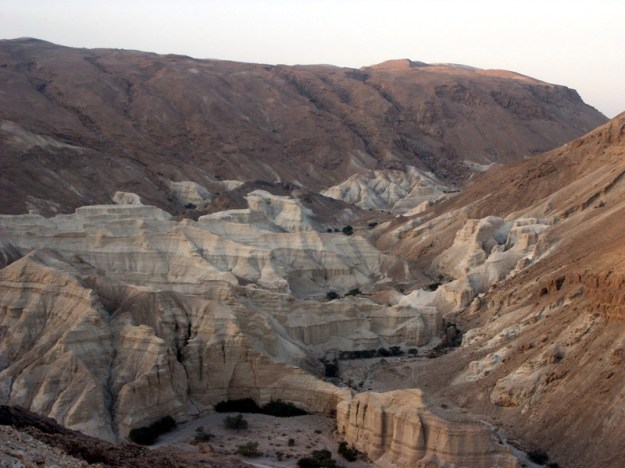
1 Those who trust in the LORD are like Mount Zion,
which cannot be moved but abides forever.
2 As the mountains surround Jerusalem,
so the LORD surrounds his people
from this time on and forevermore.
3 For the scepter of wickedness shall not rest
on the land allotted to the righteous,
so that the righteous might not stretch out
their hands to do wrong.
4 Do good, O LORD, to those who are good
and to those who are upright in their hearts.
5 But those who turn aside to their own crooked ways,
the Lord will lead away with evildoers.
Peace be upon Israel!
Bolded words have notes on translation below.
Underlying the wisdom of the psalter is the conviction that God is trustworthy. Those who trust in the LORD become like the one that they trust in the metaphors of this psalm. Jerusalem, the temple, and Mount Zion were viewed as being a place protected by God an idea echoed by Psalm 46: 5,” The LORD is in the midst of the city, it shall not be moved.” Zion as a focal point of hope was likely increased in the aftermath of Sennacherib’s unsuccessful siege of Jerusalem in the time of King Hezekiah/Uzziah (2 Kings 18–20). Mount Zion is in the psalm an immovable object and now those who trust in the LORD in the metaphor are also immovable. Yet they are not immovable because they stand on their own but instead, they are surrounded by the LORD’s presence perpetually just as Mount Zion is surrounded by even higher mountains particularly in the east. God is trustworthy and those who trust in God are able to stand fast because they are surrounded by God’s protection and strength.
The Hebrew particle ki which begins verse three indicates a strong contrast between the forces of wickedness and the righteous. I like Nancy deClaissé-Walford’s translation of this verse as “Surely the tribe of the wicked ones will not rest upon the inheritance of the righteous.” (Nancy deClaisse-Walford, 2014, p. 901) which captures several elements of the Hebrew. Some scholars have viewed verse three as indicating a post-exilic era since might indicate a time when ‘the wicked’ dominated the inheritance of ‘the righteous’ but I think the easier reading is to assume a pre-exilic time among a people who believe that God’s defense of the land and the city will never change. The land was a breathing space for the righteous to learn how to live free from the pressures of the wicked world around them. Jerusalem and Mount Zion became a safe space where the righteous were protected from the wicked.
The basic wisdom themes of the LORD watching over the life of the good and leading away the wicked and evildoers is a central theme of the psalms beginning with Psalm 1. The sovereignty, strength, and protection of God over the city was to create a space where righteousness could flourish. Yet the practice of life in Jerusalem in 1&2 Kings and 1&2 Chronicles tells a less rosy story of the city of peace which rested on Mount Zion. As I was thinking about this psalm I was reminded of the opening lines of a Paramore song from 2009 “Turn it Off.” “I scraped my knees while I was praying/ And found a demon in my safest haven.” The people of God have often dreamed of space of safety and well-being, and it is shattering when those places become corrupted. For the prophets that was their understanding of why Jerusalem did not endure on Mount Zion forever, and it is a warning for any place of God that allows the scepter or tribe of wickedness to have power over the righteous ones. The pilgrims of the Songs of Ascent have come seeking a safe space where they can live in righteousness surrounded and protected by the LORD. Those charged with leading places where people gather to worship bear a responsibility in partnership with God to make these places of peace where the righteous are protected. Israel has rarely known peace and as I write these words it is currently at war along with the United States against Iran. Yet I long, along with these pilgrims from long ago, for shalom (peace) for Israel, shalom for those who gather to seek the LORD in churches and synagogues and other holy spaces, and peace for the righteous and the upright in heart.
 Sign of the Rose