Monthly Archives: March 2025

Psalm 104 Praise the Great God of Creation

Sun over Lake Hawea in New Zealand By Michal Klajban – Own work, CC BY-SA 4.0, https://commons.wikimedia.org/w/index.php?curid=78855569

Psalm 104

 1Bless the LORD, O my soul. O LORD my God, you are very great. You are clothed with honor and majesty,
 2wrapped in light as with a garment. You stretch out the heavens like a tent,
 3you set the beams of your chambers on the waters, you make the clouds your chariot, you ride on the wings of the wind,
 4you make the winds your messengers, fire and flame your ministers.
 5You set the earth on its foundations, so that it shall never be shaken.
 6You cover it with the deep as with a garment; the waters stood above the mountains.
 7At your rebuke they flee; at the sound of your thunder they take to flight.
 8They rose up to the mountains, ran down to the valleys to the place that you appointed for them.
 9You set a boundary that they may not pass, so that they might not again cover the earth.
 10You make springs gush forth in the valleys; they flow between the hills,
 11giving drink to every wild animal; the wild asses quench their thirst.
 12By the streams the birds of the air have their habitation; they sing among the branches.
 13From your lofty abode you water the mountains; the earth is satisfied with the fruit of your work.
 14You cause the grass to grow for the cattle, and plants for people to use, to bring forth food from the earth,
 15and wine to gladden the human heart, oil to make the face shine, and bread to strengthen the human heart.
 16The trees of the LORD are watered abundantly, the cedars of Lebanon that he planted.
 17In them the birds build their nests; the stork has its home in the fir trees.
 18The high mountains are for the wild goats; the rocks are a refuge for the coneys.
 19You have made the moon to mark the seasons; the sun knows its time for setting.
 20You make darkness, and it is night, when all the animals of the forest come creeping out.
 21The young lions roar for their prey, seeking their food from God.
 22When the sun rises, they withdraw and lie down in their dens.
 23People go out to their work and to their labor until the evening.
 24O LORD, how manifold are your works! In wisdom you have made them all; the earth is full of your creatures.
 25Yonder is the sea, great and wide, creeping things innumerable are there, living things both small and great.
 26There go the ships, and Leviathan that you formed to sport in it.
 27These all look to you to give them their food in due season;
 28when you give to them, they gather it up; when you open your hand, they are filled with good things.
 29When you hide your face, they are dismayed; when you take away their breath, they die
 and return to their dust.
 30When you send forth your spirit, they are created; and you renew the face of the ground.
 31May the glory of the LORD endure forever; may the LORD rejoice in his works —
 32who looks on the earth and it trembles, who touches the mountains and they smoke.
 33I will sing to the LORD as long as I live; I will sing praise to my God while I have being.
 34May my meditation be pleasing to him, for I rejoice in the LORD.
 35Let sinners be consumed from the earth, and let the wicked be no more. Bless the LORD, O my soul. Praise the LORD!

This psalm and its predecessor are linked by their common opening and closing, “Bless the LORD, O my soul (nephesh).”  The pairing of these psalms reminds me of a table prayer that I taught my children as they were growing up, “God is great, God is good, and we thank God for our food.”  As Rolf A. Jacobson can state,

Whereas the central theological witness of Psalm 103 is that God is good (that is, the Lord is a God of hesed), the driving witness of Psalm 104 is that God is great. (Nancy deClaisse-Walford, 2014, p. 774)

This psalm looks in doxological wonder at the beauty, majesty, and order of God’s creation and exuberantly pours out praise at the greatness of the God who created the heavens and the earth. Like earlier psalms that marveled in the intricate connections and scale of creation, the psalmist joins their voice as a humble offering amidst the chorus of creation.

When modern people talk of creation our typical mode of thought is scientific and explanatory. The debate between creationists who try to limit God’s creation to the seven days of Genesis 1 and evolutionists arguing for a natural evolution of the universe are both framed by the language of modernity, a language which would be foreign to the scriptures. The biblical way of approaching the creation is the language of poetry and praise, wonder and curiosity. The entire direction of both the biblical narratives of creation in Genesis 1-2 and the places where the bible poetically wonders at the creation is oriented on giving praise, honor, glory, and majesty to the God of creation. This poem shares the characteristic joyfulness of the faithful ones throughout the scriptures reflecting on God’s own joy at the good creation.

Both Psalm 104 and the Genesis narratives utilize and subvert the mythological language found in the creation myths throughout the Middle East. While the Lord’s chambers are established upon the waters, an image of chaos throughout the Middle Eastern mythologies, both Genesis and the Psalms have the LORD bringing order out of chaos in a non-violent manner. Light and heavens, waters and wind, fires and flames, clouds and earth all become ordered to form the dominion of God and all the elements are brought together to build and serve the order of God. The waters rise up like a garment and though they can cover the mountains they flee at God’s rebuke and are bound and contained. The chaotic waters that threatened to flood the earth become the lifegiving seas and waters which provide for the plants of the earth and the animals of the field.

The psalmist delight’s in “God’s superabundant liberality”[1] and imagines God looking with delight upon the majestic creation. The lens of the psalmist begins his reflection on the works[2] of God’s hands with agricultural images that would likely be closest to their daily experience. God causes grass to grow for cattle, and plants that people harvest that bring forth the food that people eat. God is great and God is good, and they thank God for the food that God provides. God provide for the necessities of life but also for the joyous things: wine to gladden the human heart, oil for the human face, and bread to strengthen the heart.[3] Yet, the reflection on the works of God do not end with the immediate benefits for human society. God provides for the trees and the birds that live in them, wild goats and rabbits. There is a time for everything, daytime and nighttime for humanity and the creatures of the forest, days marked by the sun and seasons marked by the moon. The lion, the representative great beast of the forest, humanity works in the city and fields, and Leviathan the great beast of the sea all joins in the noise of creation calling out to God. Leviathan, the great chaos monster that was a threat to the gods in other societies, is now merely a plaything of the LORD. The great lion of the forest and the dragon of the sea have been tamed by the creating LORD upon whom both depend.  Lion, humanity, and Leviathan all know that God is great, and God is good, and it is the LORD who they thank for the food that God provides in due season.

Yet, the creation is dependent upon God’s continual attention and sustainment. Hebrew thought has no conception of the modern image of a god who created the universe as a clockmaker creates a clock, winds it up and then departs. The creation remains dependent upon God’s face being turned towards it and God’s breath[4] residing within and animating the creature. Humanity and all creation are completely dependent upon the continued provision of the LORD which animates the creatures and renews the face of the ground. The face of the ground looks up in adoration at the face of the LORD which provides for it. The earth trembles at the attention of the LORD and the touch of God’s finger upon the mountain causes them to smoke.

The psalmist sings his song amid the majesty of creation as an offering to the LORD. The penultimate line where the psalmist asks for “sinners to be consumed from the earth, and let the wicked be not more” may seem like a discordant note to end the psalm with, but within the ordered world of creation and God’s justice and righteousness there is no space for those who undermine the order of creation. Hebrew wisdom does separate good from evil, righteous from sinners, wise from foolish, and the faithful from the wicked. Yet, the LORD is both good and great, providing life, food, and joy for all of creation, and the psalmists humble meditation tries to with their humble offering of praise to bring a little joy to the creator. Their whole life[5] is involved with blessing and praising the good and great God of creation.

Cecil Alexander’s joyous song “All Things Bright and Beautiful” echoes the emotion and orientation of this psalm:

All things bright and beautiful, all creatures great and small, all things wise and wonderful, the Lord God made them all.

And in the final verse of this song, after reflecting on creation from the smallness of flowers to the majesty of the mountains, Cecil Alexander’s words come back to the human standing amid the wonders of God’s works:

God gave us eyes to see them, and lips that we might tell how great is God Almighty, who has made all things well.

Or in the words of the psalmist, Bless the LORD, O my soul (nephesh). Praise the LORD. May our eyes, lips, and entire being continually live in wonder at the greatness of the creation that God’s hands formed, at the faithfulness of God continuing to look upon the face of the earth and sending forth the ruach (wind, spirit, breath) which continues to animate and sustain the creation and to respond in praise.


[1] John Calvin’s term. (Bellinger, 2014, p. 446)

[2] Works, Hebrew ‘asa, is an important concept in the poem which is sometimes translated make (s)/made (v. 4, 19, 24b) and other times as works (v. 13, 31). (NIB VI: 1096)

[3] Worth noting that the heart in Hebrew is not the instrument of emotion but of will and decision.

[4] This is the Hebrew ruach which can also mean spirit or wind. All creation in both Genesis 1 and Psalm 104 is dependent upon the ruach which originates in God. English translates ruach as breath and spirit in successive verses obscuring this connection.

[5] Hebrew nephesh is not simple the Greek concept of soul but encompasses all of life.

Psalm 103 A Meditation on the Steadfast Love of God

A Frosty Morning By USFWS Mountain-Prairie – A Frosty Morning, Public Domain, https://commons.wikimedia.org/w/index.php?curid=110781726

Psalm 103

Of David.
 1Bless the LORD, O my soul, and all that is within me, bless his holy name.
 2Bless the LORD, O my soul, and do not forget all his benefits —
 3who forgives all your iniquity, who heals all your diseases,
 4who redeems your life from the Pit, who crowns you with steadfast love and mercy,
 5who satisfies you with good as long as you live so that your youth is renewed like the eagle’s.
 6The LORD works vindication and justice for all who are oppressed.
 7He made known his ways to Moses, his acts to the people of Israel.
 8The LORD is merciful and gracious, slow to anger and abounding in steadfast love.
 9He will not always accuse, nor will he keep his anger forever.
 10He does not deal with us according to our sins, nor repay us according to our iniquities.
 11For as the heavens are high above the earth, so great is his steadfast love toward those who fear him;
 12as far as the east is from the west, so far he removes our transgressions from us.
 13As a father has compassion for his children, so the LORD has compassion for those who fear him.
 14For he knows how we were made; he remembers that we are dust.
 15As for mortals, their days are like grass; they flourish like a flower of the field;
 16for the wind passes over it, and it is gone, and its place knows it no more.
 17But the steadfast love of the LORD is from everlasting to everlasting on those who fear him, and his righteousness to children’s children,
 18to those who keep his covenant and remember to do his commandments.
 19The LORD has established his throne in the heavens, and his kingdom rules over all.
 20Bless the LORD, O you his angels, you mighty ones who do his bidding, obedient to his spoken word.
 21Bless the LORD, all his hosts, his ministers that do his will.
 22Bless the LORD, all his works, in all places of his dominion. Bless the LORD, O my soul.

This poem of blessing and praise attempts to capture the fulness of God’s steadfast love and compassion from the experience of the individual, the community of the faithful, and all of creation. This psalm is not an acrostic[1] but like an acrostic poem it is twenty-two lines long and it is likely that the author is using form to denote a whole or complete treatment of the steadfast love and compassion of God. In twenty-two lines the poet covers a remarkable breath of issues. Rolf A. Jacobson can state,

Psalm 103 is a wide-reaching hymn of praise that reaches out and touches most of the great theological issues of life and faith—sin and forgiveness, sickness and health, oppression and vindication, God’s election of Israel and the gift of the law, God’s transcendence and God’s mercy, human mortality and divine immortality, and the reign of God. (Nancy deClaisse-Walford, 2014, p. 759)

This psalmist joins its voice with the hosts of heaven and the works of God’s creation in lifting their humble blessing on the God of steadfast love and compassion.

This is a psalm where a little knowledge of Hebrew can bring a lot of richness to one’s reading because translations restrict the meaning of some key Hebrew ideas. “Bless,” Hebrew barak, originally meant to bow in homage to one’s king or lord and it does not have the connotation of providing a gift or benefit that the English bless/blessing has. This poem or praise or worship is framed by “bless” and the imperative to “bless” begins with the psalmist and then extends to the heavens and earth joined by the psalmist’s “soul.” “Soul” in Hebrew thought, Hebrew nephesh, is not the Greek idea of a soul which is different from the body but instead is the essence of life and the totality of oneself. It is not only the spiritual Greek “soul” which is to praise God but the center of one’s life and everything else that is a part of the psalmist joined in the action of praising God’s name.

Martin Luther’s contemporary Philip Melanchthon once stated memorably in his Loci Communes, “that to know Christ is to know his benefits.” (Melanchthon, 2014, p. 24) Now this psalm attributed to David[2] reflects on several of the primary characteristics of God and their benefits for the psalmist and all of creation. The thirteen attributes articulated in Exodus 34: 6-7 provide the language for much of reflection on God’s characteristics throughout the scriptures. In the aftermath of the golden calf, God has chosen not to destroy the people of Israel and declares to Moses:

The LORD passed before him, and proclaimed,

“The LORD, the LORD,

a God merciful and gracious,

slow to anger,

and abounding in steadfast love and faithfulness,

7 keeping steadfast love for the thousandth generation,

 forgiving iniquity and transgression and sin,

yet by no means clearing the guilty,

but visiting the iniquity of the parents upon the children

and the children’s children,

to the third and the fourth generation.”

The psalmist begins with the LORD’s action of forgiving iniquity which is linked to the healing of diseases. The word for diseases can refer to illness, weakness, or pains that come from hunger, famine, disease, or old age (Nancy deClaisse-Walford, 2014, p. 763) and the cause of  ‘disease’ is often a punishment for iniquity in Hebrew thought.[3] Yet, it is the forgiveness of the LORD which brings about the rescue from death for this poet. The rescue from the Pit may be a time when their life was at death’s door or it may be a metaphor for God’s rescue from a time of urgency, but regardless the psalmist has benefited from the forgiving nature of the LORD for the LORD’s servant and the poet understands the benefits they have received from their God.

Instead of crowning the psalmist with gold or silver they are crowned with steadfast love and mercy. Steadfast love and mercy are traits associated with God and God has reached into the divine character to place these traits upon the servant of the LORD. Steadfast love, Hebrew hesed, is the central feature attributed to God and hesed is the root of the New Testament concept of the grace of God. Hesed is a relational love and within this psalm God’s hesed is for those who fear him. Hebrew thought is covenantal in nature and the steadfast love of God is tied to the fear, honor, and respect of God’s people. Transgressions can be removed but the mercy of God is only known in relationship with the LORD. Frequently in the psalms hesed is paired with faithfulness, but in this psalm and other psalms relating to human sin and divine anger resolved by faithfulness it may instead be paired with compassion/mercy. [4](Mays, 1994, p. 328) The psalmist trusts that God’s hesed and mercy/compassion will prevail over any anger at the transgressions of either the psalmist or the people.

The dimensions of the “steadfast love”/hesed of God and the forgiveness of God are measured by the vastness of the heavens. The vertical distance between the heavens and the earth are used metaphorically to speak of the unmeasurable hesed of God. Yet, although English translations obscure this, the length of the heavens is used to envision God’s forgiveness of transgressions. The Hebrew behind “as far as the east is from the west,” is literally rendered as distant as the sunrise (rising) is from the sunset (setting). The compassion/mercy of the LORD is compared to the compassion of a father for their child. God’s steadfast love and forgiveness are as vast as can be comprehended and yet God’s compassion is as tender and intimate as what one hopes to experience within the family.

The immeasurability of the steadfast love of God and the forgiveness of God is contrasted by the impermanence of God’s human servants. The psalm picks up the play on words of Genesis 3:18 “you are dust, and to dust you shall return.”[5] The impermanence of humanity is poetically rendered by the metaphors of dust and grass, flowers and wind. In contrast to the impermanence of humanity is the permanence of the hesed of God which lasts from everlasting to everlasting to those who live in faithfulness to the covenant and obedience to the commandments. The steadfast love of God in Hebrew is a relational concept and the gracious, eternal, and forgiving love of God is tied to the fear, respect, obedience, and faithfulness of the servant.

The psalm ends where it begins, in ‘blessing’ the LORD. The blessings begin with the angels and the hosts and ministers of the LORD and then extends to all the works of God’s hands (the creation of God) and finally resides in the voice of this poet praising God in harmony with all creation. The psalmist has seen the way God has crowned their life with the attributes of God, and they have come to celebrate the benefits of living in a relational covenant of steadfast love and compassion/mercy with their God. Martin Luther would later echo the sentiment of the psalmist in reflecting on God’s act of creation when he stated, “For all this I owe it to God to thank and praise, serve and obey him. This is most certainly true.” (Luther, 1978, p. 25) Like the psalmist we can reflect upon the benefits of this life lived in blessing and praise of God, we can marvel at the immeasurable depth of God’s steadfast love and forgiveness, and we can strive to live in faithful obedience to the God whose love and compassion shape our lives.


[1] In an acrostic poem each line begins with a successive letter in the alphabet. In Hebrew there are twenty-two letters and a multiple of twenty-two is often a clue that a psalm or other Hebrew poetry is acrostic. Acrostic poetry tends to denote dealing with a topic in a complete manner.

[2] Some scholars attribute this psalm to a post-monarchical period and point to the reference to Moses instead of a king as evidence of this reaching back to a pre-Davidic period for a foundation for their faith. Although this historical reconstruction is possible, it is also possible that a psalm written by David, particularly before he is king, would refer back to the last common leader of the people of Israel and the creator of the law.

[3] Although this is not absolute. Within Deuteronomic thought suffering and illness is linked to iniquity, but there are significant counter voices like Job which challenge this linkage.

[4] Psalm 51:1; 77: 7-10.

[5] The name Adam in Genesis 3 is taken from the Hebrew word for soil/ground adamah. In both the psalm and Genesis 3 the word for dust is aphar, but even though the Hebrew utilizes two words in the wordplay the connection between the two words is clear in Genesis 3.

Review of the Sound and the Fury by William Faulkner (1929)

Time Magazine Top 100 Novels

Book 85: The Sound and the Fury by William Faulkner (1929)

This is a series of reflections reading through Time Magazine’s top 100 novels as selected by Lev Grossman and Richard Lacayo published since 1923 (when Time magazine was founded). For me this is an attempt to broaden my exposure to authors I may not encounter otherwise, especially as a person who was not a liberal arts major in college. Time’s list is alphabetical, so I decided to read through in a random order, and I plan to write a short reflection on each novel.

The Sound and the Fury is the second William Faulkner book I have read and reviewed, and it was even less enjoyable than A Light in August. Both books tell ugly stories using ugly language with occasional moments of poetic prose. I listened to an audiobook of this which was even more disturbing than reading this book full of unlikeable characters continually arguing with one another. Especially in the initial chapter when you are hearing through the ears of ‘Benjy’ and it switches back and forth from his memories as a young child to his confusion as a thirty-three-year-old man with childlike emotions, I found myself wondering what I was listening to. The novel is historically situated in a time where the views on race, sex, religion, and society are very different from our current era. In Faulkner’s other work I reviewed there were times I could fall into Faulkner’s poetic use of prose, but in the Sound and the Fury the only scene where the transcendent language overcame the harsh, ugly, argumentative language was in the final chapter during the Easter service. The story is tragic as the family at the heart of the story disintegrates in its dysfunction, but I had a difficult time having any empathy for any of the Compson family.

If William Faulkner’s intent in the Sound and the Fury was to induce disgust, then he was successful. The language of the American South from the 1910s and 1920s is jarring to an educated ear a century later and I often found this ugly language resonating in my head long after I removed my headphones. This book made me viscerally angry, and I was sorely tempted to not finish it. Perhaps it, like Flannery O’Connor’s work, presents an uncomfortable mirror to the world of my grandparents whose prejudices echo in both spoken and unspoken ways in our own but there was none of the artistry of Flannery O’Connor. I am glad that there are no other works by William Faulkner on this list, because I have no interest in reading anything by him in the future. I have never been as happy to reach the conclusion of a book.

Psalm 102 The Song of One Suffering in Solitude

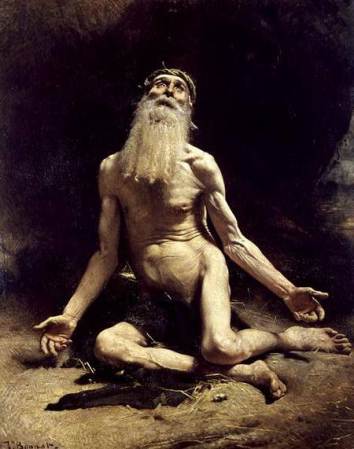
Job (oil on canvas) by Bonnat, Leon Joseph Florentin (1833-1922)

Psalm 102

A prayer of one afflicted, when faint and pleading before the LORD.
 1Hear my prayer, O LORD; let my cry come to you.
 2Do not hide your face from me in the day of my distress. Incline your ear to me; answer me speedily in the day when I call.
 3For my days pass away like smoke, and my bones burn like a furnace.
 4My heart is stricken and withered like grass; I am too wasted to eat my bread.
 5Because of my loud groaning my bones cling to my skin.
 6I am like an owl of the wilderness, like a little owl of the waste places.
 7I lie awake; I am like a lonely bird on the housetop.
 8All day long my enemies taunt me; those who deride me use my name for a curse.
 9For I eat ashes like bread, and mingle tears with my drink,
 10because of your indignation and anger; for you have lifted me up and thrown me aside.
 11My days are like an evening shadow; I wither away like grass.
 12But you, O LORD, are enthroned forever; your name endures to all generations.
 13You will rise up and have compassion on Zion, for it is time to favor it; the appointed time has come.
 14For your servants hold its stones dear, and have pity on its dust.
 15The nations will fear the name of the LORD, and all the kings of the earth your glory.
 16For the LORD will build up Zion; he will appear in his glory.
 17He will regard the prayer of the destitute, and will not despise their prayer.
 18Let this be recorded for a generation to come, so that a people yet unborn may praise the LORD:
 19that he looked down from his holy height, from heaven the LORD looked at the earth,
 20to hear the groans of the prisoners, to set free those who were doomed to die;
 21so that the name of the LORD may be declared in Zion, and his praise in Jerusalem,
 22when peoples gather together, and kingdoms, to worship the LORD.
 23He has broken my strength in midcourse; he has shortened my days.
 24“O my God,” I say, “do not take me away at the midpoint of my life, you whose years endure throughout all generations.”
 25Long ago you laid the foundation of the earth, and the heavens are the work of your hands.
 26They will perish, but you endure; they will all wear out like a garment. You change them like clothing, and they pass away;
 27but you are the same, and your years have no end.

 28The children of your servants shall live secure; their offspring shall be established in your presence.

Psalm 102 is described in its superscription as a prayer of one afflicted, when faint and pleading before the LORD. This type of description is unusual among the psalms. It doesn’t indicate an author to attribute the psalm to, nor does it give instructions for its performance or a reference to a scriptural story that the psalm comes from. This psalm of a suffering one who is alienated from their body, from society, and ultimately from God may have been intended as a psalm that any suffering individual could recite at times where their situation seemed hopeless, and God’s help seemed far away. Imagery of impermanence, loneliness, pain, and shame permeate the complaint of the psalm, but like many psalms of complaint there is a turn towards hope. The psalmist intuits that the answer, “to human finitude and mortality is divine infinitude and immortality.” (Nancy deClaisse-Walford, 2014, p. 754)

The opening language of the psalm resonates with appeals throughout the psalter as Rolf A. Jacobson notes:

The opening appeal to be heard employs language quite typical of these entreaties—hear my prayer, let my cry come unto you (39:12), do not hide your face (27:9; 143:7), turn your ear towards me (31:2; 71:2), make haste to answer me (69:17; 143:7) (Nancy deClaisse-Walford, 2014, p. 751)

Although Rolf Jacobson attributes this to intentionally creating a generic composition for use in the community, the use of familiar language may also reflect a person shaped in the communal worship which utilizes these psalms. The language of prayer and faith is shaped in the worshipping community which shaped the psalmist’s faith and life. Yet, now in a time when the author is alienated from their own physical body, from the community, and from God, they turn to the words that shaped their life when they were physically, socially, and religiously whole.

The psalm moves between personal complaints about their own health and isolation, “I complaints” in Westermann’s terminology, complaints about the actions of isolation and persecution by those in the psalmist’s society, “they complaints”, and complaints about the way that God is treating the psalmist, “you complaints.”[1] The personal complaints begin with an image of transience that reminds me of Ecclesiastes frequently used term hebel (vanity, emptiness). Hebel literally means smoke, mist, or vapor but is often used metaphorically to refer to the emptiness of life.[2] Now for the psalmist their days pass away like smoke and their bones burn like a furnace. Their life down to their very bones is going up in smoke while their heart withers like grass and they are too far gone to even eat the bread that could give them strength.  Their songs have turned to groans and their body now is transforming into a (barely) living skeleton. We don’t know if they were suffering from an illness, but they attribute their suffering to God’s judgment upon them. Their suffering is also done in isolation, they are like an unclean owl of the wastelands or a lonely bird on a roof. These lonely images of birds heighten the feeling of the psalm, for the sufferer is not only weak but they are abandoned.

The social complaints are also sharply worded as the psalmist’s unnamed name is synonymous with a curse among their enemies. Their personal weakness and isolation are viewed in the society as a curse from God, and enemies have taken advantage of this weakness. The only nourishment left for this abandoned one is the bread of ashes and the drink of tears.  Yet, behind both the physical pain and suffering and the social isolation is the LORD. We are never told of any sin that this poet has committed, but they view their suffering because of God’s anger and distance. In the words of the psalm God has cast the suffering one aside and yet hope resides in God repenting from God’s attitude towards the psalmist, turning the face and hearing with the ear and responding with grace and healing.

In contrast to the evanescent position of the psalmist is the strength and might of the LORD. The psalmist now joins his fate to the action of God to have compassion on Zion. It is possible that this psalm originates in the time of the exile where there is hope for the rebuilding of Zion and rescue the people from the destitute position as exiles in a foreign land. Yet, even without the context of the Babylonian exile, the turn to hope is based on the faithfulness of God for the people and a belief that God’s anger lasts only a moment, but God’s favor is for a lifetime.[3] The poet’s strength may have been broken in the middle of their life by God’s action, but if God wills it will be renewed. The heavens and the earth which seem so permanent to humanity are like a garment that can easily be changed by the powerful and permanent God. God will continue to endure and only in God can this suffering one hope to find a renewed physical, social, and religious life. The psalmist claims their familial bond to the LORD the God of Israel and now awaits the parental turning of their God to the children of God’s servants.


[1] Rolf A. Jacobson notes this helpful pattern citing Westermann, The Psalms (54-57). (Nancy deClaisse-Walford, 2014, p. 752)

[2] Psalm102 does not use the term hebel but the combination of words of impermanence create a similar resonance for me as Ecclesiastes.

[3] Psalm 30:5.

Psalm 101 A Leader Shaping a Community of Character

The Presentation of the Torah By Édouard Moyse – Own work Musée d’art et d’histoire du Judaïsme, CC BY-SA 4.0, https://commons.wikimedia.org/w/index.php?curid=41893002

Psalm 101

Of David. A Psalm.
 1I will sing of loyalty and of justice; to you, O LORD, I will sing.
 2I will study the way that is blameless. When shall I attain it? I will walk with integrity of heart within my house;
 3I will not set before my eyes anything that is base. I hate the work of those who fall away;
 it shall not cling to me.
 4Perverseness of heart shall be far from me; I will know nothing of evil.
 5One who secretly slanders a neighbor I will destroy. A haughty look and an arrogant heart
 I will not tolerate.
 6I will look with favor on the faithful in the land, so that they may live with me; whoever walks in the way that is blameless shall minister to me.
 7No one who practices deceit shall remain in my house; no one who utters lies shall continue in my presence.
 8Morning by morning I will destroy all the wicked in the land, cutting off all evildoers from the city of the LORD.

As modern readers we tend to read the psalms individualistically, and from that perspective this psalm can sound judgmental. “Do not judge, so that you may not be judged”[1] may resonate with many modern readers but if we read the psalm from this perspective, we fundamentally have missed the point of this psalm written for or by a ruler in a communal society. I am heavily influenced by Charles Taylor’s description of society prior to our disenchanted view of the world, and I think his description of the community or parish deploying the collective power of its prayers, worship, and faith for blessing and protection is instructive here. In Taylor’s words, “Villagers who hold out, or even denounce the common rites, put the efficacy of these rites in danger, and hence pose a menace to everyone.” (Taylor, 2007, p. 42) Especially after working through the prophet Ezekiel, it is clear that the Hebrew view of the world in relation to God expects a society of justice and a ruler who enforces the character of the world that God’s law articulates. The king in Jerusalem, and leaders throughout history have been responsible for checking the selfish impulses of those who have the power to exploit others. Allowing injustice to take root in their kingdom quickly corrupts not only the individual practicing the injustice but the entire society.

This is a psalm of loyalty (hesed)[2] and justice, two primary characteristics of God that are to be embodied in the community of the faithful. Throughout this psalm the ideas of being blameless and having integrity translate the Hebrew terms tam and tamim.[3] This psalm is a royal psalm, and so the one studying the way of blamelessness (tamim) likely points to the ideal of a king articulated in Deuteronomy 17:14-20. Yet, the king can acknowledge that their practice of these ideals of loyalty and justice and the way of blamelessness are still aspirational.

The leader aspires to walk with integrity of heart and to keep its opposite, perverseness in heart, far from them. The metaphor of walking (halak) is often used in Hebrew about the way one lives one’s life. Halakah is a term commonly used to talk about the law and one’s life is to be oriented around the practices outlined in the law of God. In addition, the heart in Hebrew thought is not the seat of emotion, but the seat of will and discernment. This leader’s life and will are set upon God’s way for the community and not on the way that will enrich themselves or allow them to accrue more power. This leader in following God is walking in God’s way, learning to set their heart on the things of integrity and justice, and their character is shaped by the God they serve.

The character of the leader shapes the character of the community. One of the critical acts of leading a community is setting boundaries that protect those under the leader’s authority. Those who slander a neighbor, who are haughty and arrogant and feel they are above the law, who practice deceit and utter lies undermine the ethos the leader is attempting to cultivate. The leader seeks the way of loyalty and justice, a blameless way that models the character of God, and the presence of those who follow the path of wickedness, deceit and injustice are a danger to the life of the community.

James Mays notes that Martin Luther called this psalm, “the mirror of a monarch” and relates the story of Ernest the Pious, Duke of Saxe-Gotha who would send an unfaithful minister a copy of the 101st Psalm when that official had done anything wrong. (Mays, 1994, pp. 321-322) A leader who models their leadership on the loyalty and justice of God, who strives to study the way that is blameless and walk in integrity of heart was unusual both in biblical times and in our own time. Yet, it is path that the way of God expects for those entrusted with power in family, land, city, congregation, or the world. The things we invest in with both our resources and our actions show where our heart is located. As Jesus would state in the Sermon on the Mount, “where your treasure is, there your heart will be also.”[4] The life of faith is not merely a quest for individualistic righteousness, but to shape a community of loyalty and justice that seek the way of blamelessness and walk in integrity. Both Hebrew and Christian communities have often fallen short of the vision of this psalm, but leaders can call the community together to this of life shaped by the character of the God we attempt to follow. Communities that are in the heart shaping business of studying the way that is blameless and modeling walking with integrity.


[1] Matthew 7:1.

[2] Hesed is one of those rich Hebrew concepts that loses richness in translation. It is often translated as steadfast love in English. I am partial to ‘covenantal faithfulness’ as a translation of this term but it almost always points to the connection between God and God’s people. A Christian/New Testament term that is heavily related to God’s hesed is grace.

[3] See my discussion on Perfection and Blamelessness in the Bible.

[4] Matthew 6:21.

Review of Lonesome Dove by Larry McMurtry

Five Star Book Review

Larry McMurtry. Lonesome Dove.

For me a five-star book is something that either I want to read again or something that is so profound it makes an immediate impact. There are lots of ways that books can be compelling: a unique idea, an interesting set of characters, a complex plot, an artistic use of the English language and more. Reading is also a subjective experience, so what appeals to me as a reader may be very different for you. I read a lot for both pleasure and work, but these short reviews are a way for me to show my appreciation for the work and the craft of the author of the reviewed work.

Lonesome Dove is an invitation back to a journey through a time when the American West in transition with a memorable cast of characters. Augustus “Gus” McCrae and Woodrow F. Call are two retired Texas Rangers living in Lonesome Dove on the Texas border with Mexico. One of their former rangers comes riding into town with a description of Montana, and that sets the journey in motion through the central United States driving a herd to establish the first ranch in Montana. Through the drive and the struggles they encounter, I grew to love this group of men. Larry McMurtry takes you back to a different time and makes you feel as if you are a part of the drive observing the conversations between Gus, Call, Deets, Newt, Jake and more. This is a long book, but I wasn’t ready for the journey to end either in Montana or when the book ends.

I’ve been doing a lot of reading on the American West from a historical perspective, and this journey put a narrative to the time after the Civil War and before the railroads crossed the nation. The drive north may be the unifying plotline, but the characters are what really make this a delightful journey. Gus is the philosopher and comedian who continually needs to talk, there is the driven but quiet Call, to the young Newt wondering about his place in the world and wondering who his father is. It is a story of tragedy and perseverance, of unrequited love and the search for meaning in a wild and dangerous land. I had seen the miniseries years ago, and although the actors do a great job in that series it is impossible even in a long series to capture the majesty of this journey on the written page.