 Time Magazine Top 100 Novels
Book 85: The Sound and the Fury by William Faulkner (1929)
This is a series of reflections reading through Time Magazine’s top 100 novels as selected by Lev Grossman and Richard Lacayo published since 1923 (when Time magazine was founded). For me this is an attempt to broaden my exposure to authors I may not encounter otherwise, especially as a person who was not a liberal arts major in college. Time’s list is alphabetical, so I decided to read through in a random order, and I plan to write a short reflection on each novel.
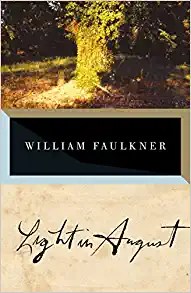
The Sound and the Fury is the second William Faulkner book I have read and reviewed, and it was even less enjoyable than A Light in August. Both books tell ugly stories using ugly language with occasional moments of poetic prose. I listened to an audiobook of this which was even more disturbing than reading this book full of unlikeable characters continually arguing with one another. Especially in the initial chapter when you are hearing through the ears of ‘Benjy’ and it switches back and forth from his memories as a young child to his confusion as a thirty-three-year-old man with childlike emotions, I found myself wondering what I was listening to. The novel is historically situated in a time where the views on race, sex, religion, and society are very different from our current era. In Faulkner’s other work I reviewed there were times I could fall into Faulkner’s poetic use of prose, but in the Sound and the Fury the only scene where the transcendent language overcame the harsh, ugly, argumentative language was in the final chapter during the Easter service. The story is tragic as the family at the heart of the story disintegrates in its dysfunction, but I had a difficult time having any empathy for any of the Compson family.
If William Faulkner’s intent in the Sound and the Fury was to induce disgust, then he was successful. The language of the American South from the 1910s and 1920s is jarring to an educated ear a century later and I often found this ugly language resonating in my head long after I removed my headphones. This book made me viscerally angry, and I was sorely tempted to not finish it. Perhaps it, like Flannery O’Connor’s work, presents an uncomfortable mirror to the world of my grandparents whose prejudices echo in both spoken and unspoken ways in our own but there was none of the artistry of Flannery O’Connor. I am glad that there are no other works by William Faulkner on this list, because I have no interest in reading anything by him in the future. I have never been as happy to reach the conclusion of a book.
 Time Magazine Top 100 Novels
 Sign of the Rose