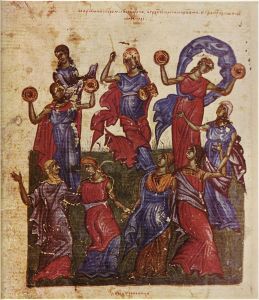
Psalm 117
1 Praise the LORD, all you nations! Extol him, all you peoples!
2 For great is his steadfast love toward us, and the faithfulness of the LORD endures forever. Praise the LORD!
This is the shortest psalm in the psalter, but as James L. Mays states, “it thinks on a grand scale.” (Mays, 1994, p. 372) The people of Israel were never a world empire, nor were they a people who aggressively attempted to spread their beliefs and worship practices to the world around them. Yet, they do believe that the LORD is the God not only of Israel. The LORD created the heavens and the earth and all the peoples of the world. Just as the psalmist has encouraged the people gathered to worship to join in the hymn of all creation, now all the peoples of the nations are invited to participate in the end for which they were created: the praise of the LORD.
The motivation for the nations and peoples turning to the LORD in praise in this short psalm is not the acts of God but the character of God. The steadfast love (hesed) and faithfulness (‘emeth) of God are a frequently used pair of attributes that are rooted in God’s self-description in Exodus 34: 6-7. These attributes of the LORD are great[1] and powerful enough is the psalmist’s imagination to evoke a scene where all the nations of the earth join in proclaiming Hallelujah! (NRSV Praise the LORD)[2]
The apostle Paul quotes Psalm 117:1 in Romans 15:11 with several other references to the nations (Gentiles) praising God. This psalm helped shape his vision of a world where every knee could bow and every tongue confess that Jesus Christ is Lord to the glory of God the Father. (Philippians 2:10-11) Yet before the evangelistic movement of the early Christians into the nations there exists within the Jewish imagination a vision of a world where the nations join with them in their praise of God. Ultimately the telos[3] or end/goal of all humanity is the praise of God and in this psalm, we get to envision the world where all the nations are engaged in their proper work of praise.
[1] Brueggeman and Bellinger note that the term “great” in Hebrew is better translated might or strength with a military connotation. The term has the meaning of the strength to work one’s will. (Bellinger, 2014, p. 503)
[2] Hallelujah is the Hebrew word for praise (hallel) and shortened form of the name of God (yah) joined together.
[3] I’ve written about telos when working through the Gospel of Matthew in Perfection and Blamelessness in the Bible. I like the way Greg Lukianoff and Jonathan Haidt capture the idea of telos in The Coddling of the American Mind. “Aristotle often evaluated a thing with respect to its “telos”—its purpose, end, or goal. The telos of a knife is to cut. A knife that does not cut well is not a good knife.” (Haidt, 2018, p. 253)
 Sign of the Rose