Tag Archives: Shamgar

Judges 5 The Song of Deborah and Barak

Luca Giordano, The Defeat of Sisera (1692)

Judges 5

1 Then Deborah and Barak son of Abinoam sang on that day, saying:
2 “When locks are long in Israel, when the people offer themselves willingly — bless  the LORD!
3 “Hear, O kings; give ear, O princes; to the LORD I will sing, I will make melody to the LORD, the God of Israel.
4 “LORD, when you went out from Seir, when you marched from the region of Edom, the earth trembled, and the heavens poured, the clouds indeed poured water.
5 The mountains quaked before the LORD, the One of Sinai, before the LORD, the God of Israel.
6 “In the days of Shamgar son of Anath, in the days of Jael, caravans ceased and travelers kept to the byways.
7 The peasantry prospered in Israel, they grew fat on plunder, because you arose, Deborah, arose as a mother in Israel.
8 When new gods were chosen, then war was in the gates. Was shield or spear to be seen among forty thousand in Israel?
9 My heart goes out to the commanders of Israel who offered themselves willingly among the people. Bless the LORD.
10 “Tell of it, you who ride on white donkeys, you who sit on rich carpets  and you who walk by the way.
11 To the sound of musicians at the watering places, there they repeat the triumphs of the LORD, the triumphs of his peasantry in Israel. “Then down to the gates marched the people of the LORD.
12 “Awake, awake, Deborah! Awake, awake, utter a song! Arise, Barak, lead away your captives, O son of Abinoam.
13 Then down marched the remnant of the noble; the people of the LORD marched down for him against the mighty.
14 From Ephraim they set out into the valley, following you, Benjamin, with your kin; from Machir marched down the commanders, and from Zebulun those who bear the marshal’s staff;
15 the chiefs of Issachar came with Deborah, and Issachar faithful to Barak; into the valley they rushed out at his heels. Among the clans of Reuben there were great searchings of heart.
16 Why did you tarry among the sheepfolds, to hear the piping for the flocks? Among the clans of Reuben there were great searchings of heart.
17 Gilead stayed beyond the Jordan; and Dan, why did he abide with the ships? Asher sat still at the coast of the sea, settling down by his landings.
18 Zebulun is a people that scorned death; Naphtali too, on the heights of the field.
19 “The kings came, they fought; then fought the kings of Canaan, at Taanach, by the waters of Megiddo; they got no spoils of silver.
20 The stars fought from heaven, from their courses they fought against Sisera.
21 The torrent Kishon swept them away, the onrushing torrent, the torrent Kishon. March on, my soul, with might!
22 “Then loud beat the horses’ hoofs with the galloping, galloping of his steeds.
23 “Curse Meroz, says the angel of the LORD, curse bitterly its inhabitants, because they did not come to the help of the LORD, to the help of the LORD against the mighty.
24 “Most blessed of women be Jael, the wife of Heber the Kenite, of tent-dwelling women most blessed.
25 He asked water and she gave him milk, she brought him curds in a lordly bowl.
26 She put her hand to the tent peg and her right hand to the workmen’s mallet; she struck Sisera a blow, she crushed his head, she shattered and pierced his temple.
27 He sank, he fell, he lay still at her feet; at her feet he sank, he fell; where he sank, there he fell dead.
28 “Out of the window she peered, the mother of Sisera gazed  through the lattice: ‘Why is his chariot so long in coming? Why tarry the hoofbeats of his chariots?’
29 Her wisest ladies make answer, indeed, she answers the question herself:
30 ‘Are they not finding and dividing the spoil? — A girl or two for every man; spoil of dyed stuffs for Sisera, spoil of dyed stuffs embroidered, two pieces of dyed work embroidered for my neck as spoil?’
31 “So perish all your enemies, O LORD! But may your friends be like the sun as it rises in its might.” And the land had rest forty years.

The song of Deborah and Barak is generally considered one of the oldest pieces of the Hebrew Scriptures, along with the song of Moses, due to its archaic Hebrew vocabulary and syntax, and like the song of Moses in Deuteronomy 32 it shares a distinctive form in the way the Hebrew text is presented. The song is assumed to be older than the narrative version of the story which formed the preceding chapter, and it gives several unique insights into the narrative. Yet, the song assumes a knowledge of the background narrative that it refers to and it was probably a way in which the narrative of Deborah, Barak, and Jael was not forgotten in the passage of time. It also highlights the contrast between the weakness of Israel and the powerful nature of the God of Israel.

The opening line, “When locks were long in Israel” is obscure and difficult to translate with any confidence, but the overall direction of the verse is clear referring to a time when the people were willing to offer themselves to the guidance of the God of Israel. The ‘locks being long’ may refer to a time when holy warriors, like the Nazirites (Numbers 6, Judges 13), didn’t cut their hair and dedicated themselves to God’s service. The NIV renders this this text as ‘when the princes of Israel take the lead’ but most other translations go in the same direction as the NRSV and this seems to be the most likely approach even if its full meaning has been lost to us now. Yet, the primary focus is not the people of Israel, it is the God of Israel whose power thy sing about. It is striking that the initial imagery of the God of Israel is very similar to the imagery that the Canaanites used for their deities, but most people in the ancient world would have assumed that their gods worked through signs like earthquakes and storms. Yet, the initial appearance of the God of Israel being seen in the earth quaking, the storm dumping water, and the mountains quaking prepare us for the action of the LORD in verses 20-21.

Beginning in verse six we have a poetic illustration of the plight of Israel before the coming of Deborah and Barak to rally them and call them back to following the LORD. The mention of Shamgar (Judges 3:31) and Jael (4:17-22) points back to a time when the people of Israel are powerless in the face of a resurgent Canaanite threat. Shamgar may have been able to drive off a Philistine force, but the overall condition was desperate. Normal life was no longer possible. A leaderless Israel could not trade and travel could not be done safely on the main roads. The people of Israel are unable to defend themselves and even once Deborah arrives to be a ‘mother of Israel’ there are no weapons among the people: no spear or shield to defend themselves with. The poem attributes this lack of strength to the Israelites adopting new gods to worship, and probably the practice of adopting the practices and ways of the people already in the land. Before Deborah, Israel has forgotten who it is and how to protect themselves in a dangerous world where their oppressors have an organized and well-equipped fighting force.

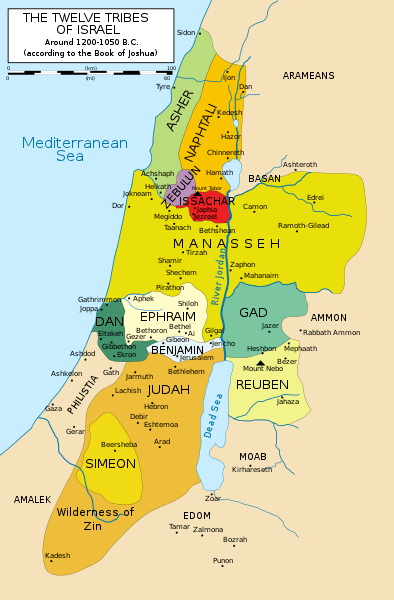
Deborah the ‘mother of Israel’ probably begins the process of helping the tribes in her region begin to reclaim their identity and distinctive way of life. As mentioned in the previous chapter, as a woman she may have had more freedom to act without the Canaanites viewing her as a threat. Whatever shape her work among Israel took, her presence sets the foundation for the rallying of the tribes that do participate in the battle of Wadi Kishon under Barak. Yet, the poem also gives us an indication that Israeli is not unified: Reuben, Dan, Asher, and the half tribe of Manasseh and Gad (designated by the region they live in, Gilead) all fail to answer the rallying cry of Deborah and Barak even though they seem to be aware of it. Ephraim, Benjamin, Issachar, Zebulun, and Naphtali all in the poem offer forces. The narrative in chapter four indicates Zebulun and Naphtali being the primary contributors which is interesting if Deborah is from Issachar. The only forces that Deborah and Barak are able to rally consists of rag tag, poorly equipped force from roughly half of the summoned tribes. Israel on its own is poorly equipped to deal with the Canaanite forces that have made trade and normal life an impossibility for the previous eighteen years.

The weakness of the Israelites in the face of the kings of Canaan has been poetically illustrated. The title ‘kings of the Canaanites’ may harken back to the time of Joshua since the narrative version only points to King Jabin, but in contrast to an ununified Israel a consolidated Canaanite force approaches this rag tag resistance with the expectation of the annihilation and plundering of their enemy. Instead the LORD deploys the stars against Canaan. In the ancient world the stars were often viewed as deities or forces that controlled the weather and the unfolding of event, but now they are a part of the heavenly army of the LORD the God of Israel who are deployed against the chariots of Canaan bringing a torrential downpour which transforms the iron chariots from an insurmountable advantage into a liability for the Canaanites. The retreat of the horses of the Canaanites is captured by the Hebrew for ‘galloping, galloping’ daharot, daharot. Yet, instead of continuing the narration of the surprising scattering of the Canaanites the poem shifts to a curse of Meroz, presumably an Israelite clan or village that did not help pursue and cut off the Canaanite retreat and may have even aided the scattered forces.

Yet in contrast to the cursing of Meroz is the blessing of Jael. Where a group of Israelites failed to provide support, a non-Israelite woman brings down the commander of the Canaanites. The poem may give us a possible hint to Jael’s actions against Sisera when it refers to him ‘laying dead at her feet.’ The Hebrew here, ben rahleyha, also means ‘between her legs’ and is used elsewhere with sexual overtones (ex. Ezekiel 16:25) (NIB II:788) and it is possible that after offering shelter Sisera she is raped by the general and responds by killing him in his sleep. This is conjecture based on the slightest of hints in the poem and is not something that can be stated with any certainty, but it would give a motive for Jael to break the expectations of hospitality and the peace her husband Hobab had established with the Canaanites.

The final stanza of the poem imagines the mother of Sisera waiting for the return of her son. In imagining the cause of his delay this woman imagines that her son is delayed by his actions against other women. The Hebrew here is more explicit than the English translations, women are reduced to wombs so instead of a woman or two for each man it is merely women as sexual objects. That this justification is placed in the mouth of a woman indicates a culture that sees the objectification of women as sexual objects to be conquered by men as normal. This is not the world the Israelites were supposed to embody but it may have been the violent world they often inhabited. The ancient world was not a safe place for women, but here in this poem we have the strong contrast between the unnamed mother of the Canaanite general and Deborah the mother of Israel who calls the people to a different identity and Jael, the wife of Hobab the Kenite, who brings an end to the violent Sisera in her tent.

The poem ends by declaring “So perish all your enemies, O LORD! But may your friends be like the sun as it rises in might.” The poem is clear that the reason for the victory that Israel achieves through Deborah, Barak, and Jael in the righteous power of the LORD the God of Israel. The Canaanites with their chariots have become enemies of their God through their oppression and for the moment these Israelites rallied around Deborah and Barak are friends of God rising in might. Yet, Israel too can find itself as an enemy of God when it forgets God’s ways and adopts the ways of the violent and oppressive ways of the Canaanites. The judges that come after Deborah and Barak will be less successful in bringing the people back to following the God of Israel and the people will continue to reflect the practices of the nations which they were supposed to displace instead of the covenant vision that God handed on to Moses and Joshua. Israel instead of rising in might stands in danger of being eclipsed by its own unfaithfulness
Judges 3 The First Three Judges

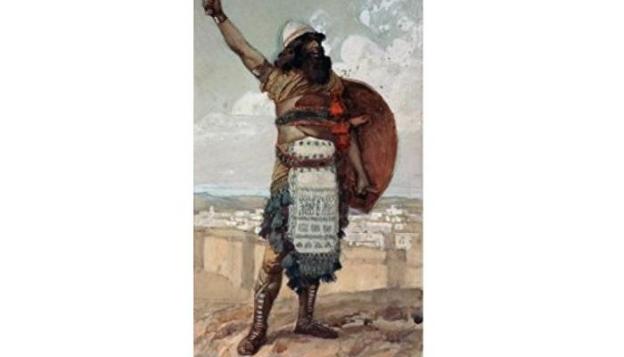
“Othniel” by the French Painter James Tissot (1836-1902)


Judges 3:1-6 The Remaining Nations

Now these are the nations that the LORD left to test all those in Israel who had no experience of any war in Canaan 2 (it was only that successive generations of Israelites might know war, to teach those who had no experience of it before): 3 the five lords of the Philistines, and all the Canaanites, and the Sidonians, and the Hivites who lived on Mount Lebanon, from Mount Baal-hermon as far as Lebo-hamath. 4 They were for the testing of Israel, to know whether Israel would obey the commandments of the LORD, which he commanded their ancestors by Moses. 5 So the Israelites lived among the Canaanites, the Hittites, the Amorites, the Perizzites, the Hivites, and the Jebusites; 6 and they took their daughters as wives for themselves, and their own daughters they gave to their sons; and they worshiped their gods.

Part of the reason to attempt to write history is to make sense of both the past and the present. Throughout the first two chapters have been setting the scene where the tribes of Israel remain with the various Canaanite and non-Canaanite peoples continuing with their own gods, practices, and in many cases their land and cities. The first two chapters have laid the blame on the Israelites and their unfaithfulness to God’s instructions. Chapter three begins with two explanations for the presence of these people among Israel: that they may learn how to fight and to be a test for the people of Israel. If one assumes that the people have the law as it is outlined in the book of Deuteronomy there is instructions on how to properly conduct war as the covenant people (Deuteronomy 20: 10-18) but that particular portion of Deuteronomy also designates the very people listed in verse five are designate for annihilation (herem). Yet, the very opposite happens here when the daughters and sons of Israel intermarry with these people and worship their gods.

Within this brief passage there are two list of remaining nations. The first list includes the Philistines who are also a people who recently conquered and settled in the land. The Philistines were a sea faring people who came from the Mediterranean (traditionally traced back to Crete) and develop an alliance of five city states (Ashodod, Ashkelon, Ekron, Gath, and Gaza) along the southwestern edge of the territory that Israel claims. The Canaanites is a general term for the peoples that already existed in the land. The Sidonians were Phoenecians who lived along the Mediterranean on the northwestern edge of Israel’s territory (they are named for the town of Sidon) while the Hivites lived in the mountainous terrain presumably in north Israel and southern Lebanon. The second list is the traditional designation of the seven nations of the Canaanites as listed in Deuteronomy 7:1, although the Girgashites are not present in Judges or Deuteronomy 20.

The situation where the boundaries of Israel are blurred by the presence of people who worship different gods and have different practices of life is compounded when the boundary of tribe and family are blurred by intermarriage. The bible has multiple perspectives on this. In general, the Hebrew people were discouraged from intermarrying with other peoples, especially the Canaanites whose land they were entering. Books like Ezra and Nehemiah blame intermarriage for the state of the nation, while Ruth tells the story of the faithful foreigner who marries a Jewish man and adopts the practices of the covenant people.  We know that intermarriage happened, and was probably a regular occurrence throughout Israel’s history but the danger was that the sons and daughters of Israel would then adopt the practices and worship of the other peoples instead of these new sons and daughters being integrated into the covenant life of the chosen people of God.

Judges 3: 7-11 Othniel the First Judge (from Judah)

7 The Israelites did what was evil in the sight of the LORD, forgetting the LORD their God, and worshiping the Baals and the Asherahs. 8 Therefore the anger of the LORD was kindled against Israel, and he sold them into the hand of King Cushan-rishathaim of Aram-naharaim; and the Israelites served Cushan-rishathaim eight years. 9 But when the Israelites cried out to the LORD, the LORD raised up a deliverer for the Israelites, who delivered them, Othniel son of Kenaz, Caleb’s younger brother. 10 The spirit of the LORD came upon him, and he judged Israel; he went out to war, and the LORD gave King Cushan-rishathaim of Aram into his hand; and his hand prevailed over Cushan-rishathaim. 11 So the land had rest forty years. Then Othniel son of Kenaz died.

The story of the first judge, Othniel, is short but it sets the pattern for the narration of the judges that come afterwards. Dennis T. Olson points to six elements that give a pattern to evaluate the stories that follow:

(1) the nature of Israel’s evil, (2) the description of the enemy’s oppression, (3) God’s reaction to the Israelite’s cry of distress, (4) the judge’s success in uniting and delivering Israel, (5) a focus on God’s victory or the judge’s personal life, and a desire for vengeance, and (6) the proportion of the number of years the judge ruled in peace (the land had rest for “X” years) (NIB II: 766)

Just as Othniel will set the pattern for the evaluation of future judges, he will also in many ways be the model of what a judge should be. The Israelites at this point are not a nation and the actions of each judge are primarily oriented around individual tribes, and so with Othniel we are primarily looking at the territory of Judah.

The refrain. “The Israelites did what is evil in the sight of the LORD,” serves as a transition between each of the major judge narratives. The evil the Israelites have done is listed as two-fold: they forget the LORD their God, and they turn to other Gods (Baals and the Asherahs). The previous two chapters and the beginning of chapter three have all set the stage for the people integrating with the people who existed in the land, adopting their practices, and intermarrying with them. Now for the first time the people experience oppression under a foreign leader.

King Cushan-rishathaim (Cushan of the double wickedness) who comes from Aram-naharaim (Aram of the two rivers) is an unknown leader in the historical record outside the bible who comes from the area in modern day Syria or Iraq between the Tigris and Euphrates rivers. This doubly wicked king causes problems for Israel (or at least a portion of Israel) for eight years. The oppression of this ‘wicked’ ruler causes the people of Israel to remember their God and to call out to their God by name.[1] The LORD the God of the Israelites is a God who hears the cry of the oppressed and feels compelled to respond to that cry.

The spirit of the LORD comes upon Othniel to deliver the people. We encountered Othniel in Judges 1: 11-15 and he is the final linkage to the generation that came into the land. In contrast to the Israelites who intermarried, Othniel’s wife is an Israelite and the daughter of the illustrious Caleb, second in respect among the previous generation to only Joshua. There is little narration of the conflict between Othniel and Cushan-rishathaim beyond the spirit of the LORD coming upon Othniel and delivering this foreign king into his hand. Yet, this action of the LORD to deliver the people through Othniel brings forty years of rest in Judah.

Judah in the first chapter of Judges was the most successful in gaining control of its territory and here the judge from the people of Judah is successful in bringing a sustained period of peace after a relatively brief period of oppression (in comparison to the other stories of the judges). Othniel’s narrative is short and compact but it also sets the pattern for all other judges to be evaluated against. Yet, with the death of Othniel the people of Judah, and Israel, lose their connection with the generation that experienced God’s work to bring them into the land. In the absence of a leader to unite them they quickly lapse into the pattern of doing evil in the sight of the LORD again.

Judges 3: 12-30 Ehud the Second Judge (from Benjamin)

12 The Israelites again did what was evil in the sight of the LORD; and the LORD strengthened King Eglon of Moab against Israel, because they had done what was evil in the sight of the LORD. 13 In alliance with the Ammonites and the Amalekites, he went and defeated Israel; and they took possession of the city of palms. 14 So the Israelites served King Eglon of Moab eighteen years.

15 But when the Israelites cried out to the LORD, the LORD raised up for them a deliverer, Ehud son of Gera, the Benjaminite, a left-handed man. The Israelites sent tribute by him to King Eglon of Moab. 16 Ehud made for himself a sword with two edges, a cubit in length; and he fastened it on his right thigh under his clothes. 17 Then he presented the tribute to King Eglon of Moab. Now Eglon was a very fat man. 18 When Ehud had finished presenting the tribute, he sent the people who carried the tribute on their way. 19 But he himself turned back at the sculptured stones near Gilgal, and said, “I have a secret message for you, O king.” So the king said, “Silence!” and all his attendants went out from his presence. 20 Ehud came to him, while he was sitting alone in his cool roof chamber, and said, “I have a message from God for you.” So he rose from his seat. 21 Then Ehud reached with his left hand, took the sword from his right thigh, and thrust it into Eglon’s belly; 22 the hilt also went in after the blade, and the fat closed over the blade, for he did not draw the sword out of his belly; and the dirt came out. 23 Then Ehud went out into the vestibule, and closed the doors of the roof chamber on him, and locked them. 24 After he had gone, the servants came. When they saw that the doors of the roof chamber were locked, they thought, “He must be relieving himself in the cool chamber.” 25 So they waited until they were embarrassed. When he still did not open the doors of the roof chamber, they took the key and opened them. There was their lord lying dead on the floor.

26 Ehud escaped while they delayed, and passed beyond the sculptured stones, and escaped to Seirah. 27 When he arrived, he sounded the trumpet in the hill country of Ephraim; and the Israelites went down with him from the hill country, having him at their head. 28 He said to them, “Follow after me; for the LORD has given your enemies the Moabites into your hand.” So they went down after him, and seized the fords of the Jordan against the Moabites, and allowed no one to cross over. 29 At that time they killed about ten thousand of the Moabites, all strong, able-bodied men; no one escaped. 30 So Moab was subdued that day under the hand of Israel. And the land had rest eighty years.

The second judge comes for the tribe of Benjamin which although a southern tribe was not asked to ally itself with Judah and Simeon and remains unable to drive out the Jebusites from Jerusalem. The period of oppression is also longer before the people call on the LORD and so the people are subject to King Eglon of Moab for eighteen years, ten years longer than before they call on the LORD and the LORD provided Othniel. Now instead of an upstanding member of a family with a history of faithfulness and an individual with previous military success God provides this ‘left handed son of the right hand.’[2] This short narrative of Ehud and Eglon is full of satire and humor but it is also the story of God working through a trickster, something that has happened before and continues to happen in the scriptures.

Names often give additional humor to the story. As mentioned above Ehud is a left handed man in the tribe of the ‘son of the right hand.’ King Eglon whose name in Hebrew is related to ‘young bull’ or ‘fatted calf’ in combination with his obesity is portrayed as a sacrificial beast. We often bring our modern ideals of combat into ancient scenes, but King Eglon may have been a powerful warrior in his day. The tactics which relied on spears, shields, and probably chariots were not as reliant on agility as the sword fighting you see in movies or video games. This ‘young bull’ may have been as strong as an ox, even with his massive girth. He also is able to form alliances with the Ammonites and Amalekites and is able to hold territory once secured by Israel, reoccupying the city of palms (presumably Jericho which has not been rebuilt under Israel). It is also important to note that Ehud could not have approached the territory of Benjamin without passing through the territories of Reuben and Gad on the opposite side of the Jordan River. (Hattin 2020, 29)

Ehud makes a short two-sided sword which is a cubit[3] in length. This sword is short enough to be concealed on the right thigh, but the reality of a left handed assassin also plays into the story since most guards would look for a blade on the left side where a right handed fighter would draw it from. Ehud brings a tribute[4] to King Eglon. The Israelites in Judges have been reluctant to worship the LORD and provide their God tribute so now they find themselves providing what should have been used in the worship of their God in the service of a foreign king. Ehud sends the bearers of this tribute away but at the stones/idols[5] of Gilgal he turns back towards the house of King Eglon. Gilgal has already appeared in Judges as a place where a message from God is delivered by a messenger (2:1) that God will no longer deliver the people, but now from Gilgal God’s deliverance comes in this secret word delivered by Ehud. He bears a secret word[6] from a god[7] for the king. The king dismisses his attendants and waits for this secret word.

Much later the book of Hebrews will state,

Indeed, the word of God is living and active, sharper than any two-edged sword, piercing until it divides soul from spirit, joints from marrow; it is able to judge the thoughts and intentions of the heart. “(Hebrews 4:12)

But here the ‘word’ is a two-edged sword in a non-metaphorical way. This short sword is swallowed up by the obesity of the king and in a bit of ‘scatological humor’[8] and this humor is extended by the followers of Eglon delaying their entry of his chamber assuming he is using the chamber pot. The ‘dirt’ coming out is probably excrement and perhaps the smell also causes the followers of this corpulent king to assume their master is relieving himself in the coolness of the chamber. Their delay allows for Ehud to escape and rally the people of Benjamin and Ephraim to trap the Moabites on the western side of the Jordan River. After a massive military defeat Moab is subdued and the Israelites (at least in this region) enjoy an extended period of peace (eighty years).

This second story of a judge has a much different tone than the first. The story of Ehud and King Eglon is the story of a trickster assassin and bathroom jokes that probably provided entertainment for generations of storytellers and hearers. The morality of the bible is strange to us, but it values the clever trickster. From Jacob the heel grasper (later renamed Israel) to the spies at Bethel who make a deal with a man of the city to bypass the city defenses, (Judges 1:22-25) to the narrative of Samson and many others the bible includes many stories of tricksters who are a part of God’s purpose. The character of the trickster is often valued in ancient stories where people (or animals) find clever ways to thwart a superior opponent and the bible includes several of these stories. The assassination of the King leads to a dramatic change in the ability of the Moabite alliance to continue to oppress the Israelites and is viewed as an extension of God’s action to deliver the people from their oppression. God in Judges may work through strange agents who act in strange ways, but Ehud is viewed in a positive light among the judges of Israel.

Judges 3: 31 Shamgar the Third Judge

31 After him came Shamgar son of Anath, who killed six hundred of the Philistines with an oxgoad. He too delivered Israel.

With Shamgar we encounter the first minor judge and the first conflict with the Philistines. Shamgar is only mentioned here and in the song of Deborah (Judges 5:6) and his mention in that song may be the reason for his inclusion here. Shamgar may not be an Israelite and yet he may be lifted up as one through whom God delivers Israel from the Philistines. Anath is the name of a Canaanite female warrior goddess and there is some evidence from early Iron age Palestine that may point to the existence of a warrior class associated with Anath.[9] The Philistines were technologically advanced having iron chariots and weaponry and so the humiliation of this feared enemy by a warrior bearing a long staff used as a cattle prod makes a mockery of the superior weaponry of their opponent. It is possible that this is the first explorations of a Philistine military unit exploring the territory of the Canaanites and the Israelites and Shamgur’s actions delay the ultimate occupation by force of the Philistines in the region. [10]Yet, the inclusion of a judge who may not be an Israelite and may be the devotee of a Canaanite god is surprising among the twelve judges in this book. Already of the three judges, the God of Israel has worked through a trickster assassin and perhaps through a cattle prod wielding foreign warrior who is devoted to a Canaanite god. Yet, the book of Judges also assumes the God is at work in allowing the various kings and nations to rise up and oppress the tribes of Israel as a punishment for their disobedience, so perhaps including a non-Israelite as a deliverer of Israel is not as strange as it initially appears.

[1] Any time the Old Testament/Hebrew Scriptures uses LORD in all capital letters it is a reference to ‘YHWH’ the name of God spoken to Moses at the burning bush. Throughout the scriptures the vowels are changed to give the reader the clue to say ‘Adonai’ (Lord) instead of pronouncing the divine name (Yahweh). Yet, each time we encounter this naming of God we are referring to specifically the name of the God of Israel.

[2] Benjamin means ‘son of the right hand’ so the story begins its introduction of irony with indicating that this Benjaminite is left handed.

[3] The term for cubit (gomed) only occurs here in the Old Testament/Hebrew Scriptures. This may be shorter than the standard cubit (from elbow to fingertip) typically noted by the Hebrew ‘amma and may refer to the length from elbow to knuckles. (Webb 2012, 171)

[4] The term for tribute (minha) is usually used in scripture for an offering presented to God. (Webb 2012, 171)

[5] This word likely refers to carved stones set up for a shrine or idols, and it is likely that Gilgal is considered a ‘holy place’ where a divine message may occur.

[6] In classical Hebrew wordplay the Hebrew dabar typically means ‘word’ but can also refer to a ‘thing’

[7] In speaking to King Eglon Ehud does not speak specifically of the God of Israel but uses the generic term for ‘a god,’ the king likely assumes it is from one of the gods represented at the shrine/idols of Gilgal.

[8] Scatology is the study of feces, and scatological humor is often looked down upon in proper societies, but the Hebrew Scriptures seem to have no problem using excrement to make light of their enemies.

[9] Bronze arrowheads were discovered from this time inscribed with a warrior’s name as the ‘son of Anath’ (Webb 2012, 177)

[10] Barry Webb makes this suggestion based on the number six hundred commonly designating an organized force under a commander and provides numerous examples from first and second Samuel that support this hypothesis. (Webb 2012, 177)