Tag Archives: Prophet Elijah

2 Kings 1: The Foolish King Ahaziah Confronted By God Through Elijah

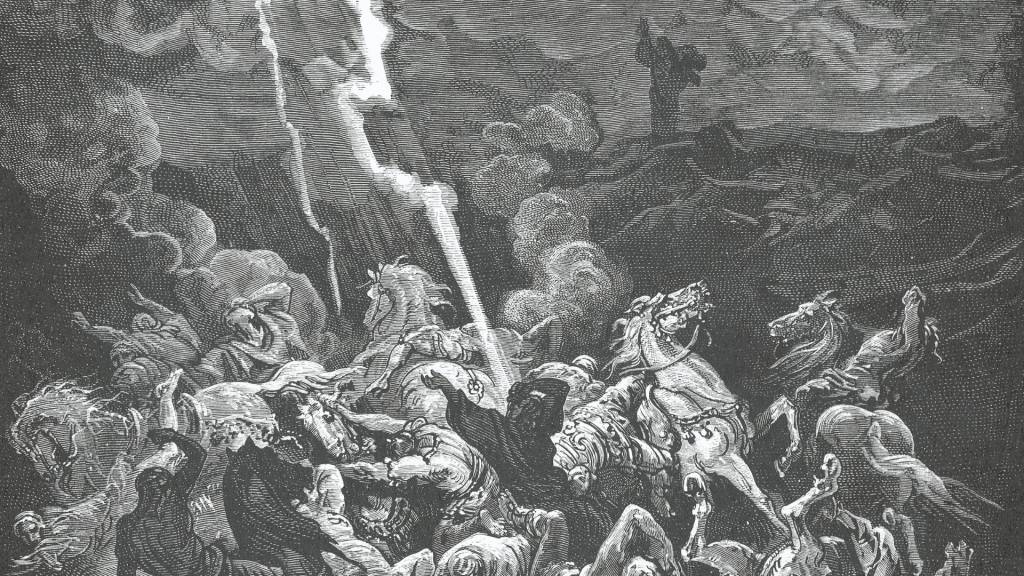
Gustave Dore, Fire Consumes the Soldiers of Ahaziah from the Illustrated Bible. 19th Century Engraving. Cropped Image

2 Kings 1

1 After the death of Ahab, Moab rebelled against Israel. 2 Ahaziah had fallen through the lattice in his upper chamber in Samaria, and lay injured; so he sent messengers, telling them, “Go, inquire of Baal-zebub, the god of Ekron, whether I shall recover from this injury.” 3 But the angel of the LORD said to Elijah the Tishbite, “Get up, go to meet the messengers of the king of Samaria, and say to them, ‘Is it because there is no God in Israel that you are going to inquire of Baal-zebub, the god of Ekron?’ 4 Now therefore thus says the LORD, ‘You shall not leave the bed to which you have gone, but you shall surely die.'” So Elijah went.

5 The messengers returned to the king, who said to them, “Why have you returned?” 6 They answered him, “There came a man to meet us, who said to us, ‘Go back to the king who sent you, and say to him: Thus says the LORD: Is it because there is no God in Israel that you are sending to inquire of Baal-zebub, the god of Ekron? Therefore you shall not leave the bed to which you have gone, but shall surely die.'” 7 He said to them, “What sort of man was he who came to meet you and told you these things?” 8 They answered him, “A hairy man, with a leather belt around his waist.” He said, “It is Elijah the Tishbite.”

9 Then the king sent to him a captain of fifty with his fifty men. He went up to Elijah, who was sitting on the top of a hill, and said to him, “O man of God, the king says, ‘Come down.'” 10 But Elijah answered the captain of fifty, “If I am a man of God, let fire come down from heaven and consume you and your fifty.” Then fire came down from heaven, and consumed him and his fifty.

11 Again the king sent to him another captain of fifty with his fifty. He went up and said to him, “O man of God, this is the king’s order: Come down quickly!” 12 But Elijah answered them, “If I am a man of God, let fire come down from heaven and consume you and your fifty.” Then the fire of God came down from heaven and consumed him and his fifty.

13 Again the king sent the captain of a third fifty with his fifty. So the third captain of fifty went up, and came and fell on his knees before Elijah, and entreated him, “O man of God, please let my life, and the life of these fifty servants of yours, be precious in your sight. 14 Look, fire came down from heaven and consumed the two former captains of fifty men with their fifties; but now let my life be precious in your sight.” 15 Then the angel of the LORD said to Elijah, “Go down with him; do not be afraid of him.” So he set out and went down with him to the king, 16 and said to him, “Thus says the LORD: Because you have sent messengers to inquire of Baal-zebub, the god of Ekron,– is it because there is no God in Israel to inquire of his word?– therefore you shall not leave the bed to which you have gone, but you shall surely die.”

17 So he died according to the word of the LORD that Elijah had spoken. His brother, Jehoram succeeded him as king in the second year of King Jehoram son of Jehoshaphat of Judah, because Ahaziah had no son. 18 Now the rest of the acts of Ahaziah that he did, are they not written in the Book of the Annals of the Kings of Israel?

This final prophetic episode in the Elijah cycle prior to the ascension of Elijah in the following chapter occurs during the year long reign of Ahaziah.[1] The division between 1 Kings and 2 Kings splits the comments on the brief reign of Ahaziah between the final three verses of 1 Kings and the initial chapter of 2 Kings. Ahaziah’s insignificant reign cut short by his injury and offense against God are contrasted with the significant prophet Elijah’s final action. The Book of Kings could easily have been the Book of Prophets, since for most of the book the kings are often secondary characters to the prophets.

Ahaziah fell from his upper chamber to the lower floor and is injured by the fall and confined to his bed. Yet, Ahaziah’s response to his injury is what dominates his portion of the story. Instead of appealing to the LORD, whether through a prophet or through the temple in Jerusalem he sends messengers to Ekron to appeal to the priests of prophets of Baal-zebub. There has been an ongoing animosity between the leaders in Samaria and Jerusalem, and the Omri dynasty has also been hostile to Elijah and other prophets of the LORD so on the one hand the action of Ahaziah to appeal to a foreign god, even a god of the once hostile Philistines, is not out of character for the Omri dynasty. Yet it is an audacious slight of the LORD the God of Israel, one that will have fatal consequences for this insignificant king.

Baal-zebub, the title for the god of Ekron would be the lord of the flies, and this is likely an intended insult of Baal-zebul the lord of the house. This is reflected title Beelzebul in the New Testament when Jesus is accused of being in lead with the lord of demons.[2] This minor spelling change turns the master of the house into the master of something considered a pest and nuisance in the ancient world. It is possible that ‘zebub’ is a local ‘baal’[3] and there is some debate over the rendering of ‘zebub’ as ‘fly’, but the Bible does frequently use insults for the other ‘gods’ that the people of Israel and the surrounding country follow.

Hebrew loves wordplay and it helps to know that the word for messenger (malakh) and angel (malakim) are closely related. Ahaziah sends messengers and the messenger of the LORD comes to Elijah to intercept these messengers of the king. Elijah’s message from the messenger (angel) of God speaks directly to the king’s messengers, “Is it because there is no God in Israel that you (plural) are going to inquire of Baal-zebub, the god of Ekron?” But when the king’s messengers return to the king they now point the blame on the king, “Is it because there is no God in Israel that you (singular) are sending to inquire of Baal-zebub, the god of Ekron?”  The sentence declared on the king is terminal by the LORD. As Brueggemann states:


The particular phrase, “surely die,” is repeated three times by the prophet (1:4, 6, 16). While the phrase looks commonplace in the English translation, it is in fact a quite severe, absolute, and formal pronouncement of a death penalty from which there is no escape or reprieve. (Brueggemann, 2000, p. 284)

From the description of the man who intercepted the prophets, a hairy man with a leather belt around his waist, the king realizes that it is the longtime foe of the Omri dynasty, the prophet Elijah. Elijah’s successor Elisha we will learn in 2:23 is bald and so there is a drastic difference in the appearance of the hairy man and the man ridiculed for being bald. The description of Elijah will also be paralleled, although in an inexact manner, by the appearance of John the Baptist at the beginning of the gospels.[4] Elijah and Elisha will be different in appearance and as we transition to the Elisha cycle it will be worthwhile to compare the ministries of these two prophets.

The king views Elijah as a threat and sends three separate leaders and soldiers to bring Elijah down from the mountain.[5] The king desires to bring Elijah down by force but only manages to cause Elijah to bring down the fire of God upon his forces.[6] The first commander of fifty goes up the mountain to approach Elijah and orders the man of God to come down, yet Elijah demonstrates that the forces of the king are no match for the power of God as the first group of fifty is consumed. The second leader goes up to Elijah, but he may not go up the mountain. There may be some hint in the story that this second commander keeps his distance, but his words indicate that now the king orders Elijah to come down. The second group of fifty meets the same fate as the first. The final commander comes and kneels before the prophet and asks the prophet to show grace[7] for his life and the lives of his men. This final commander also indicates that he is Elijah’s servant instead of the king’s. The messenger (angel) of the LORD lets Elijah know it is safe to go with this commander to deliver the message directly to the king.

For the narrative of 2 Kings, King Ahaziah dies because of the declaration of the LORD not the injuries the king receives falling through the lattice. Throughout the Elijah cycle the people under the Omri dynasty have had divided loyalties. Elijah is an uncompromising in his zeal for the LORD the God of Israel and although the Omri will continue beyond the time of Elijah, it is quickly coming to end. Ahaziah in the narrative of the Book of Kings will be one more king whose brief reign in Samaria will be defined by his disobedience to the LORD the God of Israel.


[1] 1 Kings 22:51 notes that Ahaziah ruled for two years. He came to power in the seventeenth year of Jehoshaphat of Judah and died in his eighteenth year, but his total reign was less than twelve months long. (Cogan, 1988, p. 21)

[2] Matthew 10:25; 12: 24,27; Mark 3:22; Luke: 11: 15, 18, 19.

[3] Baal is a general title for lord, and there were multiple ‘Baals’ worshipped regionally throughout Canaan.

[4] John is wearing camel’s hair as clothing rather than being described as hairy, although he does have the leather belt around his waist.

[5] Choon-Leong Seow notes that the same word har is used here as a Mount Carmel and the NIV and NRSV translation of this as ‘hill’ obscures the linkage to the previous story (1 Kings 18). (NIB III:173)   

[6] Once again there is a Hebrew wordplay between the word for ‘man’ (‘is) and the word for fire (‘es). NIB III: 173.

[7] NRSV entreat. The Hebrew hanan means “to show grace’. (Brueggemann, 2000, p. 286)

1 Kings 17 Elijah the Prophet Emerges

1 Kings 17: 1-7 Elijah’s Declaration

1 Now Elijah the Tishbite, of Tishbe in Gilead, said to Ahab, “As the LORD the God of Israel lives, before whom I stand, there shall be neither dew nor rain these years, except by my word.” 2 The word of the LORD came to him, saying, 3 “Go from here and turn eastward, and hide yourself by the Wadi Cherith, which is east of the Jordan. 4 You shall drink from the wadi, and I have commanded the ravens to feed you there.” 5 So he went and did according to the word of the LORD; he went and lived by the Wadi Cherith, which is east of the Jordan. 6 The ravens brought him bread and meat in the morning, and bread and meat in the evening; and he drank from the wadi. 7 But after a while the wadi dried up, because there was no rain in the land.

Particularly in the Northern Kingdom of Israel we have seen prophets occupy a large role in the transition between royal dynasties. Yet, these prophets have not been listened to by the kings of Israel as they kings have drifted further away from loyalty to the LORD the God of Israel. Now under King Ahab are actively promoting the worship of Baal. With the sudden appearance of Elijah we see a dramatic interruption of the narrative of the kings of Israel where the prophetic voice emerges as to challenge the unfaithful (in the view of the narrator of First Kings) stewardship of these kings. As Walter Brueggemann states of the emergence of these prophets:

It is impossible to overstate the historical, literary, and theological significance of this intrusion that features in turn, Elijah (1 Kings 17-21 along with 2 Kings 1-2), Miciah (1 Kings 22), and Elisha (2 Kings 3-9). The three are completely unexpected, uncredentialed, and uninvited characters in the royal history of Israel. According to the tale told, they enact the raw unfiltered power of Yahweh that lies completely beyond the command of the royal houses. Indeed, their presence in the narrative service to expose the inadequacy and lameness of the kings as shapers of history, in order to assert that real authority and real energy for historical reality lie outside the legitimated claims of monarchy. (Brueggemann, 2000, p. 207)

Elijah the Tishbite in an important symbol in the practice of Judaism. Elijah is present at circumcision ceremonies, the seder table, and is to be the herald of the messiah. In Christianity Elijah is associated with John the Baptist and many of Elijah’s acts which demonstrate the LORD’s power will be mirrored by Jesus in his ministry. Elijah’s name is a combination of the generic word for god ‘El’ and the name of the LORD the God of Israel ‘Yahweh” and means ‘Yahweh is my God.’ In Alex Israel’s description on the biblical persona of Elijah:

Elijah is a zealot (19:10, 14)—agitated, demanding, and passionate; he is the brusque, itinerant prophet who causes fire to descend from heaven to earth, and who ends his life by ascending heavenward in a fiery chariot (II Kings 2:11). (Israel, 2013, p. 229)

There is some debate about Tishbe, the geolocation given to Elijah because there is no known site for this town. Some have speculated that Elijah is a foreign follower of the LORD the God of Israel who was in Gilead at the time of Ahab, but regardless of his origin he becomes the defender of the worship of the LORD of Israel and the challenger to Ahab’s promotion of Baal as the favored deity of the north.

Throughout the articulation of the law in Deuteronomy there are consequences for turning away from the worship and the commandments of the LORD the God of Israel. Drought and the failure of the land to produce the food needed for life is one of the frequently articulated consequences.

Take care, or you will be seduced into turning away, serving other gods and worshipping them, for then the anger of the LORD will be kindled against you and he will shut up the heavens, so that there will be no rain and the land will yield no fruit; then you will perish quickly off the good land that the LORD is giving you. Deuteronomy 11: 16-17 (see also Deuteronomy 28:22)

Elijah invokes the LORD in his declaration that there will be neither rain nor dew until he calls for rain as a fulfillment of these consequences.[1] Elijah’s declaration challenges both the prosperity that Ahab’s reign has brought to Israel and the claims of Baal worship. Baal in Canaanite religion is a storm god and when there are periods of drought it is presumed that death (personified as a deity in Canaanite religion) has slain Baal and conversely when the rains come Baal has conquered death. (NIB III: 126) Much like the signs and wonders in Egypt where the LORD demonstrated power over the Egyptian gods (Exodus 7-11) now the LORD demonstrates mastery over Baal by withholding the rains.

Elijah’s withdrawl to the Wadi Cherith east of the Jordan returns the prophet to Gilead. Ravens become the strange providers of the nourishment that the prophet needs to survive in this wilderness environment. Although ravens are considered unclean birds and do have some negative associations in scripture[2] this scene also share similarities with God’s provision for Israel in the wilderness with manna and quails.[3] Ravens are a large bird and are capable of bringing a larger quantity of food than many other birds would be capable of. The Talmud adds the entertaining element that the ravens are either stealing food from the table of King Ahab or King Jehoshaphat in Jerusalem and bringing it to the wadi for the prophet. (Israel, 2013, p. 233) Yet, as the drought continues, and the prophet continues to remain hidden in east of the Jordan river the waters of the wadi dry up and the prophet begins to encounter the dangers felt throughout the land as the rain and dew are withheld. God will need to provide a new place where the prophet can survive the presumed threat from King Ahab and the lack of food and water in the drought.

1 Kings 17: 8-16 Elijah and the Widow of Zarephath

8 Then the word of the LORD came to him, saying, 9 “Go now to Zarephath, which belongs to Sidon, and live there; for I have commanded a widow there to feed you.” 10 So he set out and went to Zarephath. When he came to the gate of the town, a widow was there gathering sticks; he called to her and said, “Bring me a little water in a vessel, so that I may drink.” 11 As she was going to bring it, he called to her and said, “Bring me a morsel of bread in your hand.” 12 But she said, “As the LORD your God lives, I have nothing baked, only a handful of meal in a jar, and a little oil in a jug; I am now gathering a couple of sticks, so that I may go home and prepare it for myself and my son, that we may eat it, and die.” 13 Elijah said to her, “Do not be afraid; go and do as you have said; but first make me a little cake of it and bring it to me, and afterwards make something for yourself and your son. 14 For thus says the LORD the God of Israel: The jar of meal will not be emptied and the jug of oil will not fail until the day that the LORD sends rain on the earth.” 15 She went and did as Elijah said, so that she as well as he and her household ate for many days. 16 The jar of meal was not emptied, neither did the jug of oil fail, according to the word of the LORD that he spoke by Elijah.

Apparently the effects of the drought are not only being felt in Israel, but also in the region of Tyre and Sidon. Geographically this is not a long distance (approximately 40-50 miles as the raven flies depending on where East of the Jordan Elijah is coming from), and it is not surprising that they would encounter the same weather patterns. From a theological perspective, which is central to the narration of First Kings, it also extends the judgment against Baal into the land where Baal is expected to reign. Now the LORD the God of Israel will provide food in this Phoenician commercial city for the widow where King Ethbaal and Baal cannot. Yet, Elijah’s demonstrations of the power of the LORD will not be a public spectacle but will take place in small ways that would be unnoticed by many in this city. Elijah’s demonstration of the LORD’s power will be seen only by those who pay attention to the widow and her plight.

On arriving in Zarephath and discovering the widow that the LORD indicated he immediately asks her for water and then food. The widow still has some water to share, but she is preparing to make a final meal for herself and her son before starvation takes its course. The widow must recognize Elijah as an Israelite, for the oath she swears is by the LORD, Elijah’s God. She does not claim the LORD as her own God, but she recognizes Elijah as an Israelite and still is willing to share water with him. Elijah still demands her hospitality and to be served first before she feeds herself and her son, and the widow apparently complies. The promised provision of oil and flour continues to provide for her and perhaps those in her network during the drought as the LORD provides for the widow and her son, two individuals who are among the most vulnerable in the event of an extended drought. Elijah who has been isolated at the Wadi Cherith is now presented with a human face to the impact of the drought that he declared on the land.

1 Kings 17: 17-24 Elijah Revives the Widow’s Son

17 After this the son of the woman, the mistress of the house, became ill; his illness was so severe that there was no breath left in him. 18 She then said to Elijah, “What have you against me, O man of God? You have come to me to bring my sin to remembrance, and to cause the death of my son!” 19 But he said to her, “Give me your son.” He took him from her bosom, carried him up into the upper chamber where he was lodging, and laid him on his own bed. 20 He cried out to the LORD, “O LORD my God, have you brought calamity even upon the widow with whom I am staying, by killing her son?” 21 Then he stretched himself upon the child three times, and cried out to the LORD, “O LORD my God, let this child’s life come into him again.” 22 The LORD listened to the voice of Elijah; the life of the child came into him again, and he revived. 23 Elijah took the child, brought him down from the upper chamber into the house, and gave him to his mother; then Elijah said, “See, your son is alive.” 24 So the woman said to Elijah, “Now I know that you are a man of God, and that the word of the LORD in your mouth is truth.”

Although there is no correlation in the text between the desperate situation of the widow and her son prior to the arrival of Elijah and the onset of his mysterious illness, prolonged lack of sustenance can have significant physical impacts on the body. In many ways the widow and her son become representative of the impact of the drought upon the land and likely many mothers were seeing their sons (and daughters) suffer as food becomes scarce. Even with the grain and the oil now providing sustenance the crisis of a child who stops breathing places the future in jeopardy for this family and the presence of the worshipper of the God of Israel in the land around Sidon may be viewed by the woman as a reason for Baal to curse her son, or as the text indicates she may view Elijah’s God as judging her. Elijah has called for judgment but has never appealed for mercy until this incident where the widow’s son lies lifeless. Now, on behalf of the widow, he intercedes with God calling on God for healing. Elijah speaks to God first in accusation and then imploring God three times for the ‘life’[4] of the child to return and the LORD responds to Elijah’s requests. Elijah’s revival of the widow’s son allows her to proclaim that Elijah is ‘a man of God, and that the word of the LORD in your mouth is truth.” Elijah’s LORD has demonstrated power over both famine and an illness that has led her son to death’s door. For the first time Elijah enters into the space between the people and God.

The struggle of the widow and her son put a human face on the drought. Other children are certainly dying as food and water become scarce. Elijah dropped from the public space and retreated first to the Wadi Cherith and then to Zarephath. In the aftermath of the revival of the widow’s son, he returns to confront both King Ahab and the prophets of Baal who have alienated the people of Israel from the LORD their God.

[1] Alex Israel has an enlightening discussion of the Jewish debate about whether Elijah initiates the drought expecting the support of the LORD or whether he is responding to God’s word. This is one of the benefits of seeking Jewish readings of the Hebrew Scriptures which often have insights often neglected in Christian biblical studies. Although I will not end up following either direction Israel highlights my thoughts were shaped by this discussion. (Israel, 2013, pp. 230-240)

[2] Leviticus 11: 15, Psalm 147:9, Job 38: 41

[3] Exodus 16

[4] This is the Hebrew nephesh which is often translated ‘soul’ is rightly rendered as ‘life’ here. The Hebrew idea of nephesh is not the Greek idea of an immortal soul which continues beyond the mortal body, nephesh is the essence of life itself.

Images for the Ninth Sunday after Pentecost, Lectionary 19A

1 Kings 19: 9-18                 Elijah at Mount Horeb
Psalm 85: 8-13                   Righteousness and peace will kiss each other
Romans 10: 5-15              The word is near you, on your lips and in your heart
Matthew 14: 22-33          Jesus walks on the sea of Galilee
 

A few of Elijah

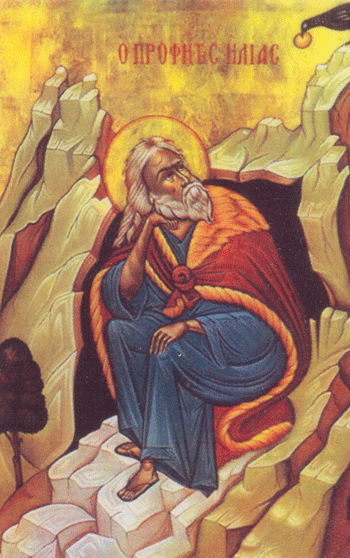
Greek Orthodox Icon, The Prophet Elijah

Greek Orthodox Icon, The Prophet Elijah

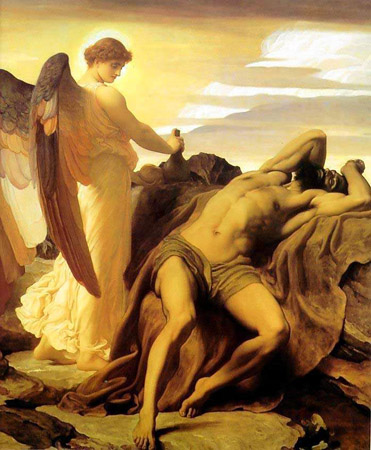
Elijah in the Wilderness, Raphael or Raphael's school

Elijah in the Wilderness, Raphael or Raphael’s school

Russian Orthodox Icon, Elijah in the Desert

Russian Orthodox Icon, Elijah in the Desert

And for the Reading from Matthew of Jesus and Peter on the sea of Galilee

Gustav Dore, Jesus Appears to the Disciples

Gustav Dore, Jesus Appears to the Disciples

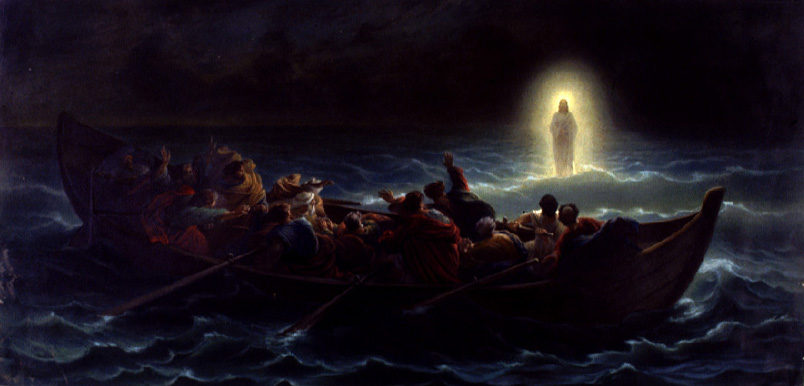
Amedee Varin (1818-1883) Le Christ marchant sur la mer

Amedee Varin (1818-1883) Le Christ marchant sur la mer

Ivan Aivazovsky, Walking on Water (1890s)

Ivan Aivazovsky, Walking on Water (1890s)

Francois Boucher, Saint Peter Attempting to Walk on the Water (1766)

Francois Boucher, Saint Peter Attempting to Walk on the Water (1766)

Also James B. Janknegt’s picture Walking on Water