Time Magazine Top 100 Novels
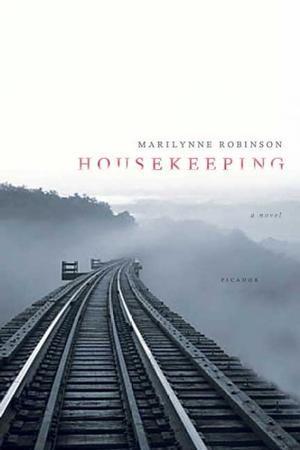
Book 44: Housekeeping by Marilynne Robinson (1981)
This is a series of reflections reading through Time Magazine’s top 100 novels as selected by Lev Grossman and Richard Lacayo published since 1923 (when Time magazine was founded). For me this is an attempt to broaden my exposure to authors I may not encounter otherwise, especially as a person who was not a liberal arts major in college. Time’s list is alphabetical, so I decided to read through in a random order, and I plan to write a short reflection on each novel.
Marilynne Robinson use of the English language is artful and poetic. I read Gilead several years ago and when I began Housekeeping, I was immediately struck by the beautiful way in which she can write. The novel is told from the perspective of Ruth Stone, normally called Ruthie throughout the book, who is left at a young age with her grandmother, Sylvia Foster, along with her sister Lucille. Ruthie’s mother after leaving her daughters at their grandmother’s house drives into the lake and dies and for several years Sylvia cares for the two girls until her death. When Slyvia dies suddenly, she arranges for her sisters-in-law, Lily and Nona Foster, to come care for the girls but these older women are uneasy with the girls and eventually locate Sylvie Fisher, the girls’ aunt and their mother’s sister, to come to the home in Fingerbone, Idaho where their grandmother was raising them. Sylvie attempts to raise these two girls, but she is ill equipped for this responsibility, and the household slowly devolves into dysfunction from the perspective of the surrounding community.
Although the book never names it there is some type of mental illness that seems to pervade the family and impacts the generations of women who compose this dysfunctional home. From the suicide of Ruthie’s mother to the transient lifestyle of Sylvie and her lack of awareness of the needs of Ruthie and Lucille. In the end Ruthie also begins to exhibit the characteristics that Sylvie possesses. Hearing the innocent perspective of Ruthie, it is apparent that she and her sister live with an absence of attention and provision that children need. Yet Ruthie is also desperate to keep Sylvie close to her since she is the only adult, in age if not maturity, who shows her any attention.
As mentioned above the use of the English language in this book is beautiful but it also seems at odds with the character who narrates the story. There is a chasm between the dysfunction and mental illness of the characters and their elevated language. As a father I struggled with the neglect and isolation of Ruthie and Lucille, but I also struggled with Ruthie as a believable narrator who speaks like a highly educated literary author but struggles to attend school and reflects on the experience of being a young girl and teenager. There were also times when the language prevented the story from moving, the narration became so struck with their thoughts that they lost track of their place in their story and their world. There was a disorientation to this book that reminded me of Caitlin Kiernan’s The Drowning Girl. Not as severe but reading Housekeeping gave the feeling of looking through the world through eyes and perceptions shrouded in some type of mental distortion.
 Sign of the Rose