Tag Archives: King Ahaziah

2 Kings 9 The Violent End of the Omri Dynasty Begins

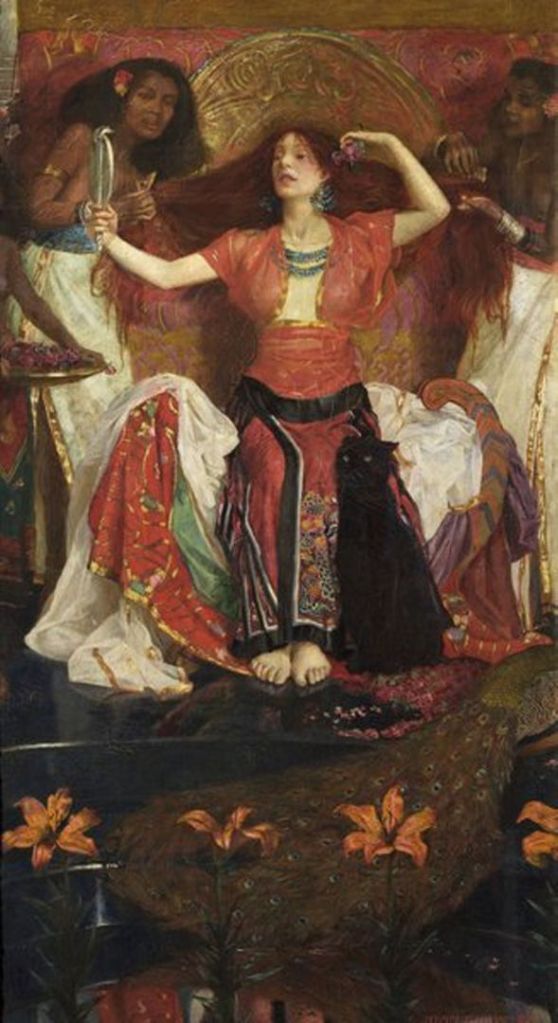
John Liston Byram Shaw, Jezebel. Museum: Russell-Cotes Art Gallery and Museum, Bournemouth, UK

2 Kings 9: 1-13 The Anointing of Jehu

1Then the prophet Elisha called a member of the company of prophets and said to him, “Gird up your loins; take this flask of oil in your hand, and go to Ramoth-gilead. 2When you arrive, look there for Jehu son of Jehoshaphat son of Nimshi; go in and get him to leave his companions, and take him into an inner chamber. 3Then take the flask of oil, pour it on his head, and say, ‘Thus says the Lord: I anoint you king over Israel.’ Then open the door and flee; do not linger.”
  4
So the young man, the young prophet, went to Ramoth-gilead. 5He arrived while the commanders of the army were in council, and he announced, “I have a message for you, commander.” “For which one of us?” asked Jehu. “For you, commander.” 6So Jehu got up and went inside; the young man poured the oil on his head, saying to him, “Thus says the LORD the God of Israel: I anoint you king over the people of the LORD, over Israel. 7You shall strike down the house of your master Ahab, so that I may avenge on Jezebel the blood of my servants the prophets and the blood of all the servants of the Lord. 8For the whole house of Ahab shall perish; I will cut off from Ahab every male, bond or free, in Israel. 9I will make the house of Ahab like the house of Jeroboam son of Nebat and like the house of Baasha son of Ahijah. 10The dogs shall eat Jezebel in the territory of Jezreel, and no one shall bury her.” Then he opened the door and fled.
  11
When Jehu came back to his master’s officers, they said to him, “Is everything all right? Why did that madman come to you?” He answered them, “You know the sort and how they babble.” 12They said, “Liar! Come on, tell us!” So he said, “This is just what he said to me: ‘Thus says the LORD, I anoint you king over Israel.’ ” 13Then hurriedly they all took their cloaks and spread them for him on the bare steps, and they blew the trumpet and proclaimed, “Jehu is king.”

In the previous chapter the long-delayed mission given to Elijah in 1 Kings 19: 15-18 to bring about the end of the Omri dynasty begins in earnest with the prophet Elisha acting as a catalyst in the rise of Hazael “son of nobody” to kill his master Ben-hadad and become the king of Aram. Now Elisha sets in motion God’s second instrument in the destruction of the Omri dynasty, Jehu. The prophet sends another member of the sons of the prophets (NRSVue company of prophets) to carry out this task of anointing Jehu, one of the commanders of the army, as the new king of Israel. Elisha may have been too well known to enter into the camp at Ramoth-gilead without creating whispers, but this young prophet goes in his stead to set Jehu in motion.

Choon Leong-Seow makes an educated assumption that these officers may be already plotting a coup based on how quickly they fall in line behind Jehu. (NIB III:217) Ultimately the narrative of 2 Kings does not give us any indication of this as the young prophet approaches, but a wounded and beaten leader recovering away from his military leaders is often viewed as vulnerable. It is also possible that some of these leaders may have viewed Elijah and Elisha favorably, and Jehu in particular is very aware of the words of Elijah and may even have a relationship with the sons of the prophets. This is all speculative, but it makes Jehu’s quick following of the young prophet to a place where he is anointed plausible.

The commissioning of Jehu as king is instrumental in his fulfilling of Elijah’s earlier condemnation of King Ahab’s line and Jezebel in the aftermath of the murder of Naboth in Jezreel to allow the king to take possession of his vineyard. (1 Kings 21) Jehu is named as the son of Jehoshaphat and the grandson of Nimshi, and while the inclusion of the grandfather in the patronym is unusual and may indicate the grandfather’s greater stature in the memory of the people than the father, it is likely that the inclusion of the grandfather’s name is to differentiate his line from Jehoshaphat son of Asa, the former king of Judah. Jehu is not coming from a royal bloodline, yet he is not a nobody. He is a commander of the army who the other commanders quickly acknowledge publicly as their leader.

In the aftermath of the prophet’s dangerous action and rapid departure, Jehu is questioned by his fellow officers about the message of ‘that madman.’ Prophets may have been viewed as mad because they were known to have ecstatic experiences, but they also were frequently (during the Omri dynasty) people who challenged the royal power. The anointing of Jehu is a dangerous action for Jehu if his colleagues view him as a traitor and he initially downplays the prophet’s purpose and message. After being convinced by his fellow officers to speak, these fellow officers join in this public act of declaring Jehu king. This act echoes the coming together of religious leaders and military leaders who anoint and blow the trumpet to declare Solomon king at the instructions of David. (1 Kings 1: 32-40) Jehu anointed by both the prophets and the military leaders moves quickly to become God’s instrument (in the view of 2 Kings) to remove the descendants of Ahab and his former wife Jezebel from their positions of power in Israel.


2 Kings 9: 14-29 Jehu Kills Joram and Ahaziah

  14Thus Jehu son of Jehoshaphat son of Nimshi conspired against Joram. Joram with all Israel had been on guard at Ramoth-gilead against King Hazael of Aram, 15but King Joram had returned to be healed in Jezreel of the wounds that the Arameans had inflicted on him when he fought against King Hazael of Aram. So Jehu said, “If this is your wish, then let no one slip out of the city to go and tell the news in Jezreel.” 16Then Jehu mounted his chariot and went to Jezreel, where Joram was lying ill. King Ahaziah of Judah had come down to visit Joram.
  17
In Jezreel, the sentinel standing on the tower spied the company of Jehu arriving and said, “I see a company.” Joram said, “Take a horseman; send him to meet them, and let him say, ‘Is it peace?’ ” 18So the horseman went to meet him; he said, “Thus says the king, ‘Is it peace?’ ” Jehu responded, “What have you to do with peace? Fall in behind me.” The sentinel reported, saying, “The messenger reached them, but he is not coming back.” 19Then he sent out a second horseman, who came to them and said, “Thus says the king, ‘Is it peace?’ ” Jehu answered, “What have you to do with peace? Fall in behind me.” 20Again the sentinel reported, “He reached them, but he is not coming back. It looks like the driving of Jehu son of Nimshi, for he drives like a maniac.”
  21
Joram said, “Get ready.” And they got his chariot ready. Then King Joram of Israel and King Ahaziah of Judah set out, each in his chariot, and went to meet Jehu; they met him at the property of Naboth the Jezreelite. 22When Joram saw Jehu, he said, “Is it peace, Jehu?” He answered, “What peace can there be, so long as the many prostitutions and sorceries of your mother Jezebel continue?” 23Then Joram reined about and fled, saying to Ahaziah, “Treason, Ahaziah!” 24Jehu drew his bow with all his strength and shot Joram between the shoulders, so that the arrow pierced his heart, and he sank in his chariot. 25Jehu said to his aide Bidkar, “Lift him out and throw him on the plot of ground belonging to Naboth the Jezreelite, for remember when you and I rode side by side behind his father Ahab how the Lord uttered this oracle against him: 26For the blood of Naboth and for the blood of his children that I saw yesterday, says the LORD, I swear I will repay you on this very plot of ground.’ Now, therefore, lift him out and throw him on the plot of ground in accordance with the word of the LORD.”

  27
When King Ahaziah of Judah saw this, he fled in the direction of Beth-haggan. Jehu pursued him, saying, “Shoot him also!” And they shot him in the chariot at the ascent to Gur, which is by Ibleam. Then he fled to Megiddo and died there. 28His officers carried him in a chariot to Jerusalem and buried him in his tomb with his ancestors in the city of David.
  29
In the eleventh year of Joram son of Ahab, Ahaziah began to reign over Judah.

Both King Joram of Samaria and King Ahaziah of Judah are at Jezreel and Joram lies ill after the battle with the Arameans. With the rest of the military remaining at Ramoth-gilead, Jehu acts quickly with his co-conspirators, preventing word from reaching Jezreel in advance of Jehu’s plot. Jehu mounts his chariot and heads west from Ramoth-gilead, across the Jordan river to Jezreel. Jehu is not traveling alone and is, in the later words of the sentinel driving his company like a madman[1] which is something Jehu is apparently known for. The sentinel dispatches a first horsemen who asks on behalf of the king, “Is it shalom (peace)” to which Jehu responds “What have you to do with shalom? Fall in behind me.” The first and later the second horseman, which echoes these words, obediently fall in behind Jehu rather than return to their post in Jezreel. Jehu is apparently a commander who the men respect and follow even in the violation of their king’s orders.

Finally, both Kings Joram and Ahaziah each mount up in their chariots to meet this approaching company under Jehu, and they meet at the property that once belonged to Naboth the Jezreelite. King Joram once again asks Jehu, ”Is it shalom?” Jehu’s response leaves no doubt his intentions are not peaceful, and King Joram is able to cry to Ahaziah “treason” before he is shot with a single arrow, similar to his father Ahab’s death in 1 Kings 22: 34. Unlike his father he is likely shot in the back while fleeing (the shot is literally between the arms so technically could be from the front but it is less likely to pierce the heart if the king is wearing a breastplate) and unlike his father who receives a royal burial in Samaria he is cast in the field taken from the murdered Naboth.

King Ahaziah of Judah also married into the family of King Ahab, and we learned that he was practicing the ways of the Omri dynasty as well. He is also mortally wounded in the conflagration, but he is taken to Jerusalem for a royal burial. In this moment of treachery, in the view of Joram and Ahaziah, or judgment, in the view of Jehu and Elisha, the leaders of both Samaria and Jerusalem are gone. Now Jehu turns his attention Jezebel who the texts views as the force behind the corruption of the leaders in both Israel and Judah.


2 Kings 9: 30-37 The Death of Jezebel

  30When Jehu came to Jezreel, Jezebel heard of it; she painted her eyes and adorned her head and looked out of the window. 31As Jehu entered the gate, she said, “Is it peace, Zimri, murderer of your master?” 32He looked up to the window and said, “Who is on my side? Who?” Two or three eunuchs looked out at him. 33He said, “Throw her down.” So they threw her down; some of her blood spattered on the wall and on the horses, which trampled on her. 34Then he went in and ate and drank; he said, “See to that cursed woman and bury her, for she is a king’s daughter.” 35But when they went to bury her, they found no more of her than the skull and the feet and the palms of her hands. 36When they came back and told him, he said, “This is the word of the LORD, which he spoke by his servant Elijah the Tishbite: In the territory of Jezreel the dogs shall eat the flesh of Jezebel; 37the corpse of Jezebel shall be like dung on the field in the territory of Jezreel, so that no one can say, ‘This is Jezebel.’ ”

Jezebel is viewed by 1&2 Kings as a corrupting influence on Israel and recently Judah through the marriage of her daughter Athaliah to Jehoram, who is the mother of the current king Ahaziah. Jezebel had brought the practices of royalty in Tyre to Samaria. Yet, in the midst of Jehu’s uprising she puts on makeup and dresses in a way that denotes her position as the queen mother. Most modern readers discount Jehu’s accusation of Jezebel’s prostitutions and sorceries (v. 22) as reflecting her worship of other gods and practices outside the laws and statues of Israel, but it is entirely possible that Jehu believes that she practices magic of some type. She mocks Jehu from her tower with the memory of Zimri (1 Kings 16: 9-16) another army officer who reigned briefly after striking down his king. Ironically Zimri was defeated by an army led by Omri, the father of Ahab-Jezebel’s late husband.

Two or three eunuchs throw Jezebel from her tower which in a moment, “transformed the narcissistic queen to a piece of rubbish in the streets.” (Brueggemann, 2000, p. 388) Jehu is unbothered by this gory site and enters the tower to eat and drink after his chariot ride and bloody work. He sends men to see to her body, although his remark that she is a king’s daughter may be ironic since he has already cast a king’s son out on the land of Naboth. Ultimately, there is not enough of Jezebel to bury which fulfills Elijah’s words in 1 Kings 21:23. The assassination of Jezebel does end a half-century alliance between Samaria and Tyre (Cogan, 1988, p. 120) but the writer of 2 Kings ultimately views this as a positive. The prophet Hosea would later criticize Jehu (Hosea 1:4) but the author of 2 Kings views his actions in this time as a necessary violence to bring about the needed end of the Omri dynasty which had corrupted northern Israel as well as Judah.


[1] This is the same Hebrew word, shuggah, used to refer to the young prophet in the previous section.

2 Kings 8 Transitioning from Prophetic Time to a Major Transition in Royal Time

Ivory carving found at Arslan Tash, Syria. A cache of ivories found at the Assyrian outpost of Arslan Tash was undoubtedly booty taken from Hazael’s palace in Damascus. The regal figure depicted on this piece is probably Hazael himself. (Louvre Museum, Paris)

2 Kings 8: 1-6 

1Now Elisha had said to the woman whose son he had restored to life, “Get up and go with your household and settle wherever you can, for the LORD has called for a famine, and it will come on the land for seven years.” 2So the woman got up and did according to the word of the man of God; she went with her household and settled in the land of the Philistines seven years. 3At the end of the seven years, when the woman returned from the land of the Philistines, she set out to appeal to the king for her house and her land. 4Now the king was talking with Gehazi the servant of the man of God, saying, “Tell me all the great things that Elisha has done.” 5While he was telling the king how Elisha had restored a dead person to life, the woman whose son he had restored to life appealed to the king for her house and her land. Gehazi said, “My lord king, here is the woman, and here is her son whom Elisha restored to life.” 6When the king questioned the woman, she told him. So the king appointed an official for her, saying, “Restore all that was hers, together with all the revenue of the fields from the day that she left the land until now.”

Elisha continues to provide for this woman who showed him hospitality and warns her and her child to flee the coming famine. The husband is not mentioned and is likely dead at this point in their story and this woman acts as a head of household. The seven years of famine matches the seven-year cycle of Genesis 41: 25-30 which causes the sons of Israel to seek food in Egypt, but here the famine is far more localized. Seven is a common biblical number of completion or a long time, and so the actual span of the drought may be longer or shorter than this commonly used number to designate a completed time. The woman makes her temporary home in Philistia, roughly 100 miles away, and avoids the impact of the famine. The famine is not explicitly stated as God’s judgment on the Omri dynasty in Samaria and is likely linked to the famine mentioned in the previous chapter during the siege of Samaria, but the famine as a part of God’s judgment against the Omri dynasty can be implied in the story. The stories of the last several chapters which chronicle the works of Elisha probably exist beyond the twelve years of King Jehoram of Judah (even though Jehoram’s reign brackets these stories). The king who is interested in the works of Elisha is the king of Israel, but likely not Jehoram or any other king of the Omri line.

Gehazi reemerges in the story, and this may either precede his affliction with leprosy/skin disease,[1] after some unmentioned healing of his disease, or he may remain afflicted. Whatever his condition he is able to converse with the king of Israel about the acts of Elisha. As he describes Elisha’s raising of the woman’s son, he points to this woman who has come to “cry out” (NRSVue appeal)[2] for the return of her property. The Torah imagines a world where the property of a family would be held by that family in perpetuity, but the narrative of scripture points to a different reality. It is possible that in her absence a relative or even squatters have come in and taken over her land, or that in her absence it became crown land, but this once well-connected woman now comes to appeal for her property. Her connection to Elisha allows her appeal to be heard by this king who is interested in the acts of Elisha, and her “crying out” is heard by the king who appoints an official[3] to restore not only her land but also the revenue from the land in the time of her absence.

2 Kings 8: 7-15

  7Elisha went to Damascus while King Ben-hadad of Aram was ill. When it was told him, “The man of God has come here,” 8the king said to Hazael, “Take a present with you and go to meet the man of God. Inquire of the LORD through him, whether I shall recover from this illness.” 9So Hazael went to meet him, taking a present with him, all kinds of goods of Damascus, forty camel loads. When he entered and stood before him, he said, “Your son King Ben-hadad of Aram has sent me to you, saying, ‘Shall I recover from this illness?’ ” 10Elisha said to him, “Go, say to him, ‘You shall certainly recover,’ but the LORD has shown me that he shall certainly die.” 11He fixed his gaze and stared at him to the point of embarrassment. Then the man of God wept. 12Hazael asked, “Why does my lord weep?” He answered, “Because I know the evil that you will do to the people of Israel; you will set their fortresses on fire; you will kill their young men with the sword, dash in pieces their little ones, and rip up their pregnant women.” 13Hazael said, “What is your servant, who is a mere dog, that he should do this great thing?” Elisha answered, “The LORD has shown me that you are to be king over Aram.” 14Then he left Elisha and went to his master Ben-hadad, who said to him, “What did Elisha say to you?” And he answered, “He told me that you would certainly recover.” 15But the next day he took the bedcover and dipped it in water and spread it over the king’s face, until he died. And Hazael succeeded him.

The prophet Elijah when he was instructed to anoint Elisha to be prophet in his place was also commanded to appoint Hazael as king over Aram and Jehu as king over Israel (1 Kings 19: 15-17). Elijah did call Elisha, but now it is Elisha who is engaged in Hazael’s ascension to power in Damascus. The story is an inversion of the story in 2 Kings 1 where King Ahaziah, king in Samaria, sends to inquire of Baal-zebub, the god of Ekron. While the king of Israel appeals to the god of Ekron, now a foreign king appeals to the prophet of Israel to inquire of the LORD his God. Yet, this inquiry of Ben-hadad sets in motion his demise despite the affirmative answer of the prophet. The prophetic messenger appoints Hazael to do the work that prophets do not do. The involvement of the prophet in both a lie and the politics of a foreign power has caused discomfort for some readers.

In the scriptures God often works through foreign powers, even if these powers are unaware of their participation in God’s action of judgment or deliverance. Hazael, the servant of Ben-hadad approaches the prophet with a large gift for this emissary of the God of Israel, but unlike Naaman’s large gift we never learn the disposition of the forty camel loads of gifts offered to the prophet. Hazael is informed of his role even though the prophet regrets the damage he will do to the people of Israel. Although Elisha gives Hazael the message that the king will recover from the illness, he also sets in motion a chain of events that lead to King Ben-hadad’s death at the hands of his servant. The prophet Amos views Hazael’s ascension as God’s act as well, but as a judgment on Ben-hadad (Amos 1: 3-4) but in Elisha’s view what is important is Hazael’s actions towards Israel. Following the original commissioning of Elijah to set Hazael over Aram and Jehu over Israel, both Aram and Jehu (and Elisha) are the swords that shall kill many. Many modern readers recoil at the violence of the actions attributed to Hazael in the prophet’s words, but war in the ancient world was violent. War of all times is violent, and innocent people often pay a heavy cost but armies in the ancient world did not act with the same restraint that modern militaries do in attempting to limit the destructiveness of the soldiers unleashed to practice violence on the enemy land and people. Hazael acknowledges that the violence the prophet describes would be a “great thing” and his only protest is that he is too insignificant to be able to accomplish this great thing. God has designated Hazael as a part of God’s plan for Israel, but Hazael is a blunt instrument that will incur a lot of damage in the removal of the Omri dynasty.

Elisha may weep for the future that he sees but he remains faithful to God’s vision. The ways of the Omri dynasty have led the people of Israel away to following other gods and unjust practices. Elisha may have wrestled with his role in being a part of the (ultimately) violent solution to the wicked (in the view of 2 Kings) kings of Israel who have now corrupted even the line of kings in Judah (see below). Many of the stories of Elisha have shown him working with individuals and groups in miraculous ways to help them navigate this world of famines and sieges. Yet, the narrative of 2 Kings attempts to understand how God is at work in the collapse of both Israel and Judah working through Aram, Assyria, and Babylon. Hazael, son of a nobody, as a large basalt statue of Shalmaneser refers to him derogatorily, (Cogan, 1988, p. 90) may not be anointed by Elisha in this story, but Elisha gives him the vision that leads to the suffocation of his ailing master and allows the son of a nobody to grasp power in Aram and to become God’s blunt instrument utilized in the judgment of Israel.

2 Kings 8: 16-29

  16In the fifth year of King Joram son of Ahab of Israel, Jehoram son of King Jehoshaphat of Judah began to reign. 17He was thirty-two years old when he became king, and he reigned eight years in Jerusalem. 18He walked in the way of the kings of Israel, as the house of Ahab had done, for the daughter of Ahab was his wife. He did what was evil in the sight of the LORD. 19Yet the LORD would not destroy Judah, for the sake of his servant David, since he had promised to give a lamp to him and to his descendants forever.
  20
In his days Edom revolted against the rule of Judah and set up a king of their own. 21Then Joram crossed over to Zair with all his chariots. He set out by night and attacked the Edomites and their chariot commanders who had surrounded him, but his army fled home. 22So Edom has been in revolt against the rule of Judah to this day. Libnah also revolted at the same time. 23Now the rest of the acts of Joram and all that he did, are they not written in the Book of the Annals of the Kings of Judah? 24So Joram slept with his ancestors and was buried with them in the city of David; his son Ahaziah succeeded him.

  25
In the twelfth year of King Joram son of Ahab of Israel, Ahaziah son of King Jehoram of Judah began to reign. 26Ahaziah was twenty-two years old when he began to reign; he reigned one year in Jerusalem. His mother’s name was Athaliah, a granddaughter of King Omri of Israel. 27He also walked in the way of the house of Ahab, doing what was evil in the sight of the LORD, as the house of Ahab had done, for he was son-in-law to the house of Ahab.
  28
He went with Joram son of Ahab to wage war against King Hazael of Aram at Ramoth-gilead, where the Arameans wounded Joram. 29King Joram returned to be healed in Jezreel of the wounds that the Arameans had inflicted on him at Ramah, when he fought against King Hazael of Aram. King Ahaziah son of Jehoram of Judah went down to see Joram son of Ahab in Jezreel because he was wounded.

The bulk of the first eight chapters of 2 Kings have broken from the typical construction of the story around the reigns of kings and has focused instead on the end of the prophet Elijah’s story and then multiple stories centered on the prophet Elisha. We will return to Elisha for a few final stories, but the narrator of 2 Kings returns us to the timeline of kings, particularly the kings in Judah. The narration of the book of kings has focused almost entirely on the northern kingdom of Samaria or Israel since the reign of Jehoshaphat in Judah in 1 Kings 22: 41-51. In contrast to his father and grandfather who followed the ways of the LORD, Jehoram[4] the new king of Judah follows the ways of the kings of Israel and is allied with these kings by marriage to Athaliah, a sister of king Joram of Israel. Like Jezebel, king Ahab’s wife, Athaliah is viewed as a corrupting influence upon both Jehoram and her son Ahaziah.

2 Chronicles reports a letter from Elijah to Jehoram:

12A letter came to him from the prophet Elijah, saying, “Thus says the LORD, the God of your father David: Because you have not walked in the ways of your father Jehoshaphat or in the ways of King Asa of Judah 13but have walked in the way of the kings of Israel and have led Judah and the inhabitants of Jerusalem into unfaithfulness, as the house of Ahab led Israel into unfaithfulness, and because you also have killed your brothers, members of your father’s house, who were better than you, 14see, the LORD will bring a great plague on your people, your children, your wives, and all your possessions, 15and you yourself will have a severe sickness with a disease of your bowels until your bowels come out, day after day, because of the disease.” 2 Chronicles 21:12-14

Both 2 Chronicles and 2 Kings view the time of Jehoram as a time which corrupted the house of David and jeopardized the enduring line promised to David. God restrains the judgement on these two unfaithful kings of Judah because of God’s loyalty to David, but Judah is in danger of becoming like the north.

Kings in the ancient world[5] are judged by their ability to maintain power and here we see the beginning of a deterioration of Judah’s control of Edom as well as one of its own cities. The narrative sets the infidelity toward the LORD of these two kings of Judah alongside their loss of power over their vassals. Readers can make a judgement about the connection between their inability to project power over their vassals and their unfaithfulness to the LORD (Brueggemann, 2000, p. 375) but the theological perspective of the narrator of 2 Kings would probably view them as connected. Alex Israel suggests that Libnah, as a Levite city, may have been demonstrating against the idolatrous religious orientation of Jehoram (Israel, 2019, p. 159) and while there were likely Levites and other people faithful to the LORD who were distressed about the direction of Judah under Jehoram and Ahaziah it is probably unlikely that one city would simply separate itself from Judah without the intervention of other powers. However, Alex Israel’s description of Judah under Jehoram is pointed and accurate:

we may certainly summarize his dismal eight-year reign as a period of national disintegration: religious deviation, internecine royal infighting, a collapse of regional influence, and failure to defend his country’s borders. Judah is in decline on all fronts. (Israel, 2019, p. 159)

The introduction of Ahaziah’s brief reign over Judah sets the stage for the violent transitions in Samaria and Jerusalem in the next three chapters. King Joram is wounded in battle like his father Ahab (1 Kings 22: 29-40) and Ahaziah goes to visit him at this critical moment where Elisha anoints Jehu which brings about the ending of the Omri dynasty and the violent transition in Jerusalem.


[1] See the discussion on skin disease/leprosy in chapter five.

[2] The Hebrew za’aq as Brueggemann notes is frequently used of those who are abused or oppressed “crying out” to God or someone who can intervene on their behalf. (Brueggemann, 2000, p. 366)

[3] Mordechai Cogan and Hayim Tadmor note that saris means ‘eunuch’ based on linguistic evidence. (Cogan, 1988, p. 112)

[4] Both Jehoram and Joram have the same name, they are differentiated in translations to make it easier to refer to these kings in Samaria and Judah which reign concurrently.

[5] The bible, particularly 1&2 Kings, evaluates kings on a completely different set of values, but in general kings in the ancient world were supposed to maintain or increase their territory and wealth. Wealth was primarily generated through land as a producer of agriculture, livestock, and mineral resources.

2 Kings 1: The Foolish King Ahaziah Confronted By God Through Elijah

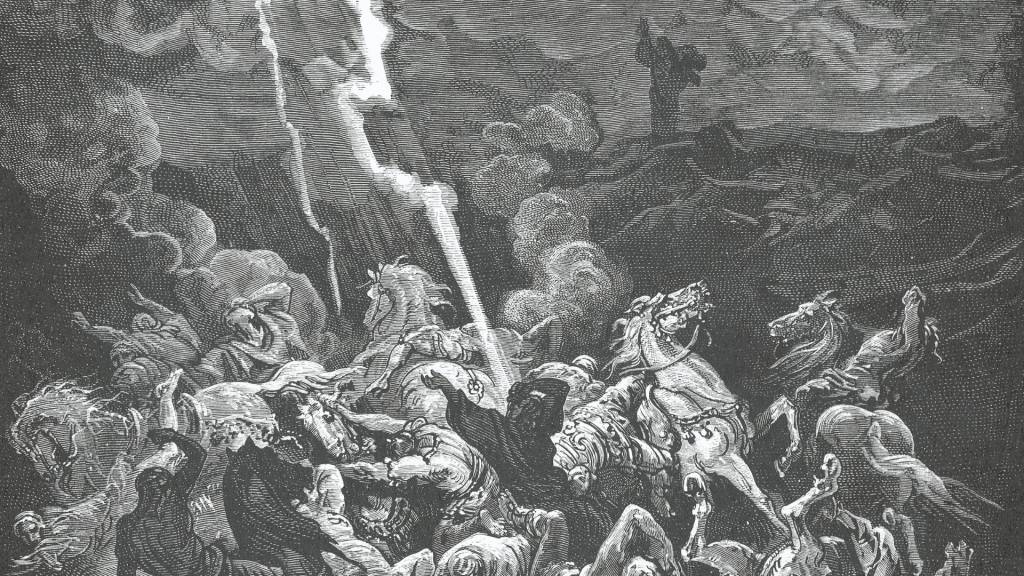
Gustave Dore, Fire Consumes the Soldiers of Ahaziah from the Illustrated Bible. 19th Century Engraving. Cropped Image

2 Kings 1

1 After the death of Ahab, Moab rebelled against Israel. 2 Ahaziah had fallen through the lattice in his upper chamber in Samaria, and lay injured; so he sent messengers, telling them, “Go, inquire of Baal-zebub, the god of Ekron, whether I shall recover from this injury.” 3 But the angel of the LORD said to Elijah the Tishbite, “Get up, go to meet the messengers of the king of Samaria, and say to them, ‘Is it because there is no God in Israel that you are going to inquire of Baal-zebub, the god of Ekron?’ 4 Now therefore thus says the LORD, ‘You shall not leave the bed to which you have gone, but you shall surely die.'” So Elijah went.

5 The messengers returned to the king, who said to them, “Why have you returned?” 6 They answered him, “There came a man to meet us, who said to us, ‘Go back to the king who sent you, and say to him: Thus says the LORD: Is it because there is no God in Israel that you are sending to inquire of Baal-zebub, the god of Ekron? Therefore you shall not leave the bed to which you have gone, but shall surely die.'” 7 He said to them, “What sort of man was he who came to meet you and told you these things?” 8 They answered him, “A hairy man, with a leather belt around his waist.” He said, “It is Elijah the Tishbite.”

9 Then the king sent to him a captain of fifty with his fifty men. He went up to Elijah, who was sitting on the top of a hill, and said to him, “O man of God, the king says, ‘Come down.'” 10 But Elijah answered the captain of fifty, “If I am a man of God, let fire come down from heaven and consume you and your fifty.” Then fire came down from heaven, and consumed him and his fifty.

11 Again the king sent to him another captain of fifty with his fifty. He went up and said to him, “O man of God, this is the king’s order: Come down quickly!” 12 But Elijah answered them, “If I am a man of God, let fire come down from heaven and consume you and your fifty.” Then the fire of God came down from heaven and consumed him and his fifty.

13 Again the king sent the captain of a third fifty with his fifty. So the third captain of fifty went up, and came and fell on his knees before Elijah, and entreated him, “O man of God, please let my life, and the life of these fifty servants of yours, be precious in your sight. 14 Look, fire came down from heaven and consumed the two former captains of fifty men with their fifties; but now let my life be precious in your sight.” 15 Then the angel of the LORD said to Elijah, “Go down with him; do not be afraid of him.” So he set out and went down with him to the king, 16 and said to him, “Thus says the LORD: Because you have sent messengers to inquire of Baal-zebub, the god of Ekron,– is it because there is no God in Israel to inquire of his word?– therefore you shall not leave the bed to which you have gone, but you shall surely die.”

17 So he died according to the word of the LORD that Elijah had spoken. His brother, Jehoram succeeded him as king in the second year of King Jehoram son of Jehoshaphat of Judah, because Ahaziah had no son. 18 Now the rest of the acts of Ahaziah that he did, are they not written in the Book of the Annals of the Kings of Israel?

This final prophetic episode in the Elijah cycle prior to the ascension of Elijah in the following chapter occurs during the year long reign of Ahaziah.[1] The division between 1 Kings and 2 Kings splits the comments on the brief reign of Ahaziah between the final three verses of 1 Kings and the initial chapter of 2 Kings. Ahaziah’s insignificant reign cut short by his injury and offense against God are contrasted with the significant prophet Elijah’s final action. The Book of Kings could easily have been the Book of Prophets, since for most of the book the kings are often secondary characters to the prophets.

Ahaziah fell from his upper chamber to the lower floor and is injured by the fall and confined to his bed. Yet, Ahaziah’s response to his injury is what dominates his portion of the story. Instead of appealing to the LORD, whether through a prophet or through the temple in Jerusalem he sends messengers to Ekron to appeal to the priests of prophets of Baal-zebub. There has been an ongoing animosity between the leaders in Samaria and Jerusalem, and the Omri dynasty has also been hostile to Elijah and other prophets of the LORD so on the one hand the action of Ahaziah to appeal to a foreign god, even a god of the once hostile Philistines, is not out of character for the Omri dynasty. Yet it is an audacious slight of the LORD the God of Israel, one that will have fatal consequences for this insignificant king.

Baal-zebub, the title for the god of Ekron would be the lord of the flies, and this is likely an intended insult of Baal-zebul the lord of the house. This is reflected title Beelzebul in the New Testament when Jesus is accused of being in lead with the lord of demons.[2] This minor spelling change turns the master of the house into the master of something considered a pest and nuisance in the ancient world. It is possible that ‘zebub’ is a local ‘baal’[3] and there is some debate over the rendering of ‘zebub’ as ‘fly’, but the Bible does frequently use insults for the other ‘gods’ that the people of Israel and the surrounding country follow.

Hebrew loves wordplay and it helps to know that the word for messenger (malakh) and angel (malakim) are closely related. Ahaziah sends messengers and the messenger of the LORD comes to Elijah to intercept these messengers of the king. Elijah’s message from the messenger (angel) of God speaks directly to the king’s messengers, “Is it because there is no God in Israel that you (plural) are going to inquire of Baal-zebub, the god of Ekron?” But when the king’s messengers return to the king they now point the blame on the king, “Is it because there is no God in Israel that you (singular) are sending to inquire of Baal-zebub, the god of Ekron?”  The sentence declared on the king is terminal by the LORD. As Brueggemann states:


The particular phrase, “surely die,” is repeated three times by the prophet (1:4, 6, 16). While the phrase looks commonplace in the English translation, it is in fact a quite severe, absolute, and formal pronouncement of a death penalty from which there is no escape or reprieve. (Brueggemann, 2000, p. 284)

From the description of the man who intercepted the prophets, a hairy man with a leather belt around his waist, the king realizes that it is the longtime foe of the Omri dynasty, the prophet Elijah. Elijah’s successor Elisha we will learn in 2:23 is bald and so there is a drastic difference in the appearance of the hairy man and the man ridiculed for being bald. The description of Elijah will also be paralleled, although in an inexact manner, by the appearance of John the Baptist at the beginning of the gospels.[4] Elijah and Elisha will be different in appearance and as we transition to the Elisha cycle it will be worthwhile to compare the ministries of these two prophets.

The king views Elijah as a threat and sends three separate leaders and soldiers to bring Elijah down from the mountain.[5] The king desires to bring Elijah down by force but only manages to cause Elijah to bring down the fire of God upon his forces.[6] The first commander of fifty goes up the mountain to approach Elijah and orders the man of God to come down, yet Elijah demonstrates that the forces of the king are no match for the power of God as the first group of fifty is consumed. The second leader goes up to Elijah, but he may not go up the mountain. There may be some hint in the story that this second commander keeps his distance, but his words indicate that now the king orders Elijah to come down. The second group of fifty meets the same fate as the first. The final commander comes and kneels before the prophet and asks the prophet to show grace[7] for his life and the lives of his men. This final commander also indicates that he is Elijah’s servant instead of the king’s. The messenger (angel) of the LORD lets Elijah know it is safe to go with this commander to deliver the message directly to the king.

For the narrative of 2 Kings, King Ahaziah dies because of the declaration of the LORD not the injuries the king receives falling through the lattice. Throughout the Elijah cycle the people under the Omri dynasty have had divided loyalties. Elijah is an uncompromising in his zeal for the LORD the God of Israel and although the Omri will continue beyond the time of Elijah, it is quickly coming to end. Ahaziah in the narrative of the Book of Kings will be one more king whose brief reign in Samaria will be defined by his disobedience to the LORD the God of Israel.


[1] 1 Kings 22:51 notes that Ahaziah ruled for two years. He came to power in the seventeenth year of Jehoshaphat of Judah and died in his eighteenth year, but his total reign was less than twelve months long. (Cogan, 1988, p. 21)

[2] Matthew 10:25; 12: 24,27; Mark 3:22; Luke: 11: 15, 18, 19.

[3] Baal is a general title for lord, and there were multiple ‘Baals’ worshipped regionally throughout Canaan.

[4] John is wearing camel’s hair as clothing rather than being described as hairy, although he does have the leather belt around his waist.

[5] Choon-Leong Seow notes that the same word har is used here as a Mount Carmel and the NIV and NRSV translation of this as ‘hill’ obscures the linkage to the previous story (1 Kings 18). (NIB III:173)   

[6] Once again there is a Hebrew wordplay between the word for ‘man’ (‘is) and the word for fire (‘es). NIB III: 173.

[7] NRSV entreat. The Hebrew hanan means “to show grace’. (Brueggemann, 2000, p. 286)