Tag Archives: Judah

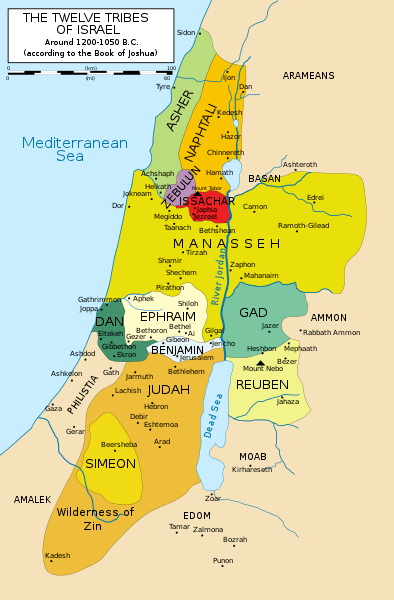
Judges 1 The Disposition of the People of Israel

Cracked pots, Picture taken by Enric from the Monestary of Sanahin, Armenia shared under creative commons 4.0

Joshua 1: 1-21 The Mainly Positive Beginnings of the Southern Tribes

1 After the death of Joshua, the Israelites inquired of the LORD, “Who shall go up first for us against the Canaanites, to fight against them?” 2 The LORD said, “Judah shall go up. I hereby give the land into his hand.” 3 Judah said to his brother Simeon, “Come up with me into the territory allotted to me, that we may fight against the Canaanites; then I too will go with you into the territory allotted to you.” So Simeon went with him. 4 Then Judah went up and the LORD gave the Canaanites and the Perizzites into their hand; and they defeated ten thousand of them at Bezek. 5 They came upon Adoni-bezek at Bezek, and fought against him, and defeated the Canaanites and the Perizzites. 6 Adoni-bezek fled; but they pursued him, and caught him, and cut off his thumbs and big toes. 7 Adoni-bezek said, “Seventy kings with their thumbs and big toes cut off used to pick up scraps under my table; as I have done, so God has paid me back.” They brought him to Jerusalem, and he died there. 8 Then the people of Judah fought against Jerusalem and took it. They put it to the sword and set the city on fire.

9 Afterward the people of Judah went down to fight against the Canaanites who lived in the hill country, in the Negeb, and in the lowland.10 Judah went against the Canaanites who lived in Hebron (the name of Hebron was formerly Kiriath-arba); and they defeated Sheshai and Ahiman and Talmai.

11 From there they went against the inhabitants of Debir (the name of Debir was formerly Kiriath-sepher). 12 Then Caleb said, “Whoever attacks Kiriath-sepher and takes it, I will give him my daughter Achsah as wife.” 13 And Othniel son of Kenaz, Caleb’s younger brother, took it; and he gave him his daughter Achsah as wife. 14 When she came to him, she urged him to ask her father for a field. As she dismounted from her donkey, Caleb said to her, “What do you wish?” 15 She said to him, “Give me a present; since you have set me in the land of the Negeb, give me also Gulloth-mayim.” So Caleb gave her Upper Gulloth and Lower Gulloth.

16 The descendants of Hobab the Kenite, Moses’ father-in-law, went up with the people of Judah from the city of palms into the wilderness of Judah, which lies in the Negeb near Arad. Then they went and settled with the Amalekites.17 Judah went with his brother Simeon, and they defeated the Canaanites who inhabited Zephath, and devoted it to destruction. So the city was called Hormah. 18 Judah took Gaza with its territory, Ashkelon with its territory, and Ekron with its territory. 19 The LORD was with Judah, and he took possession of the hill country, but could not drive out the inhabitants of the plain, because they had chariots of iron. 20 Hebron was given to Caleb, as Moses had said; and he drove out from it the three sons of Anak. 21 But the Benjaminites did not drive out the Jebusites who lived in Jerusalem; so the Jebusites have lived in Jerusalem among the Benjaminites to this day.

The book of Judges comes from a world that would seem alien to a modern reader. It is a time where the tribes and families that make up Israel are no longer united under a charismatic leader like Moses or Joshua and are not a nation in the modern sense. Moses and Joshua may have been able to hold the tribes together through the wilderness and the initial conflict with the Canaanites in the promised land, but with the death of Joshua the tribes and families no longer work together in harmony. The book of Judges narrates a theologically interpreted story of the decline of Israel in this time between the initial occupation of the promised land and the anointing of the first king of Israel.

The book of Judges is a challenging book for many reasons, but one which we encounter immediately is the expectation that the Canaanite people who occupy the promised land will be destroyed. Throughout Exodus, Leviticus, Numbers, Deuteronomy, and Joshua the have frequently echoed the command to destroy the people in the land so that the people of Israel would not adopt their practices or worship their gods. The violence of the occupation of the promised land can seem difficult to reconcile with the vision of God that many modern Jews and Christians have, and it is often hard to reconcile modern values with the actions of ancient people. The failure of the people to fully remove the populations that existed in the promised land and the failure of these tribes and families to consistently live the values outlined in the law highlights, in the view of the author of Judges, the danger of alternative visions of structuring society and of worshipping other gods to the identity of the people of Israel. As people who live in a secular and pluralistic nation it can be difficult to imagine the ideal of a theocratic and homogenous population living according to the vision of books like Deuteronomy. Apparently this vision was difficult for the people in the time of Judges to adhere to as well.

Judges begins its narration in the time after the death of Joshua. The initial military actions undertaken by Judah and Simeon are viewed in a mainly positive light. Judah and Simeon are both located at the southern end of the territory that the tribes occupy and form a mutual alliance to deal with the significant Canaanite forces still in their region. The numbers throughout Judges are difficult to translate, especially the Hebrew word ‘elep which is frequently translated thousands, but which may refer to a much smaller number in some places.[1] Even if the number of people the tribes of Judah and Simeon defeat at Bezek is less than 10,000, it is still a large battle for tribes with no standing army. The initial defeat of the Canaanites and Perizzites and their actions toward the captured king Adoni-bezek are reminders that the ancient world is a violent place. Adoni-bezek, in the narrative of Judges, views his own loss of thumbs and big toes as divine repayment[2] (although the word for God here is the generic god and not necessarily the God of Israel) for his own action of removing the thumbs and toes from kings he has conquered. The narrative is not always consistent as we see in verse eight and twenty-one, where Jerusalem is taken and burned by Judah but the residents of Jerusalem remain and are not driven out by Benjamin.

The battle in the hill country takes us back into the narrative of Joshua, where the land of Hebron is given to Caleb, the only other survivor of the Exodus journey. Caleb’s family defeats Sheshai, Ahiman, and Talmai who are descendants of Anak (Joshua, 15:14), the feared Anakim who originally caused the people of Israel to fear occupying the promised land. (Numbers 13: 28) These once feared ‘mighty men’ are now defeated and the final living member of the people who left Egypt finally receives his inheritance. The narrative of Caleb, Othniel, and Achsah highlights that we are dealing with collections of families who are working together rather than an organized nation. Othniel, who will be lifted up as the first judge, takes the city of Kiriath-sepher and wins the promised hand of Achsah, daughter of Caleb. Marriages in the ancient world were primarily economic arrangements that were to be mutually beneficial to both parties. Although Achsah may not have any choice in the marriage, she will show her own initiative in relation to both Caleb and Othniel. As Barry Webb can highlight:

From the moment of her entry (v. 14a), Achsah ceases to be an object acted upon by two men. She seizes the opportunity to get something which neither her father nor her husband has considered. Her father has already given the land of the Negeb as her dowry (v.15c). Achsah greatly enhances its value by negotiating successfully for water rights, something of great importance given the predominantly dry nature of the area. (Webb 2012, 104)

Women in the bible are often more assertive than interpreters give them credit for, and especially in the book of Judges we will see a number of women play large roles. This may also highlight the difference between the relatively positive beginning of Judges where women are able to negotiate on behalf of themselves and their families and the very dark conclusion of Judges where women are often the victims of violent acts which deny them safety and the ability to work for their own futures.

The book of Judges is not universally negative toward people who are not a part of the people of Israel, and this is highlighted by the position of the descendants of Hobab the Kenite. This partnership which goes back to Moses allows both the people of Israel and Kenite to live at peace and benefit from their relationship. The military conquest of Judah and Simeon is viewed in a predominantly positive manner, but they remain unable to expel the inhabitants of the plain who have iron chariots, which would have been the pinnacle of military technology in the early iron age. The clans of Judah and Simeon gain control over the majority of their territory but the Canaanite people and their religion prove incredibly challenging to expel completely from their region. The story gets significantly darker as the focus turns to Benjamin, who was not asked to partner with Judah and Simeon, and their inability to drive out the Jebusites and their cohabitation with the Jebusites in Jerusalem.

Judges 1: 22-34 The Less Positive Beginning of the Northern Tribes

22 The house of Joseph also went up against Bethel; and the LORD was with them. 23 The house of Joseph sent out spies to Bethel (the name of the city was formerly Luz). 24 When the spies saw a man coming out of the city, they said to him, “Show us the way into the city, and we will deal kindly with you.” 25 So he showed them the way into the city; and they put the city to the sword, but they let the man and all his family go. 26 So the man went to the land of the Hittites and built a city, and named it Luz; that is its name to this day.

27 Manasseh did not drive out the inhabitants of Beth-shean and its villages, or Taanach and its villages, or the inhabitants of Dor and its villages, or the inhabitants of Ibleam and its villages, or the inhabitants of Megiddo and its villages; but the Canaanites continued to live in that land. 28 When Israel grew strong, they put the Canaanites to forced labor, but did not in fact drive them out.

29 And Ephraim did not drive out the Canaanites who lived in Gezer; but the Canaanites lived among them in Gezer.

30 Zebulun did not drive out the inhabitants of Kitron, or the inhabitants of Nahalol; but the Canaanites lived among them, and became subject to forced labor.

31 Asher did not drive out the inhabitants of Acco, or the inhabitants of Sidon, or of Ahlab, or of Achzib, or of Helbah, or of Aphik, or of Rehob; 32 but the Asherites lived among the Canaanites, the inhabitants of the land; for they did not drive them out.

33 Naphtali did not drive out the inhabitants of Beth-shemesh, or the inhabitants of Beth-anath, but lived among the Canaanites, the inhabitants of the land; nevertheless the inhabitants of Beth-shemesh and of Beth-anath became subject to forced labor for them.

34 The Amorites pressed the Danites back into the hill country; they did not allow them to come down to the plain. 35 The Amorites continued to live in Har-heres, in Aijalon, and in Shaalbim, but the hand of the house of Joseph rested heavily on them, and they became subject to forced labor. 36 The border of the Amorites ran from the ascent of Akrabbim, from Sela and upward.

The two tribes of Joseph (Ephraim and Manasseh) are the two largest northern tribes and they unite to go against Luz (which will be renamed Bethel). The taking of Bethel shares many commonalities with the taking of Jericho in the book of Joshua (Joshua 2, 6) where a hesed (faithful) agreement is made with a resident of the city which allows the city to be taken. Bethel becomes the northern counterpoint to Jerusalem, and yet the destruction of Luz gives birth to a new city of Luz in the land of the Hittites. After the initial success of the northern tribes we receive a litany of all the Canaanites that are not driven out from the land. The Canaanites prove to be difficult to remove from the land and these remaining tribes either lack the ability or the will to secure their inheritance. In many cases the Canaanites become forced labor for these tribes and families, but in the case of Dan it is the Canaanites who retain control of most of the land forcing the Danites back into the hill country.

The inertia of the time of Joshua comes to a halt. The stage is set for the cyclical pattern of decay among the people which the book of Judges narrates. As Michael Hattin says eloquently:

Leaderless, and no longer certain of their mission, the people of Israel instead settle down, content to farm their fertile plots, raise their flocks and families, and leave the process of possession incomplete. The Canaanites continue to dwell among them, with their religious and moral system intact, and the siren call of their gods soon took effect. (Hattin 2020, 10)

Israel was always intended to be an alternative to Egypt, Canaan, and the other moral and religious visions present in the ancient world. Instead, we find the people at the end of this narrative adopting the enslaving practices they found themselves victims of in Egypt and tolerating the presence of competing visions for society complete with alternative religious systems. There is no Moses or Joshua to rally the people from their lethargy, nor is there a strong sense of unity among the tribes. The book of Judges attempts to make sense of a dark time in the story of Israel and after one chapter we are in a position to encounter the recurring challenge of faithfulness to the vision their God intended for the people. They were unable or unwilling to create a space free of alternative moral and religious visions to attempt this great divine experiment of a people living in a covenant with their God, a people living a life ordered by the law of God. Instead they live out their vocation as a covenant people in a place of competing messages and loyalties and the results do not live up to the hope of the author of Judges.

[1] For a complete discussion of the problem of large numbers in the book of Judges see Barry G. Webb’s note on translation. (Webb 2012, 71-74)

[2] The notion of divine ‘repayment’ will also feature in the stories of Gideon, Abimelech, and Samson.

Jeremiah 26 The Prophet, the Temple and the Elders

Jeremiah 26: 1-19 The Prophet, the Temple and the Elders

Ilya Repin, Cry of the Prophet Jeremiah on the Ruins of Jerusalem (1870)

Ilya Repin, Cry of the Prophet Jeremiah on the Ruins of Jerusalem (1870)

At the beginning of the reign of King Jehoiakim son of Josiah of Judah, this word came from the LORD: 2 Thus says the LORD: Stand in the court of the LORD’s house, and speak to all the cities of Judah that come to worship in the house of the LORD; speak to them all the words that I command you; do not hold back a word. 3 It may be that they will listen, all of them, and will turn from their evil way, that I may change my mind about the disaster that I intend to bring on them because of their evil doings. 4 You shall say to them: Thus says the LORD: If you will not listen to me, to walk in my law that I have set before you, 5 and to heed the words of my servants the prophets whom I send to you urgently– though you have not heeded– 6 then I will make this house like Shiloh, and I will make this city a curse for all the nations of the earth.

 7 The priests and the prophets and all the people heard Jeremiah speaking these words in the house of the LORD. 8 And when Jeremiah had finished speaking all that the LORD had commanded him to speak to all the people, then the priests and the prophets and all the people laid hold of him, saying, “You shall die! 9 Why have you prophesied in the name of the LORD, saying, ‘This house shall be like Shiloh, and this city shall be desolate, without inhabitant’?” And all the people gathered around Jeremiah in the house of the LORD.

                10 When the officials of Judah heard these things, they came up from the king’s house to the house of the LORD and took their seat in the entry of the New Gate of the house of the LORD. 11 Then the priests and the prophets said to the officials and to all the people, “This man deserves the sentence of death because he has prophesied against this city, as you have heard with your own ears.”

 12 Then Jeremiah spoke to all the officials and all the people, saying, “It is the LORD who sent me to prophesy against this house and this city all the words you have heard. 13 Now therefore amend your ways and your doings, and obey the voice of the LORD your God, and the LORD will change his mind about the disaster that he has pronounced against you. 14 But as for me, here I am in your hands. Do with me as seems good and right to you. 15 Only know for certain that if you put me to death, you will be bringing innocent blood upon yourselves and upon this city and its inhabitants, for in truth the LORD sent me to you to speak all these words in your ears.”

 16 Then the officials and all the people said to the priests and the prophets, “This man does not deserve the sentence of death, for he has spoken to us in the name of the LORD our God.” 17 And some of the elders of the land arose and said to all the assembled people, 18 “Micah of Moresheth, who prophesied during the days of King Hezekiah of Judah, said to all the people of Judah: ‘Thus says the LORD of hosts, Zion shall be plowed as a field; Jerusalem shall become a heap of ruins, and the mountain of the house a wooded height.’ 19 Did King Hezekiah of Judah and all Judah actually put him to death? Did he not fear the LORD and entreat the favor of the LORD, and did not the LORD change his mind about the disaster that he had pronounced against them? But we are about to bring great disaster on ourselves!”

This passage is traditionally linked with the ‘Temple Sermon of Jeremiah’ in Jeremiah 7 and into chapter 8 based on the dating and the circumstances lined out in the first lines. Jeremiah goes into the temple, the heart of the royal and priestly justification of the people’s favored status and compares the temple to Shiloh, which was an earlier site of the tabernacle site in the time of 1 Samuel. The prophet calls the people back to the two sided covenant of Deuteronomy, ‘If you will do these things, then you will be blessed, if you will not do these things you will be cursed.’ Since the construction of the temple by Solomon there has been a critique of the possibility of relying solely on the temple for maintaining the people’s status with God. For example when God answers Solomon’s prayer in 1 Kings 9, it relates the answer as this:

2 the LORD appeared to Solomon a second time, as he had appeared to him at Gibeon. 3 The LORD said to him, “I have heard your prayer and your plea, which you made before me; I have consecrated this house that you have built, and put my name there forever; my eyes and my heart will be there for all time. 4 As for you, if you will walk before me, as David your father walked, with integrity of heart and uprightness, doing according to all that I have commanded you, and keeping my statutes and my ordinances, 5 then I will establish your royal throne over Israel forever, as I promised your father David, saying, ‘There shall not fail you a successor on the throne of Israel.’

 6 “If you turn aside from following me, you or your children, and do not keep my commandments and my statutes that I have set before you, but go and serve other gods and worship them, 7 then I will cut Israel off from the land that I have given them; and the house that I have consecrated for my name I will cast out of my sight; and Israel will become a proverb and a taunt among all peoples. 8 This house will become a heap of ruins; everyone passing by it will be astonished, and will hiss; and they will say, ‘Why has the LORD done such a thing to this land and to this house?’ 9 Then they will say, ‘Because they have forsaken the LORD their God, who brought their ancestors out of the land of Egypt, and embraced other gods, worshiping them and serving them; therefore the LORD has brought this disaster upon them.'” (1Kings 9:2-9)

Yet in the time of King Jehoiakim this way of understanding the covenant with God is either forgotten or neglected. For the prophet claims of obedience to God’s law/Torah are more important than any human authority. This undercuts the certitude of not only Jehoiakim, but particularly here the priests in the temple where Jeremiah makes his proclamation. Their lives are invested in the maintaining of the centrality of the temple worship and the proclamation of the prophet threatens not only their temple with its words but their livelihood. The react quickly and harshly demanding the death of Jeremiah because he has spoken against the temple and the city and bring him before the leadership of the city. It is a tense picture painted where the priest and temple authorities and the crowd have surrounded the prophet and the city leaders quickly move to bring calm to the situation and hold judgment in the case of this troublesome prophet.

For his part, Jeremiah denies nothing that he is accused of and yet he claims his role as a prophet of God speaking on God’s behalf and still in the hope of both the prophet and God that the people will hear and turn from their ways. What the priests have heard as condemnation is from Jeremiah’s perspective a hope for turning and rescue by God, but the words have fallen on unreceptive ears.  Jeremiah knows that his life rests in these officials’ hands and yet he warns them that if they take his life they will be liable for innocent blood.

The elder’s rely on the precedence of Micah, one of the examples of intertextuality in the Bible. This instance refers back to the prophet Micah who a century earlier had spoken harsh words against the city, and yet Micah was not killed by the leadership then. The ‘elders’ override the ‘priest’ and the historical memory of prophetic witness and Torah piety hold out in this case and the elders too are able to see this as an opportunity for repentance rather than a certain doom. Unfortunately for the people the repentance does not come as the priestly and royal authority are hostile to this message that Jeremiah proclaim.

Jeremiah 26:20-24 The Risk of the Prophetic Challenge


                20 There was another man prophesying in the name of the LORD, Uriah son of Shemaiah from Kiriath-jearim. He prophesied against this city and against this land in words exactly like those of Jeremiah. 21 And when King Jehoiakim, with all his warriors and all the officials, heard his words, the king sought to put him to death; but when Uriah heard of it, he was afraid and fled and escaped to Egypt.22 Then King Jehoiakim sent Elnathan son of Achbor and men with him to Egypt, 23 and they took Uriah from Egypt and brought him to King Jehoiakim, who struck him down with the sword and threw his dead body into the burial place of the common people.

 24 But the hand of Ahikam son of Shaphan was with Jeremiah so that he was not given over into the hands of the people to be put to death.

King Jehoiakim is not receptive to Jeremiah’s message, and while Jeremiah apparently has some protection from Ahikam son of Shaphan another prophet, Uriah son of Shemaiah does not. The words of Uriah infuriate the king enough to send men into Egypt to capture, bring the prophet to the king and then to be killed by the king. This is not a welcome time for prophets and death and torture are real possibilities to ensure the message of King Jehoiakim is the dominant message heard.

The Place of Authority: A Brief History Part 2: King, Temple and the Prophetic Critique

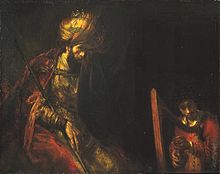
David and King Saul, Rembrandt

David and King Saul, Rembrandt

 So Samuel reported all the words of the LORD to the people who were asking him for a king. He said, “These will be the ways of the king who will reign over you: he will take your sons and appoint them to his chariots and to be his horsemen, and to run before his chariots; and he will appoint for himself commanders of thousands and commanders of fifties, and some to plow his ground and to reap his harvest, and to make his implements of war and the equipment of his chariots. He will take your daughters to be perfumers and cooks and bakers. He will take the best of your fields and vineyards and olive orchards and give them to his courtiers. He will take one-tenth of your grain and of your vineyards and give it to his officers and his courtiers. He will take your male and female slaves, and the best of your cattle and donkeys, and put them to his work. He will take one-tenth of your flocks, and you shall be his slaves. And in that day you will cry out because of your king, whom you have chosen for yourselves; but the LORD will not answer you in that day.” 1 Samuel 8.10-18


At roughly 1,020 BCE a decisive change takes place and Israel enters the time of monarchy.  Power becomes consolidated briefly under King Saul.  Two men, King Saul and Samuel, whose title before had been that of a judge but functioned as a mouthpiece for God at this point, hold the religious and political authority.  Israel begins to act as a powerful actor in the region, constantly moving from one conflict to another, but internal conflict emerges when David emerges on the scene.  Without getting bogged down in the story or trying to parse out what happened historically  by 1000 David would unify his power as king and Israel became for a brief shining moment a power player on the world stage, Jerusalem becomes the capitol, and then perhaps decisively for this era the temple is established under Solomon.   Especially for the Southern Kingdom of Judah this is decisive because the monarchy and the temple become linked as the dominant secular/religious authority. There is a prophetic voice within that critiques the monarchy and temple, but for the most part the people give up a portion of their freedom for the relative security, power and identity of being a part of the unified kingdom of Israel.  That is not to say that family, clan and tribe have lost their power or authority, but that the people become much more linked to the kings and temple than at any previous point in their history.

This is probably a good point for a fun interlude, it is hard for us to imagine being bound in systems where our autonomy is defined so externally.  We don’t have any experience of a monarchical system and so our reaction might be somewhat like the peasants in this scene from Monty Python and the Holy Grail.  Even a romanticized king when we look from our perspective seems like a tyranny or despot.

Even though King David is often looked upon romantically like the King Arthur of legend, one of the incredible things is that the recorded memory of David includes many ugly situations, many family struggles, many times where he is at odds with the prophetic voice of the time.  The whole Bathsheba and Uriah episode (2 Samuel 10-12), incest within the royal family (2 Samuel 13) and eventually the usurpation of the throne by his son Absalom (2 Samuel 15-19) as well as other internal rebellions are a part of David’s roughly forty years of consolidated rule.  Even though the King amasses incredible authority previously unattainable in anyone’s imagination the constant warfare and internal struggles begin to wear on the people.  By the time Solomon, David’s son, ascends to the throne it is a relatively peaceful time but the energy is directed internally on large building projects, the temple, but also many houses and palaces for Solomon and his entourage. The temple becomes, at least for a large group of people, the central focus of worship, and yet again just like with the idea of consolidating power with a king there is a large amount of space dedicated to the critique of the temple

 King Solomon conscripted forced labor out of all Israel; the levy numbered thirty thousand men. He sent them to the Lebanon, ten thousand a month in shifts; they would be a month in the Lebanon and two months at home; Adoniram was in charge of the forced labor. Solomon also had seventy thousand laborers and eighty thousand stonecutters in the hill country, besides Solomon’s three thousand three hundred supervisors who were over the work, having charge of the people who did the work. At the king’s command, they quarried out great, costly stones in order to lay the foundation of the house with dressed stones. So Solomon’s builders and Hiram’s builders and the Gebalites did the stonecutting and prepared the timber and the stone to build the house.  1 Kings 5.13-18 NRSV

This is a huge commitment of people and resources which are directed internally.  In fact it is such a strain that immediately upon Solomon’s death when Rehoboam takes power the people come and plead for relief:

Your father made our yoke heavy.  Now therefore lighten the hard service of your father and his heavy yoke that he placed upon us and we will serve you. 1 Kings 12.4 NRSV

To which the narrative has Rehoboam reply three days later in our language, ‘you ain’t seen nothing yet, you think my father made things hard on you?  Well prepare to be screwed!’ Most translations clean this up significantly…but the little thing that is thicker than his father’s loins is probably not a finger (see 1 Kings 12: 6-15 particularly v.10) Things are not nearly as clean in the Bible as we sometimes want to make them.  The people are offended, the kingdom splits apart and now there are two kings, two places of worship, a prophetic voice that continues to grow louder…but even with this prophetic voice within the Kingdom of Judah in the South and the Kingdom of Israel in the North growing stronger the fate of both nations is linked to the actions of kings and the worship at the temple in Judah and the worship at various sites in the North.  Particularly for the Southern Kingdom of Judah, so long as there is a Davidic king and the Temple who they are as the people of God seems secure.  Yet this too will change….

purple rose 01 by picsofflowers.blogspot.com