2 Kings 9: 1-13 The Anointing of Jehu
1 Then the prophet Elisha called a member of the company of prophets and said to him, “Gird up your loins; take this flask of oil in your hand, and go to Ramoth-gilead. 2 When you arrive, look there for Jehu son of Jehoshaphat son of Nimshi; go in and get him to leave his companions, and take him into an inner chamber. 3 Then take the flask of oil, pour it on his head, and say, ‘Thus says the Lord: I anoint you king over Israel.’ Then open the door and flee; do not linger.”
4 So the young man, the young prophet, went to Ramoth-gilead. 5 He arrived while the commanders of the army were in council, and he announced, “I have a message for you, commander.” “For which one of us?” asked Jehu. “For you, commander.” 6 So Jehu got up and went inside; the young man poured the oil on his head, saying to him, “Thus says the LORD the God of Israel: I anoint you king over the people of the LORD, over Israel. 7 You shall strike down the house of your master Ahab, so that I may avenge on Jezebel the blood of my servants the prophets and the blood of all the servants of the Lord. 8 For the whole house of Ahab shall perish; I will cut off from Ahab every male, bond or free, in Israel. 9 I will make the house of Ahab like the house of Jeroboam son of Nebat and like the house of Baasha son of Ahijah. 10 The dogs shall eat Jezebel in the territory of Jezreel, and no one shall bury her.” Then he opened the door and fled.
11 When Jehu came back to his master’s officers, they said to him, “Is everything all right? Why did that madman come to you?” He answered them, “You know the sort and how they babble.” 12 They said, “Liar! Come on, tell us!” So he said, “This is just what he said to me: ‘Thus says the LORD, I anoint you king over Israel.’ ” 13 Then hurriedly they all took their cloaks and spread them for him on the bare steps, and they blew the trumpet and proclaimed, “Jehu is king.”
In the previous chapter the long-delayed mission given to Elijah in 1 Kings 19: 15-18 to bring about the end of the Omri dynasty begins in earnest with the prophet Elisha acting as a catalyst in the rise of Hazael “son of nobody” to kill his master Ben-hadad and become the king of Aram. Now Elisha sets in motion God’s second instrument in the destruction of the Omri dynasty, Jehu. The prophet sends another member of the sons of the prophets (NRSVue company of prophets) to carry out this task of anointing Jehu, one of the commanders of the army, as the new king of Israel. Elisha may have been too well known to enter into the camp at Ramoth-gilead without creating whispers, but this young prophet goes in his stead to set Jehu in motion.
Choon Leong-Seow makes an educated assumption that these officers may be already plotting a coup based on how quickly they fall in line behind Jehu. (NIB III:217) Ultimately the narrative of 2 Kings does not give us any indication of this as the young prophet approaches, but a wounded and beaten leader recovering away from his military leaders is often viewed as vulnerable. It is also possible that some of these leaders may have viewed Elijah and Elisha favorably, and Jehu in particular is very aware of the words of Elijah and may even have a relationship with the sons of the prophets. This is all speculative, but it makes Jehu’s quick following of the young prophet to a place where he is anointed plausible.
The commissioning of Jehu as king is instrumental in his fulfilling of Elijah’s earlier condemnation of King Ahab’s line and Jezebel in the aftermath of the murder of Naboth in Jezreel to allow the king to take possession of his vineyard. (1 Kings 21) Jehu is named as the son of Jehoshaphat and the grandson of Nimshi, and while the inclusion of the grandfather in the patronym is unusual and may indicate the grandfather’s greater stature in the memory of the people than the father, it is likely that the inclusion of the grandfather’s name is to differentiate his line from Jehoshaphat son of Asa, the former king of Judah. Jehu is not coming from a royal bloodline, yet he is not a nobody. He is a commander of the army who the other commanders quickly acknowledge publicly as their leader.
In the aftermath of the prophet’s dangerous action and rapid departure, Jehu is questioned by his fellow officers about the message of ‘that madman.’ Prophets may have been viewed as mad because they were known to have ecstatic experiences, but they also were frequently (during the Omri dynasty) people who challenged the royal power. The anointing of Jehu is a dangerous action for Jehu if his colleagues view him as a traitor and he initially downplays the prophet’s purpose and message. After being convinced by his fellow officers to speak, these fellow officers join in this public act of declaring Jehu king. This act echoes the coming together of religious leaders and military leaders who anoint and blow the trumpet to declare Solomon king at the instructions of David. (1 Kings 1: 32-40) Jehu anointed by both the prophets and the military leaders moves quickly to become God’s instrument (in the view of 2 Kings) to remove the descendants of Ahab and his former wife Jezebel from their positions of power in Israel.
2 Kings 9: 14-29 Jehu Kills Joram and Ahaziah
14 Thus Jehu son of Jehoshaphat son of Nimshi conspired against Joram. Joram with all Israel had been on guard at Ramoth-gilead against King Hazael of Aram, 15 but King Joram had returned to be healed in Jezreel of the wounds that the Arameans had inflicted on him when he fought against King Hazael of Aram. So Jehu said, “If this is your wish, then let no one slip out of the city to go and tell the news in Jezreel.” 16 Then Jehu mounted his chariot and went to Jezreel, where Joram was lying ill. King Ahaziah of Judah had come down to visit Joram.
17 In Jezreel, the sentinel standing on the tower spied the company of Jehu arriving and said, “I see a company.” Joram said, “Take a horseman; send him to meet them, and let him say, ‘Is it peace?’ ” 18 So the horseman went to meet him; he said, “Thus says the king, ‘Is it peace?’ ” Jehu responded, “What have you to do with peace? Fall in behind me.” The sentinel reported, saying, “The messenger reached them, but he is not coming back.” 19 Then he sent out a second horseman, who came to them and said, “Thus says the king, ‘Is it peace?’ ” Jehu answered, “What have you to do with peace? Fall in behind me.” 20 Again the sentinel reported, “He reached them, but he is not coming back. It looks like the driving of Jehu son of Nimshi, for he drives like a maniac.”
21 Joram said, “Get ready.” And they got his chariot ready. Then King Joram of Israel and King Ahaziah of Judah set out, each in his chariot, and went to meet Jehu; they met him at the property of Naboth the Jezreelite. 22 When Joram saw Jehu, he said, “Is it peace, Jehu?” He answered, “What peace can there be, so long as the many prostitutions and sorceries of your mother Jezebel continue?” 23 Then Joram reined about and fled, saying to Ahaziah, “Treason, Ahaziah!” 24 Jehu drew his bow with all his strength and shot Joram between the shoulders, so that the arrow pierced his heart, and he sank in his chariot. 25 Jehu said to his aide Bidkar, “Lift him out and throw him on the plot of ground belonging to Naboth the Jezreelite, for remember when you and I rode side by side behind his father Ahab how the Lord uttered this oracle against him: 26 ‘For the blood of Naboth and for the blood of his children that I saw yesterday, says the LORD, I swear I will repay you on this very plot of ground.’ Now, therefore, lift him out and throw him on the plot of ground in accordance with the word of the LORD.”
27 When King Ahaziah of Judah saw this, he fled in the direction of Beth-haggan. Jehu pursued him, saying, “Shoot him also!” And they shot him in the chariot at the ascent to Gur, which is by Ibleam. Then he fled to Megiddo and died there. 28 His officers carried him in a chariot to Jerusalem and buried him in his tomb with his ancestors in the city of David.
29 In the eleventh year of Joram son of Ahab, Ahaziah began to reign over Judah.
Both King Joram of Samaria and King Ahaziah of Judah are at Jezreel and Joram lies ill after the battle with the Arameans. With the rest of the military remaining at Ramoth-gilead, Jehu acts quickly with his co-conspirators, preventing word from reaching Jezreel in advance of Jehu’s plot. Jehu mounts his chariot and heads west from Ramoth-gilead, across the Jordan river to Jezreel. Jehu is not traveling alone and is, in the later words of the sentinel driving his company like a madman[1] which is something Jehu is apparently known for. The sentinel dispatches a first horsemen who asks on behalf of the king, “Is it shalom (peace)” to which Jehu responds “What have you to do with shalom? Fall in behind me.” The first and later the second horseman, which echoes these words, obediently fall in behind Jehu rather than return to their post in Jezreel. Jehu is apparently a commander who the men respect and follow even in the violation of their king’s orders.
Finally, both Kings Joram and Ahaziah each mount up in their chariots to meet this approaching company under Jehu, and they meet at the property that once belonged to Naboth the Jezreelite. King Joram once again asks Jehu, ”Is it shalom?” Jehu’s response leaves no doubt his intentions are not peaceful, and King Joram is able to cry to Ahaziah “treason” before he is shot with a single arrow, similar to his father Ahab’s death in 1 Kings 22: 34. Unlike his father he is likely shot in the back while fleeing (the shot is literally between the arms so technically could be from the front but it is less likely to pierce the heart if the king is wearing a breastplate) and unlike his father who receives a royal burial in Samaria he is cast in the field taken from the murdered Naboth.
King Ahaziah of Judah also married into the family of King Ahab, and we learned that he was practicing the ways of the Omri dynasty as well. He is also mortally wounded in the conflagration, but he is taken to Jerusalem for a royal burial. In this moment of treachery, in the view of Joram and Ahaziah, or judgment, in the view of Jehu and Elisha, the leaders of both Samaria and Jerusalem are gone. Now Jehu turns his attention Jezebel who the texts views as the force behind the corruption of the leaders in both Israel and Judah.
2 Kings 9: 30-37 The Death of Jezebel
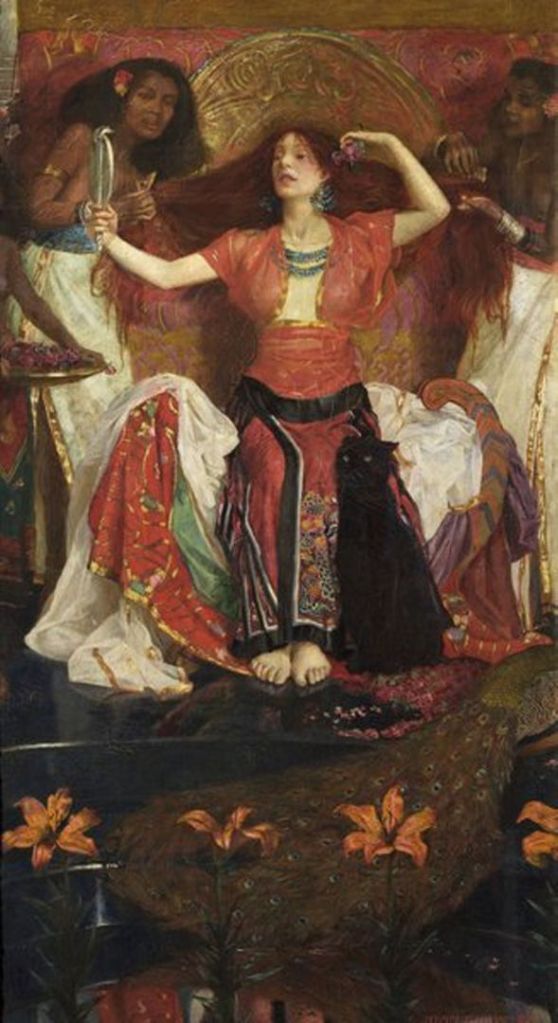
30 When Jehu came to Jezreel, Jezebel heard of it; she painted her eyes and adorned her head and looked out of the window. 31 As Jehu entered the gate, she said, “Is it peace, Zimri, murderer of your master?” 32 He looked up to the window and said, “Who is on my side? Who?” Two or three eunuchs looked out at him. 33 He said, “Throw her down.” So they threw her down; some of her blood spattered on the wall and on the horses, which trampled on her. 34 Then he went in and ate and drank; he said, “See to that cursed woman and bury her, for she is a king’s daughter.” 35 But when they went to bury her, they found no more of her than the skull and the feet and the palms of her hands. 36 When they came back and told him, he said, “This is the word of the LORD, which he spoke by his servant Elijah the Tishbite: In the territory of Jezreel the dogs shall eat the flesh of Jezebel; 37 the corpse of Jezebel shall be like dung on the field in the territory of Jezreel, so that no one can say, ‘This is Jezebel.’ ”
Jezebel is viewed by 1&2 Kings as a corrupting influence on Israel and recently Judah through the marriage of her daughter Athaliah to Jehoram, who is the mother of the current king Ahaziah. Jezebel had brought the practices of royalty in Tyre to Samaria. Yet, in the midst of Jehu’s uprising she puts on makeup and dresses in a way that denotes her position as the queen mother. Most modern readers discount Jehu’s accusation of Jezebel’s prostitutions and sorceries (v. 22) as reflecting her worship of other gods and practices outside the laws and statues of Israel, but it is entirely possible that Jehu believes that she practices magic of some type. She mocks Jehu from her tower with the memory of Zimri (1 Kings 16: 9-16) another army officer who reigned briefly after striking down his king. Ironically Zimri was defeated by an army led by Omri, the father of Ahab-Jezebel’s late husband.
Two or three eunuchs throw Jezebel from her tower which in a moment, “transformed the narcissistic queen to a piece of rubbish in the streets.” (Brueggemann, 2000, p. 388) Jehu is unbothered by this gory site and enters the tower to eat and drink after his chariot ride and bloody work. He sends men to see to her body, although his remark that she is a king’s daughter may be ironic since he has already cast a king’s son out on the land of Naboth. Ultimately, there is not enough of Jezebel to bury which fulfills Elijah’s words in 1 Kings 21:23. The assassination of Jezebel does end a half-century alliance between Samaria and Tyre (Cogan, 1988, p. 120) but the writer of 2 Kings ultimately views this as a positive. The prophet Hosea would later criticize Jehu (Hosea 1:4) but the author of 2 Kings views his actions in this time as a necessary violence to bring about the needed end of the Omri dynasty which had corrupted northern Israel as well as Judah.
[1] This is the same Hebrew word, shuggah, used to refer to the young prophet in the previous section.


 Sign of the Rose