1I lift up my eyes to the hills— from where will my help come? 2My help comes from the LORD, who made heaven and earth.
3He will not let your foot be moved; he who keeps you will not slumber. 4He who keeps Israel will neither slumber nor sleep.
5The LORD is your keeper; the LORD is your shade at your right hand. 6The sun shall not strike you by day nor the moon by night.
7The LORD will keep you from all evil; he will keep your life. 8The LORD will keep your going out and your coming in from this time on and forevermore.
Notes on the bolded words below.
One of my favorite farewells is the Spanish ‘vaya con dios’ which means ‘go with God.’ The English Godspeed is similar, which comes from the middle English ‘God spede you’ which means ‘may God prosper you.’ This short but well-loved psalm may have originated as a song for pilgrims making the journey to mount Zion to worship. The departing pilgrim receives a blessing from the one wishing God’s guarding presence upon the pilgrim. It may have originated as a ‘farewell liturgy’ as James Limburg identified this psalm, (NIB IV: 1180) but for many faithful people this has become a psalm of trust which encompasses the entire life of the faithful one guarded by the God who is both personally available and cosmically powerful.
The first two verses of the psalm are spoken by the pilgrim and is spoken in first person. The individual looks to the surrounding landscape to the hills, and likely to the destination of Zion, but their help for through the dangers of the coming journey do not come from the hills but from the LORD. The LORD is both ‘my help,’ one who is personally concerned for the fate of this pilgrim departing on the journey but also ‘the LORD who made heaven and earth.’ In a common duality seen in scripture God is both powerful and attentive, over all things and concerned about the life of the faithful one who places their life in God’s hand.
In verse three the voice now shifts to the one remaining behind as the pronouns are now second person. Within the final eight verses the word rendered ‘keep’ or ‘keeper’ in the NRSVue is the Hebrew samar. The Hebrew samar is a more active concept than ‘keep’ and has the active sense of guarding and watching over. (Nancy deClaisse-Walford, 2014, pp. 895-897) Within the movement of the psalm the God who guards will not slumber during his time of protecting and watching over the pilgrim. The LORD guards Israel and the LORD will guard the faithful one. The language continues and intensifies as the LORD guards and provides a shade (Hebrew sel) for the pilgrim. The word for shade (sel) is often used in the psalter in the phrase ‘the shelter (sel) of you wings’ and may reference the image of God extending God’s wing or cloak in protection and shelter in the journey through the wilderness. The sun and moon have sometimes been thought of mythologically as forces which oppose the pilgrim’s journey but this is not necessary for the psalm for a journey through desert on the journey to Jerusalem (or any other destination).
In the Lord’s prayer the petition ‘and deliver us from evil (or the evil one)’ taps into a consistent theme with the LORD guarding the pilgrim from evil and guarding their life. In a common Hebrew merism[1] the LORD watches over the totality of the pilgrim’s journey, their departures and their returning home for this journey and their entire life.
Psalm 121 has a rich use in the worship life of the church, and it is frequently used with both baptismal liturgies and funeral services. The psalm’s use in these two moments that form the bookends of the Christian life nicely encompass the belief that God guards the person of faith throughout the totality of their life. Martin Luther would have parents teach their children to “fear, love, and trust God above all things.” This psalm echoes the trustworthiness of the God who guards the life of the faithful one. It is a blessing for the entirety of the journeys of life as people of faith go with God. Our entire life is guarded and sheltered by the God who is both personally available and cosmically powerful.
[1] A merism is a literary device which denote the totality or completeness of something.
Frozen lake Baikal near Olkhon Island, Photo by Sergey Pesterev, Shared under CC 4.0https://en.wikipedia.org/wiki/Lake_Baikal#/media/File:Lake_Baikal_in_winter.jpg
It had been a difficult several years for Father Petrov. They had laid several of the men of his congregation to rest as casualties of the War to End All Wars between 1914 and 1917. Then came the unrest which led to the October revolution where the Bolsheviks gained control and a pall of fear was cast over the community as the official position of the new government considered the Russian Orthodox Church as a symbol of the old allegiances to the Czar. Yet even last Christmas he had celebrated in a beautiful church in Moscow with an ornate iconostasis of golden painted saints and angels as incense hung in the air and the congregation sang the chants into the night to mark the night of the Savior’s birth. But as 1918 unfolded the new government began to make its mark on Moscow. Food was in short supply and so the leaders began to point to those who had formerly been nobles, the educated, and then to the ornate and beautifully domed structures of the Orthodox churches of the city. It had been a dreary October day when worship was interrupted by uniformed men who came in arresting Father Petrov and all who had dared to assemble on that day, torching the church and sending Father Petrov and his flock on the Trans-Siberian Railway to Irkutsk where they were marched along the shore of Lake Baikal to a bleak camp where they were officially to be reeducated, but it quickly became clear that ultimately they were moved to this land to be forgotten, to pass away in the Siberian winter.
Yet, despite the cold nights and inadequate shelter, Christmas arrived in 1918. There were no songbooks, no incense, no wall of icons or brightly painted walls of a church. Olga, one of his faithful members, had managed to grab seven candles and set them up in the large shed where the tools that were used for coal mining were stored. Father Petrov had a bible and as he carried his lamp to the shed where those who would celebrate this bitterly cold Christmas were gathered, he wondered what he would do without the rituals and relics of the church that had formed him for a style of worship that had endured for centuries. As he approached the shed, he looked to the lantern in his hand and thought of Jesus’ words about a lamp needing to be placed on a lampstand and not being hidden under a bushel basket, and so he found a small table and placed his lamp on it. More people than he had expected had gathered, others in the work camp seeking a small light in winter, a taste of hope in the hopelessness, a reminder of a different world, and perhaps they looked to each other in this land of the forgotten for another soul to see them and remind them that they mattered.
Father Petrov breathed in the cold air and began with the words from John’s gospel, “The light shines in the darkness, and the darkness did not overcome it.” Then he lit the first candle and said, “and we are witnesses to that light.” Little Anya, who had seen far more than any young child should see in the last months, echoed Father Petrov’s words, “we are witnesses to that light.” And slowly at first and then in rapidly increasing numbers the remainder of the gathered congregation echoed, “and we are witnesses to that light.” Then Olga, Anya’s mother, read from the prophet Isaiah how, “The people who lived in darkness have seen a great light; those who lived in a land of deep darkness, on them light has shined.” Then Olga lit the second candle and said, “and we are witnesses to that light.” This time the community responded immediately and with more force, “and we are witnesses to that light.”
Anya now stepped up beside her mother and said the words she had been practicing for this night, how the prophet Isaiah continued saying, “Unto us a child has been born, unto us a son is given, and the government will be upon his shoulders, and he will be called Wonderful Counselor, Mighty God, Everlasting Father, the Prince of Peace. Great will be his kingdom, and there will be endless peace.” Then Anya lit the third candle and with the boldness of a child proclaimed, “and we are children of God’s son.” The congregation with a little bit of joy at seeing the faith of a child echoed, “and we are children of God’s son.”
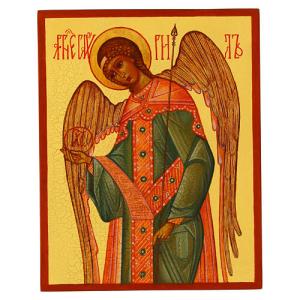
Russian Orthodox Icon of the Archangel Gabriel
Then Rita came forward to tell of how the angel Gabriel came to Mary one fateful night and told Mary, “Do not be afraid.” How often God’s messengers came to God’s people in scary times and told them not to be afraid but before she continued on she brought out from her coat an icon of the angel Gabriel that she had saved from the church before it had been destroyed, and she told of the angel’s message of the virgin Mary and Mary’s words in response, “Here am I, the servant of the Lord; let it be with me according to your word.” Then Rita lit the fourth candle and said, “And we are servants of the Lord.” The community echoed, “And we are servants of the Lord.” Then Rita’s husband Jusef came and told of Joseph, the father of Jesus, who was a righteous man trying to find a way between what God expected of him in the law and mercy for his betrothed Mary who was found to be with child, and how the angel of the Lord came to him in a dream and spoke again the words, “Do not be afraid.” And then explained to Joseph that the child to be born was from God and was the fulfillment of prophecy. “Look, the virgin shall become pregnant and give birth to a son, and they shall name him Emmanuel,” which means, “God is with us.” Perhaps we too need to hear in this godforsaken place that God has not forsaken us, indeed God is with us. And then lighting the fifth candle Jusef declared, “And we serve the God who is with us.” And the community echoed, “And we serve the God who is with us.”
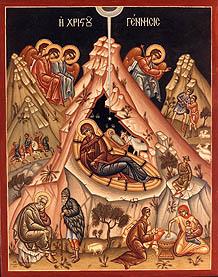
Russian Orthodox Icon of the Nativity
Then Victor came forward and he also took from his coat an icon that had been one from his home, an icon of the Christmas scene, and he told the story from the gospel of Luke of Joseph and Mary coming to Bethlehem and finding no place other than a shed, perhaps not unlike the shed they gathered in that night, and the child was born to them, unseen by relatives or most of the world. But how in the night the angel of the Lord came to shepherds and again told them, “Do not be afraid.” And the angel told the good news of great joy for all the people he had been entrusted with and told these shepherds how to find the child and its parents. How the heavenly host broke into song and the shepherds in their amazement went to find Mary and Joseph and the child promised to them, and described their amazement to anyone who heard, and how Mary treasured these things in her heart. Then Victor said, “And we too treasure these things in our heart.” He lit the sixth candle as the congregation echoed, “And we too treasure these things in our heart.”
Finally, Sophia, the oldest living member of the community at seventy-five years old, came to the front and turned to the gospel of John. She said in a clear voice, “In the beginning was the Word, and the Word was with God, and the Word was God. He was in the beginning with God. All things came into being through him, and without him not one thing came into being. What has come into being in him was life, and the life was the light of all people. The light shines in the darkness, and the darkness did not overtake it.” She lit the final candle and said, “And we are servants of that light.” To which the congregation responded, “And we are servants of that light.” Father Petrov gave a final blessing in the cold winter night and summarized how we were indeed servants of the light who brings light to people living in darkness, who promises us a child who will lead us into a time of peace, who tells his servants not to be afraid, how even in godforsaken places how our God is with us, how we too can treasure these things in our hearts, for the one who was with God in the beginning at creation is here among us bringing light and life into our darkness. He uttered a final blessing for this flock gathered in the shed and then they made their way back to their barracks where they would attempt to shelter from the piercing wind blowing over the lake. But as the left they carried with them a little hope in what before had seemed hopeless, and a small light in the winter.
This story has historical elements, but it is a fictional story. The place and time are real, but the specifics of the situation and the characters only existed in my imagination prior to this night. May this Christmas story from a cold and dark world bring a little light into your season.
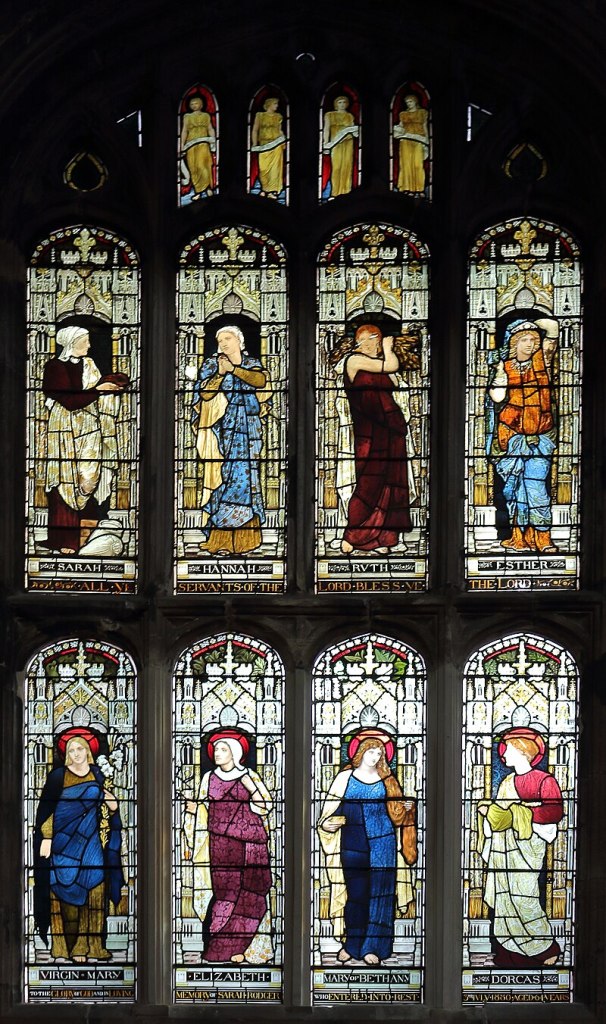
Window on the south wall of St Andrews just outside the Feilden chapel, by Henry Holiday and depicting Holy Women of the Old and New Testaments: Sarah, Hannah, Ruth and Esther in the top four panels and the Virgin Mary, Elizabeth, Mary of Bethany and Dorcas in the lower. By Rodhullandemu – Own work, CC BY-SA 4.0, https://commons.wikimedia.org/w/index.php?curid=73469366
Psalm 113
1Praise the LORD! Praise, O servants of the LORD; praise the name of the LORD. 2Blessed be the name of the LORD from this time on and forevermore. 3From the rising of the sun to its setting, the name of the LORD is to be praised. 4The LORD is high above all nations and his glory above the heavens. 5Who is like the LORD our God, who is seated on high, 6who looks far down on the heavens and the earth? 7He raises the poor from the dust and lifts the needy from the ash heap, 8to make them sit with princes, with the princes of his people. 9He gives the barren woman a home, making her the joyous mother of children. Praise the LORD!
The God of the songs and stories of Israel is a God who turns the world upside down. The LORD of Israel is the one who is high above all nations and lords yet this God raises up the “triad of the wretched” (Bellinger, 2014, p. 490) the poor, the needy, and the barren. This is the LORD on high who lifts up the lowly. Psalm 113 echoes this paradoxical reality in Hebrew thought: the LORD is high above all things, and the LORD looks down and sees the lowliest of all things.
Psalm 113 begins and ends with Hallelujah (NRSV Praise the LORD!). Unlike the previous two psalms it is not an acrostic, instead it is a short poem with two easily discerned parts. In the first four verses the praising and honoring of the LORD is the focus. Verse five forms pivot where the psalmist asks, “Who is like the LORD our God, who is seated on high.” The final four verses consider how this LORD who is seated on high cares for the lowly.
The praise of the LORD in the first four verses continually mentions the LORD and the name of the LORD as the focus of the praise of the servants of the LORD. The name of the LORD, enshrined in the commandment to “not make wrongful use the name of the LORD your God,” (Exodus 20:7, Deuteronomy 5:11) is critical to the proper reverence of the God of Israel. Names in the ancient world were powerful things and this God whose name is to be praised at all times (from this time on forevermore and from the rising of the sun to its setting) was due the reverence afforded to the name of the LORD.[1] This God who is above all things and whose name is worthy of reverence is seated on high.
The LORD on high lifting up the lowly is easily seen in the English translations, but when the Hebrew is rendered in a more literal translation[2] the parallel is even clearer as J. Clinton McCann Jr. shows:
A more literal translation captures the effect; God “makes God’s self high in order to sit,” (v.5b) “makes God’s self low in order to see,” (v. 6a) “causes the poor to arise” (v.7a), “makes exalted the needy…to cause them to sit with princes.” (NIB IV: 1139)
God intervenes in the life of the poor, the needy and the barren woman. God uses God’s position and power to lift up the lowly. This is the God of Sarah. Rebekah, and Rachel in the book of Genesis, these formerly barren women who became the joyous mothers of children. This is the God of the exodus who took a poor and needy people out of their captivity through the wilderness into the promised land. This is the God who hears the song of Hannah (1 Samuel 2) and Mary (Luke 1:46-55) which both share common themes with the second half of Psalm 113.
Psalm 113 in modern Jewish life is the first of the “Egyptian Hallel” psalms which are utilized in the Passover celebration. It is possible that this was the psalm that Jesus and his followers sang before they went out to the Mount of Olives after the Last Supper (Mark 14:26). The Psalm resonates strongly with many of the themes of the ministry of Jesus, just as it resonates with the story, songs, and the law. As Deuteronomy reminds the people:
For the LORD your God is God of gods and Lord of lords, the great God, mighty and awesome, who is not partial and takes no bribes, who executes justice for the orphan and the widow, and who loves the strangers, providing them with food and clothing. (Deuteronomy 10: 17-18)
This short psalm captures a central theme of the Hebrew and Christian scriptures: the paradox that the God who is high over all things sees and lifts up the lowly.
[1] The four letters of the divine name given to Moses in Exodus 3:14 are behind the English translation of LORD in all capitol letters. The practice of translating this LORD comes from the practice of using the vowel pointings for ‘Adonai” (Hebrew lord) on the consonants in Hebrew so that the reader knows not to utter the name of the LORD the God of Israel.
[2] Translators have to make a difficult choice when rendering a language into another of how to balance the literal meaning of the words with the different syntax and expectations of the language they are translating into. A “wooden” or “literal” translation is often difficult to read or understand because Hebrew sentences often do not include elements that most English readers are used to.
Stained Glass window at the Melkite Catholic Annunciation Cathedral in Roslindale, MA depicting Christ the King with the regalia of a Byzantine Emperor
Psalm 110
Of David. A Psalm. 1The LORD says to my lord, “Sit at my right hand until I make your enemies your footstool.” 2The LORD sends out from Zion your mighty scepter. Rule in the midst of your foes. 3Your people will offer themselves willingly on the day you lead your forces on the holy mountains. From the womb of the morning, like dew, your youth will come to you. 4The LORD has sworn and will not change his mind, “You are a priest forever according to the order of Melchizedek.” 5The LORD is at your right hand; he will shatter kings on the day of his wrath. 6He will execute judgment among the nations, filling them with corpses; he will shatter heads over the wide earth. 7He will drink from the stream by the path; therefore he will lift up his head.
Psalm 110 is repeatedly referenced in the New Testament[1] as a way of demonstrating that Jesus is the Messiah and that as the Messiah, he is more important even than David. Yet this psalm so important to early Christians is heard differently by Jewish readers. Within these reflections I’ve tried to hold both Christian and Jewish voices in conversation, and I think that both can help us gain a fuller picture of the scriptures that we share. This enthronement psalm shares similar themes to Psalm 2. Both psalms view this newly anointed lord as the chosen vessel of the LORD the God of Israel. The king may be seated at the right hand[2]
As an enthronement psalm for a Davidic king, these words would likely come from a court prophet or singer to be spoken as God’s words over the new king. The prophet or singer refers to the new king as ‘my lord’ because they serve that king. The capitalization of the letters in the other occurrences of LORD in this psalm indicate that it refers to the divine name, YHWH, and the vowels are pointed around the letters to indicate to the speaker to say ‘Lord’ (or Adonai in Hebrew) instead of the divine name. YHWH speaks through the prophet to the new king and invites the king into this position of honor and promises to fight on the new king’s behalf. Verse three is full of textual difficulties, as Nancy deClaissé- Walford states, the
words appear to be an elevated description of the newly enthroned monarch, obeyed willingly by the people and endowed with strength and stamina—the dew of your childhood—which emanate from the splendor of holiness.” (Nancy deClaisse-Walford, 2014, p. 836)
Although there were both royal and priestly roles in the world of the Davidic kings, the kings of Israel did have priestly functions. Now the king is linked to the ancient figure of Melchizedek who comes from Salem, and who is also a king, and blesses Abraham by God Most High. This King of Salem becomes the priestly model for the King of Jerusalem, likely built on the same spot generations later. This installation of the new king in both a royal and priestly role integrates this new leader into their privileged place in God’s ordering of the world. (Mays, 1994, p. 352)
The ancient world was a violent place, and the Davidic kings were expected to lead the nation to both safety and military victory. Yet, Israel was never to be a military power,[3] and their strength resided in the God who executes judgment among the nations. The language of ‘filling the nations with corpses’ and ‘shattering heads over the wide earth’ continues the elevated description of the power behind the new monarch and the power behind the throne that ultimately controls the fate of the nations. The LORD, the God of Israel, will provide the stream beyond the path of the new king allowing this king to lift up his head in honor and strength.
Christian readers will hear this psalm through the lens of Christ, and ‘sitting at the right hand of the Father’ becomes a way that the church will talk about the honored and powerful position of Jesus for the church and the world. Jesus takes on the role of king for Christians and this led to the persecution of many early followers of Jesus who refused to pay honor to the divinity of Caesar. The book of Hebrews also highlights the way Jesus fulfils the role of the priesthood for Christians.[4] In liturgical churches the final Sunday of the church year is Christ the King Sunday which celebrates the way Jesus is enthroned at the right hand of God, but instead of being a conquering king he was a crucified messiah. Revelation 19: 11-16 is the closest the New Testament gets to the militaristic language of verse five and six of this psalm. The quotation of this psalm by Jesus in his conflicts with the Pharisees in Matthew 22:44 and parallels probably was not viewed as a convincing argument by his opponents and most Jewish leaders, if they utilize this psalm today, would be waiting for a return of a Davidic ruler who can rule from the power of the LORD the God of Israel and bring the nation back to a place of security. As large of a role as this psalm plays in the New Testament, I don’t believe that it plays a similar role in the thought of contemporary Judaism.
[1]Matthew 22:44; Mark 14:62; 16:19; Luke 22:69; Acts 2:34-35; 7:55; Romans 8:34; Ephesians1:20; Colossians 3:1; Hebrews 1:3,13; 8:1; 10:12; 1 Peter 3:22
[2] Being seated at the right hand is a position of honor and power. It is interesting that in Psalm 109 the psalmists asks for an accuser to take this position for the wicked person. The name Benjamin comes from a conjunction of the Hebrew word for son (bin) and right hand (yamin).
[3]Deuteronomy 17: 14-20 which sets the limits on a king for Israel indicates that the focus is not to be on building a stronger military but instead on a ruler being faithful to the LORD and the covenant.
It isn’t with the Christmas tree Or presents wrapped for all to see St.Nick, he didn’t bring it here Nor Frosty of the Grinch I fear It isn’t in the shopping mall Nor songs that sing our ‘Deck the Hall’ Or houses decked in Christmas lights Or people packed on holiday flights Family and friends, feast and gift Do comfort and my spirits lift Yet sometimes all the noise and light Distracts me on this silent night From Joseph’s trip from Galilee And his new wife, blessed Mary From Jesus in a manger lay For no room was found on his birthday Messiah, the Word of God, the Light That came upon that Holy Night When the angel proclamation began Peace on earth, good will to man Come let us go and seek and tell This child who is Emmanuel The creator to creation come A new covenant of grace begun To seek with Magi Bethlehem To see the king or the great ‘I am’ To ponder deep within our heart The words the shepherd did impart For that is what I seek this year In the middle of the holiday cheer The place where heaven comes to earth To fill our hearts and souls with mirth
Mark’s Portrait of Jesus and The World He Lived in Part 4: A Scripture Shaped World
Scroll of the Book of Isaiah
When I originally did my presentation on the Gospel of Mark and the way that it interacts with the world in which Jesus lived and breathed I left out a very important part, the way the Gospel of Mark interacts with the Scriptures (at this time the Hebrew Scriptures or Old Testament most likely in its Greek translation the Septuagint) and uses the language and world of the scriptures to find a way to talk about who Jesus is and what the Kingdom of God means in a world of the Roman empire, Second Temple Judaism and a world where the conflict between good and evil was viewed in terms of conflict between various spiritual forces. Inhabiting a Jewish world where the language of the scriptures would have been a critical part of that world it is not surprising that Mark uses scriptures to help illuminate who Jesus is and to allude to a deeper engagement with the story of the God of Israel and the people of that God.
The question of Mark as a reader of scripture is normally handled by looking at the explicit places where the gospel quotes the scriptures and often without taking some time to examine the broader question of how Mark is using these scriptures to show who Jesus is. Richard B. Hay’s recent work on the way that the gospel authors utilized scriptures is a helpful and generative study of this question in a much more holistic light. In examining the interaction between the way that the Hebrew Scriptures were read by Mark and the way they form a linguistic world that the gospel is able to access Hays argues:
And upon rereading, we discover numerous passages scattered through this Gospel that offer intimations of a disturbing truth: Jesus’ identity with the one God of Israel. Unlike the Gospel of John—which explicitly declares that Jesus is the Logos, the Son who is one with the Father—Mark shies away from overt ontological declarations. Nonetheless, Mark’s Gospel suggests that Jesus is, in some way that defies comprehension, the embodiment of God’s presence. Mark never quite dares to articulate this claim explicitly; it is too scandalous for direct speech. For Mark, the character of God’s presence in Jesus is a mystery that can be approached only by indirection, through riddle-like allusion to the OT. (Hays, 2014, p. 19f.)Emphasis authors.
From the first direct citation in Mark 1: 2-3 which weaves together Malachi 3.1, and Isaiah 40.3, both passages which link back to the LORD, the God of Israel being the one who is coming, Malachi pointing to the LORD coming in judgment and Isaiah who proclaims the LORD God coming with might to rule and to gather together the people of Israel. Right at the very beginning there are the audacious and bold claims about the one who is coming, and yet throughout the narrative of Mark the characters in the story will wonder and will have the secret kept from them who this Jesus is. The demons may know who Jesus is but they are silenced, others may have flashes of who Jesus is but they are also told not to speak to anyone about it, Jesus’ identity is a mystery that is ultimately revealed by his actions and the way these actions resonate with the story of who God is in relation to God’s people.
Many of the conflicts that emerge between Jesus and the Pharisees early in the gospel revolve around Jesus doing things that are reserved for the God of Israel. In Mark 2.1-12, when Jesus heals the paralytic man who is lowered through his roof the accusation is, “Why does this fellow speak in this way? It is blasphemy! Who can forgive sins but God alone?” And the scriptures do highlight in several places that the God of Israel does forgive sins, for example Hays lifts up Exodus 34.6-7:
The LORD, the LORD, a God merciful and gracious, slow to anger, and abounding in steadfast love and faithfulness, keeping steadfast love for the thousandth generation, forgiving iniquity and transgression and sin, yet by no means clearing the guilty, but visiting the iniquity of the parents upon the children and the children’s children to the third and fourth generation.
A similar dynamic is at play with Jesus declaring he is Lord of the Sabbath at the end of chapter 2, where now Jesus is able to interpret what the commands of God mean and becomes an authoritative interpreter of the scriptures. Perhaps this is some of the wonder that Mark records in 1.22 where the crowds are amazed at him teaching as one with authority. Mark continues, through Jesus’ actions, to invite us to wonder who Jesus is and how he is connected with the God of Israel, from his healings and exorcisms to the walking on water in Mark 4. 35-41 where the disciples wonder, “Who then is this, that even the wind and the sea obey him?” and whether Mark directly evokes Psalm 107 or not, it provides an evocative answer to the question, “Then they cried to the LORD in their trouble, and he brought them out of their distress; he made the storms be still, and the waves of the sea were hushed.” Psalm 107. 28f. Continuing in the story of the feeding of the five thousand with the evoking of the image of the people as sheep without a shepherd there are numerous allusions to the LORD, the God of Israel being the shepherd of the people, most memorably Psalm 23, but more pointedly Ezekiel 34 which rails against the leaders of Ezekiel’s time who have not proved to be faithful shepherd and in response the LORD declares, “I myself will be the shepherd of my sheep, and I will make them lie down, says the LORD God.” Ezekiel 34.15. We are left to wonder after each event who is this Jesus, and how is he able to speak in ways that reflect God’s speech, how is he able to act in ways that reflect God’s actions and how does he embody the presence of the God of Israel who has drawn near with God’s kingdom. Mark points us continually to the suggestive but never overt answer that Jesus is fulfilling the role that God has promised to fulfill in the scriptures. That Jesus can forgive, can be Lord of Sabbath, can master the elements and the demonic forces that threaten God’s people and can be the faithful shepherd that the people has longed for.
Mark continues to invite those with eyes to see and ears to hear to sit and wonder about who Jesus is and to listen to the frequently allusive way in which the language of scriptures helps to paint this picture in a suggestive way. Yet it is a mystery that Mark invites his readers into, the mystery of the kingdom of God that arrives in parables rather than outright proclamation. Most of Jesus’ overt quotations of scriptures come at the end of the book of Mark where the question of who Jesus is comes to its ironic and sharply contested conclusion. Jesus’ authority is continually questioned by the Sadducees, the Pharisees, the scribes and the chief priests and Jesus continues not only to allude to scripture but to embody it. Whether it is the allusion to Jeremiah’s temple sermon when Jesus enters the temple in Mark 11.17 and contrasting it with the vision of Isaiah in 56.7 and Jesus continuing to embody the role of Jeremiah in conflict with the temple of his day (see the previous post particularly on Jesus and Jeremiah), and the way this plays into the image of the cursed fig tree and the oracle of Jeremiah 8.13. The allusion to Isaiah 5 with both the parable of the wicked tenants in Mark 12. 1-12 and the denunciation of the scribes in Mark 12. 38-40. The language of Daniel 7 forms the answer to the High Priest in the trial where Jesus is accused of blasphemy, but also forms the background for the Son of Man imagery used throughout the gospel. Mark uses these images poetically and sometime Jesus seems to take on the role of the God of Israel, other times Jesus walks in the place of Israel and is able to cry out to their God, sometimes he is the fulfillment of the hope of Israel and the scriptures, and yet in every place Mark leaves us with the mystery of the kingdom of God. Yet the use of scriptures continually points that somehow, evocatively, in Jesus we in some way encounter the divine presence of the God of Israel. Mark is not interested in explaining how this comes to be but rather inviting us into the journey and experience of the new people of God trying to find the language to explain who this Jesus was and what he did and finding in the language of the Hebrew Scriptures a vast set of hopes and expectations and words that describe the relationship of God to God’s people. And into that web of images the experience of Jesus mysteriously seems to fall and we wonder with the first hearers of the message what that means for our experience of this Jesus Christ the Son of God whose gospel we receive from Mark.
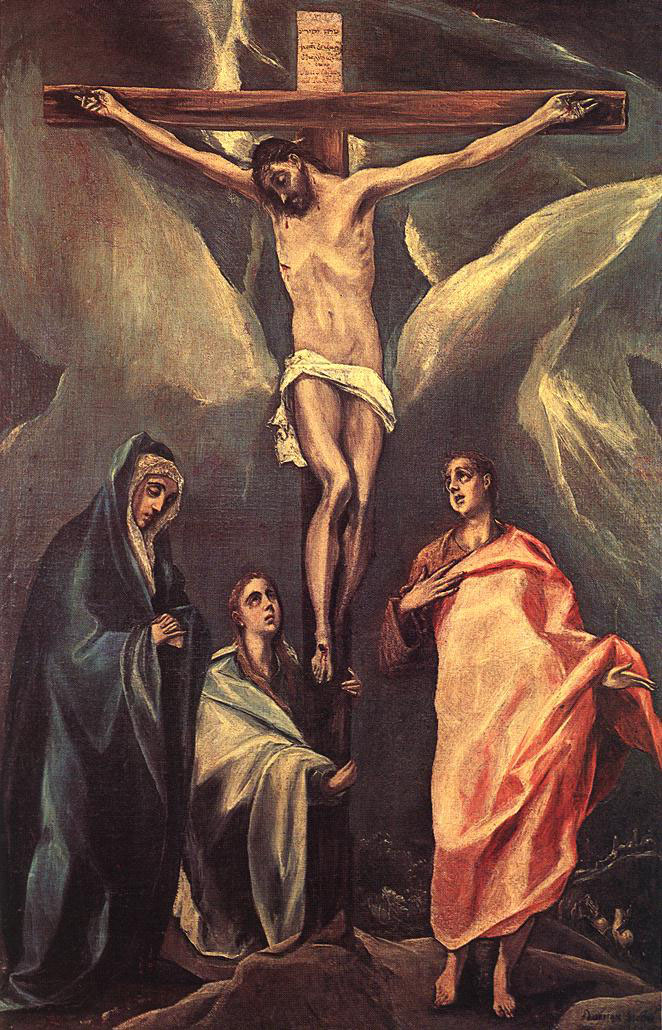
Father forgive them for they do not know what they are doing Your people chose to listen to the voices that fill the air of this noisy world The calls of the gods of violence and might they have answered And in the kiln of conflict the green wood is drying awaiting the spark Of these angry gods of war and rebellion that are never satiated Though rivers of blood and the screams of the innocent stream out Poured out as a libation making the profane sacred and the sacred profane In the days to come they will cry to the hills to cover them in their terror Calling the barren blessed and the ones lost in natural disasters lucky Because of the wrath of their gods that rejoice in the conflict of the nations
Father forgive them for they do not know what they are doing Dividing the world into the righteous and unrighteous, the holy and the mundane Those who are blessed and those who are cursed, offering to gods of privilege Those who can be excluded and kept out by their blood and their birth By the language they speak, the hue of skin or hair, who they love or how they act They bear the projected fear of the mob by sickness or disease or demonization Confined to the outskirts of the city, to the graveyards, the asylums and prisons They are prevented from having a place at the table and the temple The very outcasts that I once rescued from their sojourn as pariahs The poor who received good news and the captives that were set free Now instead of the favor of the Lord receiving the scorn of these tribal gods
Father forgive them for they do not know what they are doing They may be full and laughing and rich now but they live in spiritual destitution The concerns of the world and the lure of wealth have choked the seed God’s kingdom came among them and they never saw it snatched away They have offered their lives to the cruel gods of mammon and security Offering their lives in to quench the unending thirst for acquisition Joining house to house, starving the widows and the orphans and yet Their appetites only yearn to consume more for that is what they are They are consumers whose lives are built upon the things that in turn consume I have yearned to gather them together under my wings as a hen But they would not come for their lives were built around shrines of their own making Fouling their own nests and poisoning the waters of their children In their hunger to feed these insatiable gods that delight in their indentured servitude
Father forgive them for they do not know what they are doing Their fathers and mothers didn’t have ears to hear the prophets you sent And they have not the eyes to see the Son in their midst, and so they cast me out They rejected the cornerstone and crafted idols of stone and ideology to offer their lives to Instead of peace they chose war, instead of love they chose hate They believe they have never been slaves to anyone as they ignore their yoke Locked into the world of their fears and isolation, cursing what they do not know They mock me to ‘save myself’ but it is their lives I cry out to save It is their world that has the sun blotted out; their veils which are torn in two They and their children will bear the burden of appeasing the gods they chose Conflict and alienation and slavery may be the path that they have chosen for their own Yet, Father it is you who pull light from darkness and life from the maw of death Whose rejected kingdom is at hand and who breathes the life into the new creation It is into your hand that I commend my spirit and their shattered world as well Thy kingdom come, thy will be done on earth as it is in heaven Give unto the righteous and the unrighteous their daily bread And forgive them their trespasses for they do not know what they are doing
Three days has my master been gone
Three days since those he loved scattered
Three days since receiving his pierced and battered body
One final gift from the hands of our oppressors
Three days of mourning and preparations
Three days of weeping and working
Three days of trying to hold on to a man who is dead
The tomb awaits the payment of grief
The first day of the week has come
A time of new beginnings, of beginning anew
Yet I find myself walking towards the end, towards death itself
As I walk towards the gaping and devouring maw of the tomb
O tomb, you who could devour life itself
Who hold within you the remains of one who lifted a child from your jaws
One who denied you your prize, who snatched youth from your hands
Now perhaps you can laugh as you hold the one who denied you in your craw
Three days you have haunted me O death
Three days have I journeyed into your home
Three days have I tried to ward off your foul stench for this man’s sake
This man who made me a human and no longer a walking corpse
Three years did I journey with him,
Three years ago did he free me from the demons who tore at the corners of my mind
Three years of freedom and of being a human and not an object of shame
This man who I followed out of Magdala
Three days and I confront once again my fears
Do my demons lurk within this tomb?
Does my fragile self find itself destroyed by maw of death?
Yet, through my fear, for the memory of this true person I defy you.
Three of us walk together, three women, three lost ones
Three and yet incomplete without the one who lies behind the immovable rock
Three unable to pry open the jaws of the grave to snatch his life out of it
Uneasy, uncertain we walk towards the heart of the earth
Yet, as we approach you in the cold dawning of the day your mouth lies open
What has happened, have our oppressors taken away the one last gift we had
Have they shamed him even more, have they taken away our wrestling with death
Can we stand at the gaping maw of death without his presence?
Yet within the tomb sits a young man, a man in white
In the darkness, in the midst of death, youth that will not die sits
Our search ends with his puzzling message,
Our search begins with words that cannot breach our deadened senses
“Fear not, the one you seek is not here, he has gone ahead of you”
Fear not, and yet fear—a fear greater even than my fear of death overwhelms me
Who is this sitting here, who was the Jesus who lay here, what is he?
Is this the first day of a new creation, or is this truly the end?
How do I go home, how can I move, how can I tell his shattered disciples this?
Could I bear the rebuke of being a foolish woman whose dreams are shattered again?
Could I turn back home and tell what I’ve seen, do I even believe it myself?
Could I make the journey back to Galilee and wait for the Lord who lay in the tomb three days?
Or does fear reign in my body and in Mary and in Salome?
O tomb I taunted you, O death I defied you, but you I knew.
But now you stand open while my mouth is sealed shut
I feared your presence while you contained my Lord, now I cannot stand in your presence at all
Fear, confusion, amazement, wonder, silence
I run away
Perhaps the day will come when the stone over my own mouth is rolled away
Perhaps it too will take three days, or three months or three years
Perhaps it will take me finding the Lord who has been spirited away
“Fear not…he has gone ahead of you.”
Alone, life is over,
Those whom I ask to wait for me enter into sleep
A sleep deeper than death itself
Seconds creep by, minutes last for years
As I wait for my Father to answer me
Yet no answer comes.
Life, truly lived in God blessed abundance
Good friends, those who love me and whom I love
Those who would drink my cup, those who would share my bread
And yet for them I am alone waiting on the Father
Yet no answer comes.
Love, freely given and rarely returned
The religious mock me and the educated despise me
A few closer than brothers and sisters I have drawn near
Yet the same God brings love and separation
So still I sit alone and await an answer from the Father
Yet no answer comes.
Torment, yet it is the cup I choose
I could allow this cup to pass; yet I drink it to the dregs
I take on the curse so others might have a blessing
For those who curse me and those I have drawn near
I sit alone, the answer from the Father
I am the answer.
Betrayal, a brother draws near
With a kiss comes a wound deeper than any sword or spear
One who shared my bread rends my heart in two
I stand surrounded, forsaken by the Father
I am the answer for Judas.
Abandoned, every brother and sister scattered
For the fear of death my name forgotten and denied
All whom I opened myself to now flee as I sit on the altar
Accused, Spat upon, Beaten, a lamb for slaughter
I am the answer for the scattered.
Hated, I bear the weight of Jerusalem
An earthly kingdom I would not claim, so a thief’s death they select
Nothing did I take, only love did I give
Yet in my love I uncovered hatred so dark that hell could not contain it
Marked, Broken, Despised, a Scapegoat
I am the answer for a conquered people.
Disregarded, shown contempt as a peasant
I do not even merit the time of the procurator, only the fervor of the city’s hatred
Places me as King of the Jews before the vassal of Caesar
The power to judge I could wield, yet instead to earthly power I yield
I become the crucified one for the Romans
I am the answer for the empire.
Hung on the mountain, exposed to the world
I bear witness to a kingdom present given my form
I stake my claim as I gasp for air in the God forsakenness of Golgotha
I bear the rebellion of humanity waging war against the Creator
I am love hung on a cross for the world, the embrace of the Father
I am the answer for all creation.
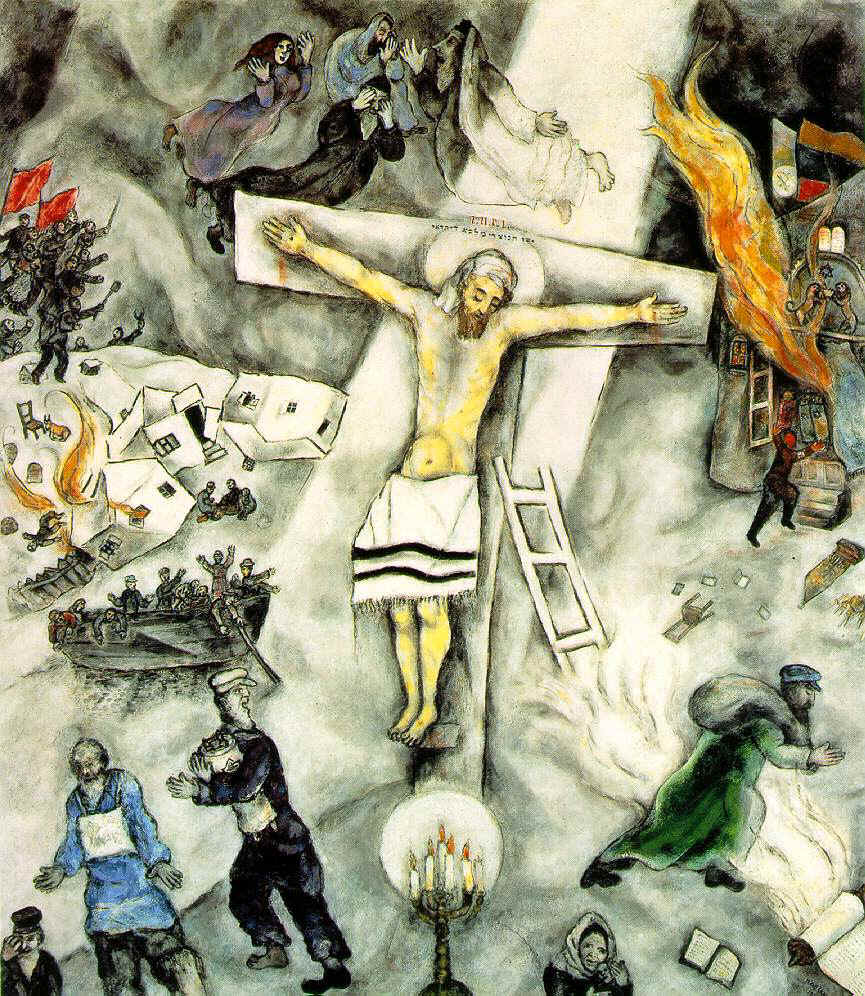
I hang on the cross today bearing the sins of a world come of age
Aging but still turned inward on itself, consuming its own flesh
A world that may know my name, but has forgotten who I am
A world who no longer needs me, but is intent on saving itself at the cost of its own life
Creation is smothered and the oppressed are crushed
The powerful are caught in their paranoia and fathers disown their children
Wives seek other lovers and leaders devour their followers
The blood of the earth cries out for vindication, the desecrated heavens shout for judgement
Yet here I hang, the lamb, the scapegoat, the crucified one, love it self
Forsaken for the world’s sake, and yet I am
I am the answer for the world
Does anyone question anymore?







 Sign of the Rose
