Tag Archives: faithfulness of God

Psalm 107 The God of Steadfast Love Who Rescues

Rembrandt, Christ in the Storm (1633)

Psalm 107

 1O give thanks to the LORD, for he is good; for his steadfast love endures forever.
 2Let the redeemed of the LORD say so, those he redeemed from trouble
 3and gathered in from the lands, from the east and from the west, from the north and from the south.
 4Some wandered in desert wastes, finding no way to an inhabited town;
 5hungry and thirsty, their soul fainted within them.
 6Then they cried to the LORD in their trouble, and he delivered them from their distress;
 7he led them by a straight way, until they reached an inhabited town.
 8Let them thank the LORD for his steadfast love, for his wonderful works to humankind.
 9For he satisfies the thirsty, and the hungry he fills with good things.
 10Some sat in darkness and in gloom, prisoners in misery and in irons,
 11for they had rebelled against the words of God, and spurned the counsel of the Most High.
 12Their hearts were bowed down with hard labor; they fell down, with no one to help.
 13Then they cried to the LORD in their trouble, and he saved them from their distress;
 14he brought them out of darkness and gloom, and broke their bonds asunder.
 15Let them thank the LORD for his steadfast love, for his wonderful works to humankind.
 16For he shatters the doors of bronze, and cuts in two the bars of iron.
 17Some were sick through their sinful ways, and because of their iniquities endured affliction;
 18they loathed any kind of food, and they drew near to the gates of death.
 19Then they cried to the LORD in their trouble, and he saved them from their distress;
 20he sent out his word and healed them, and delivered them from destruction.
 21Let them thank the LORD for his steadfast love, for his wonderful works to humankind.
 22And let them offer thanksgiving sacrifices, and tell of his deeds with songs of joy.
 23Some went down to the sea in ships, doing business on the mighty waters;
 24they saw the deeds of the LORD, his wondrous works in the deep.
 25For he commanded and raised the stormy wind, which lifted up the waves of the sea.
 26They mounted up to heaven, they went down to the depths; their courage melted away in their calamity;
 27they reeled and staggered like drunkards, and were at their wits’ end.
 28Then they cried to the LORD in their trouble, and he brought them out from their distress;
 29he made the storm be still, and the waves of the sea were hushed.
 30Then they were glad because they had quiet, and he brought them to their desired haven.
 31Let them thank the LORD for his steadfast love, for his wonderful works to humankind.
 32Let them extol him in the congregation of the people, and praise him in the assembly of the elders.
 33He turns rivers into a desert, springs of water into thirsty ground,
 34a fruitful land into a salty waste, because of the wickedness of its inhabitants.
 35He turns a desert into pools of water, a parched land into springs of water.
 36And there he lets the hungry live, and they establish a town to live in;
 37they sow fields, and plant vineyards, and get a fruitful yield.
 38By his blessing they multiply greatly, and he does not let their cattle decrease.
 39When they are diminished and brought low through oppression, trouble, and sorrow,
 40he pours contempt on princes and makes them wander in trackless wastes;
 41but he raises up the needy out of distress, and makes their families like flocks.
 42The upright see it and are glad; and all wickedness stops its mouth.
 43Let those who are wise give heed to these things, and consider the steadfast love of the LORD.

This psalm of thanksgiving divides into four representative manners by which the faithful have been saved by their God: hunger and thirst, imprisonment and oppression, sickness and nearing death, and bombarded by wind and waves upon the sea. These four life threatening events are matched to the four cardinal directions of the compass in most English translations.[1] The LORD, the God of Israel, is the one who rescues from the wilderness of the desert and the dangers of the sea, from the bondage and oppression as well as sickness because of sinful ways. God responds to the cries of a lost and scattered people and provides them food and drink, recovery and rescue.

Like many psalms, this psalm focuses on the steadfast love (hesed) of God. God’s unending steadfast love is the reason for the song, but the steadfast love is recognized through the redemption that has been received. The desert wastes were a theme of both the people’s original journey from Egypt to the promised land, and an exilic theme as God promises the people a new exodus leading them from exile to their home. The land of Israel is bordered by the Syrian and Arabian deserts to the east as well as the Saharan desert to the south. Although there are fertile places in the Middle East, and much of Israel is a productive land, any extended travel over land involves traversing the desert. Within the desert waste it is very easy to become lost, and both food and water are precious commodities away from one’s home. Yet in the song they cry to the LORD and there is an immediate (in the progression of the text) reply to the cry of distress. The LORD hears the hungry and thirsty and satisfies them with good things. The LORD hears the lost and leads them on a straight path to a town where they can receive shelter and nourishment. Although hunger and thirst play a significant role in the narrative of the exodus and the words of the prophets pointing to a return to the promised land it is only mentioned here in the psalms, with the exception for hungering and thirsting for God (Psalm 42,43). (Mays, 1994, p. 345)

The second tribulation that the people cry out from is imprisonment and oppression. This also echoes the original situation of the people at the beginning of the exodus as well as the exile, yet the only other psalm that mentions imprisonment is Psalm 142. Here the imprisonment is because they rebelled and spurned the words of God and likely reflects the experience of the community in exile rather than one individual imprisoned, yet even this experience of imprisonment and oppression the people call, and God responds. No bronze doors or iron bars can prevent the LORD from rescuing the people of God when they cry out for deliverance.

The sickness experienced, like the imprisonment in the previous section, is a result of sin and iniquity. The Hebrew term translated sickness (‘awal) means ‘foolish ones.’ (Nancy deClaisse-Walford, 2014, p. 818) The petitioner is suffering as a result of their own actions, and they are at the point where they can no longer eat and stand at the gate of death. Yet even the gate of death is not too far for the LORD to hear their call and respond in steadfast love. Sickness and imprisonment, hunger and thirst, being lost in the desert and even lost at sea the people of God remainonly a cry away from the experience of the steadfast love of God.

Finally, the faithful are rescued from calamity on the sea. Seafaring was not a large part of Hebrew culture and the only other psalm speaking about the sea is Jonah’s prayer in Jonah 2. Yet, like the wanderers lost in the desert these seafarers are lost in the wind and waves of the sea. Once again, the mighty wonders of the LORD on the sea may terrify, but the LORD’s mighty deliverance is reason for praise. Sailors are reduced to reeling like drunkards until the LORD delivers them from the wind and waves which threaten their ship and their lives. The action of Jesus to still the wind and the waves with a word[2] echoes the obedience of the waves and wind to the LORD in verse twenty-nine. The LORD brings those lost at sea back to a haven.

Martin Luther captures the essence of this psalm which responds to all the LORD has done when he states, “For all of this I owe it to God to thank and praise, serve and obey him.” (Luther, 1978, p. 25) Later hymnwriters would try to lift up their thanks in songs like William Whitings “Eternal Father, Strong to Save” and Martin Rinkhart’s “Now Thank We All Our God.” For God has led God’s people through desert and sea, sickness and suffering. Yet, God can also turn the fertile places to infertile. The princes who wield power are humbled before the power of the LORD, but the humble crying out for deliverance are saved. The God of the psalms is the God who created and sustains the heavens and the earth. This God can turn the current reality in creation upside down: deserts can become fertile, while rivers can run dry, storms can be stilled, and even the chaotic sea tamed. The Weak can turn to their God of steadfast love for deliverance but the proud and foolish princes may find their way frustrated by the same God. Wisdom to the psalmist is considering the steadfast love of God which does amazing things for the faithful ones who cry out for deliverance.


[1] No Hebrew Manuscript has ‘south’ in verse three. Instead in Hebrew the word is sea, and several other translations also have sea (including the Septuagint and the Vulgate). 

[2] Matthew 8: 23-27, Mark 4: 35-41, Luke 8: 22-25.

Psalm 105 Give Thanks to the Faithful God of Our Story

Grigory Mekheev, Exodus (2000) artist shared work under Creative Commons Attribution-Share Alike 3.0

Psalm 105 

1O give thanks to the LORD, call on his name, make known his deeds among the peoples.
 2Sing to him, sing praises to him; tell of all his wonderful works.
 3Glory in his holy name; let the hearts of those who seek the LORD rejoice.
 4Seek the LORD and his strength; seek his presence continually.
 5Remember the wonderful works he has done, his miracles, and the judgments he has uttered,
 6O offspring of his servant Abraham, children of Jacob, his chosen ones.
 7He is the LORD our God; his judgments are in all the earth.
 8He is mindful of his covenant forever, of the word that he commanded, for a thousand generations,
 9the covenant that he made with Abraham, his sworn promise to Isaac,
 10which he confirmed to Jacob as a statute, to Israel as an everlasting covenant,
 11saying, “To you I will give the land of Canaan as your portion for an inheritance.”
 12When they were few in number, of little account, and strangers in it,
 13wandering from nation to nation, from one kingdom to another people,
 14he allowed no one to oppress them; he rebuked kings on their account,
 15saying, “Do not touch my anointed ones; do my prophets no harm.”
 16When he summoned famine against the land, and broke every staff of bread,
 17he had sent a man ahead of them, Joseph, who was sold as a slave.
 18His feet were hurt with fetters, his neck was put in a collar of iron;
 19until what he had said came to pass, the word of the LORD kept testing him.
 20The king sent and released him; the ruler of the peoples set him free.
 21He made him lord of his house, and ruler of all his possessions,
 22to instruct his officials at his pleasure, and to teach his elders wisdom.
 23Then Israel came to Egypt; Jacob lived as an alien in the land of Ham.
 24And the LORD made his people very fruitful, and made them stronger than their foes,
 25whose hearts he then turned to hate his people, to deal craftily with his servants.
 26He sent his servant Moses, and Aaron whom he had chosen.
 27They performed his signs among them, and miracles in the land of Ham.
 28He sent darkness, and made the land dark; they rebelled against his words.
 29He turned their waters into blood, and caused their fish to die.
 30Their land swarmed with frogs, even in the chambers of their kings.
 31He spoke, and there came swarms of flies, and gnats throughout their country.
 32He gave them hail for rain, and lightning that flashed through their land.
 33He struck their vines and fig trees, and shattered the trees of their country.
 34He spoke, and the locusts came, and young locusts without number;
 35they devoured all the vegetation in their land, and ate up the fruit of their ground.
 36He struck down all the firstborn in their land, the first issue of all their strength.
 37Then he brought Israel out with silver and gold, and there was no one among their tribes who stumbled.
 38Egypt was glad when they departed, for dread of them had fallen upon it.
 39He spread a cloud for a covering, and fire to give light by night.
 40They asked, and he brought quails, and gave them food from heaven in abundance.
 41He opened the rock, and water gushed out; it flowed through the desert like a river.
 42For he remembered his holy promise, and Abraham, his servant.
 43So he brought his people out with joy, his chosen ones with singing.
 44He gave them the lands of the nations, and they took possession of the wealth of the peoples,
 45that they might keep his statutes and observe his laws. Praise the LORD!

Although there is no superscript to introduce Psalm 105, verses 1-15 of this psalm appear in the mouth of King David in 1 Chronicles 16: 8-22 combined with several other psalms. This quote of this psalm at the arrival of the ark of the covenant in the tent David set up for it in Jerusalem is one possible background for the composition of this psalm narrating God’s gracious actions on behalf of the covenant people. Within book four of the psalter this psalm pairs with Psalm 106 which closes book four as well as Psalm 103 and 104 which preceded it. Psalm 103 gives thanks to the LORD because God is good (hesed), Psalm 104 gives thanks to the God who is great in relation to the creation, and now Psalm 105 celebrates the covenant faithfulness of God to God’s people in a narration of their history. Psalm 105 and Psalm 106 form complementary narrations of the history of God’s faithfulness. Throughout Psalm 105 there is no mention of the faithless moments in Israel’s history with the LORD the God of Israel, nor is there any moment of reflection upon God’s reaction to those moments of faithlessness. Unlike the other historical psalms[1] that is not the purpose of this psalm. Psalm 106 will contrast the faithfulness of God with the faithlessness of the people.

Once again, the people are summoned to give thanks and praise the LORD for the things that God has done and to remember the works, miracles, and judgments. The covenant throughout this Psalm appears to be the covenant with Abraham in relation to God giving the people the land of Canaan. Even though the second half of the psalm will deal with God’s mighty works in the Exodus narrative the Sinai covenant is never mentioned. Instead the focal point of the promise is the covenant with Abraham confirmed with Jacob (aka Israel) and the statute here and everlasting covenant is one sided. God promises protection and the land as an inheritance for this family set aside by God.

The people in the time of Abraham, Isaac, and Jacob wander this land as strangers (Hebrew gerim) who are reliant upon the LORD for protection. Abraham would claim before the Hittites that he was a “stranger and alien residing among them”[2] and this reality of the patriarchs and the people in Egypt being ‘strangers’ forms the ethical reaction to ‘strangers’ in Deuteronomy: “You shall also love the stranger, for you were strangers in the land of Egypt.[3] Yet here the focus of the narrative is not upon the ethical responsibility of the people, but the gracious protection of God. God does not allow the settled nations to touch his anointed people or to harm the prophets.[4]

The backstory of the psalm continues through the narrative of Genesis, arriving to the story of Joseph who is sent ahead by God to Egypt to provide bread for the people in a time of famine. Even here, although Joseph is sold as a slave, the mention of the role of the brothers of Joseph in his sojourn in Egypt is obscured. Instead, it is the LORD who tests him through these ordeals. Joseph becomes a heroic figure who endures slavery and imprisonment only to rise to become the lord of the house of Pharoah. Yet, even at the end of this brief retelling of the Joseph story Jacob/Israel is an alien in the land of Ham.[5]

At the midpoint of the psalm the narrative shifts from the stories of Genesis to the stories of Exodus. Exodus remembers the duration of the sojourn of the people in Egypt as four hundred thirty years[6] and during this time they had not only been protected by God but prospered, emerging as a people great in number and feared by their Egyptian overlords. Moses and Aaron are sent to be God’s voice to the people and to Pharoah. The number and order of the plagues are different from the narration of Exodus 7-12 and Psalm 78:44-51. It is possible that this is a separate tradition recounting the Exodus narrative, but I believe it is also likely that the constraints of the poetic form of this psalm are responsible for the truncated nature of this retelling.

Yet, the truncated nature of the retelling of the signs and miracles performed in Egypt are extravagant compared to the narration of the journey from Egypt to the promised land. As mentioned above, the giving of the covenant at Sinai as well as the disobedience of the people is omitted. The forty years of wandering in the wilderness is reduced to eight verses or one stanza of the psalm and as throughout the psalm the focus is on God’s presence, protection, and provision for the people. God provided protection by the cloud and the fire, provided mana from heaven, quails for the camp, and water from the rock, and brought them to the long-promised land of the covenant.

Songs can play a crucial role in helping people to remember their story, and this Psalm helps to remind the people where they come from. Throughout this psalm they are sustained by protection and provision of the LORD through works, miracles, and judgments which demonstrate the faithfulness of the LORD to the people. Any narration of a story makes choices about what to include and what to exclude based upon the intent of the story, or in this case poem or song. The focus upon God’s continual faithfulness and provision may choose to exclude the faithless moments of the people, and yet this psalm stands within a collection of psalms and narratives which reinforce, strengthen, and complete its narration. Yet, the focal imagery of the past three psalms of God being a God of goodness and steadfast love, God being a God of greatness in relation to the creation, and finally God being a God of steadfast love and greatness towards the covenant people mutually reinforce each other.


[1] Psalm 78, 106, 136.

[2] Genesis 23:4.

[3] Deuteronomy 10:19.

[4] Presumably for the purpose of the Psalm the patriarchs are the prophets.

[5] The tradition of Egypt coming from Noah’s son Ham is traced back to Genesis 10:6 where Cush (Ethiopia), Egypt, Put, and Canaan trace their lineage to this survivor of the ark in the Hebrew telling of their history.

[6] Exodus 12:40.

Psalm 77 Searching for God in a Shattered World

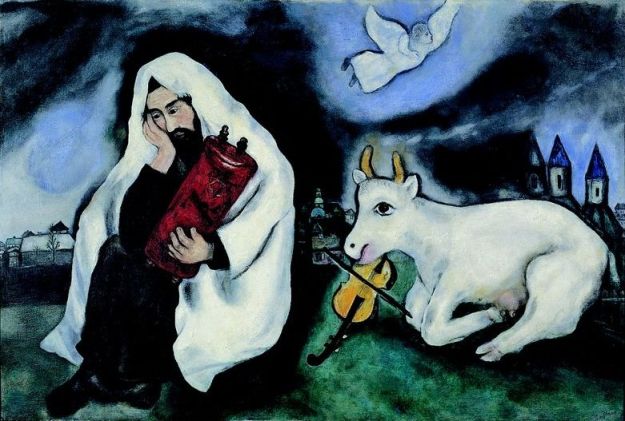
Marc Chagall, Solitude (1933)

Psalm 77

<To the leader: according to Jeduthun. Of Asaph. A Psalm.>
1 I cry aloud to God, aloud to God, that he may hear me.
2 In the day of my trouble I seek the Lord; in the night my hand is stretched out without wearying; my soul refuses to be comforted.
3 I think of God, and I moan; I meditate, and my spirit faints. Selah
4 You keep my eyelids from closing; I am so troubled that I cannot speak.
5 I consider the days of old, and remember the years of long ago.
6 I commune with my heart in the night; I meditate and search my spirit:
7 “Will the Lord spurn forever, and never again be favorable?
8 Has his steadfast love ceased forever? Are his promises at an end for all time?
9 Has God forgotten to be gracious? Has he in anger shut up his compassion?” Selah
10 And I say, “It is my grief that the right hand of the Most High has changed.”
11 I will call to mind the deeds of the LORD; I will remember your wonders of old.
12 I will meditate on all your work, and muse on your mighty deeds.
13 Your way, O God, is holy. What god is so great as our God?
14 You are the God who works wonders; you have displayed your might among the peoples.
15 With your strong arm you redeemed your people, the descendants of Jacob and Joseph. Selah
16 When the waters saw you, O God, when the waters saw you, they were afraid; the very deep trembled.
17 The clouds poured out water; the skies thundered; your arrows flashed on every side.
18 The crash of your thunder was in the whirlwind; your lightnings lit up the world; the earth trembled and shook.
19 Your way was through the sea, your path, through the mighty waters; yet your footprints were unseen.
20 You led your people like a flock by the hand of Moses and Aaron.

The shattering of the world that we know can often lead to a crisis of faith where we wonder if God is present or if God’s ways have changed. Like the other Psalms of Asaph that open book three of the psalter, it is likely that this psalm originates in the world-shattering experience of the destruction of Jerusalem and the exile of the Jewish people in Babylon. Perhaps to a person sitting in a sheltered place these agonized meditations about the faithfulness of God in the moment may seem dangerously close to heresy but this is a place where the solidness of the tradition handed on to the psalmist is challenged by the acuteness of experience (Brueggemann, 2014, p. 335). The very question of God’s identity is at stake for the psalmist as they move between the agonizing questions their present evokes and the narrative of God’s covenant they received throughout their life.

The initial verse is more jagged than translations, “my voice unto God” is repeated twice as the psalmist tries to bring their pain into a coherent speech. In many places I have written about a heartbroken God who mourns the state of the people, but here we have the utterances of a heartbroken psalmist who feels abandoned and forsaken by God. Prayer has given way to these agonized meditations which are seeking to make sense of their world which has been shattered. They are unable to sleep in this anxious state of questioning as they sit with their feelings, prayers, broken dreams, and questions not only about the future but also their relationship to God.

The acuteness of their experience has made them question whether God has changed and whether the covenant still holds. Has God spurned the individual forever? Has God broken God’s promises? Is the LORD no longer faithful? Had God’s anger and wrath overwhelmed the motherly compassion God has for the individual and the people? The wording of these questions reflects a person formed in the faith of Israel. In particular they reference the thirteen attributes of God which are seen first in Exodus 34:

“The LORD, the LORD,
a God merciful and gracious,
slow to anger,
and abounding in steadfast love and faithfulness,
7 keeping steadfast love for the thousandth generation,
 forgiving iniquity and transgression and sin,
yet by no means clearing the guilty,
but visiting the iniquity of the parents upon the children
and the children’s children,
to the third and the fourth generation Exodus 34: 6-7

When the psalmist asks, “Has his steadfast love ceased forever? Are his promises at an end for all time? Has God forgotten to be gracious? Has he in anger shut up compassion?[1]What is being referenced are key pieces of this identity that God declared for Godself. In addition to these three attributes of God is the irrevocable promise/covenant that God made with the people. The right hand, the action of the God of Israel, has changed towards the people causing the psalmist grief[2]. The psalmist in their meditation questions the justice of God’s withheld action, grace, compassion, and steadfast love. In Melanchthon’s famous phrase, “To know Christ is to know his benefits.” (Melanchton, 2014, p. 24) In the psalmist’s situation where the benefits and characteristics of God are unknown or unseen they begin to wonder if they truly know the LORD their God.

The psalm’s tone changes abruptly in verse eleven and this has led some interpreters to question if this is two psalms joined together. The two sections make sense as a part of a common meditation where in the acuteness of their experience the psalmist again attempts to hold onto the solidness of the tradition. In a time where God’s hand is turned away they go back to the memory of times when God’s strong arm redeemed the people. In a time of disasters, they remember the wonder working God. In a time where the holy places have been defiled they cling to the holiness of their God. The theological crisis posed by their experience and highlighted in their meditation is not met with logic but with memory.

The dynamic of the life of faith moves between experience and memory. In times of crisis the belief that things will change is often rooted in the experience of times of faithfulness in the past. Often the life of prayer is a life of calling upon God to be God, to exhibit the characteristics that God identifies Godself with, to recall the covenant and deliver the people. The words that desperately cling to faith in the difficult time may seem impertinent in times of peace, but that is a part of the rich gift of the scriptures which attempt to witness to the life of faith in both the times of peace and the times where the world of the author has been shattered and they are attempting to make sense of their world, their life, and God’s place within it.


[1] Hesed (steadfast love), hannot (gracious)t, and rahamim (compassion) in Hebrew, rahamim is translated as merciful in Exodus 34:6

[2] Literally sickness in Hebrew