Tag Archives: Esther

Rumors of Assassination: Esther 2: 19-23

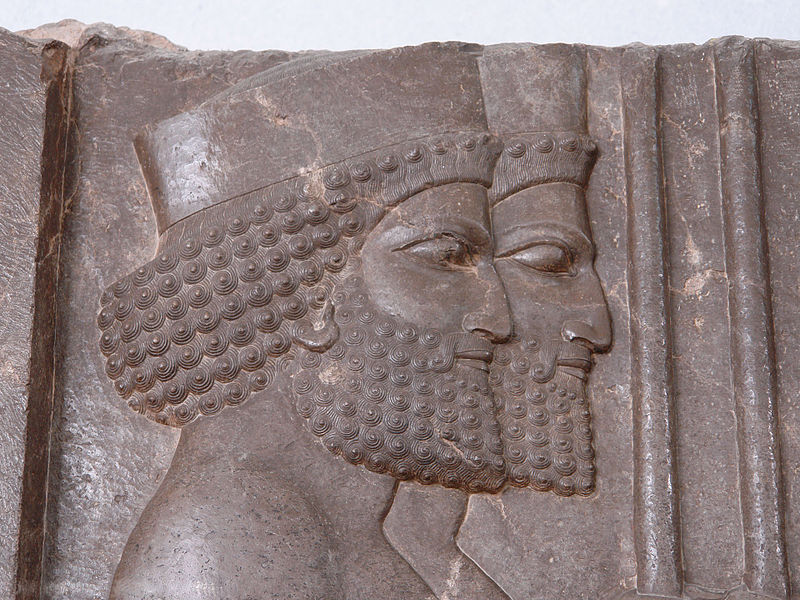
Two Persian Soldiers on the Persepolis

Two Persian Soldiers on the Persepolis

Esther 2: 19-23

 19 When the virgins were being gathered together, Mordecai was sitting at the king’s gate. 20 Now Esther had not revealed her kindred or her people, as Mordecai had charged her; for Esther obeyed Mordecai just as when she was brought up by him. 21 In those days, while Mordecai was sitting at the king’s gate, Bigthan and Teresh, two of the king’s eunuchs, who guarded the threshold, became angry and conspired to assassinate King Ahasuerus. 22 But the matter came to the knowledge of Mordecai, and he told it to Queen Esther, and Esther told the king in the name of Mordecai. 23 When the affair was investigated and found to be so, both the men were hanged on the gallows. It was recorded in the book of the annals in the presence of the king.

There are a lot of things that are unclear in this little passage: Esther is already queen, why are they gathering the virgins together. Does the competition go on? It doesn’t seem so, but there is no indication they are being sent home either. As confusing as it is we have our two protagonists, Esther and Mordecai, who have assimilated to the Persian culture and who are in the court of the king working together to expose a coup attempt. Mordecai comes into knowledge of the plots of Bigthan and Teresh and he informs Esther, and Ester tells the king. Mordecai doesn’t expect or receive any reward at this point and the two conspirators after an investigation are executed. This gets recorded, and it is critical to the story moving forward, but ultimately it is recorded and forgotten for now.

Plots were not uncommon in the Persian courts, nor were coup attempts. The act of saving the king at this point will prove important for Esther, Mordecai and the Jewish people going forward.

If you are going to plot an assassination, probably best not to do it at the king’s gate where many ears are listening. Eunuchs did have a fair amount of power but they would never lead themselves, and we will never know what they are upset about. Perhaps they believe the king is a fool, perhaps they think he parties too much, perhaps some policy worked against their people. We will never know the reasons, and ultimately they are a necessary side plot that will be important later, but once the investigation commences it is not a good day to be named Bigthan or Teresh.

Long Live the Queen: Esther 2:12-18

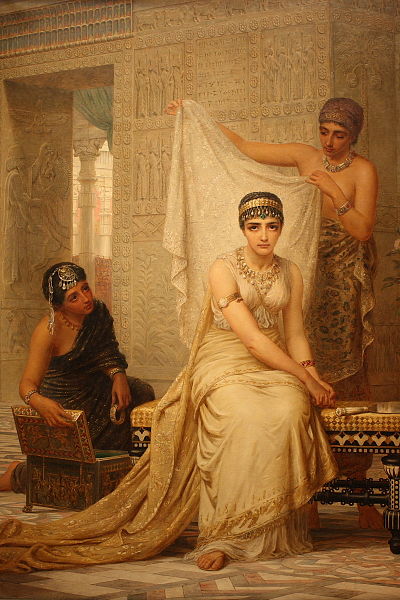
Esther Edwin Long

Esther 2: 12-18

12 The turn came for each girl to go in to King Ahasuerus, after being twelve months under the regulations for the women, since this was the regular period of their cosmetic treatment, six months with oil of myrrh and six months with perfumes and cosmetics for women. 13 When the girl went in to the king she was given whatever she asked for to take with her from the harem to the king’s palace. 14 In the evening she went in; then in the morning she came back to the second harem in custody of Shaashgaz, the king’s eunuch, who was in charge of the concubines; she did not go in to the king again, unless the king delighted in her and she was summoned by name.

 15 When the turn came for Esther daughter of Abihail the uncle of Mordecai, who had adopted her as his own daughter, to go in to the king, she asked for nothing except what Hegai the king’s eunuch, who had charge of the women, advised. Now Esther was admired by all who saw her. 16 When Esther was taken to King Ahasuerus in his royal palace in the tenth month, which is the month of Tebeth, in the seventh year of his reign, 17 the king loved Esther more than all the other women; of all the virgins she won his favor and devotion, so that he set the royal crown on her head and made her queen instead of Vashti. 18 Then the king gave a great banquet to all his officials and ministers– “Esther’s banquet.” He also granted a holiday to the provinces, and gave gifts with royal liberality.


So we come to the ‘rose ceremony’ after the date where the king gets to choose the person who he has fallen for, what the woman thinks about the matter doesn’t matter. After a year of treatments, and we really don’t know exactly what all these treatments would entail and whether they would also include training to be more sexually proficient, but this is a story of excess and after a year of preparation, at least in Esther’s case, the girl is brought to the palace to spend the night with the king and then shipped off to be with the rest of the concubines to be summoned at the king’s will. The young girl is to try to win the heart of the king or be consigned to the house of the concubines never to be summoned again. Unlike the Bachelor, these girls are not sent home that they may find someone else who will love them, nope they are the kings women, and they have no say in this.

Esther plays the game well and the king loves her. She is his new queen and the throws a banquet, proclaims a holiday and there was much rejoicing. Again this is a story of excess and this is the celebration of the completion of the search for the new queen. Esther the powerless orphan and the Jew is now Queen Esther, bride of King Ahasuerus the ruler of the world (or at least the biggest empire of the day).

One final note, Esther apparently isn’t a devoutly practicing Jew. There is no mention of her requiring a special diet, like Daniel. Nobody realized that she is Jewish, it never seems to be a consideration. She assimilates to the culture of the people who she is in exile with. As the prophet Jeremiah states:

4 Thus says the LORD of hosts, the God of Israel, to all the exiles whom I have sent into exile from Jerusalem to Babylon: 5 Build houses and live in them; plant gardens and eat what they produce. 6 Take wives and have sons and daughters; take wives for your sons, and give your daughters in marriage, that they may bear sons and daughters; multiply there, and do not decrease. 7 But seek the welfare of the city where I have sent you into exile, and pray to the LORD on its behalf, for in its welfare you will find your welfare. Jeremiah 29: 4-7

There is no condemnation of this assimilation, Esther does what she has to do (just as Mordecai does) to survive. Yet, somehow through these two powerless ones God will work to make a place for his people in the midst of Babylon.

purple rose 01 by picsofflowers.blogspot.com

Reality TV in the Ancient World: Esther 2: 1-11

the-bachelor-logo21

Esther 2:1-11

After these things, when the anger of King Ahasuerus had abated, he remembered Vashti and what she had done and what had been decreed against her. 2 Then the king’s servants who attended him said, “Let beautiful young virgins be sought out for the king. 3 And let the king appoint commissioners in all the provinces of his kingdom to gather all the beautiful young virgins to the harem in the citadel of Susa under custody of Hegai, the king’s eunuch, who is in charge of the women; let their cosmetic treatments be given them. 4 And let the girl who pleases the king be queen instead of Vashti.” This pleased the king, and he did so.

                5 Now there was a Jew in the citadel of Susa whose name was Mordecai son of Jair son of Shimei son of Kish, a Benjaminite. 6 Kish had been carried away from Jerusalem among the captives carried away with King Jeconiah of Judah, whom King Nebuchadnezzar of Babylon had carried away. 7 Mordecai had brought up Hadassah, that is Esther, his cousin, for she had neither father nor mother; the girl was fair and beautiful, and when her father and her mother died, Mordecai adopted her as his own daughter. 8 So when the king’s order and his edict were proclaimed, and when many young women were gathered in the citadel of Susa in custody of Hegai, Esther also was taken into the king’s palace and put in custody of Hegai, who had charge of the women. 9 The girl pleased him and won his favor, and he quickly provided her with her cosmetic treatments and her portion of food, and with seven chosen maids from the king’s palace, and advanced her and her maids to the best place in the harem. 10 Esther did not reveal her people or kindred, for Mordecai had charged her not to tell. 11 Every day Mordecai would walk around in front of the court of the harem, to learn how Esther was and how she fared.

Here we have the Old Testament’s version of the Bachelor where many young women are gathered up to try to impress a single man. Now the Old Testament version would not be fit to show on network television, even though the book of Esther does not go into any details like modern literature would do, it is quite clear that how these young girls please the king determines whether they are to be the queen or not. There is no rose ceremony, nor have these young girls chosen this path…it is the way of the time: a powerful man has the authority to take the best and brightest to himself. The King has the power, and as Mel Brooks would say, “It’s good to be the king!” If you make a complete fool of yourself and allow your words to become law, law which cannot be revoked and you put your queen, who it seems like King Ahasuerus is missing, aside and prevent her from being in your present-why not get a new and replacement queen.

Power and powerlessness are put side by side in the book of Esther, the king has all the power, but then enters Mordecai, the exile, and Esther (or her Jewish name Hadassah used only here), the orphan, who have no power. Esther is taken into the custody of Hegai, the king’s eunuch, and her life is in another’s hands. From this point forward her life depends upon how she can please others. As much as we may want to rebel against this, in the world of Esther her life is not in her own hands. Because she pleases Hegai she gets cosmetic treatments, food, maids and the best place in the house. On the one hand this is probably like the young teenager who suddenly finds stardom and realizes quickly that their life is no longer their own, but rather many others want a piece of her life. Esther’s life is now contained in the bubble of the king’s harem and she will have her audition night with the king, but she and Mordecai are ultimately powerless in the midst of the powerful king seeking one who pleases him.

purple rose 01 by picsofflowers.blogspot.com

If You Make a Decision While Drunk, Make Sure You Have Good Advisers: Esther 1: 13-21

Vashti Refuses the King's Summons, painting by Edward Long (1879)

Vashti Refuses the King’s Summons, painting by Edward Long (1879)

Esther 1: 13-21

                13 Then the king consulted the sages who knew the laws (for this was the king’s procedure toward all who were versed in law and custom, 14 and those next to him were Carshena, Shethar, Admatha, Tarshish, Meres, Marsena, and Memucan, the seven officials of Persia and Media, who had access to the king, and sat first in the kingdom): 15 “According to the law, what is to be done to Queen Vashti because she has not performed the command of King Ahasuerus conveyed by the eunuchs?” 16 Then Memucan said in the presence of the king and the officials, “Not only has Queen Vashti done wrong to the king, but also to all the officials and all the peoples who are in all the provinces of King Ahasuerus. 17 For this deed of the queen will be made known to all women, causing them to look with contempt on their husbands, since they will say, ‘King Ahasuerus commanded Queen Vashti to be brought before him, and she did not come.’ 18 This very day the noble ladies of Persia and Media who have heard of the queen’s behavior will rebel against the king’s officials, and there will be no end of contempt and wrath! 19 If it pleases the king, let a royal order go out from him, and let it be written among the laws of the Persians and the Medes so that it may not be altered, that Vashti is never again to come before King Ahasuerus; and let the king give her royal position to another who is better than she. 20 So when the decree made by the king is proclaimed throughout all his kingdom, vast as it is, all women will give honor to their husbands, high and low alike.”

 21 This advice pleased the king and the officials, and the king did as Memucan proposed;22 he sent letters to all the royal provinces, to every province in its own script and to every people in its own language, declaring that every man should be master in his own house.
In George R.R. Martin’s book (and by extension the television series) The Game of Thrones begins with Robert Baratheon  as king, and King Robert likes his drink and he likes his women (well every woman except the one he is married to, but that is a long story) and he makes a number of brash decisions. In both stories a king’s inebriation leads him to make decisions he will later regret and allows him to  be manipulated by his counselors. What began as an interpersonal refusal, Vashti refuses to appear, becomes an event of national consequence. One adviser leads the king on a drastic course of action that seems to be completely disproportionate to the slight for fear that Vashti’s actions will embolden all women to be rebels against their own husbands, and well anarchy is only one tipping domino away, at least as Memucan fears it.

We can speculate all we want about why Vashti refuses: was it because she knew the kings would make a spectacle of her, some seem to think that she was to appear naked although this is not a part of what is recorded, her reasons in the story are her own and as much as we might want to applaud her, she is but a foil in the story. She has unsuccessfully negotiated the realities of the situation she found herself in. In challenging the king’s authority she lost. In a perfect world with equal power, with no patriarchal systems or favoritism based on authority, position or wealth someone would never have to worry about how they negotiate the realities of the political situations they find themselves in, but Vashti and we do not live in a perfect world. Vashti will open the door for Esther, our protagonist to enter the scene and we will see her enter the story next.

A decision made in anger makes the story turn. The excess of the decision should make us laugh at the king. The story is told by people who are without power at a festival where they have some free space to poke fun, indirectly, at the ruling powers. We should be able to enjoy the sarcastic picture of this ruler of the largest empire of his day as well: the king is a buffoon whose heart is made glad with wine and he is no wiser or more powerful than the rest of us for his own decision will bind him, and bad advice will cost him something he cherishes. Perhaps before we allow our own fears of what might happen if the dominos begin to fall and we find ourselves on the treacherous slippery slope of moral depravity unleashed by one person’s refusal to conform to expectations, we should take a deep breath and perhaps a reality check. Yet the king in this respect is no different than us, for words harshly uttered cannot be taken back, and although we may not find ourselves in the ridiculous position of being unable to unmake a law or ruling many times our words can leave a legacy that we must live with.

purple rose 01 by picsofflowers.blogspot.com

Let the Party Begin: Esther 1: 1-12

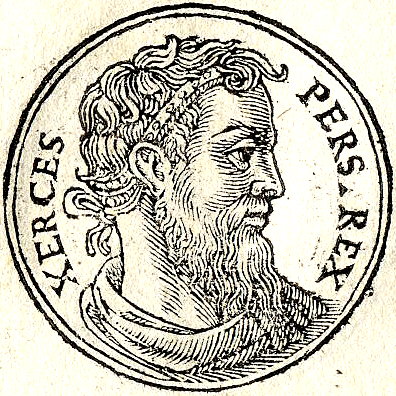
Xerxes_I

This happened in the days of Ahasuerus, the same Ahasuerus who ruled over one hundred twenty-seven provinces from India to Ethiopia. 2 In those days when King Ahasuerus sat on his royal throne in the citadel of Susa, 3 in the third year of his reign, he gave a banquet for all his officials and ministers. The army of Persia and Media and the nobles and governors of the provinces were present, 4 while he displayed the great wealth of his kingdom and the splendor and pomp of his majesty for many days, one hundred eighty days in all.

                5 When these days were completed, the king gave for all the people present in the citadel of Susa, both great and small, a banquet lasting for seven days, in the court of the garden of the king’s palace. 6 There were white cotton curtains and blue hangings tied with cords of fine linen and purple to silver rings and marble pillars. There were couches of gold and silver on a mosaic pavement of porphyry, marble, mother-of-pearl, and colored stones. 7 Drinks were served in golden goblets, goblets of different kinds, and the royal wine was lavished according to the bounty of the king. 8 Drinking was by flagons, without restraint; for the king had given orders to all the officials of his palace to do as each one desired.

 9 Furthermore, Queen Vashti gave a banquet for the women in the palace of King Ahasuerus.

10 On the seventh day, when the king was merry with wine, he commanded Mehuman, Biztha, Harbona, Bigtha and Abagtha, Zethar and Carkas, the seven eunuchs who attended him, 11 to bring Queen Vashti before the king, wearing the royal crown, in order to show the peoples and the officials her beauty; for she was fair to behold. 12 But Queen Vashti refused to come at the king’s command conveyed by the eunuchs. At this the king was enraged, and his anger burned within him.

Roll them bones!

Oftentimes we get too uptight about approaching a Biblical story and we forget the way they are approached by people throughout the generations. Esther is a story told at the Jewish festival of Purim, which quite likely has its origins in Persian or Babylonian celebrations[i], and it is heard with raucous laughter-it should be a fun story perhaps shared over wine or beer. Are there things we can learn from this story: Absolutely, but we should be aware that God is never mentioned in the book, nor are there any indications (other than fasting which was widely practiced beyond Judaism) of any Jewish practice. It is the story of excess and foolishness, of the people of God who are trying to navigate living in the world where they are mixed in with everyone else, trying to make their way in the world of the Medes and Persians. There are things to learn from all of this, but also we need to learn to laugh at the story, to find humor where there is humor. Even Martin Luther who I respect greatly wished the book of Esther did not exist, perhaps this was a moment when Luther was taking himself too seriously.

First, Ahasuerus is probably to represent King Xerxes of Persia, and some translations will automatically change Ahasuerus to Xerxes, but this not intended to be a historical work as much as a story, and the fact that the story was linked with a festival is probably the main reason it was included in the canon. It is a story of excess and the excess begins with a six month long party (take that college students) yet unlike a college student the king has the financial wherewithal to finance a six month long party where the wine flows liberally and people are able to recline on couches of gold and silver in addition to the other lavish surroundings. This is a scene that puts the largest royal banquet in Game of Thrones to shame, and while a banquet that lasts for seven days seems excessive to us in the West for whom eating is functional, I am reminded that for many cultures something like a wedding will last days or even as long as a week.

All this lavishness sets the scene for the king’s command sent through seven eunuchs to retrieve his extremely beautiful wife (who is throwing her own party with the women) to display her before his officials and those with him at his banquet. This is not a fair world, in our society it would not be uncommon for a woman to refuse a drunken request but this is an extremely patriarchal world which women did not have a great deal of freedom, and even queens are only queens so long as it pleases the king. But the amazing happens, Vashti refuses, the king is enraged and the stage is set for the unfolding of a new drama. It will be set with overreactions and a paranoid defense of the patriarchal order (can’t have a queen who disobeys a king, what would that do to the fabric of society-it is a fear we will see expressed.) Most modern women and many men have some empathy for Vashti, but the reaction of the men in the court of Ahasuerus will be much different.

purple rose 01 by picsofflowers.blogspot.com


[i] I owe this observation to Sidnie White Crawford, (Actemeier, Elizabeth et. al. 1999, 3:860). This is not a unique phenomenon, Christians celebrate Christmas and Easter at the times when they are celebrated as a way of displacing holidays celebrated by the people that Christianity was spreading to. Or think of the conjunction of All Saints day (November 1) with All Hallows Eve (or as we call it today Halloween).