Tag Archives: Book Reviews

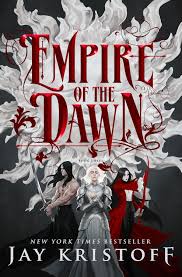
Review of Empire of the Dawn by Jay Kristoff

For me a five-star book is something that either I want to read again or something that is so profound it makes an immediate impact. There are lots of ways that books can be compelling: a unique idea, an interesting set of characters, a complex plot, an artistic use of the English language and more. Reading is also a subjective experience, so what appeals to me as a reader may be very different for you. I read a lot for both pleasure and work, but these short reviews are a way for me to show my appreciation for the work and the craft of the author of the reviewed work.

Jay Kristoff quickly became one of my favorite authors with both the Nevernight trilogy and this worthy conclusion to the Empire of the Vampire trilogy. This narrative journey through Empire of the Vampire, Empire of the Damned and now Empire of the Dawn has been phenomenal. Gabriel de Leon, the last Silversaint (vampire hunter), Celene Castia, Gabriel’s sister and the last Liathe, and Dior le Chance, the young woman who is believed to have the power to end the eternal darkness of their world form the central characters in this final volume. The story is dark, the narration of the conflict scenes so rich I could imagine them as a manga or anime (I think that is the only way you could faithfully replicate the speed and damage of these vampire vs Silversaint fights). The world cloaked in darkness, the place of religion and mysticism, the rich imagery in a perilous world, there is so much to love in this long but engaging story of a world where vampires are no longer consigned to the night and humanity hangs on the precipice. But beyond the incredible plot, worldbuilding, and hard driving action are the characters and their interactions with one another. There were so many times the dialogue between the characters echoed the pattern of conversations I had with people in the army, the way men rib each other to show they care, the language, and verbal duels that went along with the physical trials. There were countless times I would look up from the page and say, “Damn. Jay Kristoff can write.”

Each of the volumes of this trilogy were the best read of the year they were released and there is some regret in coming to the end of this massive journey. Jay Kristoff will not be for every reader: his language is the language of fighting men which includes frequent swearing (and he has some really interesting ways of utilizing the coarser parts of the English language) and there are several very spicy erotic scenes throughout the books. It is a dark world (literally and metaphorically) where no human character or animal character is safe. It is fantasy with horror and romantic elements set in a beautifully imagined (and illustrated if you buy a physical copy) world. It is a poignantly human story of characters who walk through the hell of war, betrayal, death, and times that seem hopeless. People will be divided on the ending of the book, but I thought it was masterful use of a plot device that breaks the fourth wall with a pair of narrators who have their own motivations for why they tell the story they are spinning. I did not want to put this almost eight-hundred-page book down, each time I picked it up it hooked me. I loved this dark gothic story of faith and fighting in a world struggling against four vampiric armies. The symbology and the myth, the conversations and the combat, the characters and the plot all come together to form the favorite trilogy I have ever read.

Review of the Girl in the Tower by Katherine Arden (2018)

Five Star Book Review

Katherine Arden, The Girl in the Tower

For me a five-star book is something that either I want to read again or something that is so profound it makes an immediate impact. There are lots of ways that books can be compelling: a unique idea, an interesting set of characters, a complex plot, an artistic use of the English language and more. Reading is also a subjective experience, so what appeals to me as a reader may be very different for you. I read a lot for both pleasure and work, but these short reviews are a way for me to show my appreciation for the work and the craft of the author of the reviewed work.

The Girl in the Tower is the middle book of the Winternight Trilogy, and it picks up in the aftermath of The Bear and the Nightingale. Vasya and her magnificent horse Solovey now set off to travel away from her home of Lesnaya Zemla where her father can no longer protect her from being viewed as a witch. She sets off on a journey as a traveler but quickly finds herself rescuing girls stolen by bandits and reunited with her brother Sasha who is a monk, a renowned warrior, and a trusted advisor of the crown prince of Moscow. She disguises herself as a boy and her brother, and later her sister Olya in Moscow, are caught up in this deception. From pursuing bandits raiding small villages in the woods to the world of court in Moscow and the appearance of the strange noble Kasyan this is a story with an even richer world than The Bear and the Nightingale. One of the things I appreciate about this story is that it is honest about the danger of Vasya as a woman attempting to navigate a different path where the only two options available for women are marriage and the convent.  

Katherine Arden does a remarkable job of portraying the world of this story. A time where Russia still owed allegiance to the Tatars but is beginning to yearn for independence, when the Russian Orthodox church reigns supreme in Moscow but the old practices and myths still have a hold in the rural areas. It is a winter story, but it is also a story of winter losing its hold to spring. For Vasya it is also a coming-of-age story and I appreciate the tension in the relationship between Vasya and the Winter King Morosko, but that there is an acknowledgement that this cannot be a simple love story. In the words of the characters:

                “Love?” he (Mososko) retorted. “How? I am a demon and a nightmare; I die every spring, and I will live forever.”

                She waited.

                “But yes,” he said wearily. “As I could, I loved you. Now will you go? Live.”

                “I, too,” she said. “In a childish way, as girls love heroes that come in the night, I loved you.” (336)

Even in a world that still has a little magic in it, maidens do not easily surrender their hearts to myths nor do inhuman ‘gods’ warm quickly to the maiden. Yet, Katherine Arden does a remarkable job of creating the tension which is formed by their bond. I really enjoy this mixture of fantasy with historical fiction and myths and folk stories of medieval Russia. I wrote in my review of The Bear and the Nightingale that the story felt like returning to a home I never knew, and the characters and environment made me feel at home with them once again in this second book of the Winternight trilogy. I look forward to returning to The Winter of the Witch later this year.  

A Review of Call it Sleep by Henry Roth (1934)

Time Magazine Top 100 Novels

Book 18: Call it Sleep by Henry Roth

This is a series of reflections reading through Time Magazine’s top 100 novels as selected by Lev Grossman and Richard Lacayo published since 1923 (when Time magazine was founded). For me this is an attempt to broaden my exposure to authors I may not encounter otherwise, especially as a person who was not a liberal arts major in college. Time’s list is alphabetical, so I decided to read through in a random order, and I plan to write a short reflection on each novel.

Call it Sleep follows a young Jewish boy, David Schearl who immigrates to the United States with his mother Genya. Upon arriving he is introduced to his emotionally unstable and unloving father Albert Schearl. Young David struggles to engage with other children and adults and Henry Roth does a good job of writing a story from the perspective of an early elementary age boy. David is an innocent in a rough world, and he fears both the world outside and of his violent father. The place of an innocent in a fallen and rough world seems to animate the narration as David continually finds himself in situations he is unprepared for. From a neighbor girl who wants to play ‘bad’ to an older Gentile boy who takes advantage of David’s desire for attention to put himself in a position to take advantage of one of David’s cousins. Central to the story is a secret his mother tells her sister, which David overhears, about being in love with a Christian organ player to the disgrace of her family. The one place where David fits in is in chedar, a one room Hebrew school for young boys. David has a talent for Hebrew recitation and it also curious about the little bit of insight into God he receives from Reb Pankower, but this is also where David allows his interpretation of his mother’s secret to slip out to disastrous effects. When a rabbi who hears David’s confession brings it to his mother and father it creates an explosive crisis in the home.

Every book is not for every reader, and when a story fails for me, I often wonder what it is that makes me not the best reader of the book, particularly a book other intelligent readers have enjoyed. Part of my struggle was the language of dialogue between the young people in the narrative in broken English which made it more difficult to follow. The lines spoken in Yiddish are translated into easily read English, but Henry Roth attempts to copy the slang and accent of English spoken in the Jewish ghettos of the early 1900s. I can also appreciate Henry Roth’s ability to convey the mental state of a young boy, but young David is an unreliable interpreter of the world around him. I can understand why young David is fearful, and I appreciate the way his perspective sheds light on the immigrant experience, but it also made for a dull read. Call it Sleep was ultimately a book I could appreciate but not one I enjoyed.

Review of Go Tell It On The Mountain by James Baldwin (1953)

Time Magazine Top 100 Novels

Book 35: Go Tell It On The Mountain by James Baldwin (1953)

This is a series of reflections reading through Time Magazine’s top 100 novels as selected by Lev Grossman and Richard Lacayo published since 1923 (when Time magazine was founded). For me this is an attempt to broaden my exposure to authors I may not encounter otherwise, especially as a person who was not a liberal arts major in college. Time’s list is alphabetical, so I decided to read through in a random order, and I plan to write a short reflection on each novel.

Go Tell It On The Mountain starts on the birthday of John Grimes who is the central character in this book of religion and hypocrisy, love desired and rarely returned, a family of secrets and hurt, and the first arousals of sexuality in a young man who realizes he is attracted to other men. Gabriel, his father but not his biological father, Elizabeth, John’s mother, and Florence, John’s aunt and Gabriel’s sister, all contribute to the tension in this household as well as the younger son Roy, biological son of Gabriel, and the unclaimed memory of Royal, an out of wedlock son of Gabriel who died before this moment in the story. The event of John’s birthday, which his mother belatedly remembers, is pushed into the background when his belligerent younger brother storms out of the house only to return wounded by a knife. Even though it is his birthday and he had taken his mother’s belated gift of a little money to the theater, his father lashes out at him, his mother, and his aunt in exasperation about Roy’s wild ways. John eventually escapes to the storefront church where his father is a deacon and the theme of sexuality emerges as he wrestles with Elisha, an older boy in the church, as they set up for evening services.

The remainder of the book occurs in flashbacks and visions during the evening church service where first his aunt Florence remembers her life and reluctantly surrenders to prayer. Then his father’s life is revealed in his wild teenage years, his marriage, his affair which produces Royal who he never claims and eventually dies a violent death, and his marriage to Elizabeth, John’s mother. Then Elizabeth has her own vision of her weak mother and the father who she loved. After her mother’s death who she was taken from by her father by her aunt because of the work her father does. She grows up in a loveless childhood but finds love in a young man named Richard. Before she can tell Richard about her pregnancy he commits suicide after a wrongful arrest by the police. Finally, is John’s dark night of the soul before his vision and acceptance of Christ.

The book does a good job of showing both the brokenness and the strength of faith. The Pentecostal tradition has a strong emphasis on holiness and yet the book is open about the hypocrisy and closely held secrets of the men who lead the church. It is a story of several intertwined people who never experienced the love they desired from the fathers, mothers, and siblings in their lives and who continue to hand on their broken lives to the next generation. The visions in part two do a good job of telling the backstory of the characters but even among the revelations of the visions the brokenness between the family members remains entrenched to the end. Even as there should be celebration over the salvation of John, his father Gabriel remains closed off from him. The shattered relationship between Gabriel and Florence over Gabriel’s wild past and his unforgiving nature is never resolved even though Florence feels she is near the end of her life, and she holds a letter with the secret of Gabriel’s out of wedlock child which she threatens to release to the congregation. Apparently, the story is semi-autobiographical, and I can appreciate the way the author works through his broken home and broken heart through the pages of the book.