Tag Archives: Bible and Violence

2 Kings 10 The Elimination of the Sons of Ahab and the Worshippers of Baal

Part of the gift-bearing delegation of King Jehu, Black Obelisk, 841–840 BCE.

2 Kings 10: 1-14

  1 Now Ahab had seventy sons in Samaria. So Jehu wrote letters and sent them to Samaria, to the rulers of the city, to the elders, and to the guardians of the sons of Ahab, saying, 2 “Since your master’s sons are with you and you have at your disposal chariots and horses, a fortified city, and weapons, 3 select the son of your master who is the best qualified, set him on his father’s throne, and fight for your master’s house.” 4 But they were utterly terrified and said, “Look, two kings could not withstand him; how then can we stand?” 5 So the steward of the palace and the governor of the city, along with the elders and the guardians, sent word to Jehu, “We are your servants; we will do anything you say. We will not make anyone king; do whatever you think right.” 6 Then he wrote them a second letter, saying, “If you are on my side and if you are ready to obey me, take the heads of your master’s sons and come to me at Jezreel tomorrow at this time.” Now the king’s sons, seventy persons, were with the leaders of the city, who were charged with their upbringing. 7 When the letter reached them, they took the king’s sons and killed them, seventy persons; they put their heads in baskets and sent them to him at Jezreel. 8 When the messenger came and told him, “They have brought the heads of the king’s sons,” he said, “Lay them in two heaps at the entrance of the gate until the morning.” 9 Then in the morning when he went out, he stood and said to all the people, “You are innocent. It was I who conspired against my master and killed him, but who struck down all these? 10 Know, then, that there shall fall to the earth nothing of the word of the Lord that the Lord spoke concerning the house of Ahab, for the Lord has done what he said through his servant Elijah.” 11 So Jehu killed all who were left of the house of Ahab in Jezreel, all his leaders, close friends, and priests, until he left him no survivor.
  12 Then he set out and went to Samaria. On the way, when he was at Beth-eked of the Shepherds, 13 Jehu met relatives of King Ahaziah of Judah and said, “Who are you?” They answered, “We are kin of Ahaziah; we have come down to visit the royal princes and the sons of the queen mother.” 14 He said, “Take them alive.” They took them alive and slaughtered them at the pit of Beth-eked, forty-two in all; he spared none of them.

There is no avoiding the violence of this text. Jehu and those around him are blunt instruments removing the cancer of both the Omri dynasty and the cancer of Baalism from Israel. Back when I was working through the book of Esther, I did a short reflection on Violence and the Bible, but I still think most modern readers and interpreters find the bloody transition from the heirs of king Ahab to Jehu disconcerting.

The world of the bible was violent as was the ancient world that it was set within. It may not be quite the grimdark world of some recent fantasy made popular in George R.R. Martin’s Game of Thrones, since the world of the bible does assume there is a higher moral power involved in it, but as far as the shocking violence I think this, and the previous chapter, compete with almost anything written by modern authors. There were no bloodless coups in the ancient world. For the necessary transition to happen in both Israel and Judah drastic actions are required (in the view of 2 Kings).

Alex Israel in his writing on Jehu’s overthrown of the Omri dynasty believes that the detail provided is a critique of Jehu’s violence:

Kings is no stranger to military coups, yet not one of these mutinies revel in the explicit gore and detailed descriptions of murder that we find with Jehu. The narrative’s detail communicates Jehu’s barbarism. (Israel, 2019, p. 168)

Although Hosea 1:4 does view Jehu’s violence as excessive, I don’t believe that the narrator of 2 Kings does. Even though the other mention of seventy sons[1] being killed belongs to Abimelech in Judges 9, a story that has several connections with 2 Kings 10, Jehu’s actions are viewed in a positive light in 2 Kings. The violence does not all occur at Jehu’s hands as we will see as the narrative progresses, but Jehu’s evaluation is not tainted by his violent methods in overthrowing the Omri dynasty and the practices of Baal worship but instead that Jehu didn’t go far enough in removing the false worship practices from Northern Israel.

Jehu’s actions at the beginning of this chapter challenge the people with power in Samaria to choose one of the heirs of Ahab to rally behind and to prepare to meet him in battle. Jehu’s rule will never be secure as long as there is another line that can make a claim on the throne, but he does grant the leadership in Samaria the opportunity to make a fight for these heirs of Ahab. We don’t know how the line of Ahab was viewed within Samaria, and the text only mentions the terror of the leaders about this military commander’s ability to conquer whatever resistance they offer. These leaders entreat Jehu for peace and Jehu responds with the command to bring the heads of the seventy sons of Ahab. These leaders of will also have blood on their hands at the conclusion of the coup, but it may not have been necessary for them to directly participate in the bloodshed. As Choon-Leong Seow states on the Hebrew wordplay:

The word “heads” (ra’sim) is ambiguous, for it could refer literally the anatomical heads or figuratively to leaders. The officials assume the literal meaning and decapitate the remaining descendants of Ahab. (NIB III: 223)

There was a time when the leaders could have claimed innocence in this bloody transition since it was Jehu who killed the kings of Israel and Judah as well as Jezebel the queen mother, but now with the seventy heads of the sons of Ahab in baskets they share in this overthrow. Their hands are just as bloody as Jehu’s. Yet, for the narrator of 2 Kings, this bloody event is the fulfillment of the words of Elijah spoken against Jehu in Jezreel. (1 Kings 21)

Finally in this section there is the slaughter of the relatives of Ahaziah. These travelers from Judah seem completely unaware of the situation they walked into as they travel to visit Jezebel and the royal princes of Israel. These kin of Ahaziah are linked by marriage to Ahab’s line and in slaughtering these relatives Jehu weakens the remnants of the house of Ahaziah in Jerusalem. As we will see in the following chapter the remaining child of Ahab, his daughter Athaliah, will violently attempt to hold onto power in Jerusalem.  

2 Kings 10: 15-36

  15When he left there, he met Jehonadab son of Rechab coming to meet him; he greeted him and said to him, “Is your heart as true to mine as mine is to yours?” Jehonadab answered, “It is.” Jehu said, “If it is, give me your hand.” So he gave him his hand. Jehu took him up with him into the chariot. 16He said, “Come with me and see my zeal for the Lord.” So he had him ride in his chariot. 17When he came to Samaria, he killed all who were left to Ahab in Samaria, until he had wiped them out according to the word of the Lord that he spoke to Elijah.

  18
Then Jehu assembled all the people and said to them, “Ahab offered Baal small service, but Jehu will offer much more. 19Now therefore summon to me all the prophets of Baal, all his servants, and all his priests; let none be missing, for I have a great sacrifice to offer to Baal; whoever is missing shall not live.” But Jehu was acting with cunning in order to destroy the servants of Baal. 20Jehu decreed, “Sanctify a solemn assembly for Baal.” So they proclaimed it. 21Jehu sent word throughout all Israel; all the servants of Baal came, so that there was no one left who did not come. They entered the temple of Baal until the temple of Baal was filled from wall to wall. 22He said to the keeper of the wardrobe, “Bring out the vestments for all the servants of Baal.” So he brought out the vestments for them. 23Then Jehu entered the temple of Baal with Jehonadab son of Rechab; he said to the servants of Baal, “Search and see that there is no servant of the Lord here among you but only servants of Baal.” 24Then they proceeded to offer sacrifices and burnt offerings.
  Now Jehu had stationed eighty men outside, saying, “Whoever allows any of those to escape whom I deliver into your hands shall forfeit his life.” 25
As soon as he had finished presenting the burnt offering, Jehu said to the guards and to the officers, “Come in and kill them; let no one escape.” So they put them to the sword. The guards and the officers threw them out and then went into the citadel of the temple of Baal. 26They brought out the pillar that was in the temple of Baal and burned it. 27Then they demolished the pillar of Baal and destroyed the temple of Baal and made it a latrine to this day.
  28
Thus Jehu wiped out Baal from Israel. 29But Jehu did not turn aside from the sins of Jeroboam son of Nebat that he caused Israel to commit: the golden calves that were in Bethel and in Dan. 30The Lord said to Jehu, “Because you have done well in carrying out what I consider right and in accordance with all that was in my heart have dealt with the house of Ahab, your sons of the fourth generation shall sit on the throne of Israel.” 31But Jehu was not careful to follow the law of the Lord the God of Israel with all his heart; he did not turn from the sins of Jeroboam that he caused Israel to commit.

  32
In those days the Lord began to trim off parts of Israel. Hazael defeated them throughout the territory of Israel: 33from the Jordan eastward, all the land of Gilead, the Gadites, the Reubenites, and the Manassites, from Aroer, which is by the Wadi Arnon, that is, Gilead and Bashan. 34Now the rest of the acts of Jehu, all that he did, and all his power, are they not written in the Book of the Annals of the Kings of Israel? 35So Jehu slept with his ancestors, and they buried him in Samaria. His son Jehoahaz succeeded him. 36The time that Jehu reigned over Israel in Samaria was twenty-eight years.

Jehu now meets Jehonadab son of Rachab. The two men are loyal to one another but also share a zeal for the LORD. The descendants of Jehonadab son of Rechab will be the Rechabites that the prophet Jeremiah encounters in Jerusalem who do not drink wine or grow vineyards in obedience to their ancestor’s way. (Jeremiah 35) Now this ancestor of the Rechabites and Jehu move with cunning against the entrenched worship of Baal in Samaria.

In the ancient world the political and religious realms are interconnected, and it would not be surprising for a new ruler to pay for a sacrifice to the gods worshipped in the land. Jehu’s religious connections may not be well known in Samaria, and the prospect of having the new king as a patron would be enticing to the cult of Baal in the land. Yet, Jehu is acting with ‘cunning.’[2] Many modern readers may be confused by the dishonesty of Jehu’s actions, but 2 Kings views these actions positively. After attempting to ensure that only worshippers of Baal are present Jehu orders his guards to slaughter those participating and not to allow any to escape. Jehu in this action eliminates the worship of Baal during his reign and in the view of 2 Kings this causes God to grant him the longest running dynasty in the Northern Kingdom.

Yet the final evaluation of Jehu is negative not because of his violence or dishonesty but because he didn’t go far enough. He allowed the shrines at Bethel and Dan to remain. One the one hand it would be difficult for Jehu to remain in control in Samaria if people had to return to Jerusalem to worship, but in the view of the narrator of 2 Kings this is evidence of idolatry. Northern Israel is slowly losing control of its border to Hazael’s forces out of Damascus, but Jehu and his sons will maintain control in Samaria for four generations.


[1] Seventy is one of the ‘representative’ numbers in Hebrew which may be literal or may represent a large number. Typically multiples of three, seven, and twelve have a connotation of completeness in Hebrew thought.

[2] The Hebrew word for cunning is ‘aqob. This is also the name Jacob. Jacob’s original name and his character in Genesis is that of one who acts with cunning. The trickery here by Jehu is not evaluated in a negative light.
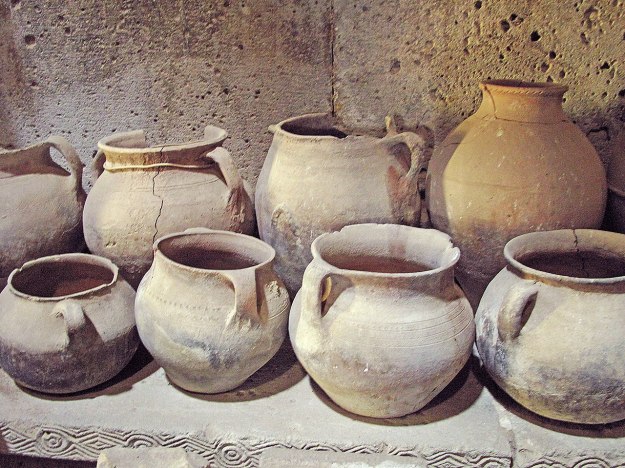
Transitioning into the book of Judges

Cracked pots, Picture taken by Enric from the Monestary of Sanahin, Armenia shared under creative commons 4.0

A part of my learning process is spending time with the parts of the bible I am less familiar with, and this certainly applies to one of the “most exciting, colorful, and disturbing books in the Bible” (NIB II:723) the book of Judges. The book of Judges narrates the time between the entry into the promised land under Joshua and the beginning of the time of the kings of Judah and Israel. This book which occurs in the early Iron Age highlighting the transition from, “a nomadic, shepherding life to one settled and agrarian.” (Hattin 2020, xi) During the book of Judges, Israel is not a nation as we think of nations but rather a collection of tribes and families that rarely acted as a whole. The book of Judges is a violent book which narrates a continual decline in the social and religious life of the people. It is a time where the divine promise is under threat by forces external to Israel, but the greatest threat to the promise is internal-the continual drift of the people away from the ways of covenant faithfulness and to the attractive alternative presented by the gods and practices of the nations that continue to exist in the land.

Entering the world of the book of Judges is challenging. As mentioned above the book is violent, but so is the ancient world. In addition to the immense technological gap between the early iron age and the information age is the equally challenging cultural gap between both the author of the book of Judges and the world that the book describes. The world of Judges is closer to the society of native American populations prior to the arrival of Europeans than to the medieval world that many imagine. It is a time of competing religious and moral visions contrasted with the desire for a covenant based theocratic system desired by the author of Judges.

Within the book of Judges is a continuing and escalating pattern of the unfaithfulness of the people, God’s deliverance of the people into the hands of an oppressor, the call for help from the people, and God’s deliverance of the people from their trouble by a judge. The judges are not legal scholars but military leaders who act to deliver the people from trouble. There are many familiar stories within the book of Judges: Samson and Delilah, Gideon, and Deborah and Barak. There are also many parts of Judges that are rarely talked about: Jephthah’s rash promise which ends with the sacrifice of his daughter, the awful treatment of the unnamed concubine of the Levite and the subsequent near elimination of the tribe of Benjamin, and the carrying away of the women of Shiloh. It has stories that teenage boys love because of their gruesome nature: stories of a sword swallowed up by fat or a tent peg driven through a sleeping king’s head. It is a violent and strange book.

This is not a part of scripture I’ve spent a lot of time thinking about and beyond the simple reality of God’s continual deliverance of Israel despite its continual turning from the covenant vision and its dark vision of the possibility of human depravity I’m not sure what I will discover in this exploration. It is a place in scripture where women often fill unexpected roles, but are also victims of violence. I do consider Judges, along with 1 and 2 Samuel and 1 and 2 Kings, part of a larger narration of the story of Israel that looks backwards trying to make sense of how it can end up in exile under Babylon, and a part of that narration is trying to make sense of the current crisis by examining the stories of the past and where the people have failed to live into the vision God desired for them. I can’t promise that every piece of Judges will produce brilliant flashes of illumination, but I do trust that there is wisdom to attempting to enter this strange book, hear it on its own terms, trying to understand and learn from this action filled and disturbing story.

Deuteronomy 2: The Warrior God

 Deuteronomy 2: 1-25 ‘Here There Once Were Giants’

(After you has stayed at Kadesh as many days as you did) we journeyed back into the wilderness, in the direction of the Red Sea, as the LORD had told me and skirted Mount Seir for many days. 2 Then the LORD said to me: 3 “You have been skirting this hill country long enough. Head north, 4 and charge the people as follows: You are about to pass through the territory of your kindred, the descendants of Esau, who live in Seir. They will be afraid of you, so, be very careful 5 not to engage in battle with them, for I will not give you even so much as a foot’s length of their land, since I have given Mount Seir to Esau as a possession. 6 You shall purchase food from them for money, so that you may eat; and you shall also buy water from them for money, so that you may drink. 7 Surely the LORD your God has blessed you in all your undertakings; he knows your going through this great wilderness. These forty years the LORD your God has been with you; you have lacked nothing.” 8 So we passed by our kin, the descendants of Esau who live in Seir, leaving behind the route of the Arabah, and leaving behind Elath and Ezion-geber.

When we had headed out along the route of the wilderness of Moab, 9 the LORD said to me: “Do not harass Moab or engage them in battle, for I will not give you any of its land as a possession, since I have given Ar as a possession to the descendants of Lot.” 10 (The Emim– a large and numerous people, as tall as the Anakim– had formerly inhabited it. 11 Like the Anakim, they are usually reckoned as Rephaim, though the Moabites call them Emim. 12 Moreover, the Horim had formerly inhabited Seir, but the descendants of Esau dispossessed them, destroying them and settling in their place, as Israel has done in the land that the LORD gave them as a possession.) 13 “Now then, proceed to cross over the Wadi Zered.”

So we crossed over the Wadi Zered. 14 And the length of time we had traveled from Kadesh-barnea until we crossed the Wadi Zered was thirty-eight years, until the entire generation of warriors had perished from the camp, as the LORD had sworn concerning them. 15 Indeed, the LORD’s own hand was against them, to root them out from the camp, until all had perished.

16 Just as soon as all the warriors had died off from among the people, 17 the LORD spoke to me, saying, 18 “Today you are going to cross the boundary of Moab at Ar. 19 When you approach the frontier of the Ammonites, do not harass them or engage them in battle, for I will not give the land of the Ammonites to you as a possession, because I have given it to the descendants of Lot.” 20 (It also is usually reckoned as a land of Rephaim. Rephaim formerly inhabited it, though the Ammonites call them Zamzummim, 21 a strong and numerous people, as tall as the Anakim. But the LORD destroyed them from before the Ammonites so that they could dispossess them and settle in their place. 22 He did the same for the descendants of Esau, who live in Seir, by destroying the Horim before them so that they could dispossess them and settle in their place even to this day.23 As for the Avvim, who had lived in settlements in the vicinity of Gaza, the Caphtorim, who came from Caphtor, destroyed them and settled in their place.) 24 “Proceed on your journey and cross the Wadi Arnon. See, I have handed over to you King Sihon the Amorite of Heshbon, and his land. Begin to take possession by engaging him in battle. 25 This day I will begin to put the dread and fear of you upon the peoples everywhere under heaven; when they hear report of you, they will tremble and be in anguish because of you.”

Sometimes when people ask me, “What does the bible say about this?” they assume that the Bible only speaks with one voice or has one answer and as a pastor I have to be sensitive to the situation the person is asking from how I answer the question. If the person is at a safe place where they can deal with the dialogue and variety of perspectives that emerge from the sixty six books collected together to form the Bible that many Christians use (Catholics and Orthodox would also include some additional books like Baruch, Wisdom of Solomon, 1&2 Maccabees and others as a part of their cannon) and I typically can do this in a way that allows the person to enter the questions of the people of God and their interaction with God. There are times of trauma and crisis where a person needs an immediate and certain answer to hold on to. Whether Deuteronomy emerges from its narrative context, where Moses is addressing the people of Israel prior to entering Israel, or as many scholars believe the trauma of the Babylonian exile, where all the things that once defined them have been taken away, it speaks from this need of an immediate and certain answer. For the author of Deuteronomy there are some bedrock truths that they want their readers in a situation of crisis to understand: God has been faithful, God is powerful and will act on their behalf and their previous defeats prior to entering the promised land were due to the unfaithfulness of their ancestors. There is strength and there is danger to this level of certainty and I will deal with the danger and the need for the broader perspective of scripture in the second half of this chapter.

Map Showing the Kingdoms of Israel and Judah in the 9th Century BCE

Map Showing the Kingdoms of Israel and Judah in the 9th Century BCE

The narrative that Deuteronomy leads us into has the people journeying peacefully through the lands of Seir, Moab and the Ammonites. Rather than approaching from the south as was done in chapter one the people move through these lands peacefully to approach from the east. There are a few really interesting things that the narrative highlights and the first is that there are other people who have land that has been given to them by the LORD. The descendants of Lot, who are distant kin according to Genesis; Esau, who are closer kin according to Genesis, both have land that has been entrusted to their heirs and even though these descendants of Lot and Esau presumably do not know the LORD, the LORD has enabled them to overcome whatever prevented them from coming into possession of the land. A new player is also introduced into the narrative, the Caphtorim who come from Caphtor, who are not mentioned in Genesis as having any link with the Hebrew people, instead they will become the Philistines who will factor into the later story of Israel, but as the prophet Amos will later state they too have a place given by the LORD:

                Are you not like the Ethiopians to me, O people of Israel? Says the LORD.
                Did I not bring Israel up from the land of Egypt, and the Philistines from Caphtor
                And the Arameans from Kir? Amos 9:7

And in the midst of the fear the people on this journey must be facing, Moses in the narrative reassures them over and over again that the LORD is not merely their tribal God but something much more. The LORD was able to bring them out of Egypt and settle all of these people because their LORD is a God above all gods.

The other side of this is that the narrative also lets us know that Israel is not the only people that the LORD is concerned with. As Walter Brueggemann says, “there are other communities on the horizon of YHWH’s specific beneficence. Israel’s entitlement gives it no permit to disrupt the entitlement of another people by YHWH.” (Brueggemann, 2001, p. 35f) This beneficence may or may not have been well received, but in the narrative the people journey onward peacefully through these lands. For the time being the most important thing is not their approval or disapproval but their obedience.

In the midst of this journey they have been provided with everything they have needed. They have the resources to pay for food and water for this part of their journey. They were able to barter for what they would need because, as throughout their sojourn in the wilderness, the LORD had provided for them. Another aspect of the LORD’s control in this narrative is the disposition of the people towards Israel. They are afraid and it is the LORD that has made them afraid but it is a fear that allows them to pass through the land without resistance rather than a fear that resorts to fighting and conflict. They walk through the lands of these former giant slayers and the giant slayers are afraid of them.

In Deuteronomy 1 their ancestor’s confidence failed when there were rumors of giants in the land.

The people are stronger and taller than we; the cities are large and fortified up to heaven! We actually saw there the offspring of the Anakim!” Deuteronomy 1. 28

The route prior to entering the conflict in the land leads them through the lands that were once possessed by related groups of giant people who were numerous but are no more. There were once giants here but the LORD worked with these other peoples to drive them out and if the LORD protected them, how much more will he protect the people who have this specific covenant with the God who took them out of Egypt, through the wilderness and now again to the precipice of the promised land. The narrative has done everything it can to build confidence and trust among the people as they prepare for the conflict ahead.


Deuteronomy 2: 26-37 The Defeat Of King Sihon And The Slaughter Of The People Of The Land

26 So I sent messengers from the wilderness of Kedemoth to King Sihon of Heshbon with the following terms of peace: 27 “If you let me pass through your land, I will travel only along the road; I will turn aside neither to the right nor to the left. 28 You shall sell me food for money, so that I may eat, and supply me water for money, so that I may drink. Only allow me to pass through on foot– 29 just as the descendants of Esau who live in Seir have done for me and likewise the Moabites who live in Ar– until I cross the Jordan into the land that the LORD our God is giving us.” 30 But King Sihon of Heshbon was not willing to let us pass through, for the LORD your God had hardened his spirit and made his heart defiant in order to hand him over to you, as he has now done.

31 The LORD said to me, “See, I have begun to give Sihon and his land over to you. Begin now to take possession of his land.” 32 So when Sihon came out against us, he and all his people for battle at Jahaz, 33 the LORD our God gave him over to us; and we struck him down, along with his offspring and all his people. 34 At that time we captured all his towns, and in each town we utterly destroyed men, women, and children. We left not a single survivor. 35 Only the livestock we kept as spoil for ourselves, as well as the plunder of the towns that we had captured. 36 From Aroer on the edge of the Wadi Arnon (including the town that is in the wadi itself) as far as Gilead, there was no citadel too high for us. The LORD our God gave everything to us. 37 You did not encroach, however, on the land of the Ammonites, avoiding the whole upper region of the Wadi Jabbok as well as the towns of the hill country, just as the LORD our God had charged.

One of the earliest heresies the early Christian church has to deal with was the followers of Marcion (more on Marcion and some of the early heresies of the church here) who could not reconcile the warrior God presented here and in many other places throughout the scriptures with the God he had come to know in Jesus Christ. Marcion approached the scriptures from a Greek perspective and wanted everything to line up systematically and give us easy answers. There can be great strength in a unified vision and a common cause but we also know all too well the dangers of such absolutism. This is a passage that will offend and I think should offend us and make us ask questions and go back to the scriptures and the dialogue they present and many other passages as we discern what God’s calling is for us at any given time. There are many places in the Old Testament where God seems to call for genocide and this is one. There are also many times where Christians have felt justified in their attempts to wipe out another people or persecute them because of a different religion or a different culture. I wrestled with this question much earlier when I was going through the book of Esther here.

We have the scriptures we have and as uncomfortable as this passage may be it is a part of our scriptures and our stories. I would rather wrestle with what is uncomfortable than ignore it. The image of the warrior God can be a great source of strength for people who are oppressed. Luther’s ‘A Mighty Fortress’ comes out of this picture of God and it is not a coincidence that the narrative that many of the preachers of the civil rights movement went back to was the people of Israel being led by the warrior God out of Egypt and to the promised land. I served for five years as a soldier prior to beginning my training for ministry and we live in a different time but the conflicts in Iraq and Afghanistan opened our eyes again to the challenge of close warfare. In contrast with the conflict in 1991 where it was a maneuver war fought primarily with airpower and artillery and armored vehicles firing at long range, in both Iraq and Afghanistan this long term conflict involved infantry and non-uniformed combatants in close quarters with urban populations. This is a type of conflict that quickly becomes ugly and distasteful, there is no glory in this type of war and many of the technological advantages become neutralized. I think if nothing else these conflicts have reminded us that war is an ugly, brutal and costly thing in lives and longer term psychological damage. The experiences of the Holocaust, Bosnia, and Rwanda have reminded us of what genocide looks like. We come to passages like this where the people strike down men, women and children leaving no survivors and it makes us wonder why, and that is a question we cannot answer satisfactorily.

I also worry about inscribing our values on the lives and times of ancient peoples. As I have told my congregation many times, “we are offended by the violence of ISIS when they behead people, but we need to understand that in the ancient world beheading was an honorable death. We should be horrified by it now, but it also reflects where our world has come.” The ancient world was a brutal place and the scriptures are a part of that world and will reflect that world. The God of Israel is a loving God but not a controllable one. Perhaps a line from the chronicles of Narnia fits here, when Lucy is wondering about Aslan she asks if he is safe, and the response is ‘Safe! He is a lion, of course he is not safe, but he is good.’ And perhaps that may be all the resolution we can come to as we approach the LORD as presented throughout the Exodus narrative. The LORD is good and passionate and hears the people but they never mistake the LORD is safe and perhaps as we go through the narrative we need this side of the LORD’s presence which complements our too easy accommodation to a God who is safe and doesn’t intervene in our world.

Approaching the scriptures is not easy. To hold together the God who hardened the heart of King Sihon , like Pharoah, and prevented peace here with what St. Paul labels God as the God of peace (Romans 15.33) is challenging and some would say impossible. Others will need to come up with systems to contain what God is like, but the God of scriptures always challenges any easy answers. This is a part of the mystery of faith and the journey of faith that we make with God. There will be times where we understand and times where we don’t but as a part of the people of this story and the story of the cross I pray for the wisdom to pray for both the people of Israel and the people of Sihon, to love my neighbor and my enemy. This is one of the many images of God that I have come to know, but for me it is not the dominant one.