 Time Magazine Top 100 Novels
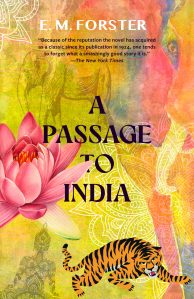
Book 70: A Passage to India by E. M. Foster (1924)
This is a series of reflections reading through Time Magazine’s top 100 novels as selected by Lev Grossman and Richard Lacayo published since 1923 (when Time magazine was founded). For me this is an attempt to broaden my exposure to authors I may not encounter otherwise, especially as a person who was not a liberal arts major in college. Time’s list is alphabetical, so I decided to read through in a random order, and I plan to write a short reflection on each novel.
A Passage to India is an uncomfortable read. It is a story set in India under British colonial rule and is a story of multiple cultures that do not communicate effectively with each other. There is the British citizens who view themselves as people bringing civilization to the people of India and view the Indian people as inferior and dangerous. Even among the Indians there are the divisions between Muslim and Hindu Indians. Two women come to India, Mrs. Moore and Mrs. Adela Quested, to visit Mrs. Moore’s son, Ronny who is the magistrate for the fictional city of Chandrapore. Both women hope to experience India while they are there, but the English citizens in India, especially the women, keep to the safety of their compounds. Mrs. Quested is also trying to decide if she will marry Ronny Moore, and initially she is inclined to break off the engagement, but in a stressful situation she agrees to marry Ronny. Later the two women go on an outing to the Marabar Hills with Doctor Aziz, a Muslim Indian doctor who attempts to meet the expectations of these English women. Yet, Adela Quested in a moment of being overwhelmed in the cave first, unknowingly, insults Doctor Aziz and then later accuses him of assaulting her.
The English, except for Cyril Fielding the headmaster of a small government run college for Indians, are convinced of Doctor Aziz’ guilt, and the Indians rally around the Doctor. Eventually in the trial Mrs. Quested withdraws her accusation and Doctor Aziz is freed, but animosity remains between all the characters until almost the end of the story. It is a story of miscommunication and varied expectations between cultures. English, Muslims, and Hindus in the story often have no interest in understanding one another.
I cannot say I enjoyed this book. I understand why it is an important book, especially when it was published in 1924. Even though E. M. Foster attempts to be sympathetic to the Indian characters in the story, there are times that I cringe at the way he portrays them. Part of this may be that I live in an area with a large Indian population and although their level of education and their exposure to western society is different that what colonial India would have experienced in the 1920s, there are times when the colonial attitudes the book is attempting to critique still come through.
 Sign of the Rose