Category Archives: Biblical Reflections

Jeremiah 18: A Misshapen People

  Jeremiah 18

2008_0530ThomThrowingABowl0028

Spoiled Clay

The word that came to Jeremiah from the LORD: 2 “Come, go down to the potter’s house, and there I will let you hear my words.” 3 So I went down to the potter’s house, and there he was working at his wheel. 4 The vessel he was making of clay was spoiled in the potter’s hand, and he reworked it into another vessel, as seemed good to him.

 5 Then the word of the LORD came to me: 6 Can I not do with you, O house of Israel, just as this potter has done? says the LORD. Just like the clay in the potter’s hand, so are you in my hand, O house of Israel. 7 At one moment I may declare concerning a nation or a kingdom, that I will pluck up and break down and destroy it, 8 but if that nation, concerning which I have spoken, turns from its evil, I will change my mind about the disaster that I intended to bring on it. 9 And at another moment I may declare concerning a nation or a kingdom that I will build and plant it, 10 but if it does evil in my sight, not listening to my voice, then I will change my mind about the good that I had intended to do to it. 11 Now, therefore, say to the people of Judah and the inhabitants of Jerusalem: Thus says the LORD: Look, I am a potter shaping evil against you and devising a plan against you. Turn now, all of you from your evil way, and amend your ways and your doings.

 12 But they say, “It is no use! We will follow our own plans, and each of us will act according to the stubbornness of our evil will.”

It is hard for me to read this passage without hearing the lyrics of the contemporary Christian song:

Change my heart, O God, make it ever true
Change my heart, O God, may I be like you
You are the potter, I am the clay
Mold me and make me, this is what I pray

And while the lyric assumes a positive relationship between the vessel and God, this passage in Jeremiah does not. This passage, like Isaiah 45: 9 uses the image of a potter forming vessels as a distinction between the people of Israel and God, where God’s intent is for them to be formed in one way but they as a vessel are turning out to be spoiled in the maker’s hand. On the positive side, this is a world where turning is still possible, as Binaymin Lau (Lau, 2013, p. 47f.) draws the contrast between these words of Jeremiah and the words of the prophetess Huldah in 2 Kings:

Thus says the Lord, I will indeed bring disaster upon this place and on its inhabitants—all the words of the book that the king of Judah has read. (2 Kings 22: 16)

And even though there will be a reprieve for Josiah who will not see the disaster that is to come, there is no staving off the disaster. Here in Jeremiah’s words there is still hope that if the people will change God’s mind will change. There remains an opening and a plea for a turning away from the ways that have led the people into this situation, but the response is telling. It points to a reality that resistance to God practiced will eventually eliminate the capacity to choose life instead of death. (Brueggemann, 1998, p. 168) Perhaps like the addict who can no longer choose the way that they know leads to life, Judah has become addicted to the practices of death.
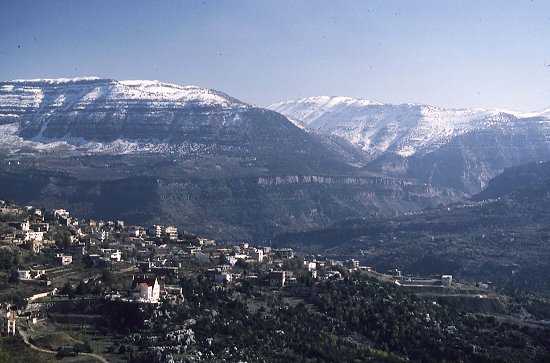
 qartaba

The Lost Identity

 13 Therefore thus says the LORD:
Ask among the nations:
Who has heard the like of this?
The virgin Israel has done a most horrible thing.
 14 Does the snow of Lebanon leave the crags of Sirion?
Do the mountain waters run dry, the cold flowing streams?
 15 But my people have forgotten me,
they burn offerings to a delusion;
they have stumbled in their ways,
in the ancient roads,
and have gone into bypaths, not the highway,
 16 making their land a horror, a thing to be hissed at forever.
All who pass by it are horrified and shake their heads.
 17 Like the wind from the east, I will scatter them before the enemy.
 I will show them my back, not my face, in the day of their calamity.
 
The Lord turns away, and the people lose their identity. Without God, Israel is no longer Israel. Their identity is tied to one another. Somehow they have become something so different than what God intended for them that God has removed his hand from the wheel and is turning away and attempting to forget the people who have already forgotten the Lord. Even though it means their destruction the Lord turns away.
 

Jeremiah by James Tissot

Jeremiah by James Tissot

 18 Then they said, “Come, let us make plots against Jeremiah– for instruction shall not perish from the priest, nor counsel from the wise, nor the word from the prophet. Come, let us bring charges against him, and let us not heed any of his words.”

Interesting that it is the religious leaders and not the military or royal authorities that make plots against Jeremiah, yet it is also these authorities that Jeremiah’s presence directly threatens. We will learn that there are those outside the religious establishment that will risk their own lives and reputations to help Jeremiah, but unfortunately the Bible and history is full of religious people who were more concerned with their own position and power than any type of adherence to God’s will.
 
 19 Give heed to me, O LORD, and listen to what my adversaries say!
 20 Is evil a recompense for good? Yet they have dug a pit for my life.
Remember how I stood before you to speak good for them,
to turn away your wrath from them.
 21 Therefore give their children over to famine;
 hurl them out to the power of the sword,
let their wives become childless and widowed.
May their men meet death by pestilence,
their youths be slain by the sword in battle.
 22 May a cry be heard from their houses,
when you bring the marauder suddenly upon them!
 For they have dug a pit to catch me, and laid snares for my feet.
 23 Yet you, O LORD, know all their plotting to kill me.
Do not forgive their iniquity, do not blot out their sin from your sight.
Let them be tripped up before you;
deal with them while you are angry.
 
This is the classic imprecatory (cursing) prayer, like the imprecatory psalms from the book of Psalms. It stands in contrast to the sermon on the mount, and yet it would be easy to judge Jeremiah and the Psalmist without standing in their shoes. Ellen Davis, who taught Old Testament at Duke University and several other places shared a story about how she was told to pray the imprecatory psalms about someone who had betrayed her and then after a couple days she could no longer pray them. On the other hand, in the midst of Jeremiah’s pain he may, like Jonah, be all too aware of God’s tendency to forgive and want to ensure that God does not quickly forget and calls upon God to face them in the midst of God’s wrath. In contrast to Job, who does not want to face God in God’s anger, Jeremiah calls on God to confront his adversaries in God’s anger. Perhaps in the prayer God’s mind will change and perhaps in the prayer the prophets heart will change. At this point in the non-linear time of Jeremiah the window for God’s heart to change and the people’s behavior to change is still open.

purple rose 01 by picsofflowers.blogspot.com

Jeremiah 17: States of the Heart

scarsofheart

Jeremiah 17

The sin of Judah is written with an iron pen; with a diamond point it is engraved on the tablet of their hearts, and on the horns of their altars, 2 while their children remember their altars and their sacred poles, beside every green tree, and on the high hills, 3 on the mountains in the open country. Your wealth and all your treasures I will give for spoil as the price of your sin throughout all your territory. 4 By your own act you shall lose the heritage that I gave you, and I will make you serve your enemies in a land that you do not know, for in my anger a fire is kindled that shall burn forever.

Walter Brueggeman has an excellent line about this passage:

It (Judah’s idolatry) is written on the ultimate places of memory, on the heart and on the altar. The record on the heart is the very antethesis of the torah on the heart (31:33). Something will be written on the heart, either sin or torah. (Brueggemann, 1998, p. 156)

This chapter brings together a lot of varied styles and probably comes from various places in Jeremiah’s ministry, but it all centers around issues of the heart, and specifically the poet’s heart and the people’s heart. Here the heart of the people is directed away from God, towards the high hills, the green trees and the poles, probably indicating worship of Asherah and Baal. Now the degree that the people are worshipping other gods compared to turning away from God’s vision for their lives we will never know, but from Jeremiah’s view they have turned their heart to other gods and placed their place in other things. Their turning has left a permanent mark on their heart and on their worship and the consequences of this turning away from the source of their life is dire.

 5 Thus says the LORD:
Cursed are those who trust in mere mortals
and make mere flesh their strength,
whose hearts turn away from the LORD.
 6 They shall be like a shrub in the desert,
and shall not see when relief comes.
They shall live in the parched places of the wilderness,
in an uninhabited salt land.
 7 Blessed are those who trust in the LORD,
whose trust is the LORD.
 8 They shall be like a tree planted by water,
sending out its roots by the stream.
It shall not fear when heat comes,
and its leaves shall stay green;
in the year of drought it is not anxious,
and it does not cease to bear fruit.
 9 The heart is devious above all else;
 it is perverse– who can understand it?
 10 I the LORD test the mind and search the heart,
to give to all according to their ways,
according to the fruit of their doings.
Now the oracle switches styles to reflect a more poetic style and reflects the language of the psalms or wisdom literature. The contrast between a shrub in the desert and the tree planted by water contrasts between the wise choice (trusting God) and the unwise choice (trusting in mortals). On the one hand, this seems readily apparent, but Jeremiah is probably protesting the practice of making alliances with nations like Egypt to protect the nation from the threat of the armies of Assyria or Babylon. Throughout the book of Jeremiah these alliances prove to be unreliable leaving the people of Judah captive to Babylon. Even when later Jeremiah will urge the people to not resist Babylon it is more attractive to rely on a foreign power that can challenge the armies that march upon the nation. Here the heart again becomes one of the images and it is a devious heart, yet it is also searched out by God.

 11 Like the partridge hatching what it did not lay,
so are all who amass wealth unjustly;
in mid-life it will leave them,
and at their end they will prove to be fools.

This little wisdom snippet may be a part of what lies ahead or it may be its own little pithy saying comparing those who amass unjust wealth with the partridge that hatches other birds eggs. Just like placing trust in mortals is a bad idea, so is placing ones trust in wealth for it will ultimately abandon them as well.

12 O glorious throne, exalted from the beginning,
shrine of our sanctuary!
 13 O hope of Israel! O LORD!
All who forsake you shall be put to shame;
those who turn away from you shall be recorded in the underworld,
for they have forsaken the fountain of living water, the LORD.
 14 Heal me, O LORD, and I shall be healed;
save me, and I shall be saved;
for you are my praise.
 15 See how they say to me,
“Where is the word of the LORD? Let it come!”
 16 But I have not run away from being a shepherd in your service,
nor have I desired the fatal day.
 You know what came from my lips;
it was before your face.
 17 Do not become a terror to me;
you are my refuge in the day of disaster;
 18 Let my persecutors be shamed,
but do not let me be shamed;
let them be dismayed,
but do not let me be dismayed;
bring on them the day of disaster;
destroy them with double destruction!

The  prophet lifts up a prayer in the language of lament.  He begins by praising God as many lament psalms do and then he present his case. The prophet claims to have been faithful and has been wounded in remaining faithful. He is taunted by those who mock him saying, “Where is the word of the Lord? Let it come!” and yet Jeremiah has remained true. As a prophet he is caught between God and the disobedient people and Jeremiah asks not to receive terror from both sides for God is all the prophet has left. I read this as the prophet asking to be removed from this place between so that his persecutors may be shamed, not him, they may be dismayed, not him, and they may be destroyed, not him.

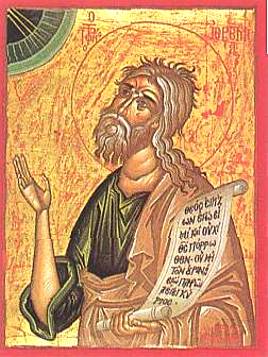
Orthodox Icon of the Prophet Jeremiah

Orthodox Icon of the Prophet Jeremiah

 
19 Thus said the LORD to me: Go and stand in the People’s Gate, by which the kings of Judah enter and by which they go out, and in all the gates of Jerusalem, 20 and say to them: Hear the word of the LORD, you kings of Judah, and all Judah, and all the inhabitants of Jerusalem, who enter by these gates. 21 Thus says the LORD: For the sake of your lives, take care that you do not bear a burden on the sabbath day or bring it in by the gates of Jerusalem. 22 And do not carry a burden out of your houses on the sabbath or do any work, but keep the sabbath day holy, as I commanded your ancestors. 23 Yet they did not listen or incline their ear; they stiffened their necks and would not hear or receive instruction.
 24 But if you listen to me, says the LORD, and bring in no burden by the gates of this city on the sabbath day, but keep the sabbath day holy and do no work on it, 25 then there shall enter by the gates of this city kings who sit on the throne of David, riding in chariots and on horses, they and their officials, the people of Judah and the inhabitants of Jerusalem; and this city shall be inhabited forever. 26 And people shall come from the towns of Judah and the places around Jerusalem, from the land of Benjamin, from the Shephelah, from the hill country, and from the Negeb, bringing burnt offerings and sacrifices, grain offerings and frankincense, and bringing thank offerings to the house of the LORD. 27 But if you do not listen to me, to keep the sabbath day holy, and to carry in no burden through the gates of Jerusalem on the sabbath day, then I will kindle a fire in its gates; it shall devour the palaces of Jerusalem and shall not be quenched.

In a world where God is not central the Sabbath is neglected. When people trust in their own works, in wealth and in their own abilities to bring about prosperity there is no need for a day of rest. The Sabbath becomes another day for commerce, for work, for making and selling, for travel and for burdens. The most challenging thing that God commands God people is to rest and to trust in God to provide. Paradoxically it is this additional work which will undercut the value of the rest of the work. If the people rest they will be secure, they will have a king and be safe and they will receive the gifts from the surrounding world coming to them, yet if they work harder and harder to attain these things they will fall away and become more and more distant as the nation separates itself from it source of life and its reason for being

purple rose 01 by picsofflowers.blogspot.com

Jeremiah 16: A Vision of Resurrection, But Only Through Death

Jeremiah Lamenting the Destruction of Jerusalem by Rembrandt van Rijn 1630

Jeremiah Lamenting the Destruction of Jerusalem by Rembrandt van Rijn 1630

The word of the LORD came to me: 2 You shall not take a wife, nor shall you have sons or daughters in this place. 3 For thus says the LORD concerning the sons and daughters who are born in this place, and concerning the mothers who bear them and the fathers who beget them in this land: 4 They shall die of deadly diseases. They shall not be lamented, nor shall they be buried; they shall become like dung on the surface of the ground. They shall perish by the sword and by famine, and their dead bodies shall become food for the birds of the air and for the wild animals of the earth.
5 For thus says the LORD: Do not enter the house of mourning, or go to lament, or bemoan them; for I have taken away my peace from this people, says the LORD, my steadfast love and mercy. 6 Both great and small shall die in this land; they shall not be buried, and no one shall lament for them; there shall be no gashing, no shaving of the head for them. 7 No one shall break bread for the mourner, to offer comfort for the dead; nor shall anyone give them the cup of consolation to drink for their fathers or their mothers. 8 You shall not go into the house of feasting to sit with them, to eat and drink. 9 For thus says the LORD of hosts, the God of Israel: I am going to banish from this place, in your days and before your eyes, the voice of mirth and the voice of gladness, the voice of the bridegroom and the voice of the bride.
10 And when you tell this people all these words, and they say to you, “Why has the LORD pronounced all this great evil against us? What is our iniquity? What is the sin that we have committed against the LORD our God?” 11 then you shall say to them: It is because your ancestors have forsaken me, says the LORD, and have gone after other gods and have served and worshiped them, and have forsaken me and have not kept my law; 12 and because you have behaved worse than your ancestors, for here you are, every one of you, following your stubborn evil will, refusing to listen to me. 13 Therefore I will hurl you out of this land into a land that neither you nor your ancestors have known, and there you shall serve other gods day and night, for I will show you no favor.
14 Therefore, the days are surely coming, says the LORD, when it shall no longer be said, “As the LORD lives who brought the people of Israel up out of the land of Egypt,” 15 but “As the LORD lives who brought the people of Israel up out of the land of the north and out of all the lands where he had driven them.” For I will bring them back to their own land that I gave to their ancestors.
16 I am now sending for many fishermen, says the LORD, and they shall catch them; and afterward I will send for many hunters, and they shall hunt them from every mountain and every hill, and out of the clefts of the rocks. 17 For my eyes are on all their ways; they are not hidden from my presence, nor is their iniquity concealed from my sight. 18 And I will doubly repay their iniquity and their sin, because they have polluted my land with the carcasses of their detestable idols, and have filled my inheritance with their abominations.
19 O LORD, my strength and my stronghold,
my refuge in the day of trouble,
to you shall the nations come from the ends of the earth and say:
Our ancestors have inherited nothing but lies, worthless things in which there is no profit.
20 Can mortals make for themselves gods? Such are no gods!
21 “Therefore I am surely going to teach them, this time I am going to teach them my power and my might, and they shall know that my name is the LORD.”
This is a really harsh passage, and there have been a number of these harsh passages in the book and in the life of Jeremiah. Here Jeremiah is commanded not to share in the joy of others in the community, not to have the joy of a wife or family, but to live in preparation for the coming destruction. He is a contrast to the people around him, and his life of sorrow is a message to the surrounding world in the midst of its feasting and celebration. It is a hard life as a prophet, a life that no one would choose on their own if they knew what it would entail. Jeremiah will suffer, and perhaps not having a family prevents the deeper suffering of seeing the ones you love wounded by the convictions you are called to live out of, yet this is a call to a very lonely life and profession. Yet, he is the bearer of a message of the death of not only an age, but of people: of families and friends, of a way of life, of the world as it is known. It is a death so profound that it overwhelms the past stories that made the people who they are and strips away all the things that held the community together.
It is a time of death, but in the middle of this chapter we also see the glimmer of a resurrection. For the new covenant between God and God’s people to come to light the current relationship has to die. For something truly new to be born something old is having to give way. The people who have trusted in Kings, in land, in the Temple and the temple cult are about to have all these things stripped away and as exiles in a foreign land only then will they refind who they are. The promised new identity will be so strong that no longer will they point to the Exodus as their defining story but rather the regathering of the people after the Babylonian Exile as God brings them home from all the places they have been.
Yet the passage closes again with the death and with the fishers and hunters who are seeking out the people. Much as the narratives at the end of the synoptic gospels (Matthew, Mark and Luke) sometimes called the Olivet Discourses point to a similar seeking:
Then two will be in the field; one will be taken and the one will be left. Two women will be grinding meal together; one will be taken and one will be left. (Matthew 24: 40f)
And I think Jesus is also pointing towards the coming destruction of the city and temple that will come in the Jewish War around 70 CE. Yet Jeremiah continues to wrestle with God and enters once more into the language of lament in 19-20 hoping and praying for a merciful turn, yet perhaps God sees that it is only through death that a resurrection will be possible, only through exile that the people can return to their new home, and only through the loss of the old relationship that a new relationship can be born, and only through the loss of these idols (or things that the people have placed their trust in) that they can once again see the living God. As Isaiah states:
A shoot shall come out of the stump of Jesse, and a branch shall grow out of its roots. (Isaiah 11:1)
Without making the too quick jump to Christ, that many Christians naturally make with this passage, let us also consider that for Jeremiah and Isaiah who would see the house of Jesse, the line of David kings cut off and reduced to a stump, that it would take the death of this line before the people could see new life. There is no avoiding the harshness and the pain of this passage, but without the hope of new life, resurrection or the shoot that comes out of the stump; without the hope of the return from the exile that will outshine the remembrance of the journey to the promised land from Egypt-without these things the journey into the loneliness and brokenness that Jeremiah and the people will encounter is senseless hell. It only is bearable in the hope that God will once again create life out of death.

purple rose 01 by picsofflowers.blogspot.com

Jeremiah 15-Ready to Walk Away

Jeremiah 15

The Prophet Jeremiah by Michelangelo

The Prophet Jeremiah by Michelangelo

Anger and Regret
Then the LORD said to me: Though Moses and Samuel stood before me, yet my heart would not turn towards this people. Send them out of my sight, and let them go! 2And when they say to you, ‘Where shall we go?’ you shall say to them: Thus says the LORD:
Those destined for pestilence, to pestilence,
and those destined for the sword, to the sword;
those destined for famine, to famine,
and those destined for captivity, to captivity.
3And I will appoint over them four kinds of destroyers, says the LORD: the sword to kill, the dogs to drag away, and the birds of the air and the wild animals of the earth to devour and destroy. 4I will make them a horror to all the kingdoms of the earth because of what King Manasseh son of Hezekiah of Judah did in Jerusalem.

5 Who will have pity on you, O Jerusalem,
or who will bemoan you?
Who will turn aside
to ask about your welfare?
6 You have rejected me, says the LORD,
you are going backwards;
so I have stretched out my hand against you and destroyed you—
I am weary of relenting.
7 I have winnowed them with a winnowing-fork
in the gates of the land;
I have bereaved them, I have destroyed my people;
they did not turn from their ways.
8 Their widows became more numerous
than the sand of the seas;
I have brought against the mothers of youths
a destroyer at noonday;
I have made anguish and terror
fall upon her suddenly.
9 She who bore seven has languished;
she has swooned away;
her sun went down while it was yet day;
she has been shamed and disgraced.
And the rest of them I will give to the sword
before their enemies,
says the LORD.

Jeremiah can be a very harsh book since it comes at the point of the story between God and God’s people where there is no easy way to fix the brokenness, it is a story where something will have to die for the possibility of new life. The leadership of Judah have become attracted to the Assyrian culture which seemed so powerful here at the beginning of Jeremiah’s ministry (the fact that it refers to what King Manasseh did points to an early date since Jeremiah begins his ministry in the time of Josiah, Manasseh’s successor). Even here at the beginning God seems to be at the point of being out of patience, of not wanting to hear from the prophet- and yet perhaps through the prophets intercession God will seemingly grant more time or at least allow the political situation to develop. Yet, God seems to swing from unrelenting anger in the first four verses to a tone of regret in 5-9 where at the beginning we see the anger for what the nation became and then in 5-9 the regret over the brokenness of the relationship. I’ve mentioned before that the God portrayed in Jeremiah has very human emotions and has been deeply wounded by the brokenness of the relationship with God’s people and is finally at the point where God can no longer abide with them in the same place. The old covenant which God has held to and yet the people have not, where God has tried to give the blessing and apparently held back the woes of the Deuteronomic covenant, this covenant is finally beyond reconciliation in the way that it is. For new life and a new covenant something has to die so that something new can live.
God is weary, worn, tired and heartbroken. Wrath and anger in Jeremiah are not signs of a cruel and vicious God, but rather a God who was so deeply involved with the people that God was wounded and heartbroken. As harsh as the language of Jeremiah is, and indeed as offensive as it may at points be, it is the language of relationship. For all the violence and destruction of the language you can never say that the God that Jeremiah points to doesn’t care.

Job by Leon Bonnat (1880)

Job by Leon Bonnat (1880)

Taking God to Task
10 Woe is me, my mother, that you ever bore me, a man of strife and contention to the whole land! I have not lent, nor have I borrowed, yet all of them curse me. 11The LORD said: Surely I have intervened in your life for good, surely I have imposed enemies on you in a time of trouble and in a time of distress. 12Can iron and bronze break iron from the north?
13 Your wealth and your treasures I will give as plunder, without price, for all your sins, throughout all your territory. 14I will make you serve your enemies in a land that you do not know, for in my anger a fire is kindled that shall burn for ever.
15 O LORD, you know;
remember me and visit me,
and bring down retribution for me on my persecutors.
In your forbearance do not take me away;
know that on your account I suffer insult.
16 Your words were found, and I ate them,
and your words became to me a joy
and the delight of my heart;
for I am called by your name,
O LORD, God of hosts.
17 I did not sit in the company of merrymakers,
nor did I rejoice;
under the weight of your hand I sat alone,
for you had filled me with indignation.
18 Why is my pain unceasing,
my wound incurable,
refusing to be healed?
Truly, you are to me like a deceitful brook,
like waters that fail.

19 Therefore, thus says the LORD:
If you turn back, I will take you back,
and you shall stand before me.
If you utter what is precious, and not what is worthless,
you shall serve as my mouth.
It is they who will turn to you,
not you who will turn to them.
20 And I will make you to this people
a fortified wall of bronze;
they will fight against you,
but they shall not prevail over you,
for I am with you
to save you and deliver you,

says the LORD.
21 I will deliver you out of the hand of the wicked,
and redeem you from the grasp of the ruthless.

Jeremiah has been given a rough calling, to proclaim a message that nobody wants to hear and to be considered politically traitorous and religiously dangerous. Jeremiah’s words have not made him any friends and many enemies, and here we see Jeremiah tormented by the calling God gave him. I think most leaders who have faced opposition can relate to these words, maybe not quite to the level of Jeremiah, but there are times where we lament our calling and the pain and loneliness it can bring. To wonder if it would be easier to never have existed or if somehow our life were to end. I don’t know if Jeremiah ever contemplated suicide, but he certainly despaired of his life getting better. He lived in a rough time to be a prophet, and these words are especially surprising if they do come early in his ministry in the time of Josiah, a time that most voices in the bible considered a time of great revival and return to God’s ways. Yet, Jeremiah seems to be the one called on in the midst of all the trumpets of celebration to play the dirge. He is off key with everyone else of his time and because of that he is an outsider and is persecuted. Yet God’s words to the prophet are not encouraging, instead they are letting Jeremiah know it is going to get worse. There is no easy balm here, there is no springs of renewal, only the long journey into the wilderness of desolation. Jeremiah turns to the tradition of laments, like in the Psalter where the psalms of lament call upon God, the lift up the reality that God knows what is going on and they call on God to act. Unlike most the Psalms of lament though God does not answer in the expected way. The prophet goes so far as to accuse God of being unreliable, of in effect saying, “God you deceived me, you lied to me, I have done everything you have asked and you have allowed everyone else to prosper while I remain with a wound that won’t heal. Jeremiah gives us an incredibly rich, if sometimes combative set of language to be in conversation with God about, and yet, God’s answer is harsh as well. It is almost as if Jeremiah screams at God from his wounds and God yells back. “If you turn back…if you utter what is precious…” and in a world where there is a woundedness that will not heal, where preachers and prophets and people run into persecution for attempting to be faithful to the calling God has for them. Perhaps there is the freedom to vocally wrestle with God, to scream at God in frustration and to know that we may not always like God’s answers. Yet in the midst of all of this God promises God’s presence “I am with you…I will make you… I will deliver you.” In the midst of the darkness and depression, in the midst of the times when God’s faithful want to scream that they feel betrayed, in the midst of all the pain and confusion, perhaps the gospel is the presence of God that does not abandon in precisely those moments. In those moments where we may not want God around that God does not abandon and journeys with us through the darkest days.

purple rose 01 by picsofflowers.blogspot.com

Jeremiah 14: The Broken Covenant and the Death of the Land

drought18-8b9a6db718dda8f9f968da97316f9c0a2daa3655-s6-c30

Jeremiah 14

The word of the Lord that came to Jeremiah concerning the drought: 

2 Judah mourns
and her gates languish;
they lie in gloom on the ground,
and the cry of Jerusalem goes up.
3 Her nobles send their servants for water;
they come to the cisterns,
they find no water,
they return with their vessels empty.
They are ashamed and dismayed
and cover their heads,
4 because the ground is cracked.
Because there has been no rain on the land
the farmers are dismayed;
they cover their heads.
5 Even the doe in the field forsakes her newborn fawn
because there is no grass.
6 The wild asses stand on the bare heights,
they pant for air like jackals;
their eyes fail
because there is no herbage.
7 Although our iniquities testify against us,
act, O Lord, for your name’s sake;
our apostasies indeed are many,
and we have sinned against you.
8 O hope of Israel,
its savior in time of trouble,
why should you be like a stranger in the land,
like a traveler turning aside for the night?
9 Why should you be like someone confused,
like a mighty warrior who cannot give help?
Yet you, O Lord, are in the midst of us,
and we are called by your name;
do not forsake us!
10 Thus says the Lord concerning this people:
Truly they have loved to wander,
they have not restrained their feet;
therefore the Lord does not accept them,
now he will remember their iniquity
and punish their sins. 

There is a connection between the vision of shalom that the people of God are called to live in and not only their own health, but the very health of the earth around them. The turning away of the people has effected everything and nobody is able to avoid the drought. Even nobles who have the choice wells and access to the best water are no longer able to have their servants successfully draw water. Farmers in their fields are directly affected as their crops are unable to grow and life itself hangs by a thread. Even the wild animals abandon the natural order, does no longer care for their fawns, wild donkeys can find no food foraging in the mountains. Everything is dying in the midst of the drought. And in a turn of lament, whether the prophet or the people call on God. In the tradition of the Psalms of lament they cry out in their distress calling on the Lord to act, to rouse Godself from slumber, to act like God has acted in the past, to demonstrate God’s power. Finally as the land dies and the events of the people’s rebellion is coming to fruition, both in the approaching armies of the Babylonians and in the oppressive lack of moisture which is killing the animals and crops of the fields. Yet the prayer comes too late, God is not willing to quickly and easily accept the words that come before God. Too many times in the past the turning has been superficial and now God has turned God’s back upon the people of the covenant, allowing the negative side of the covenant-the woes-to come to pass. The iniquity and sins will not be forgotten or passed over, forgiveness is not granted, the past is not forgotten.

The wrath of God can be a troubling concept for many, myself included at times, especially the way in which it can be utilized to be a tool of fear and oppression. Yet, there is a very real sense where God does care, where God does take sides and where we need to wrestle with the ways in which forgiveness is not cheap, where reconciliation is often a hard and painful process and where our actions (or inactions) cause pain and harm not only to ourselves but the world around us.

Jeremiah Lamenting the Destruction of Jerusalem by Rembrandt van Rijn 1630

Jeremiah Lamenting the Destruction of Jerusalem by Rembrandt van Rijn 1630

Jeremiah 14: 11-22

11 The Lord said to me: Do not pray for the welfare of this people.12Although they fast, I do not hear their cry, and although they offer burnt-offering and grain-offering, I do not accept them; but by the sword, by famine, and by pestilence I consume them.

13 Then I said: ‘Ah, Lord God! Here are the prophets saying to them, “You shall not see the sword, nor shall you have famine, but I will give you true peace in this place.” ’ 14And the Lord said to me: The prophets are prophesying lies in my name; I did not send them, nor did I command them or speak to them. They are prophesying to you a lying vision, worthless divination, and the deceit of their own minds.15Therefore thus says the Lord concerning the prophets who prophesy in my name though I did not send them, and who say, ‘Sword and famine shall not come on this land’: By sword and famine those prophets shall be consumed. 16And the people to whom they prophesy shall be thrown out into the streets of Jerusalem, victims of famine and sword. There shall be no one to bury them—themselves, their wives, their sons, and their daughters. For I will pour out their wickedness upon them. 


17 You shall say to them this word:
Let my eyes run down with tears night and day,
and let them not cease,
for the virgin daughter—my people—is struck down with a crushing blow,
with a very grievous wound.
18 If I go out into the field,
look—those killed by the sword!
And if I enter the city,
look—those sick with famine!
For both prophet and priest ply their trade throughout the land,
and have no knowledge. 


19 Have you completely rejected Judah?
Does your heart loathe Zion?
Why have you struck us down
so that there is no healing for us?
We look for peace, but find no good;
for a time of healing, but there is terror instead.
20 We acknowledge our wickedness, O Lord,
the iniquity of our ancestors,
for we have sinned against you.
21 Do not spurn us, for your name’s sake;
do not dishonor your glorious throne;
remember and do not break your covenant with us.
22 Can any idols of the nations bring rain?
Or can the heavens give showers?
Is it not you, O Lord our God?
We set our hope on you,
for it is you who do all this.

Perhaps the role of the prophet is not to give up, to be willing to wrestle with God-even when God is unwilling to hear any longer. Moses wrestled with God for the sake of the people several times in the Exodus and God changed God’s mind, and here Jeremiah enters in to once again plead for the people even after God instructs him not to pray for them any longer. Jeremiah refuses to give us, refuses to stay silent. Once again he searches for a way, reminding God that the priests, the prophets and the leaders have failed the people, they have set them on a course for war with Babylon while promising peace. They have trusted in their own strength and the strength of allies like Egypt and have not accepted that it is God’s hand that is moving with the Babylonians and they are to accept their rule for the time being. The Lord is not having any of this, the prophets and leaders will indeed bear the consequences with the people, but there is no turning back from the death that is coming and will soon be all around. Death in the fields, death in the city, death from war and famine and sickness, and the shattering of all that was. The world that the people of Judah know is about to die, they will now be exiles in a foreign land, the remnant of a once proud people.

Jeremiah refuses to give up, returning to the language of lament, searching for hope in the hopelessness. Trying once again to call on God to be God, to be their hope, to save the people not because they deserve it but because it will bring glory to God. Jeremiah fears that if God turns this time the stump will be destroyed to the point it will never rise again, that the people will be wiped out and that death will triumph. Jeremiah continues, even in his own woundedness, to pray for and appeal for the people against the command of God. His love of the people, of Jerusalem and the temple push him to this even though he has been considered a traitor by all of these throughout his ministry. Grace and healing may be coming, but it is not before the people passes through the valley of the shadow of death. With the approaching armies of Babylon death is coming. But we looking back know that God will not turn God’s back forever.

purple rose 01 by picsofflowers.blogspot.com

Jeremiah 13: Weeping for Those Who Don’t Hear

loincloth

Jeremiah 13: 1-11: The Ruined Loincloth

 Thus said the LORD to me, “Go and buy yourself a linen loincloth, and put it on your loins, but do not dip it in water.” 2 So I bought a loincloth according to the word of the LORD, and put it on my loins. 3 And the word of the LORD came to me a second time, saying, 4 “Take the loincloth that you bought and are wearing, and go now to the Euphrates, and hide it there in a cleft of the rock.” 5 So I went, and hid it by the Euphrates, as the LORD commanded me. 6 And after many days the LORD said to me, “Go now to the Euphrates, and take from there the loincloth that I commanded you to hide there.” 7 Then I went to the Euphrates, and dug, and I took the loincloth from the place where I had hidden it. But now the loincloth was ruined; it was good for nothing.

 8 Then the word of the LORD came to me: 9 Thus says the LORD: Just so I will ruin the pride of Judah and the great pride of Jerusalem. 10 This evil people, who refuse to hear my words, who stubbornly follow their own will and have gone after other gods to serve them and worship them, shall be like this loincloth, which is good for nothing. 11 For as the loincloth clings to one’s loins, so I made the whole house of Israel and the whole house of Judah cling to me, says the LORD, in order that they might be for me a people, a name, a praise, and a glory. But they would not listen.

Throughout Jeremiah’s ministry words have failed to convince his listeners to turn from their path, and now God instructs Jeremiah to turn to a symbolic action. Whether Jeremiah actually makes the long journey to the Euphrates river multiple times or whether this is a dream sequence or whether he buries it at another river near his hometown (the Nehal Perat) is something that scholars will debate back and forth, but the symbolic nature of the Euphrates is powerful since it is where the people will cross as they go into exile. At issue within the symbolic representation of the loincloth is the people’s losing the meaning of their being set aside by God for a purpose.

Election, although freighted with all types of baggage with the way it has been used by religious groups, within both Jewish and Christian terms is not for the sake of the elect. The elect are there to be a blessing to the world around them, but too often they become fixated on their own status and they cling to that rather than clinging to the identity they were given by the one who set them apart. Israel was to cling to God and move in the ways God moved as a piece of clothing but to use Jesus’ words they have become like salt that has lost its saltiness and like the loincloth they have failed to be good for anything at this point. Perhaps it is only in this time where they are separated from God and feel that they are ruined that there can be the possibility of being made new and hearing and seeing once again who God is calling them to be.

 Jeremiah 13: 12-14: Filled with Drunkenness

 12 You shall speak to them this word: Thus says the LORD, the God of Israel: Every wine-jar should be filled with wine. And they will say to you, “Do you think we do not know that every wine-jar should be filled with wine?” 13 Then you shall say to them: Thus says the LORD: I am about to fill all the inhabitants of this land– the kings who sit on David’s throne, the priests, the prophets, and all the inhabitants of Jerusalem– with drunkenness. 14 And I will dash them one against another, parents and children together, says the LORD. I will not pity or spare or have compassion when I destroy them.

 Using the image of drunkenness indicates a state where decisions are impaired, where bad choices are frequently made and previous inhibitions may be cast aside. In the context of Jeremiah, the people have turned from God for a long time, they have chased other gods, other goods, trusting in their Davidic king, the temple and the city of Jerusalem to keep them safe. The very people who should be leading the people back to God: the priests, the prophets (other than Jeremiah and perhaps a few others) and the king on David’s throne have instead led them towards a path of destruction. The people are on a path to conflict with Babylon and yet they cannot see it yet, but the prophet sees. The people’s judgment and reactions are impaired unable to see the coming collision with the immovable object and God will not rescue them this time. Perhaps God is the immovable object, perhaps God is merely allowing the consequences of their previous bad choices to come to fruition like a person who after trying to prevent a person who is drunk from taking the wheel and sees them start the vehicle anyways. Regardless, God is no longer there offering a shield of protection to keep the people from hitting the bottom. God has begun to seem to the people no longer as their guardian but their oppressor and until they reach rock bottom they probably won’t be able to see God in a different light.

 Orthodox Icon of the Prophet Jeremiah

Orthodox Icon of the Prophet JeremiahJeremiah 13:15-17: A Prophet’s Plea

 15 Hear and give ear; do not be haughty, for the LORD has spoken.
 16 Give glory to the LORD your God before he brings darkness,
and before your feet stumble on the mountains at twilight;
 while you look for light, he turns it into gloom and makes it deep darkness.
 17 But if you will not listen, my soul will weep in secret for your pride;
my eyes will weep bitterly and run down with tears,
because the LORD’s flock has been taken captive.
 

At the center of Israel’s life is the calling to hear (shema) which goes back to Deuteronomy 6:4

Hear, O Israel: The LORD is our God, the LORD alone

And again in this plea the people are called to hear and give hear, to look, to listen and in language characteristic of Deuteronomy’s blessings and curses there is the other side of “if you will not listen” but instead of seeing the consequences for the people we see the consequences for the prophet. The prophet makes his plea as one who is brokenhearted reaching out yet again to the people who have failed to listen to him throughout his ministry and yet his soul still weeps for them and his eyes run down with tears because they will bear the effects of their inability to (or choosing not to) hear.
 
Jeremiah 13: 18-27 Corrupted Identity

18 Say to the king and the queen mother;
“Take a lowly seat, for your beautiful crown has come down from your head.”
 19 The towns of the Negeb are shut up with no one to open them;
all Judah is taken into exile, wholly taken into exile.
 20 Lift up your eyes and see those who come from the north.
Where is the flock that was given you, your beautiful flock?
 21 What will you say when they set as head over you those whom you have trained to be your allies?
Will not pangs take hold of you, like those of a woman in labor?
 22 And if you say in your heart, “Why have these things come upon me?”
it is for the greatness of your iniquity that your skirts are lifted up, and you are violated.
 23 Can Ethiopians change their skin or leopards their spots?
Then also you can do good who are accustomed to do evil.
 24 I will scatter you like chaff driven by the wind from the desert.
 25 This is your lot, the portion I have measured out to you, says the LORD,
 because you have forgotten me and trusted in lies.
 26 I myself will lift up your skirts over your face, and your shame will be seen.
 27 I have seen your abominations, your adulteries and neighings,
 your shameless prostitutions on the hills of the countryside.
Woe to you, O Jerusalem! How long will it be before you are made clean?

Everything is going to change and nothing is going to change. Everything external will change among the people, the king and queen mother will lose their places, places that were once open in hospitality will be closed by conflict, the honored will become dishonored and the powerful will find themselves powerless. But the prophet or God also has little hope or belief that anything will change, that the people’s identity has been corrupted  and they are less likely to change their ways than a person is able to change the color of their skin or a leopard could have its spots removed. The desire is for the unclean to be made clean, but the 13th chapter ends in woe not knowing what it will take for the people to have a new heart placed within them and a new sense of identity as the people of God to live out of. They will need eyes to see and ears to hear, but for now the prophet sees them content in their deafness and blindness, unaware of their shame and their brokenness.

purple rose 01 by picsofflowers.blogspot.com

Jeremiah 12: The Disillusioned Prophet and the God who Listens

Jeremiah’s Petition

Job by Leon Bonnat (1880)

Job by Leon Bonnat (1880)

  Jeremiah 12

 You will be in the right, O LORD,when I lay charges against you;
 but let me put my case to you. Why does the way of the guilty prosper?
Why do all who are treacherous thrive?
 2 You plant them, and they take root; they grow and bring forth fruit;
 you are near in their mouths yet far from their hearts.
 3 But you, O LORD, know me; You see me and test me– my heart is with you.
Pull them out like sheep for the slaughter, and set them apart for the day of slaughter.
 4 How long will the land mourn, and the grass of every field wither?
For the wickedness of those who live in it the animals and the birds are swept away,
and because people said, “He is blind to our ways.”
 
The question of theodicy, how can the wicked prosper while the righteous suffer is one that the bible wrestle with again and again, and here Jeremiah lays it before God. Jeremiah lays out the difference between himself as the righteous one and the ‘wicked ones’ who believe that God is blind to their ways and Jeremiah is ready for God to judge. Jeremiah is worn out, tired and brokenhearted and is ready to be done with it, ready for God to judge his opponents not knowing how long of a journey he still has before him. While most commentators see God’s response as harsh, that has as much to do with the tone they hear it in as the words themselves (that and they way they divide the text which I will address below). I hear it somewhat differently

Stallions charging

God’s response

 5 If you have raced with foot-runners and they have wearied you, how will you compete with horses?
 And if in a safe land you fall down, how will you fare in the thickets of the Jordan?
 6 For even your kinsfolk and your own family, even they have dealt treacherously with you;
 they are in full cry after you; do not believe them, though they speak friendly words to you.

God’s response to Jeremiah is one of warning of what is still to come. Jeremiah’s journey is not going to be an easy one going forward with betrayal coming even from his own household. Jeremiah this is probably one of those points where Jeremiah needs to be heard and hear that God is still active.  In Jeremiah it is often difficult to know where God is speaking and where Jeremiah is speaking. Two of the scholars I respect greatly see God speaking from verse 5 through the end of the chapter, (Brueggemann 1998, 102-123) (Elizabeth Acthemeier, et.al 1999, VI:679f.) but I am going to propose a different reading with Jeremiah picking up at verse 7

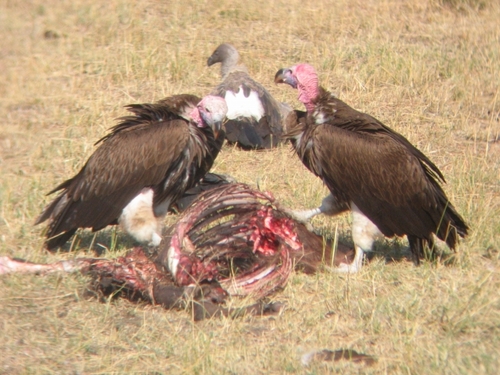
 masai-mara-national-park-scavengers--large-msg-115779180761

Jeremiah’s reponse

 7 I have forsaken my house, I have abandoned my heritage;
 I have given the beloved of my heart into the hands of her enemies.
 8 My heritage has become to me like a lion in the forest;
 she has lifted up her voice against me– therefore I hate her.
 9 Is the hyena greedy for my heritage at my command?
Are the birds of prey all around her?
Go, assemble all the wild animals;
bring them to devour her.
 10 Many shepherds have destroyed my vineyard,
 they have trampled down my portion,
 they have made my pleasant portion a desolate wilderness.
 11 They have made it a desolation; desolate, it mourns to me.
The whole land is made desolate, but no one lays it to heart.
 12 Upon all the bare heights in the desert spoilers have come;
for the sword of the LORD devours from one end of the land to the other;
 no one shall be safe.
 13 They have sown wheat and have reaped thorns,
 they have tired themselves out but profit nothing.
They shall be ashamed of their harvests because of the fierce anger of the LORD.

Jeremiah no longer is concerned for his relations, his family, his heritage. He feels betrayed and so he is ready to surrender them to the consequences of their actions. He is ready for the birds of the air and the beasts of the field to pick over the bones of his homeland, his own village and his family. Jeremiah at this point sees no hope, all he can see is the betrayal and devastation that is coming. The prophet’s broken heart has left him in a state of absolute depression where there is no longer any profit, any joy.

scarsofheart

God’s response

 14 Thus says the LORD concerning all my evil neighbors who touch the heritage that I have given my people Israel to inherit: I am about to pluck them up from their land, and I will pluck up the house of Judah from among them. 15 And after I have plucked them up, I will again have compassion on them, and I will bring them again to their heritage and to their land, everyone of them. 16 And then, if they will diligently learn the ways of my people, to swear by my name, “As the LORD lives,” as they taught my people to swear by Baal, then they shall be built up in the midst of my people. 17 But if any nation will not listen, then I will completely uproot it and destroy it, says the LORD.

God desires God’s people back. There is no easy way around what is coming, even in the reforms of Josiah at the time Jeremiah begins his time as a prophet only brought about superficial changes and God desires something much deeper. The only way a new relationship can begin is for the old one to die so a new one can take it’s place. The Babylonian exile, while an event of horror in the memory of the Jewish people was also a time where they went through a process that they re-identified who they were in their relationship with the Lord. The Lord is unwilling to sit by and not be active, the Lord can no longer abide the way things are where the treacherous thrive and the guilty prosper, yet God still loves the people and desires to have compassion on them and wants them to live out of their identity.

purple rose 01 by picsofflowers.blogspot.com

Jeremiah 11: From Blessing to Curse

Shemah inscription on the Knesset Menorah, Jerusalem

Shemah inscription on the Knesset Menorah, Jerusalem

Jeremiah 11: 1-8: Recalling the People’s Vocation
The word that came to Jeremiah from the LORD: 2 Hear the words of this covenant, and speak to the people of Judah and the inhabitants of Jerusalem. 3 You shall say to them, Thus says the LORD, the God of Israel: Cursed be anyone who does not heed the words of this covenant, 4 which I commanded your ancestors when I brought them out of the land of Egypt, from the iron-smelter, saying, Listen to my voice, and do all that I command you. So shall you be my people, and I will be your God, 5 that I may perform the oath that I swore to your ancestors, to give them a land flowing with milk and honey, as at this day. Then I answered, “So be it, LORD.”
6 And the LORD said to me: Proclaim all these words in the cities of Judah, and in the streets of Jerusalem: Hear the words of this covenant and do them. 7 For I solemnly warned your ancestors when I brought them up out of the land of Egypt, warning them persistently, even to this day, saying, Obey my voice. 8 Yet they did not obey or incline their ear, but everyone walked in the stubbornness of an evil will. So I brought upon them all the words of this covenant, which I commanded them to do, but they did not.

Jeremiah attempts to call the people back to their vocation as the people of God. The language recalls the formative story of the Hebrew people, the story of the Exodus and calls them back to the covenant that God made with the people when they were brought out of Egypt. The people are called once again to hear the words of the covenant, obey the Lord’s voice in a powerful echo of Deuteronomy where the central command is to ‘hear’ or ‘give heed.’ For Jeremiah this sense of a calling the people are to live into as the people of God is their reason for existing. Yet, Jeremiah is also aware of the story of his people and the way they didn’t listen and heed. Jeremiah is working out of a Deuteronomic theology (do these things and you will be blessed, fail to do these things and you will be cursed) and from that perspective he will judge the way God is working in the life of the people. Jeremiah will find this perspective challenged as he continues his ministry, but the basic understanding of why the people find themselves under God’s judgment remains a powerful thought throughout Jeremiah. It is the way Jeremiah makes senses of the senseless desolation he will encounter later in his life with the desolation of his people and their forced exile.

436px-DeadTree

Jeremiah 11: 9-17: The Good Tree Gone Bad
9 And the LORD said to me: Conspiracy exists among the people of Judah and the inhabitants of Jerusalem.10 They have turned back to the iniquities of their ancestors of old, who refused to heed my words; they have gone after other gods to serve them; the house of Israel and the house of Judah have broken the covenant that I made with their ancestors. 11 Therefore, thus says the LORD, assuredly I am going to bring disaster upon them that they cannot escape; though they cry out to me, I will not listen to them. 12 Then the cities of Judah and the inhabitants of Jerusalem will go and cry out to the gods to whom they make offerings, but they will never save them in the time of their trouble. 13 For your gods have become as many as your towns, O Judah; and as many as the streets of Jerusalem are the altars you have set up to shame, altars to make offerings to Baal.
14 As for you, do not pray for this people, or lift up a cry or prayer on their behalf, for I will not listen when they call to me in the time of their trouble. 15 What right has my beloved in my house, when she has done vile deeds? Can vows and sacrificial flesh avert your doom? Can you then exult? 16 The LORD once called you, “A green olive tree, fair with goodly fruit”; but with the roar of a great tempest he will set fire to it, and its branches will be consumed. 17 The LORD of hosts, who planted you, has pronounced evil against you, because of the evil that the house of Israel and the house of Judah have done, provoking me to anger by making offerings to Baal.

This is the language of the betrayed. The Lord speaks out of the Lord’s deep wounds and the grief of the brokenness of the relationship. The people have lost their position, their betrayal has cut so deep that their appeals no longer have any value. They are reaping the harvest of their past deed, and the blanket term that covers their betrayal is idolatry. Their identity has changed from being the fruitful olive tree to becoming the blackened and dead tree after the fire consumes it. God no longer wants to hear from the people, nor the intercession of even his prophet on their behalf. God is done listening, God has turned God’s back, like a parent who disowns his or her children or a spouse who divorces their partner, God no longer is willing to continue with the relationship because of the continued betrayal of the people.

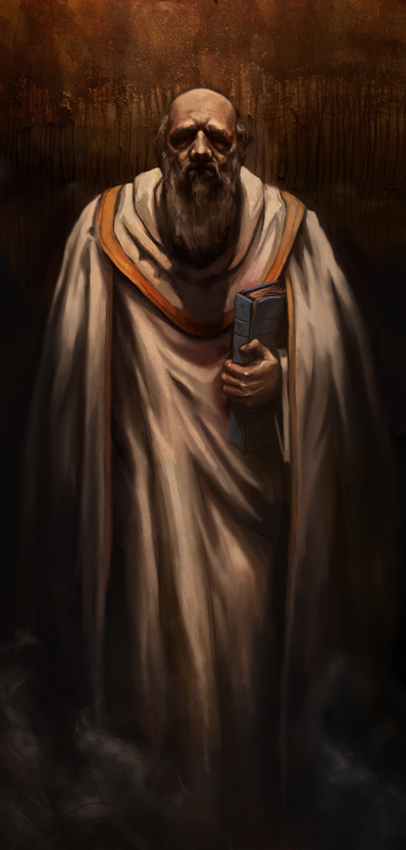
The Prophet (nogard86 at deviantart.com)

The Prophet (nogard86 at deviantart.com)

Jeremiah 11: 18-23: The Cost of Being a Prophet
18 It was the LORD who made it known to me, and I knew;
then you showed me their evil deeds.
19 But I was like a gentle lamb led to the slaughter.
And I did not know it was against me that they devised schemes, saying,
“Let us destroy the tree with its fruit,
let us cut him off from the land of the living,
so that his name will no longer be remembered!”
20 But you, O LORD of hosts, who judge righteously,
who try the heart and the mind,
let me see your retribution upon them,
for to you I have committed my cause.
21 Therefore thus says the LORD concerning the people of Anathoth, who seek your life, and say, “You shall not prophesy in the name of the LORD, or you will die by our hand”– 22 therefore thus says the LORD of hosts: I am going to punish them; the young men shall die by the sword; their sons and their daughters shall die by famine; 23 and not even a remnant shall be left of them. For I will bring disaster upon the people of Anathoth, the year of their punishment.

The consequences for the prophet are steep, and just as the Lord experiences betrayal so now the prophet also experiences a deep betrayal. The prophet has loved his people, indeed that is one of the requirements of being a prophet, and yet now the Lord reveals the plot against the prophet himself. The prophet is horrified and also lapses into the language of betrayal-calling for retribution on his betrayers. In the Lord’s verdict (21-23) we also learn that this betrayal, from the people of Anathoth, are from Jeremiah’s own kin, his own hometown. The people of Anathoth are going to bear an even greater punishment than the people in general, for the Lord says there will not be a remnant from them, unlike the rest of the people.

purple rose 01 by picsofflowers.blogspot.com

The Things That Deceive: Jeremiah 10

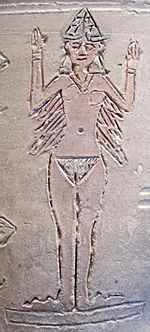
Ishtar Vase from between 1999 and 1500 BCE

Ishtar Vase from between 1999 and 1500 BCE

Mocking the Idols: Jeremiah 10: 1-16

 Hear the word that the LORD speaks to you, O house of Israel.
 2 Thus says the LORD:
 Do not learn the way of the nations,
or be dismayed at the signs of the heavens;
 for the nations are dismayed at them.
 3 For the customs of the peoples are false:
 a tree from the forest is cut down,
 and worked with an ax by the hands of an artisan;
 4 people deck it with silver and gold;
they fasten it with hammer and nails so that it cannot move.
 5 Their idols are like scarecrows in a cucumber field, and they cannot speak;
 they have to be carried, for they cannot walk.
 Do not be afraid of them, for they cannot do evil, nor is it in them to do good.
 6 There is none like you, O LORD; you are great, and your name is great in might.
 7 Who would not fear you, O King of the nations? For that is your due;
 among all the wise ones of the nations and in all their kingdoms there is no one like you.
 8 They are both stupid and foolish; the instruction given by idols is no better than wood!
 9 Beaten silver is brought from Tarshish, and gold from Uphaz.
They are the work of the artisan and of the hands of the goldsmith;
their clothing is blue and purple; they are all the product of skilled workers.
 10 But the LORD is the true God; he is the living God and the everlasting King.
 At his wrath the earth quakes, and the nations cannot endure his indignation.
 11 Thus shall you say to them: The gods who did not make the heavens and the earth shall perish from the earth and from under the heavens.
 12 It is he who made the earth by his power,
who established the world by his wisdom,
and by his understanding stretched out the heavens.
 13 When he utters his voice, there is a tumult of waters in the heavens,
 and he makes the mist rise from the ends of the earth.
He makes lightnings for the rain, and he brings out the wind from his storehouses.
 14 Everyone is stupid and without knowledge;
 goldsmiths are all put to shame by their idols;
 for their images are false, and there is no breath in them.
 15 They are worthless, a work of delusion;
at the time of their punishment they shall perish.
 16 Not like these is the LORD, the portion of Jacob,
for he is the one who formed all things,
and Israel is the tribe of his inheritance; the LORD of hosts is his name.

The people of Jeremiah’s time, like people in our own time, live in a world of multiple allegiances and gods and one of the central commandment of the Jewish people was not to create an image for their God. There is always the temptation to attempt to place our hopes in the things that we create, and so Jeremiah like Isaiah (see for example Isaiah 44: 9-20) has a section of mocking the idols as powerless. Yet these idols are things that are consuming the most precious resources: gold, silver, the finest clothing, the best wood, caring sculpted by an artisan and yet they are nothing. The Hebrew word hevel comes up three times in this section talking about the idols, this is a word which goes back to the name Abel (from the Cain and Abel story) which is most famously picked up in Ecclesiastes:

Vanity of Vanities,says the teacher
Vanity of Vanities! All is vanity. Ecclesiastes 1:2

The word translated vanities (hevel) is literally mist, smoke, vapor-it is something that when grasped onto vanishes within one’s grasp. Those who are trusting in these things they created are finding the objects of their trust are no more reliable than the evanescent vapor of a morning fog.

In our own time we have our own idols as well, they may not be stone, wood or metal statues but they may be individuals (athletes, politicians, actors, musicians); military might or power, security, wealth, fame, position or status or any number of other things. They may be external things we give our allegiance to or they may be things we create (or at least believe we create) with our own hands. Often they are tied up with our wealth and where our wealth is directed. And just like the people of Jeremiah’s time who invested their wealth into the creation of images of gods, we too invest our wealth where our gods are. As Walter Brueggemann can point out false economics and false religion are tied together (Brueggemann 1998, 103) or as Jesus says in the Sermon on the Mount:

For where your treasure is, there your heart will be also Matthew 6: 21.

shepherd-sheep

The Leaders who Lead Astray Jeremiah 10: 17-25

17 Gather up your bundle from the ground, O you who live under siege!
 18 For thus says the LORD:
I am going to sling out the inhabitants of the land at this time,
 and I will bring distress on them, so that they shall feel it.
 19 Woe is me because of my hurt! My wound is severe.
But I said, “Truly this is my punishment, and I must bear it.”
 20 My tent is destroyed, and all my cords are broken;
 my children have gone from me, and they are no more;
there is no one to spread my tent again, and to set up my curtains.
 21 For the shepherds are stupid, and do not inquire of the LORD;
 therefore they have not prospered, and all their flock is scattered.
 22 Hear, a noise! Listen, it is coming—
 a great commotion from the land of the north
 to make the cities of Judah a desolation, a lair of jackals.
 23 I know, O LORD, that the way of human beings is not in their control,
that mortals as they walk cannot direct their steps.
 24 Correct me, O LORD, but in just measure;
not in your anger, or you will bring me to nothing.
 25 Pour out your wrath on the nations that do not know you,
and on the peoples that do not call on your name;
for they have devoured Jacob;
they have devoured him and consumed him,
and have laid waste his habitation.

Who is the mourner, is it the prophet, is it Zion personified, or is it God? Any of the three, and perhaps all of the three are mourning together. The reality is that for those who are willing to listen, which seems to be few if any, they are to flee like the people of Israel fleeing at the beginning of their exodus in the wilderness. In the midst of the wounded God, wounded prophet and a wounded people we see at the center of things are the leaders who have led the flock astray. This is not the world where everyone makes their own decision on things, in fact the Davidic and priestly leadership would claim divine authorization, and yet they had not inquired of God. Rather they had probably looked out for their own interests, ensuring their own comfort, and operating much as any other nation’s leaders operated. If the leaders don’t live out the vision of God’s peace what hope do the people have.

At verse 23 we have a shift and the prophet is talking back to God, pleading both for God’s mercy and justice at the same time. Much as Psalm 6 begins with an appeal for God to act justly but not in anger:

O Lord, do not rebuke me in your anger,
Or discipline me in your wrath. Psalm 6:1

The plea is for God to calm down, to make decisions after God’s anger has dissipated which places the prophet in a precarious place (which any person who has told a person who is raging to calm down knows) and then also calls on God to pour out God’s wrath on the nations around Jerusalem. To hold them to the same standard that Jerusalem is being held to.

Being the set aside people of God is a dangerous position, God has high hopes for them. The calling is a gift and a challenge at the same time. The people have failed in their vocation and are now enduring the wrath and the grief of God. Wrath is an uncomfortable term and I probably need to spend some time talking about it, but ultimately God is not passive-God does take sides and one of the hopes that Christians have is that God will not allow injustice to continue indefinitely. Unfortunately, many times this image of God’s wrath has been used as an object of fear to prop up the unquestioned authority of the church or particular leaders, and this would not be that different from Jeremiah’s day with the temple and king.

purple rose 01 by picsofflowers.blogspot.com

Review of Jeremiah: The Fate of A Prophet by Binyamin Lau

Jeremiah the Fate fo a Prophet

JEREMIAH: THE FATE OF A PROPHET, by Binyamin Lau. Translated by Sara Daniel. Jerusalem: Maggid Books, 2013. Pp.230.  $24.95 (hardcover)

The book of Jeremiah is one of the most challenging to approach in all of scriptures due to its enigmatic arrangement, wide historical context and challenging material. Rabbi Dr. Binyamin Lau does an incredible service in taking the book of Jeremiah and rearranging the chapters into sections that parallel the prophet’s life and placing the prophet’s words in the surrounding historical context. Set within this broader context we see the struggle of the prophet as he moves from soaring hope for the reunification of Israel and Judah through the disillusionment with the nationalistic struggles of Judah and eventually into the despair of the Babylonian exile. Rather than producing a commentary which deals with each chapter of Jeremiah, Rabbi Lau produces a narrative using: the text of Jeremiah, the recorded memory of the events in 2 Kings and 2 Chronicles in conversation with other historical sources and other prophets active at various points in Jeremiahs long career as well as the Rabbinic tradition of interpretation. The end result is a coherent and tragic narrative of a disparaged and disgraced prophet who tried desperately to eliminate the social injustices and corruption of his people and to save the Temple from its impending doom.

The introduction of the work argues that the modern context the prophet might be understood as the public intellectual who must summon all of their intellectual powers and persuasive skills to convince their audience of the truth of their words. Lau argues that prophecy does not depend upon being accepted and among the prophets only Jonah was able to fulfill his mission by convincing the people of Nineveh to see the error of their ways (xiv-xv). Yet the prophet must love the people enough to pay the personal price for their visions, and even be willing to be declared an enemy of the people. Jeremiah’s prophetic ministry, as the narrative will tell, will come at a high personal cost.

The book is divided between the three primary kings that Jeremiah’s prophetic ministry took place under: Josiah, Jehoiakim, Zedekiah. Part I begins by setting the stage with the story leading up to the time of Josiah by dealing with his predecessors. Briefly touching on the conflict between Samaria and Judah, in the context of the Assyrian domination of the Trans-Euphrates region, we see a picture of a divided people where savage wars between the nations of Judah and Israel overshadow the blood ties that once united them. (3) During the miraculous salvation of Jerusalem, in the time of Isaiah the prophet and the reign of King Hezekiah, we see the entry of Babylonia into the Judean world with Merodoch-Baladan’s delegation to Hezekiah. When Hezekiah’s son, Manasseh, ascended to the throne in 697 BCE he attempted to put the nation of Judah back on its feet but could not resist the lure of Assyrian culture and began to forfeit the cultural and religious heritage of Judah. It is within this context, after a brief reign by Amon, that Josiah becomes king in 640 BCE and the story of Jeremiah’s prophetic career begins.

Jeremiah’s prophetic calling occurs in the thirteenth year of Josiah’s reign, or 626 BCE, which is a time of great change in the region. This is the time when King Josiah has begun to cleanse and purify Jerusalem from Assyrian culture and worship. The young king is also sending envoys to Samaria to attempt to reunite the kingdoms of Judah and Israel. This grand dream of King Josiah to bring the people of Judah and Israel back to being one kingdom and worshipping the Lord only can be understood within the horizon of the crumbling of the Assyrian empire which is waging a war of attrition on its northern border. (10) Jeremiah’s ministry begins prophesying the unification of Israel and Judah, appealing to their shared ancestor Jacob. Jeremiah is captured by this vision and is convinced that God’s promise to rebuild after the destruction will soon be realized. Yet, as Jeremiah begins to yearn for this change he recognizes a discrepancy between the king’s attempted reforms and the other local leadership who still continue to represent the sinful generation of Manessah, yet Jeremiah believes that God is about to get rid of these shepherds and gather the scattered flock from Samaria. Jeremiah’s most optimistic words go out to the cities of Samaria, but in Judah and particularly in his own homeland of Benjamin Jeremiah witnesses a people “engrossed in their own land and wealth, wrapped up in everyday life, and awash in paganism.” (33) Throughout the remainder of the reign of Josiah and his attempts to reform Judah, Jeremiah will become increasingly distraught over the superficiality of these reforms among the leaders, priests and the people. “Jeremiah sees behind this façade and recognizes the falsity and the hypocrisy, the thin veneer of piety serving as a fig leaf for corruption and warped social values.”(49) When King Josiah dies in 609 BCE, while going out to confront Pharaoh Necho, Jeremiah’s observation of the shallowness of the reforms of Josiah bear their unfortunate fruit as the new king sets the nation on a very different course.

Part II deals with the reign of Johoiakim (609-598 BCE) and his pro-Egyptian regime. This is a time where Egypt experiences a renewal of power and influence. Egypt lays a heavy tariff on Judah, which Johoiakim passes onto the people of the land. “Jehoiakim strikes a winning combination: economic reliance on Egypt, spiritual and national reliance on the Temple, and a general atmosphere of compliance with the leader. What can go wrong?”(78) Jeremiah’s prophecy rails against all three of these items stating that reliance on Egypt will lead the king and his followers to their demise, that the temple is like the tabernacle at Shiloh that was destroyed by God after it was corrupted by the high priest’s sons, and the king and his loyalists will fall into the hands of Babylonia. Jeremiah finds himself struggling against the leaders of his nation, the priests and other prophets and is viewed as a traitor to the very people he is attempting to save from their coming doom. Jeremiah finds himself caught between the message of impending doom he feels compelled to pronounce and the persecution this pronouncement brings. The nation’s ability to rely on Egypt falters in 605 when Nebuchadnezzar begins his conquest, and Judah becomes subservient for three years, but in 601 when Egypt enjoys a brief resurgence Judah again sides with Egypt and rebels against Babylon. Jeremiah is able to see Babylon as the instrument of the Lord’s judgment and yet he still holds a single thread of hope that the people will repent and the terrible coming destruction of the Babylonians will be averted. Yet, in 597 Nebuchadnezzar in a brief campaign recaptures the rebellious cities of Judah the reign of Jehoiakim and the three month reign of his successor Jeconiah come to an end and the time between the two exiles begins under the Zedekiah, who was Josiah’s youngest son, after he swore loyalty to Babylon.

Binyamin Lau continues to masterfully tell the story of Jeremiah and the people of Judah in the time leading up to the destruction of Jerusalem and the final deportation of the Judean people as a punishment for breaching of their treaty with Babylon. King Zedekiah finds himself surrounded by those who have seized power in the leadership vacuum left by the Babylonians taking most of the previous leaders into exile in 597 BCE. When Babylon returns to the north in 594, Judah finds itself with the other nations in the area becoming a part of an Egypt led alliance. To the consternation of many of the leaders in the land as well as many other prophets, in particular Hananiah, Jeremiah continues to proclaim that the nation is to serve the King of Babylon and live and he passionately pleads for the city to turn from its course and avoid the destruction that is coming. Yet again the prophet’s words will fall on deaf ears. Even though King Zedekiah has some sympathy for Jeremiah and his prophesy the king finds himself powerless in the face of those who are leading the nation on a path of confrontation once again with Babylon. Even after Jeremiah’s words come true with the destruction of Jerusalem and the temple in 586 BCE, the people still refuse to pay attention to the prophet who for decades has tried to save the city and temple from this fate.

Jeremiah’s story is one of bitter disappointment. Throughout the story and prophecy of Jeremiah, Rabbi Lau is able to illuminate parallels in modern day Jerusalem. “The streets of Jerusalem still throng with false prophets who earnestly claim, ‘the tradition of our forefathers is in our hands; the Third Temple shall not be destroyed!’ Once again they seek to lull us into a sense of false security, to make us forget the grave responsibility we shoulder: to be worthy of this national home, the Jewish state.”(225) It is also very easy to make connections between the political and religious movements in modern day Israel and similar political and religious rhetoric in the United States. This is an insightful journey into the world of the prophet and illuminating in approaching not only Jeremiah but the world of the Hebrew Scriptures.

purple rose 01 by picsofflowers.blogspot.com