Time Magazine Top 100 Novels
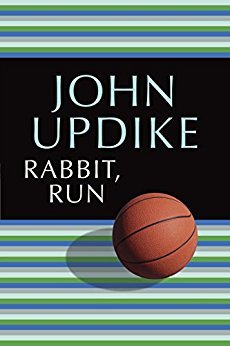
Book 76: Rabbit, Run by John Updike (1960)
This is a series of reflections reading through Time Magazine’s top 100 novels as selected by Lev Grossman and Richard Lacayo published since 1923 (when Time magazine was founded). For me this is an attempt to broaden my exposure to authors I may not encounter otherwise, especially as a person who was not a liberal arts major in college. Time’s list is alphabetical, so I decided to read through in a random order, and I plan to write a short reflection on each novel.
Rabbit, Run is the story of Harry “Rabbit” Angstrom a former basketball star who now feels trapped in a meaningless job and an unsatisfying marriage. Coming home after a brief experience on the basketball court with some younger boys he looks at his life with his wife Janice as a trap and he initially makes a run in his car planning to leave for the south, but then returns to the area and seeks out his old basketball coach. His former coach lost his job in a scandal and soon connects “Rabbit” with Ruth Leonard who was a prostitute at the time. Harry moves in with Ruth for several months and starts a new job as a gardener which he enjoys. Harry has developed a relationship with the Episcopal priest in town who gave him the connection for the new job but is also attempting to reunite Harry with his wife. Harry leaves the now pregnant Ruth when he learns that his wife Janice is having their second child and attempts to restart his life with his wife and a job at his father-in-law’s auto dealership. Harry’s newfound devotion is short lived and his harsh words for his wife and departure cause her to return to drinking and leads to the accidental death of their newborn daughter by drowning. During the funeral “Rabbit” runs again attempting to find some feeling that he seems incapable of holding on to.
I understand that the book attempts to point to the emptiness of the middle-class life of the 1960s for husbands expected to be the provider for wife and children with little concern for their own happiness. Yet, Harry Angstrom was a vapid character for me. He seems completely unable to consider the consequences on anyone action and expects everyone to pick up the pieces as he walks away. Anytime things get difficult he runs and attempts to find someone new to take him in. Rather than the emptiness of the middle-class life of the 1960s I felt like John Updike left us with an empty man as his main character.
Every book is not for every reader, and when a story fails for me, I often wonder what it is that makes me not the best reader of the book, particularly a book other intelligent readers have enjoyed. For me the main character, Harry Angstrom, is an empty man-a person with very little dimension and depth who is driven by his instincts and who has no concern for the consequences of his actions on others. From the moment “Rabbit” runs and leaves his young son I lost my sympathy for him. I struggled to want to spend much time with any of the characters and the plot of a man who runs away rather than attempt to find a way through the struggles was also not appealing to me. Others will enjoy John Updike’s writing or the way he pokes fun at religion, familial structure, and overall loss of meaning at the beginning of the 1960s. For me the primary emotion it evoked was disgust at the main character. That may be the intent as it looks at empty men like “Rabbit” but that makes for a difficult book to stomach.
 Sign of the Rose
Pingback: Time Magazine Top 100 Novels | Sign of the Rose