Monthly Archives: April 2016

Reflections From A Year Spent with Deuteronomy

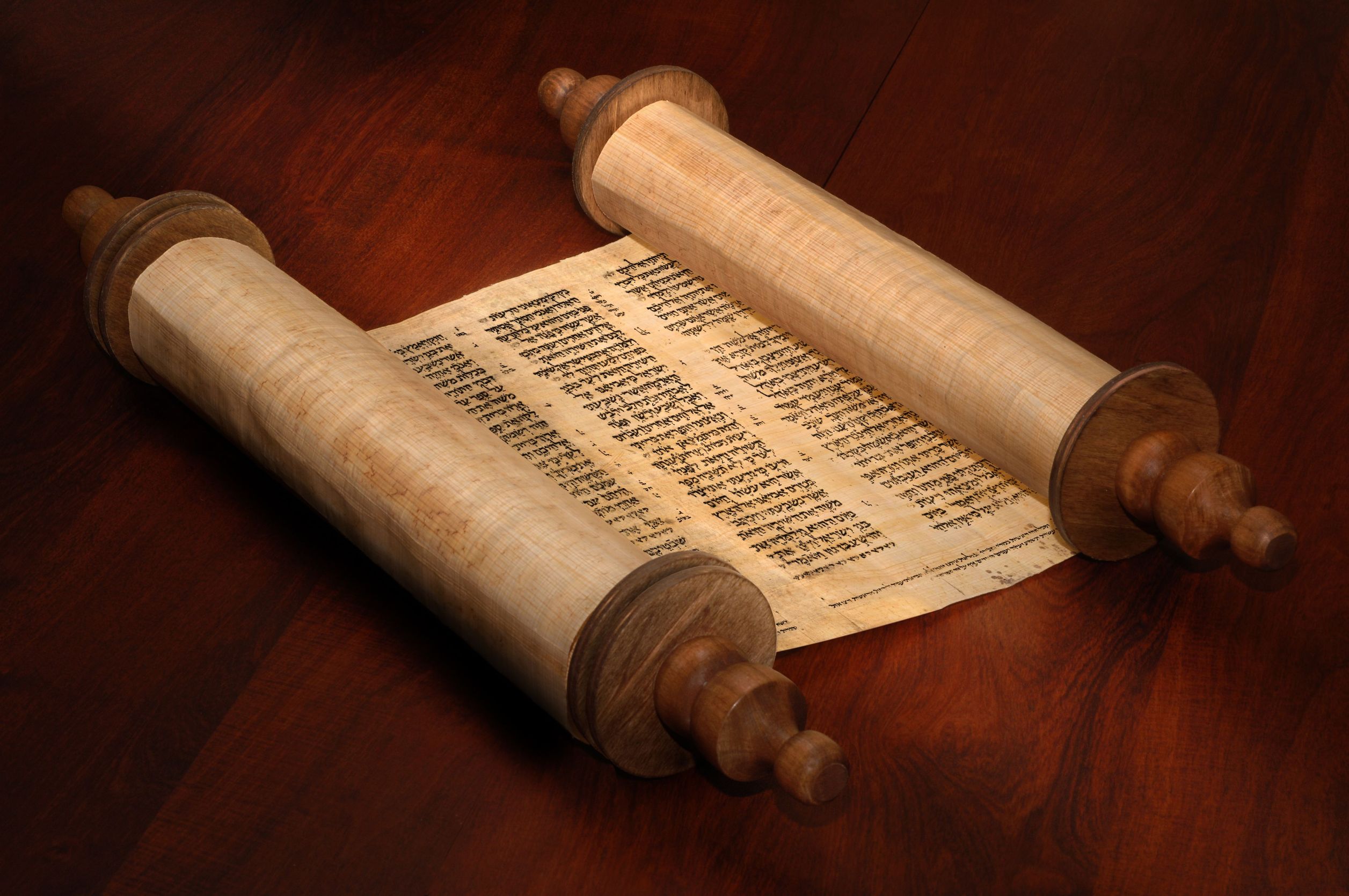
Torah Scroll, Original image from http://www.nachat-austin.org/weekly-torah/

Torah Scroll, Original image from http://www.nachat-austin.org/weekly-torah/

Deuteronomy is the fourth book, and the second large book that I have worked my way through systematically from beginning to end. It took me a little more than a year (13 months and 1 week) from my first post on Deuteronomy 1 to the final entry on Deuteronomy 34. Deuteronomy is not a book that a lot of Christians spend a lot of time with but for our Jewish brothers and sisters it is one of their most important books. Most Christians don’t spend much time with Deuteronomy, well with the exception of Deuteronomy 6 which has become important to those who want to talk about faith formation in the home or Deuteronomy 5 which re-articulates the ten commandments. Many of the ordinances and commandments of Deuteronomy seemed alien to me and yet, I knew that there was a reason that people had gone back to this work for over 2,500 years. Using Walter Brueggemann’s and Deanna A. Thompson’s commentaries on Deuteronomy as my two primary reading companions I began not knowing how the project would turn out but at least motivated to see what wisdom I would glean from this ancient work. I was motivated by the knowledge that I had made it through Jeremiah, a larger and very challenging work, and that I would be able to eventually reach the point of reflecting back again.

I am a Lutheran pastor who has spent most of my time studying the Gospels and Paul’s letters and who comes from a tradition that is open to reading scripture with a critical eye. Deuteronomy has some sections that in the twenty first century we will not be adopting or advocating and so I have tried to bring the issues of the time into conversation with the events and policies and beliefs of our time. I have tried to use Deuteronomy as a helpful conversation partner-trying to understand how the author of Deuteronomy thought about God and society.

Deuteronomy wants to imagine a society ordered around God’s law and living out of the covenant relationship with the LORD the God of Israel. For the people of Israel and Judah their public life was a reflection of their faith and there was no concept of a separation between church and state. In a world where the people of Israel were surrounded by a plethora of religious alternatives the book of Deuteronomy tries to imagine a society centered around the laws and covenant and ordinances of the God of Israel and a manner both catechetically in the home and liturgically in the worship of the community that would pass on this faith from generation to generation. The great anxiety of the book of Deuteronomy is that in the midst of abundance the generations to come would forget the source of their abundance and become attracted by the practices and the gods of the people around them.

I am very aware of the postmodern, secular, pluralistic world in which we live and I have attempted to bring the questions of that worldview into conversation with the strictly ordered worldview of the Deuteronomist. What has emerged at its best is an opportunity to think ethically about what type of world I as a Lutheran Christian in 21st Century would imagine in dialogue with Deuteronomy imagining God’s will for their time. Because our hermeneutics and starting points are different there are times where we come to different answers and that is OK. Even when I may diverge from the way Deuteronomy understands God or the meaning of what God desires I still try to find the wisdom of the people who were wondering God’s story had entered their story through the Exodus and through their experiences.

As a modern scholar I have used a lot of different tools in working through Deuteronomy. The first is an ancient tool, I simply forced myself to listen to the text by slowing down and manually writing out the text as I commented on it. As mentioned above, I am a Lutheran pastor so I do come from a perspective where the cannon within the cannon (or the most important key to understanding scripture) is what conveys Christ and so I have listened to where Deuteronomy spoke in concert and contrast to the witness of Christ throughout the New Testament. I have brought my experiences and listened to the ways my time in the military, as a father, as a divorced person, and as a pastor have been brought into conversation and filled out the way I can hear these texts. I have been intentionally intertextual, allowing Deuteronomy to be in conversation with the rest of the Bible. But I come to this as a person who loves the Bible and the God it tries to bear witness to and as a pastor who wants to communicate this story to others who would have the patience to listen. I am not a PhD in the Hebrew Scriptures, just a willing student of Deuteronomy.

Wrestling with books like Deuteronomy is more challenging than the familiar gospels or even Paul’s letters but there is wisdom. It is hard to understand the way the early church leaders talked about Jesus without understanding the scriptures they were reading. There are portions of Deuteronomy that help make sense of who Jesus was and what he was striving for. For example, look at Deuteronomy 17: 14-20 and then think about what it meant for Jesus to have the title Messiah (anointed king) applied to him. Deuteronomy forms the basic frame that the prophets will work out of as they protest the injustices and idolatry of the nations of Israel and Judah. The thought of Deuteronomy will form one of the loudest voices in informing the rest of the Hebrew Scriptures as they evaluate their history and as they imagine their future.

If you have benefited from these reflections I am thankful. They have been beneficial for me to write. The process continues to allow me to grow in my faith and understanding. I hope that in them I have exercised wisdom. I have benefited from the wisdom of others who have passed on the faith and this tradition to me.

As an update on what is next I am returning to the book of Psalms and will work through Psalms 11-20 as I decide which book I will work through next. I have enjoyed this project but I also am ready to work with something new and there is always a sense of relief at the completion of a work like this (even if I am the only person who ever reads it).

 

Deuteronomy 34- The Death of Moses

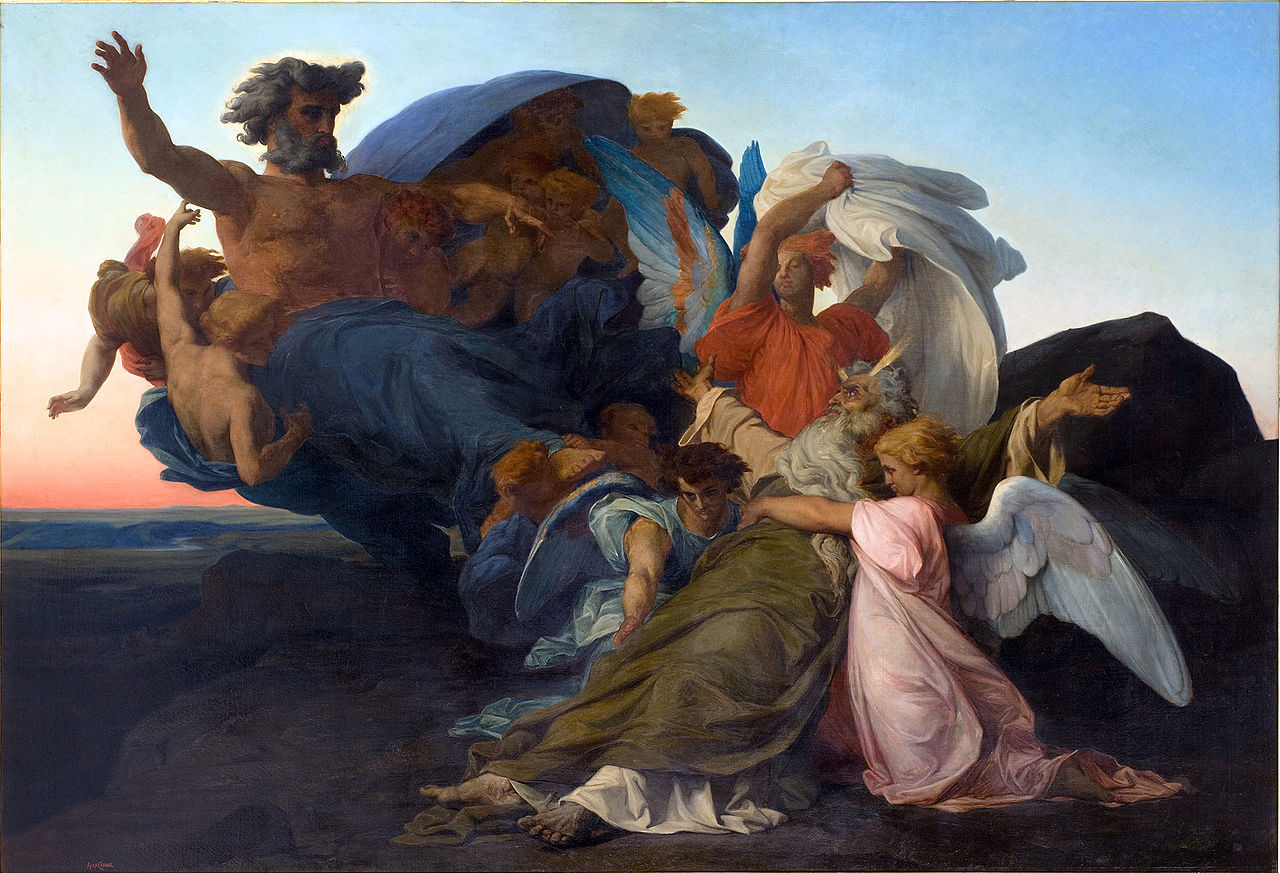
Alexandre Cabanel, The Death of Moses (1850)

Alexandre Cabanel, The Death of Moses (1850)

Deuteronomy 34

1 Then Moses went up from the plains of Moab to Mount Nebo, to the top of Pisgah, which is opposite Jericho, and the LORD showed him the whole land: Gilead as far as Dan,2 all Naphtali, the land of Ephraim and Manasseh, all the land of Judah as far as the Western Sea,3 the Negeb, and the Plain– that is, the valley of Jericho, the city of palm trees– as far as Zoar.4 The LORD said to him, “This is the land of which I swore to Abraham, to Isaac, and to Jacob, saying, ‘I will give it to your descendants’; I have let you see it with your eyes, but you shall not cross over there.”5 Then Moses, the servant of the LORD, died there in the land of Moab, at the LORD’s command.6 He was buried in a valley in the land of Moab, opposite Beth-peor, but no one knows his burial place to this day.7 Moses was one hundred twenty years old when he died; his sight was unimpaired and his vigor had not abated.8 The Israelites wept for Moses in the plains of Moab thirty days; then the period of mourning for Moses was ended.

9 Joshua son of Nun was full of the spirit of wisdom, because Moses had laid his hands on him; and the Israelites obeyed him, doing as the LORD had commanded Moses.

10 Never since has there arisen a prophet in Israel like Moses, whom the LORD knew face to face.11 He was unequaled for all the signs and wonders that the LORD sent him to perform in the land of Egypt, against Pharaoh and all his servants and his entire land,12 and for all the mighty deeds and all the terrifying displays of power that Moses performed in the sight of all Israel.

Deuteronomy and the Pentateuch end with Moses’ death on Mount Nebo. The five central books to the Jewish understanding of faith traditionally attributed to Moses now have come to an end. Moses’ death has been foreshadowed throughout Deuteronomy and has been attributed to both the disobedience of the people and to Moses and Aaron acting without giving proper praise to God the waters of Meribath-kadesh (see Deuteronomy 32: 48-52). Yet, foreshadowing the death of Moses (even though he is reported to be one hundred twenty years old-which is also a way of referring to people being of a good old age) when he can still see well, is still active and vigorous and not suffering from the illness and impairment of old age is still an unexpected death of one who is so alive. The transition from Moses the teacher and leader has been set in motion through the end of the book but Moses will remain a unique figure for the people of Israel.

Many people focus on the unfairness of Moses being unable to enter the promised land but perhaps there is the possibility of grace here in this moment. George Elliot in his poem “the Death of Moses” can speak of Moses’ death as:

A death was given called the Death of Grace
Which freed them, from the burden of the flesh
But left them rulers of the multitude
And loved companions of the lonely. This
Was God’s last gift to Moses, this the hour
When soul must part from self and be but soul. (Thompson, 2014, p. 195)

From a Christian perspective we, perhaps, too quickly make the jump to resurrection or to Moses being with the God of Israel in heaven, but for the ancient Jewish people resurrection was not a part of their understanding of the blessing and promise of God. Yet, after a life of struggle, of constantly being pulled between the needs of the people and their inability to remain faithful and the dangerous engagement of the LORD with those same people. After Moses again and again would place himself between God and the people and after the people would continually disappoint Moses. Perhaps the ending of a powerful but heavily laden life can truly be laying down one’s burdens to, in the words of an old Vince Gill song, go rest high upon the mountain. Or perhaps from another powerful example that Deanna Thompson lifted up was the example of Martin Luther King, Jr. from his speech to sanitation workers on April 3, 1968-the day before his assassination when King prophetically speaks:

I don’t know what will happen now. We’ve got some difficult days ahead. But it really doesn’t matter with me now—because I’ve been to the mountaintop. I don’t mind. Like anybody, I would love to live a long life, but I’m not worried about that now. I just want to do God’s will. And He’s allowed me to go up to the mountain. And I’ve looked over. And I’ve seen the promised land. I may not get there with you. But I want you to know tonight that we as a people will get to the promised land. So I’m happy tonight. I’m not worried about anything. I’m not fearing any man. Mine eyes have seen the glory of the coming of the LORD. (Thompson, 2014, p. 245)

Moses, the reluctant leader who in the desert tried to avoid the calling of God would indeed be the one who God would work through in ways that no one else would share. The people began to trust in Moses as a mediator of the presence of the almighty God, as one who would know unknown intimacy with the LORD by being able to speak to God face to face and not die. He would be remembered for wielding God’s power in incredible ways in the land of Egypt and in the journey through the wilderness. Yet, perhaps there is grace in a death that is away from the people in an unknown grave. If the grave was known it is possible, perhaps probable, that people would begin to venerate it in ways that worshipped Moses rather than God. There are certainly times in the book of Judges where people begin to worship the things of the Judge rather than the God who worked through the judge.

Throughout Deuteronomy we realize that the people of Israel’s life is contingent upon the God of Israel who has drawn close to them. Here in this final chapter where Moses dies at the command of the LORD we see the contingency of one drawn so close to God even more clearly. Moses’ position and power derive from his proximity to the LORD who called him at Mount Horeb. No one will know the intimacy of the relationship that Moses does and linked to that connection is also the reality that no one will perform the wonders of the LORD in the same way either. Moses becomes the mediator of the presence of the divine to the people, he becomes the vessel through which the LORD’s power for the preservation (and sometimes the punishment) of the people will pour.

Moses will continue to echo throughout the story of Israel and the church. Others will attempt to carry on the legacy that he began, but even Joshua’s power is here lifted up as derivative of Moses laying on of hands. The absence of the grave will lead to speculations about Moses. By the time of the emergence of the Christian church there was speculation about Moses assumption directly into heaven like Elijah or Enoch. In Mark 9, and parallels, Moses will be present with Elijah on the mount of the Transfiguration talking with Jesus and Jude 9 is either a reference to The Assumption of Moses a Jewish Pseudapigraphal document which we only have one existent 6th century copy of or another tradition of Moses’ assumption which may predate that. Regardless by the first century CE it was common to think of Moses having been assumed bodily into heaven and the absence of a grave becomes evidence to this. Yet for Deuteronomy, this text seems to know of either whispers of a possible gravesite or the search for one and seeks to assure the reader that no one knows of the site to this day.

So we come to the end of this part of the story and to the end of a remarkable life narrated in between the story of the LORD, the God of Israel and the people of Israel. Moses journey with the people has set the stage for the journey they will continue with Joshua.

Living Brave Reflection 7- There Is No Going Back…

There are experiences that have shaped who I am in various ways. Even though there are parts of my life that were painful and difficult I feel very fortunate to live the life that I have lived. Yet, there is no going back to the person I was prior to any of those points.  Sure, I can romanticize the past occasionally, thinking back to a simpler time. Yet, even if you could turn back the clock I am a different person than I was. There really is no going home the same way as you began your journey. The road has changed each of us, and for me I can be thankful for those changes.

I would have never chosen to be color deficient and be denied the ability to fly (which was my life’s ambition through middle school and high school) or to be able to utilize an appointment to the Naval Academy (which I worked hard to receive), but it led me to being a part of the Corps of Cadets and the band at Texas A&M and a whole different set of experiences. I would have never chosen to receive Chemical Corps as a branch when I graduated from college and was commissioned into the army, with a civil engineering major I was planning on either the Corps of Engineers or a second choice of Armor. Yet, it put me in positions with people who helped form me as a leader and probably made it easier for me to accept my calling to enter seminary. I would have never chosen to have my son diagnosed with autism, and at the time of the diagnosis I raged at the injustice of it and the broken dreams that I had for my son, yet I have learned more from him than I could have ever imagined and as a 17-year-old young man I am proud of what he has accomplished. I would not have chosen going through the experiences of conflict in a congregation that I did in my second call and the amount of emotional and personal upheaval it caused, yet I would not be the person or pastor I am today without that experience. I would not have chosen to be denied entry into PhD programs multiple times during that same period but it forced me to find my own avenue for creative activity. I would not have chosen to see my marriage of 13 years dissolve no matter how much effort, work and love I poured into it, but without that painful experience I’m not sure I would have rediscovered who I am or been ready for the relationship that I am very happy to have with my wife of almost a year. The list could go on and on, for there are countless experiences that formed me to be who I am. Each time I had to make sense of the change and figure out a way forward and there are gifts from each experience, even when they may have been heartbreaking at the time.

Yet, because of each of these experiences I am a different person than I was before. Because of that I see things in a new light. There have been times where I have been told to ignore a part of my story because it didn’t fit where I am. It took me a long time, for example, to reconcile my experiences of seminary and my experiences in the military—they felt like two pieces of a story from two different lives. Each experience was very different and forced me to be able to engage the paradox that is life and the beauty and complexity of the interaction of the stories that shaped me, the experiences of the present and the hope and challenges of the desired future at any time. I am thankful for the wide range of experiences that my forty-three years have allowed me. I am the man I am today because of this journey.