Yearly Archives: 2013

The Calling: Jeremiah 1

Jeremiah by James Tissot

Jeremiah by James Tissot

Jeremiah 1

   The words of Jeremiah son of Hilkiah, of the priests who were in Anathoth in the land of Benjamin, 2 to whom the word of the LORD came in the days of King Josiah son of Amon of Judah, in the thirteenth year of his reign. 3 It came also in the days of King Jehoiakim son of Josiah of Judah, and until the end of the eleventh year of King Zedekiah son of Josiah of Judah, until the captivity of Jerusalem in the fifth month.
 4 Now the word of the LORD came to me saying,
 5 “Before I formed you in the womb I knew you,
and before you were born I consecrated you;
I appointed you a prophet to the nations.”
 6    Then I said, “Ah, Lord GOD! Truly I do not know how to speak, for I am only a boy.” 7 But the LORD said to me,
“Do not say, ‘I am only a boy’;
for you shall go to all to whom I send you,
and you shall speak whatever I command you.
8 Do not be afraid of them,
for I am with you to deliver you, says the LORD.”
 9 Then the LORD put out his hand and touched my mouth; and the LORD said to me, “Now I have put my words in your mouth.
10 See, today I appoint you over nations and over kingdoms,
to pluck up and to pull down,
to destroy and to overthrow,
to build and to plant.”
     11 The word of the LORD came to me, saying, “Jeremiah, what do you see?” And I said, “I see a branch of an almond tree.” 12 Then the LORD said to me, “You have seen well, for I am watching over my word to perform it.” 13 The word of the LORD came to me a second time, saying, “What do you see?” And I said, “I see a boiling pot, tilted away from the north.”
    14 Then the LORD said to me: Out of the north disaster shall break out on all the inhabitants of the land.15 For now I am calling all the tribes of the kingdoms of the north, says the LORD; and they shall come and all of them shall set their thrones at the entrance of the gates of Jerusalem, against all its surrounding walls and against all the cities of Judah. 16 And I will utter my judgments against them, for all their wickedness in forsaking me; they have made offerings to other gods, and worshiped the works of their own hands. 17 But you, gird up your loins; stand up and tell them everything that I command you. Do not break down before them, or I will break you before them. 18 And I for my part have made you today a fortified city, an iron pillar, and a bronze wall, against the whole land– against the kings of Judah, its princes, its priests, and the people of the land. 19 They will fight against you; but they shall not prevail against you, for I am with you, says the LORD, to deliver you.

Why would anyone want to be a prophet? I know, I’ve heard the young rebels I know who want to ‘speak truth to power’ but the reality is that the prophet is not an easy role. To use Richard Lischer’s words, “The prophet’s voice is usually about an octave too high for the rest of society.” (Lischer 2005, 23) And while there may be moments of anger for the prophet they are caught between God and a people and often they feel abused by both sides. They are the messengers of God at a time when it is all to common to shoot the messenger, they are the bearers of the news that nobody wants to hear. They love their people dearly even when they are abused by them, and while there may be moments of anger, that is not their dominant emotion. Following Lischer again: “…the emotion most characteristic of the prophet is not anger but sorrow. He tells the truth but rarely in bitterness of spirit and never with contempt for the Other. His truth-telling is pervaded by a sense of tragedy.” (Lischer 2005, 161) As we journey with Jeremiah we will experience that tragedy, the sorrow, the frustration and the honest emotions he feels as he is caught between God and the people of God.

Let us begin with his calling: Jeremiah starts out as a priest, one of the literate elite in the time leading up to crisis. He will serve for a prophet as a long time, and will suffer much and it is not a life he chose, but rather a life that was chosen for him:

4 Now the word of the LORD came to me saying,
 5 “Before I formed you in the womb I knew you,
and before you were born I consecrated you;
I appointed you a prophet to the nations.”

God is the actor, Jeremiah is acted upon. God makes the choice, God has made Jeremiah who he is for this role, to be  a mouthpiece. Jeremiah doesn’t ask for this, doesn’t want this and like every other prophet I can think of tries to talk God out of this: I don’t know how to speak, for I am only a boy. Like Moses who didn’t know how to speak, and he is not the type of youth who thinks he knows it all but rather is all too aware of his unworthiness and weaknesses-and yet he is chosen and he begins the road that is laid out before him.

Back in the 1980s one of my favorite bands was a heavy metal group, Queensrÿche, and one of their songs The Road to Madness is perhaps helpful at this point:

Most of this is memory now
I’ve gone too far to turn back now
I’m not quite what I thought I was but
Then again I’m maybe more
The blood-words promised, I’ve spoken
Releasing the names from the circle
Maybe I can leave here now and, o
Transcend the boundaries

For now I’m standing here
I’m awaiting this grand transition
The future is but past forgotten
On the road to madness

Times measure rusts as it crawls
I see its face in the looking glass – stop
This screaming laughter hides, the pain of its reality
Black, the door was locked I opened
And now I’ve paid that price ten-fold over
Knowledge – was it worth such torment, oh
To see the far side of shadow

And still I’m standing here
I’m awaiting this grand transition
I’m a fool in search of wisdom
And I’m on the road to madness
Yes, I’m on the road to madness

I’m awaiting endlessly
Pounding rhythms echo me
Won’t you take me somewhere far beyond the void

And still I’m standing here
I’m awaiting this grand transition
Maybe one day, oh I’ll meet you, and we’ll
Walk the roads to madness
Yes, we’re on the road to madness

Oh, I think they’ve come to take me
I hear the voice, but there’s no-one to see
I can’t scream, too late it’s time

As with this song, the actual meaning of the words may not be as important as what they convey-the sense of having and seeing things in a way that everyone else sees them opens the one seeing to a whole new world of pain, it is almost like Plato’s famous story in the Republic of the Cave where the person who has seen the world in a new way and returns home only to be apprehended and killed by those who are still in darkness.  Being God’s mouthpiece is going to come at a high personal price for Jeremiah.

God has chosen, the prophet will pluck up and pull down, destroy and overthrow, build and plant. The prophet will bear the news that nobody wants to hear and he doesn’t have the choice to throw up his hands and give up. In the words of the song, the door that is locked is opened (and not by the prophet but from the other side, from God) and the prophet will pay the price ten fold over. Who the prophet is, why he was chosen is based on who God formed him to be—God has chosen his instrument for a difficult task and will continue to be with Jeremiah, but Jeremiah never has the ability to give up for it is either withstand priests and princes or be crushed by God?
But who is this God who puts prophets in such a difficult circumstance? Why make the chosen ones suffer so? And yet it is the way of the elect. A person is set aside not for their own benefit but for the benefit of others. The way we naturally want to think of election is that it is what makes a person separate and perhaps able to look down their righteous noses at others, election makes me or us special…but in scripture election, setting apart is always for the sake of the other. Israel is set apart to be a blessing to the nations (the world), the prophets are set apart to be a witness to either the covenant people or those outside the covenant. They are a part of what God is doing and the world, and it is not always easy. The suffer and grieve for those who will not or can not hear, they bear the weight of seeing all that is wrong even when they may not be able to fix it. They may indeed be close to the road to madness, and yet they are there not for their own sake, not for some secret knowledge…they are there because ultimately God loves God’s people (and by extension the world) so much that God will not let go and so God allows those who are drawn closest to suffer on their behalf so that they might see, know and return.

The world of Jeremiah, like our world is not as it should be. Most people accommodate and make their way as best they can with little reference to God or any other source of meaning outside what benefits themselves. The prophets, like Jeremiah, are drawn into the relationship with God and into God’s desire to re-establish the relationship and the idea of shalom (God’s peace or harmony in the world). They are drawn to the dream and they see the nightmare that most of the rest of us have grown accustomed to. It is like us watching a dystopic movie, like The Hunger Games for example, where reality is so dark and yet when we are honest we can see parts of our own society mirrored in that experience. In a very real sense, when everyone else sees things as running along OK the prophet will see through a dystopic lense of all the things that are really wrong and it is only in the midst of crisis that the prophetic hope of what a utopia might look like emerges and gives light and hope for the hard work of building that society of shalom and reconciliation. We are journeying towards the light, but we have a long way to go before the dawn and the road ahead will get darker on the prophet’s road.

purple rose 01 by picsofflowers.blogspot.com

Three Days- A Poem

Statue of Mary Magdalene in Mission Santa Monica

Statue of Mary Magdalene in Mission Santa Monica

Three days has my master been gone
Three days since those he loved scattered
Three days since receiving his pierced and battered body
One final gift from the hands of our oppressors

Three days of mourning and preparations
Three days of weeping and working
Three days of trying to hold on to a man who is dead
The tomb awaits the payment of grief

The first day of the week has come
A time of new beginnings, of beginning anew
Yet I find myself walking towards the end, towards death itself
As I walk towards the gaping and devouring maw of the tomb

O tomb, you who could devour life itself
Who hold within you the remains of one who lifted a child from your jaws
One who denied you your prize, who snatched youth from your hands
Now perhaps you can laugh as you hold the one who denied you in your craw

Three days you have haunted me O death
Three days have I journeyed into your home
Three days have I tried to ward off your foul stench for this man’s sake
This man who made me a human and no longer a walking corpse

Three years did I journey with him,
Three years ago did he free me from the demons who tore at the corners of my mind
Three years of freedom and of being a human and not an object of shame
This man who I followed out of Magdala

Three days and I confront once again my fears
Do my demons lurk within this tomb?
Does my fragile self find itself destroyed by maw of death?
Yet, through my fear, for the memory of this true person I defy you.

Three of us walk together, three women, three lost ones
Three and yet incomplete without the one who lies behind the immovable rock
Three unable to pry open the jaws of the grave to snatch his life out of it
Uneasy, uncertain we walk towards the heart of the earth

Yet, as we approach you in the cold dawning of the day your mouth lies open
What has happened, have our oppressors taken away the one last gift we had
Have they shamed him even more, have they taken away our wrestling with death
Can we stand at the gaping maw of death without his presence?
Yet within the tomb sits a young man, a man in white
In the darkness, in the midst of death, youth that will not die sits
Our search ends with his puzzling message,
Our search begins with words that cannot breach our deadened senses
“Fear not, the one you seek is not here, he has gone ahead of you”

Fear not, and yet fear—a fear greater even than my fear of death overwhelms me
Who is this sitting here, who was the Jesus who lay here, what is he?
Is this the first day of a new creation, or is this truly the end?
How do I go home, how can I move, how can I tell his shattered disciples this?

Could I bear the rebuke of being a foolish woman whose dreams are shattered again?
Could I turn back home and tell what I’ve seen, do I even believe it myself?
Could I make the journey back to Galilee and wait for the Lord who lay in the tomb three days?
Or does fear reign in my body and in Mary and in Salome?

O tomb I taunted you, O death I defied you, but you I knew.
But now you stand open while my mouth is sealed shut
I feared your presence while you contained my Lord, now I cannot stand in your presence at all
Fear, confusion, amazement, wonder, silence
I run away

Perhaps the day will come when the stone over my own mouth is rolled away
Perhaps it too will take three days, or three months or three years
Perhaps it will take me finding the Lord who has been spirited away
“Fear not…he has gone ahead of you.”

purple rose 01 by picsofflowers.blogspot.com

Daddy’s Girl

Together We Fly by Treekami at deviantart.com

Together We Fly by Treekami at deviantart.com

May dolphins and dragons dance through your dreams
And faeries, pixies and sprites inhabit your imagination
Let the magic linger and play in the springtime of your life
Sing and dance and play and let the world look on in envy

You will always be my little girl, you will always be loved
You will always be precious, you will always have a place in my heart
So go out into the world an taste the bounty of joy that I hope waits for you
Know that pain makes the joy sweeter
And that laughter and tears may flow in good times and bad
And no matter what happens along the journey
You will always be welcome in your father’s arms

The greatest gift you can give the world is being you
So don’t let anyone tell you what you can or cannot be
Often the tougher path is worth the journey
And embrace love and joy were it is found–even when it doesn’t last forever

For as long as I live you will always be daddy’s girl

For my daughter on her birthday

purple rose 01 by picsofflowers.blogspot.com

Stay Here and Keep Watch-A Poetic Meditation for Good Friday

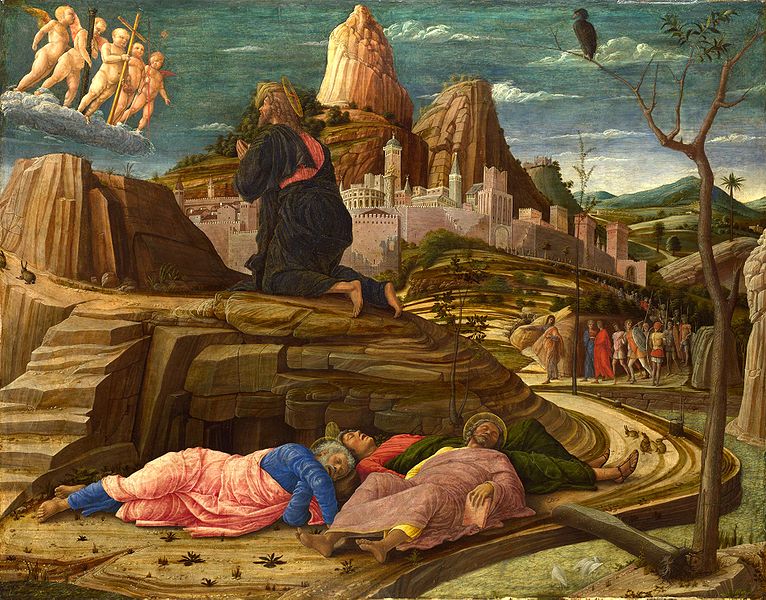
Andrew Mantegne's Agony in the Garden

Andrew Mantegne’s Agony in the Garden

Stay here for just a moment and keep watch in the garden.
Where love is betrayed and where friends are spared
Where a beloved one brings soldiers and temple police
Where love endures and does not shirk away from the consequences of loving the loveless
Where swords are sheathed and wounds are healed
Where the healer is treated as the rebel, the lover as a bandit
Where the evening of violence has its say, yet even strong men seem reluctant to place the one claiming
“I am he” in chains
Stay here and watch as love comes down the mountain so that others may go free

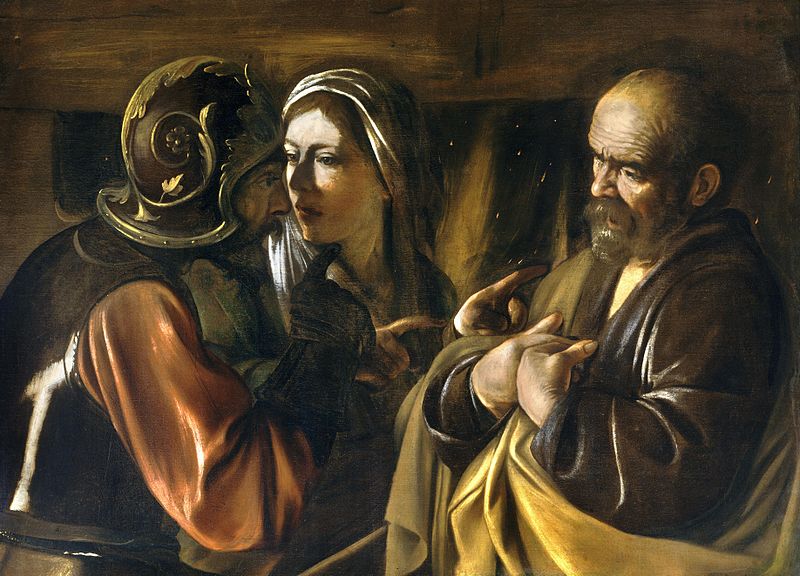
Michelangelo Merisis da Carvaggio, The Denial of Saint Peter

Michelangelo Merisis da Carvaggio, The Denial of Saint Peter

Stay here for just a moment and keep watch in the courtyard
Where love is betrayed and friends are spared
Where a beloved one stands around a charcoal fire
Attempting to hold fast to the love that has been taken away by the loveless
Where a sheathed sword goes with a wounded soul
Where the one named rock becomes broken, the faithful one becomes faithless
Where the evening of violence has its say and even the rock seems unable to remain strong
“I am not” he claims
Stay here and watch as strength fails and confidence flees in the cold night

Jesus en casa de Anas by Jose de Madrazo Agudo

Jesus en casa de Anas by Jose de Madrazo Agudo

Stay here for just a moment and keep watch in the household of Caiphas
Where love is betrayed and the a people is spared
“For it is better for one person to die for the people”
As the cannibalistic logic of human sacrifice gives up on love for the sake of security
Where love is bound and struck across the face
Where hatred is sharpened on the grindstone of fear
The evening of violence with his own question, “Are you the son of God?”
“You say that I am”
Stay here and watch as testimony is transformed into terror

Mihaly Munkasy, Christ Before Pilate

Mihaly Munkasy, Christ Before Pilate

Stay here for just a moment and keep watch in the courtyard of Pilate
Where love is betrayed and an empire watches
When the leaders of the chosen nation bow down before the eagle of Rome
Where uncleanness is avoided at the cost of corruption
Where charges become spears and accusations become daggers
Where love is turned criminal and might makes right
Where the morning of violence makes its accusations
Silence is the only answer
Stay here and watch as the crowd becomes a mob

Matthias Storm, Christ Crowned with Thorns

Matthias Storm, Christ Crowned with Thorns

Stay here for just a moment and keep watch in the headquarters of the occupying army
Where love is betrayed as the legion mocks
Where purple is used to mock and crowns are made of thorns
Where mercy looks like beating and justice a cat of nine tails
Where titles of honor become mockeries of disdain
Where spears and swords are the real power
Where a violence owns the day and power shapes reality asking
“What is truth?”
Stay here and watch as the love is abused by power

Hieronymus Bosch, Christ Carrying the Cross

Hieronymus Bosch, Christ Carrying the Cross

Stay here just for a moment and keep watch in the midst of the mob
Where love is betrayed and hatred is fueled by fear
Where a people turn from the dream of hope to the certainty of death
Where the fires of anger are stoked by the desperation for someone to blame
Where mercy and justice corrode in the illusive certainty of self-deception
Where words are more deadly than swords, a mob more dangerous than an army
The morning of violence passes its sentence
“Crucify, Crucify”
Stay here and watch as truth is the casualty of fear

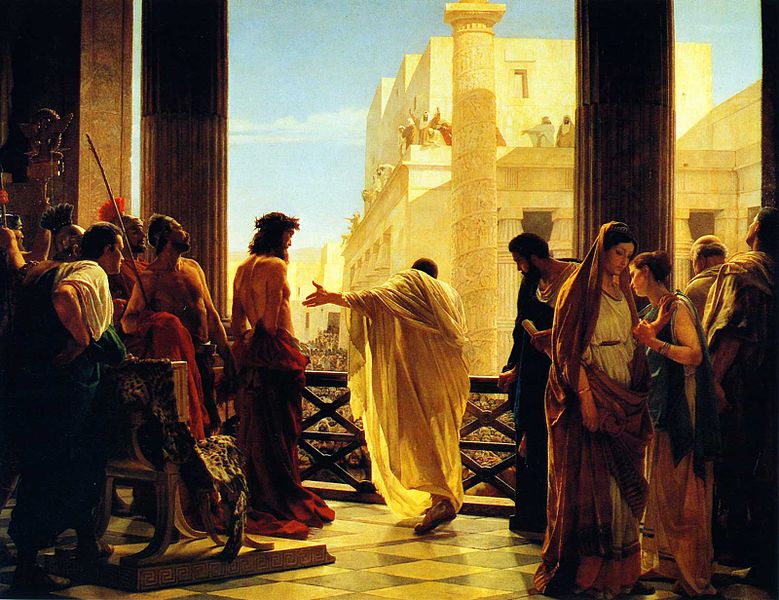
Antonio Ciseri, Ecce Homo (Behold the Man)

Antonio Ciseri, Ecce Homo (Behold the Man)

Stay here just a moment and keep watch at Gabbatha, the stone pavement
Where justice is consumed by the gaping jaws of blind rage
Where the people betray their own identity to become the servants of violence
Where love endures and does not shirk away from the consequences of loving the loveless
Where rage demands the life of the innocent and freedom for the bandit
Where the wages of love are death and cost of healing is execution
The morning of violence cries out its judgment
“Crucify, crucify.”
Stay here and watch as the horror presses on unstoppable

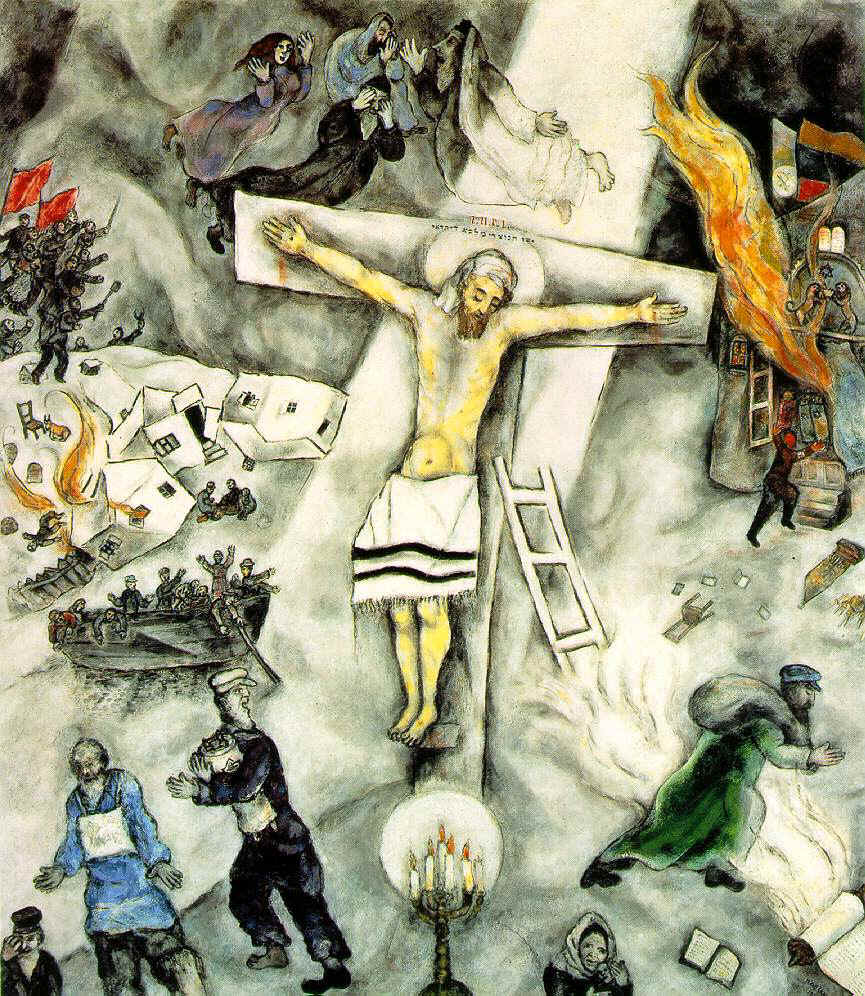
White Crucifixion, Marc Chagall

White Crucifixion, Marc Chagall

Stay here just a moment and keep watch at Golgatha, the place of the skull
Where love is killed and the world stops
Where darkness rules in the midst of the day
Where nails and spears deny love the air it needs to breath
Where the King of the Jews becomes the slave of the cross
Where justice and mercy are traded for death
The afternoon of violence has had its say and love utters its final words
“It is finished”
Stay here and watch as it is finished but not complete

Garden Tomb considered by some to be the site of the burial and resurrection

Garden Tomb considered by some to be the site of the burial and resurrection

Stay here just for a moment and keep watch in the garden
Where love is laid in a tomb and the beloved ones weep
Where hope seems lost and violence seems to be truth
Where the crucified one is placed in a tomb
Where the world enters into the silence of Sabbath without its Lord
Where everything stops and death has its word
The silence of Sabbath and the closed lips of the tomb utter
“It is finished”
Stay here and watch until the certainty of death and darkness, violence and power, rage and fear have their say

The Resurrection of Christ by Piero della Francesca

The Resurrection of Christ by Piero della Francesca

Stay here just a moment longer and keep watch on this night and one night more
Where we wait for the day when truth is reborn
Where love triumphs over hatred
Where peace wins over violence
Where life is liberated from death
When the silence of Sabbath gives way to the beginning of new creation
And the voices of the grieving proclaim
“He is risen”
Stay here and watch knowing that resurrection is coming

purple rose 01 by picsofflowers.blogspot.com

Golgotha

White Crucifixion, Marc Chagall

White Crucifixion, Marc Chagall

Alone, life is over,
Those whom I ask to wait for me enter into sleep
A sleep deeper than death itself
Seconds creep by, minutes last for years
As I wait for my Father to answer me
Yet no answer comes.

Life, truly lived in God blessed abundance
Good friends, those who love me and whom I love
Those who would drink my cup, those who would share my bread
And yet for them I am alone waiting on the Father
Yet no answer comes.

Love, freely given and rarely returned
The religious mock me and the educated despise me
A few closer than brothers and sisters I have drawn near
Yet the same God brings love and separation
So still I sit alone and await an answer from the Father
Yet no answer comes.

Torment, yet it is the cup I choose
I could allow this cup to pass; yet I drink it to the dregs
I take on the curse so others might have a blessing
For those who curse me and those I have drawn near
I sit alone, the answer from the Father
I am the answer.

Betrayal, a brother draws near
With a kiss comes a wound deeper than any sword or spear
One who shared my bread rends my heart in two
I stand surrounded, forsaken by the Father
I am the answer for Judas.

Abandoned, every brother and sister scattered
For the fear of death my name forgotten and denied
All whom I opened myself to now flee as I sit on the altar
Accused, Spat upon, Beaten, a lamb for slaughter
I am the answer for the scattered.

Hated, I bear the weight of Jerusalem
An earthly kingdom I would not claim, so a thief’s death they select
Nothing did I take, only love did I give
Yet in my love I uncovered hatred so dark that hell could not contain it
Marked, Broken, Despised, a Scapegoat
I am the answer for a conquered people.

Disregarded, shown contempt as a peasant
I do not even merit the time of the procurator, only the fervor of the city’s hatred
Places me as King of the Jews before the vassal of Caesar
The power to judge I could wield, yet instead to earthly power I yield
I become the crucified one for the Romans
I am the answer for the empire.

Hung on the mountain, exposed to the world
I bear witness to a kingdom present given my form
I stake my claim as I gasp for air in the God forsakenness of Golgotha
I bear the rebellion of humanity waging war against the Creator
I am love hung on a cross for the world, the embrace of the Father
I am the answer for all creation.

I hang on the cross today bearing the sins of a world come of age
Aging but still turned inward on itself, consuming its own flesh
A world that may know my name, but has forgotten who I am
A world who no longer needs me, but is intent on saving itself at the cost of its own life
Creation is smothered and the oppressed are crushed
The powerful are caught in their paranoia and fathers disown their children
Wives seek other lovers and leaders devour their followers
The blood of the earth cries out for vindication, the desecrated heavens shout for judgement
Yet here I hang, the lamb, the scapegoat, the crucified one, love it self
Forsaken for the world’s sake, and yet I am
I am the answer for the world
Does anyone question anymore?

Composed Neil White, 2013

Updated from a poem originally written in 2002

purple rose 01 by picsofflowers.blogspot.com

At the Table- A Meditation and Poem for Maundy Thursday

The Last Supper by Pascal Adolphe Dagnan-Bouvret

The Last Supper by Pascal Adolphe Dagnan-Bouvret

At the table with the others who will stumble and fall
Here with the one who touched us each in our turn
Healing our sickness, dispelling our demons, freeing us from our captivity
At least for the moment we are reclining at the table, a part of the feast
With Peter and John and James, Mary Magdalene and Martha and Lazarus
With saints of all ages and times and sinners from far and near
On this night we are there with them sharing in the feast of deliverance
From slave to liberation, from outsider to insider
No titles, no ranks, no stations or wealth matter here
For at the table this night we are all guests of the Lord
Bound together by his love

On this night we call Maundy, we receive the mandate
A call to love as we have been loved
To serve as we have been served
To make others clean as we have been made clean
Though we may deny and betray the Lord who joins us together
With our words
With our actions
With our hatred
With our exclusion
With our prejudice
With our pride
With our clinging to the old order rather than seeking God’s kingdom
With our addictions to power and wealth and privilege
With our own self-righteousness
Like Judas we may value money over God’s dream
Like Peter we may not be able to see how a master can serve
Or perhaps in our attempts to follow in his tracks we will deny we know him
Before the cock crows in the morn
We come with all the others, as unexpected and unworthy guests of the Lord of love
Receiving forgiveness and mercy, his prayers and his love
Tonight we are a part of the gathering of the feast that is to come in the kingdom

Though we know the story, we know these things, we know to love
And we are blessed to be called to do them
To wash feet
To share a meal
To extend forgiveness
To love as we have been loved
To remember again the story that shapes our lives
And to come again to the table to share in the gifts of grace
We are called and gathered here as one
No longer separated as
men and women
slave and free,
Jew and Gentile,
Righteous and unrighteous
Saint and sinner
Lord and servant
Rich and poor
Powerful and pariah
No here we are all beloved
Maybe we are God lovers,or seekers,or lost,or confused
Wondering how it is that we find ourselves here on this night
Yet here we are and once again we are
Washed and cleansed, yet needing to be washed again
Fed and yet not satisfied, with the foretaste until the feast itself comes
Made holy and yet still we may walk from this place labeled by others as a sinner
Forgiven and yet still not free from being led into temptation
And yet we are here at the table this night
As we are moved by God towards our liberation
We share bread and the cup
The bread of affliction is turned into a sampling of the kingdom of heaven
The cup of sorrow is transformed into the elixir of new life
As Christ offers himself to us again and meets us here at the table
As one who serves, so that we might learn to serve
As one who love, so that we might learn to love
As one who forgives, so that we might learn to forgive
As one who welcomes the stranger, as we might welcome the stranger
Shaped and formed by the practice of love to be those who can love one another
So that others may know whose we are
We are those who were here at the table
Invited and shaped by the loving Lord who hosts us this night

Composed Neil White 2013

purple rose 01 by picsofflowers.blogspot.com

A Brief Forward to the Prophet Jeremiah

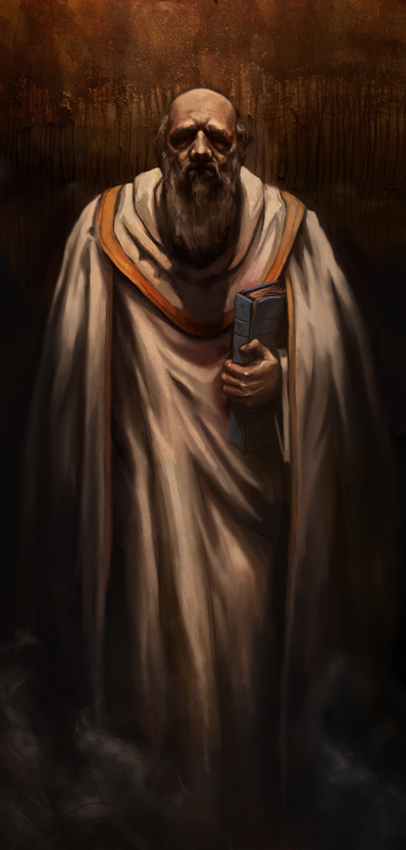
The Prophet (nogard86 at deviantart.com)

The Prophet (nogard86 at deviantart.com)

Jeremiah is one of the more challenging books to approach, both for its content, its length, the fact that it is not organized linearly on a specific timeline but rather skips and jumps to different times and places, and the general unfamiliarity of most people with the context that the prophet (and most prophets are written in). Prophets for many people either are considered fortune tellers or their use is limited to foretelling the birth and ministry of Christ in the New Testament, but that is not how even the authors of the New Testament would have seen the prophets. The prophets were:

-re-interpreters of the story and tradition of God’s relation with the Jewish people. Scripture was not fixed at this point, and even scripture is present would be mediated through  the priestly and kingly offices (since they would be the literate people- there is no general interpretation of scripture by the majority of the population at this point in history, nor would there be for millennia)

-A voice that often spoke in sharp contrast to the priests and kings of their time. Prophets often deal with not only religious but concrete economic and political injustices. It is a mistake to assume that we can separate religion from political power in the ancient world, they are linked. The prophets become the counter-voice that often (although not always) speaks against power and they often are persecuted for their words and actions.

-The actions and words of the prophets may seem strange to us, and I’m sure that even in their time they were looked upon as abnormal, but they also were seen as having a role. Many prophets came from the priestly side (although not all, for example Amos is not a priest) but they in taking up the call of the prophet may lose the safety of the priestly role they are born into.

Jeremiah is born and does his ministry in a time leading up to the defining crisis of this point of the Jewish story, the Babylonian exile. For a better understanding of that time you may want to look at  The Place of Authority A Brief History Part 3a: The Exile, The Crisis of Collapse. Which I wrote as part of a different project but which briefly addresses this part of the story.  Being a prophet who is pronouncing the impending destruction of the way that things are is not an easy calling. But enough of that for the moment, let’s approach Jeremiah and walk with the prophet through the destruction and the hope and examine the God who he encounters throughout that journey. This is a long journey, since Jeremiah is 52 chapters long-many of them quite lengthy. I actually wrote the first three chapters prior to the posts on Haggai and Esther and rather than rewrite them, I have left them largely intact (hence they cover larger pieces, sometimes entire chapters in a single post) but since I know this is a long journey I have continued to move forward rather than going back and starting over again. I will attempt to do at least one chapter per week in addition to my other posts (due to the length of several chapters that may be all there is space for).

For me this is a discipline, it is a way of training myself to listen and see better. If you are reading this I hope you are able to benefit from this journey with Jeremiah through the darkness and towards hope. There will be times when the darkness seems overwhelming in this book (it is a book set at the ending of the world that the prophet knew, the ending of the kingdoms of Israel and Judah and the taking of the people into exile) and yet in the midst of the darkness, hope will come forth.

purple rose 01 by picsofflowers.blogspot.com

Betrayal- A Poem

Apophysis-Betrayal (1footonthedawn at deviantart.com)

Apophysis-Betrayal (1footonthedawn at deviantart.com)

A friend, a lover, a confidant, the one who I let down my armor to
I accepted the blame for another’s actions
And I slowly let the blade of betrayal slide between my ribs and into my heart
How could someone who once brought such joy cause such pain
And not shed a tear over the ruins of a relationship that took years to build

Were you ever what I saw in you? Or was it all just an illusion
Some spell conjured to confound and confuse
Or did someone remove the heart that once beat within your breast
Did some earlier wound fill your heart and soul with scar tissue
How else can you stand there unmoved as my life essence pools on the ground
Drowning the dreams of the future and the joy of the present
How could I be so blind?

As I journey through the wasteland of broken dreams, a shadow of my former self
To the world I stood strong, withstanding every challenge and melee
Little did I know where the true danger lay, where the sword that would pierce my soul resided
Yet it is not anger I feel, maybe somewhere down the road, but rather I still find myself unable to believe
The wound and the wounder, the blade and its wielder
And within it all my own trust lying shattered on the floor

Composed Neil White 2013

purple rose 01 by picsofflowers.blogspot.com

The Final Chapter: Esther 10: 1-3

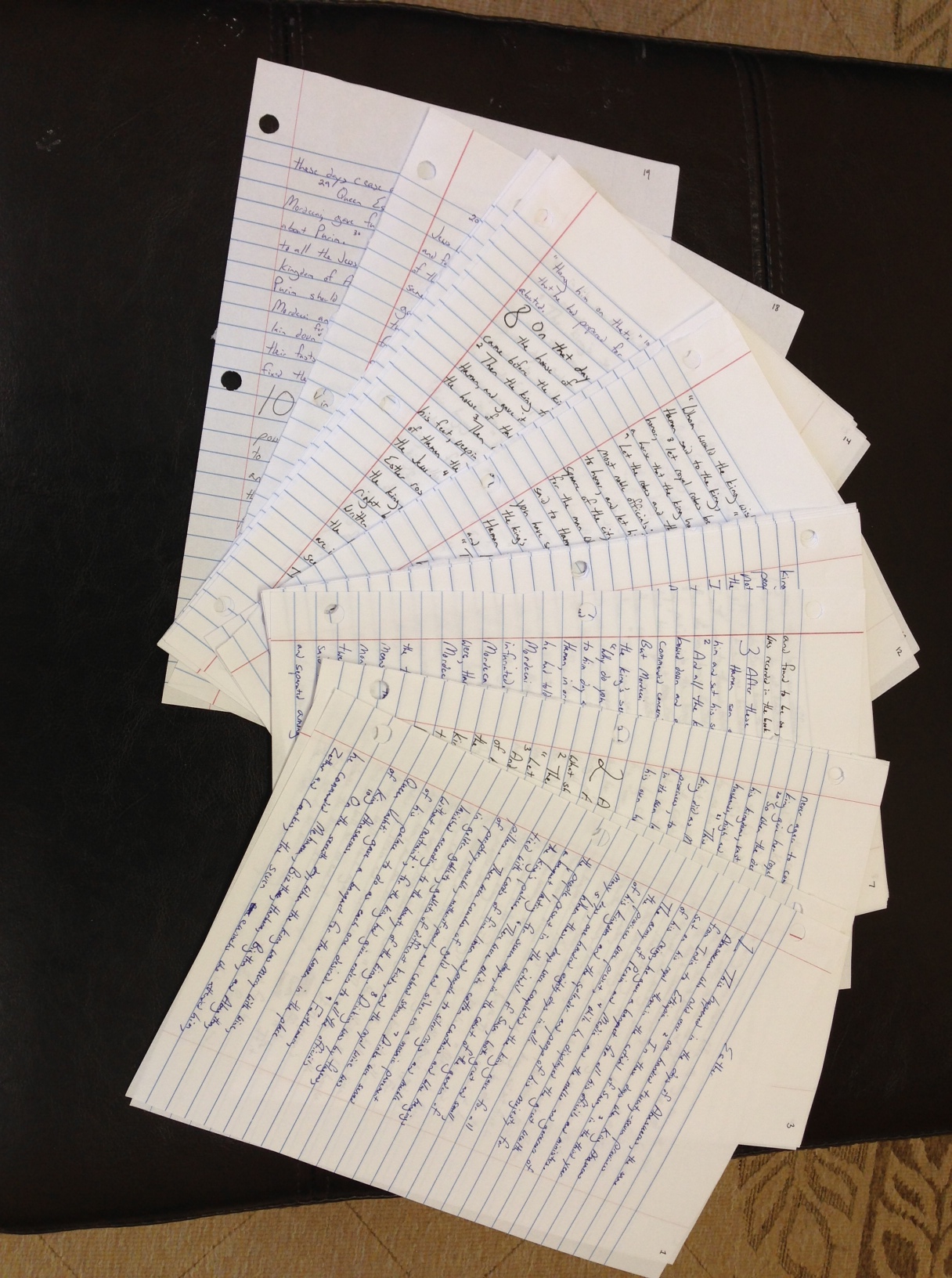
Esther Handwritten

This is the book of Esther written out in my hand, it spans 19 pages. This has been a part of my discipline as I write these posts.

Esther 10: 1-3

King Ahasuerus laid tribute on the land and on the islands of the sea. 2 All the acts of his power and might, and the full account of the high honor of Mordecai, to which the king advanced him, are they not written in the annals of the kings of Media and Persia? 3 For Mordecai the Jew was next in rank to King Ahasuerus, and he was powerful among the Jews and popular with his many kindred, for he sought the good of his people and interceded for the welfare of all his descendants.

                 And they all lived happily ever after, isn’t that how we want the story to end? For Mordecai he is afforded power and position and honor, and it is great for him and his people and his kindred.  As with the previous chapters, many scholars will argue these are additions to what the original story was. Without going into a lot of detail for Esther there are three primary ancient documents: The Masoretic Text (MT) written in Hebrew late 4th or early 3rd Century BCE, the Alpha Text (AT) which is a greek translation of the Hebrew Text (which is roughly 20% shorter than the MT) and the Septuagint which is also a Greek translation used by most early church fathers and probably most of the writers of the New Testament which comes from the Second century BCE. There are differences in each of the texts, with the Septuagint adding quite a lot (if you look in the Apocrypha in most Bibles that contain them, this is where The Additions to Esther come from). Most translations of the Bible go back to the MT, which contains chapters 9 and 10, while the AT does not. Anyways, it really matters little since the text most people read is the translation of the MT from Hebrew into English (or whatever your favorite language is) and this is the communal memory of the book.

The book end on the note of living happily ever after, and that is where we will leave it. I don’t feel a strong desire to spend any time with the Additions to Esther, but Sidnie-White Crawford, whose commentary in The New Interpreter’s Bible I’ve been reading along with as a write does cover this in depth. (Elizabeth Acthemeier, et.al 1999, 3:945-972)

If you have followed through this journey with me, I hope you have enjoyed it and it has provoked thought. Next we are heading into one of the longer books and more challenging books of the Bible, Jeremiah. I am doing this because it is one of the books I don’t know well, like Haggai and Esther, and I want to know more. If you join me on the journey perhaps together we shall see where it leads us.

purple rose 01 by picsofflowers.blogspot.com

The Practice Forms the Faith: Esther 9: 20-32

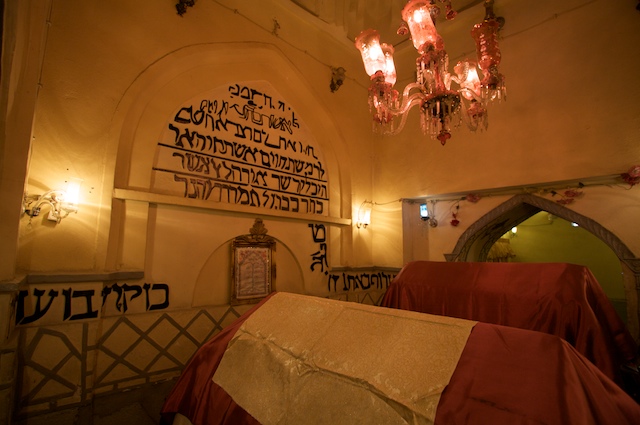
Tomb of Esther and Mordecai, Hamadan, Iran

Tomb of Esther and Mordecai, Hamadan, Iran

Esther 9: 20-32

                20 Mordecai recorded these things, and sent letters to all the Jews who were in all the provinces of King Ahasuerus, both near and far, 21 enjoining them that they should keep the fourteenth day of the month Adar and also the fifteenth day of the same month, year by year, 22 as the days on which the Jews gained relief from their enemies, and as the month that had been turned for them from sorrow into gladness and from mourning into a holiday; that they should make them days of feasting and gladness, days for sending gifts of food to one another and presents to the poor. 23 So the Jews adopted as a custom what they had begun to do, as Mordecai had written to them.

 24 Haman son of Hammedatha the Agagite, the enemy of all the Jews, had plotted against the Jews to destroy them, and had cast Pur– that is “the lot”– to crush and destroy them; 25 but when Esther came before the king, he gave orders in writing that the wicked plot that he had devised against the Jews should come upon his own head, and that he and his sons should be hanged on the gallows. 26 Therefore these days are called Purim, from the word Pur. Thus because of all that was written in this letter, and of what they had faced in this matter, and of what had happened to them, 27 the Jews established and accepted as a custom for themselves and their descendants and all who joined them, that without fail they would continue to observe these two days every year, as it was written and at the time appointed. 28 These days should be remembered and kept throughout every generation, in every family, province, and city; and these days of Purim should never fall into disuse among the Jews, nor should the commemoration of these days cease among their descendants.

 29 Queen Esther daughter of Abihail, along with the Jew Mordecai, gave full written authority, confirming this second letter about Purim. 30 Letters were sent wishing peace and security to all the Jews, to the one hundred twenty-seven provinces of the kingdom of Ahasuerus, 31 and giving orders that these days of Purim should be observed at their appointed seasons, as the Jew Mordecai and Queen Esther enjoined on the Jews, just as they had laid down for themselves and for their descendants regulations concerning their fasts and their lamentations. 32 The command of Queen Esther fixed these practices of Purim, and it was recorded in writing.

Paschasius Radbertus (785-865), a medieval Catholic theologian gave voice to an ancient principle of how doctrine is sometimes formed by the practices of prayer and worship when he said, “the rule of prayer should lay down the rule of faith.” (Pelikan 1978, 159) Our practice informs what we believe, and within the practices of Purim, and the feasting and celebrating combined with the reading of Esther. Purim has some of the feasting and hilarity of Mardi Gras and people often dress up as Esther, Mordecai, Ahasuerus, etc. and this practice shapes the way the Jewish people approach the story in a way that Christians do not have. Esther is a beloved story as a part of this celebration, and so it is not surprising that we have in the closure two different  commands, one from Mordecai and one from Esther that establish the festival. Which came first, the chicken or the egg? You can debate back and forth does the edict establish the festival or does the edict give justification for a practice that was already ongoing.

At one point in my life, I took myself and the world way too seriously, and the life of faith is often looked upon as one of austerity, seriousness and moderation-but that has little to do with the Bible or Jesus. The world of the bible is a world of festivals and feasts, of celebrations and parties, of people enjoying participating and being a part of the story. My personal opinion is we celebrate too little. Mardi Gras for example evolved as an act of rebellion against being continually told by priests (Mardi Gras evolved in predominantly Catholic areas) of all the things they were to give up and to avoid having fun. And yet both of the primary festivals of the Christian church (Christmas and Easter) have evolved to where there is an element of feasting and celebration-but this is done with family and not with any connection to the story of the day. One of the challenges for the church as it enters the twenty first century perhaps we need to learn to celebrate and feast, to begin to live out of abundance rather than scarcity. Now one critical difference is the Christian church, at least in the United States, tells its story from a place of relative privilege, we are not (predominantly) a marginalized group. Many of our members occupy places of authority throughout the society, unlike the experience of the Jewish people throughout much of their history. Nonetheless, especially in a postmodern world which places a high value on story, we would do well to consider how our practices could be informing our faith and how we too can use these feasts throughout the year to do just that: to feast and to celebrate.

purple rose 01 by picsofflowers.blogspot.com