Monthly Archives: October 2013

Jeremiah 13: Weeping for Those Who Don’t Hear

loincloth

Jeremiah 13: 1-11: The Ruined Loincloth

 Thus said the LORD to me, “Go and buy yourself a linen loincloth, and put it on your loins, but do not dip it in water.” 2 So I bought a loincloth according to the word of the LORD, and put it on my loins. 3 And the word of the LORD came to me a second time, saying, 4 “Take the loincloth that you bought and are wearing, and go now to the Euphrates, and hide it there in a cleft of the rock.” 5 So I went, and hid it by the Euphrates, as the LORD commanded me. 6 And after many days the LORD said to me, “Go now to the Euphrates, and take from there the loincloth that I commanded you to hide there.” 7 Then I went to the Euphrates, and dug, and I took the loincloth from the place where I had hidden it. But now the loincloth was ruined; it was good for nothing.

 8 Then the word of the LORD came to me: 9 Thus says the LORD: Just so I will ruin the pride of Judah and the great pride of Jerusalem. 10 This evil people, who refuse to hear my words, who stubbornly follow their own will and have gone after other gods to serve them and worship them, shall be like this loincloth, which is good for nothing. 11 For as the loincloth clings to one’s loins, so I made the whole house of Israel and the whole house of Judah cling to me, says the LORD, in order that they might be for me a people, a name, a praise, and a glory. But they would not listen.

Throughout Jeremiah’s ministry words have failed to convince his listeners to turn from their path, and now God instructs Jeremiah to turn to a symbolic action. Whether Jeremiah actually makes the long journey to the Euphrates river multiple times or whether this is a dream sequence or whether he buries it at another river near his hometown (the Nehal Perat) is something that scholars will debate back and forth, but the symbolic nature of the Euphrates is powerful since it is where the people will cross as they go into exile. At issue within the symbolic representation of the loincloth is the people’s losing the meaning of their being set aside by God for a purpose.

Election, although freighted with all types of baggage with the way it has been used by religious groups, within both Jewish and Christian terms is not for the sake of the elect. The elect are there to be a blessing to the world around them, but too often they become fixated on their own status and they cling to that rather than clinging to the identity they were given by the one who set them apart. Israel was to cling to God and move in the ways God moved as a piece of clothing but to use Jesus’ words they have become like salt that has lost its saltiness and like the loincloth they have failed to be good for anything at this point. Perhaps it is only in this time where they are separated from God and feel that they are ruined that there can be the possibility of being made new and hearing and seeing once again who God is calling them to be.

 Jeremiah 13: 12-14: Filled with Drunkenness

 12 You shall speak to them this word: Thus says the LORD, the God of Israel: Every wine-jar should be filled with wine. And they will say to you, “Do you think we do not know that every wine-jar should be filled with wine?” 13 Then you shall say to them: Thus says the LORD: I am about to fill all the inhabitants of this land– the kings who sit on David’s throne, the priests, the prophets, and all the inhabitants of Jerusalem– with drunkenness. 14 And I will dash them one against another, parents and children together, says the LORD. I will not pity or spare or have compassion when I destroy them.

 Using the image of drunkenness indicates a state where decisions are impaired, where bad choices are frequently made and previous inhibitions may be cast aside. In the context of Jeremiah, the people have turned from God for a long time, they have chased other gods, other goods, trusting in their Davidic king, the temple and the city of Jerusalem to keep them safe. The very people who should be leading the people back to God: the priests, the prophets (other than Jeremiah and perhaps a few others) and the king on David’s throne have instead led them towards a path of destruction. The people are on a path to conflict with Babylon and yet they cannot see it yet, but the prophet sees. The people’s judgment and reactions are impaired unable to see the coming collision with the immovable object and God will not rescue them this time. Perhaps God is the immovable object, perhaps God is merely allowing the consequences of their previous bad choices to come to fruition like a person who after trying to prevent a person who is drunk from taking the wheel and sees them start the vehicle anyways. Regardless, God is no longer there offering a shield of protection to keep the people from hitting the bottom. God has begun to seem to the people no longer as their guardian but their oppressor and until they reach rock bottom they probably won’t be able to see God in a different light.
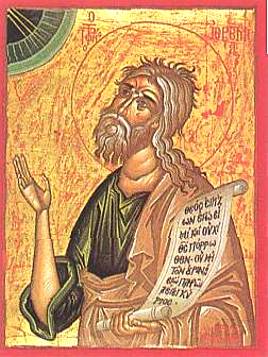
 Orthodox Icon of the Prophet Jeremiah

Orthodox Icon of the Prophet JeremiahJeremiah 13:15-17: A Prophet’s Plea

 15 Hear and give ear; do not be haughty, for the LORD has spoken.
 16 Give glory to the LORD your God before he brings darkness,
and before your feet stumble on the mountains at twilight;
 while you look for light, he turns it into gloom and makes it deep darkness.
 17 But if you will not listen, my soul will weep in secret for your pride;
my eyes will weep bitterly and run down with tears,
because the LORD’s flock has been taken captive.
 

At the center of Israel’s life is the calling to hear (shema) which goes back to Deuteronomy 6:4

Hear, O Israel: The LORD is our God, the LORD alone

And again in this plea the people are called to hear and give hear, to look, to listen and in language characteristic of Deuteronomy’s blessings and curses there is the other side of “if you will not listen” but instead of seeing the consequences for the people we see the consequences for the prophet. The prophet makes his plea as one who is brokenhearted reaching out yet again to the people who have failed to listen to him throughout his ministry and yet his soul still weeps for them and his eyes run down with tears because they will bear the effects of their inability to (or choosing not to) hear.
 
Jeremiah 13: 18-27 Corrupted Identity

18 Say to the king and the queen mother;
“Take a lowly seat, for your beautiful crown has come down from your head.”
 19 The towns of the Negeb are shut up with no one to open them;
all Judah is taken into exile, wholly taken into exile.
 20 Lift up your eyes and see those who come from the north.
Where is the flock that was given you, your beautiful flock?
 21 What will you say when they set as head over you those whom you have trained to be your allies?
Will not pangs take hold of you, like those of a woman in labor?
 22 And if you say in your heart, “Why have these things come upon me?”
it is for the greatness of your iniquity that your skirts are lifted up, and you are violated.
 23 Can Ethiopians change their skin or leopards their spots?
Then also you can do good who are accustomed to do evil.
 24 I will scatter you like chaff driven by the wind from the desert.
 25 This is your lot, the portion I have measured out to you, says the LORD,
 because you have forgotten me and trusted in lies.
 26 I myself will lift up your skirts over your face, and your shame will be seen.
 27 I have seen your abominations, your adulteries and neighings,
 your shameless prostitutions on the hills of the countryside.
Woe to you, O Jerusalem! How long will it be before you are made clean?

Everything is going to change and nothing is going to change. Everything external will change among the people, the king and queen mother will lose their places, places that were once open in hospitality will be closed by conflict, the honored will become dishonored and the powerful will find themselves powerless. But the prophet or God also has little hope or belief that anything will change, that the people’s identity has been corrupted  and they are less likely to change their ways than a person is able to change the color of their skin or a leopard could have its spots removed. The desire is for the unclean to be made clean, but the 13th chapter ends in woe not knowing what it will take for the people to have a new heart placed within them and a new sense of identity as the people of God to live out of. They will need eyes to see and ears to hear, but for now the prophet sees them content in their deafness and blindness, unaware of their shame and their brokenness.

purple rose 01 by picsofflowers.blogspot.com

Images for the 23rd Sunday after Pentecost/ Lectionary 29

Luke 18: 1-8, the Parable of the Unjust Judge, and Genesis 32: 22-31, Jacob wrestles and is renamed Israel

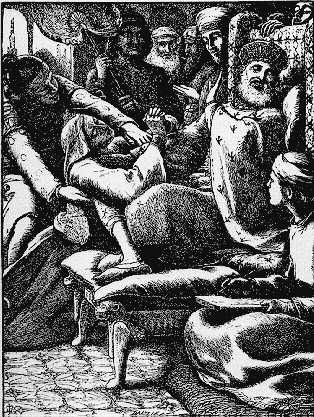
There are not a lot of images for the Parable of the Unjust Judge, but here is one:

John Everett Millais, Parable of the Unjust Judge (1863)

John Everett Millais, Parable of the Unjust Judge (1863)

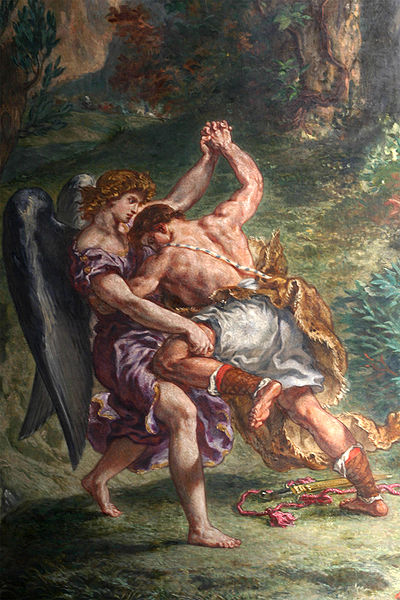
For the reading from Genesis there are some good classic images, and I also am planning to use more of Joseph’s story so I included a couple images not specifically from this scene:

Rembrandt Harmenszoon van Rijn, Jacob Wrestling with the Angel (1659)

Rembrandt Harmenszoon van Rijn, Jacob Wrestling with the Angel (1659)

Photo of Lutte's de Jacob avec l'Ange by Gloumouth1 http:/gloumouth1.free.fr

Photo of Lutte’s de Jacob avec l’Ange by Gloumouth1 http:/gloumouth1.free.fr

Woodcut from Gutenberg Bibel, 1558

Woodcut from Gutenberg Bibel, 1558

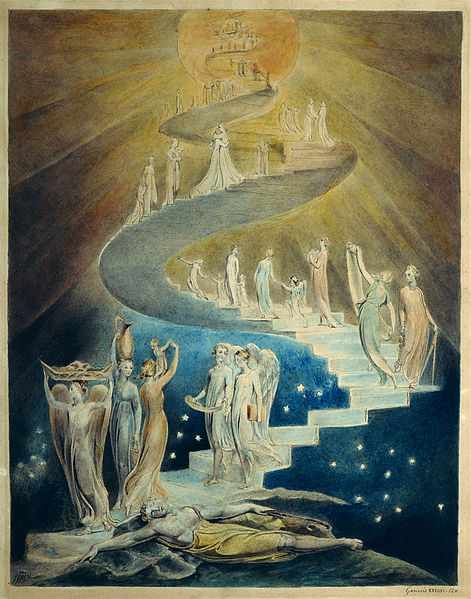
William Blake, Jacob's Dream (1805)

William Blake, Jacob’s Dream (1805)

I just really like this one by Blake and as I mentioned above I am telling more of Jacob’s story

Pierre Paul Rubens, The Reconciliation of Jacob and esau, as in Genesis 33 (1624)

Pierre Paul Rubens, The Reconciliation of Jacob and esau, as in Genesis 33 (1624)


Two Short Poems

Mourning

The Pasts Which Might Have Been
Sometimes I catch myself in my ruminations
Seeking a better past, overlooking the flaws
Longing for things lost, forgetting why they were left behind
Imagining the could’ve beens, the should’ve beens, the would’ve beens
With the if onlys and the perhaps maybes
Idealized versions of a reality that no longer exists
Except in the rearview mirror of the memory
Yet even there they remain not as there were
But as some potential of a past possibility

Mirror

Worn Thin

Stretched and pushed by a taskmaster
Who mercilessly demands an ever higher tribute
Constantly pushing for perfection in every aspect
Never flagging in his criticism, never satisfied with enough
Wearing me thin with continual pressure to achieve
Yet, the taskmaster and the one worn thin
Are but reflections in the mirror.

Neil White, 2013

purple rose 01 by picsofflowers.blogspot.com

Obfuscation

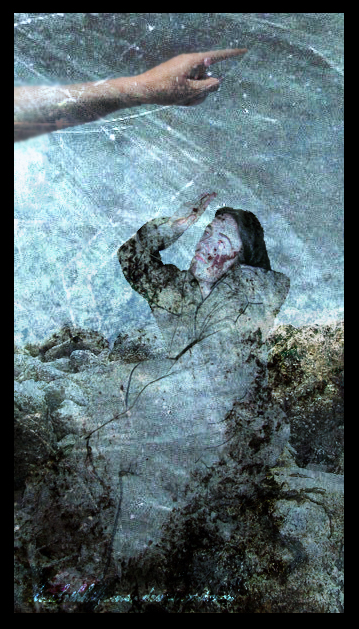
The Modern Leper by addsuns@deviantart.com

The Modern Leper by addsuns@deviantart.com

Polysyllabic platitudes of pensive prose performed per proper phraseology parameters
Quickly and quiescently quaffing quaint quietude
Rearranging relativity and rolling r’s to reflect refinement
Subtly stringing synonymous sentences in sequences surely
Trumping truth to triumphantly transcend transcendentalism
Understanding the ubiquity of uselessness
Veritably vegetating in varieties of vagabond
Wordsmithing willingly whining without wrangling
Xerotically extracting xenomorphic and xenogametic xerocopies
Yearning yonderly yede yon to
Zen

Neil White, 2013

If you haven’t figured it out the poem basically says nothing, but it was a fun exercise in both form and vocabulary and I appreciate the number of sights out there dedicated to scrabble words and words starting with unusual letters. Enjoy my exercise in obfuscatory alliteration.

purple rose 01 by picsofflowers.blogspot.com

Images for the 22nd Sunday After Pentecost/Lectionary 28

This is the story of the healing of Naaman by Elisha (2 Kings5: 1-15) and the healing of ten lepers by Jesus in Luke 17: 11-19. There are some good images for the ideas in these passages:

Elisha Refuses the Gift of Naaman, Pieter de Grebber (1652-53)

Elisha Refuses the Gift of Naaman, Pieter de Grebber (1652-53)

Of Naaman and Leprosy by Elisabethhijanen@deviantart.com

Of Naaman and Leprosy by Elisabethhijanen@deviantart.com

Naaman by Creely at deviantart.com

Naaman by Creely at deviantart.com

The Healing of Ten Leperes by James Tissot (between 1886 and 1894)

The Healing of Ten Lepers by James Tissot (between 1886 and 1894)

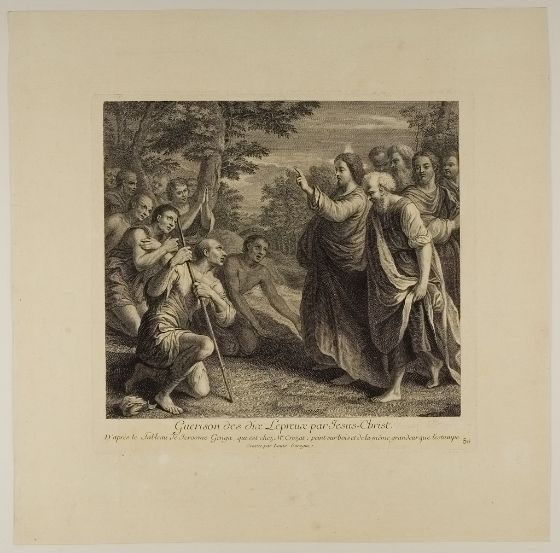
The Healing of the Ten Lepers by Jesus Christ by Louis Surugue (1686-1762)

The Healing of the Ten Lepers by Jesus Christ by Louis Surugue (1686-1762)

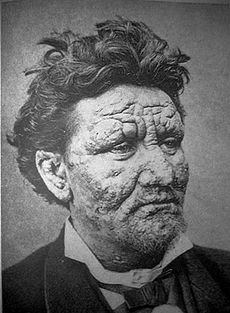
24 year old man from Norway with leprosy

24 year old man from Norway with leprosy

Noting that the condition translated leprosy in the bible is probably not the modern disease leprosy

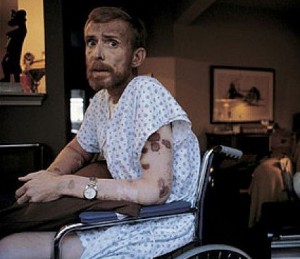
An American AIDS patient

An American AIDS patient

The Modern Leper by addsuns@deviantart.com

The Modern Leper by addsuns@deviantart.com

To See or Not to See…

The Healing of Ten Leperes by James Tissot (between 1886 and 1894)

The Healing of Ten Leperes by James Tissot (between 1886 and 1894)

To see or not to see, that is the question
‘Tis certainly easier to turn a blind eye to the walking wounded
Those passed by in the world’s turning and to ensure my standing
To consign them to some modern day leper’s colony
The unclean and the unseen

To see or not to see, that is the question
In a time where all the suffering of the world pours in digitally
It would be so easy to disconnect from the groaning of the world
And to blame the victim for the suffering they cause me
The untouchable and the unwanted

To see or not to see, that is the calling
The world around me calls me not to see, not to care, not to believe it matters
The kingdom calls for eyes that see and ears that hear with soft hearts
To see Christ in the victim and God in the suffering
The crucified and the scandalous

Yet many who should see are blind
And among the ones who see are those who seem to come from a different fold
In all of it the kingdom is there in the midst of us, in the love and hate
In the midst of real lives and real stories
The seen and the unseen

Neil White, 2013

purple rose 01 by picsofflowers.blogspot.com

Transitions

transitions

A change in the environment, a new home, a new office, new people
Transitions with the potential for new opportunities new beginnings
Yet, they also come with numerous challenges to be navigated
For it means abandoning that which you knew, the routines you valued
The stores you shopped in, the arrangement of the kitchen
Everything changes as a new equilibrium is sought, new relationships established
And though I would like the world to stop while I catch up, it spins on
Blind to the transitions and those caught within them

Neil White 2013

purple rose 01 by picsofflowers.blogspot.com

Empathetic-A Poem

Eye_iris

I can see the exhaustion in your eyes
And the way you hold your head tells a story
Before the first word emerges from your mouth
I can imagine myself in your shoes
And perhaps I have been there, perhaps not
But either way I can imagine your world
And attempt to see my own through your eyes
In empathy I can see your humanity
And I am drawn to care and notice your suffering
To value you as a peer even while a stranger

Yet, in an inhospitable world how do we risk hospitality
When empathy is mistakenly viewed as weakness
And psychosis as strength and it is easier not to care
How do we make the inhuman humane?
How does compassion live with apathy?
How can love exist in the midst of hate?
Wouldn’t it be far easier to turn inwards
Narcissistically seeking my own good and benefit?
Refusing to consider any world beyond my own,
Refusing to risk seeing and hearing and caring
To convince myself that your story doesn’t matter
That I am entitled to the position as the world’s center of gravity
It would be easier to turn a blind eye
With willfully blinded eyes and closed ears

Yet, I do see and I remain empathetic
And once again hope triumphs over despair
That perhaps you might know you are seen
And that you might also see me as well
And our journey through this life might not be alone

Neil White, 2013

purple rose 01 by picsofflowers.blogspot.com

Unrequited- A Poem

scarsofheart
Our feelings are our own
   Sometimes we control them
      Sometimes they control us
          But they are a part of our lives
             And sometimes we share them with other
                And sometimes they hang out there unrequited
             And sometimes they are not shared by others
          But they are a part of our lives
      Sometimes they are controlled by them
   Sometimes they are in control of them
Their feelings are there own

Neil White, 2013
purple rose 01 by picsofflowers.blogspot.com

The Circus


dog act

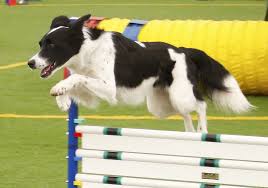
Jumping through hoops to please some unseen watcher

Who holds the keys to stability, dangling them before my nose

As I frenetically attempt to clear every obstacle

Placed in my path without stumbling in the process

Or as I wait patiently as yet one more set of challenges

Are lined up for my betterment and safe-keeping

Even when I run the course in record time

I wait upon the unimpressed administrators who set the clock

Speeding up and then slowing down the process with arbitrary freedom

Ensuring that we know I am never in control of my own fate

Neil White, 2013

This emerges out of the process of closing on a house (still ongoing) which has at times felt like a circus and has definitely left me feeling out of control and dependent upon others. I’m sure the words can also point to broader realities but it emerges out of a specific one.

purple rose 01 by picsofflowers.blogspot.com